Kirjojen hintavertailu. Mukana 11 518 949 kirjaa ja 12 kauppaa.

Kirjahaku

Etsi kirjoja tekijän nimen, kirjan nimen tai ISBN:n perusteella.

1000 tulosta hakusanalla Elizabeth A. Cook

Fortune's Wheel

Fortune's Wheel

Elizabeth A. Campbell

Ohio University Press
2004
sidottu
In the first half of the nineteenth century, England became quite literally a world on wheels. The sweeping technological changes wrought by the railways, steam-powered factory engines, and progressively more sophisticated wheeled conveyances of all types produced a corresponding revolution in Victorian iconography: the image of the wheel emerged as a dominant trope for power, modernity, and progress. In Fortune's Wheel, an original and illuminating study, Elizabeth Campbell explores the ways in which Charles Dickens appropriated and made central to his novels the dominant symbol of his age. Between 1840 and 1860, a transformation took place in Dickens' thinking about gender and time, and this revolution is recorded in iconographic representations of the goddess Fortune and wheel imagery that appear in his work. Drawing on a rich history of both literary and visual representations of Fortune, Professor Campbell argues that Dickens' contribution to both the iconographic and narrative traditions was to fuse the classical image of the wheel with the industrial one. As the wheel was increasingly identified as the official Victorian symbol for British industrial and economic progress, Dickens reacted by employing this icon to figure a more pessimistic historical vision—as the tragic symbol for human fate in the nineteenth century. Fortune's Wheel ably portrays the concept that, in both text and illustrations, images of fortune and the wheel in Dickens' work record his abandonment of a linear, progressive, and arguably masculine view of history to embrace a cyclical model that has been identified with "women's time."
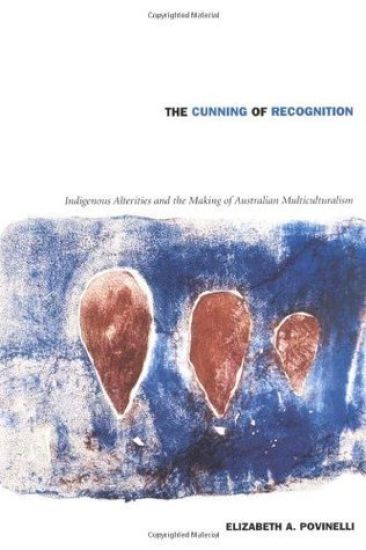
The Cunning of Recognition

The Cunning of Recognition

Elizabeth A. Povinelli

Duke University Press
2002
sidottu
The Cunning of Recognition is an exploration of liberal multiculturalism from the perspective of Australian indigenous social life. Elizabeth A. Povinelli argues that the multicultural legacy of colonialism perpetuates unequal systems of power, not by demanding that colonized subjects identify with their colonizers but by demanding that they identify with an impossible standard of authentic traditional culture.Povinelli draws on seventeen years of ethnographic research among northwest coast indigenous people and her own experience participating in land claims, as well as on public records, legal debates, and anthropological archives to examine how multicultural forms of recognition work to reinforce liberal regimes rather than to open them up to a true cultural democracy. The Cunning of Recognition argues that the inequity of liberal forms of multiculturalism arises not from its weak ethical commitment to difference but from its strongest vision of a new national cohesion. In the end, Australia is revealed as an exemplary site for studying the social effects of the liberal multicultural imaginary: much earlier than the United States and in response to very different geopolitical conditions, Australian nationalism renounced the ideal of a unitary European tradition and embraced cultural and social diversity. While addressing larger theoretical debates in critical anthropology, political theory, cultural studies, and liberal theory, The Cunning of Recognition demonstrates that the impact of the globalization of liberal forms of government can only be truly understood by examining its concrete-and not just philosophical-effects on the world.
The Cunning of Recognition

The Cunning of Recognition

Elizabeth A. Povinelli

Duke University Press
2002
pokkari
This volume explores liberal multiculturalism from the perspective of Australian indigenous social life. Povinelli draws on 17 years of ethnographic research explaining that, while aboriginal peoples have an official "place" in Australia, they must uphold stereotypically authentic ways of being.
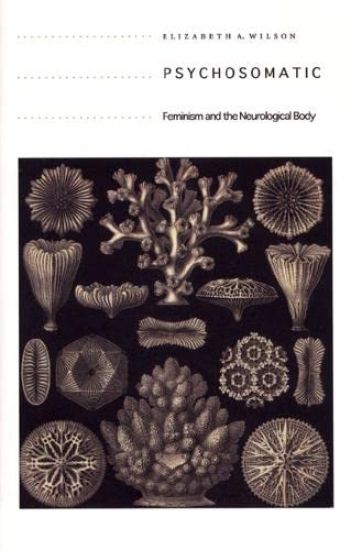
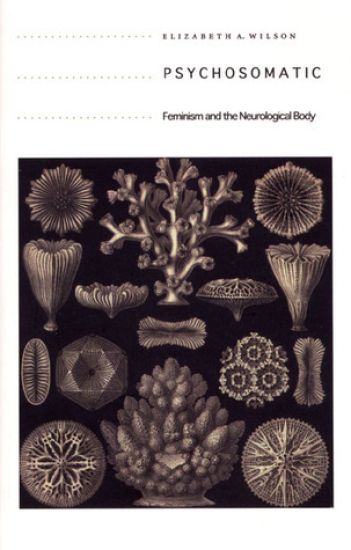
Psychosomatic

Psychosomatic

Elizabeth A. Wilson

Duke University Press
2004
sidottu
How can scientific theories contribute to contemporary accounts of embodiment in the humanities and social sciences? In particular, how does neuroscientific research facilitate new approaches to theories of mind and body? Feminists have frequently criticized the neurosciences for biological reductionism, yet, Elizabeth A. Wilson argues, neurological theories-especially certain accounts of depression, sexuality, and emotion-are useful to feminist theories of the body. Rather than pointing toward the conventionalizing tendencies of the neurosciences, Wilson emphasizes their capacity for reinvention and transformation. Focusing on the details of neuronal connections, subcortical pathways, and reflex actions, she suggests that the central and peripheral nervous systems are powerfully allied with sexuality, the affects, emotional states, cognitive appetites, and other organs and bodies in ways not fully appreciated in the feminist literature. Whether reflecting on Simon LeVay’s hypothesis about the brains of gay men, Peter Kramer’s model of depression, or Charles Darwin’s account of trembling and blushing, Wilson is able to show how the neurosciences can be used to reinvigorate feminist theories of the body.
Psychosomatic

Psychosomatic

Elizabeth A. Wilson

Duke University Press
2004
pokkari
How can scientific theories contribute to contemporary accounts of embodiment in the humanities and social sciences? In particular, how does neuroscientific research facilitate new approaches to theories of mind and body? Feminists have frequently criticized the neurosciences for biological reductionism, yet, Elizabeth A. Wilson argues, neurological theories-especially certain accounts of depression, sexuality, and emotion-are useful to feminist theories of the body. Rather than pointing toward the conventionalizing tendencies of the neurosciences, Wilson emphasizes their capacity for reinvention and transformation. Focusing on the details of neuronal connections, subcortical pathways, and reflex actions, she suggests that the central and peripheral nervous systems are powerfully allied with sexuality, the affects, emotional states, cognitive appetites, and other organs and bodies in ways not fully appreciated in the feminist literature. Whether reflecting on Simon LeVay’s hypothesis about the brains of gay men, Peter Kramer’s model of depression, or Charles Darwin’s account of trembling and blushing, Wilson is able to show how the neurosciences can be used to reinvigorate feminist theories of the body.
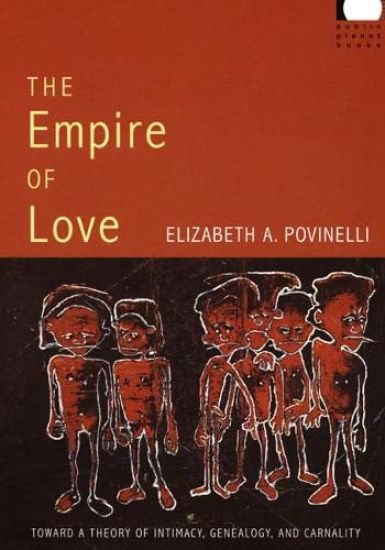
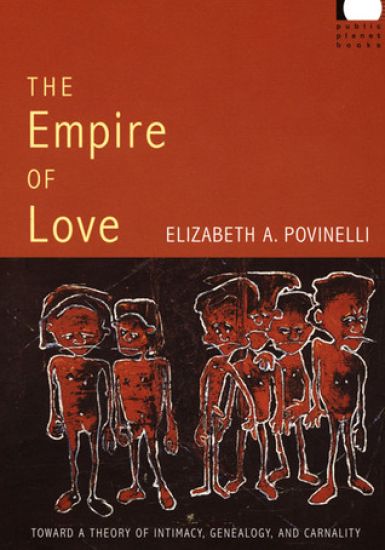
The Empire of Love

The Empire of Love

Elizabeth A. Povinelli

Duke University Press
2006
sidottu
In The Empire of Love anthropologist Elizabeth A. Povinelli reflects on a set of ethical and normative claims about the governance of love, sociality, and the body that circulates in liberal settler colonies such as the United States and Australia. She boldly theorizes intimate relations as pivotal sites where liberal logics and aspirations absorbed through settler imperialism are manifest, where discourses of self-sovereignty, social constraint, and value converge.For more than twenty years, Povinelli has traveled to the social worlds of indigenous men and women living at Belyuen, a small community in the Northern Territory of Australia. More recently she has moved across communities of alternative progressive queer movements in the United States, particularly those who identify as radical faeries. In this book she traces how liberal binary concepts of individual freedom and social constraint influence understandings of intimacy in these two worlds. At the same time, she describes alternative models of social relations within each group in order to highlight modes of intimacy that transcend a reductive choice between freedom and constraint.Shifting focus away from identities toward the social matrices out of which identities and divisions emerge, Povinelli offers a framework for thinking through such issues as what counts as sexuality and which forms of intimate social relations result in the distribution of rights, recognition, and resources, and which do not. In The Empire of Love Povinelli calls for, and begins to formulate, a politics of “thick life,” a way of representing social life nuanced enough to meet the density and variation of actual social worlds.
The Empire of Love

The Empire of Love

Elizabeth A. Povinelli

Duke University Press
2006
pokkari
In The Empire of Love anthropologist Elizabeth A. Povinelli reflects on a set of ethical and normative claims about the governance of love, sociality, and the body that circulates in liberal settler colonies such as the United States and Australia. She boldly theorizes intimate relations as pivotal sites where liberal logics and aspirations absorbed through settler imperialism are manifest, where discourses of self-sovereignty, social constraint, and value converge.For more than twenty years, Povinelli has traveled to the social worlds of indigenous men and women living at Belyuen, a small community in the Northern Territory of Australia. More recently she has moved across communities of alternative progressive queer movements in the United States, particularly those who identify as radical faeries. In this book she traces how liberal binary concepts of individual freedom and social constraint influence understandings of intimacy in these two worlds. At the same time, she describes alternative models of social relations within each group in order to highlight modes of intimacy that transcend a reductive choice between freedom and constraint.Shifting focus away from identities toward the social matrices out of which identities and divisions emerge, Povinelli offers a framework for thinking through such issues as what counts as sexuality and which forms of intimate social relations result in the distribution of rights, recognition, and resources, and which do not. In The Empire of Love Povinelli calls for, and begins to formulate, a politics of “thick life,” a way of representing social life nuanced enough to meet the density and variation of actual social worlds.
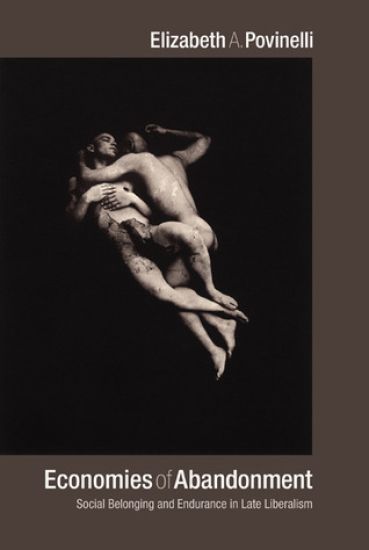
Economies of Abandonment

Economies of Abandonment

Elizabeth A. Povinelli

Duke University Press
2011
sidottu
In Economies of Abandonment, Elizabeth A. Povinelli explores how late liberal imaginaries of tense, eventfulness, and ethical substance make the global distribution of life and death, hope and harm, and endurance and exhaustion not merely sensible but also just. She presents new ways of conceptualizing formations of power in late liberalism-the shape that liberal governmentality has taken as it has responded to a series of legitimacy crises in the wake of anticolonial and new social movements and, more recently, the “clash of civilizations” after September 11. Based on longstanding ethnographic work in Australia and the United States, as well as critical readings of legal, academic, and activist texts, Povinelli examines how alternative social worlds and projects generate new possibilities of life in the context of ordinary and extraordinary acts of neglect and surveillance. She focuses particularly on social projects that have not yet achieved a concrete existence but persist at the threshold of possible existence. By addressing the question of the endurance, let alone the survival, of alternative forms of life, Povinelli opens new ethical and political questions.
Economies of Abandonment

Economies of Abandonment

Elizabeth A. Povinelli

Duke University Press
2011
pokkari
In Economies of Abandonment, Elizabeth A. Povinelli explores how late liberal imaginaries of tense, eventfulness, and ethical substance make the global distribution of life and death, hope and harm, and endurance and exhaustion not merely sensible but also just. She presents new ways of conceptualizing formations of power in late liberalism-the shape that liberal governmentality has taken as it has responded to a series of legitimacy crises in the wake of anticolonial and new social movements and, more recently, the “clash of civilizations” after September 11. Based on longstanding ethnographic work in Australia and the United States, as well as critical readings of legal, academic, and activist texts, Povinelli examines how alternative social worlds and projects generate new possibilities of life in the context of ordinary and extraordinary acts of neglect and surveillance. She focuses particularly on social projects that have not yet achieved a concrete existence but persist at the threshold of possible existence. By addressing the question of the endurance, let alone the survival, of alternative forms of life, Povinelli opens new ethical and political questions.
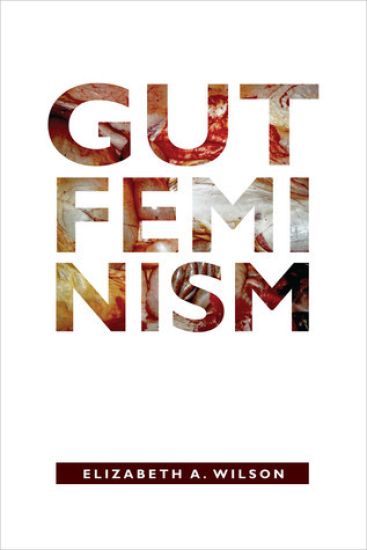
Gut Feminism

Gut Feminism

Elizabeth A. Wilson

Duke University Press
2015
sidottu
In Gut Feminism Elizabeth A. Wilson urges feminists to rethink their resistance to biological and pharmaceutical data. Turning her attention to the gut and depression, she asks what conceptual and methodological innovations become possible when feminist theory isn’t so instinctively antibiological. She examines research on anti-depressants, placebos, transference, phantasy, eating disorders and suicidality with two goals in mind: to show how pharmaceutical data can be useful for feminist theory, and to address the necessary role of aggression in feminist politics. Gut Feminism’s provocative challenge to feminist theory is that it would be more powerful if it could attend to biological data and tolerate its own capacity for harm.
Gut Feminism

Gut Feminism

Elizabeth A. Wilson

Duke University Press
2015
pokkari
In Gut Feminism Elizabeth A. Wilson urges feminists to rethink their resistance to biological and pharmaceutical data. Turning her attention to the gut and depression, she asks what conceptual and methodological innovations become possible when feminist theory isn’t so instinctively antibiological. She examines research on anti-depressants, placebos, transference, phantasy, eating disorders and suicidality with two goals in mind: to show how pharmaceutical data can be useful for feminist theory, and to address the necessary role of aggression in feminist politics. Gut Feminism’s provocative challenge to feminist theory is that it would be more powerful if it could attend to biological data and tolerate its own capacity for harm.
Geontologies

Geontologies

Elizabeth A. Povinelli

Duke University Press
2016
sidottu
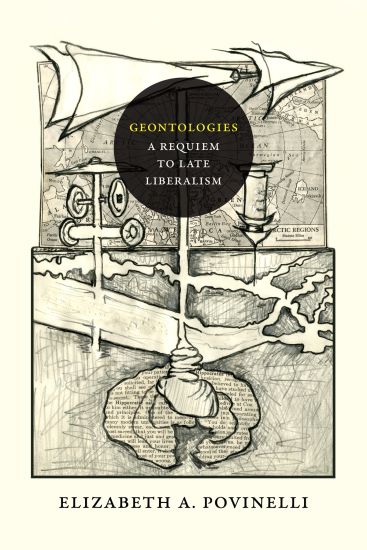
In Geontologies Elizabeth A. Povinelli continues her project of mapping the current conditions of late liberalism by offering a bold retheorization of power. Finding Foucauldian biopolitics unable to adequately reveal contemporary mechanisms of power and governance, Povinelli describes a mode of power she calls geontopower, which operates through the regulation of the distinction between Life and Nonlife and the figures of the Desert, the Animist, and the Virus. Geontologies examines this formation of power from the perspective of Indigenous Australian maneuvers against the settler state. And it probes how our contemporary critical languages-anthropogenic climate change, plasticity, new materialism, antinormativity-often unwittingly transform their struggles against geontopower into a deeper entwinement within it. A woman who became a river, a snakelike entity who spawns the fog, plesiosaurus fossils and vast networks of rock weirs: in asking how these different forms of existence refuse incorporation into the vocabularies of Western theory Povinelli provides a revelatory new way to understand a form of power long self-evident in certain regimes of settler late liberalism but now becoming visible much further beyond.
Geontologies

Geontologies

Elizabeth A. Povinelli

Duke University Press
2016
pokkari
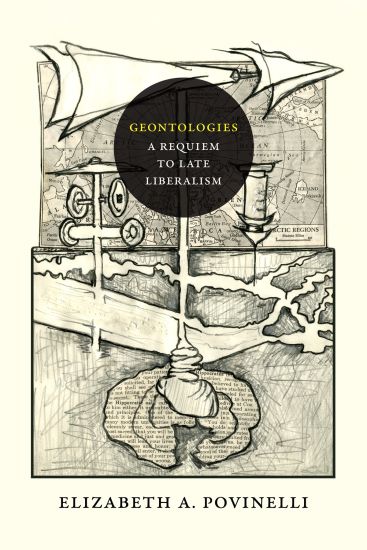
In Geontologies Elizabeth A. Povinelli continues her project of mapping the current conditions of late liberalism by offering a bold retheorization of power. Finding Foucauldian biopolitics unable to adequately reveal contemporary mechanisms of power and governance, Povinelli describes a mode of power she calls geontopower, which operates through the regulation of the distinction between Life and Nonlife and the figures of the Desert, the Animist, and the Virus. Geontologies examines this formation of power from the perspective of Indigenous Australian maneuvers against the settler state. And it probes how our contemporary critical languages-anthropogenic climate change, plasticity, new materialism, antinormativity-often unwittingly transform their struggles against geontopower into a deeper entwinement within it. A woman who became a river, a snakelike entity who spawns the fog, plesiosaurus fossils and vast networks of rock weirs: in asking how these different forms of existence refuse incorporation into the vocabularies of Western theory Povinelli provides a revelatory new way to understand a form of power long self-evident in certain regimes of settler late liberalism but now becoming visible much further beyond.
Consider Jesus

Consider Jesus

Elizabeth A. Johnson

Crossroad Publishing Co ,U.S.
1992
nidottu
Consider Jesus is widely regarded as the finest general introduction to Christology. Adopted for adult education courses, classrooms, and seminars, this classic book, written by one of the leading theologians of our era, presents major themes about Jesus in clear and accessible language.
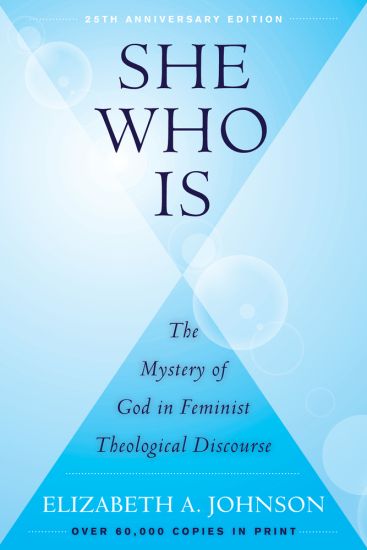
She Who Is

She Who Is

Elizabeth A. Johnson

Crossroad Publishing Co ,U.S.
2017
nidottu
Winner of the Louisville Grawemeyer Award in Religion, this classic text explains what feminist theology is and how we can rediscover the feminine God within the Christian tradition, offering a profound vision of Christian theology, women's experience, and emancipation. First published in 1992, it immediately caused a groundswell reaction for and against the concept of women's participation and role in the Christian church. It is both controversial and thought provoking. It served as the seminal text in the analysis of woman and Christianity. This 25th anniversary edition, with new content, will keep it in the forefront of the feminist theology conversation.
Friends of God and Prophets

Friends of God and Prophets

Elizabeth A. Johnson

Continuum International Publishing Group Ltd.
1999
nidottu
"[Johnson's] book should be read slowly, thoughtfully and prayerfully by Christians of all denominations, for it has much to say about belonging to the communion of all the saints." -Christian Century
Dangerous Memories

Dangerous Memories

Elizabeth A. Johnson

Continuum International Publishing Group Ltd.
2004
nidottu
Elizabeth Johnson takes the 13 gospel appearances of Mary of Nazareth and creates a rich, deep Marian identity from this complex mosaic. Dangerous Memories is taken from her acclaimed Truly Our Sister: A Theology of Mary in the Communion of Saints (0-8264-1473-7), with the addition of a new introduction and a short annotated bibliography.
Truly our Sister

Truly our Sister

Elizabeth A. Johnson

Continuum International Publishing Group Ltd.
2006
nidottu
The first-century Jewish woman Miriam of Nazareth, mother of Jesus, proclaimed in faith to be Theotokos, the God-bearer, is the most celebrated female religious figure in the Christian tradition. So varied and manifold are the traditions about Mary, both popular and scholarly, that some would speak of "Mary" as a collective noun or refer, in George Tavard's memorable title, to "The Thousand Faces of the Virgin Mary". In her long-awaited book on Mary, which forms a diptych with "Friends of God and Prophets", Elizabeth Johnson offers an interpretation of Mary that is theologically sound, spiritually empowering, ethically challenging, socially liberating, and ecumenically fruitful. In particular, she construes the image of Mary so as to be a source of blessing rather than blight for women's lives in both religious and political terms.