

Kirjahaku
Etsi kirjoja tekijän nimen, kirjan nimen tai ISBN:n perusteella.
1000 tulosta hakusanalla Emanuel Herrmann



Dictionary of Correspondence, Representatives & Significatives Derived from the Word of the Lord 1924
Emanuel Swedenborg
Kessinger Pub
2003
pokkari

Angelic Wisdom Concerning the Divine Providence (1853)
Emanuel Swedenborg
KESSINGER PUBLISHING CO
2003
pokkari

Divine Personality, Incarnation and Glorification of the Lord with a Critical Analysis of the Athanasian Creed (1848)
Emanuel Swedenborg
KESSINGER PUBLISHING CO
2003
pokkari

This landmark volume presents the first-ever English translation of the ancient Israelite Samaritan version of the Pentateuch, or Torah. A text of growing interest and importance in the field of biblical studies, the Samaritan Pentateuch preserves a version of the Hebrew text distinct from the traditional Masoretic Text that underlies modern Bible translations. Benyamim Tsedaka's expert English translation of the Samaritan Pentateuch is here laid out parallel to the more familiar Masoretic Text, highlighting the more than 6,000 differences between the two versions. In addition to extensive explanatory notes in the margins throughout, the book's detailed appendices show affinities between the Samaritan and Septuagint versions and between the Samaritan and Dead Sea Scroll texts. Concluding the volume is a categorical name index containing a wealth of comparative information.

The Artificial Paradises in French Literature
Emanuel J. Mickel Jr.
The University of North Carolina Press
1969
nidottu
This is a study that traces the influence of drugs on French literature. The first three chapters acquaint the reader with various aspects of the use and effect of opium and hashish. Later chapters analyze the influence on the works of various writers of the period, particularly Baudelaire.

John Wayne was the most popular and the most durable star in film history. He was also a national legend, a folk hero, and a powerful symbol of the American Dream. Levy evaluates Wayne's film oeuvre by comparing him with other major stars of his generation and demonstrates that of all American actors, he came closest to the notion of 'actor-as-auteur.'
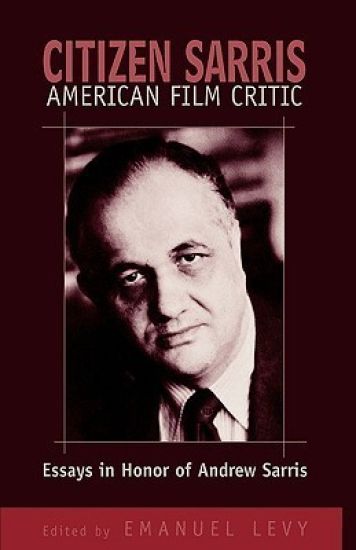
This collection of essays pays tribute to Andrew Sarris, the most influential film critic in American film history. A noted film personality, Sarris occupies a unique position, walking the line between popular journalism and more academic scholarship. He began his career in the 1950s with a passion for film and an eloquent style of prose that led him to become a prominent voice in the film world. As a writer and editor for the Village Voice at its prime, Sarris reached and educated a whole generation of readers, and became respected by academics and critics all over the world. The thirty-eight essays assembled here and arranged according to major themes demonstrate the amazing impact Sarris has had on every aspect of the film world: fellow critics, filmmakers, readers, and American popular culture. Contributors include noted critics Leonard Maltin and Molly Haskell, film scholars David Bordwell and James Naremore, and directors Martin Scorsese, Robert Benton, and John Sayles.
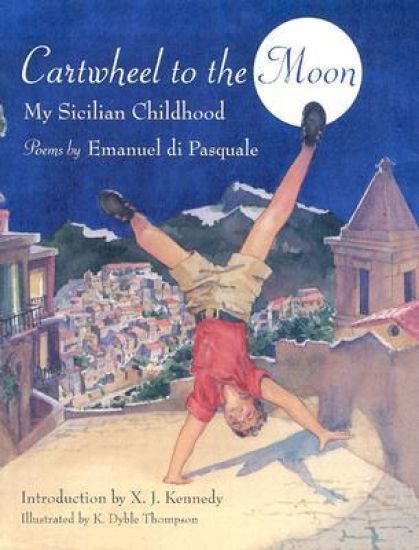
An illustrated collection of poems celebrating the landscape, people, plants and animals, customs, and traditions of the Italian island of Sicily.

In surprise attacks on Israel in October 1973, Egyptian and Syrian forces crossed ceasefire lines to enter the Israeli-held Sinai Peninsula and Golan Heights, igniting what became known as the Yom Kippur War. In the north, Israel succeeded in blocking the Syrian advance, but in the south, it failed to achieve an operational decision in the defense campaign. In Soldier in the Sinai, mobile and armored warfare expert Major General Emanuel Sakal analyzes the operational and strategic decisions made by Israel's political and military leadership and assesses the causes of the defense's first-phase failure.Prior to the conflict, the government approved the Israel Defense Forces' (IDF) strategy, dubbed "the regulars will hold." This plan assumed that the IDF regulars on the front lines, supported by the Israeli Air Force, would effectively counter the Arab attack even if deterrence failed. Employing operations research, simulation, and computerized war games, Sakal examines the virtual results of an alternative approach by the Israeli military and explains how ineffective air support, an inadequate tank strategy, and a delay in mobilizing its reserves crippled the country's air force.An intriguing and detailed evaluation of Israel's flawed defense, Soldier in the Sinai offers a firsthand account of military strategy from a general who commanded a regular tank battalion that fought in the most desperate battles of the conflict. Based on extensive research, including interviews with the principal officers involved, this book provides a meticulous critique of the faulty assumptions and lack of planning that contributed to the disastrous early battles of the Yom Kippur War.
The Struggle of Democracy Against Terrorism
Emanuel Gross; Aharon Barak
University of Virginia Press
2006
sidottu
Radically different from other struggles covered by the international laws of war, the war on terrorism continues to create new legal challenges and grave moral dilemmas for the free world. Democracies are increasingly faced with balancing security against civil liberties, human rights, and the rule of law. In his new book ""The Struggle of Democracy against Terrorism"", Emanuel Gross examines the legal and moral complexities democracies face when dealing with terrorism. Drawing on his own experience as a former judge in the Israeli military courts, Gross compares the experiences of the United States, Israel, and the United Kingdom, providing a broad picture of the dangers imposed by the measures these democracies use to combat terrorism. Particularly critical of the USA Patriot Act, Gross outlines what he argues to be the three cornerstones of Israel's experience with terrorism applicable to other democracies. On this platform, he bases his examination of the various laws that apply to a democracy's fight against terrorism, providing sharp and wide-ranging analysis that will be of great use to citizens and governments worldwide. Both provocative and informative, ""The Struggle of Democracy against Terrorism"" will appeal to students and teachers of law, political science, and philosophy, as well as to citizens and activists concerned with the impact of terrorism on civil liberties.

This unique volume brings together contributions from experts who are able to introduce both the neophyte and the scholar to important faucets of Freud's life and work. The gross misconceptions and distortions of Freud and his ideas which have prevailed in many circles are here dispelled by scholars. Originally delivered at a symposium sponsored by the Freud literary heritage Foundation in cooperation with The Institute of Pennsylvania Hospital, the contributions to Understanding Freud provide us with a clear look at perhaps the most important mind of this century.
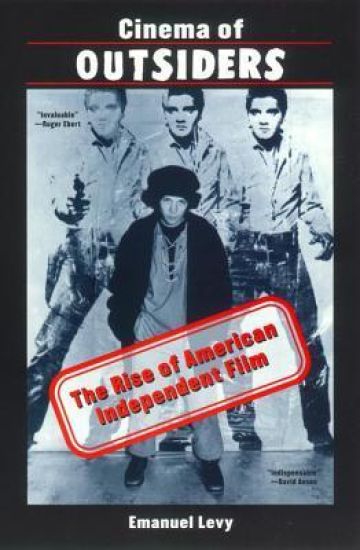
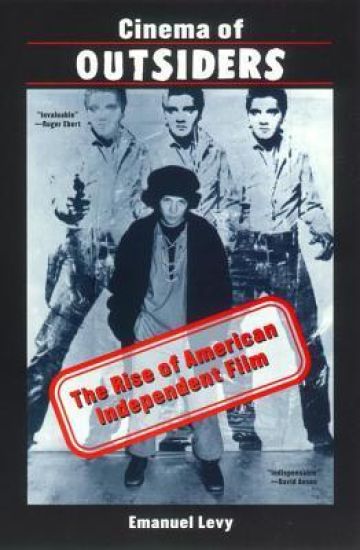
A deep dive into the emergence and success of independent filmmaking in America A Los Angeles Times Bestseller The most important development in American culture of the last two decades is the emergence of independent cinema as a viable alternative to Hollywood. Indeed, while Hollywood's studios devote much of their time and energy to churning out big-budget, star-studded event movies, a renegade independent cinema that challenges mainstream fare continues to flourish with strong critical support and loyal audiences. Cinema of Outsiders is the first and only comprehensive chronicle of contemporary independent movies from the late 1970s up to the present. From the hip, audacious early works of maverick David Lynch, Jim Jarmusch, and Spike Lee, to the contemporary Oscar-winning success of indie dynamos, such as the Coen brothers (Fargo), Quentin Tarentino (Pulp Fiction), and Billy Bob Thornton (Sling Blade), Levy describes in a lucid and accessible manner the innovation and diversity of American indies in theme, sensibility, and style. Documenting the socio-economic, political and artistic forces that led to the rise of American independent film, Cinema of Outsiders depicts the pivotal role of indie guru Robert Redford and his Sundance Film Festival in creating a showcase for indies, the function of film schools in supplying talent, and the continuous tension between indies and Hollywood as two distinct industries with their own structure, finance, talent and audience. Levy describes the major cycles in the indie film movement: regional cinema, the New York school of film, African-American, Asian American, gay and lesbian, and movies made by women. Based on exhaustive research of over 1,000 movies made between 1977 and 1999, Levy evaluates some 200 quintessential indies, including Choose Me, Stranger Than Paradise, Blood Simple, Blue Velvet, Desperately Seeking Susan, Slacker, Poison, Reservoir Dogs, Gas Food Lodging, Menace II Society, Clerks, In the Company of Men, Chasing Amy, The Apostle, The Opposite of Sex, and Happiness. Cinema of Outsiders reveals the artistic and political impact of bold and provocative independent movies in displaying the cinema of "outsiders"-the cinema of the "other America."
A deep dive into the emergence and success of independent filmmaking in America A Los Angeles Times Bestseller The most important development in American culture of the last two decades is the emergence of independent cinema as a viable alternative to Hollywood. Indeed, while Hollywood's studios devote much of their time and energy to churning out big-budget, star-studded event movies, a renegade independent cinema that challenges mainstream fare continues to flourish with strong critical support and loyal audiences. Cinema of Outsiders is the first and only comprehensive chronicle of contemporary independent movies from the late 1970s up to the present. From the hip, audacious early works of maverick David Lynch, Jim Jarmusch, and Spike Lee, to the contemporary Oscar-winning success of indie dynamos, such as the Coen brothers (Fargo), Quentin Tarentino (Pulp Fiction), and Billy Bob Thornton (Sling Blade), Levy describes in a lucid and accessible manner the innovation and diversity of American indies in theme, sensibility, and style. Documenting the socio-economic, political and artistic forces that led to the rise of American independent film, Cinema of Outsiders depicts the pivotal role of indie guru Robert Redford and his Sundance Film Festival in creating a showcase for indies, the function of film schools in supplying talent, and the continuous tension between indies and Hollywood as two distinct industries with their own structure, finance, talent and audience. Levy describes the major cycles in the indie film movement: regional cinema, the New York school of film, African-American, Asian American, gay and lesbian, and movies made by women. Based on exhaustive research of over 1,000 movies made between 1977 and 1999, Levy evaluates some 200 quintessential indies, including Choose Me, Stranger Than Paradise, Blood Simple, Blue Velvet, Desperately Seeking Susan, Slacker, Poison, Reservoir Dogs, Gas Food Lodging, Menace II Society, Clerks, In the Company of Men, Chasing Amy, The Apostle, The Opposite of Sex, and Happiness. Cinema of Outsiders reveals the artistic and political impact of bold and provocative independent movies in displaying the cinema of "outsiders"-the cinema of the "other America."
In recent years, there has been an upsurge of interest in religion and religious issues. Some have linked this to a neo-liberal form of individualism, while others noted that secularism has left people bereft of a humanly necessary link with the transcendent. The importance of identity issues has also been remarked upon. This book examines how liberal forms of religion are allowing people to engage with religion on their own terms, while also feeling part of something more universal. Looking at liberal approaches to the Abrahamic faiths – Judaism, Protestant and Roman Catholic Christianity and Islam – this book teases out how postmodern culture has shaped the way in which people engage with these religions. It also compares and contrasts how liberal thinking and theology have been expressed in each of the faiths examined, as well as the reactionary responses to its emergence. By considering how liberalism has influenced the narrative around the Abrahamic faiths, this book demonstrates how malleable faith and spirituality can be. As such, it will be of interest to scholars working in Religious Studies, Theology, Sociology and Cultural Anthropology.

This scholarly study sheds important new light on the politics of Polish Jewry on the eve of its destruction. Drawing from sources in the Polish Jewish and non-Jewish press and from archives in Europe, Israel, and the United States, Emanuel Melzer examines the efforts of Jews in this major center of Jewish life to secure its existence and advance its interests in the late 1930s, when the radicalization of antisemitism became an increasingly prominent theme in the countrys political life. With the death of Pilsudski, the prognosis for the Polish Jews appeared increasingly bleak, as hostile forces sought to abrogate their constitutional rights and force them to leave the country en masse. The enmity they experienced drew in no small measure from the example of Nazi Germany, which did not hesitate to portray the Jews as the common enemy of Germans and Poles alike. In the face of these developments, Polish Jews attempted to wage a coordinated and concerted political battle against the economic persecution, hostile administrative practices, discriminatory legislation, and violent riots that increasingly pervaded their daily lives. Melzer recounts those attempts and analyzes their failure. Of the three primary groups among Polish Jewrythe Zionists, Agudas Yisroel, and the Bundonly the last was capable of carrying on effective opposition to anti-Jewish forces. But it was not prepared to join with nonproletarian Jewish groups in an all-Jewish defense. The Jewish press, too, was not able to forge a unified Jewish organizational framework, tied as it was to the existing political parties and reflecting their attitudes and shortcomings. The only official political voice of Polish Jewry was the small Jewish parliamentary caucus. Although respected by much of the Jewish public, the Sejm and Senat deputies were not recognized as its legitimate spokesmen and usually acted without coordinating their interventions with one another. As a result, the most effective Jewish actions were undertaken on the local levelnotably the self-defense organized during the Przytyk pogrom and the stubborn battle of Jewish students against the ghetto benches. Melzer demonstrates that the vociferous Jewish public debate over questions of policy and the tenacious daily struggles against discrimination had little effect upon Polish Jewrys deteriorating situation. Without charismatic leadership and an organizational framework based on common Jewish destiny and mutual identification, its ability to confront the grave challenges that lay ahead was seriously impaired. With the approach of war, many felt they were trapped with no way out, left to face the Nazi onslaught virtually alone.
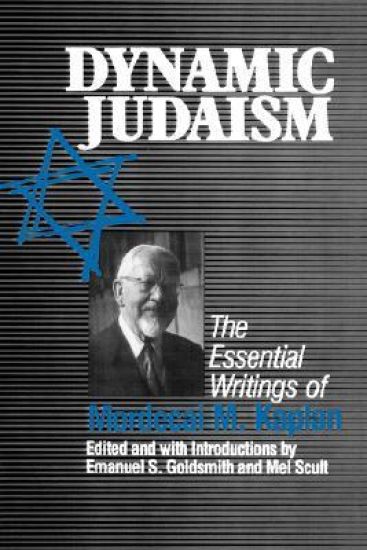
Available in a new digital edition with reflowable text suitable for e-readers Mordecai M. Kaplan was born in a small Lithuanian town on the outskirts of Vilna on a Friday evening in June of 1881. Kaplan was raised in a predominately Jewish atmosphere, which is shown by the fact that he knew his day of birth only by the Jewish calendar until he went to the New York Public Library as a young man to look up the corresponding date. His family was extremely traditional, and his father, Israel Kaplan, was a learned man.Kaplan's concept of Judaism as an evolving religious civilization was widely influential in 20th-century American Jewish life, and his founding of the Reconstructionist Rabbinical College created a new denomination. This book contains a biographical essay and excerpts from all of his major works.