

Kirjahaku
Etsi kirjoja tekijän nimen, kirjan nimen tai ISBN:n perusteella.
1000 tulosta hakusanalla Eric J Butler Jr

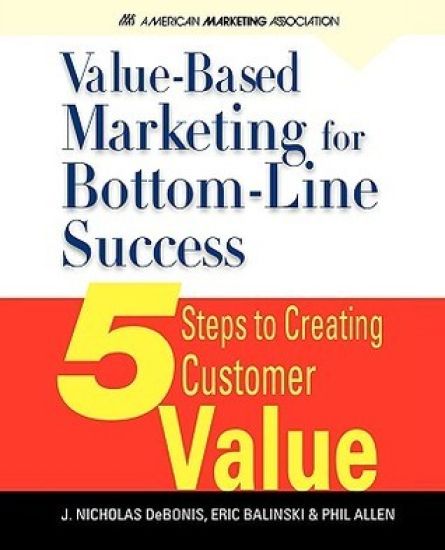
Value-Based Marketing for Bottom-Line Success
J Nicholas Debonis; Eric Balinski; Phil Allen
McGraw-Hill
2002
pokkari
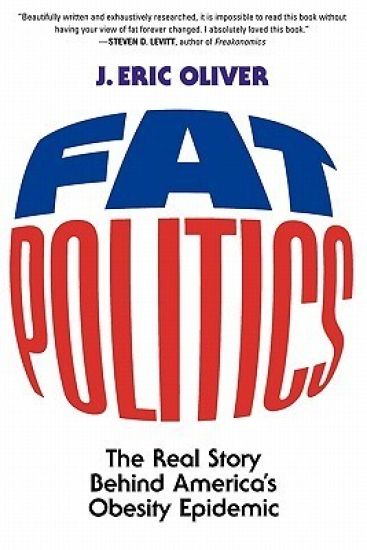
Over the past twenty years, obesity has risen in the United States to epidemic proportions. Today, over sixty percent of Americans are overweight, and over one in four is obese. This book examines the cultural contradictions that underlie this massive transformation. Oliver's highly readable yet carefully documented book addresses the meaning of obesity in American life. At one level, the book outlines very straightforward issues such as controversies over the sources of obesity, its economic and social consequences, and its prospects for resolution. At another level, the book examines fatism, the last bastion of acceptable discrimination in the United States, particularly as it applies to women. Finally, the book makes a deeper argument about how obesity reflects a serious contradiction in American life. At no other time in human history has food been so easily available and survival so physically un-taxing. But rather than giving us greater freedom, our affluence has disempowered us. Most Americans continue to gain weight and fight a losing struggle to reduce their body sizes, and increasingly, the overweight are derided for their moral failure. As more people become obese, this cultural paradox will grow. In the book's conclusion, Oliver outlines how the contradiction surrounding America's obesity epidemic may be resolved and where the battle lines in the coming fat wars are likely to be drawn.
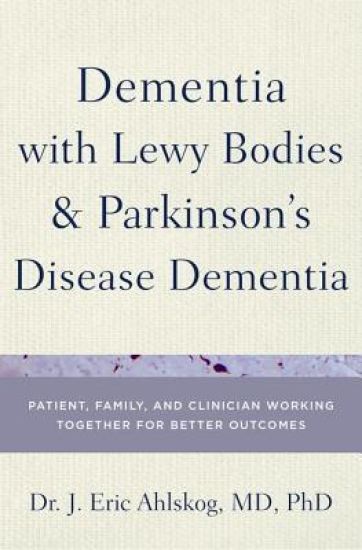
Dementia with Lewy Body and Parkinson's Disease Patients
J. Eric Ahlskog
Oxford University Press Inc
2013
sidottu
Dementia implies impaired thinking and memory. It develops in the majority of people with Parkinson's disease if they live long enough. A closely related condition is Dementia with Lewy Bodies, which is the second leading cause of dementia (behind Alzheimer' disease). These are all too common disorders, yet little is written for the lay public about such dementia. This book is designed to fill that void, and especially to provide guidelines for treatment. A cure does not yet exist, but optimal medical treatment can markedly improve quality of life, for both patients and family. Treating these conditions can become complicated, given the variety of available drugs, plus the unintended side effects of some medications. Busy clinicians are increasingly challenged by time constraints, which is another complicating factor. Hence, patients, family, caregivers need to be armed with facts, which will help their clinicians choose the best drugs and avoid those most likely to cause other problems. Drugs, doses, medications to avoid and why, are all discussed in detail. This book is designed to provide the patient-family team with the knowledge necessary to partner with their doctors to get the best medical treatment. Dr. Ahlskog is an expert in Parkinson's disease and Dementia with Lewy Bodies, thanks to his clinical and research work at Mayo Clinic. His previous general-audience title, "The Parkinson's Disease Treatment Book" has sold over 11,000 copies.
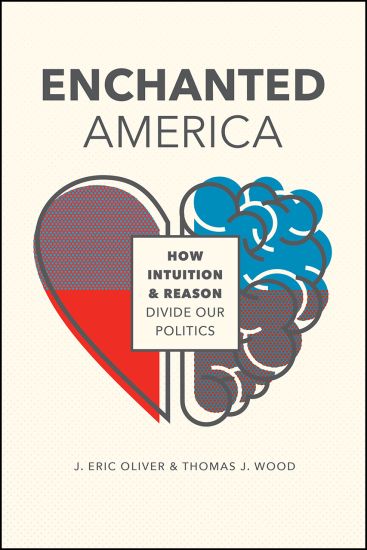
America is in civic chaos, its politics rife with conspiracy theories and false information. Nationalism and authoritarianism are on the rise, while scientists, universities, and news organizations are viewed with increasing mistrust. Its citizens reject scientific evidence on climate change and vaccinations while embracing myths of impending apocalypse. And then there is Donald Trump, a presidential candidate who won the support of millions of conservative Christians despite having no moral or political convictions. What is going on? The answer, according to J. Eric Oliver and Thomas J. Wood, can be found in the most important force shaping American politics today: human intuition. Much of what seems to be irrational in American politics arises from the growing divide in how its citizens make sense of the world. On one side are rationalists. They use science and reason to understand reality. On the other side are intuitionists. They rely on gut feelings and instincts as their guide to the world. Intuitionists believe in ghosts and End Times prophecies. They embrace conspiracy theories, disbelieve experts, and distrust the media. They are stridently nationalistic and deeply authoritarian in their outlook. And they are the most enthusiastic supporters of Donald Trump. The primary reason why Trump captured the presidency was that he spoke about politics in a way that resonated with how Intuitionists perceive the world. The Intuitionist divide has also become a threat to the American way of life. A generation ago, intuitionists were dispersed across the political spectrum, when most Americans believed in both God and science. Today, intuitionism is ideologically tilted toward the political right. Modern conservatism has become an Intuitionist movement, defined by conspiracy theories, strident nationalism, and hostility to basic civic norms. Enchanted America is a clarion call to rationalists of all political persuasions to reach beyond the minority and speak to intuitionists in a way they understand. The values and principles that define American democracy are at stake.

America is in civic chaos, its politics rife with conspiracy theories and false information. Nationalism and authoritarianism are on the rise, while scientists, universities, and news organizations are viewed with increasing mistrust. Its citizens reject scientific evidence on climate change and vaccinations while embracing myths of impending apocalypse. And then there is Donald Trump, a presidential candidate who won the support of millions of conservative Christians despite having no moral or political convictions. What is going on? The answer, according to J. Eric Oliver and Thomas J. Wood, can be found in the most important force shaping American politics today: human intuition. Much of what seems to be irrational in American politics arises from the growing divide in how its citizens make sense of the world. On one side are rationalists. They use science and reason to understand reality. On the other side are intuitionists. They rely on gut feelings and instincts as their guide to the world. Intuitionists believe in ghosts and End Times prophecies. They embrace conspiracy theories, disbelieve experts, and distrust the media. They are stridently nationalistic and deeply authoritarian in their outlook. And they are the most enthusiastic supporters of Donald Trump. The primary reason why Trump captured the presidency was that he spoke about politics in a way that resonated with how Intuitionists perceive the world. The Intuitionist divide has also become a threat to the American way of life. A generation ago, intuitionists were dispersed across the political spectrum, when most Americans believed in both God and science. Today, intuitionism is ideologically tilted toward the political right. Modern conservatism has become an Intuitionist movement, defined by conspiracy theories, strident nationalism, and hostility to basic civic norms. Enchanted America is a clarion call to rationalists of all political persuasions to reach beyond the minority and speak to intuitionists in a way they understand. The values and principles that define American democracy are at stake.

The United States is rapidly changing from a country monochromatically divided between black and white into a multiethnic society. "The Paradoxes of Integration" helps us to understand America's racial future by revealing the complex relationships among integration, racial attitudes, and neighborhood life. J. Eric Oliver demonstrates that the effects of integration differ tremendously depending on which geographical level one is examining. Living among people of other races in a larger metropolitan area corresponds with greater racial intolerance, particularly for America's white majority. But when whites, blacks, Latinos, and Asian Americans actually live in integrated neighborhoods, they feel less racial resentment. Paradoxically, this racial tolerance is usually also accompanied by feeling less connected to their community; it is no longer 'theirs'. Basing its findings on our most advanced means of gauging the impact of social environments on racial attitudes, "The Paradoxes of Integration" sensitively explores the benefits and at times, heavily borne costs, of integration.

The United States is rapidly changing from a country monochromatically divided between black and white into a multiethnic society. "The Paradoxes of Integration" helps us to understand America's racial future by revealing the complex relationships among integration, racial attitudes, and neighborhood life. J. Eric Oliver demonstrates that the effects of integration differ tremendously depending on which geographical level one is examining. Living among people of other races in a larger metropolitan area corresponds with greater racial intolerance, particularly for America's white majority. But when whites, blacks, Latinos, and Asian Americans actually live in integrated neighborhoods, they feel less racial resentment. Paradoxically, this racial tolerance is usually also accompanied by feeling less connected to their community; it is no longer 'theirs'. Basing its findings on our most advanced means of gauging the impact of social environments on racial attitudes, "The Paradoxes of Integration" sensitively explores the benefits and at times, heavily borne costs, of integration.
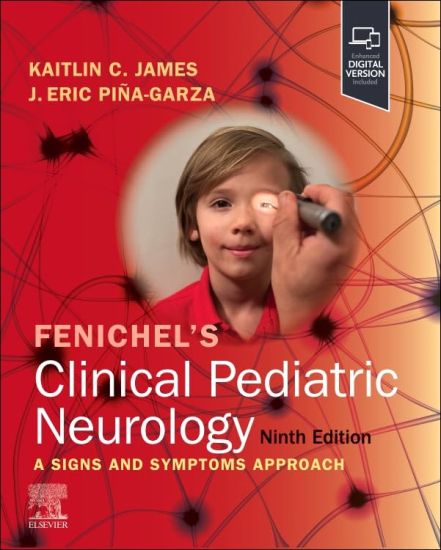
Fenichel's Clinical Pediatric Neurology
J. Eric Piña-Garza; Kaitlin C. James
Elsevier - Health Sciences Division
2024
nidottu
**Selected for 2025 Doody’s Core Titles® in Pediatrics** Using a practical, easy-to-reference signs and symptoms approach, Fenichel's Clinical Pediatric Neurology, 9th Edition, provides a solid foundation in the diagnosis and management of primary neurologic disorders of childhood while bringing you fully up to date with developments in the field. It offers step-by-step, authoritative guidance that considers each presenting symptom in terms of differential diagnosis and treatment, reflecting real-life patient evaluation and management. Perfect for board exam preparation, office use, or residency reference, this well-organized, revised edition is an ideal introduction to this complex and fast-changing field. Defines age at onset, course of illness, clinical features, and treatment options for each neurological disease, all logically organized by neurological signs and symptoms in a highly templated format Brings you up to date with every aspect of the field, with integrated content on new medications, new topics such as neurological complications of COVID in children, and a new chapter on behavioral neurology Includes comprehensive coverage of genetics in relation to epilepsy, autism, and many neurometabolic disorders, with up-to-date coverage of genetic testing, diagnosis, and pharmacogenomics Features weighted differential diagnosis tables and treatment algorithms that help you quickly identify the more common and most treatable neurological disorders, as well as evaluate and manage the most difficult neurodegenerative disorders, including those caused by inborn errors of metabolism Provides helpful boxes that synthesize symptoms and foundational points, an increased number of imaging examples throughout, and more than 300 illustrations, tables, and charts that support and clarify the text Shares the knowledge and experience of clinical neurologist and epileptologist, Dr. Kaitlin C. James, and Dr. J. Eric Piña-Garza, a longtime associate and protégé of Dr. Gerald Fenichel An eBook version is included with purchase. The eBook allows you to access all of the text, figures, and references, with the ability to search, customize your content, make notes and highlights, and have content read aloud. Additional digital ancillary content may publish up to 6 weeks following the publication date

Recent research has documented that in K–12 programs over the past decade, instruction in math computation has been de-emphasized. Calculations in Chemistry addresses these gaps in student background, applying the findings of recent scientific research on cognition, fluency in applied mathematics, and reading comprehension, to prepare students for the rigor and pace of general chemistry.

Design for Electrical and Computer Engineers
J. Eric Salt; Robert Rothery
John Wiley Sons Inc
2001
nidottu
Addresses the important issues of documentation and testing. * A chapter on project management provides practical suggestions for organizing design teams, scheduling tasks, monitoring progress, and reporting status of design projects. * Explains both creative and linear thinking and relates the types of thinking to the productivity of the design engineers and novelty of the end design.

Suburbanization is often blamed for a loss of civic engagement in contemporary America. How justified is this claim? Just what is a suburb? How do social environments shape civic life? Looking beyond popular stereotypes, Democracy in Suburbia answers these questions by examining how suburbs influence citizen participation in community and public affairs. Eric Oliver offers a rich, engaging account of what suburbia means for American democracy and, in doing so, speaks to the heart of widespread debate on the health of our civil society. Applying an innovative, unusually rigorous mode of statistical analysis to a wealth of unique survey and census data, Oliver argues that suburbs, by institutionalizing class and racial differences with municipal boundaries, transform social conflicts between citizens into ones between political institutions. In reducing the incentives for individual political participation, suburbanization has negated the benefits of "small town" government and deprived metropolitan areas of valuable civic capacity. This ultimately increases prospects of serious social conflict. Oliver concludes that we must reconfigure suburban governments to allow seemingly intractable issues of common metropolitan concern to surface in local politics rather than be ignored as cross-jurisdictional. And he believes this is possible without sacrifice of local government's advantages. Scholars and students of political science, sociology, and urban affairs will prize this book for its striking findings, its revealing scrutiny of the commonplace, and its insights into how the pursuit of the American dream may be imperiling American democracy.

Local Elections and the Politics of Small-Scale Democracy
J. Eric Oliver; Shang E. Ha; Zachary Callen
Princeton University Press
2012
pokkari
Local government is the hidden leviathan of American politics: it accounts for nearly a tenth of gross domestic product, it collects nearly as much in taxes as the federal government, and its decisions have an enormous impact on Americans' daily lives. Yet political scientists have few explanations for how people vote in local elections, particularly in the smaller cities, towns, and suburbs where most Americans live. Drawing on a wide variety of data sources and case studies, this book offers the first comprehensive analysis of electoral politics in America's municipalities. Arguing that current explanations of voting behavior are ill suited for most local contests, Eric Oliver puts forward a new theory that highlights the crucial differences between local, state, and national democracies. Being small in size, limited in power, and largely unbiased in distributing their resources, local governments are "managerial democracies" with a distinct style of electoral politics. Instead of hinging on the partisanship, ideology, and group appeals that define national and state elections, local elections are based on the custodial performance of civic-oriented leaders and on their personal connections to voters with similarly deep community ties. Explaining not only the dynamics of local elections, Oliver's findings also upend many long-held assumptions about community power and local governance, including the importance of voter turnout and the possibilities for grassroots political change.

Forty Thousand Years of Separation: A Novel of Possibilities
J. Eric Shulenberger Phd
Shulenberger Press
2016
nidottu
Just when did Homo sapiens finally attain its modern mental capabilities? Evidence about mental capacity is rare - scratched prey-bones and simple tools can set only a very low "lower bound". Only the most durable materials have survived, and they tell us nothing about what the makers thought or discussed, or how well they did so. "Separation" speculates on the nature of creativity in early Homo sapiens society and how it might have been used and fostered. In the tale, Mother Nature 40,000 years ago brought together a collection of events in the affairs of a human tribe, each event improbable but certainly possible. The outcome was a multi-generational chain of spectacularly-gifted women who were cave artists and a great deal more, led by Artist Veejr and her mother Chys. Gerard, a modern boy living in the same region, discovers Veejr's main art-cave. In it, he finds a boggling display of her decades of development as a self-taught artist. The collection culminates in a magnificent painting -clearly a self-portrait- set among hundreds of depictions not of mere animals or items, but of people and autobiographical events from Chys' and Veejr's lives. Gerard becomes an archaeologist, forever lured onwards by the evidence he is uncovering about specific, talented, identifiable individuals - nameable, knowable people from so long ago. Across the separation emerges a surprisingly clear and detailed story of the relationship between Chys, Veejr, their descendants, art, and various forms of Tribal knowledge. That story is told by a remarkable and ever-growing suite of findings of materials and of evidence of individuals' thought processes. Ultimately, the Artist, via her descendants, can be traced forward into the present. Surely there is a reasonable probability that somewhere there may exist just such a record as is imagined here. It may someday be discovered: why not? Nothing in the story is impossible.

Cultural Cycles: Examining the History of the United States - Why It Repeats Itself, and the Next Looming Reset
J. Eric Wilson
Georgetown Grassroots Publications
2017
nidottu
Time may be linear, but history is circular. We see patterns throughout history-periods of prosperity and growth followed inevitably by disastrous upheaval that changes everything. Through an intriguing mixture of historical acumen and big-data analytics, these events can be studied and predicted. In Cultural Cycles, business forecaster J. Eric Wilson applies his knowledge of predictive analytics to the history of human cultures, to help illuminate the past, explain the present, and provide a bold picture of tomorrow. Wilson demonstrates a predictable cycle of historic extremes from periods of abundance and growth to cultural crises, or "resets," marked by disastrous social and political upheaval. At its worst, a reset can destroy a culture-and any nations strong enough to survive such events are forever changed. Closely examining the historical cycles of the United States from the seventeenth century to the present, Wilson argues that the nation is poised for its next cataclysmic reset. The nation's future lies in the balance-and Wilson's recommendations can help us prepare. A fascinating, easily understood exploration of history and analytics, Cultural Cycles uses practical reasoning and intuitive insight to reveal what many sense-the next great turn of the wheel of history.
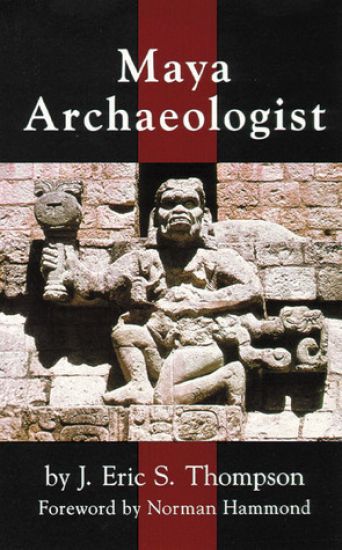
Maya Archaeologist is an autobiographical account of explorations in Mayan ruins by J. Eric Thompson, one of the world's foremost authorities on the Maya Indians of Mexico and Central America. Based on his expeditions from 1926 to 1936 - when conditions in the Maya area were very close to those in the years of the Conquest - this book is an intensely personal account of the investigation of the ""stone cities,"" such as Uxmal, Chichén Itzá, Copán, Tikal, and Quirigua, as well as lively portraits of the archaeologists who probed this civilization - Morley, Gann, Ruppert, Vaillant, Roys, and many others.
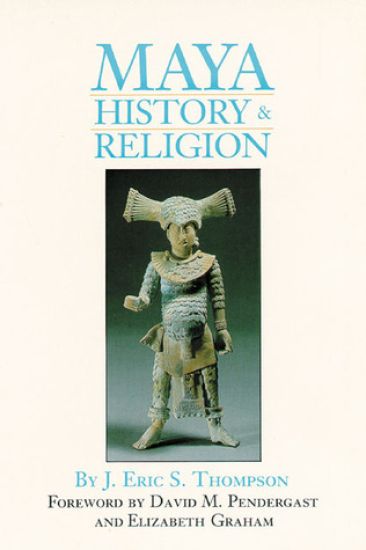
Believing that Maya studies today are ""suffering from imbalance,"" J. Eric S. Thompson here approaches Maya history and religion from the standpoint of ethno-history. Present-day archaeologists often tend to restrict their curiosity to their excavations and social anthropologists to observe the modern Maya as members of a somewhat primitive society in an era of change. In this volume, a distinguished Maya scholar seeks to correlate data from colonial writings and observations of the modern Indian with archaeological information in order to extend and clarify the panorama of Maya culture.The shock of the Spanish Conquest was devastating to the Maya. Not only were they placed under the domination of a people uninterested in their ancient ways, but their religion was proscribed, they were removed from their familiar settlements into new areas, and new diseases were introduced which ravaged their civilization. In spite of these ordeals, the Maya have clung closely to the old ways, and Maya culture is still very much alive, though slowly giving way before modern technology and influences.Topics discussed include Putun Maya expansion in Yucatan and the Pasión drainage, the depopulation of the Maya Central area at the time of the Conquest on account of newly introduced diseases, the location of the controversial eastern boundary of the Maya area, trade relations between the highlands and the lowlands, the use of hallucinatory drugs and tobacco, lowlands Maya religion, and the creation myths of the Maya in relation to those of other Middle American cultures.Mr. Thompson's approach to Maya life will prove thought-provoking to archaeologists, ethnologists, historians, and all others interested in the ancient Maya civilization.
When Nancy was in her late twenties, she began having blinding headaches, tunnel vision, and dizziness, which led to the discovery of an abnormality on her brain stem. Complications during surgery caused serious brain damage, resulting in partial paralysis of the left side of her body and memory and cognitive problems. Although she was constantly evaluated by her doctors, Nancy's own questions and her distress got little attention in the hospital. Later, despite excellent job performance post-injury, her physical impairments were regarded as an embarrassment to the "perfect" and "beautiful" corporate image of her employer. Many conversations about brain injury are deficit-focused: those with disabilities are typically spoken about by others, as being a problem about which something must be done. In Living with Brain Injury, J. Eric Stewart takes a new approach, offering narratives which highlight those with brain injury as agents of recovery and change in their own lives. Stewart draws on in-depth interviews with ten women with acquired brain injuries to offer an evocative, multi-voiced account of the women's strategies for resisting marginalization and of their process of making sense of new relationships to self, to family and friends, to work, and to community. Bridging psychology, disability studies, and medical sociology, Living with Brain Injury showcases how—and on what terms—the women come to re-author identity, community, and meaning post-injury.
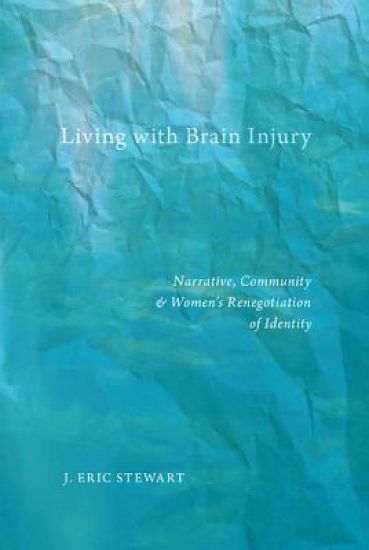
When Nancy was in her late twenties, she began having blinding headaches, tunnel vision, and dizziness, which led to the discovery of an abnormality on her brain stem. Complications during surgery caused serious brain damage, resulting in partial paralysis of the left side of her body and memory and cognitive problems. Although she was constantly evaluated by her doctors, Nancy's own questions and her distress got little attention in the hospital. Later, despite excellent job performance post-injury, her physical impairments were regarded as an embarrassment to the "perfect" and "beautiful" corporate image of her employer. Many conversations about brain injury are deficit-focused: those with disabilities are typically spoken about by others, as being a problem about which something must be done. In Living with Brain Injury, J. Eric Stewart takes a new approach, offering narratives which highlight those with brain injury as agents of recovery and change in their own lives. Stewart draws on in-depth interviews with ten women with acquired brain injuries to offer an evocative, multi-voiced account of the women's strategies for resisting marginalization and of their process of making sense of new relationships to self, to family and friends, to work, and to community. Bridging psychology, disability studies, and medical sociology, Living with Brain Injury showcases how—and on what terms—the women come to re-author identity, community, and meaning post-injury.