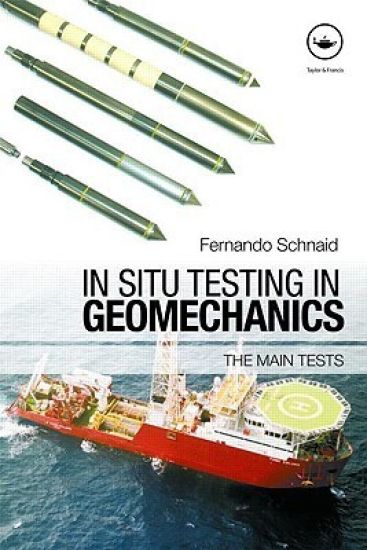
Demanding a thorough knowledge of material behaviour and numerical modelling, site characterisation and in situ test interpretation are no longer just basic empirical recommendations.Giving a critical appraisal of the understanding and assessment of the stress-strain-time and strength characteristics of geomaterials, this book explores new interpretation methods for measuring properties of a variety of soil formations.Emphasis is given to the five most commonly encountered in situ test techniques: standard penetration tests cone penetration tests vane test pressuremeter tests dilatometer testsIdeal for practising engineers in the fields of geomechanics and environmental engineering, this book solves numerous common problems in site characterisation. It is also a valuable companion for students coming to the end of their engineering courses and looking to work in this sector.
Twentieth Century Guerrilla Movements in Latin America: A Primary Source History collects political writings on human rights, social injustice, class struggle, anti-imperialism, national liberation, and many other topics penned by urban and rural guerrilla movements.In the second half of the twentieth century, Latin America experienced a mass wave of armed revolutionary movements determined to overthrow oppressive regimes and eliminate economic exploitation and social injustices. After years of civil resistance, and having exhausted all peaceful avenues, thousands of working-class people, peasants, professions, intellectuals, clergymen, students, and teachers formed dozens of guerrilla movements. Fernando Herrera Calderón presents important political writings, some translated into English here for the first time, that serve to counteract the government propaganda that often overshadowed the intellectual side of revolutionary endeavors. These texts come from Latin American countries such as Argentina, Bolivia, Colombia, Mexico, Nicaragua, and many more.The book will be indispensable to anyone teaching or studying revolutions in modern Latin American history.
Twentieth Century Guerrilla Movements in Latin America: A Primary Source History collects political writings on human rights, social injustice, class struggle, anti-imperialism, national liberation, and many other topics penned by urban and rural guerrilla movements.In the second half of the twentieth century, Latin America experienced a mass wave of armed revolutionary movements determined to overthrow oppressive regimes and eliminate economic exploitation and social injustices. After years of civil resistance, and having exhausted all peaceful avenues, thousands of working-class people, peasants, professions, intellectuals, clergymen, students, and teachers formed dozens of guerrilla movements. Fernando Herrera Calderón presents important political writings, some translated into English here for the first time, that serve to counteract the government propaganda that often overshadowed the intellectual side of revolutionary endeavors. These texts come from Latin American countries such as Argentina, Bolivia, Colombia, Mexico, Nicaragua, and many more.The book will be indispensable to anyone teaching or studying revolutions in modern Latin American history.
A practical tool for propagation channel modeling with MATLAB® simulations. Many books on wireless propagation channel provide a highly theoretical coverage, which for some interested readers, may be difficult to follow. This book takes a very practical approach by introducing the theory in each chapter first, and then carrying out simulations showing how exactly put the theory into practice. The resulting plots are analyzed and commented for clarity, and conclusions are drawn and explained from the obtained results. Key features include: A unique approach to propagation channel modeling with accompanying MATLAB® simulations to demonstrate the theory in practiceContains step by step commentary and analysis of the obtained simulation results in order to provide a comprehensive and structured learning toolCovers a wide range of topics including shadowing effects, coverage and interference, Multipath Narrowband channel, Multipath Wideband channel, propagation in micro and pico-cells, the land mobile satellite (LMS) channel, the directional Multipath channel and MIMO and propagation effects in fixed radio links (terrestrial and satellite)The book comes with an accompanying website that contains the MATLAB® simulations and allows readers to try them out themselvesWell suited for lab-use, as reference and as a self-learning tool both for advanced students and professionals Modeling the Wireless Propagation Channel: A simulation approach with MATLAB® will be best suited for postgraduate (Masters and PhD) students and practicing engineers in telecommunications and electrical engineering fields, who are seeking to familiarise themselves with the topic without too many formulas. The book will also be of interest to network engineers, system engineers and researchers
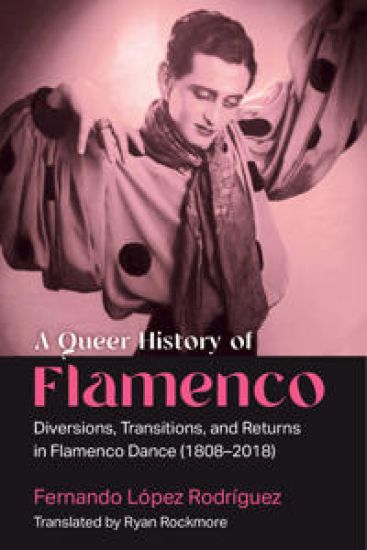
A Queer History of Flamenco offers a groundbreaking exploration of flamenco through the lenses of queer theory and cultural studies. Previous histories have provided a largely distorted image about why, where, and how people have done flamenco—as well as who has performed flamenco. Yet feminists, transvestites, butches, femmes, the Spanish Roma, disabled people, guiris, and “incomprehensible” artists have been determined to do things differently without giving up their flamenco status. In this skillful translation of his book Historia queer del flamenco, Fernando López Rodríguez draws on diverse archival materials as well as his own lived experience and artistic practice, unearthing queer flamenco histories, voices, and perspectives that were previously unknown, avoided, or purposely hidden. Tracing flamenco’s development from its birth up to the contemporary era, the book places flamenco within significant historical periods such as the Spanish Civil War, Franco’s dictatorship, the transition to democracy, and the economic crisis of 2008, up to contemporary performances of the late 2010s. In taking a queer approach to History, the author abandons antiquated debates about purities and impurities; anecdotes about the lives of artists that are completely detached from their processes of creation; and myths about geniuses who seem to make art alone and completely detached from their collaborators and the historical, social, economic and artistic moment in which they lived. A Queer History of Flamenco is not only about the present and the queerness of people living, performing, or creating in it, but also about flamenco’s past in which so many queer artists and practices and their lives have remained unearthed and unaddressed.
A Queer History of Flamenco offers a groundbreaking exploration of flamenco through the lenses of queer theory and cultural studies. Previous histories have provided a largely distorted image about why, where, and how people have done flamenco—as well as who has performed flamenco. Yet feminists, transvestites, butches, femmes, the Spanish Roma, disabled people, guiris, and “incomprehensible” artists have been determined to do things differently without giving up their flamenco status. In this skillful translation of his book Historia queer del flamenco, Fernando López Rodríguez draws on diverse archival materials as well as his own lived experience and artistic practice, unearthing queer flamenco histories, voices, and perspectives that were previously unknown, avoided, or purposely hidden. Tracing flamenco’s development from its birth up to the contemporary era, the book places flamenco within significant historical periods such as the Spanish Civil War, Franco’s dictatorship, the transition to democracy, and the economic crisis of 2008, up to contemporary performances of the late 2010s. In taking a queer approach to History, the author abandons antiquated debates about purities and impurities; anecdotes about the lives of artists that are completely detached from their processes of creation; and myths about geniuses who seem to make art alone and completely detached from their collaborators and the historical, social, economic and artistic moment in which they lived. A Queer History of Flamenco is not only about the present and the queerness of people living, performing, or creating in it, but also about flamenco’s past in which so many queer artists and practices and their lives have remained unearthed and unaddressed.
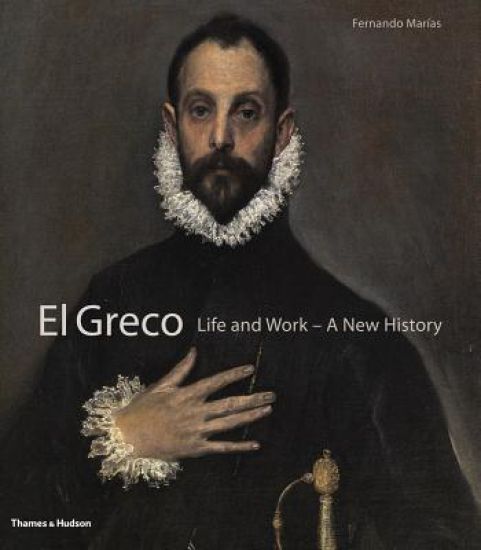
Domenikos Theotokopoulos, known to us as El Greco, was one of the seminal figures of the Spanish Golden Age. This magnificent volume, published to mark the four hundredth anniversary of the artist’s death, features superb new photographs of recently cleaned and restored paintings, revealing hitherto unknown facets of his art. Born in Crete in 1541 under Venetian rule, raised in the iconographic traditions of Byzantine art, and acquainted with both Greek Orthodox and Roman Catholic practice, El Greco journeyed to Venice and Rome in the late Renaissance, before finding patronage in Spain at the court of Philip II. He was a painter not only of religious subjects but also of idiosyncratic portraits executed in his own uniquely dramatic and expressionistic style. He spent approximately half his life in Toledo, a city with which his name has become indelibly linked, although he was never fully accepted and was known there as a disputatious outsider. All this and more is detailed in this thorough, richly illustrated book, in which the artist’s works are reproduced following their recent major cleanings and restorations, which have revealed hitherto unknown facets of his art.
At the end of World War II, several Latin American countries seemed to be ready for industrialization and self-sustaining economic growth. Instead, they found that they had exchanged old forms of political and economic dependence for a new kind of dependency on the international capitalism of multinational corporations. In the much-acclaimed original Spanish edition ("Dependencia y Desarrollo en America Latina") and now in the expanded and revised English version, Cardoso and Faletto offer a sophisticated analysis of the economic development of Latin America. The economic dependency of Latin America stems not merely from the domination of the world market over internal national and 'enclave' economies, but also from the much more complex interact ion of economic drives, political structures, social movements, and historically conditioned alliances. While heeding the unique histories of individual nations, the authors discern four general stages in Latin America's economic development: the early outward expansion of newly independent nations, the political emergence of the middle sector, the formation of internal markets in response to population growth, and the new dependence on international markets. In a postscript for this edition, Cardoso and Faletto examine the political, social and economic changes of the past ten years in light of their original hypotheses.
The Celestina is considered by scholars to be the first European novel. Written in fifteenth-century Spain, this masterpiece is remarkable for its originality, depth, handling of dialogue, and drawing of character. The novel's focus is the character of Celestina, who dominates the scene. An old bawd brimming with salty wisdom derived from a vigorous and sinful life, she is one of the great creations in all of literature and holds a secure place beside her two compatriots, Don Quixote and Sancho Panza. This Spanish classic, a forebear of Cervantes, was originally published anonymously in 1499; later editions bear the name of Fernando de Rojas as author.
Scientists around the world rise up for climate and ecological justice In April 2022, hundreds of scientists rose in civil disobedience, breaking the law in more than twenty-eight countries. Risking arrest, they glued their hands to roads, blocked government and corporate buildings, and chained themselves to the White House fence. In Science in Resistance, Fernando Racimo provides a first-person account of the Scientist Rebellion, a growing international movement of researchers stepping beyond conventional roles to alert the public about the need for action in the climate emergency. Combining personal stories, interviews with frontline activists, and insights from research on direct action and academia, he explores the challenges scientists face when taking a stand for climate and social justice. Reflecting on his role as a scientist-activist, Racimo describes how he came to be involved in the movement. He also explores the many ways in which academic institutions today are complicit in climate breakdown—whether by accepting funding from and collaborating with the very industries driving it, or by discouraging scientists from speaking up. Drawing on lessons from political science, psychology, ecology, sociology, and the history of science, he explains how academia can be transformed to become an actor for good in the emergency.
Scientists around the world rise up for climate and ecological justice In April 2022, hundreds of scientists rose in civil disobedience, breaking the law in more than twenty-eight countries. Risking arrest, they glued their hands to roads, blocked government and corporate buildings, and chained themselves to the White House fence. In Science in Resistance, Fernando Racimo provides a first-person account of the Scientist Rebellion, a growing international movement of researchers stepping beyond conventional roles to alert the public about the need for action in the climate emergency. Combining personal stories, interviews with frontline activists, and insights from research on direct action and academia, he explores the challenges scientists face when taking a stand for climate and social justice. Reflecting on his role as a scientist-activist, Racimo describes how he came to be involved in the movement. He also explores the many ways in which academic institutions today are complicit in climate breakdown—whether by accepting funding from and collaborating with the very industries driving it, or by discouraging scientists from speaking up. Drawing on lessons from political science, psychology, ecology, sociology, and the history of science, he explains how academia can be transformed to become an actor for good in the emergency.
In a world that expects cities to fuel economic growth and attract millions of people every year, there's something unnerving about the phrase "shrinking cities." But thousands of cities are getting smaller, leaving vacant homes, abandoned factories, and oversized infrastructure. Shrinking cities pose a new problem for urban planners: how to manage the transition to fewer residents with a tool kit designed for expansion. Urbanist Fernando Ortiz-Moya argues that instead of chasing regrowth, cities can embrace their smaller size and build on their unique character and history to enhance life for those who remain. We're Still Here contrasts official responses to shrinkage with spontaneous bottom-up actions led by traditionally marginalized residents in the cities of Pittsburgh, Manchester, and Kitakyushu. These stories show how decline becomes a springboard for social and physical (re)construction and justice-driven urbanism—revealing both the limits of pro-growth planning and the seeds of a new approach that he calls "(Re)City-Making." Far from a cautionary tale, this book makes a convincing case for the shrinking city as a laboratory for innovative, people-centered urban policy and collective empowerment.
In a world that expects cities to fuel economic growth and attract millions of people every year, there's something unnerving about the phrase "shrinking cities." But thousands of cities are getting smaller, leaving vacant homes, abandoned factories, and oversized infrastructure. Shrinking cities pose a new problem for urban planners: how to manage the transition to fewer residents with a tool kit designed for expansion. Urbanist Fernando Ortiz-Moya argues that instead of chasing regrowth, cities can embrace their smaller size and build on their unique character and history to enhance life for those who remain. We're Still Here contrasts official responses to shrinkage with spontaneous bottom-up actions led by traditionally marginalized residents in the cities of Pittsburgh, Manchester, and Kitakyushu. These stories show how decline becomes a springboard for social and physical (re)construction and justice-driven urbanism—revealing both the limits of pro-growth planning and the seeds of a new approach that he calls "(Re)City-Making." Far from a cautionary tale, this book makes a convincing case for the shrinking city as a laboratory for innovative, people-centered urban policy and collective empowerment.
Business schools have come under fire in recent years with criticisms centring on their academic rigour and the relevance of business education to the 'real' world of management. Alongside this ongoing debate, increasing international competition and media rankings have led to a fierce struggle between business schools for positioning and differentiation. These are among the challenges that are faced by the Dean of the modern-day business school. In this book, Fernando Fragueiro and Howard Thomas show how Deans of business schools can meet such challenges in terms of strategic direction setting and the execution of their leadership role. Drawing on their invaluable experience as Deans of highly successful business schools, they present a series of case studies to show how leaders of five leading business schools (IMD, LBS, INSEAD, IAE and Warwick) have built effective strategies in the context of internal and external political pressures.
There is now a large body of theory concerning algebraic varieties over finite fields, and many conjectures exist in this area that are of great interest to researchers in number theory and algebraic geometry. This book is concerned with the arithmetic of diagonal hypersurfaces over finite fields, with special focus on the Tate conjecture and the Lichtenbaum–Milne formula for the central value of the L-function. It combines theoretical and numerical work, and includes tables of Picard numbers. Although this book is aimed at experts, the authors have included some background material to help non-specialists gain access to the results.
This textbook offers a systematic, self-contained account of the main contributions of modern game theory and its applications to economics. Starting with a detailed description of how to model strategic situations, the discussion proceeds by studying basic solution concepts, their main refinements, games played under incomplete information, and repeated games. For each of these theoretical developments, there is a companion set of applications that cover the most representative instances of game-theoretic analysis in economics, e.g. oligopolistic competition, public goods, coordination failures, bargaining, insurance markets, implementation theory, signaling and auctions. The theory and applications covered in the first part of the book fall under the so-called 'classical' approach to game theory, which is founded on the paradigm of players' unlimited rationality. The second part shifts towards topics that no longer abide by that paradigm. This leads to the study of topics such as the interplay between evolution and rationality.
This textbook offers a systematic, self-contained account of the main contributions of modern game theory and its applications to economics. Starting with a detailed description of how to model strategic situations, the discussion proceeds by studying basic solution concepts, their main refinements, games played under incomplete information, and repeated games. For each of these theoretical developments, there is a companion set of applications that cover the most representative instances of game-theoretic analysis in economics, e.g. oligopolistic competition, public goods, coordination failures, bargaining, insurance markets, implementation theory, signaling and auctions. The theory and applications covered in the first part of the book fall under the so-called 'classical' approach to game theory, which is founded on the paradigm of players' unlimited rationality. The second part shifts towards topics that no longer abide by that paradigm. This leads to the study of topics such as the interplay between evolution and rationality.
This 2007 book provides a systematic and self-contained account of the fast-developing theory of complex social networks. Social networks are central to the understanding of most socio-economic phenomena in the modern world. The classical approach to studying them relies on a methodology that abstracts from their size and complexity. In contrast, the approach taken in this book keeps complexity at the core, whilst integrating it with the incentive considerations that are preeminent in traditional economic analysis. The treatment starts with a detailed discussion of the basic models that act as 'benchmarks' for the complex-network literature: random networks, small worlds, and scale-free networks, before studying three different forces that underlie almost all network phenomena in social contexts: diffusion, search, and play. Finally, these forces are combined into a unified framework that is brought to bear on the issue of network formation and the coevolution of agents' behaviour and their pattern of interaction.
The theory of relativity describes the laws of physics in a given space-time. However, a physical theory must provide observational predictions expressed in terms of measurements, which are the outcome of practical experiments and observations. Ideal for readers with a mathematical background and a basic knowledge of relativity, this book will help readers understand the physics behind the mathematical formalism of the theory of relativity. It explores the informative power of the theory of relativity, and highlights its uses in space physics, astrophysics and cosmology. Readers are given the tools to pick out from the mathematical formalism those quantities that have physical meaning and which can therefore be the result of a measurement. The book considers the complications that arise through the interpretation of a measurement, which is dependent on the observer who performs it. Specific examples of this are given to highlight the awkwardness of the problem.