Kirjojen hintavertailu. Mukana 12 374 238 kirjaa ja 12 kauppaa.

Kirjahaku

Etsi kirjoja tekijän nimen, kirjan nimen tai ISBN:n perusteella.

1000 tulosta hakusanalla Frank Merlo

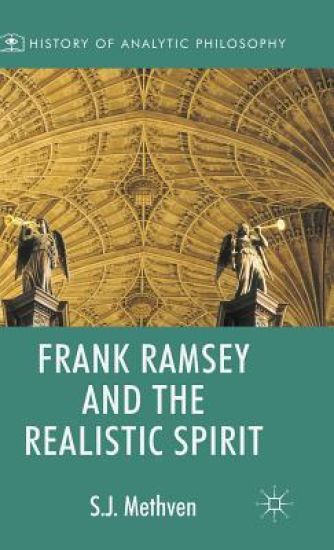
Frank Ramsey and the Realistic Spirit

Frank Ramsey and the Realistic Spirit

Steven Methven

Palgrave Macmillan
2015
sidottu
This book attempts to explicate and expand upon Frank Ramsey's notion of the realistic spirit. In so doing, it provides a systematic reading of his work, and demonstrates the extent of Ramsey's genius as evinced by both his responses to the Tractatus Logico-Philosophicus, and the impact he had on Wittgenstein's later philosophical insights.
Frank H. Knight

Frank H. Knight

David Cowan

Palgrave Macmillan
2016
sidottu
This book argues for the reconsideration of Frank Knight and the Chicago School of Economic thought in a post-Financial Crisis world. The author posits that the discussion of the founder of "Knightian Uncertainty" can reveal new insights into what the economy can do for society, as his prophetic insights can offer a view into the soul of the modern economy. The book first considers Frank Knight's early history and the unfolding of his economic philosophy before going on to evaluate his enduring legacy. All those interested in the influence of political and religious philosophy on economics will be delighted to discover the lasting impact of this great economic thinker.
Frank Zappa and the And
This collection of essays, documented by an international and interdisciplinary array of scholars, represents the first academically focused volume exploring the creative idiolect of Frank Zappa. Several of the authors are known for contributing significantly to areas such as popular music, cultural, and translation studies, with expertise and interests ranging from musicology to poetics. The publication presents the reader with an understanding of the ontological depth of Zappa's legacy by relating the artist and his texts to a range of cultural, social, technological and musicological factors, as encapsulated in the book's title - Frank Zappa and the And. Zappa's interface with religion, horror, death, movies, modernism, satire, freaks, technology, resistance, censorship and the avant-garde are brought together analytically for the first time, and approached non chronologically, something that strongly complies with the non linear perspective of time Zappa highlights in both his autobiography and recordings. The book employs a variety of analytical approaches, ranging from literary and performance theory, 'horrality' and musicology, to post modern and textually determined readings, and serves as a unique and invaluable guide to Zappa's legacy and creative force.
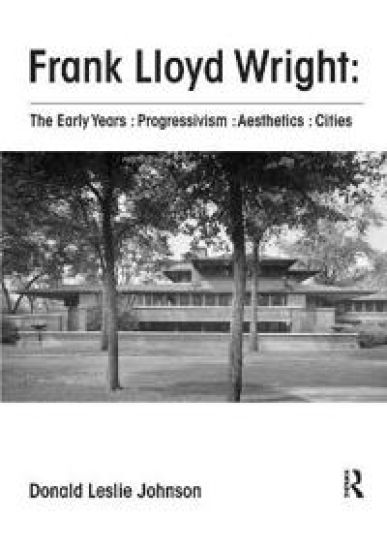
Frank Lloyd Wright : The Early Years : Progressivism : Aesthetics : Cities
Frank Lloyd Wright : The Early Years : Progressivism : Aesthetics : Cities examines Wright's belief that all aspects of human life must embrace and celebrate an aesthetic experience that would thereby lead to necessary social reforms. Inherent in the theory was a belief that reform of nineteenth-century gluttony should include a contemporary interpretation of its material presence, its bulk and space, its architectural landscape. This book analyzes Wright's innovative, profound theory of architecture that drew upon geometry and notions of pure design and the indigenous as put into practice. It outlines the design methodology that he applied to domestic and non-domestic buildings and presents reasons for the recognition of two Wright Styles and a Wright School. The book also studies how his design method was applied to city planning and implications of historical and theoretical contexts of the period that surely influenced all of Wright's community and city planning.
Frank Lloyd Wright’s Fallingwater

Frank Lloyd Wright’s Fallingwater

Catherine W Zipf

Routledge
2020
sidottu
New Deal Book Award 2022 Honourable MentionFrank Lloyd Wright’s Fallingwater explores the relationship between the economic tumult in the United States in the 1930s, Frank Lloyd Wright, and the construction of his most famous house, Fallingwater. The book reinterprets the history of this iconic building, recognizing it as a Depression-era monument that stands as a testimony to what an American architect could achieve with the right site, client, and circumstance, even in desperate economic circumstances. Using newly available resources, author Catherine W. Zipf examines Wright’s work before and after Fallingwater to show how it was influenced by the economic climate, public architectural projects of the Great Depression, and America’s changing relationship with Modernist style and technology.Including over 50 black-and-white images, this book will be of great interest to students, historians, and researchers of art, architecture, and Frank Lloyd Wright.
Frank Lloyd Wright’s Fallingwater

Frank Lloyd Wright’s Fallingwater

Catherine W Zipf

Routledge
2020
nidottu
New Deal Book Award 2022 Honourable MentionFrank Lloyd Wright’s Fallingwater explores the relationship between the economic tumult in the United States in the 1930s, Frank Lloyd Wright, and the construction of his most famous house, Fallingwater. The book reinterprets the history of this iconic building, recognizing it as a Depression-era monument that stands as a testimony to what an American architect could achieve with the right site, client, and circumstance, even in desperate economic circumstances. Using newly available resources, author Catherine W. Zipf examines Wright’s work before and after Fallingwater to show how it was influenced by the economic climate, public architectural projects of the Great Depression, and America’s changing relationship with Modernist style and technology.Including over 50 black-and-white images, this book will be of great interest to students, historians, and researchers of art, architecture, and Frank Lloyd Wright.
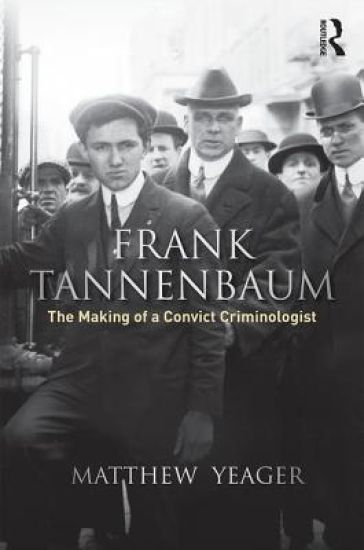
Frank Tannenbaum

Frank Tannenbaum

Matthew G. Yeager

Routledge
2015
sidottu
Frank Tannenbaum and the Making of a Convict Criminologist is a historical biography about Columbia University professor Frank Tannenbaum and his contribution to American criminology. Tannenbaum was a major figure in criminology in the early twentieth century, and is known for his contributions to labeling theory, particularly his conception of the "dramatization of evil" presented in his 1938 book, Crime and Community. Tannenbaum served a year on Blackwell’s Island in New York City for labor disturbances in 1914 and subsequently became a prison reformer, writing about his experiences with the American penal system and serving as the official reporter for the Wickersham Commission’s study on Penal Institutions, Probation, and Parole in 1931. This book explores his unique early career, and his influence on convict criminology, drawing on his personal papers housed at the Butler Library at Columbia University.