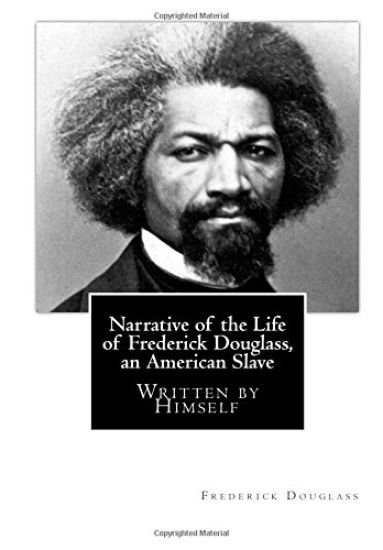
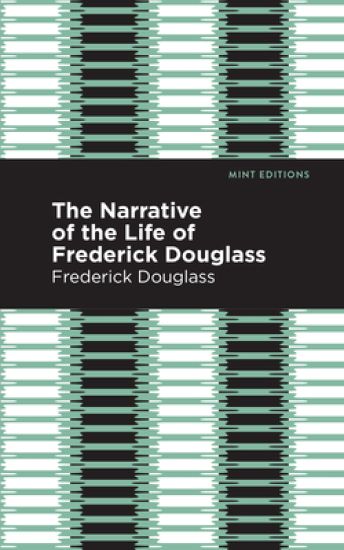
Narrative of the Life of Frederick Douglass is an 1845 memoir and treatise on abolition written by famous orator and former slave Frederick Douglass. It is generally held to be the most famous of a number of narratives written by former slaves during the same period. In factual detail, the text describes the events of his life and is considered to be one of the most influential pieces of literature to fuel the abolitionist movement of the early 19th century in the United States. Narrative of the Life of Frederick Douglass encompasses eleven chapters that recount Douglass' life as a slave and his ambition to become a free man.
In the month of August, 1841, I attended an anti-slavery convention in Nantucket, at which it was my happiness to become acquainted with Frederick Douglass, the writer of the following Narrative. He was a stranger to nearly every member of that body; but, having recently made his escape from the southern prison-house of bondage, and feeling his curiosity excited to ascertain the principles and measures of the abolitionists, -of whom he had heard a somewhat vague description while he was a slave, -he was induced to give his attendance, on the occasion alluded to, though at that time a resident in New Bedford. Fortunate, most fortunate occurrence -fortunate for the millions of his manacled brethren, yet panting for deliverance from their awful thraldom -fortunate for the cause of negro emancipation, and of universal liberty -fortunate for the land of his birth, which he has already done so much to save and bless -fortunate for a large circle of friends and acquaintances, whose sympathy and affection he has strongly secured by the many sufferings he has endured, by his virtuous traits of character, by his ever-abiding remembrance of those who are in bonds, as being bound with them -fortunate for the multitudes, in various parts of our republic, whose minds he has enlightened on the subject of slavery, and who have been melted to tears by his pathos, or roused to virtuous indignation by his stirring eloquence against the enslavers of men -fortunate for himself, as it at once brought him into the field of public usefulness, "gave the world assurance of a MAN," quickened the slumbering energies of his soul, and consecrated him to the great work of breaking the rod of the oppressor, and letting the oppressed go free I shall never forget his first speech at the convention-the extraordinary emotion it excited in my own mind-the powerful impression it created upon a crowded auditory, completely taken by surprise-the applause which followed from the beginning to the end of his felicitous remarks. I think I never hated slavery so intensely as at that moment; certainly, my perception of the enormous outrage which is inflicted by it, on the godlike nature of its victims, was rendered far more clear than ever. There stood one, in physical proportion and stature commanding and exact-in intellect richly endowed-in natural eloquence a prodigy-in soul manifestly "created but a little lower than the angels"-yet a slave, ay, a fugitive slave, -trembling for his safety, hardly daring to believe that on the American soil, a single white person could be found who would befriend him at all hazards, for the love of God and humanity Capable of high attainments as an intellectual and moral being-needing nothing but a comparatively small amount of cultivation to make him an ornament to society and a blessing to his race-by the law of the land, by the voice of the people, by the terms of the slave code, he was only a piece of property, a beast of burden, a chattel personal, nevertheless
"...I therefore hate the corrupt, slaveholding, women-whipping, cradle-plundering, partial and hypocritical Christianity of the land... I look upon it as the climax of all misnomers, the boldest of all frauds, and the grossest of all libels. Never was there a clearer case of 'stealing the livery of the court of heaven to serve the devil in.' I am filled with unutterable loathing when I contemplate the religious pomp and show, together with the horrible inconsistencies, which every where surround me. We have men-stealers for ministers, women-whippers for missionaries, and cradle-plunderers for church members. The man who wields the blood-clotted cowskin during the week fills the pulpit on Sunday, and claims to be a minister of the meek and lowly Jesus. . . . The slave auctioneer's bell and the church-going bell chime in with each other, and the bitter cries of the heart-broken slave are drowned in the religious shouts of his pious master. Revivals of religion and revivals in the slave-trade go hand in hand together. The slave prison and the church stand near each other. The clanking of fetters and the rattling of chains in the prison, and the pious psalm and solemn prayer in the church, may be heard at the same time. The dealers in the bodies of men erect their stand in the presence of the pulpit, and they mutually help each other. The dealer gives his blood-stained gold to support the pulpit, and the pulpit, in return, covers his infernal business with the garb of Christianity. Here we have religion and robbery the allies of each other---devils dressed in angels' robes, and hell presenting the semblance of paradise." --- Frederick Douglass, Narrative of the Life of Frederick Douglass Narrative of the Life of Frederick Douglass is an 1845 memoir and treatise on abolition written by famous orator and former slave Frederick Douglass. It is generally held to be the most famous of a number of narratives written by former slaves during the same period. In factual detail, the text describes the events of his life and is considered to be one of the most influential pieces of literature to fuel the abolitionist movement of the early 19th century in the United States. Narrative of the Life of Frederick Douglass encompasses eleven chapters that recount Douglass' life as a slave and his ambition to become a free man.
As with "The 30-Year war", this historical work is the occasion for F. Schiller to expose something more than just an analysis of events, and the persons who helped shape them. This work treats in detail about the relationship among the central authority (the Emperor), the regent and the various state councils and local parliaments. It is an attempt to analyze the complex power relationships among the ruler, the other executive and legislative offices. It begins with the psychological profile of Philip II, the Emperor, the mind in center of all important decisions. It portrays also the buoyant personality of people like William of Orange and his peers who fought with all diplomacy and duplicity for the sovereignty of their lands. Iconoclasm was the act of resistance of these men which they made execute by bands of hostile citizens. Inquisition was the response of the central authority. Inquisition is depicted in this work in its very detailed horror. It was used for pure religious reasons, but also as means of repression by the authorities of the Emperor. In this account, Schiller brings to us his interest for another woman of power, Margaret of Parma, from his very own standpoint. This woman was brought up to be a great regent, but History did not retain her name. Schiller gives us all the details about her skillfulness and frailties to maintain herself at the head of imperial vassals who, actually, were her fiercest opponents. A particular mention should be given to the various advisers and writers that Schiller gives us the descriptions of in this work. Starting from the very powerful Cardinal Granville, counselor to the Emperor of Spain to Erasmus (with the local parliament in the Netherlands), to name just a few. He also exposes in this text some aspects of the secret writer which has still some validity to this day, and infers, at the end of this long research, that the whole History of Europe would certainly have been different should Margaret of Parma not have as a writer, the very famous Nicolas Machiavelli.
In the month of August, 1841, I attended an anti-slavery convention in Nantucket, at which it was my happiness to become acquainted with Frederick Douglass, the writer of the following Narrative. He was a stranger to nearly every member of that body; but, having recently made his escape from the southern prison-house of bondage, and feeling his curiosity excited to ascertain the principles and measures of the abolitionists,
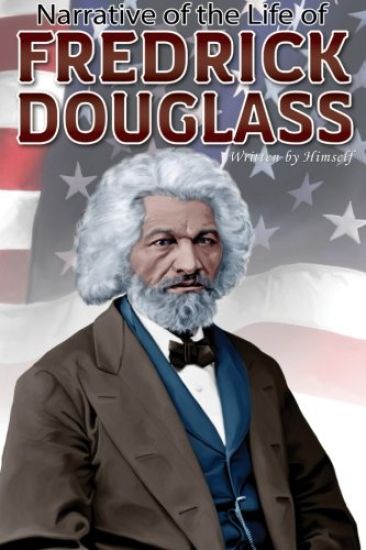
First appearing in 1845 The Narrative of the Life of Frederick Douglass, with its painfully vivid depiction of life in bondage, was both a bestseller in its day and one of the most powerful, authoritative texts lending support to the abolitionist movement. The author traces his life from an infant born into slavery and taken from his mother at birth, to a displaced child hungry for knowledge, to an abused and beaten laborer seeking freedom and a chance to marry the woman he loved. Offering bright, cameo glimpses into a world that should not be forgotten, Douglass chronicles both the cruel violence of a system that saw him as little more than livestock, and the brighter moments of success, of courageous support from friends and allies. Initially greeted by some with doubt that it could have been written by a black man and former slave, the book had a profound effect on American society, making the author something of a celebrity and his cause less an abstract ideal and more of an urgent human concern. Solemn, powerful and passionate The Narrative of the Life of Frederick Douglass is more than an important historical document—it is a personal account of striving for human freedom in a world where the author was regarded as neither free nor human. With an eye-catching new cover, and professionally typeset manuscript, this edition of The Narrative of the Life of Frederick Douglass is both modern and readable.
First appearing in 1845 The Narrative of the Life of Frederick Douglass, with its painfully vivid depiction of life in bondage, was both a bestseller in its day and one of the most powerful, authoritative texts lending support to the abolitionist movement. The author traces his life from an infant born into slavery and taken from his mother at birth, to a displaced child hungry for knowledge, to an abused and beaten laborer seeking freedom and a chance to marry the woman he loved. Offering bright, cameo glimpses into a world that should not be forgotten, Douglass chronicles both the cruel violence of a system that saw him as little more than livestock, and the brighter moments of success, of courageous support from friends and allies. Initially greeted by some with doubt that it could have been written by a black man and former slave, the book had a profound effect on American society, making the author something of a celebrity and his cause less an abstract ideal and more of an urgent human concern. Solemn, powerful and passionate The Narrative of the Life of Frederick Douglass is more than an important historical document—it is a personal account of striving for human freedom in a world where the author was regarded as neither free nor human. With an eye-catching new cover, and professionally typeset manuscript, this edition of The Narrative of the Life of Frederick Douglass is both modern and readable.
First appearing in 1845 The Narrative of the Life of Frederick Douglass, with its painfully vivid depiction of life in bondage, was both a bestseller in its day and one of the most powerful, authoritative texts lending support to the abolitionist movement. The author traces his life from an infant born into slavery and taken from his mother at birth, to a displaced child hungry for knowledge, to an abused and beaten laborer seeking freedom and a chance to marry the woman he loved. Offering bright, cameo glimpses into a world that should not be forgotten, Douglass chronicles both the cruel violence of a system that saw him as little more than livestock, and the brighter moments of success, of courageous support from friends and allies. Initially greeted by some with doubt that it could have been written by a black man and former slave, the book had a profound effect on American society, making the author something of a celebrity and his cause less an abstract ideal and more of an urgent human concern. Solemn, powerful and passionate The Narrative of the Life of Frederick Douglass is more than an important historical document—it is a personal account of striving for human freedom in a world where the author was regarded as neither free nor human. With an eye-catching new cover, and professionally typeset manuscript, this edition of The Narrative of the Life of Frederick Douglass is both modern and readable.
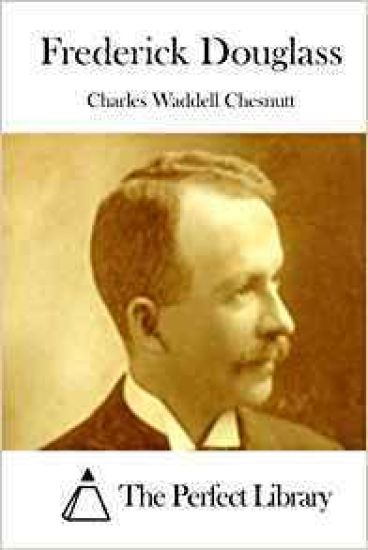
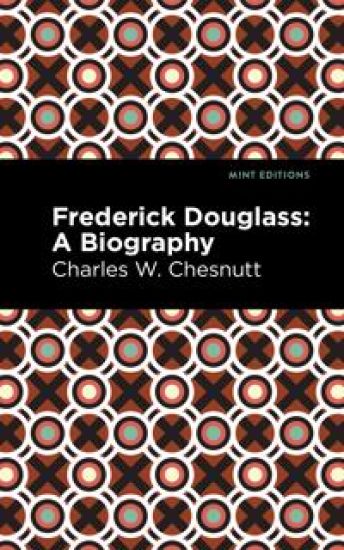
Frederick Douglass: A Biography (1899) is a book by African American author, lawyer, and political activist Charles Chesnutt. While he is more widely known for “The Goophered Grapevine,” the first story published in The Atlantic by an African American author, Chesnutt was also a gifted biographer whose storytelling ability allowed him to present the life of such a man as Frederick Douglass in a fresh and revelatory light. “From this night of slavery Douglass emerged, passed through the limbo of prejudice which he encountered as a freeman, and took his place in history.” Born in Maryland, Douglass escaped slavery at the age of twenty with the help of his future wife Anna Murray Douglass, a free black woman from Baltimore. In New England, he connected with the influential abolitionist community and joined the African Methodist Episcopal Zion Church, a historically Black denomination which counted Sojourner Truth and Harriet Tubman among its members. In 1839, Douglass became a preacher and began his career as a captivating orator on religious, social, and political matters. He met William Lloyd Garrison, publisher of anti-slavery newspaper The Liberator, in 1841, and was deeply moved by his passionate abolitionism. As Douglass’ reputation and influence grew, he traveled across the country and eventually to Ireland and Great Britain to advocate on behalf of the American abolitionist movement, winning countless people over to the leading moral cause of the nineteenth century. Arguably one of the most influential Americans of all time, Douglass led a life dedicated to democracy and racial equality. With a beautifully designed cover and professionally typeset manuscript, this edition of Charles Chesnutt’s Frederick Douglass: A Biography is a classic of African American literature reimagined for modern readers.