Kirjojen hintavertailu. Mukana 12 016 292 kirjaa ja 12 kauppaa.

Kirjahaku

Etsi kirjoja tekijän nimen, kirjan nimen tai ISBN:n perusteella.

1000 tulosta hakusanalla George Perry

George Soros

George Soros

Kaoru Kurotani

John Wiley Sons Inc
2005
nidottu
George Soros, is one of the most acclaimed and feared figures in the investment world. Famous for his role in breaking the Bank of England, he is also known for his outspoken criticism of distinguished politicians. Soros has earned his respect not only from his investment coups but also for his charitable activities and for encouraging pro-democracy movements around the world. This book explores the life of a man who has an undue influence on world-wide currency markets. His dramatic life story will attract a wide range of readers, even those who are not familiar with the world of investment and finance.
George Washington

George Washington

Woodrow Wilson

Dover Publications Inc.
2017
nidottu
A president-to-be chronicles the life and times of the historic first Chief Executive in this insightful biography. Before his entry into politics, Woodrow Wilson was a noted educator and historian, and his erudition shines in this fascinating profile of George Washington's rise to leadership. Wilson traces the iconic figure's path from his birth in a tranquil settlement through his explosive military career and precedent-setting administration, providing a fascinating portrait of colonial America along the way."Bred a gentleman and man of honor in the free school of Virginian society," Washington came of age with the first stir of revolutionary events. His training as a surveyor made him an expert woodsman and hardy traveler, qualities that served him well during his rough apprenticeship in the French and Indian War. At the age of 44, the Revolution found him an experienced commander who organized and trained the army in addition to fighting in its battles and serving as a symbol of organized resistance. After his selfless resignation of power upon achieving victory, Washington was compelled to take on a task even harder than those of wartime: the formation of a unified national government.This edition of Wilson's scholarly yet readable biography is splendidly illustrated with portraits and maps as well as illustrations by Howard Pyle, among others, who collaborated closely with the author on depictions of episodes from Washington's extraordinary life.
George Hoyningen-Huene

George Hoyningen-Huene

The George Hoyningen-Huene Estate Archives

THAMES HUDSON LTD
2024
sidottu
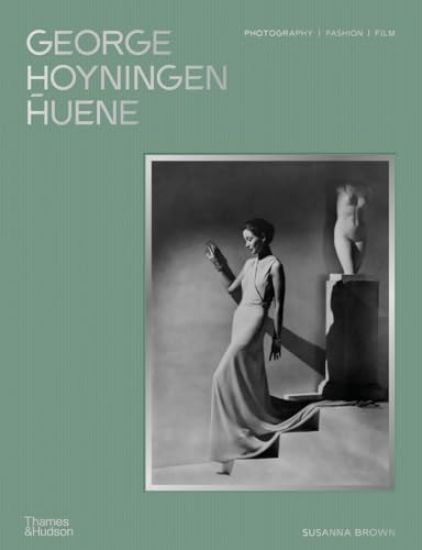
A captivating photographic odyssey spanning fashion, Hollywood and travel, this is the first publication in almost 40 years on the work of George Hoyningen-Huene, the photographer whose images defined an era. Baron George Hoyningen-Huene (1900–1968), known simply as Huene, worked during the golden age of couture fashion and Hollywood cinema. He was born in St Petersburg to a wealthy family, but they had to flee their home during the Russian revolution in 1917. Huene spent time in England before moving to Paris, where he was employed to create photographs for Vogue and Vanity Fair and rapidly established himself as a visual innovator, fusing elements of neoclassicism and surrealism to create chic, arresting images. In 1935, Huene joined Harper’s Bazaar magazine, where he remained a contributor until 1946, following which he settled in California and embarked on a second career as a colour coordinator for Hollywood films. Supported by an international exhibition opening at Chanel Nexus Hall in Tokyo, this book combines elegant design and production values with rigorous new research and scholarship. Organized into eight chapters, each supported by texts by contributing writers from the worlds of fashion, cinema and photography, and featuring names and faces that have defined our view of style, glamour and grace in the 20th century, it reminds us of Huene’s position among the greats of photography.
George Condo

George Condo

Simon Baker

THAMES HUDSON LTD
2022
nidottu
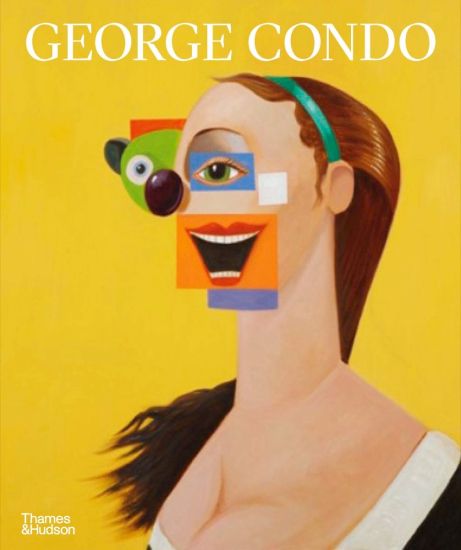
The definitive monograph on the iconoclastic painter George Condo. With his arresting, unsettling style, George Condo emerged out of the dynamism of the New York art scene in the early 1980s, and he has been restlessly painting, drawing and sculpting - bringing forms into the world in one way or another - ever since. With his 'fake' Old Masters, reconfigured Manets, impossibly intricate paintings that seem abstract only from a distance, fractured and multifaceted 'psychologically Cubist' portraits, and the orgiastic misdemeanours of a host of butlers, bankers and priests, Condo has invented, mastered and expanded not just one painterly language but an entire lexicon. Working closely with Condo, Simon Baker has combined biographical, chronological and thematic approaches to survey the artist's work and career to date. An introductory essay on Condo's contradictory nature and a chapter exploring his phenomenal early career are followed by three thematic chapters that look at the years from 1984 to the present, tracing Condo's systematic reconstruction of the techniques of painting, exploring his relationship to the concept of abstraction, and probing the darker side of his psychological iconography in drawing, painting, sculpture and writing. George Condo is the definitive monograph about a unique artist that will appeal to artists, art students and those with a general interest in art.
George Grosz

George Grosz

George Grosz; Barbara McCloskey

University of California Press
1998
pokkari
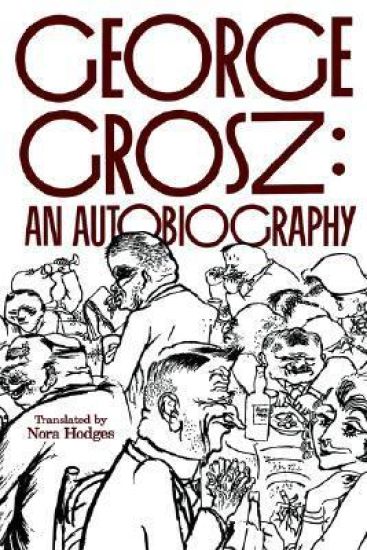
This acclaimed autobiography by one of the twentieth century's greatest satirical artists is as much a graphic portrait of Germany in chaos after the Treaty of Versailles as it is a memoir of a remarkable artist's development. Grosz's account of a world gone mad is as acute and provocative as the art that depicts it, and this translation of a work long out of print restores the spontaneity, humor, and energy of the author's German text. It also includes a chapter on Grosz's experience in the Soviet Union - omitted from the original English-language edition - as well as more writings about his twenty-year self-imposed exile in America, and a fable written in English.
George Gershwin

George Gershwin

Pollack Howard

University of California Press
2007
sidottu
This comprehensive biography of George Gershwin (1898-1937) unravels the myths surrounding one of America's most celebrated composers and establishes the enduring value of his music. Gershwin created some of the most beloved music of the twentieth century and, along with Jerome Kern, Irving Berlin, and Cole Porter, helped make the golden age of Broadway golden. Howard Pollack draws from a wealth of sketches, manuscripts, letters, interviews, books, articles, recordings, films, and other materials - including a large cache of Gershwin scores discovered in a Warner Brothers warehouse in 1982 - to create an expansive chronicle of Gershwin's meteoric rise to fame. He also traces Gershwin's powerful presence that, even today, extends from Broadway, jazz clubs, and film scores to symphony halls and opera houses. Pollack's lively narrative describes Gershwin's family, childhood, and education; his early career as a pianist; his friendships and romantic life; his relation to various musical trends; his writings on music; his working methods; and his tragic death at the age of 38. Unlike Kern, Berlin, and Porter, who mostly worked within the confines of Broadway and Hollywood, Gershwin actively sought to cross the boundaries between high and low, and wrote works that crossed over into a realm where art music, jazz, and Broadway met and merged. The author surveys Gershwin's entire oeuvre, from his first surviving compositions to the melodies that his brother and principal collaborator, Ira Gershwin, lyricized after his death. Pollack concludes with an exploration of the performances and critical reception of Gershwin's music over the years, from his time to ours.
George Eliot's Early Novels

George Eliot's Early Novels

U. C. Knoepflmacher

University of California Press
2022
pokkari
This study shows how George Eliot, a leader in the nineteenth-century intellectual world of Darwin and the Industrial Revolution, wrestled in her early novels with the esthetic problems of reconciling her art and her philosophy. Attempting in her fiction to reproduce the real, temporal world she lived in, George Eliot also tried to reassure herself and her readers that their godless modern world still operated according to higher moral laws of justice and perfectibility. U. C. Knoepflmacher examines here for the first time in sequence George Eliot's development of increasingly sophisticated forms of fiction in her efforts to reconcile the two conflicting orientations in her thought. We see this popular novelist as she progressed artistically from the flawed "Amos Barton" in 1857 up to the balance she achieved in Silas Marner in 1861. And we discover her in the context of her literary antecedents and surrounding in a way that brings many new affiliations to light, particularly the connection of her novels to the writings of Milton, the Romantic poets, and her contemporaries Arnold and Carlyle. Professor Knoepflmacher thoroughly discusses each work in George Eliot's first stage, brining new attention to minor works like "The Lifted Veil" and Scenes of Clerical Life and fresh insights to such well known works as Adam Bede, The Mill on the Floss, and Silas Marner. This title is part of UC Press's Voices Revived program, which commemorates University of California Press's mission to seek out and cultivate the brightest minds and give them voice, reach, and impact. Drawing on a backlist dating to 1893, Voices Revived makes high-quality, peer-reviewed scholarship accessible once again using print-on-demand technology. This title was originally published in 1968.
George Lewis

George Lewis

Tom Bethell

University of California Press
2022
pokkari
George Lewis, one of the great traditional jazz clarinetists, was born in 1900 at about the same time that jazz itself first appeared in New Orleans. And by the time he died, on the last day of 1968, New Orleans jazz had pretty much run its course, too. By then a jazz museum stood on Bourbon Street, and a cultural center was under construction where Globe Hall had Stood. Lewis's life thus paralleled that of New Orleans jazz, and in his later years hew as the best known standard bearer of his city's music. He came to the attention of the jazz world at the time of the so-called "New Orleans Revival" of the 1940's, when veteran trumpeter Bunk Johnson was recorded by a number of jazz enthusiasts, notably William Russell. In this new biography, Tom Bethell challenges a favorite myth of the history of jazz: that the music became moribund in New Orleans after the legal red light district, Storyville, was closed in 1917, resulting in most jazz musicians going "up the river." In fact, Bethell shows, many more jazzmen stayed in the city than left, and the musical style continued to develop and grow. Thus the jazz fans who arrived in the city in the early 1940's did not encounter a "revival" of an old style so much as an ongoing tradition, with clarinetists like Lewis having been influenced by Benny Goodman and the Swing Era in addition to Lorenzo Tio and the Creole School. After Bunk Johnson's death in 1949, at a time when many other social changes were beginning to be felt in the city, the New Orleans jazz tradition began to go into a decline. It became increasingly rigid and repetitive, and was often designed to please what one observer called "Dixieland fans yelling for their favorite members." The book is based on lengthy research in New Orleans, including interviews with George Lewis shortly before his death, and unpublished material from the diaries kept by William Russell on his visits to New Orleans between 1942 and 1949. It also includes a statement by Lewis on jazz and the best way to play it and a complete Lewis discography. This title is part of UC Press's Voices Revived program, which commemorates University of California Press's mission to seek out and cultivate the brightest minds and give them voice, reach, and impact. Drawing on a backlist dating to 1893, Voices Revived makes high-quality, peer-reviewed scholarship accessible once again using print-on-demand technology. This title was originally published in 1977.
George Lewis

George Lewis

Tom Bethell

University of California Press
2022
sidottu
George Lewis, one of the great traditional jazz clarinetists, was born in 1900 at about the same time that jazz itself first appeared in New Orleans. And by the time he died, on the last day of 1968, New Orleans jazz had pretty much run its course, too. By then a jazz museum stood on Bourbon Street, and a cultural center was under construction where Globe Hall had Stood. Lewis's life thus paralleled that of New Orleans jazz, and in his later years hew as the best known standard bearer of his city's music. He came to the attention of the jazz world at the time of the so-called "New Orleans Revival" of the 1940's, when veteran trumpeter Bunk Johnson was recorded by a number of jazz enthusiasts, notably William Russell. In this new biography, Tom Bethell challenges a favorite myth of the history of jazz: that the music became moribund in New Orleans after the legal red light district, Storyville, was closed in 1917, resulting in most jazz musicians going "up the river." In fact, Bethell shows, many more jazzmen stayed in the city than left, and the musical style continued to develop and grow. Thus the jazz fans who arrived in the city in the early 1940's did not encounter a "revival" of an old style so much as an ongoing tradition, with clarinetists like Lewis having been influenced by Benny Goodman and the Swing Era in addition to Lorenzo Tio and the Creole School. After Bunk Johnson's death in 1949, at a time when many other social changes were beginning to be felt in the city, the New Orleans jazz tradition began to go into a decline. It became increasingly rigid and repetitive, and was often designed to please what one observer called "Dixieland fans yelling for their favorite members." The book is based on lengthy research in New Orleans, including interviews with George Lewis shortly before his death, and unpublished material from the diaries kept by William Russell on his visits to New Orleans between 1942 and 1949. It also includes a statement by Lewis on jazz and the best way to play it and a complete Lewis discography. This title is part of UC Press's Voices Revived program, which commemorates University of California Press's mission to seek out and cultivate the brightest minds and give them voice, reach, and impact. Drawing on a backlist dating to 1893, Voices Revived makes high-quality, peer-reviewed scholarship accessible once again using print-on-demand technology. This title was originally published in 1977.
George Eliot's Early Novels

George Eliot's Early Novels

U. C. Knoepflmacher

University of California Press
2022
sidottu
This study shows how George Eliot, a leader in the nineteenth-century intellectual world of Darwin and the Industrial Revolution, wrestled in her early novels with the esthetic problems of reconciling her art and her philosophy. Attempting in her fiction to reproduce the real, temporal world she lived in, George Eliot also tried to reassure herself and her readers that their godless modern world still operated according to higher moral laws of justice and perfectibility. U. C. Knoepflmacher examines here for the first time in sequence George Eliot's development of increasingly sophisticated forms of fiction in her efforts to reconcile the two conflicting orientations in her thought. We see this popular novelist as she progressed artistically from the flawed "Amos Barton" in 1857 up to the balance she achieved in Silas Marner in 1861. And we discover her in the context of her literary antecedents and surrounding in a way that brings many new affiliations to light, particularly the connection of her novels to the writings of Milton, the Romantic poets, and her contemporaries Arnold and Carlyle. Professor Knoepflmacher thoroughly discusses each work in George Eliot's first stage, brining new attention to minor works like "The Lifted Veil" and Scenes of Clerical Life and fresh insights to such well known works as Adam Bede, The Mill on the Floss, and Silas Marner. This title is part of UC Press's Voices Revived program, which commemorates University of California Press's mission to seek out and cultivate the brightest minds and give them voice, reach, and impact. Drawing on a backlist dating to 1893, Voices Revived makes high-quality, peer-reviewed scholarship accessible once again using print-on-demand technology. This title was originally published in 1968.
George Eliot and the Conflict of Interpretations

George Eliot and the Conflict of Interpretations

David Carroll

Cambridge University Press
2006
pokkari
Two versions of George Eliot, both influential, have emerged from the study of her life and work. One is the radical Victorian thinker, formidably learned in a whole range of intellectual disciplines; the other is the reclusive novelist, celebrating through her fiction the communal values which were being eroded in the modern world. This chronological study of the novels brings the two together and places her within the crisis of belief and value acted out in the mid-nineteenth century. George Eliot saw this crisis as one of interpretation, in a vivid, almost apocalyptic awareness that traditional modes of interpreting the world were breaking down irrevocably. This study shows how, in response, she redefined the nature of Victorian fiction, testing to the point of destruction a variety of Victorian myths, orthodoxies and ideologies in each of her novels.
George Eliot and the British Empire

George Eliot and the British Empire

Nancy Henry

Cambridge University Press
2006
pokkari
In this study Nancy Henry introduces a set of facts that place George Eliot's life and work within the contexts of mid-nineteenth-century British colonialism and imperialism. Henry examines Eliot's roles as an investor in colonial stocks, a parent to emigrant sons, and a reader of colonial literature. She highlights the importance of these contexts to our understanding of both Eliot's fiction and her situation within Victorian culture. Henry argues that Eliot's decision to represent the empire only as it infiltrated the imaginations and domestic lives of her characters illuminates the nature of her Realism. The book also re-examines the assumptions of postcolonial criticism about Victorian fiction and its relation to empire.
George Eliot

George Eliot

R. T. Jones

Cambridge University Press
1970
sidottu
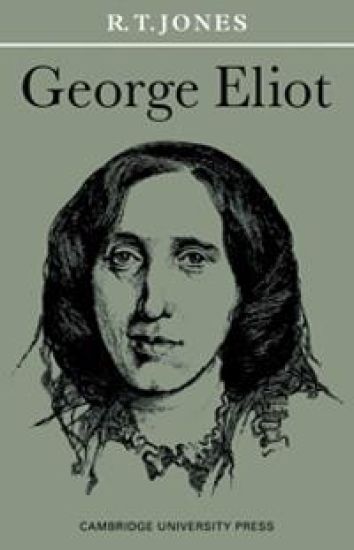
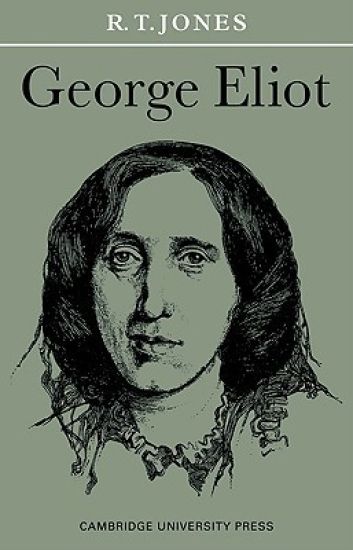
Mr Jones treats the main novels in chronological sequence examining with the aid of extensive quotation George Eliot's means of description and characterisation and the moral purpose of her fiction. He emphasises her appeal to the inner life of her readers, as exemplified in her frequent use of such phrases as 'Have we not all…' George Eliot assumes that no human act or emotion is entirely unconnected with what we have all done or felt at some time. Her sympathy with human weakness often carries her to the point where she has difficulty in reconciling her tolerance with her moral purpose. This book gives a useful introduction to George Eliot's novels. As in the other books in the series British Authors: Introductory Critical Studies, the author assesses his subject simply and clearly, using as a basis the internal evidence of the novels themselves rather than biographical detail.
George Eliot's 'Daniel Deronda' Notebooks

George Eliot's 'Daniel Deronda' Notebooks

George Eliot

Cambridge University Press
2008
pokkari
George Eliot's notebooks from the years 1872–77 contain memoranda of her reading while she was preparing for and writing Daniel Deronda, together with the 'Oriental Memoranda' and other notes she recorded in the year following the novel's publication. Above all, the notebooks reveal her acquisition of a wide range of learning about Judaism and provide insight into the creative process of integrating that learning into Daniel Deronda. One of these notebooks is published in this 1996 book; others are offered in new transcriptions. They are all presented in a form which demonstrates the intellectual coherence underlying the diversity of the memoranda: translations are provided for the notes in German, French, Italian, Greek, and Hebrew; explanatory notes are offered, and interpretative links are made to the novel; primary sources are traced and the chronology of Eliot's reading outlined.
George Joachim Goschen

George Joachim Goschen

Jr Spinner

Cambridge University Press
2008
pokkari
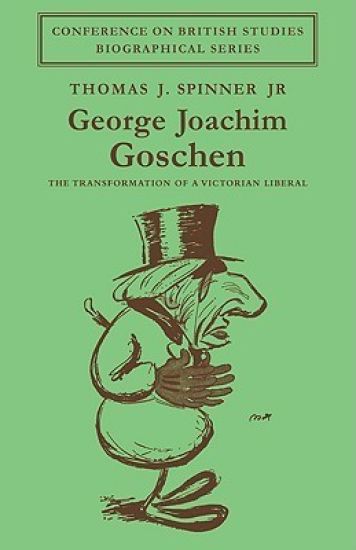
The career of George Joachim Goschen, the man whom Lord Randolph Churchill forgot, illuminates many of the problems faced by the British ruling classes in the late nineteenth century: a Liberal in 1863, Goschen entered the twentieth century a Conservative. In examining his life and career, Professor Spinner shows how this transition took place and how it typified the reaction of many Victorian statesmen to the massive social and economic changes of the period. The son of a German immigrant merchant banker, thoroughly Anglicized by Rugby and Oxford, Goschen had no difficulty in rising to the highest positions of political and economic power. Elected to the Commons in 1863, he served successively in Lord Russell's Cabinet and at the Poor Law Board and the Admiralty during Gladstone's first Ministry.
George Eliot

George Eliot

Joan Bennett

Cambridge University Press
1948
pokkari
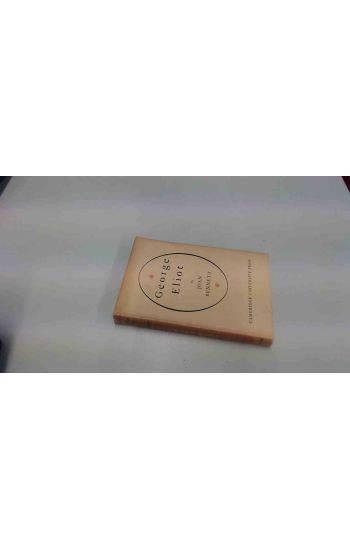
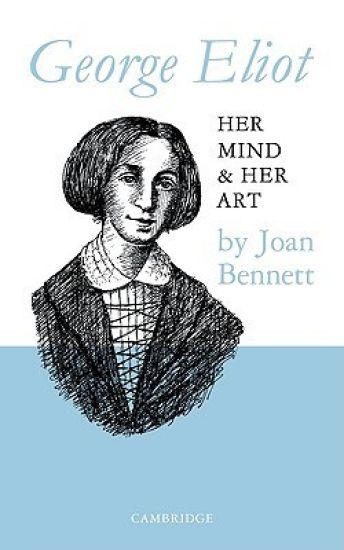
Mrs Bennett finds in George Eliot's work the beginnings of certain modern developments of the novel, notably her respect for unity of design, her interest in the complexity of human personality and experience and beneath a contemporary naturalism, a feeling towards symbolic presentation. Some of the moral problems implicit in the character-studies and situations best the minds of the best of her contemporaries: some are still relevant. And an awareness of moral problems - a novelist's acceptance of novel-writing as a serious and responsible job - is now characteristic of the best modern fiction. The first three chapters of Bennett's book are biographical and deal chiefly with the formative years. The remaining eight, after defining in general George Eliot's qualities as a novelist, discuss the novels one by one and illustrate the deeper aspects of their author's outlook.
George Eliot

George Eliot

R. T. Jones

Cambridge University Press
1970
pokkari
Mr Jones treats the main novels in chronological sequence examining with the aid of extensive quotation George Eliot's means of description and characterisation and the moral purpose of her fiction. He emphasises her appeal to the inner life of her readers, as exemplified in her frequent use of such phrases as 'Have we not all…' George Eliot assumes that no human act or emotion is entirely unconnected with what we have all done or felt at some time. Her sympathy with human weakness often carries her to the point where she has difficulty in reconciling her tolerance with her moral purpose. This book gives a useful introduction to George Eliot's novels. As in the other books in the series British Authors: Introductory Critical Studies, the author assesses his subject simply and clearly, using as a basis the internal evidence of the novels themselves rather than biographical detail.
George Eliot's Intellectual Life

George Eliot's Intellectual Life

Fleishman Avrom

Cambridge University Press
2010
sidottu
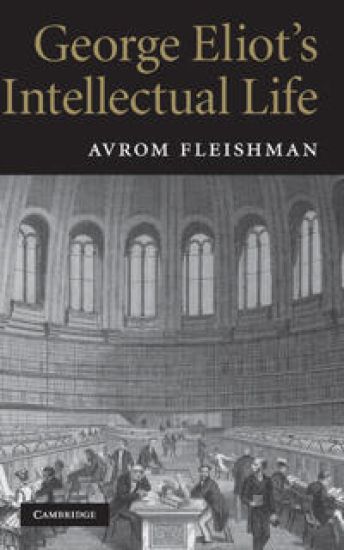
It is well known that George Eliot's intelligence and her wide knowledge of literature, history, philosophy and religion shaped her fiction, but until now no study has followed the development of her thinking through her whole career. This intellectual biography traces the course of that development from her initial Christian culture, through her loss of faith and working out of a humanistic and cautiously progressive world view, to the thought-provoking achievements of her novels. It focuses on her responses to her reading in her essays, reviews and letters as well as in the historical pictures of Romola, the political implications of Felix Holt, the comprehensive view of English society in Middlemarch, and the visionary account of personal inspiration in Daniel Deronda. This portrait of a major Victorian intellectual is an important addition to our understanding of Eliot's mind and works, as well as of her place in nineteenth-century British culture.