Kirjojen hintavertailu. Mukana 12 016 292 kirjaa ja 12 kauppaa.

Kirjahaku

Etsi kirjoja tekijän nimen, kirjan nimen tai ISBN:n perusteella.

1000 tulosta hakusanalla Gerald Durrell

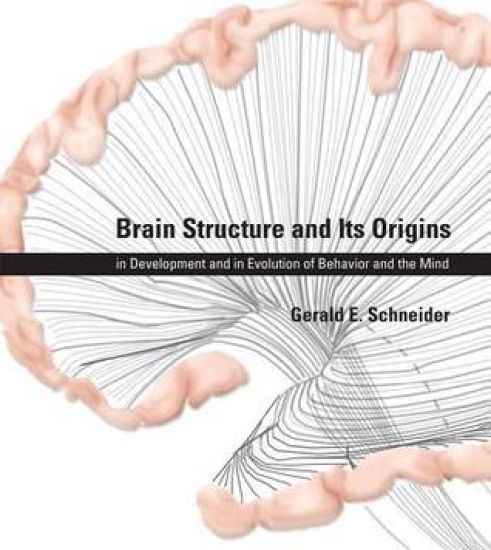
Brain Structure and Its Origins

Brain Structure and Its Origins

Gerald E. Schneider

MIT Press
2014
sidottu
An introduction to the brain's anatomical organization and functions with explanations in terms of evolutionary adaptations and development.This introduction to the structure of the central nervous system demonstrates that the best way to learn how the brain is put together is to understand something about why. It explains why the brain is put together as it is by describing basic functions and key aspects of its evolution and development. This approach makes the structure of the brain and spinal cord more comprehensible as well as more interesting and memorable. The book offers a detailed outline of the neuroanatomy of vertebrates, especially mammals, that equips students for further explorations of the field.Gaining familiarity with neuroanatomy requires multiple exposures to the material with many incremental additions and reviews. Thus the early chapters of this book tell the story of the brain's origins in a first run-through of the entire system; this is followed by other such surveys in succeeding chapters, each from a different angle. The book proceeds from basic aspects of nerve cells and their physiology to the evolutionary beginnings of the nervous system to differentiation and development, motor and sensory systems, and the structure and function of the main parts of the brain. Along the way, it makes enlightening connections to evolutionary history and individual development. Brain Structure and Its Origins can be used for advanced undergraduate or beginning graduate classes in neuroscience, biology, psychology, and related fields, or as a reference for researchers and others who want to know more about the brain.
The Technology Fallacy

The Technology Fallacy

Gerald C. Kane; Anh Nguyen Phillips

MIT PRESS LTD
2022
nidottu
Why an organization's response to digital disruption should focus on people and processes and not necessarily on technology.Digital technologies are disrupting organizations of every size and shape, leaving managers scrambling to find a technology fix that will help their organizations compete. This book offers managers and business leaders a guide for surviving digital disruptions—but it is not a book about technology. It is about the organizational changes required to harness the power of technology. The authors argue that digital disruption is primarily about people and that effective digital transformation involves changes to organizational dynamics and how work gets done. A focus only on selecting and implementing the right digital technologies is not likely to lead to success. The best way to respond to digital disruption is by changing the company culture to be more agile, risk tolerant, and experimental. The authors draw on four years of research, conducted in partnership with MIT Sloan Management Review and Deloitte, surveying more than 16,000 people and conducting interviews with managers at such companies as Walmart, Google, and Salesforce. They introduce the concept of digital maturity—the ability to take advantage of opportunities offered by the new technology—and address the specifics of digital transformation, including cultivating a digital environment, enabling intentional collaboration, and fostering an experimental mindset. Every organization needs to understand its “digital DNA” in order to stop “doing digital” and start “being digital.” Digital disruption won't end anytime soon; the average worker will probably experience numerous waves of disruption during the course of a career. The insights offered by The Technology Fallacy will hold true through them all. A book in the Management on the Cutting Edge series, published in cooperation with MIT Sloan Management Review.
The Mindful Brain

The Mindful Brain

Gerald M. Edelman; Vernon B. Mountcastle

MIT Press
1982
pokkari
A proposal by two eminent biological scientists for a mechanism whereby mind becomes manifest from the operations of brain tissue.This significant contribution to neuroscience consists of two papers, the first by Mountcastle an, the second by Edelman. Between them, they examine from different but complementary directions the relationships that connect the higher brain-memory, learning, perception, thinking-with what goes on at the most basic levels of neural activity, with particular stress on the role of local neuronal circuits.Edelman's major hypothesis is that "the conscious state results from phasic reentrant signaling occurring in parallel processes that involve associations between stored patterns and current sensory or internal input." This selective process occurs by the polling of degenerate primary repertoires of neuronal groups that are formed during embryogenesis and development. Edelman's theory extrapolates to the brain the selectionistic immunological theories for which he was awarded the 1972 Nobel Prize in Physiology or Medicine. Mountcastle's paper reviews what is known about the actual structure of various parts of the neo cortex. He relates the large entities of the neocortex to their component modules-the local neuronal circuits-and shows how the complex interrelationships of such a distributed system can yield dynamic distributed functioning. There are strong conceptual parallels between Mountcastle's idea of cortical columns and their functional subunits and Edelman's concept of populations of neurons functioning as processors in a brain system based on selectional rather than instructional principles. These parallels are traced and put into perspective in Francis Schmitt's Introduction.
Recovering Solidarity

Recovering Solidarity

Gerald Beyer

University of Notre Dame Press
2010
nidottu
In Recovering Solidarity, Gerald J. Beyer provides a contextualized theological and ethical treatment of the idea of solidarity. He focuses particularly on the Polish Solidarity movement of the 1980s and the ways in which that movement originally embodied but, during the country's transformation to a capitalist democratic society, soon abandoned this important aspect of the Catholic social tradition. Using Poland as a case study, Beyer explores the obstacles to promoting an ethic of solidarity in contemporary capitalist societies and attempts to demonstrate how the moral revolution of the early Solidarity movement can be revived, both in its country of origin and around the world. Recovering Solidarity is widely interdisciplinary, utilizing Catholic social tradition, philosophical ethics, developmental economics, poverty research, gender studies, and sociology. It will appeal to those interested in the problems of poverty and justice.
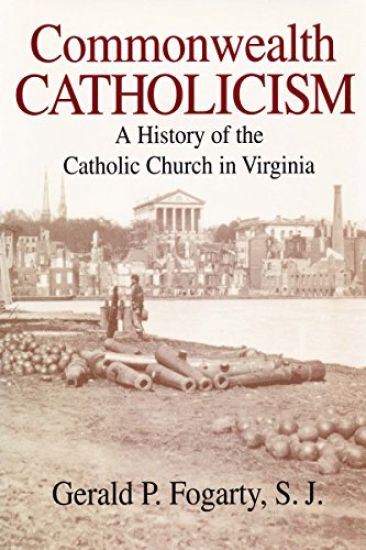
Commonwealth Catholicism

Commonwealth Catholicism

Gerald P. Fogarty

University of Notre Dame Press
2001
sidottu
Commonwealth Catholicism is the first comprehensive history of the Catholic Church in the State of Virginia. Distinguished historian Gerald P. Fogarty tells the story of Virginia's Catholics in the state's history, from the colonial period to the present. Using archival resources, Fogarty brings to life the events and characters that comprise the Church's colorful and often turbulent history. Catholics in Virginia, as in other parts of the South, were a tiny minority from the beginning and remained so for much of their history. They gathered into small, isolated communities, often without a resident priest. The Catholic population in Virginia was so small, in fact, that there was only one diocese until 1974. Catholics were often suspected of unpatriotic sympathies by their Protestant neighbors and tried to remain unnoticed, blending in, as far as possible, with the prevailing Protestant culture. Full religious tolerance for Virginia Catholics did not come until the Revolution. Reconstructing the available documentary evidence, Fogarty tells the story of these early communities in full detail. Fogarty also brings to life many of the prominent actors in the unfolding drama. Father Matthew O'Keefe, the pastor of the Norfolk region from 1852 until 1886—a period of intense Know Nothing activity—is one example. O'Keefe was asked by two men calling at the rectory door to minister to a dying man. Reaching the Elizabeth River on the edge of Portsmouth, Virginia, the two said that the dying man lay further on. O'Keefe "took a pair of revolvers from his coat, placed the men under citizen's arrest, and marched them into Portsmouth where he turned them over to the sheriff. They subsequently confessed that they had been hired to assassinate him." Commonwealth Catholicism, a considerable accomplishment from one of the most prominent historians of American Catholicism, will remain for many years the definitive study on the subject of Virginia's Catholic heritage.
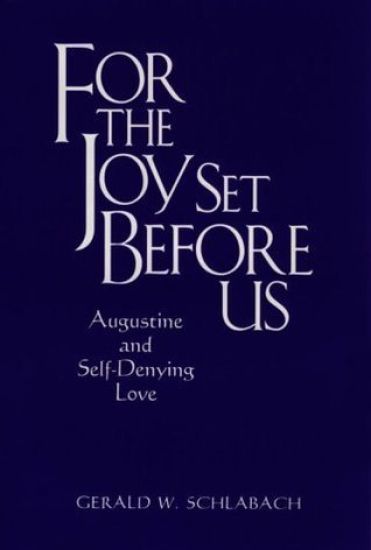
For the Joy Set Before Us

For the Joy Set Before Us

Gerald W. Schlabach

University of Notre Dame Press
2001
sidottu
Age-old debates over self-love and self-denial continue in the Christian community. Many regard self-love as incompatible with the self-sacrifice of Christ. Others, especially feminists and liberation theologians, contest the notion that self-sacrifice is the test of authentic Christian love. The resolution to this dilemma, argues Gerald Schlabach, lies with St. Augustine. In this engaging book, Schlabach examines how Augustine reconciled self-love and self-denial in a unified Christian love. He demonstrates the crucial role that continence played in Augustine's teaching. It is much more than an attitude toward sexuality. Rather, it is the operative mode of Augustinian caritas. Addressing historical theology, contemporary Christian ethics, feminism, and pastoral considerations, Schlabach traces the role that self-denial played in Augustine's teaching. He argues that an integration of self-love and self-denial enables us to distinguish true Christian self-denial from mere victimization and that the good we seek when we love—whether directed toward neighbor, enemy, or self—is not self-serving but rather a participation in a mutual relationship with God and His creation. Through this critical retrieval of Augustine's thought, Schlabach shows that self-denial is meaningful only when ordered to a higher good, as when Christ endured the suffering of the cross. He demonstrates practical applications of how charity working through continence can maintain right self-love and proper self-denial in our daily lives, and proposes that Christian self-sacrifice is the willing acceptance of a good derived from working on behalf of others. Schlabach rediscovers a unity of Christian love and opens up new resources even for readers skeptical of St. Augustine. His work offers provocative reading for all who are concerned with keeping their lives and work rooted in the Christian tradition of love and service.
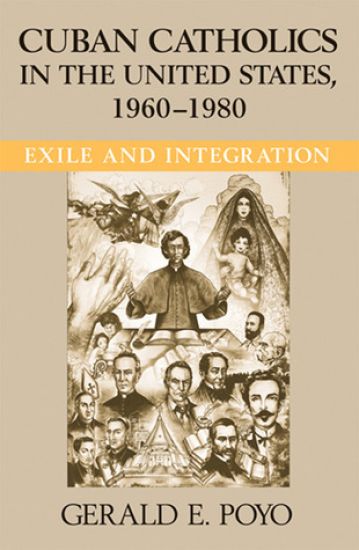
Cuban Catholics in the United States, 1960-1980

Cuban Catholics in the United States, 1960-1980

Gerald E. Poyo

University of Notre Dame Press
2007
sidottu
Everyday life for Cubans in the United States during the 1960s and 1970s involved an intimate interaction between commitment to an exile identity and reluctant integration into a new society. For Catholic Cuban exiles, their faith provided a filter through which they analyzed and understood both their exile and their ethnic identities. Catholicism offered the exiles continuity: a community of faith, a place to gather, a sense of legitimacy as a people. Religion exerted a major influence on the beliefs and actions of Cuban exiles as they integrated into U.S. culture and tried at the same time to make sense of events in their homeland. Cuban Catholics in the United States, 1960-1980 examines all these facets of the exile and integration process among Catholics, primarily in south Florida, but the voices of others across the United States, Latin America, and Europe also enter the story. The personal papers of exiles, their books and pamphlets, newspaper articles, government archives, and personal interviews provide the historical data for this book. In his thorough examination Gerald E. Poyo provides insights not only for this community but for other faith-based exile communities.
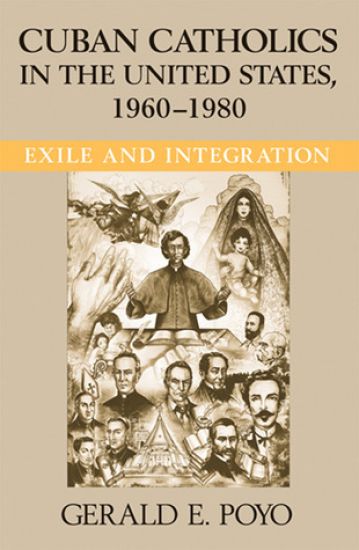
Cuban Catholics in the United States, 1960-1980

Cuban Catholics in the United States, 1960-1980

Gerald E. Poyo

University of Notre Dame Press
2007
nidottu
Everyday life for Cubans in the United States during the 1960s and 1970s involved an intimate interaction between commitment to an exile identity and reluctant integration into a new society. For Catholic Cuban exiles, their faith provided a filter through which they analyzed and understood both their exile and their ethnic identities. Catholicism offered the exiles continuity: a community of faith, a place to gather, a sense of legitimacy as a people. Religion exerted a major influence on the beliefs and actions of Cuban exiles as they integrated into U.S. culture and tried at the same time to make sense of events in their homeland. Cuban Catholics in the United States, 1960-1980 examines all these facets of the exile and integration process among Catholics, primarily in south Florida, but the voices of others across the United States, Latin America, and Europe also enter the story. The personal papers of exiles, their books and pamphlets, newspaper articles, government archives, and personal interviews provide the historical data for this book. In his thorough examination Gerald E. Poyo provides insights not only for this community but for other faith-based exile communities.
Commonwealth Catholicism

Commonwealth Catholicism

Gerald P. Fogarty

University of Notre Dame Press
2001
nidottu
Commonwealth Catholicism is the first comprehensive history of the Catholic Church in the State of Virginia. Distinguished historian Gerald P. Fogarty tells the story of Virginia's Catholics in the state's history, from the colonial period to the present. Using archival resources, Fogarty brings to life the events and characters that comprise the Church's colorful and often turbulent history. Catholics in Virginia, as in other parts of the South, were a tiny minority from the beginning and remained so for much of their history. They gathered into small, isolated communities, often without a resident priest. The Catholic population in Virginia was so small, in fact, that there was only one diocese until 1974. Catholics were often suspected of unpatriotic sympathies by their Protestant neighbors and tried to remain unnoticed, blending in, as far as possible, with the prevailing Protestant culture. Full religious tolerance for Virginia Catholics did not come until the Revolution. Reconstructing the available documentary evidence, Fogarty tells the story of these early communities in full detail. Fogarty also brings to life many of the prominent actors in the unfolding drama. Father Matthew O'Keefe, the pastor of the Norfolk region from 1852 until 1886—a period of intense Know Nothing activity—is one example. O'Keefe was asked by two men calling at the rectory door to minister to a dying man. Reaching the Elizabeth River on the edge of Portsmouth, Virginia, the two said that the dying man lay further on. O'Keefe "took a pair of revolvers from his coat, placed the men under citizen's arrest, and marched them into Portsmouth where he turned them over to the sheriff. They subsequently confessed that they had been hired to assassinate him." Commonwealth Catholicism, a considerable accomplishment from one of the most prominent historians of American Catholicism, will remain for many years the definitive study on the subject of Virginia's Catholic heritage.
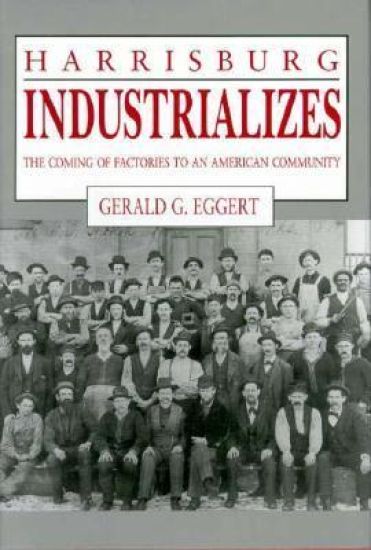
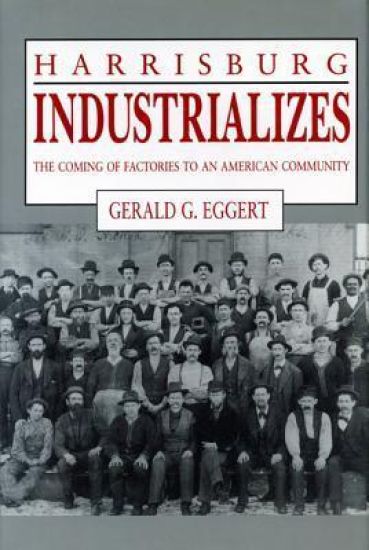
Harrisburg Industrializes

Harrisburg Industrializes

Gerald G. Eggert

Pennsylvania State University Press
1992
sidottu
In 1850, Harrisburg, Pennsylvania, was a community like many others in the U. S., employing most of its citizens in trade and commerce. Unlike its larger neighbors, Pittsburgh and Philadelphia, Harrisburg had not yet experienced firsthand the Industrial Revolution. Within a decade, however, Harrisburg boasted a cotton textile mill, two blast furnaces and several iron rolling mills, a railroad car manufactory, and a machinery plant. This burst of industrial activity naturally left its mark on the community, by within two generations most industry had left Harrisburg, and its economic base was shifting toward white-collar governmental administration and services. Harrisburg Industrializes looks at this critical episode in Harrisburg's history to discover how the coming of the factory system affected the life of the community.Eggert begins with the earliest years of Harrisburg, describing its transformation from a frontier town to a small commercial and artisanal community. He identifies the early entrepreneurs who built the banking, commercial, and transportation infrastructure, which would provide the basis for industry at mid-century. Eggert then reconstructs the development of the principal manufacturing firms from their foundings, through the expansive post-Civil War era, to the onset of deindustrialization near the end of the century. Through census and company records, he is able to follow the next generation of craftsmen and entrepreneurs as well as the new industrial workers—many of then minorities—who came to the city after 1850.Eggert sees Harrisburg's experience with the factory system as "second-stage," or imitative, industrialization, which was typical of many, if not most, communities that developed factory production. At those relatively few industrial centers (Lowell and Pittsburgh, for example) where new technologies arose and were aggressively impose on workers, the consequences were devastating, often causing alienation, rebellion, and repression. By contrast, at secondary centers like Harrisburg (or Reading, Scranton, or Wilmington), industrialization came later, was derivative rather than creative, was modest in scale, and focused on local and regional markets. Because the new factories did not compete with local crafts, few displaced artisans became factory hands. At the same time, an adequate supply of local native-born workers forestalled an influx of immigrants, so Harrisburg experienced little ethnic hostility. Ultimately, therefore, Eggert concludes that the introduction of an industrial order was much less disruptive in Harrisburg than in the major industrial sites, primarily because it did not alter so profoundly the existing economic and social order.
Domesticating Revolution

Domesticating Revolution

Gerald W. Creed

Pennsylvania State University Press
1997
sidottu
The collapse of state socialism in 1989 focused attention on the transition to democracy and capitalism in Eastern Europe. But for many people who actually lived through the transition, the changes were often disappointing. Perhaps none were more disappointed than the villagers of rural Bulgaria whose very lifestyles and identities were threatened by the transition. Domesticating Revolution explains this unexpected outcome through a detailed study of economic reform in one Bulgarian village, from the beginning of collectivization in the 1940s to decollectivization efforts in the 1990s. Gerald Creed is the only American anthropologist to have conducted extended fieldwork in a single Bulgarian village both during and after the socialist era. This work has enabled him to document the precise connections between socialist practice and postsocialist developments. He suggests that by simply doing what they could to improve their difficult lot under socialism, Bulgarian villagers gradually domesticated the socialist system. This very achievement, however, set the stage for an ambivalent transition after 1989 as villagers sought to defend their earlier gains against new threats. Ironically, they appealed to domesticated socialism in a failed effort to domesticate the transition as well. Domesticating Revolution will force scholars to rethink both their models of state socialism and their interpretations of the transition.
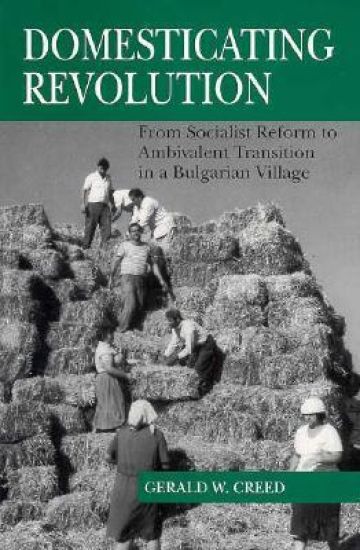
Domesticating Revolution

Domesticating Revolution

Gerald W. Creed

Pennsylvania State University Press
1997
pokkari
The collapse of state socialism in 1989 focused attention on the transition to democracy and capitalism in Eastern Europe. But for many people who actually lived through the transition, the changes were often disappointing. Perhaps none were more disappointed than the villagers of rural Bulgaria whose very lifestyles and identities were threatened by the transition. Domesticating Revolution explains this unexpected outcome through a detailed study of economic reform in one Bulgarian village, from the beginning of collectivization in the 1940s to decollectivization efforts in the 1990s. Gerald Creed is the only American anthropologist to have conducted extended fieldwork in a single Bulgarian village both during and after the socialist era. This work has enabled him to document the precise connections between socialist practice and postsocialist developments. He suggests that by simply doing what they could to improve their difficult lot under socialism, Bulgarian villagers gradually domesticated the socialist system. This very achievement, however, set the stage for an ambivalent transition after 1989 as villagers sought to defend their earlier gains against new threats. Ironically, they appealed to domesticated socialism in a failed effort to domesticate the transition as well. Domesticating Revolution will force scholars to rethink both their models of state socialism and their interpretations of the transition.
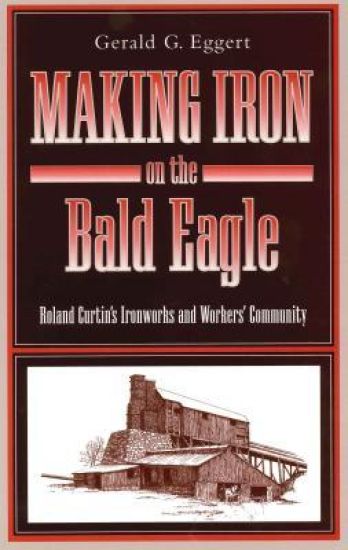
Making Iron on the Bald Eagle

Making Iron on the Bald Eagle

Gerald G. Eggert

Pennsylvania State University Press
1999
sidottu
In 1810, Irish immigrant Roland Curtin launched a charcoal ironmaking operation in central Pennsylvania that continued for 110 years. Through this engaging account of Curtin and his iron plantation, Gerald Eggert provides an important chapter in the history of the iron industry in America. Eggert's story begins with Curtin’s arrival in the Bald Eagle Valley in 1797. From the time he constructed his first forge on the south bank of Bald Eagle Creek until the final closing of the Eagle Ironworks in 1922, Roland and his sons, then his grandsons, and still later a great-grandson operated what had become one of Centre County's major enterprises. Throughout much of its history, the Eagle Works employed between 100 and 200 full- and part-time workmen. Eggert analyzes the workforce and describes life in the workers' village. The relationships, lifestyles, and housing of the Curtins, in contrast to those of their employees, offer insights into the social history of the period. Eggert also provides an excellent summary of the ironmaking process—from the cutting of wood and making of charcoal to the mining of ore and smelting of the iron—and the challenges of transporting iron products out of the frontier to Pittsburgh and Philadelphia.The long history of the Curtin family's Eagle Ironworks mirrors both the rise and the long decline of American charcoal-iron production. Typical of the small, family-owned enterprises that bridged the gap between preindustrial and modern industrial production, the history of the Eagle Ironworks illustrates both the industrializing and, later, the deindustrializing processes and the impact these had on all who were involved. When the Eagle Ironworks closed in 1922, it was the last charcoal-iron establishment in Pennsylvania and one of the two or three last such works in the United States.
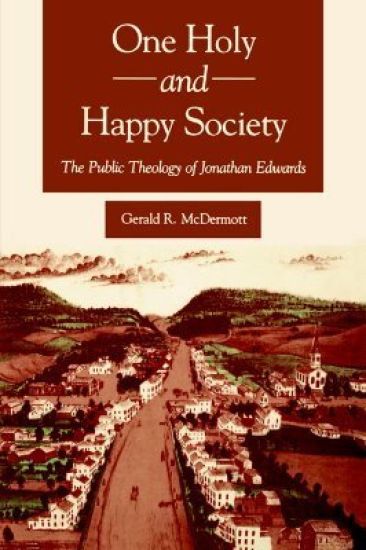
One Holy and Happy Society

One Holy and Happy Society

Gerald McDermott

Pennsylvania State University Press
1992
pokkari
Jonathan Edwards (1703–58) was arguably this country's greatest theologian and its finest philosopher before the nineteenth century. His school if disciples (the "New Divinity") exerted enormous influence on the religious and political cultures of late colonial and early republican America. Hence any study of religion and politics in early America must take account of this theologian and his legacy.Yet historians still regard Edward's social theory as either nonexistent or underdeveloped. Gerald McDermott demonstrates, to the contrary, that Edwards was very interested in the social and political affairs of his day, and commented upon them at length in his unpublished sermons and private notebooks. McDermott shows that Edwards thought deeply about New England's status under God, America's role in the millennium, the nature and usefulness of patriotism, the duties of a good magistrate, and what it means to be a good citizen. In fact, his sociopolitical theory was at least as fully developed as that of his better-known contemporaries and more progressive in its attitude toward citizens' rights.Using unpublished manuscripts that have previously been largely ignored, McDermott also convincingly challenges generations of scholarly opinion about Edwards. The Edwards who emerges from this nook is both less provincial and more this-worldly than the persona he is commonly given.
Harrisburg Industrializes

Harrisburg Industrializes

Gerald G. Eggert

Pennsylvania State University Press
1992
pokkari
In 1850, Harrisburg, Pennsylvania, was a community like many others in the U. S., employing most of its citizens in trade and commerce. Unlike its larger neighbors, Pittsburgh and Philadelphia, Harrisburg had not yet experienced firsthand the Industrial Revolution. Within a decade, however, Harrisburg boasted a cotton textile mill, two blast furnaces and several iron rolling mills, a railroad car manufactory, and a machinery plant. This burst of industrial activity naturally left its mark on the community, by within two generations most industry had left Harrisburg, and its economic base was shifting toward white-collar governmental administration and services. Harrisburg Industrializes looks at this critical episode in Harrisburg's history to discover how the coming of the factory system affected the life of the community.Eggert begins with the earliest years of Harrisburg, describing its transformation from a frontier town to a small commercial and artisanal community. He identifies the early entrepreneurs who built the banking, commercial, and transportation infrastructure, which would provide the basis for industry at mid-century. Eggert then reconstructs the development of the principal manufacturing firms from their foundings, through the expansive post-Civil War era, to the onset of deindustrialization near the end of the century. Through census and company records, he is able to follow the next generation of craftsmen and entrepreneurs as well as the new industrial workers—many of then minorities—who came to the city after 1850.Eggert sees Harrisburg's experience with the factory system as "second-stage," or imitative, industrialization, which was typical of many, if not most, communities that developed factory production. At those relatively few industrial centers (Lowell and Pittsburgh, for example) where new technologies arose and were aggressively impose on workers, the consequences were devastating, often causing alienation, rebellion, and repression. By contrast, at secondary centers like Harrisburg (or Reading, Scranton, or Wilmington), industrialization came later, was derivative rather than creative, was modest in scale, and focused on local and regional markets. Because the new factories did not compete with local crafts, few displaced artisans became factory hands. At the same time, an adequate supply of local native-born workers forestalled an influx of immigrants, so Harrisburg experienced little ethnic hostility. Ultimately, therefore, Eggert concludes that the introduction of an industrial order was much less disruptive in Harrisburg than in the major industrial sites, primarily because it did not alter so profoundly the existing economic and social order.
Making Iron on the Bald Eagle

Making Iron on the Bald Eagle

Gerald G. Eggert

Pennsylvania State University Press
2015
pokkari
In 1810, Irish immigrant Roland Curtin launched a charcoal ironmaking operation in central Pennsylvania that continued for 110 years. Through this engaging account of Curtin and his iron plantation, Gerald Eggert provides an important chapter in the history of the iron industry in America. Eggert's story begins with Curtin’s arrival in the Bald Eagle Valley in 1797. From the time he constructed his first forge on the south bank of Bald Eagle Creek until the final closing of the Eagle Ironworks in 1922, Roland and his sons, then his grandsons, and still later a great-grandson operated what had become one of Centre County's major enterprises. Throughout much of its history, the Eagle Works employed between 100 and 200 full- and part-time workmen. Eggert analyzes the workforce and describes life in the workers' village. The relationships, lifestyles, and housing of the Curtins, in contrast to those of their employees, offer insights into the social history of the period. Eggert also provides an excellent summary of the ironmaking process—from the cutting of wood and making of charcoal to the mining of ore and smelting of the iron—and the challenges of transporting iron products out of the frontier to Pittsburgh and Philadelphia.The long history of the Curtin family's Eagle Ironworks mirrors both the rise and the long decline of American charcoal-iron production. Typical of the small, family-owned enterprises that bridged the gap between preindustrial and modern industrial production, the history of the Eagle Ironworks illustrates both the industrializing and, later, the deindustrializing processes and the impact these had on all who were involved. When the Eagle Ironworks closed in 1922, it was the last charcoal-iron establishment in Pennsylvania and one of the two or three last such works in the United States.