In Christmas with Gordon, superstar chef Gordon Ramsay offers inspiration, adviceand 75 failsafe and delicious recipes for all occasions over the Christmas period.The stars of the show are five Christmas Feasts - turkey, goose, beef, ham or seabass - and the recipes include starters, accompaniments and desserts for each.To take the stress out of Christmas Gordon offers masses of advice on ordering,shopping, preparation and timing. Also included is a great chapter on PartyFood, and inspired recipes for Breakfast & Brunch, Lunches & Suppers, andSweet Treats. Gordon's favourite Christmas ingredients, including stilton, smokedsalmon, turkey and ham, are highlighted with suggestions for creative ways to usethem over the Christmas period. Plus there's advice on wines and party drinks,cheese and other festive ingredients to make this the essential guide to the perfectChristmas.
A contemporary classic set during the Glasgow Rent Strike of 1915, with one of the best women's roles ever to emerge from Scottish theatre, an unforgettable tragicomic heroine with an extraordinary power to repel and attract. The Quinn family live in a Glasgow tenement so poor the only floor covering is old newspapers. But Elizabeth Gordon Quinn is indomitable in the face of poverty and rising rents. Furthermore, she is harbouring a son who is wanted by the police for desertion. Chris Hannan's play Elizabeth Gordon Quinn was first staged at the Traverse Theatre, Edinburgh, in 1985. This radically revised version was published alongside the major revival by the National Theatre of Scotland in 2006.
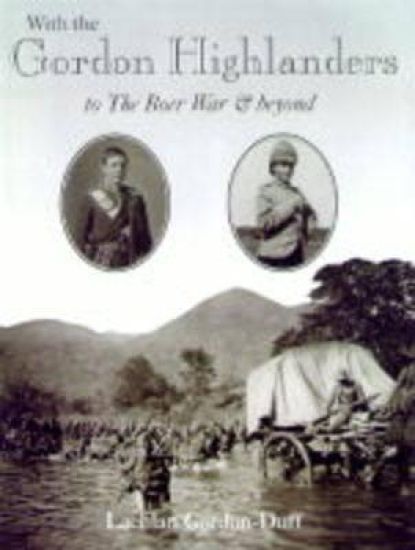
The story of Lachlan Gordon-Duff, a young officer in the Gordon Highlanders during the Boer War. From letters sent to his family, a vivid account is given of the fighting and hardships they faced.
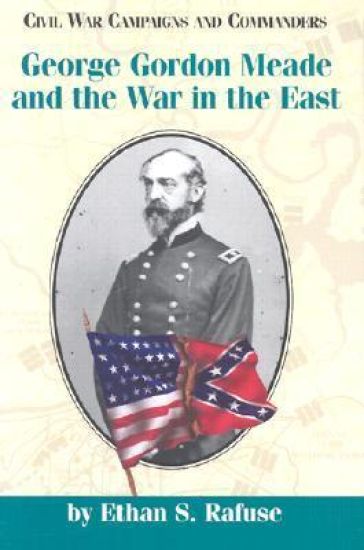
Despite his defeat of Robert E. Lee at Gettysburg and his major role in several other Civil War campaigns, George Gordon Meade is perceived as the last of the unsuccessful generals of the Army of the Potomac. This biography examines the political dynamics that shaped his military strategy.
This book will accompany the first major solo exhibition of Douglas Gordon's work in Scotland since he presented his now celebrated work, 24 Hour Psycho at Tramway in Glasgow in 1993. Gordon is one of a number of Glasgow-trained artists who came to prominence in the 1990s. He has gone on to achieve huge international recognition, marked by major awards, including the Turner Prize in 1996, and by exhibitions in museums in Europe and America. Gordon works with film, video, photographs, objects and texts, examining issues such as memory and identity, good and evil, life and death. He makes great play with the doubling of images often in positive and negative or in mirrored form. This book will show all the important aspects of Gordon's work, both past and present. In addition, it will be specially tailored to bring out the particularly Scottish nature of Gordon s ideas and practice. The exhibition book will contain essays by the exhibition curator, Keith Hartley, senior curator at the Scottish Nati
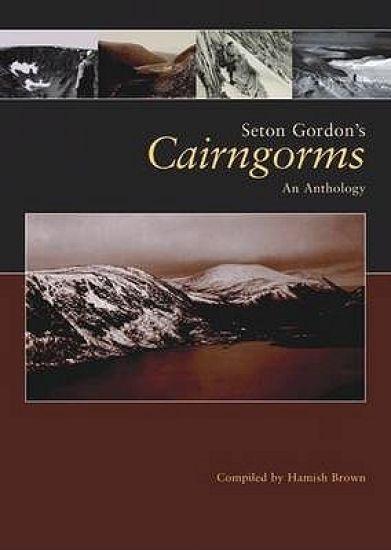
Seton Gordon was only a boy when he began exploring the Cairngorms, fascinated by its wildlife and seeking to photograph all he saw - he later became a pioneer naturalist, photographer and folklorist. He wrote about the land that is Scotland, her flora and fauna, her people, her spirits, her often violent past. He took the earliest pictures of golden eagles at their eyries and throughout the first half of the 20th century came to know Scotland's remotest corners, amassing a unique photographic record, recording the changing social life of the islands, collecting a mass of folklore and historical stories, lecturing and writing both for regular publications and in 27 books. Like John Muir, he was a wanderer and a guide. We walk with him through pinewoods, to eyries, to the corries of the Cairngorms, we follow him trying to recreate the greenshank's song on his bagpipe chanter; and see him holding a snowball windward of a nesting dotterel to cool its panting.Welcomed in croft or palace, a keen piper, inevitably dressed in kilt and bunnet, Seton Gordon was one of the age's great characters. This selection from his writings gives a fascinating insight of the man and his great versatility. The author, himself a Scottish outdoors enthusiast and well-known author, has been a lifelong admirer of Seton Gordon and his books and has created a book to treasure.
Seton Gordon really created himself as naturalist, photographer and writer, the first such in the country, his first book appearing when he was eighteen. In all he wrote 27 books, two specifically about the Cairngorms where he grew up and first explored and returned to many times throughout his long life. He wrote with a revelational wonder and freshness, writing in poetic prose descriptions only possible by someone intimately at home in the hills with their interacting, connected features: birds, plants, trees, geology, weather, Gaelic culture, place names, history, folklore - an ecologist before the word was coined. Hamish Brown selected passages for "Seton Gordon's Scotland" and has now made a fascinating choice from Seton Gordon's extensive writings about the Cairngorms. There are descriptions of hill days throughout the seasons and intimate descriptions of wildlife. Seton Gordon lived to a great age but the Cairngorms were his first, young man's enthusiasm. Hamish Brown, no mean mountaineer and lover of the outdoors, has garnered biographical material and archive pictures for a book which everyone with an interest in the Scottish hills will welcome.
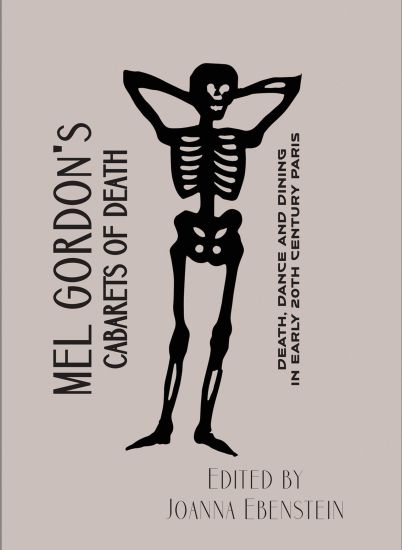
From 1892 until 1954, three cabaret-restaurants in the Montmartre district of Paris captivated tourists with their grotesque portrayals of death in the afterworlds of Hell, Heaven, and Nothingness. Each had specialized cuisines and morbid visual displays with flashes of nudity and shocking optical illusions. These cabarets were considered the most curious and widely featured amusements in the city. Entrepreneurs even hawked graphic postcards of their ironic spectacles and otherworldly interiors.Cabarets of Death documents the dinner shows, the character interactions with guests, and the theatrical goings-on in these unique establishments. Presenting original images and drawings from contemporary journals, postcards, tourist brochures, and menus, Mel Gordon leads a tour of these idiosyncratically macabre institutions, and grants us unique access to a form of popular spectacle now gone.
Alastair Gordon (b.1978, Edinburgh), is an artist based in London. This, the first major monograph of the artist’s career, includes over 160 paintings, drawings and documentational photographs, along with notes by Gordon himself. The book introduces this accomplished and engaging new voice in British painting.Gordon’s paintings bring the historic languages of genre painting and the quodlibet into a contemporary discourse that pushes the boundaries of realism, figuration and illusionism to focus on everyday moments. His work often elevates seemingly ordinary objects – feathers, matchsticks, postcards – allowing them to speak to wider concerns of beauty, truth, life and death. The documented works, produced between 2012 and 2023, include paintings made in oil or acrylic on MDF, wood, ‘found’ wood, gesso panel, paper, canvas and occasionally linen. Each is distinctive for its style and for the recurring motifs Gordon selects such as masking tape, paper ephemera and repeated, subtly different studies of the same subject. Gordon’s texts describe how objects found mud larking on the banks of the River Thames, shoes from the London City Mission and rags and papers discarded from art students’ studios have been depicted in paintings, incorporating the histories and stories of each item (and each person) into his work. The book also features recent works influenced by rural landscapes and parkland.An introduction by Julia Lucero, Associate Director of Nahmad Projects, London, emphasises the importance of nature and of meditation within Gordon’s practice. Specifically, Lucero brings out the idea of the ‘axis mundi, that metaphysical and mystical connecting point where heaven meets Earth’. She explores the significance of quodlibet, a seventeenth-century trompe-l’oeil painting technique that Gordon favours, rendering brushstrokes invisible and affording everyday objects new significance, even ‘profound value’. Humble objects such as a matchstick or paper aeroplane might be elevated to the realms of the divine. An essay by Jorella Andrews, Professor of Visual Cultures at Goldsmiths, University of London, describes the influence of Gordon’s time on a research residency in the former studio of Paul Cézanne at Les Lauves on the outskirts of Aix-en-Provence. His experiences there proved pivotal to the direction of his practice, in which both the ‘visual misdirection’ of quodlibet and the qualities of wood have become central. Andrews brings art historical texts and works of art into relation with Gordon’s paintings, making comparisons between subject, form and approach. Andrews’ text further details the recent synthesis of two sides of Gordon’s work: precise illusionism combined with looser observations made in the natural landscape.Edited by Alastair Gordon Studio, designed by Herman Lelie, printed by EBS Verona and published in 2023 by Anomie Publishing, London, the publication has been generously supported by Howard and Roberta Ahmanson through Fieldstead and Company.Alastair Gordon (b. 1978, Edinburgh) is an artist working with painting, drawing and installation, based in London. Gordon received his BA from Glasgow School of Art and his MA from Wimbledon School of Art, London. His work has been shown in recent solo exhibitions at Ahmanson Gallery in Irvine, California (2017), Aleph Contemporary, London (Quodlibet (2021) and Without Borders (2020)) and in the group exhibition Unpacking Gainsborough (2021) at Cynthia Corbett Gallery, London.
In Driven to Greatness, discover the riveting journey of Jimmy Johnson-a man whose passion for speed and relentless drive transformed him from a curious boy in a small-town garage into one of motorsport's most celebrated legends. This comprehensive biography takes you through every twist and turn of his illustrious career. From his formative years immersed in the scent of motor oil and the excitement of local races, to the breakthrough moments on international circuits that redefined modern racing, Jimmy's story is one of innovation, perseverance, and an unwavering commitment to excellence.More than just a chronicle of victories and record-breaking laps, this book delves into the personal side of a racing icon. It reveals the invaluable lessons learned from early mentors, the tight-knit bond shared with his pit crew, and the profound impact his legacy has had on future generations of drivers. With candid reflections on the challenges of fame, the evolution of racing technology, and his tireless efforts in community outreach and charity, Driven to Greatness offers an intimate look at how one man's passion reshaped an entire sport-and continues to inspire countless fans and aspiring racers around the world.
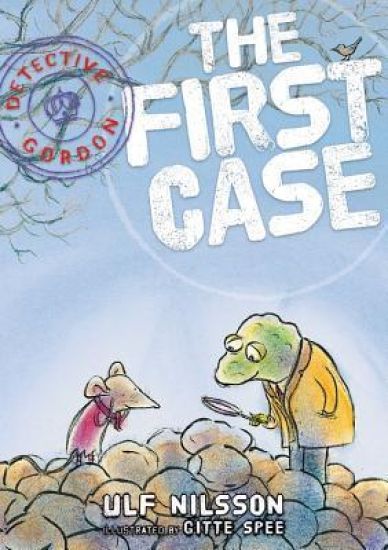
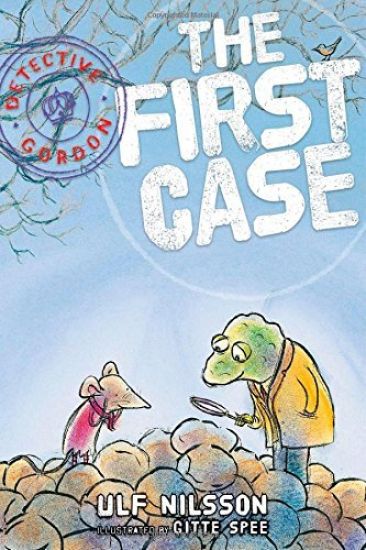
An award-winning illustrated detective story set in a friendly forest and first in the acclaimed series for beginning readers. Detective Gordon - a mystery-solving toad who loves cake - has his very first case. Someone's stealing nuts from the forest, and it's up to Detective Gordon to catch the thief Unfortunately, solving this crime means standing in the snow and waiting for a long time... If only he had an assistant - someone small, fast, and clever - to help solve this terrible case. Then Detective Gordon would be able to go back to doing what he's best at: thinking, eating cakes, drinking tea, and stamping important papers. A perfect first chapter book for children aged five and up by one of Sweden's top children's writers. This much-loved junior fiction series is illustrated in full color throughout and packed full of character and humor. Winner of multiple awards and accolades, Detective Gordon is a fun whodunnit mystery series to read alone or aloud. Ulf Nilsson is a celebrated children's writer in Sweden. He has written more than 20 books for all ages, including All the Dear Little Animals. He is a winner of the August Award and the American Batchelder Award. Gitte Spee is a renowned artist from the academy of fine art and design in the Netherlands. She now works in Amsterdam as a children's book illustrator. Translated from the Swedish edition by Julia Marshall. Read all the Detective Gordon series: Detective Gordon: A Complicated Case Detective Gordon: A Case in Any Case Detective Gordon: A Case for Buffy Praise for Detective Gordon: The First Case "KLA-DUNK Another winner." Kirkus Reviews, starred review "A must-have for chapter book collections." School Library Journal, starred review "Full of warm humour and wisdom...with a feather-light touch." Best Books of 2015, Horn Book "A wonderful choice for independent reading." Booklist, starred review
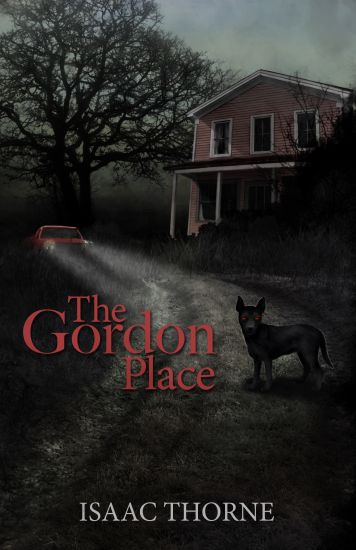
Lost Hollow constable Graham Gordon just walked into his abandoned childhood home for the first time in twenty years. Local teenagers have been spreading rumors about disembodied screams coming from inside. Now, thanks to a rickety set of cellar stairs and the hateful spirit of his dead father, he might never escape.Meanwhile, Channel 6 News feature reporter Afia Afton-whose father is the victim of a local decades-old hate crime-is meeting with town administrator Patsy Blankenship. Her mission is to develop a ghost story feature for a special to air on the station's Halloween broadcast. When Patsy tells her about the screams at the Gordon place, the past and the present are set on a collision course with potentially catastrophic results.Can Graham come to terms with his father's past and redeem his own future? Can the murder mystery that has haunted Afia for most of her life finally be solved?It's a fight for the future and the past when spirit and flesh wage war at the Gordon place.ABOUT THE CONTENTSFor more information about the tropes and contents of this story, please see the author's website: www.isaacthorne.com/gordon-place
Lost Hollow constable Graham Gordon just walked into his abandoned childhood home for the first time in twenty years. Local teenagers have been spreading rumors about disembodied screams coming from inside. Now, thanks to a rickety set of cellar stairs and the hateful spirit of his dead father, he might never escape.Meanwhile, Channel 6 News feature reporter Afia Afton-whose father is the victim of a local decades-old hate crime-is meeting with town administrator Patsy Blankenship. Her mission is to develop a ghost story feature for a special to air on the station's Halloween broadcast. When Patsy tells her about the screams at the Gordon place, the past and the present are set on a collision course with potentially catastrophic results.Can Graham come to terms with his father's past and redeem his own future? Can the murder mystery that has haunted Afia for most of her life finally be solved?It's a fight for the future and the past when spirit and flesh wage war at the Gordon place.ABOUT THE CONTENTSFor information about the tropes and other contents in this story, please see the author's website: www.isaacthorne.com/gordon-place
When her husband, Gordon, was diagnosed first with Alzheimer's dementia and later Lewy body dementia, Ruth and Gordon Pollard faced the challenge of their lifetime. Aiming to keep him at home as long as possible while knowing a memory care facility might be an eventual reality, Ruth educated herself about every aspect of the disease, attending seminars and reading stacks of books. She embraced support from family, friends and neighbors and joined a support group. And most importantly she asked for help, for this journey cannot be completed on one's own.Along the way, Ruth found wisdom in the words and actions of professional caregivers as well as her dearest loved ones. Surprisingly, help also came from complete strangers in the form of encouragement and understanding. The journal she kept for several years now supports and inspires caregivers and their family members through their walk with dementia, one of life's most arduous, tender and compassionate journeys.
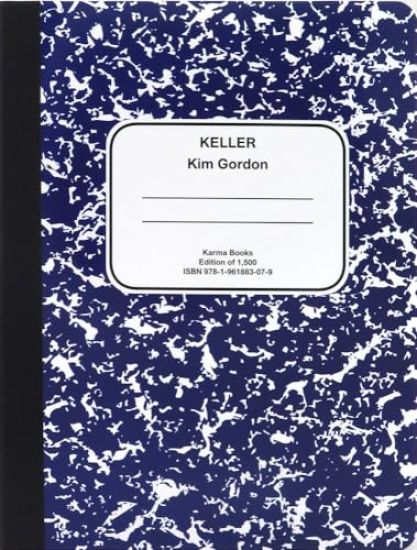
The musician’s tender and nuanced tribute to the life and work of her deceased brother This volume is an intimate consideration of musician Kim Gordon’s brother’s life and art featuring personal photographs and pages from his journals. Following Keller Gordon’s death in 2023, his sister collected mementos—relics from a shared existence spent dipping in and out of one another’s lives over decades—including drawings, photos, poems and the diaries he kept at various stages of lucidity. The Sonic Youth frontwoman also authored a diaristic essay about their childhood, the complexities of family dynamics and the double-edged sword of creating and maintaining legends about those we love and admire. “I know exactly when the myth of my brother started,” she writes. Designed to evoke the format of Keller’s diaries, this volume features facsimiles of his writings, offering insight into the complicated figure of Keller Gordon as well as his sister’s life. Through Kim’s prose and Keller’s own words, Keller extends and destabilizes the form of the biography, foregrounding the fragmented and the imperfect, echoing how memories themselves dissolve and take new shape over time. Kim Gordon is an artist and cofounding member of the bands Sonic Youth and Body/Head, and the author of the memoir Girl in a Band.