Kirjojen hintavertailu. Mukana 12 016 292 kirjaa ja 12 kauppaa.

Kirjahaku

Etsi kirjoja tekijän nimen, kirjan nimen tai ISBN:n perusteella.

1000 tulosta hakusanalla Grass Timothy

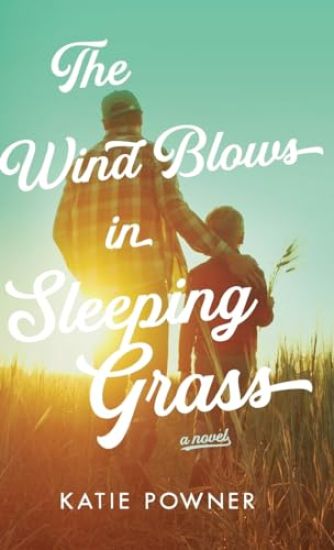
Wind Blows in Sleeping Grass

Wind Blows in Sleeping Grass

Katie Powner

BETHANY HOUSE
2023
sidottu
Pete is content in his simple life in a remote Montana town, but elderly widow Wilma is busy meddling in Pete's life to make up for past wrongs. When the sister Pete was separated from as a child shows up, Pete must confront a difficult past, and Wilma discovers her long-awaited chance at redemption may come at too high a price.
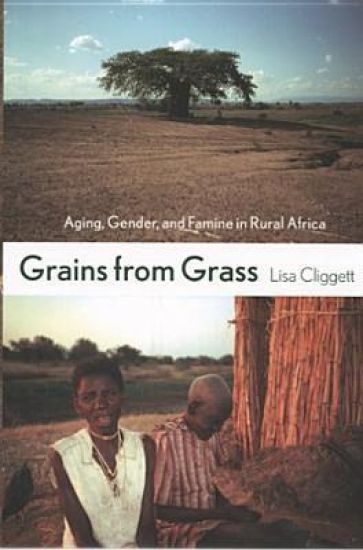
Grains from Grass

Grains from Grass

Lisa Cliggett

Cornell University Press
2005
sidottu
In her ethnography of the Gwembe Tonga people of rural Zambia, Lisa Cliggett explores what happens to kinship ties in times of famine. The Tonga, a matrilineal Bantu-speaking society, had long lived and farmed along the banks of the Zambezi River, but when the Kariba Dam was completed and the river valley was flooded in 1958, approximately 57,000 people were forcibly relocated. All of southern Africa has suffered from severe droughts in the last three decades, and the Gwembe Valley has proved particularly susceptible to failed harvests and sociopolitically and ecologically triggered crises.The work of survival for the Gwembe Tonga includes difficult decisions about how to distribute inadequate resources among family members. Physically limited elderly Tonga who rely on their kin for food and assistance are particularly vulnerable. Cliggett examines Tonga household economies and support systems for the elderly. Old men and women, she finds, use deeply gendered approaches to encourage aid from their children and fend off starvation. In extreme circumstances, often the only resources at people's disposal are social support networks. Cliggett's book tells a story about how people living in environmentally and economically dire circumstances manage their social and material worlds to the best of their ability, sometimes at the cost of maintaining kinship bonds—a finding that challenges Western notions of family among indigenous people, especially in rural Africa.
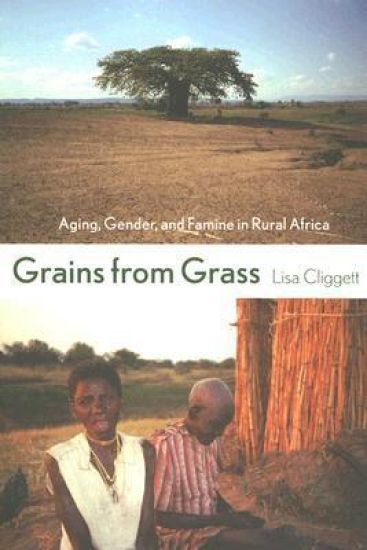
Grains from Grass

Grains from Grass

Lisa Cliggett

Cornell University Press
2005
pokkari
In her ethnography of the Gwembe Tonga people of rural Zambia, Lisa Cliggett explores what happens to kinship ties in times of famine. The Tonga, a matrilineal Bantu-speaking society, had long lived and farmed along the banks of the Zambezi River, but when the Kariba Dam was completed and the river valley was flooded in 1958, approximately 57,000 people were forcibly relocated. All of southern Africa has suffered from severe droughts in the last three decades, and the Gwembe Valley has proved particularly susceptible to failed harvests and sociopolitically and ecologically triggered crises.The work of survival for the Gwembe Tonga includes difficult decisions about how to distribute inadequate resources among family members. Physically limited elderly Tonga who rely on their kin for food and assistance are particularly vulnerable. Cliggett examines Tonga household economies and support systems for the elderly. Old men and women, she finds, use deeply gendered approaches to encourage aid from their children and fend off starvation. In extreme circumstances, often the only resources at people's disposal are social support networks. Cliggett's book tells a story about how people living in environmentally and economically dire circumstances manage their social and material worlds to the best of their ability, sometimes at the cost of maintaining kinship bonds—a finding that challenges Western notions of family among indigenous people, especially in rural Africa.
Leaves of Grass

Leaves of Grass

University of Nebraska Press
2008
pokkari
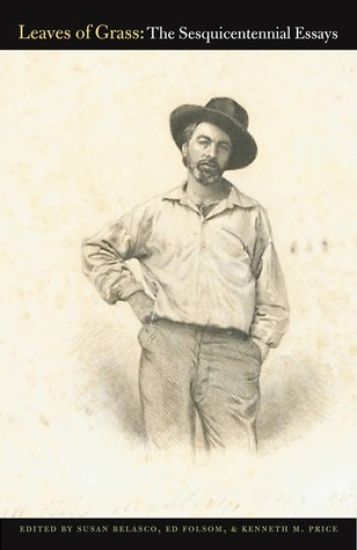
This comprehensive volume celebrates the 150th anniversary of the 1855 edition of Walt Whitman's Leaves of Grass with twenty essays by preeminent scholars representing a variety of critical perspectives that focus exclusively on the original edition. Once regarded as primarily a collector's item, this edition is now viewed as the poet's most bold and compelling articulation of the possibilities of American democracy. The essays weave a rich tapestry of the most current, innovative criticism on this foundational book of American poetry. The contributors treat Whitman's poetry, his biography, his politics, his reception in the United States and abroad, race and ethnic issues, nineteenth-century America, and even the complex typographical history of the first edition of Leaves of Grass. The volume also includes a tribute from the renowned poet Galway Kinnell.
All Flesh Is Grass

All Flesh Is Grass

Gene Logsdon

Swallow Press
2004
sidottu
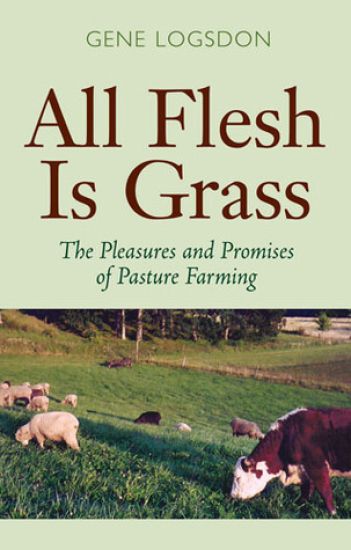
Amidst Mad Cow scares and consumer concerns about how farm animals are bred, fed, and raised, many farmers and homesteaders are rediscovering the traditional practice of pastoral farming. Grasses, clovers, and forbs are the natural diet of cattle, horses, and sheep, and are vital supplements for hogs, chickens, and turkeys. Consumers increasingly seek the health benefits of meat from animals raised in green paddocks instead of in muddy feedlots. In All Flesh Is Grass: The Pleasures and Promises of Pasture Farming, Gene Logsdon explains that well-managed pastures are nutritious and palatable—virtual salads for livestock. Leafy pastures also hold the soil, foster biodiversity, and create lovely landscapes. Grass farming might be the solution for a stressed agricultural system based on an industrial model and propped up by federal subsidies. In his clear and conversational style, Logsdon explains historically effective practices and new techniques. His warm, informative profiles of successful grass farmers offer inspiration and ideas. His narrative is enriched by his own experience as a "contrary farmer" on his artisan-scale farm near Upper Sandusky, Ohio. All Flesh Is Grass will have broad appeal to the sustainable commercial farmer, the home-food producer, and all consumers who care about their food.
All Flesh Is Grass

All Flesh Is Grass

Gene Logsdon

Swallow Press
2004
pokkari
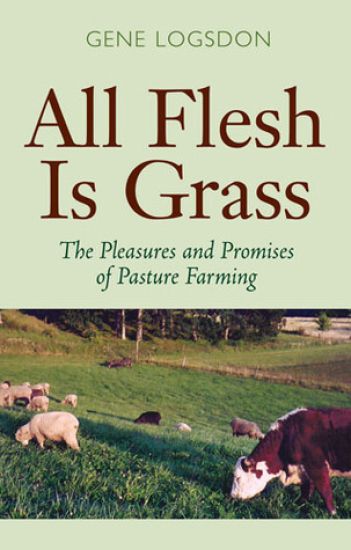
Amidst Mad Cow scares and consumer concerns about how farm animals are bred, fed, and raised, many farmers and homesteaders are rediscovering the traditional practice of pastoral farming. Grasses, clovers, and forbs are the natural diet of cattle, horses, and sheep, and are vital supplements for hogs, chickens, and turkeys. Consumers increasingly seek the health benefits of meat from animals raised in green paddocks instead of in muddy feedlots. In All Flesh Is Grass: The Pleasures and Promises of Pasture Farming, Gene Logsdon explains that well-managed pastures are nutritious and palatable—virtual salads for livestock. Leafy pastures also hold the soil, foster biodiversity, and create lovely landscapes. Grass farming might be the solution for a stressed agricultural system based on an industrial model and propped up by federal subsidies. In his clear and conversational style, Logsdon explains historically effective practices and new techniques. His warm, informative profiles of successful grass farmers offer inspiration and ideas. His narrative is enriched by his own experience as a "contrary farmer" on his artisan-scale farm near Upper Sandusky, Ohio. All Flesh Is Grass will have broad appeal to the sustainable commercial farmer, the home-food producer, and all consumers who care about their food.
In the Tall Tall Grass

In the Tall Tall Grass

Denise Fleming

Henry Holt Company Inc
1995
nidottu
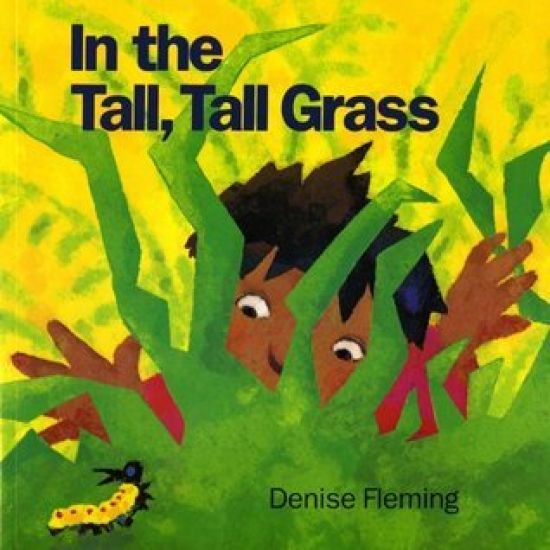
If you were a fuzzy caterpillar crawling through the tall, tall grass on a sunny afternoon, what would you see? Beginning as the sun is high in the sky and ending as fireflies blink and the moon rises above, this backyard tour is one no child will want to miss. A 1992 "Boston Globe" - Horn Book Award Honor Book for Picture BooksAn ALA Notable BookA "School Library Journal" Best BookAn" American Bookseller" Pick of the ListsA "Booklist" Editors' Choice
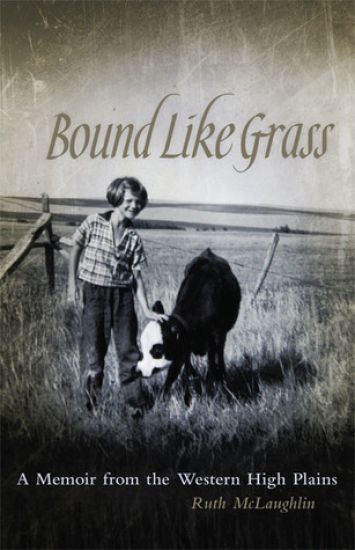
Bound Like Grass

Bound Like Grass

Ruth McLaughlin; Dee Garceau-Hagen

University of Oklahoma Press
2012
nidottu
At the start of this haunting memoir, Ruth McLaughlin returns to the site of her childhood home in rural eastern Montana. In place of her family's house, she finds only rubble and a blackened chimney. A fire has taken the old farmstead and with it ninety-seven years of hard-luck memories. Amidst the ruins, a lone tree survives, reminding her of her family's stubborn will to survive despite hardships that included droughts, hunger, and mental illness.Bound Like Grass is McLaughlin's account of her own - and her family's - struggle to survive on their isolated wheat and cattle farm. With acute observation, she explores her roots as a descendant of Swedish American grandparents who settled in Montana at the turn of the twentieth century with high ambitions, and of parents who barely managed to eke out a living on their own neighboring farm.In unvarnished prose, McLaughlin reveals the costs of homesteading on such unforgiving land, including emotional impoverishment and a necessary thrift bordering on deprivation. Yet in this bleak world, poverty also inspired ingenuity. Ruth learned to self-administer a fashionable razor haircut, ignoring slashes to her hands; her brother taught himself to repair junk cars until at last he built one to carry him far away. Ruth also longs for a richer, brighter life, but when she finally departs, she finds herself an alien in a modern world of relative abundance. While leaving behind a life of hardship and hard luck, she remains bound - like the long, intertwining roots of prairie grass - to the land and to the memories that tie her to it.
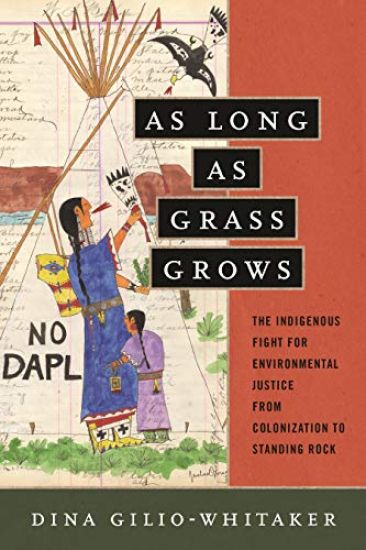
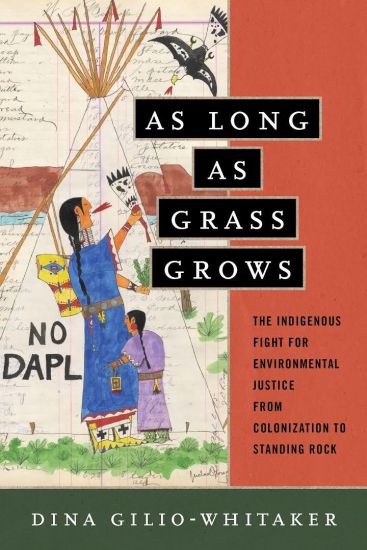
As Long as Grass Grows

As Long as Grass Grows

Dina Gilio-Whitaker

Beacon Press
2019
sidottu
The story of Native peoples' resistance to environmental injustice and land incursions, and a call for environmentalists to learn from the Indigenous community's rich history of activism Through the unique lens of "Indigenized environmental justice," Indigenous researcher and activist Dina Gilio-Whitaker explores the fraught history of treaty violations, struggles for food and water security, and protection of sacred sites, while highlighting the important leadership of Indigenous women in this centuries-long struggle. As Long As Grass Grows gives readers an accessible history of Indigenous resistance to government and corporate incursions on their lands and offers new approaches to environmental justice activism and policy. Throughout 2016, the Standing Rock protest put a national spotlight on Indigenous activists, but it also underscored how little Americans know about the longtime historical tensions between Native peoples and the mainstream environmental movement. Ultimately, she argues, modern environmentalists must look to the history of Indigenous resistance for wisdom and inspiration in our common fight for a just and sustainable future.
Pigeons on the Grass

Pigeons on the Grass

Wolfgang Koeppen

NEW DIRECTIONS PUBLISHING CORPORATION
2020
nidottu
Pigeons on the Grass is told over a single day in Munich in 1948. The first new cinemas and insurance offices are opening atop the ruins, Korea and Persia are keeping the world in panic, planes rumble in the sky (but no one looks up), newspaper headlines announce war over oil and atomic bomb tests. Odysseus Cotton, a black man, alights at the station and hires a porter; Frau Behrend disowns her daughter; with their interracial love affair, Carla Behrend and Washington Price scandalize their neighbors--who still expect gifts of chocolate and coffee; a boy hustles to sell a stray dog; Mr. Edwin, a visiting poet, prepares for a reading; Philipp gives himself up to despair; Emilia sells the last of her jewelry; Alexander stars as the Archduke in a new German Super-production; and Susanne seeks out a night to remember. In Michael Hofmann's words, "in their sum, they are the totality of existence."Koeppen spares no one and sees all in this penetrating and intense novel that surveys those who remain, and those who have just arrived, in a damaged society. As inventive as Joyce and as compulsively readable as Dickens, Pigeons on the Grass is a great lost classic.
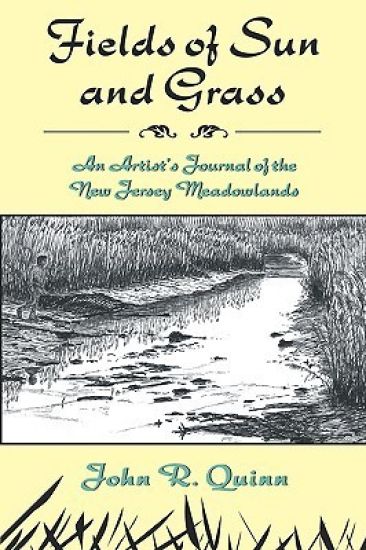
Fields of Sun and Grass

Fields of Sun and Grass

John R. Quinn

Rutgers University Press
1997
nidottu
To all caring and compassionate environmentalists out there, Fields of Sun and Grass, the latest offering by gifted naturalist, writer, and artist John R. Quinn, is a glorious cry of victory via a remarkable portrayal of some of the most durable and stubbornly determined survivors in the faunal and floral kindgdom.The setting is the New Jersey Meadowlands, a wild and reedy tract located a mere six miles west of New York's Times Square. It is considered by many as nothing more than a "toxic wasteland," but is in fact home to a dazzling array of often overlooked plants and animals. While there is little doubt that many of the life forms that once thrived here are long gone, many others remain, and these are the primary focus of this book. Many, many species are discussed; far too many to list here. Suffice it to say Quinn leaves no stones unturned.The book has three central parts, respectively called "Yesterday," "Today," and "Tomorrow." Each covers a different time period in the ecological life of the Meadowlands. There also is an "Introduction," a "Starting Point," an "Epilogue," a bibliography, an index, and an interesting sort of "hands-on" chapter called "Exploring the Meadowlands." This will be of particular interest to anyone who lives within traveling distance of the region. It gives helpful and experienced advice on enjoyed the Meadowlands firsthand through boating, fishing, hiking, and the visiting of local parks.
Leaves of Grass, A Textual Variorum of the Printed Poems: Volume I: Poems
Throughout his life, Walt Whitman continually revised and re-released Leaves of Grass. He added and deleted words, emended lines, divided poems, dropped and created titles, and shifted the order of poems. Leaves of Grass: A Textual Variorum of the Printed Poems includes all the variants that Whitman ever published, from the collection’s first appearance in 1855 through the posthumous “Old Age Echoes” annex printed in 1897. Each edition was unique, with its own character and emphasis, and the Textual Variorum enables scholars to follow the development of both the individual poems and the work as a whole. Volume I contains introductory material, including a chronology of the poems and a summary of all the editions and annexes, along with the poems from 1855 and 1856. Volume II includes the poems from 1860 through 1867, including the first appearance of “When Lilacs Last in the Door-Yard Bloom’d” and “O Captain! my Captain!” Volume III features the poems 1870–1891, plus the “Old Ages Annex” and an index to the three-volume set.
Leaves of Grass, A Textual Variorum of the Printed Poems: Volume II: Poems
Throughout his life, Walt Whitman continually revised and re-released Leaves of Grass. He added and deleted words, emended lines, divided poems, dropped and created titles, and shifted the order of poems. Leaves of Grass: A Textual Variorum of the Printed Poems includes all the variants that Whitman ever published, from the collection’s first appearance in 1855 through the posthumous “Old Age Echoes” annex printed in 1897. Each edition was unique, with its own character and emphasis, and the Textual Variorum enables scholars to follow the development of both the individual poems and the work as a whole. Volume I contains introductory material, including a chronology of the poems and a summary of all the editions and annexes, along with the poems from 1855 and 1856. Volume II includes the poems from 1860 through 1867, including the first appearance of “When Lilacs Last in the Door-Yard Bloom’d” and “O Captain! my Captain!” Volume III features the poems 1870–1891, plus the “Old Ages Annex” and an index to the three-volume set.
Leaves of Grass, A Textual Variorum of the Printed Poems: Volume III: Poems
Throughout his life, Walt Whitman continually revised and re-released Leaves of Grass. He added and deleted words, emended lines, divided poems, dropped and created titles, and shifted the order of poems. Leaves of Grass: A Textual Variorum of the Printed Poems includes all the variants that Whitman ever published, from the collection’s first appearance in 1855 through the posthumous “Old Age Echoes” annex printed in 1897. Each edition was unique, with its own character and emphasis, and the Textual Variorum enables scholars to follow the development of both the individual poems and the work as a whole. Volume I contains introductory material, including a chronology of the poems and a summary of all the editions and annexes, along with the poems from 1855 and 1856. Volume II includes the poems from 1860 through 1867, including the first appearance of “When Lilacs Last in the Door-Yard Bloom’d” and “O Captain! my Captain!” Volume III features the poems 1870–1891, plus the “Old Ages Annex” and an index to the three-volume set.
Labour's Grass Roots
The period between 1918 and 1945 witnessed dynamic social and economic developments in Britain as the notion of a government controlled economy and welfare state took root. In order to be understood, this shift in the political landscape needs to be seen in context of the growth of mass political movements and the implementation of fuller democratic processes in the aftermath of the Great War. But whilst much has been written on the rise of the Labour Party, the decline of the Liberals and the domination of the Conservatives in the sphere of high politics, much less research has been done on the local or regional experience of Britain's main political parties between the wars. This volume brings together ten essays that together provide an introduction to the role, influence and effectiveness of Labour Party activists across Britain. Taking a systematic and comparative approach that examines a range of representative areas, this volume is more than simply a collection of local studies. Instead it utilises the local to develop and illuminate the wider dynamics at work inside the Labour Party. By emphasising the role of the party membership, Britain's social and political evolution can be reconstructed from grass-roots level, taking into account the priorities and expectations of the people who sustained and cultivated the nation's social-political base. By addressing reoccurring issues of interest to labour historians, such as gender, nationalism, the co-operative movement and trade unionism, through the locus of regionalism and local party activity, this volume will not only provide scholars with a better understanding of the Labour Party, but should stimulate similar much needed research into other political parties and organisations.
Avoiding the Greener Grass Syndrome – How to Grow Affair–Proof Hedges Around Your Marriage
Extramarital affairs are certainly not the social taboo that they once were, and may be more prevalent now than ever. Unfortunately, Christians are not exempt. With the anonymity of the Internet and the privacy of personal mobile phones, the temptation to cheat on one's spouse has fertile ground to grow. After straying to the other side of this marital fence--and returning to find forgiveness and restoration--Anderson brings this practical book about predicting and preventing an extramarital affair. Based on the principle that the grass is always greener when it's watered, Avoiding the Greener Grass Syndrome focuses on how to grow a beautiful marriage by establishing six protective hedges around it. This second edition includes a new chapter on repairing marriage following infidelity, as well as an appendix considering the Andersons' own marriage before and after the affair from Ron's point of view.
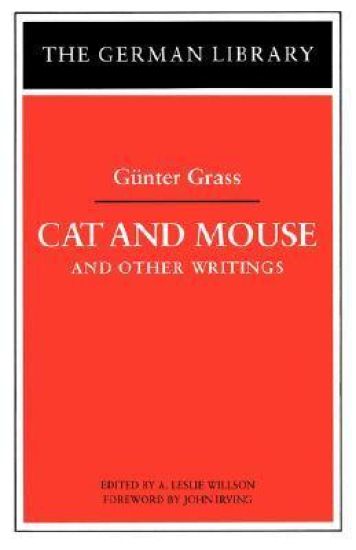
Cat and Mouse: Günter Grass

Cat and Mouse: Günter Grass

Continuum International Publishing Group Ltd.
1997
nidottu
For many years, Gunter Grass (born 1927) has been one of the world's most vital literary figures. From the publication of The Tin Drum through his latest pleas for sane government and civil treatment of Germany's "foreign citizens" in the 1990s, Grass has been at the forefront of both literary and political worlds. This representative volume features two important works: Cat and Mouse and The Meeting at Telgte. Both speak to our time, but under very different settings. It also includes a selection of other works to give a well-rounded view of a writer whom John Irving characterizes in his foreword as "the greatest living novelist today". The German Library is a new series of the major works of German literature and thought from medieval times to the present. The volumes have forewords by internationally known writers and introductions by prominent scholars. Here the English-speaking reader can find the broadest possible collection of poetic and intellectual achievements in new as well as great classic translations. Convenient and accessible in format, the volumes of The German Library will form the core of any growing library of European literature for years to come.Select list of volumes now published: -- German Medieval Tales -- German Humanism and Reformation -- Immanuel Kant: Philosophical Writings -- Johann Wolfgang von Goethe: The Sufferings of Young Werther and Elective Affinities -- Friedrich Schiller: Plays -- "Intrigue and Love" and "Don Carlos" -- Friedrich Schiller: "Wallenstein" and "Mary Stuart" -- German Fairy Tales -- German Literary Fairy Tales -- German Romantic Novellas -- German Romantic Stories -- German Novellas of Realism -- German Poetry from 1750 to 1900 -- Georg Buchner: Complete Works and Letters -- Rainer Maria Rilke: Prose and Poetry -- Gottfried Benn: Prose, Essays, Poems -- German Essays on Art History -- Essays on German Theater -- Hans Magnus Enzensberger: Critical Essays