The Vermeer of California’s Light and Space movement: the first comprehensive monograph on Helen Pashgian’s infinitely subtle and mutable sculpture Over the course of her career, Pasadena-based artist Helen Pashgian (born 1934) has produced a significant oeuvre of sculptures comprised of vibrantly colored columns, discs and spheres, which often feature an isolated element appearing suspended, embedded or encased within them. Using an innovative application of industrial epoxies, plastics and resins, Pashgian’s works are characterized by their translucent surfaces that appear to filter and somehow contain illumination. “One must move around to observe changes,” she testifies: “coming and going, appearing and receding, visible and invisible—a phenomenon of constant movement.” This book documents Pashgian’s vast body of work, dating from the 1960s to now, with historic and new photographs of the artist’s spheres and discs. An essay by John Yau and a chronology built on new research is also included.
Luminous late works on paper from the great Color Field pioneer Exploring works from the later period of Helen Frankenthaler’s life, Late Works, 1988–2009 features approximately 50 plates and archival images dating from 1988 to 2009. Originally inspired by the exhibition curated by Douglas Dreishpoon (Director of the Helen Frankenthaler Catalogue Raisonné and Chief Curator Emeritus of the Albright-Knox Art Gallery), the book expands upon the original exhibition to include a wide range of important pieces from this prolific period in the artist's career. Through her invention of the soak-stain technique, Frankenthaler expanded the possibilities of abstract painting while referencing figuration and landscape in unique ways. In her later years, her practice continued to evolve through her use of diverse mediums and processes, as she shifted from painting canvas on the floor to using larger sheets of paper that were laid out on the floor or on tabletops for easier accessibility. The continuity between the late work and what came before is striking. Helen Frankenthaler (1928–2011) has long been recognized as one of the great American artists of the 20th century. She was eminent among the second generation of postwar American abstract painters and is widely credited for playing a pivotal role in the transition from Abstract Expressionism to Color Field painting with her invention of the soak-stain technique, which involved pouring thinned paint directly onto unprimed canvas. The juxtaposition of amorphous fields of color and gestural brushstrokes produces a vigorous rhythm of activity that seems to convey both the expanse of landscape and the surface texture of mark-making.
This cookbook includes recipes and pictures of Helen's favorite family recipes.Included are appetizers, soups, salads, breads, casseroles, entrees and desserts taste tested by family, firemen, policemen, shut-ins, church family and her many neighbors and friends.Recipes include Brie en Croute, Reuben Crescent Bake, Eggplant Casserole, Vanilla Pudding, Gingerbread Men Cookies, Sugar Cookies, Jalapeno Poppers, Patriotic Jell-O Salad, Cheese Braid Coffee Cake, Swan Lemon Cream Puffs, Baked Chicken Salad Wreath and many more. Many of these recipes have won ribbons at county fairs and other competitions as shown here. Now in her mid-eighties, this is Helen's legacy to her five children, eleven grandchildren and seventeen great-grandchildren.Enjoy
This cookbook includes recipes and pictures of Helen's favorite family recipes.Included are appetizers, soups, salads, breads, casseroles, entrees and desserts taste tested by family, firemen, policemen, shut-ins, church family and her many neighbors and friends.Recipes include Brie en Croute, Reuben Crescent Bake, Eggplant Casserole, Vanilla Pudding, Gingerbread Men Cookies, Sugar Cookies, Jalapeno Poppers, Patriotic Jell-O Salad, Cheese Braid Coffee Cake, Swan Lemon Cream Puffs, Baked Chicken Salad Wreath and many more. Many of these recipes have won ribbons at county fairs and other competitions as shown here. Now in her mid-eighties, this is Helen's legacy to her five children, eleven grandchildren and seventeen great-grandchildren.Enjoy
LARGE PRINT EDITION: AMONG all the States of the Union, not one has a history more interesting than Virginia, for her annals are full of strangely poetic incident, from the world-famous idyll of Pocahontas to the tragic stories still fresh in our own memories; and from the fertile seaboard to the rich mountain valleys of her western border, there is scarcely a field or village that has not its tale to tell. More than one great name, "familiar in our mouths as household words," belongs in the catalogue of Virginia's children; and although to-day her greatness is a thing of the past and the future, yet that future promises such certainty as is more than guaranteed by her natural advantages and the brave and willing temper of her people. In the history of this State, there arose, long years ago, an unnatural relation between two races, which furnished a problem, dealt with by statesmen, philanthropists, and fanatics, and finally solved by God himself, in his own time, and his own way; and it is with an outgrowth of that problem and its solution that this little book has to do. The introduction of negroes into the country as slaves was made at a time when only a few minds, here and there, had any true conception of the rights of individuals, or could put a fair interpretation upon that higher law which makes us our brothers' keepers; and the virgin soil and relaxing climate of the South made slavery so temptingly easy and profitable as to insure its continuance until a Power stronger than humanity interfered to bring it to an end. In no part of the United States can the history of negro slavery, from its origin to its extinction, be more clearly traced than in Virginia; and as that State was chosen as the scene of bitterest struggle, so it seems likely to attain the earliest and highest development, for within its borders are now being fairly tested the possibilities of, the African race, and the results to them and the whites of the new relations of freedom. It is not too much to say that throughout the history of slavery in Virginia, there runs a strain of poetic justice, which is absolutely dramatic, robbing facts of their dryness and interweaving the prosaic details of life with the elements of tragedy. Nowhere has there been greater prosperity, nowhere has there been greater suffering, and many a page might be filled with the record of the changes which a century has wrought, of the old things that have passed away, and the new hopes that are blossoming for the future; and in writing this brief story of an experiment which is just now being tried upon Virginian soil, there will be an earnest attempt to offer such testimony of the capacity of a hitherto enslaved race, and of the intelligent and generous action of their whilom owners, as shall not be altogether valueless.
A little ant does not obey his parents and gets into a long journey of problems before he is able to return home to his family. He learns the hard way to listen to his parents.
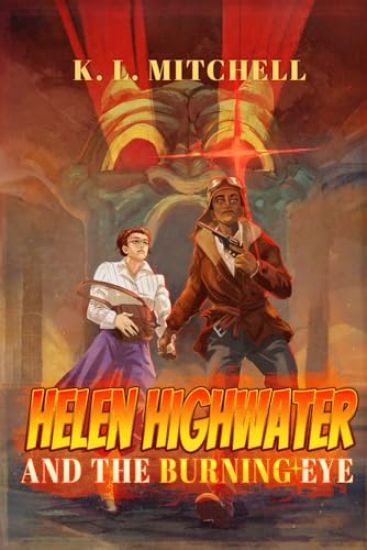
Freelance pilot and treasure hunter Helen Highwater finds herself in too deep when she agrees to retrieve an ancient mask from a long-forgotten temple. Suddenly her employers are trying to kill her and silence her forever. She enlists the aid of Abigail Dawson, a prim English historian and archaeologist whose dreams of fieldwork have run aground in the backrooms of an old museum. Together they must race against time and Helen's pursuers to decode the mystery of the mask and discover a terrifying secret that has lain dormant for centuries.
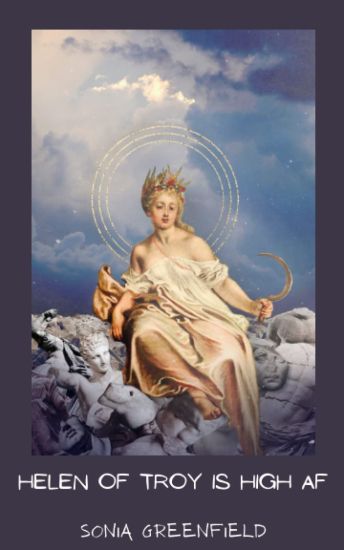
Sonia Greenfield (she/they) is the author of All Possible Histories (Riot in Your Throat, 2022), Letdown (White Pine Press, 2020), American Parable (Autumn House, 2018), and Boy with a Halo at the Farmer's Market (Codhill Press, 2015). Her work has appeared in the 2018 and 2010 Best American Poetry, Southern Review, Willow Springs and elsewhere. She lives with her family in Minneapolis where she teaches at Normandale College, edits the Rise Up Review, and advocates for both neurodiversity and the decentering of the cis/het white hegemony. You can find more at soniagreenfield.com.
Helen of Bikini examines the way humans inhabit the world, both in beauty and in conflict. How do the twinned human forces of domestication and domination, rage and mediation, witness and culpability, destruction and nurturing, find their balances, not in an either/or, but in a melding? In an unapologetically feminist approach to these topics, Reeves explores the idea that "we are the only ones who name," and goes about teaching us the "alphabet of our unmaking."
All of us have our comfort zones, the familiar place where we feel safe. But what would happen if we stepped into unfamiliar territory? As author Helen Kithinji says in the book, Limitless Success with Helen Kithinji, magical things are bound to happen. Following her five key points, we can enter a circle of continual growth and enjoy a successful life. This book is for anyone who wants more out of life but doesn't know where to start.About the AuthorHelen Kithinji is a successful entrepreneur, investor, an Accredited Executive Coach, and author of one of the most powerful personal development books published: Profiles on Success with Helen Kithinji, which also features other global best-selling authors. An MBA graduate, her story about growing to executive management in her fifteen-year banking career, becoming an entrepreneur, and establishing a multi-million-dollar global business in less than five years continues to provide inspiration and encouragement to others in pursuit of their dreams. She has been featured in leading business publications, including the Voyager Magazine, Business Daily, The Daily Nation, Business for Home, and The Standard newspaper. She has won several awards, her latest recognition being the achievement of a million dollars in sales commissions in her online business. She also enjoys a rich, happy family life with her husband-Ronnie-and their two adorable sons.
In Greek mythology, Helen, better known as Helen of Sparta or Helen of Troy, was daughter of Zeus and Leda, wife of king Menelaus of Sparta and sister of Castor, Polydeuces and Clytemnestra. Her abduction by Paris brought about the Trojan War. Helen was described as having the face that launched a thousand ships. Helen or Helene is probably derived from the Greek word meaning "torch" or "corposant" or might be related to "selene" meaning "moon".
Helen is a novel by Maria Edgeworth (1767-1849). It was written in 1834, late in the writer's life. Helen tells the story of a young orphan, Helen Stanley, whose guardian, Dean Stanley, has squandered his fortune and left Helen without means of support. She is forced to take up residence with the local vicar, whose wife is astonished that none of the Stanleys' aristocratic friends have offered a refuge to her. Eventually, however, the Davenant family returns from abroad and invite Helen to their daughter's new home, Clarendon Park. (Cecilia Davenant has just married General Clarendon.) Helen journeys to join her dear friend Cecilia (a charming socialite), and the first half of the novel describes Helen's experiences among the most fortunate of Britain's elite under the tutelage of Lady Davenant, who in some ways favors Helen over her own daughter Cecilia. In the second and more dramatic half of the novel, Lady Davenant departs with her husband, who has been named ambassador at the Court of St. Petersburg, Russia. Helen is left to the care of General Clarendon and Cecilia. By this time she is engaged to Granville Beauclerc, a young and handsome man who is another of Lady Davenant's favorites. All does not run smoothly for Helen, however. Before her marriage, Cecilia has carried on an amorous correspondence with Colonel d'Aubigny, a worthless rou who has since died. These letters reappear in a packet addressed to Cecilia's husband. Cecilia implores Helen to act as if the letters were addressed to her rather than to Cecilia. Helen, from misguided devotion to her friend and gratitude for Cecilia's kind hospitality, agrees to the deception. This first step leads to more and more serious consequences, until finally Helen's reputation is in tatters. Beauclerc is forced to fight a duel in defense of his fianc e, after which he must flee from England. Cecilia still refuses to recognize the letters as hers, out of fear of losing her own husband if she admits to the correspondence. The General is convinced that Helen is faithless. She refuses to stay where she is not respected and chooses exile in Wales with the General's sister, where she becomes dangerously ill. Even the birth of Cecilia's first child, a son, does not encourage her to confess to her husband, and Helen gives up all hope of exoneration. The d nouement comes when Lady Davenant, also dangerously ill, returns to London at the same time as the General finally discovers his wife's deception and vows to separate from Cecilia for life. Helen's character is redeemed, Beauclerc returns to England when his adversary recovers from his wounds, and the novel ends happily for all the protagonists with Lady Davenant saying that she is "now, and not till now, happy--perfectly happy in Love and Truth "....... Maria Edgeworth (1 January 1768 - 22 May 1849) was a prolific Anglo-Irish writer of adults' and children's literature. She was one of the first realist writers in children's literature and was a significant figure in the evolution of the novel in Europe. She held advanced views, for a woman of her time, on estate management, politics and education, and corresponded with some of the leading literary and economic writers, including Sir Walter Scott and David Ricardo. Early life: Maria Edgeworth was born at Black Bourton, Oxfordshire. She was the second child of Richard Lovell Edgeworth (who eventually fathered 22 children by four wives) and Anna Maria Edgeworth; Maria was thus an aunt of Francis Ysidro Edgeworth. She spent her early years with her mother's family in England, until her mother's death when Maria was five. When her father married his second wife Honora Sneyd in 1773, she went with him to his estate, Edgeworthstown, in County Longford, Ireland. Maria was sent to Mrs. Lattafi re's school in Derby after Honora fell ill in 1775....