

Kirjahaku
Etsi kirjoja tekijän nimen, kirjan nimen tai ISBN:n perusteella.
1000 tulosta hakusanalla Helene Musso
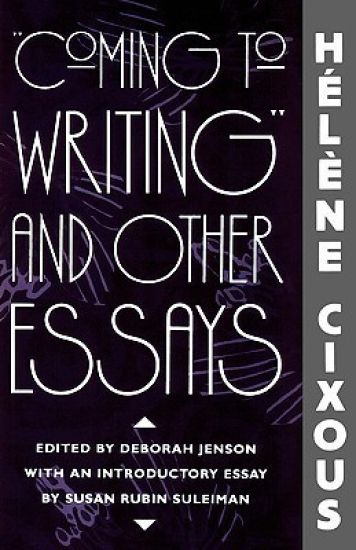
This collection presents six essays by one of France’s most remarkable contemporary authors. A notoriously playful stylist, here Hélène Cixous explores how the problematics of the sexes—viewed as a paradigm for all difference, which is the organizing principle behind identity and meaning—manifest themselves, write themselves, in texts. These superb translations do full justice to Cixous’s prose, to its songlike flow and allusive brilliance.
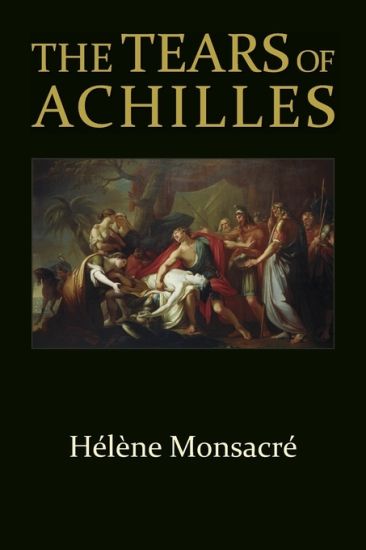
Achilles—warrior and hero—by the protocols of Western culture, should never cry. And yet Homeric epic is full of his tears and those of his companions at Troy. This path-blazing study by Hélène Monsacré shows how later ideals of stoically inexpressive manhood run contrary to the poetic vision presented in the Iliad and Odyssey. The epic protagonists, as larger-than-life figures who transcend gender categories, are precisely the men most likely to weep.Monsacré pursues the paradox of the tearful fighter through a series of lucid and detailed close readings, and examines all aspects of the interactions between men and women in the Homeric poems. Her illuminating analysis, first published in French in 1984, remains bold, fresh, and compelling for anyone touched—like Achilles—by a world of grief.
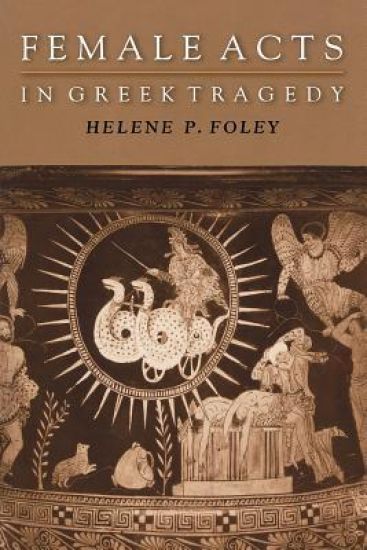
Although Classical Athenian ideology did not permit women to exercise legal, economic, and social autonomy, the tragedies of Aeschylus, Sophocles, and Euripides often represent them as influential social and moral forces in their own right. Scholars have struggled to explain this seeming contradiction. Helene Foley shows how Greek tragedy uses gender relations to explore specific issues in the development of the social, political, and intellectual life in the polis. She investigates three central and problematic areas in which tragic heroines act independently of men: death ritual and lamentation, marriage, and the making of significant ethical choices. Her anthropological approach, together with her literary analysis, allows for an unusually rich context in which to understand gender relations in ancient Greece. This book examines, for example, the tragic response to legislation regulating family life that may have begun as early as the sixth century. It also draws upon contemporary studies of virtue ethics and upon feminist reconsiderations of the Western ethical tradition. Foley maintains that by viewing public issues through the lens of the family, tragedy asks whether public and private morality can operate on the same terms. Moreover, the plays use women to represent significant moral alternatives. Tragedy thus exploits, reinforces, and questions cultural cliches about women and gender in a fashion that resonates with contemporary Athenian social and political issues.
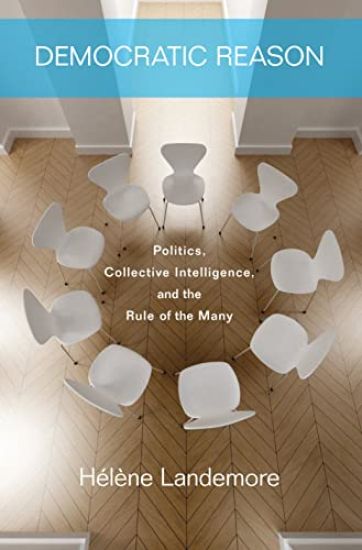
Individual decision making can often be wrong due to misinformation, impulses, or biases. Collective decision making, on the other hand, can be surprisingly accurate. In Democratic Reason, Helene Landemore demonstrates that the very factors behind the superiority of collective decision making add up to a strong case for democracy. She shows that the processes and procedures of democratic decision making form a cognitive system that ensures that decisions taken by the many are more likely to be right than decisions taken by the few. Democracy as a form of government is therefore valuable not only because it is legitimate and just, but also because it is smart. Landemore considers how the argument plays out with respect to two main mechanisms of democratic politics: inclusive deliberation and majority rule. In deliberative settings, the truth-tracking properties of deliberation are enhanced more by inclusiveness than by individual competence. Landemore explores this idea in the contexts of representative democracy and the selection of representatives. She also discusses several models for the "wisdom of crowds" channeled by majority rule, examining the trade-offs between inclusiveness and individual competence in voting. When inclusive deliberation and majority rule are combined, they beat less inclusive methods, in which one person or a small group decide. Democratic Reason thus establishes the superiority of democracy as a way of making decisions for the common good.
"Open Democracy envisions what true government by mass leadership could look like."—Nathan Heller, New YorkerHow a new model of democracy that opens up power to ordinary citizens could strengthen inclusiveness, responsiveness, and accountability in modern societies To the ancient Greeks, democracy meant gathering in public and debating laws set by a randomly selected assembly of several hundred citizens. To the Icelandic Vikings, democracy meant meeting every summer in a field to discuss issues until consensus was reached. Our contemporary representative democracies are very different. Modern parliaments are gated and guarded, and it seems as if only certain people—with the right suit, accent, wealth, and connections—are welcome. Diagnosing what is wrong with representative government and aiming to recover some of the lost openness of ancient democracies, Open Democracy presents a new paradigm of democracy in which power is genuinely accessible to ordinary citizens.Hélène Landemore favors the ideal of “representing and being represented in turn” over direct-democracy approaches. Supporting a fresh nonelectoral understanding of democratic representation, Landemore recommends centering political institutions around the “open mini-public”—a large, jury-like body of randomly selected citizens gathered to define laws and policies for the polity, in connection with the larger public. She also defends five institutional principles as the foundations of an open democracy: participatory rights, deliberation, the majoritarian principle, democratic representation, and transparency.Open Democracy demonstrates that placing ordinary citizens, rather than elites, at the heart of democratic power is not only the true meaning of a government of, by, and for the people, but also feasible and, today more than ever, urgently needed.
"Open Democracy envisions what true government by mass leadership could look like."—Nathan Heller, New YorkerHow a new model of democracy that opens up power to ordinary citizens could strengthen inclusiveness, responsiveness, and accountability in modern societies To the ancient Greeks, democracy meant gathering in public and debating laws set by a randomly selected assembly of several hundred citizens. To the Icelandic Vikings, democracy meant meeting every summer in a field to discuss issues until consensus was reached. Our contemporary representative democracies are very different. Modern parliaments are gated and guarded, and it seems as if only certain people—with the right suit, accent, wealth, and connections—are welcome. Diagnosing what is wrong with representative government and aiming to recover some of the lost openness of ancient democracies, Open Democracy presents a new paradigm of democracy in which power is genuinely accessible to ordinary citizens.Hélène Landemore favors the ideal of “representing and being represented in turn” over direct-democracy approaches. Supporting a fresh nonelectoral understanding of democratic representation, Landemore recommends centering political institutions around the “open mini-public”—a large, jury-like body of randomly selected citizens gathered to define laws and policies for the polity, in connection with the larger public. She also defends five institutional principles as the foundations of an open democracy: participatory rights, deliberation, the majoritarian principle, democratic representation, and transparency.Open Democracy demonstrates that placing ordinary citizens, rather than elites, at the heart of democratic power is not only the true meaning of a government of, by, and for the people, but also feasible and, today more than ever, urgently needed.

A Companion Guide for: The Inefficiency Assassin: Time Management Tactics for Working Smarter, Not Longer
Helene Segura
Hacienda Oaks Press
2015
nidottu
This companion book is designed to be used for capturing notes, thoughts and lessons learned during Helene Segura's workshops and webinars, and while reading her book "The Inefficiency Assassin: Time Management Tactics for Working Smarter, Not Longer" (New World Library).No matter how you proceed, please realize that nothing will change if you don't do something different.Are you tired of feeling overwhelmed from having so much to do?Do you want to never miss another special moment?Do you wish you had more time in the day?Do you want to learn how to improve productivity, so that you can increase success and decrease stress levels?If you answered yes to any of these questions, you're in the right place
Captain Morgan Pentland flies for Border Watch, patrolling the vast Australian coastline. With steely determination, she's fought hard to reach this point in her career, but her private life is a shambles. Will she ever break the tragic patterns of her childhood? Customs agent Rafe Daniels is working with her undercover. Morgan knows Rafe doesn't like her. What she doesn't know is that he has her under surveillance as a suspected terrorist. Critical information about their operations is leaking and she's the main suspect. Carl Wiseman, an elite policeman and Morgan's ex, is still on the scene, but is he pursuing Morgan to regain her love or for something more sinister? Morgan and Rafe will be forced to work together if they are to discover what is really going on, and stop a terrorist attack on Australian soil. But first, they will have to acknowledge the attraction that is growing between them.
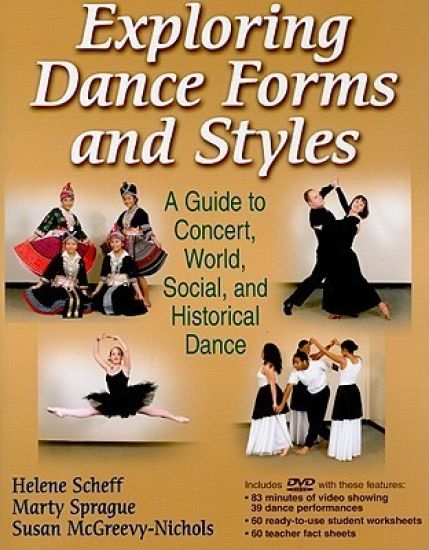
Exploring Dance Forms and Styles
Helene Scheff; Marty Sprague; Susan McGreevy-Nichols
Human Kinetics
2010
muu
Exploring Dance Forms and Styles: A Guide to Concert, World, Social, and Historical Dance helps all teachers introduce students to a variety of dance forms and styles—without having to leave the classroom! This book–DVD package is an all-in-one resource that will help your students appreciate various dance forms and begin to recognize the characteristics that make each dance form or style distinct. And because of the way the information is packaged, you can be a dance novice yourself and still expertly guide your students in being both an effective audience member and an astute observer. Exploring Dance Forms and Styles: A Guide to Concert, World, Social, and Historical Dance presents a systematic approach for building four critical thinking skills in dance: • Viewing: What did you see? • Connecting: What do you know? • Responding: What do you think? What do you wonder? • Performing: What can you do? Part I of the book outlines these four critical thinking skills and why they are important for viewing dance performances. In part II, the four critical thinking skills are incorporated on student-tested worksheets located in the book and available as printable PDFs from the bound-in DVD. Each worksheet template facilitates an understanding of the elements of dance, builds movement vocabulary, and guides students' recognition of cultural, historical, and artistic diversity. As students build their skills, they are introduced to selected dances in each of the four broad categories of dance: concert, world, social, and historical. These categories are constantly evolving, and many dances can be cross-linked across these four categories. For those students new to dance, the four broad categories provide a starting point from which to see the evolution of the forms. In part III, the authors provide specific suggestions for comparing and contrasting either within a category or across dance categories and for identifying selected dance forms and styles that present universal themes. These tasks require application of higher-level thinking skills, and they develop aesthetic values. Part III also offers lesson plan and unit ideas, using the dance forms and styles introduced earlier in the book. With Exploring Dance Forms and Styles, you can select individual dances as you like, or develop complete dance units; you can use the materials to meet state standards and national dance standards; and you can introduce various forms of dance to students in geographic areas where they would otherwise not be able to view live dance performances. But best of all, you can deepen students' understanding, appreciation, and enjoyment of dance.
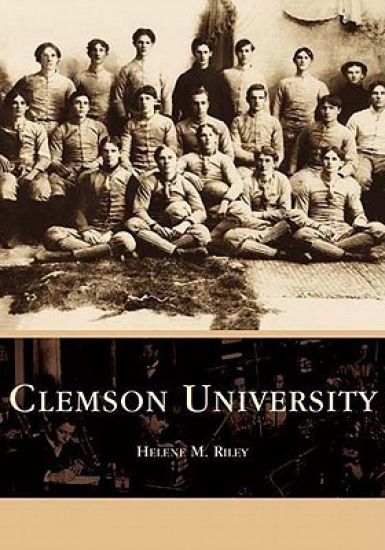
See how one man's belief in agriculture's promise led to the founding of what is now a powerhouse among Southern academic institutions, Clemson University.The roots of agriculture run deeply in South Carolina's history; even its earliest settlers valued the rich and fertile land. However, after the Civil War devastated Southern land and economy, many questioned if the agrarian way of life could survive. Thomas Green Clemson, son-in-law of South Carolina's foremost statesman John C. Calhoun, believed in the promise of agricultural improvement through science and offered his estate, Fort Hill, to found the agricultural and mechanical college today called Clemson University. For more than a century, the institution that bears his name has served as a beacon for perhaps thousands of students, standing proudly in the solemn Carolina foothills. Through the years, faculty, students, alumni, and fans have realized Thomas G. Clemson's vision for higher education and strengthened the school to a mighty level. From the more than 600 students who applied the first year to join an all-male Cadet Corps, Clemson has developed into a household academic institution. Recognized for its commitment to academic excellence, cultural opportunities, and aesthetic attractions, the university is perhaps best known as home of the famed athletic teams, the Clemson Tigers. This volume offers young and mature readers alike a chance to meet and reminisce about Clemson's legends - with longtime Tiger fans perhaps even finding old friends they made along the way.
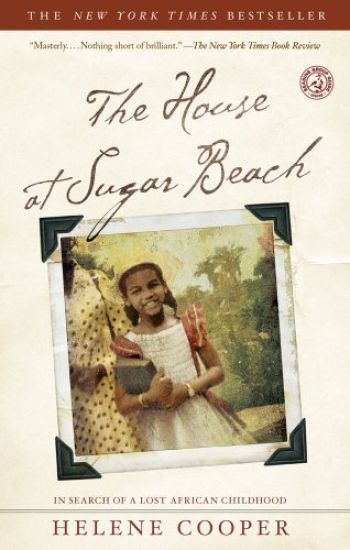
Journalist Helene Cooper examines the violent past of her home country Liberia and the effects of its 1980 military coup in this deeply personal memoir and finalist for the 2008 National Book Critics Circle Award.Helene Cooper is “Congo,” a descendant of two Liberian dynasties—traced back to the first ship of freemen that set sail from New York in 1820 to found Monrovia. Helene grew up at Sugar Beach, a twenty-two-room mansion by the sea. Her childhood was filled with servants, flashy cars, a villa in Spain, and a farmhouse up-country. It was also an African childhood, filled with knock foot games and hot pepper soup, heartmen and neegee. When Helene was eight, the Coopers took in a foster child—a common custom among the Liberian elite. Eunice, a Bassa girl, suddenly became known as “Mrs. Cooper’s daughter.” For years the Cooper daughters—Helene, her sister Marlene, and Eunice—blissfully enjoyed the trappings of wealth and advantage. But Liberia was like an unwatched pot of water left boiling on the stove. And on April 12, 1980, a group of soldiers staged a coup d'état, assassinating President William Tolbert and executing his cabinet. The Coopers and the entire Congo class were now the hunted, being imprisoned, shot, tortured, and raped. After a brutal daylight attack by a ragtag crew of soldiers, Helene, Marlene, and their mother fled Sugar Beach, and then Liberia, for America. They left Eunice behind.A world away, Helene tried to assimilate as an American teenager. At the University of North Carolina at Chapel Hill she found her passion in journalism, eventually becoming a reporter for the Wall Street Journal and the New York Times. She reported from every part of the globe—except Africa—as Liberia descended into war-torn, third-world hell.In 2003, a near-death experience in Iraq convinced Helene that Liberia—and Eunice—could wait no longer. At once a deeply personal memoir and an examination of a violent and stratified country, The House at Sugar Beach tells of tragedy, forgiveness, and transcendence with unflinching honesty and a survivor's gentle humor. And at its heart, it is a story of Helene Cooper’s long voyage home.
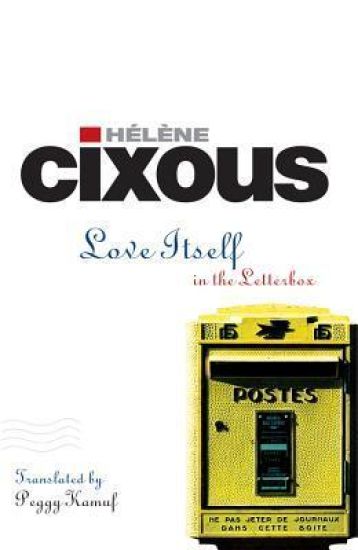
Love’s memories, love recalling itself in letters lost and found over an interval of forty years: Cixous’s writer-narrator advances here far into a labyrinth of passions long ago delivered and yet still arriving through the mail, through letters and literature, in other words, the poetry of the post. As for the lovers’ returning scenes, they have their addresses in Paris (rue Olivier de Serres, Avenue de Choisy, street names that endlessly feed love’s unconscious language) and in New York, but also in a lost oasis of the Egyptian desert during the Napoleonic wars, in Athens and along the shores of a great lake centuries ago in the country of myth. The lovers are poets or soldiers, philosophers or students madly in love with poetry and poets. They are as well mermaids or panthers. Panthers? Yes, for it is the passion of the animal that drives all these lovers to bare themselves, and sometimes their claws, before the beloved. Misunderstandings are often, even inevitably the result. Seconded and witnessed by her passionate, truth-telling cats, Cixous’s narrator-writer returns unerringly to moments of errancy inflicted on address and language, those errors and faults when love, perhaps, is listening only to itself, without subject or object, lover or beloved, just love itself, l’amour même, l’amour m’aime, love loving me, in the letter box of memory.
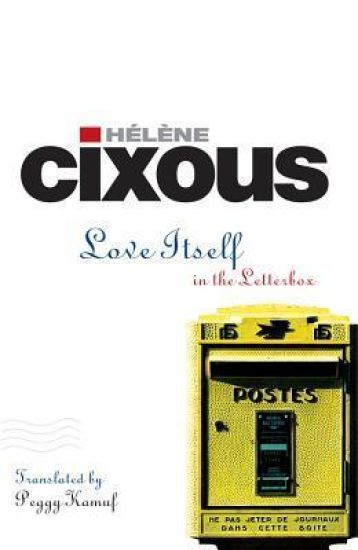
Love’s memories, love recalling itself in letters lost and found over an interval of forty years: Cixous’s writer-narrator advances here far into a labyrinth of passions long ago delivered and yet still arriving through the mail, through letters and literature, in other words, the poetry of the post. As for the lovers’ returning scenes, they have their addresses in Paris (rue Olivier de Serres, Avenue de Choisy, street names that endlessly feed love’s unconscious language) and in New York, but also in a lost oasis of the Egyptian desert during the Napoleonic wars, in Athens and along the shores of a great lake centuries ago in the country of myth. The lovers are poets or soldiers, philosophers or students madly in love with poetry and poets. They are as well mermaids or panthers. Panthers? Yes, for it is the passion of the animal that drives all these lovers to bare themselves, and sometimes their claws, before the beloved. Misunderstandings are often, even inevitably the result. Seconded and witnessed by her passionate, truth-telling cats, Cixous’s narrator-writer returns unerringly to moments of errancy inflicted on address and language, those errors and faults when love, perhaps, is listening only to itself, without subject or object, lover or beloved, just love itself, l’amour même, l’amour m’aime, love loving me, in the letter box of memory.

Hyperdream is a major new novel by celebrated French author Hélène Cixous. It is a literary tour de force, returning anew to challenge necessity itself, the most implacable of human certainties: you die in the end – and that’s the end. For you, for me. But what if? What if death did not inevitably spell the end of life? Hyperdream invests this fragile, tentative suspension of disbelief with the sheer force of its poetic audacity, inventing a sort of magic telephone: a wireless lifeline against all the odds to the dearly departed. It is a book about time, age, love and the greatest loss. A book which turns on death: on the question or the moment of death, depending on it, expecting it, living off it, taking place at once before and after, but at the same time turning against it, contesting it, outwriting it hopefully, desperately, performatively, as an interruptible interruption. Hyperdream is a book of mourning, but also of morning, a tragedy-with-comedy and a universal family romance in which it transpires that the narrator is the veritable offspring of a “treasure of literature” in the form of a bed, purchased by her mother from a certain W. Benjamin in 1934, slept on for 40 years by her brother and dreamt of by her friend “J.D.”

Hyperdream is a major new novel by celebrated French author Hélène Cixous. It is a literary tour de force, returning anew to challenge necessity itself, the most implacable of human certainties: you die in the end – and that’s the end. For you, for me. But what if? What if death did not inevitably spell the end of life? Hyperdream invests this fragile, tentative suspension of disbelief with the sheer force of its poetic audacity, inventing a sort of magic telephone: a wireless lifeline against all the odds to the dearly departed. It is a book about time, age, love and the greatest loss. A book which turns on death: on the question or the moment of death, depending on it, expecting it, living off it, taking place at once before and after, but at the same time turning against it, contesting it, outwriting it hopefully, desperately, performatively, as an interruptible interruption. Hyperdream is a book of mourning, but also of morning, a tragedy-with-comedy and a universal family romance in which it transpires that the narrator is the veritable offspring of a “treasure of literature” in the form of a bed, purchased by her mother from a certain W. Benjamin in 1934, slept on for 40 years by her brother and dreamt of by her friend “J.D.”
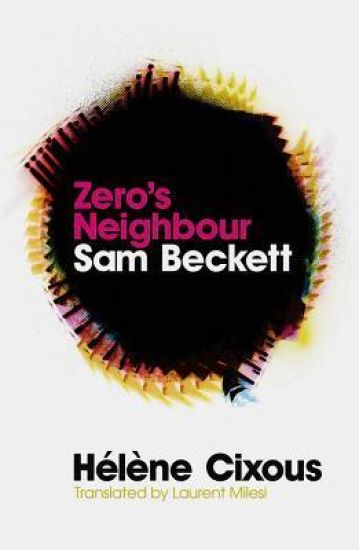
Zero's Neighbour is Hélène Cixous's tribute to the minimalist genius of the artist in exile who courted nothingness in his writing like nobody else: Samuel Beckett. In this unabashedly personal odyssey through a sizeable range of his novels, plays and poems, Cixous celebrates Beckett’s linguistic flair and the poignant, powerful thrust of his stylistic terseness, and passionately declares her love for his unrivalled expression of the meaningless ‘precious little’ of life, its unfathomable banality ending in chaos and death. Poised between a critical essay and a textual performance across two languages adapting Beckett's own literary vein, this book will appeal to scholars, critics and creative writers as well as students of the ‘grey self-Sam’. Its allusive intertextual insights will also prove to be of critical relevance to readers of Dante and Proust, among other literary figures, as much as to those appreciative of Cixous’s own inimitable genius for dissecting the quintessence of the life and works of a ‘neighbourly’ artist.

Zero's Neighbour is Hélène Cixous's tribute to the minimalist genius of the artist in exile who courted nothingness in his writing like nobody else: Samuel Beckett. In this unabashedly personal odyssey through a sizeable range of his novels, plays and poems, Cixous celebrates Beckett’s linguistic flair and the poignant, powerful thrust of his stylistic terseness, and passionately declares her love for his unrivalled expression of the meaningless ‘precious little’ of life, its unfathomable banality ending in chaos and death. Poised between a critical essay and a textual performance across two languages adapting Beckett's own literary vein, this book will appeal to scholars, critics and creative writers as well as students of the ‘grey self-Sam’. Its allusive intertextual insights will also prove to be of critical relevance to readers of Dante and Proust, among other literary figures, as much as to those appreciative of Cixous’s own inimitable genius for dissecting the quintessence of the life and works of a ‘neighbourly’ artist.