

Kirjahaku
Etsi kirjoja tekijän nimen, kirjan nimen tai ISBN:n perusteella.
1000 tulosta hakusanalla Henry-Rider Haggard
This book has been considered by academicians and scholars of great significance and value to literature. This forms a part of the knowledge base for future generations. So that the book is never forgotten we have represented this book in a print format as the same form as it was originally first published. Hence any marks or annotations seen are left intentionally to preserve its true nature.
This book has been considered important throughout the human history, and so that this work is never forgotten we have made efforts in its preservation by republishing this book in a modern format for present and future generations. This whole book has been reformatted, retyped and designed. These books are not made of scanned copies of their original work and hence the text is clear and readable.



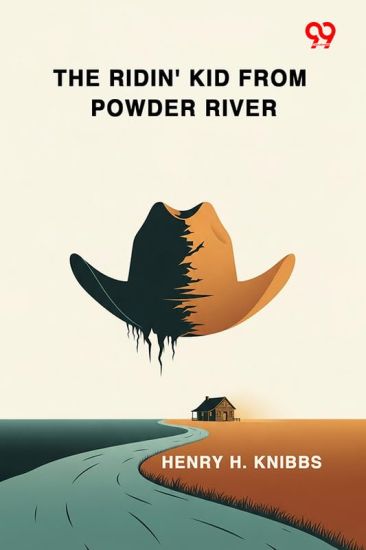
The ridin' kid from powder river explores adventure, coming-of-age, and survival against the harsh realities of the Western frontier. The story follows a young boy who endures a cruel and difficult life while traveling with a merciless horse-trader. His fortunes begin to shift when he meets an old homesteader who offers him guidance and companionship, becoming a father figure. This encounter marks the start of the boy s journey toward self-improvement, loyalty, and a search for justice in a lawless and unforgiving land. The narrative emphasizes the boy s growth as he moves from neglect and hardship toward forming meaningful relationships and embracing new opportunities. Early scenes reveal the struggle between his troubled past and the promise of a better future, setting the tone for the challenges and conflicts he will face. Throughout, the story highlights the tension between survival and hope, laying the foundation for significant character development as the boy navigates a world filled with danger and possibility.

River Runs Through Me is more than fishing experiences. It offers the realities Mark faced in walking the human landscape.Yes, there are fishing moments, when a tree stump and not a fish was hooked, when the leader pinged and the fish flipped its middle fin before swimming away, when he lost the net into Tillamook Bay...In his journey, metaphorically, Mark describes the full reality of a rose-the beautiful flower, the stem and the thorns. Life cannot be one without the others.In it all, as child, as pitcher of a wicked curve, as university and seminary student, as husband, as father, as minister in local church and judicatory for a denomination, as novelist, Mark shares how life at times reaches up to touch bottom and when life is standing on top of a mountain, personal Rocky Mountain highs.Hopefully his journey, the ups and downs all together, will benefit, so your own steps can dance and not drag.
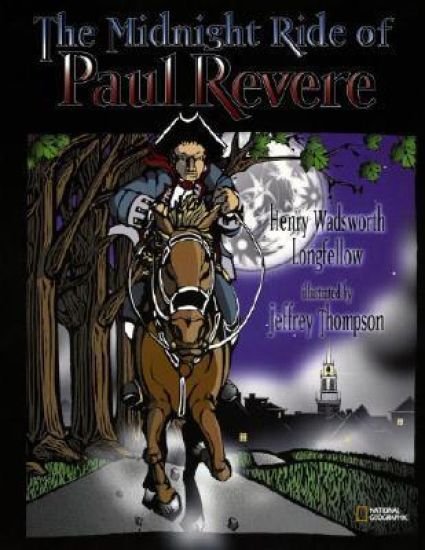
In this classic poem, Henry Wadsworth Longfellow takes Paul Revere, the Boston silversmith who was an active patriot during the American Revolution, and makes him an example of the quintessential hero who galvanizes the people in times of crisis. In the poem, Revere plans to receive a signal telling him whether the British will be attacking by land or by sea and then rides this horse through several small Massachusetts towns alerting the local patriots to prepare for what will be the first battle of the American Revolution. The Midnight Ride of Paul Revere was originally published as "The Landlord's Tale," part of the longer poem Tales from a Wayside Inn.
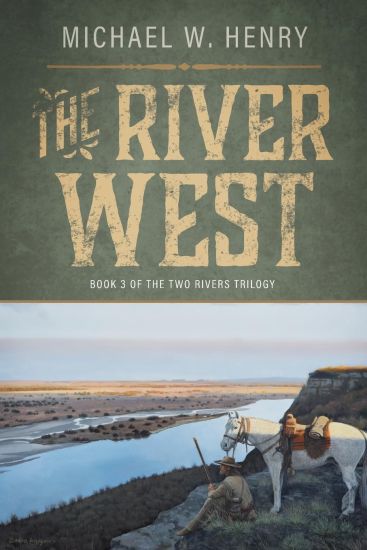
Action and Adventure Spiritual Warfare Powerful Truths Having escaped from a secret holding cell in the Masonic Temple, missionary Allen Hartman is on the Natchez Trace after rescuing his friend from slavery on a swamp plantation. But when the evil La Marque sends an assassin to kill him and forcibly return Deacon Abraham to captivity, Allen must battle an onslaught of dark spiritual forces. Will Allen withstand this attack of powerful sorcery? Can he clear his name from false accusations by religious leaders? Will he follow the river west to resume his mission and realize a hoped-for future with Moon Cloud, the Arapaho woman he loves? In book three of the Two Rivers Trilogy, Allen Hartman learns that "greater love" has a costly price as he battles evil in the Lord's strength.
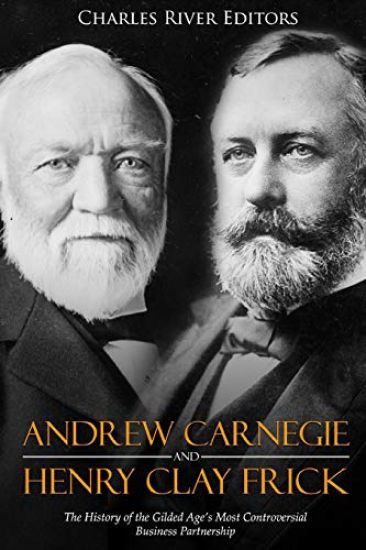
Andrew Carnegie and Henry Clay Frick: The History of the Gilded Age's Most Controversial Business Partnership
Charles River
Createspace Independent Publishing Platform
2018
nidottu
*Includes pictures *Includes online resources and a bibliography for further reading The Gilded Age and the dawn of the 20th century are often remembered as an era full of monopolies, trusts, and economic giants in heavy industries like oil and steel. Men like John Rockefeller built empires and financiers like J.P. Morgan merged and consolidated them. The era also made names like Astor, Cooke, and Vanderbilt instantly recognizable across the globe. Over time, the unfathomable wealth generated by the businesses made the individuals on top incredibly rich, and that in turn led to immense criticism and an infamous epithet used to rail against them: robber barons. The term robber baron has largely fallen into disuse in the 21st century but there was a time when it was a popular epithet that described the kind of man who, it was believed, built his fortune by taking things belonging to others. The Gilded Age and the dawn of the 20th century are often remembered as an era full of monopolies, trusts, and economic giants in heavy industries like oil and steel. Men like Andrew Carnegie built empires like Carnegie Steel, and financiers like J.P. Morgan merged and consolidated them. The era also made names like Astor, Cooke, and Vanderbilt instantly recognizable across the globe. Over time, the unfathomable wealth generated by the businesses made the individuals on top incredibly rich, and that in turn led to immense criticism and an infamous epithet used to rail against them: robber barons. The industrial might wielded by men like Gould in the later 19th century directly led to a public backlash and made President Teddy Roosevelt the "trust buster", and there has since been countless regulations to attempt to avoid the types of monopolies found over 100 years ago. However, many 20th century historians and writers pushed back against the allegations hurled at the "robber barons" and even took issue with the name. For example, Libertarian writer John Stossel argued, "They weren't robbers, because they didn't steal from anyone, and they weren't barons-they were born poor..." Dozens of these men would be pilloried as "robber barons," but few of them were as wealthy or influential as Andrew Carnegie, who built America's foremost steel empire. Ironically, Carnegie epitomized the American Dream, migrating with his poor family to America in the mid-19th century and rising to the top of the business world in his adopted country. A prodigious writer in addition to his keen sense of business, Carnegie was one of the most outspoken champions of capitalism at a time when there was pushback among lower social classes who witnessed the great disparities in wealth; as he once put it, "Upon the sacredness of property civilization itself depends-the right of the laborer to his hundred dollars in the savings bank, and equally the legal right of the millionaire to his millions." In a similar vein, he said, "Those who would administer wisely must, indeed, be wise, for one of the serious obstacles to the improvement of our race is indiscriminate charity." Though his was not the "rags to riches" story one often hears of this era, Henry Clay Frick's drive and ambition helped transform a young man from a solidly middle class family into a millionaire by the age of 30. At the same time, despite the characteristic ruthlessness with which he dealt with business associates and foes alike, he was devoted and sometime even tender to his friends and family. After surviving an assassination attempt, he lived to toast the 20th century and avoided going down with so many others of his era on the Titanic, only to see the world he had worked to create consumed by a European war that spread around the world.
Andrew Carnegie and Henry Clay Frick: The History of the Gilded Age's Most Controversial Business Partnership
Charles River
Createspace Independent Publishing Platform
2018
nidottu
*Includes pictures *Includes online resources and a bibliography for further reading The Gilded Age and the dawn of the 20th century are often remembered as an era full of monopolies, trusts, and economic giants in heavy industries like oil and steel. Men like John Rockefeller built empires and financiers like J.P. Morgan merged and consolidated them. The era also made names like Astor, Cooke, and Vanderbilt instantly recognizable across the globe. Over time, the unfathomable wealth generated by the businesses made the individuals on top incredibly rich, and that in turn led to immense criticism and an infamous epithet used to rail against them: robber barons. The term robber baron has largely fallen into disuse in the 21st century but there was a time when it was a popular epithet that described the kind of man who, it was believed, built his fortune by taking things belonging to others. The Gilded Age and the dawn of the 20th century are often remembered as an era full of monopolies, trusts, and economic giants in heavy industries like oil and steel. Men like Andrew Carnegie built empires like Carnegie Steel, and financiers like J.P. Morgan merged and consolidated them. The era also made names like Astor, Cooke, and Vanderbilt instantly recognizable across the globe. Over time, the unfathomable wealth generated by the businesses made the individuals on top incredibly rich, and that in turn led to immense criticism and an infamous epithet used to rail against them: robber barons. The industrial might wielded by men like Gould in the later 19th century directly led to a public backlash and made President Teddy Roosevelt the "trust buster", and there has since been countless regulations to attempt to avoid the types of monopolies found over 100 years ago. However, many 20th century historians and writers pushed back against the allegations hurled at the "robber barons" and even took issue with the name. For example, Libertarian writer John Stossel argued, "They weren't robbers, because they didn't steal from anyone, and they weren't barons-they were born poor..." Dozens of these men would be pilloried as "robber barons," but few of them were as wealthy or influential as Andrew Carnegie, who built America's foremost steel empire. Ironically, Carnegie epitomized the American Dream, migrating with his poor family to America in the mid-19th century and rising to the top of the business world in his adopted country. A prodigious writer in addition to his keen sense of business, Carnegie was one of the most outspoken champions of capitalism at a time when there was pushback among lower social classes who witnessed the great disparities in wealth; as he once put it, "Upon the sacredness of property civilization itself depends-the right of the laborer to his hundred dollars in the savings bank, and equally the legal right of the millionaire to his millions." In a similar vein, he said, "Those who would administer wisely must, indeed, be wise, for one of the serious obstacles to the improvement of our race is indiscriminate charity." Though his was not the "rags to riches" story one often hears of this era, Henry Clay Frick's drive and ambition helped transform a young man from a solidly middle class family into a millionaire by the age of 30. At the same time, despite the characteristic ruthlessness with which he dealt with business associates and foes alike, he was devoted and sometime even tender to his friends and family. After surviving an assassination attempt, he lived to toast the 20th century and avoided going down with so many others of his era on the Titanic, only to see the world he had worked to create consumed by a European war that spread around the world.
They fought for their country. Now they'll fight for each other.Tall, hard-bodied security professional Nick Flannery is home from active duty and ready to start life with the military analyst who owns his heart. But Liz is different these days-distant. She's avoiding him and he's determined to find out why. Because the new beginning he wants? It's nothing without her.Liz Nelson returned from Iraq with a prosthetic, a secret baby and an enemy who threatens everything she cares about. She worked hard to find her new normal but that second chance with the sergeant she adores? It won't happen if he learns the truth.In this gripping tale of love, sacrifice and redemption, you'll find sizzling chemistry and pulse-pounding suspense as Nick and Liz navigate a treacherous path to their happily ever after. The Rough Ride is a sexy, second chance, secret baby, wounded warrior romantic suspense. They've both got secrets . . . and a mutual enemy.Winner of The Holt Medallion and The Golden Leaf award for Best First Book.
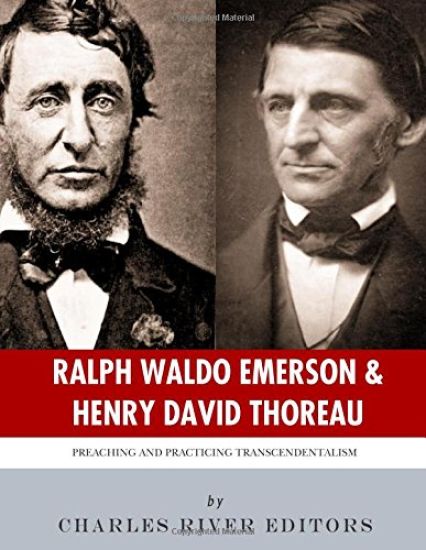
Ralph Waldo Emerson & Henry David Thoreau: Preaching and Practicing Transcendentalism
Charles River
Createspace Independent Publishing Platform
2018
nidottu
*Includes inspirational quotes from both Emerson and Thoreau *Includes Emerson's article about Thoreau's life in the August 1862 edition of Atlantic Monthly *Includes a Bibliography of their works and secondary works about them. *Includes pictures of Emerson, Thoreau and important people and places in their lives. "Standing on the bare ground, - my head bathed by the blithe air, and uplifted into infinite space, - all mean egotism vanishes. I become a transparent eye-ball; I am nothing; I see all; the currents of the Universal Being circulate through me; I am part or particle of God." - Ralph Waldo Emerson "A living dog is better than a dead lion. Shall a man go and hang himself because he belongs to the race of pygmies, and not be the biggest pygmy that he can? Let every one mind his own business, and endeavor to be what he was made. Why should we be in such desperate haste to succeed and in such desperate enterprises? If a man does not keep pace with his companions, perhaps it is because he hears a different drummer. Let him step to the music which he hears, however measured or far away." - Henry David Thoreau In the mid-19th century, Romantic literature was still in full bloom across the West, but some American authors began producing literature that, while still Romantic, was unique enough to be considered a different genre. This new genre, Transcendentalism, focused on the spirituality of the self and nature, not rejecting religion outright but concentrating on pragmatism and the importance of individuals as the spiritual center of the cosmos. In addition to drawing upon the Age of Enlightenment, Transcendentalist authors also utilized the philosophy of Plato, who taught that self-fulfillment through attaining knowledge should be an individual's ultimate goal. The leader of Transcendentalism, and the man who ushered the movement's practices and literature, was Ralph Waldo Emerson (1802-1883), one of America's most famous writers and speakers. Emerson initiated Transcendentalism with the publishing of his essay Nature in 1836, which espoused the virtues of nature and the interconnectedness of all life in nature. With his focus on the environment and natural history, Emerson became the first major American writer whose work was not influenced in any way by European literature. Emerson established group meetings, gave a series of lectures, and helped produce a Transcendentalist publication in the 1840s, which included his famous essay Self-Reliance. As Emerson's movement and stature grew, he befriended other authors, including Henry David Thoreau, who became his greatest prot g . As a prot g of Ralph Waldo Emerson, Thoreau took the values of the movement to heart and was particularly interested in the interconnection between man and nature, writing in Walden, "Most of the luxuries and many of the so-called comforts of life are not only not indispensable, but positive hindrances to the elevation of mankind." That famous work was Thoreau's account of his experience living for two years in a small cabin in a forest along the shore of Walden Pond in Concord, Massachusetts. In 1846, Thoreau was arrested for failing to pay taxes, which was based on his opposition to slavery and other ways the government spent taxpayers' money. After being freed, he gave a lecture about the roles of governments and individuals in society, which eventually became the famous essay "Civil Disobedience." Thoreau's message of civil disobedience has resonated more than any of his other Transcendentalist values, and it had a profound influence on the philosophy and nonviolent protests of activists like Mahatma Gandhi and Martin Luther King, Jr. Ralph Waldo Emerson & Henry David Thoreau looks at the lives and works of both men, examining their ideology and the Transcendentalist movement.
The Grand Canon of the Colorado River
Henry White Warren
BCR (Bibliographical Center for Research)
2010
pokkari