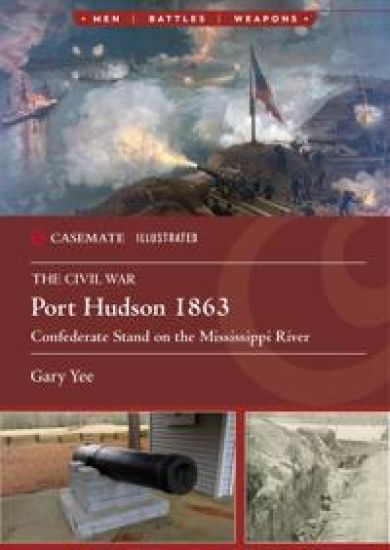
Often overlooked, Port Hudson on the Mississippi River was below Vicksburg and above Baton Rouge, Louisiana. Its possession by the Confederates ensured that commerce could flow to and from the Red River. Being situated atop a high bluff, it was a natural point to be fortified to control river traffic. Both Union and Confederate forces were late in recognizing this (and Farragut had sailed past it a year earlier to demand Vicksburg’s surrender) but its peaceful idleness would not remain long. The Confederates began fortifying it and the Union’s attempt to capture it became the longest siege of the American Civil War. It was also costly and largely unnecessary too and in terms of losses the Union suffered over 8,000 dead, wounded or died of disease. This fully illustrated book examines this campaign and its consequences.
Observera att förlaget som ger ut denna produkt baserar innehållet i sina produkter på fria källor som Wikipedia. Boken är med stor sannolikhet endast ett utdrag ur dessa informationskällor, alltså inte en vanlig bok i den bemärkelsen.
Observera att förlaget som ger ut denna produkt baserar innehållet i sina produkter på fria källor som Wikipedia. Boken är med stor sannolikhet endast ett utdrag ur dessa informationskällor, alltså inte en vanlig bok i den bemärkelsen.
Observera att förlaget som ger ut denna produkt baserar innehållet i sina produkter på fria källor som Wikipedia. Boken är med stor sannolikhet endast ett utdrag ur dessa informationskällor, alltså inte en vanlig bok i den bemärkelsen.
Observera att förlaget som ger ut denna produkt baserar innehållet i sina produkter på fria källor som Wikipedia. Boken är med stor sannolikhet endast ett utdrag ur dessa informationskällor, alltså inte en vanlig bok i den bemärkelsen.
Learning the basic laws of physics - mechanics, thermodynamics, relativity, quantum mechanics - can be a struggle. This title presents Holmes, Dr Watson, Professor Challenger of "Lost World" fame, and other favourite Conan Doyle characters to solve a Baker Street dozen baffling science mysteries.
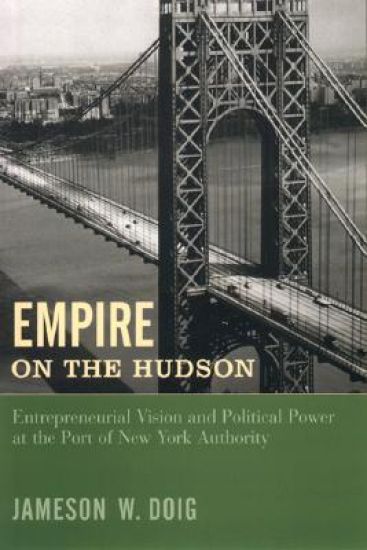
Revered and reviled in almost equal amounts since its inception, the Port Authority of New York and New Jersey has been responsible for creating and maintaining much of New York and New Jersey's transportation infrastructure-the things that make the region work. Doig traces the evolution of the Port Authority from the battles leading to its creation in 1921 through its conflicts with the railroads and its expansion to build bridges and tunnels for motor vehicles. Chronicling the adroit maneuvers that led the Port Authority to take control of the region's airports and seaport operations, build the largest bus terminal in the nation, and construct the World Trade Center, Doig reveals the rise to power of one of the world's largest specialized regional governments. This definitive history of the Port Authority underscores the role of several key players-Austin Tobin, the obscure lawyer who became Executive Director and a true "power broker" in the bi-state region, Julius Henry Cohen, general counsel of the Port Authority for its first twenty years, and Othmar H. Ammann, the Swiss engineer responsible for the George Washington Bridge, the Bayonne and Goethels bridges, the Outerbridge Crossing, and the Lincoln Tunnel. Today, with public works projects stalled by community opposition in almost every village and city, the story of how the Port Authority managed to create an empire on the Hudson offers lessons for citizens and politicians everywhere.
Revered and reviled in almost equal amounts since its inception, the Port Authority of New York and New Jersey has been responsible for creating and maintaining much of New York and New Jersey's transportation infrastructure-the things that make the region work. Doig traces the evolution of the Port Authority from the battles leading to its creation in 1921 through its conflicts with the railroads and its expansion to build bridges and tunnels for motor vehicles. Chronicling the adroit maneuvers that led the Port Authority to take control of the region's airports and seaport operations, build the largest bus terminal in the nation, and construct the World Trade Center, Doig reveals the rise to power of one of the world's largest specialized regional governments. This definitive history of the Port Authority underscores the role of several key players-Austin Tobin, the obscure lawyer who became Executive Director and a true "power broker" in the bi-state region, Julius Henry Cohen, general counsel of the Port Authority for its first twenty years, and Othmar H. Ammann, the Swiss engineer responsible for the George Washington Bridge, the Bayonne and Goethels bridges, the Outerbridge Crossing, and the Lincoln Tunnel. Today, with public works projects stalled by community opposition in almost every village and city, the story of how the Port Authority managed to create an empire on the Hudson offers lessons for citizens and politicians everywhere.
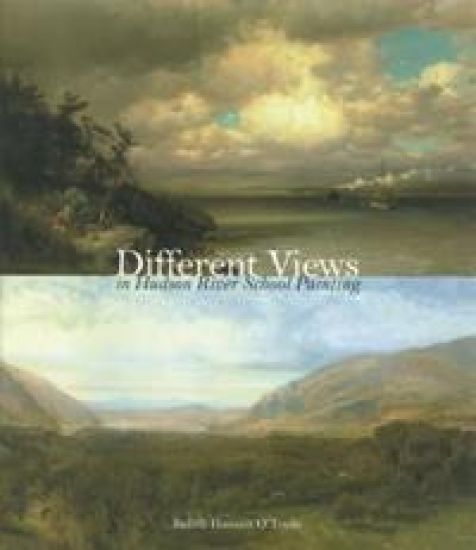
Hudson River School artists shared an awe of the magnificence of nature as well as a belief that the untamed American scenery reflected the national character. In this new work, color reproductions of more than 115 paintings capture the beauty and illuminate the aesthetic and philosophical principles of the Hudson River School painters. The pieces included in this volume reflect a period (1825-1875) when American landscape painting was most thoroughly explored and formalized with personal, artistic, cultural, and national identifications. Judith Hansen O'Toole reveals the subtleties and quiet majesty of the works and discusses their shared iconography, the ways in which artists responded to one another's paintings, and how the paintings reflected nineteenth-century American cultural, intellectual, and social milieus. Different Views is also the first major study to examine closely the Hudson River School artists' practice of creating thematically related pairs and series of paintings. O'Toole considers painters' use of this method to express different moods and philosophical concepts. She observes artists' representations of landscape and their nuanced depictions of weather, light, and season. By comparing and contrasting Hudson River School paintings, O'Toole reveals differences in meaning, emotion, and cultural connotation. Different Views in Hudson River School Painting contains reproductions of works from a range of prominent and lesser-known artists, including Jasper Francis Cropsey, Sanford Robinson Gifford, Asher B. Durand, Frederic Edwin Church, Albert Bierstadt, John Frederic Kensett, and John William Casilear. The works come from a leading private collection and were recently exhibited at the Westmoreland Museum of American Art.
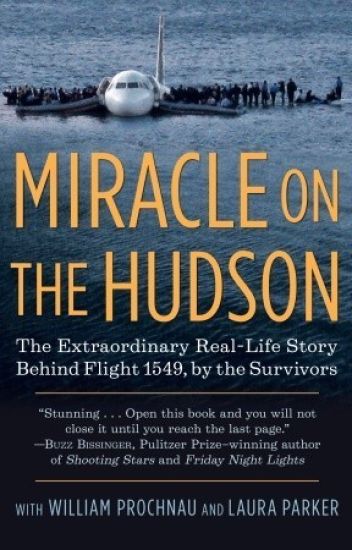
The remarkable true story of Chesley "Sully" Sullenberger's heroic crash landing in the Hudson River, as told by the passengers who owe him their lives. Millions watched the aftermath on television, while others witnessed the event actually happening from the windows of nearby skyscrapers. But only 155 people know firsthand what really happened on U.S. Airways Flight 1549 on January 15, 2009. Now, for the first time, the survivors detail their astounding, terrifying, and inspiring experiences on that freezing winter day in New York City. Written by two esteemed journalists, Miracle on the Hudson is the entire tale from takeoff to bird strike to touchdown to rescue, seen through the eyes and felt in the souls of those on board the fateful flight. Revealing many new and compelling details, Miracle on the Hudson dramatically evokes the explosion and "smell of burning flesh" as both engines were destroyed by geese, the violent landing on the river that felt like a "huge car wreck," the gridlock in the aisles as the plane filled swiftly with freezing water, and the thrill of the passengers' rescue from the wings and from rafts--all of it recalled by the "cross section of America" on board. Jay McDonald, a thirty-nine-year-old software developer, had survived brain-tumor surgery just two years earlier and now faced the unimaginable. Tracey Wolsko, a nervous flier, suddenly became other people's rock: "Just pray. It's going to be all right." Jim Whitaker, a construction executive, reassured a nervous mother of two young children on board, only later admitting, "I was pathologically lying the whole time." As the plane started sinking, Lucille Palmer, eighty-five, told her daughter to save herself: "Just leave me " Featuring much more than what the media reported--moments of chaos in addition to stoicism and common sense, and the fortuitous mistakes and quick instincts that saved lives that otherwise would have been lost--Miracle on the Hudson is the chronicle of one of the most phenomenal feel-good stories of recent years, one that could have been a nightmare and instead became a stirring narrative of heroism and hope for our times.
August Kleinzahler has earned admiration for his musical, precise, wise, and sometimes madcap poems that are grounded in the wide array of places, people, and most especially voices he has encountered in his real and imaginative worlds. Snow Approaching on the Hudson is a collection that moves seamlessly through the often hypnogogic, porous realms of dreams, the past and present, inner and outer landscapes. His haunting, shifting atmospheres are peopled by characters, intimately portrayed, that are at one historical and invented. The poet's signature rhythmic propulsion serves as the engine for his newest collection, and his always masterful free verse conveys a life thoroughly lived and brilliantly perceived.
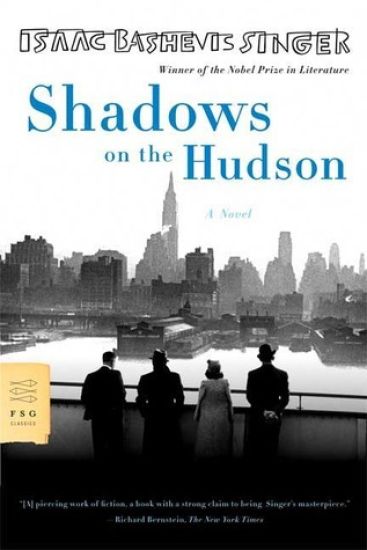
"A piercing work of fiction with a strong claim to being Singer's masterpiece" - Richard Bernstein, "The New York Times". 'Shadows On The Hudson" traces the intertwined lives of a group of Jewish refugees in New York City in the late 1940s. At its centre is Boris Makaver, a pious, wealthy businessman whose greatest trial is his unstable daughter, Anna. A chain of events disrupts the lives of the close-knit community as each refugee struggles to reconcile the horrific past with the difficult present, as Singer explores both the nature of faith and the nature of love in the aftermath of the Holocaust.
August Kleinzahler has earned admiration for his musical, precise, wise, and sometimes madcap poems that are grounded in the wide array of places, people, and most especially voices he has encountered in his real and imaginative worlds. Snow Approaching on the Hudson is a collection that moves seamlessly through the often hypnogogic, porous realms of dreams, the past and present, inner and outer landscapes. His haunting, shifting atmospheres are peopled by characters, intimately portrayed, who are at one historical and invented. The poet's signature rhythmic propulsion serves as the engine for his newest collection, and his always masterful free verse conveys a life thoroughly lived and brilliantly perceived.
No part of the country was more contested during the American Revolution than New York City, the Hudson River, and the surrounding counties. Political and military leaders on both sides viewed the Hudson River Valley as the American jugular, which, if cut, would quickly bleed the rebellion to death. So in 1776, King George III sent the largest amphibious force ever assembled to seize Manhattan and use it as a base from which to push up the Hudson River Valley for a grand rendezvous at Albany with an impressive army driving down from Canada. George Washington and every other patriot leader shared the king’s fixation with the Hudson. Generations of American and British historians have held the same view. In fact, one of the few things that scholars have agreed upon is that the British strategy, though disastrously executed, should have been swift and effective. Until now, no one has argued that this plan of action was lunacy from the beginning. Revolution on the Hudson makes the bold new argument that Britain’s attempt to cut off New England never would have worked, and that doggedly pursuing dominance of the Hudson ultimately cost the crown her colonies. It unpacks intricate military maneuvers on land and sea, introduces the personalities presiding over each side’s strategy, and reinterprets the vagaries of colonial politics to offer a thrilling response to one of our most vexing historical questions: How could a fledgling nation have defeated the most powerful war machine of the era? George C. Daughan—winner of the prestigious Samuel Eliot Morrison Award for Naval Literature—integrates the war’s naval elements with its political, military, economic, and social dimensions to create a major new study of the American Revolution. Revolution on the Hudson offers a much clearer understanding of our founding conflict, and how it transformed a rebellion that Britain should have crushed into a war they could never win.
No part of the country was more contested during the American Revolution than New York City and its surroundings. Military leaders of the time—and generations of scholars since—believed that the Hudson River Valley was America’s geographic jugular, which, if cut, would quickly bleed the rebellion to death. In Revolution on the Hudson, prize-winning historian George C. Daughan makes the daring new argument that this strategy would never have worked, and that dogged pursuit of dominance over the Hudson ultimately cost Britain the war. This groundbreaking naval history offers a thrilling response to one of our most vexing historical questions: How could a fledgling nation have defeated the most powerful war machine of the era?
Twenty years in print, The Thames & Hudson Dictionary of Graphic Design and Designers contains around 750 entries offering detailed information on every important graphic designer, movement, agency, practice and publication from 1840 up to the present day. The dictionary gives clear and accessible definitions, from technical minutiae of typography to computer-aided design and printing. Cross-references make navigating between entries simple. The endmatter contains a handy bibliography of key texts and recommended reading, as well as a timeline that puts the most influential individuals, developments and movements in chronological order. This third edition contains over 200 new, updated or expanded entries (as well as 45 new illustrations, 22 in colour) on the latest designers, terms and influences; content that ranges from Adobe InDesign to Manga, and from Chip Kidd to Marian Bantjes. Redesigned and re-typeset throughout, the book remains an indispensable reference tool to all students and practitioners of graphic design.