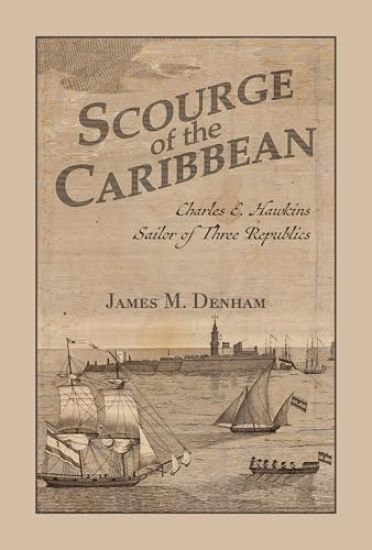
The pervasive influence of the frontier is fundamental to an understanding of antebellum Florida. James M. Denham traces the growth and social development of this sparsely settled region through its experience with crime and punishment. Using court records, government documents, newspapers, and personal papers, Denham explores how crime affected ordinary Floridians - whites and blacks, perpetrators, victims, and enforcers. He contends that although the frontier determined the enforcement and administration of the law, the ethic of honor dominated human relationships. Although indictments for crimes against persons were far more frequent than those for crimes against property, the punishment for the latter was more severe (except for murder) because such crimes violated the South's cherished code of honor. A sparse, rural agricultural population valued a personal integrity that included a strong sense of economic morality. Honesty and truthfulness were traits not only desired but demanded. Stealing was a violation of that trust and received society's sternest punishment.
The last two decades have seen a convergence of the interests of anthropologists and economists. In the past few years, a small number of anthropologists have become interested in institutional economics—many of those anthropologists are contributors to this volume. The primary objective of this volume is to begin to assess the degree to which the ideas of institutional economics can be applied to societies in the Third World. They discuss a wide variety of institutions from this perspective, including family budgets, revolving credit institutions in Bangladesh, Mexican peasant unions, markets in East Africa, share contracts in the Philippine fishing communities, the actions of the agents of the state, and credit institutions in Africa. Co-published with the Society for Economic Anthropology.
The primary objective of this volume is to begin to assess the degree to which the ideas of institutional economics can be applied to societies in the Third World. They discuss a wide variety of institutions from this perspective, including family budgets, revolving credit institutions in Bangladesh, Mexican peasant unions, markets in East Africa, share contracts in the Philippine fishing communities, the actions of the agents of the state, and credit institutions in Africa. Co-published with the Society for Economic Anthropology.
Most critics overlook the literary significance of Alexander Solzhenitsyn's work, focusing instead on biographical, political, and moral interpretations. This examination of Solzhenitsyn's major novels—One Day in the Life of Ivan Denisovitch, The First Circle, Cancer Ward, and August 1914—emphasizes that his writings must be understood within the tradition of Russian literature and the context of Western culture.James M. Curtis provides a detailed analysis of Tolstoy's crucial influence on Solzhenitsyn, and he discusses at length Solzhenitsyn's relationship to Dostoyevsky, Leskov, Chekhov, and Zamyatin. Curtis also demonstrates that a study of Ernest Hemingway (whose books have been enormously popular in Russia) and Virginia Woolf can contribute to our understanding of the Russian novelist. Solzhenitsyn's Traditional Imagination includes a chapter on Dos Passos and Eisenstein whose work constituted Solzhenitsyn's first major artistic interest outside Russian literature. The chapter presents the first comprehensive examination of the importance of film for Solzhenitsyn and shows how he learned the use of film technique in literature from Dos Passos and how he adapted it from Eisenstein's films.This was the first full-length study to use Solzhenitsyn's revised editions of One Day . . ., The First Circle, and Cancer Ward (all published in 1978). Professor Curtis's careful use of the best available texts, together with his wide knowledge of contemporary literary criticism and his insistence upon Solzhenitsyn's purely literary importance, make this a valuable book for all students of Solzhenitsyn's fiction.
The Souls of Jewish Folk argues that late nineteenth-century Germany’s struggle with its “Jewish question”—what to do with Germany’s Jews—served as an important and to-date underexamined influence on W.E.B. Du Bois’s considerations of America’s anti-Black racism at the turn of the twentieth century. Du Bois is well known for his characterization of the twentieth century’s greatest challenge, “the problem of the color line.” This proposition gained prominence in the conception of Du Bois’s The Souls of Black Folk (1903), which engages the questions of race, racial domination, and racial exploitation. James M. Thomas contends that this conception of racism is haunted by the specter of the German Jew. In 1892 Du Bois received a fellowship for his graduate studies at the University of Berlin from the John F. Slater Fund for the Education of Freedmen. While a student in Berlin, Du Bois studied with some of that nation's most prominent social scientists. What The Souls of Jewish Folk asks readers to take seriously, then, is how our ideas, and indeed intellectual work itself, are shaped by and embedded within the nexus of people, places, and prevailing contexts of their time. With this book, Thomas examines how the major social, political, and economic events of Du Bois’s own life—including his time spent living and learning in a late nineteenth-century Germany defined in no small part by its violent anti-Semitism—constitute the soil from which his most serious ideas about race, racism, and the global color line sprang forth.
The Souls of Jewish Folk argues that late nineteenth-century Germany’s struggle with its “Jewish question”—what to do with Germany’s Jews—served as an important and to-date underexamined influence on W.E.B. Du Bois’s considerations of America’s anti-Black racism at the turn of the twentieth century. Du Bois is well known for his characterization of the twentieth century’s greatest challenge, “the problem of the color line.” This proposition gained prominence in the conception of Du Bois’s The Souls of Black Folk (1903), which engages the questions of race, racial domination, and racial exploitation. James M. Thomas contends that this conception of racism is haunted by the specter of the German Jew. In 1892 Du Bois received a fellowship for his graduate studies at the University of Berlin from the John F. Slater Fund for the Education of Freedmen. While a student in Berlin, Du Bois studied with some of that nation's most prominent social scientists. What The Souls of Jewish Folk asks readers to take seriously, then, is how our ideas, and indeed intellectual work itself, are shaped by and embedded within the nexus of people, places, and prevailing contexts of their time. With this book, Thomas examines how the major social, political, and economic events of Du Bois’s own life—including his time spent living and learning in a late nineteenth-century Germany defined in no small part by its violent anti-Semitism—constitute the soil from which his most serious ideas about race, racism, and the global color line sprang forth.
The Promise of Progressivism: Angelo Patri and Urban Education is a biography of the well-known progressive educator during the first half of the twentieth century. A follower of John Dewey, Patri was the principal of two large community-oriented progressive schools in the Bronx from 1907 to 1944. As the first Italian-American school administrator in the United States, he helped immigrant families to maintain their language and heritage while preparing for success in American society. Patri's syndicated column of advice for parents was carried in hundreds of newspapers, had millions of readers, and provided material for the twelve advice books he published for parents. As educator and writer, Patri helped immigrants and mainstream Americans to understand one another and to work together for the common good.
What role does the Christian community play in the process of growing in Christian maturity? This book argues that in Pauline theology the redeemed community is a necessary means for the progressive sanctification of the individual believer, an idea that is largely misunderstood in parts of the Western church. It evaluates foundational theological considerations traditionally omitted from sanctification studies and places them within the context of Pauline theology. Included are the missiological nature of holiness, the initiatory character of God, the creation of the new humanity as reflecting the image of God, and the impact upon the church resulting from the radical redefinition by Christ of the cultural symbols surrounding the Jewish temple system. This book offers a corrective to the individualized approach to Christian growth: For Paul, the focus of God's transformative activity culminates with the community rather than the individual, the goal of which is to reveal God's glory to the broader creation.
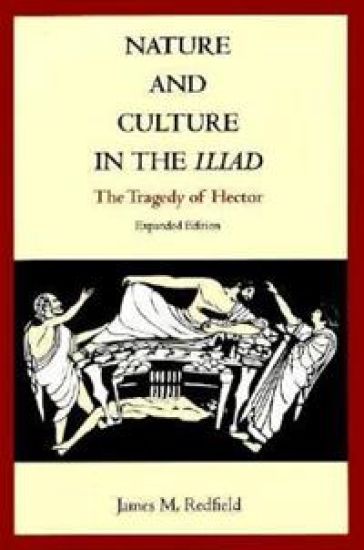
By focusing on the story of Hector, James M. Redfield presents an imaginative perspective not only on the Iliad but also on the whole of Homeric culture. In an expansive discussion informed by a reinterpretation of Aristotle's Poetics and a reflection on the human meaning of narrative art, the analysis of Hector leads to an inquiry into the fundamental features of Homeric culture and of culture generally in its relation to nature. Through Hector, as the "true tragic hero of the poem," the events and themes of the Iliad are understood and the function of tragedy within culture is examined. Redfield's work represents a significant application of anthropological perspectives to Homeric poetry. Originally published in 1975 (University of Chicago Press), this revised edition includes a new preface and concluding chapter by the author.
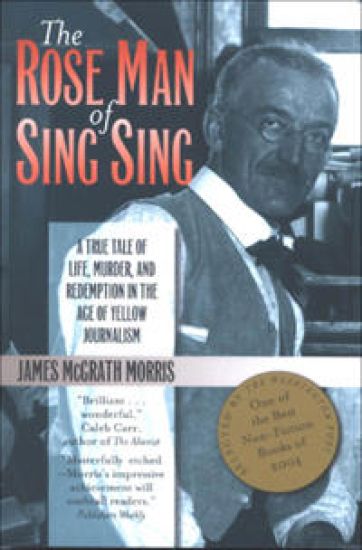
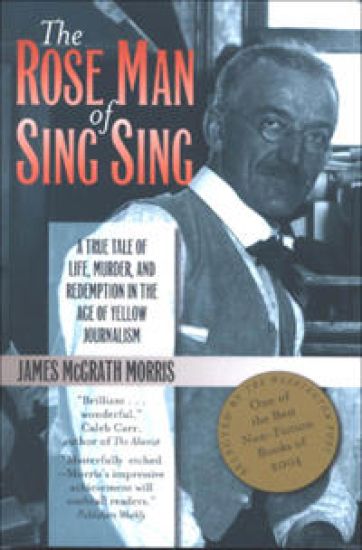
Today, seventy-three years after his death, journalists still tell tales of Charles E. Chapin. As city editor of Pulitzer's New York Evening World , Chapin was the model of the take-no-prisoners newsroom tyrant: he drove reporters relentlessly—and kept his paper in the center ring of the circus of big-city journalism. From the Harry K. Thaw trial to the sinking of the Titanic , Chapin set the pace for the evening press, the CNN of the pre-electronic world of journalism. In 1918, at the pinnacle of fame, Chapin's world collapsed. Facing financial ruin, sunk in depression, he decided to kill himself and his beloved wife Nellie. On a quiet September morning, he took not his own life, but Nellie's, shooting her as she slept. After his trial—and one hell of a story for the World's competitors—he was sentenced to life in the infamous Sing Sing Prison in Ossining, New York. In this story of an extraordinary life set in the most thrilling epoch of American journalism, James McGrath Morris tracks Chapin's rise from legendary Chicago street reporter to celebrity powerbroker in media-mad New York. His was a human tragedy played out in the sensational stories of tabloids and broadsheets. But it's also an epic of redemption: in prison, Chapin started a newspaper to fight for prisoner rights, wrote a best-selling autobiography, had two long-distance love affairs, and tapped his prodigious talents to transform barren prison plots into world-famous rose gardens before dying peacefully in his cell in 1930. The first portrait of one of the founding figures of modern American journalism, and a vibrant chronicle of the cutthroat culture of scoops and scandals, The Rose Man of Sing Sing is also a hidden history of New York at its most colorful and passionate. James McGrath Morris is a former journalist, author of Jailhouse Journalism: The Fourth Estate Behind Bars , and a historian. He lives in Falls Church, Virginia, and teaches at West Springfield High School.
Today, seventy-three years after his death, journalists still tell tales of Charles E. Chapin. As city editor of Pulitzer's New York Evening World , Chapin was the model of the take-no-prisoners newsroom tyrant: he drove reporters relentlessly—and kept his paper in the center ring of the circus of big-city journalism. From the Harry K. Thaw trial to the sinking of the Titanic , Chapin set the pace for the evening press, the CNN of the pre-electronic world of journalism. In 1918, at the pinnacle of fame, Chapin's world collapsed. Facing financial ruin, sunk in depression, he decided to kill himself and his beloved wife Nellie. On a quiet September morning, he took not his own life, but Nellie's, shooting her as she slept. After his trial—and one hell of a story for the World's competitors—he was sentenced to life in the infamous Sing Sing Prison in Ossining, New York. In this story of an extraordinary life set in the most thrilling epoch of American journalism, James McGrath Morris tracks Chapin's rise from legendary Chicago street reporter to celebrity powerbroker in media-mad New York. His was a human tragedy played out in the sensational stories of tabloids and broadsheets. But it's also an epic of redemption: in prison, Chapin started a newspaper to fight for prisoner rights, wrote a best-selling autobiography, had two long-distance love affairs, and tapped his prodigious talents to transform barren prison plots into world-famous rose gardens before dying peacefully in his cell in 1930. The first portrait of one of the founding figures of modern American journalism, and a vibrant chronicle of the cutthroat culture of scoops and scandals, The Rose Man of Sing Sing is also a hidden history of New York at its most colorful and passionate. James McGrath Morris is a former journalist, author of Jailhouse Journalism: The Fourth Estate Behind Bars , and a historian. He lives in Falls Church, Virginia, and teaches at West Springfield High School.
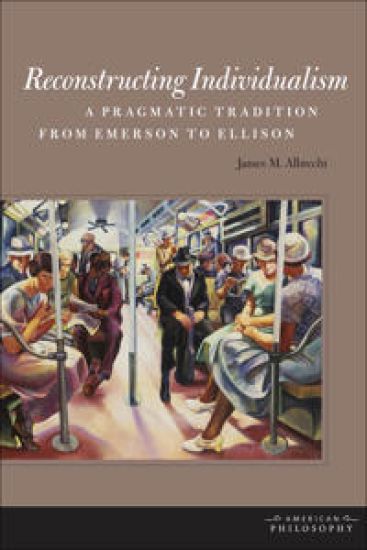
America has a love–hate relationship with individualism. In Reconstructing Individualism, James Albrecht argues that our conceptions of individualism have remained trapped within the assumptions of classic liberalism. He traces an alternative genealogy of individualist ethics in four major American thinkers—Ralph Waldo Emerson, William James, John Dewey, and Ralph Ellison. These writers' shared commitments to pluralism (metaphysical and cultural), experimentalism, and a melioristic stance toward value and reform led them to describe the self as inherently relational. Accordingly, they articulate models of selfhood that are socially engaged and ethically responsible, and they argue that a reconceived—or, in Dewey's term, "reconstructed"—individualism is not merely compatible with but necessary to democratic community. Conceiving selfhood and community as interrelated processes, they call for an ongoing reform of social conditions so as to educate and liberate individuality, and, conversely, they affirm the essential role individuality plays in vitalizing communal efforts at reform.
This is Volume II of a bibliography of works on the homelessness and is dedicated to the many homeless people who discussed their situation during the author's research across the United States.
This book helps readers pray and meditate as Jesus did. It opens up the gospel text so that one can see their mystical meaning. When Jesus speaks about hidden treasure, the pearl of great price, of seeking first the kingdom of heaven, he is talking about the contemplative path. "The Mystical Sense of the Gospels" is ideal for everyone interested in "praying always".
Now in its second edition, Public Health: An Introduction to the Science and Practice of Population Health is expanded in both scope and depth of content to better aid students who are launching their public health studies and preparing for professions in the field. This edition features a greater emphasis on the social determinants of health, health equity, prevention of disease and disability, and the practice of public health. Public Health explores both historical public health issues and contemporary public health challenges—including environmental justice, food deserts, climate change, and COVID-19—through the social ecological lens and with a life course perspective. In addition to establishing a solid knowledge base on the foundations, functions, and core values of public health, the book presents an engaging survey of the social ecological framework and of the demographic factors affecting health at different life stages. The methods of public health, including analytic approaches, systems thinking, implementation science, community engagement, and advocacy are examined, helping students understand the structural underpinnings of population health. Written by leading public health educators, and containing engaging case studies including unique Case Study Podcasts, illustrations, real-world examples, and discussion questions, every chapter analyzes systemic public health issues and the workforce roles driving and implementing public health initiatives and programs in practice. Key Features: New chapters on The Origins of Public Health and The Practice of Public Health provide increased emphasis on the functions and organization of public health and the roles of the workforce New case studies provide real-world examples of historical and contemporary public health challenges that have affected population health 19 Case Study Podcasts highlight current public health issues and initiatives Covers the latest developments affecting population health including infectious disease, chronic disease, mental health, environmental exposures, gun violence, addiction, health policy and many more Expanded coverage of the social determinants of health and health equity COVID-19 and its effects on the public health field are explored, including health communication, public trust, and health inequities Qualified instructors have access to a full set of instructor resources, including a detailed Instructor Manual, PowerPoints, Test Bank, podcasts, and transition guides through an LMS course cartridge
"And behold, with the clouds of heaven there came one like a son of man, and he came to the Ancient of Days and was presented before him. And to him was given dominion and glory and a kingdom." (Daniel 7:13-14 ESV).Perceiving a hole in evangelical biblical theology that should be filled with a robust treatment of the book of Daniel, James Hamilton takes this chance to delve into the book's rich contribution to the Bible's unfolding redemptive-historical storyline. By setting Daniel in the broader context of biblical theology, this canonical study helps move us toward a clearer understanding of how we should live today in response to its message. First, Hamilton shows how the book's literary structure contributes to its meaning, and then addresses key questions and issues, concluding by examining typological patterns.This New Studies in Biblical Theology volume argues that the four kingdoms prophesied by Daniel are both historical and symbolic--that the "one like a son of man" seen by Daniel is identified with and distinguished from the Ancient of Days in a way that would be mysterious until Jesus came as both the son of David and God incarnate. He elaborates that the interpretations of Daniel in early Jewish literature attest to strategies similar to those employed by New Testament authors and exposes that those authors provide a Spirit-inspired interpretation of Daniel that was learned from Jesus. He also highlights how the book of Revelation uses Daniel's language, imitates his structure, points to the fulfillment of his prophecies and clarifies the meaning of his "seventieth week."Addressing key issues in biblical theology, the works comprising New Studies in Biblical Theology are creative attempts to help Christians better understand their Bibles. The NSBT series is edited by D. A. Carson, aiming to simultaneously instruct and to edify, to interact with current scholarship and to point the way ahead.