Kirjojen hintavertailu. Mukana 11 717 486 kirjaa ja 12 kauppaa.

Kirjahaku

Etsi kirjoja tekijän nimen, kirjan nimen tai ISBN:n perusteella.

1000 tulosta hakusanalla Jessica Innes

Fallibilism: Evidence and Knowledge

Fallibilism: Evidence and Knowledge

Jessica Brown

Oxford University Press
2018
sidottu
What strength of evidence is required for knowledge? Ordinarily, we often claim to know something on the basis of evidence which doesn't guarantee its truth. For instance, one might claim to know that one sees a crow on the basis of visual experience even though having that experience does not guarantee that there is a crow (it might be a rook, or one might be dreaming). As a result, those wanting to avoid philosophical scepticism have standardly embraced "fallibilism": one can know a proposition on the basis of evidence that supports it even if the evidence doesn't guarantee its truth. Despite this, there's been a persistent temptation to endorse "infallibilism", according to which knowledge requires evidence that guarantees truth. For doesn't it sound contradictory to simultaneously claim to know and admit the possibility of error? Infallibilism is undergoing a contemporary renaissance. Furthermore, recent infallibilists make the surprising claim that they can avoid scepticism. Jessica Brown presents a fresh examination of the debate between these two positions. She argues that infallibilists can avoid scepticism only at the cost of problematic commitments concerning evidence and evidential support. Further, she argues that alleged objections to fallibilism are not compelling. She concludes that we should be fallibilists. In doing so, she discusses the nature of evidence, evidential support, justification, blamelessness, closure for knowledge, defeat, epistemic akrasia, practical reasoning, concessive knowledge attributions, and the threshold problem.

Wordsworth's Monastic Inheritance

Wordsworth's Monastic Inheritance

Jessica Fay

Oxford University Press
2018
sidottu
This is the first extended study of Wordsworth's complex, subtle, and often conflicted engagement with the material and cultural legacies of monasticism. It reveals that a set of topographical, antiquarian, and ecclesiastical sources consulted by Wordsworth between 1806 and 1822 provided extensive details of the routines, structures, landscapes, and architecture of the medieval monastic system. In addition to offering a new way of thinking about religious dimensions of Wordsworth's work and his views on Roman Catholicism, the book offers original insights into a range of important issues in his poetry and prose, including the historical resonances of the landscape, local attachment and memorialization, gardening and cultivation, Quakerism and silence, solitude and community, pastoral retreat and national identity. Wordsworth's interest in monastic history helps explain significant stylistic developments in his writing. In this often-neglected phase of his career, Wordsworth undertakes a series of generic experiments in order to craft poems capable of reformulating and refining taste; he adapts popular narrative forms and challenges pastoral conventions, creating difficult, austere poetry that, he hopes, will encourage contemplation and subdue readers' appetites for exciting narrative action. This book thus argues for the significance and innovative qualities of some of Wordsworth's most marginalized writings. It grants poems such as The White Doe of Rylstone, The Excursion, and Ecclesiastical Sketches the centrality Wordsworth believed they deserved, and reveals how Wordsworth's engagement with the monastic history of his local region inflected his radical strategies for the creation of taste.
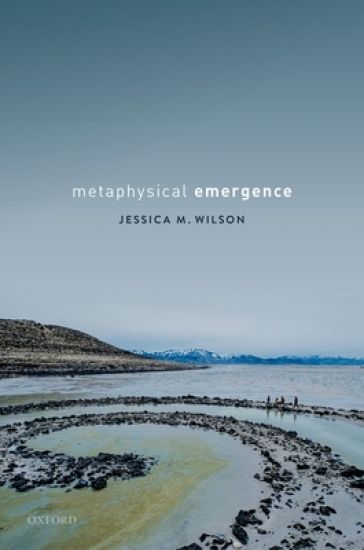
Metaphysical Emergence

Metaphysical Emergence

Jessica M. Wilson

Oxford University Press
2021
sidottu
Both the special sciences and ordinary experience suggest that there are metaphysically emergent entities and features: macroscopic goings-on (including mountains, trees, humans, and sculptures, and their characteristic features) which depend on, yet are distinct from and distinctively efficacious with respect to, lower-level physical configurations and features. These appearances give rise to two key questions. First, what is metaphysical emergence, more precisely? Second, is there any metaphysical emergence, in principle and moreover in fact? Metaphysical Emergence provides clear and systematic answers to these questions. Wilson argues that there are two, and only two, forms of metaphysical emergence of the sort seemingly at issue in the target cases: 'Weak' emergence, whereby a dependent feature has a proper subset of the powers of the feature upon it depends, and 'Strong' emergence, whereby a dependent feature has a power not had by the feature upon which it depends. Weak emergence unifies and illuminates seemingly diverse accounts of non-reductive physicalism; Strong emergence does the same as regards seemingly diverse anti-physicalist views positing fundamental novelty at higher levels of compositional complexity. After defending the in-principle viability of each form of emergence, Wilson considers whether complex systems, ordinary objects, consciousness, and free will are actually metaphysically emergent. She argues that Weak emergence is quite common, and that there is Strong emergence in the important case of free will.
An Equal Burden

An Equal Burden

Jessica Meyer

Oxford University Press
2019
sidottu
This is an open access title available under the terms of a CC BY-NC-ND 4.0 International licence. It is free to read at Oxford Scholarship Online and offered as a free PDF download from OUP and selected open access locations. An Equal Burden is the first scholarly study of the Army Medical Services in the First World War to focus on the roles and experiences of the men of the Royal Army Medical Corps (RAMC). Though they were not professional medical caregivers, they were called upon to provide urgent medical care and, as non-combatants, were forbidden from carrying weapons. Their role in the war effort was quite unique and warranting of further study. Structured both chronologically and thematically, An Equal Burden examines the work that RAMC rankers undertook and its importance to the running of the chain of medical evacuation. It additionally explores the gendered status of these men within the medical, military, and cultural hierarchies of a society engaged in total war. Through close readings of official documents, personal papers, and cultural representations, Meyer argues that the ranks of the RAMC formed a space in which non-commissioned servicemen, through their many roles, defined and redefined medical caregiving as men's work in wartime.
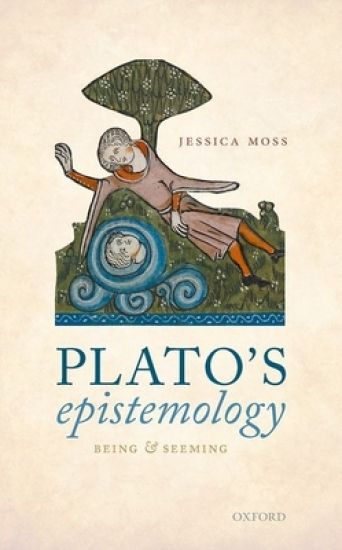
Plato's Epistemology

Plato's Epistemology

Jessica Moss

Oxford University Press
2021
sidottu
Plato's Epistemology: Being and Seeming presents an original interpretation of one of the central topics in Plato's work: epistemology. Jessica Moss argues that Plato's epistemology is radically different from our own. Going against the grain of recent scholarship, and drawing on ancient interpretations of Plato, Jessica Moss argues that Plato is not best understood as studying what we now call knowledge and belief. Instead, Moss proposes that the central players in his epistemology, epistêmê and doxa, are each essentially to be understood as cognition of a certain kind of object. Epistêmê is cognition of what Is - where this turns out to mean that it is a deep grasp of ultimate reality. Doxa is cognition of what seems - where this turns out to mean that it is atheoretical thought that mistakes images for reality. The book defends these characterizations by arguing that they explain important features of Plato's epistemology. In particular, it shows that they underlie and make sense of a view which was long attributed to Plato but has recently been deemed "outrageous": that there is no doxa of Forms, and no epistêmê of perceptibles. Finally, Moss contends that Plato's epistemology is so different from modern epistemology because it is motivated by his central ethical and metaphysical views. As the Cave allegory illustrates, he holds that the goal of life is to be in contact with genuine Being, and that the greatest obstacle to this goal is our tendency to rest content with appearances. Therefore, when Plato turns to epistemological investigations, the distinction he finds most salient is that between cognition of what Is and cognition of what seems.
Thinking of Necessity

Thinking of Necessity

Jessica Leech

Oxford University Press
2023
sidottu
Thinking of Necessity: A Kantian Account of Modal Thought and Modal Metaphysics sets out a Kant-inspired theory of modality, i.e., possibility and necessity. The theory is driven by a methodology which takes seriously questions about the function of modal judgment, i.e., the role or purpose of judgments of possibility and necessity, as a guide to a metaphysics of modality. Kant is a good example for how to develop this methodological approach since, for Kant, modal concepts play an important role in our capacity for thought and experience of the world. The book argues that we need logical modal concepts as a condition on our ability to think, and metaphysical modal concepts as a condition on our ability to think objectively, i.e., to think about the world. Concordant with this, it argues that logical necessity has its source in the laws of thought and that metaphysical necessity is relative to conditions on objective thought. This account of metaphysical necessity, which is termed “Modal Transcendentalism”, is then further developed, covering questions concerning necessary and contingent existence, de re necessity, essentialism, and modal epistemology. The theory of modality developed in the book is inspired by aspects of Kant's writings on modality, but the development and defence of the theory is undertaken mostly independently of Kant.
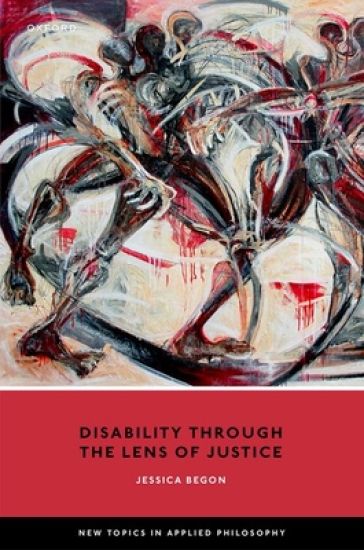
Disability Through the Lens of Justice

Disability Through the Lens of Justice

Jessica Begon

Oxford University Press
2023
sidottu
Disability through the Lens of Justice offers a contextual framework for considering the limitations that disability places on individuals. Specifically, those that prevent individuals from having control in certain domains of their life, by restricting the availability of acceptable options or the ability to choose between them. Begon argues that our theory of justice should be concerned with the lives individuals can lead, and not with whether their bodies and minds function typically. The problem that disability raises is not the mere fact of difference, but the ways in which that difference is accommodated (or not) and the limitations it may cause. In Disability Through the Lens of Justice, Begon offers a new framework to the disability and justice model. She argues that achieving justice does not require 'normalisation', or the elimination of difference, but through implementating a model which enables all individuals to control their lives as they choose.
Metaphysical Emergence

Metaphysical Emergence

Jessica M. Wilson

Oxford University Press
2023
nidottu
Both the special sciences and ordinary experience suggest that there are metaphysically emergent entities and features: macroscopic goings-on (including mountains, trees, humans, and sculptures, and their characteristic properties) which depend on, yet are distinct from and distinctively efficacious with respect to, lower-level physical configurations and features. These appearances give rise to two key questions. First, what is metaphysical emergence, more precisely? Second, is there any metaphysical emergence, in principle and moreover in fact? Metaphysical Emergence provides clear and systematic answers to these questions. Wilson argues that there are two, and only two, forms of metaphysical emergence of the sort seemingly at issue in the target cases: 'Weak' emergence, whereby a dependent feature has a proper subset of the powers of the feature upon which it depends, and 'Strong' emergence, whereby a dependent feature has a power not had by the feature upon which it depends. Weak emergence unifies and illuminates seemingly diverse accounts of non-reductive physicalism; Strong emergence does the same as regards seemingly diverse anti-physicalist views positing fundamental novelty at higher levels of compositional complexity. After defending the in-principle viability of each form of emergence, Wilson considers whether complex systems, ordinary objects, consciousness, and free will are actually metaphysically emergent. She argues that Weak emergence is quite common, and that there is Strong emergence in the important case of free will.
Plato's Epistemology

Plato's Epistemology

Jessica Moss

Oxford University Press
2023
nidottu
Plato's Epistemology: Being and Seeming presents an original interpretation of one of the central topics in Plato's work: epistemology. Jessica Moss argues that Plato's epistemology is radically different from our own. Going against the grain of recent scholarship, and drawing on ancient interpretations of Plato, Jessica Moss argues that Plato is not best understood as studying what we now call knowledge and belief. Instead, Moss proposes that the central players in his epistemology, epistêmê and doxa, are each essentially to be understood as cognition of a certain kind of object. Epistêmê is cognition of what Is - where this turns out to mean that it is a deep grasp of ultimate reality. Doxa is cognition of what seems - where this turns out to mean that it is atheoretical thought that mistakes images for reality. The book defends these characterizations by arguing that they explain important features of Plato's epistemology. In particular, it shows that they underlie and make sense of a view which was long attributed to Plato but has recently been deemed "outrageous": that there is no doxa of Forms, and no epistêmê of perceptibles. Finally, Moss contends that Plato's epistemology is so different from modern epistemology because it is motivated by his central ethical and metaphysical views. As the Cave allegory illustrates, he holds that the goal of life is to be in contact with genuine Being, and that the greatest obstacle to this goal is our tendency to rest content with appearances. Therefore, when Plato turns to epistemological investigations, the distinction he finds most salient is that between cognition of what Is and cognition of what seems.
Groups as Epistemic and Moral Agents

Groups as Epistemic and Moral Agents

Jessica Brown

Oxford University Press
2024
sidottu
Organised groups such as governments, corporations, charities and courts are an integral part of our lives. They provide services, sell goods, employ people, raise taxes, wage wars, and issue legal judgements. In our interactions with them, we routinely ascribe them mental states, speaking of what they know, want and intend. And we use these ascriptions in predicting what groups will do and assessing their responsibility for outcomes. For instance, in morally assessing the government's performance in the coronavirus pandemic, we might ask what the government knew about the virus at key decision points. And in attempting to predict Russia's response to the current war in Ukraine, we might ask what Russia believes about the West's resolve to defend Ukraine. This book takes these ordinary ways of thinking and talking seriously, assuming that at least some groups are agents with mental states on which they act. In particular, the book examines groups both as epistemic and moral agents providing non-summative accounts of group evidence, group belief, group justified belief, group knowledge, what it is for a group to act or believe for one reason rather than another, and when a group has an excuse for wrongdoing from blameless ignorance. These phenomena are crucial to the evaluation of the beliefs and actions of groups. Whether a group's belief is justified depends on its evidence and the reason for which it believes; whether it's praiseworthy or blameworthy for its actions depends on the reason for which it acted, as well as whether it is blamelessly ignorant of any wrongdoing. By providing a clearer view of central group phenomena, the book will help us assess the beliefs and actions of the powerful groups at work in our lives, whether governments, corporations, public sector bodies or third sector actors.
Expect Us

Expect Us

Jessica L. Beyer

Oxford University Press Inc
2014
sidottu
People use online social forums for all sorts of reasons, including political conversations, regardless of the site's main purpose. But what leads some of these people to take their online political activity into the offline world of activism? In Expect Us, Jessica L. Beyer looks at political consciousness and action in four communities, each born out of chaotic online social spaces that millions of individuals enter, spend time in, and exit moment by moment: Anonymous (4chan), IGN, World of Warcraft, and The Pirate Bay. None of these sites began as places for political organization per se, but visitors to each have used them as places for political engagement to one degree or another. Beyer explains the puzzling emergence of political engagement in these disparate social spaces and offers reasons for their varied capacity to generate political activism. Her comparative ethnography of these four online communities demonstrates that the technological organization of space itself has a strong role in determining the possibility of political mobilization. Overall, she shows that political mobilization rises when a site provides high levels of anonymity, low levels of formal regulation, and minimal access to small-group interaction. Furthermore, her findings reveal that young people are more politically involved than much of the civic engagement literature suggests. Expect Us offers surprising and compelling insights for anyone interested in understanding which factors and online environments lead to the greatest amount of impact offline.
Expect Us

Expect Us

Jessica L. Beyer

Oxford University Press Inc
2014
nidottu
People use online social forums for all sorts of reasons, including political conversations, regardless of the site's main purpose. But what leads some of these people to take their online political activity into the offline world of activism? In Expect Us, Jessica L. Beyer looks at political consciousness and action in four communities, each born out of chaotic online social spaces that millions of individuals enter, spend time in, and exit moment by moment: Anonymous (4chan), IGN, World of Warcraft, and The Pirate Bay. None of these sites began as places for political organization per se, but visitors to each have used them as places for political engagement to one degree or another. Beyer explains the puzzling emergence of political engagement in these disparate social spaces and offers reasons for their varied capacity to generate political activism. Her comparative ethnography of these four online communities demonstrates that the technological organization of space itself has a strong role in determining the possibility of political mobilization. Overall, she shows that political mobilization rises when a site provides high levels of anonymity, low levels of formal regulation, and minimal access to small-group interaction. Furthermore, her findings reveal that young people are more politically involved than much of the civic engagement literature suggests. Expect Us offers surprising and compelling insights for anyone interested in understanding which factors and online environments lead to the greatest amount of impact offline.
Triumph in Defeat

Triumph in Defeat

Jessica H. Clark

Oxford University Press Inc
2014
sidottu
Although a great deal of historical work has been done in the past decade on Roman triumphs, defeats and their place in Roman culture have been relatively neglected. Why should we investigate the defeats of a society that almost never lost a war? In Triumph in Defeat, Jessica H. Clark answers this question by showing what responses to defeat can tell us about the Roman definition of victory. First opening with a general discussion of defeat and commemoration at Rome and then following the Second Punic War from its commencement to its afterlife in Roman historical memory through the second century BCE, culminating in the career of Gaius Marius, Clark examines both the successful production of victory narratives within the Senate and the gradual breakdown of those narratives. The result sheds light on the wars of the Republic, the Romans who wrote about these wars, and the ways in which both the events and their telling informed the political landscape of the Roman state. Triumph in Defeat not only fills a major gap in the study of Roman military, political, and cultural life, but also contributes to a more nuanced picture of Roman society, one that acknowledges the extent to which political discourse shaped Rome's status as a world power. Clark's work shows how defeat shaped the society whose massive reputation was-and still often is-built on its successes.
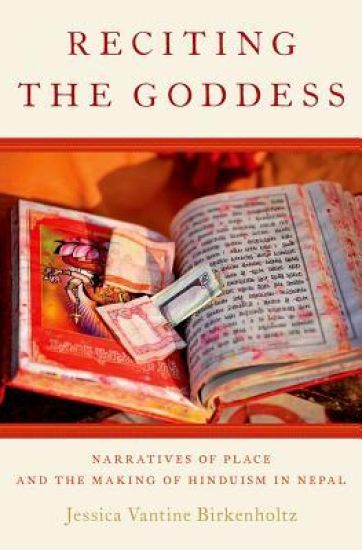
Reciting the Goddess

Reciting the Goddess

Jessica Vantine Birkenholtz

Oxford University Press Inc
2018
sidottu
Reciting the Goddess is the first book-length study of Nepal's goddess Svasthani and the popular Svasthanivratakatha textual tradition. In the centuries following its origin as a simple local legend in the sixteenth century, the Svasthanivratakatha developed into a comprehensive Purana text that is still widely celebrated today among Nepal's Hindus with an annual month-long recitation. Jessica Birkenholtz uses the Svasthanivratakatha as a medium through which to view the ways in which political and cultural shifts among Nepal's ruling elite were taken up by the general public. Drawing on both archival and ethnographic research, the book examines Svasthani and the Svasthanivratakatha within the shifting literary, linguistic, religious, cultural, and political contexts of medieval and modern Nepal from the sixteenth century to the present. It also explores both the complementary and contentious relationships between Nepal's heterogeneous Newar Hindu and high-caste hill Hindu communities, and those of Nepal as a Hindu kingdom vis-à-vis Hindu India. Reciting the Goddess brings the Svasthani devotional tradition to light as a new case study in the discussion of the making of Hindu religious identity and practice in Nepal and South Asia.
Powerful Patriots

Powerful Patriots

Jessica Chen Weiss

Oxford University Press Inc
2014
sidottu
Why has the Chinese government sometimes allowed and sometimes repressed nationalist, anti-foreign protests? What have been the international consequences of these choices? Anti-American demonstrations were permitted in 1999 but repressed in 2001 during two crises in US-China relations. Anti-Japanese protests were tolerated in 1985, 2005, and 2012 but banned in 1990 and 1996. Protests over Taiwan, the issue of greatest concern to Chinese nationalists, have never been allowed. To explain this variation in China's response to nationalist mobilization, Powerful Patriots argues that Chinese and other authoritarian leaders weigh both diplomatic and domestic incentives to allow and repress nationalist protests. Autocrats may not face electoral constraints, but anti-foreign protests provide an alternative mechanism by which authoritarian leaders can reveal their vulnerability to public pressure. Because nationalist protests are costly to repress and may turn against the government, allowing protests demonstrates resolve and increases the domestic cost of diplomatic concessions. Repressing protests, by contrast, sends a credible signal of reassurance, facilitating diplomatic flexibility and signaling a willingness to spend domestic political capital for the sake of international cooperation. To illustrate the logic, the book traces the effect of domestic and diplomatic factors in China's management of nationalist protest in the post-Mao era (1978-2012) and the consequences for China's foreign relations.
Powerful Patriots

Powerful Patriots

Jessica Chen Weiss

Oxford University Press Inc
2014
nidottu
Why has the Chinese government sometimes allowed and sometimes repressed nationalist, anti-foreign protests? What have been the international consequences of these choices? Anti-American demonstrations were permitted in 1999 but repressed in 2001 during two crises in US-China relations. Anti-Japanese protests were tolerated in 1985, 2005, and 2012 but banned in 1990 and 1996. Protests over Taiwan, the issue of greatest concern to Chinese nationalists, have never been allowed. To explain this variation in China's response to nationalist mobilization, Powerful Patriots argues that Chinese and other authoritarian leaders weigh both diplomatic and domestic incentives to allow and repress nationalist protests. Autocrats may not face electoral constraints, but anti-foreign protests provide an alternative mechanism by which authoritarian leaders can reveal their vulnerability to public pressure. Because nationalist protests are costly to repress and may turn against the government, allowing protests demonstrates resolve and increases the domestic cost of diplomatic concessions. Repressing protests, by contrast, sends a credible signal of reassurance, facilitating diplomatic flexibility and signaling a willingness to spend domestic political capital for the sake of international cooperation. To illustrate the logic, the book traces the effect of domestic and diplomatic factors in China's management of nationalist protest in the post-Mao era (1978-2012) and the consequences for China's foreign relations.
The Semantics of Evaluativity

The Semantics of Evaluativity

Jessica Rett

Oxford University Press
2014
sidottu
This book focuses on the semantic phenomenon of evaluativity and its consequences across constructions. Evaluativity has traditionally been associated exclusively with the positive construction, a term for sentences with a gradable adjective but with no overt degree morphology. John is tall is evaluative because it entails that John is tall relative to a contextually valued standard. John is taller than Sue and John is as tall as Sue are not evaluative because both could be used even if John and Sue were short. Previous accounts of evaluativity have assumed that it is not part of the inherent meaning of adjectives, but is contributed by a null morpheme. Jessica Rett argues against this analysis, proposing that no null morpheme is required. Instead, evaluativity is explained on the basis of assumptions that speakers and hearers make about the relationship between the simplicity of a situation and the simplicity of the language used to describe that situation; the analysis is couched in recent approaches to Gricean conversational implicature.
The Semantics of Evaluativity

The Semantics of Evaluativity

Jessica Rett

Oxford University Press
2014
nidottu
This book focuses on the semantic phenomenon of evaluativity and its consequences across constructions. Evaluativity has traditionally been associated exclusively with the positive construction, a term for sentences with a gradable adjective but with no overt degree morphology. John is tall is evaluative because it entails that John is tall relative to a contextually valued standard. John is taller than Sue and John is as tall as Sue are not evaluative because both could be used even if John and Sue were short. Previous accounts of evaluativity have assumed that it is not part of the inherent meaning of adjectives, but is contributed by a null morpheme. Jessica Rett argues against this analysis, proposing that no null morpheme is required. Instead, evaluativity is explained on the basis of assumptions that speakers and hearers make about the relationship between the simplicity of a situation and the simplicity of the language used to describe that situation; the analysis is couched in recent approaches to Gricean conversational implicature.
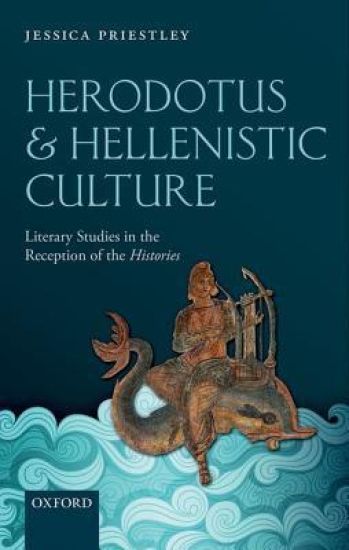
Herodotus and Hellenistic Culture

Herodotus and Hellenistic Culture

Jessica Priestley

Oxford University Press
2014
sidottu
In a series of literary studies, Priestley explores some of the earliest ancient responses to Herodotus' Histories through the extant written record of the early and middle Hellenistic period. Responses to the Histories were rich and varied, and the range of Hellenistic writers responding in different ways to Herodotus' work is in part a reflection of the Histories'own broad scope. The Histories remained relevant in this later age and continued to speak meaningfully to a broad range of readers long after Herodotus' death. Herodotus and Hellenistic Culture explores a variety of discourses where Herodotus occupies an important place in the intellectual background, and, in particular, it draws attention to writers not usually categorized as historians in order to broaden our perspectives on Herodotus' cultural importance. Through discussions of contemporary discourse relating to, for instance, the Persian Wars, geography, the wondrous, aesthetics, literary style, and biography, it nuances our understanding of how ancient readers reacted to and appropriated the Histories to serve their own distinct rhetorical goals. The volume also contributes to scholarship that reappraises the very term 'Hellenistic', drawing attention to both diachronic continuities and synchronic diversity in ancient Greek literature.
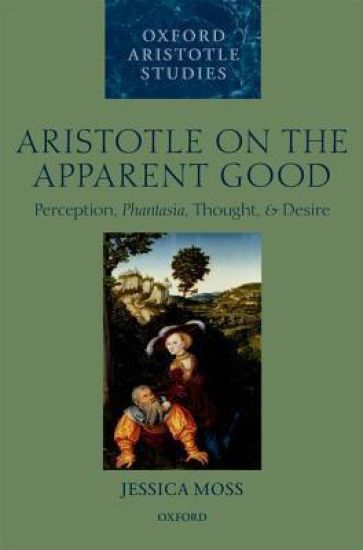
Aristotle on the Apparent Good

Aristotle on the Apparent Good

Jessica Moss

Oxford University Press
2012
sidottu
Aristotle holds that we desire things because they appear good to us--a view still dominant in philosophy now. But what is it for something to appear good? Why does pleasure in particular tend to appear good, as Aristotle holds? And how do appearances of goodness motivate desire and action? No sustained study of Aristotle has addressed these questions, or even recognized them as worth asking. Jessica Moss argues that the notion of the apparent good is crucial to understanding both Aristotle's psychological theory and his ethics, and the relation between them. Beginning from the parallels Aristotle draws between appearances of things as good and ordinary perceptual appearances such as those involved in optical illusion, Moss argues that on Aristotle's view things appear good to us, just as things appear round or small, in virtue of a psychological capacity responsible for quasi-perceptual phenomena like dreams and visualization: phantasia ('imagination'). Once we realize that the appearances of goodness which play so major a role in Aristotle's ethics are literal quasi-perceptual appearances, Moss suggests we can use his detailed accounts of phantasia and its relation to perception and thought to gain new insight into some of the most debated areas of Aristotle's philosophy: his accounts of emotions, akrasia, ethical habituation, character, deliberation, and desire. In Aristotle on the Apparent Good, Moss presents a new--and controversial--interpretation of Aristotle's moral psychology: one which greatly restricts the role of reason in ethical matters, and gives an absolutely central role to pleasure.