
Kirjahaku
Etsi kirjoja tekijän nimen, kirjan nimen tai ISBN:n perusteella.
1000 tulosta hakusanalla John H Harding

Iran is a country with a deep and complex history. Over several thousand years, Iran has been the source of numerous creative contributions to the spiritual and literary world, and the site of many remarkable manifestations of material culture. The special place that Iran has come to hold in contemporary historical events, most recently as a center stage actor in the unfolding and interconnected drama of worldwide nuclear arms proliferation and terrorism, is all the more reason to explore the characters and personality of Iran and Iranians. This second edition of Historical Dictionary of Iran is designed to give the reader a quick and understandable overview of specific events, movements, people, political and social groups, places, and trends. Through its extensive chronology, introduction, bibliography, appendixes, and more than double the number of cross-referenced dictionary entries as in the previous edition, the work allows for considerable exploration of a number of historical and contemporary topics and issues. In particular, the modern period, defined as 1800—present, is covered extensively.

Byzantium was one of the greatest empires that ever existed. It reigned over extensive regions around the Mediterranean and in Eastern Europe from its founding by Constantine in 324 to the fall of Constantinople in 1453. During this period, its emperors had not only secular powers but also religious, dominating the Orthodox church that spread into Slavic lands. However, internal divisions, rivalry with the West, and the relentless battle against invaders, including the Ottomans, would eventually weaken the Byzantine Empire, and although it disappeared half a millennia ago, its influences can still be seen today in Eastern Orthodoxy and Byzantine art and archaeology. The A to Z of Byzantium covers an impressively long period of over a thousand years, balancing the high points as it expanded and flourished and the low points when it was pushed back. The major events are first marked in the chronology and then expanded upon in the introduction. What actually transpired can then be seen in greater detail through several hundred cross-referenced dictionary entries describing important persons, institutions, events, and significant aspects of the economy, society, culture, religion, and warfare. A bibliography of supplementary material concludes the book.
The Byzantine Empire dates back to Constantine the Great, the first Christian ruler of the Roman Empire, who, in 330 AD, moved the imperial capital from Rome to a port city in modern-day Turkey, which he then renamed Constantinople in his honor. From its founding, the Byzantine Empire was a major anchor of east-west trade, and culture, art, architecture, and the economy all prospered in the newly Christian empire. As Byzantium moved into the middle and late period, Greek became the official language of both church and state and the Empire’s cultural and religious influence extended well beyond its boundaries. In the mid-15th century, the Ottoman Turks put an end to 1,100 years of Byzantine history by capturing Constantinople, but the Empire’s legacy in art, culture, and religion endured long after its fall. In this revised and updated second edition of the Historical Dictionary of Byzantium, author John H. Rosser introduces both the general reader and the researcher to the history of the Byzantine Empire. This comprehensive dictionary includes detailed, alphabetical entries on key figures, ideas, places, and themes related to Byzantine art, history, and religion, and the second edition contains numerous additional entries on broad topics such as transportation and gender, which were less prominent in the previous edition. An expanded introduction introduces the reader to Byzantium and a guide to further sources and suggested readings can be found in the extensive bibliography that follows the entries. A basic chronology and various maps and illustrations are also included in the dictionary. This book is an excellent access point for students, researchers, and anyone wanting to know more about Byzantium.
Iran is a country with a deep and complex history. Over several thousand years, Iran has been the source of numerous creative contributions to the spiritual and literary world, and the site of many remarkable manifestations of material culture. The special place that Iran has come to hold in contemporary historical events, most recently as a center stage actor in the unfolding and interconnected drama of worldwide nuclear arms proliferation and terrorism, is all the more reason to explore the characters and personality of Iran and Iranians. The A to Z of Iran is designed to give the reader a quick and understandable overview of specific events, movements, people, political and social groups, places, and trends. Through its extensive chronology, introduction, bibliography, appendixes, and more than double the number of cross-referenced dictionary entries as in the previous edition, the work allows for considerable exploration of a number of historical and contemporary topics and issues. In particular, the modern period, defined as 1800-present, is covered extensively.
What should historians do with the words of the dead? Inquisition and Power reformulates the historiography of heresy and the inquisition by focusing on depositions taken from the Cathars, a religious sect that opposed the Catholic church and took root in southern France during the twelfth century. Despite the fact that these depositions were spoken in the vernacular, but recorded in Latin in the third person and rewritten in the past tense, historians have often taken these accounts as verbatim transcriptions of personal testimony. This belief has prompted some historians, including E. Le Roy Ladurie, to go so far as to retranslate the testimonies into the first-person. These testimonies have been a long source of controversy for historians and scholars of the Middle Ages. Arnold enters current theoretical debates about subjectivity and the nature of power to develop reading strategies that will permit a more nuanced reinterpretation of these documents of interrogation. Rather than seeking to recover the true voice of the Cathars from behind the inquisitor's framework, this book shows how the historian is better served by analyzing texts as sites of competing discourses that construct and position a variety of subjectivities. In this critically informed history, Arnold suggests that what we do with the voices of history in fact has as much to do with ourselves as with those we seek to 'rescue' from the silences of past.

Suburban sprawl has been the prevailing feature-and double-edged sword-of metropolitan America's growth and development since 1945. The construction of homes, businesses, and highways that were signs of the nation's economic prosperity also eroded the presence of agriculture and polluted the environment. This in turn provoked fierce activism from an array of local, state, and national environmental groups seeking to influence planning and policy. Many places can lay claim to these twin legacies of sprawl and the attendant efforts to curb its impact, but, according to John H. Spiers, metropolitan Washington, D.C., in particular, laid the foundations for a smart growth movement that blossomed in the late twentieth century. In Smarter Growth, Spiers argues that civic and social activists played a key role in pushing state and local officials to address the environmental and fiscal costs of growth. Drawing on case studies including the Potomac River's cleanup, local development projects, and agricultural preservation, he identifies two periods of heightened environmental consciousness in the early to mid-1970s and the late 1990s that resulted in stronger development regulations and land preservation across much of metropolitan Washington. Smarter Growth offers a fresh understanding of environmental politics in metropolitan America, giving careful attention to the differences between rural, suburban, and urban communities and demonstrating how public officials and their constituents engaged in an ongoing dialogue that positioned environmental protection as an increasingly important facet of metropolitan development over the past four decades. It reveals that federal policies were only one part of a larger decision-making process-and not always for the benefit of the environment. Finally, it underscores the continued importance of grassroots activists for pursuing growth that is environmentally, fiscally, and socially equitable-in a word, smarter.
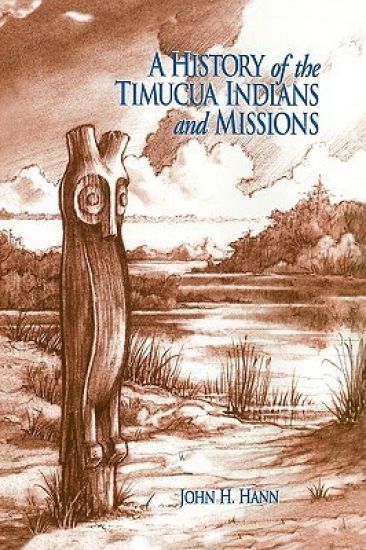
A History of the Timucua Indians and Missions
John H. Hann; Jerald T. Milanich
University Press of Florida
1996
sidottu
Relying on previously unused documents, this is a history of the Timucua Indians of Florida, from the first contact with Europeans, to their exile in Cuba in 1763 and their final eradication. It examines their culture, language, political structures, and the meanings of their placenames and titles.
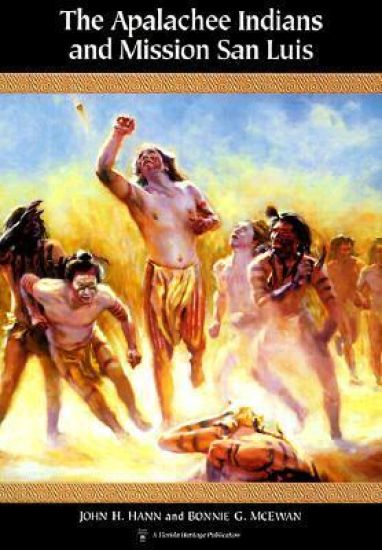
The Apalachee Indians and Mission San Luis
John H. Hann; Bonnie G. McEwan; Jerald T. Milanich
University Press of Florida
1998
nidottu
This text offers a combination of archaeology and history to tell the story of the Apalachee Indians of northwest Florida and their Spanish conquerors. The book portrays the dwellings, daily life, religious practices, social structures and recreation activities of the mission.

Language scholars have traditionally agreed that the development of the English language was largely unplanned. John H. Fisher challenges this view, demonstrating that the standardization of writing and pronunciation was, and still is, made under the control of political and intellectual forces.In these essays Fisher chronicles his gradual realization that Standard English was not a popular evolution at all but was the direct result of political decisions made by the Lancastrian administrations of Henry IV and Henry V. To achieve standardization and acceptance of the vernacular, these kings turned to their Chancery scribes, who were responsible for writing and copying legal and royal documents.Chaucer, a relative of the king, began to be labeled by the government as a master of the language, and it was Henry V who inspired the fifteenth-century tradition of citing Chaucer as the "maker" of English. An even more important link between language development and government practice is the fact that Chaucer himself composed in the English of the Chancery scribes.Fisher discusses the development of Chancery practices, royal involvement in promoting use of the vernacular, Chaucer's use of English, Caxton's use of Chancery Standard, and the nineteenth-century phenomenon of a standard, or "received," pronunciation of English. This engaging and clearly written work will change the way scholars understand the development of English and think about the intentional shaping of our language.
An ancient question asks what role moral formation ought to play in education. It leads to such questions as, do intellectual and moral formation belong together? Is it possible to form the mind and neglect the heart? Is it wise? These perennial questions take on new significance today, when education—especially, higher education—has become a defining feature in the lives of young people.Throughout his more than 40 years in academia, John Garvey has reflected on the relationship between intellectual and moral formation, especially in Catholic higher education. For 12 years as the President of The Catholic University of America, he made the cultivation of moral virtue a central theme on campus, highlighting its significance across all aspects of University culture, from University policy to campus architecture.During his two decades of presiding at commencement exercises, first as Dean of Boston College Law School and then as President of The Catholic University of America, Garvey made a single virtue the centerpiece of his remarks each year. The Virtues is the fruit of those addresses. More reflective than analytical, its purpose is to invite conversation about what it means to live well.Following Catholic tradition, The Virtues places the theological virtues of faith, hope, and love at the center of the moral life, and the cardinal virtues—justice, temperance, fortitude, and prudence—with them. Alongside these major virtues, Garvey considers a collection of "little virtues," habits that assist and accompany us in small but important ways on the path to goodness.Though he treats each virtue individually, a common thread unites his reflections. "The intellectual life depends on the moral life," Garvey writes. "Without virtue we cannot sustain the practices necessary for advanced learning. In fact, without virtue, it's hard to see what the purpose of the university is. Learning begins with love (for the truth). If we don't have that, it's hard to know why we would bother with education at all." The Virtues invites its readers, especially students, to appreciate that the cultivation of virtue is indispensable to success, academic or otherwise, and more importantly, essential to their ultimate aim, a life well lived.
The rise of the multi-billion dollar ancestry testing industry points to one immutable truth about us as human beings: we want to know where we come from and who our ancestors were. John H. Relethford and Deborah A. Bolnick explore this topic and many more in this second edition of Reflections of Our Past.Where did modern humans come from and how important are the biological differences among us? Are we descended from Neandertals? How should we understand the connections between genetic ancestry, race, and identity? Were Native Americans the first to inhabit the Americas? Can we see evidence of the Viking invasions of Ireland a millennium ago even in the Irish of today? Through engaging examination of issues such as these, and using non-technical language, Reflections of Our Past shows how anthropologists use genetic information to suggest answers to fundamental questions about human history. By looking at genetic variation in the world today and in the past, we can reconstruct the recent and remote events and processes that have created the variation we see, providing a fascinating reflection of our genetic past.
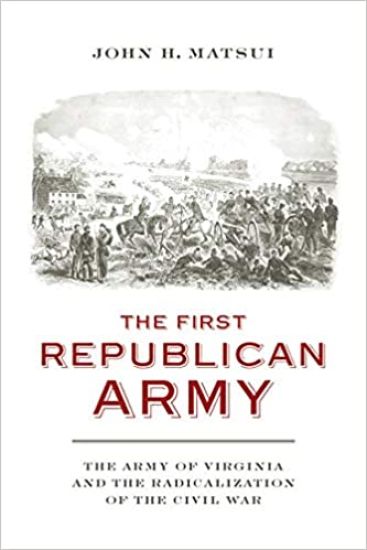
Although much is known about the political stance of the military at large during the Civil War, the political party affiliations of individual soldiers have received little attention. Drawing on archival sources from twenty-five generals and 250 volunteer officers and enlisted men, John Matsui offers the first major study to examine the ways in which individual politics were as important as military considerations to battlefield outcomes and how the experience of war could alter soldiers’ political views.The conservative war aims pursued by Abraham Lincoln and his generals in the first year of the American Civil War focused on the preservation of the Union and the restoration of the antebellum status quo. This approach was particularly evident in the prevailing policies and attitudes toward the Confederacy-supporting Southern civilians and African American slaves. But this changed in Virginia during the summer of 1862 with the formation of the Army of Virginia. If the Army of the Potomac (the major Union force in Virginia) was dominated by generals who concurred with the ideology of the Democratic Party, the Army of Virginia was its political opposite, from its senior generals to the common soldiers. The majority of officers and soldiers in the Army of Virginia saw slavery and pro-Confederate civilians as crucial components of the rebel war effort and blamed them for prolonging the war. Ultimately, the frustrating occupation experiences of the Army of Virginia radicalized them and other Union soldiers against Southern rebellion and slavery, paving the way for Abraham Lincoln to issue the Emancipation Proclamation.
Written primarily for incoming presidential appointees and those in the White House, Senate, and media who must identify, appoint, confirm, and report on them, Prune Books address the appointment and transition processes in their various dimensions. The 2000 edition explores at length the evolving leadership challenge for presidential appointees and, like its five predecessors, profiles 45 of the toughest leadership jobs in government?responsibilities, issues, and necessary professional credentials. The book is based on interviews with current and former appointees, other veterans of the executive branch and Congress, journalists, and political consultants.
Furnishes valuable insights into the complex realities of federal management, with detailed profiles of subcabinet executive positions filled by presidential appointees, a discussion of the management dimensions of appointed positions, and an understanding of agency operations, personnel, financial managment, integrity, efficiency, and more. Original.
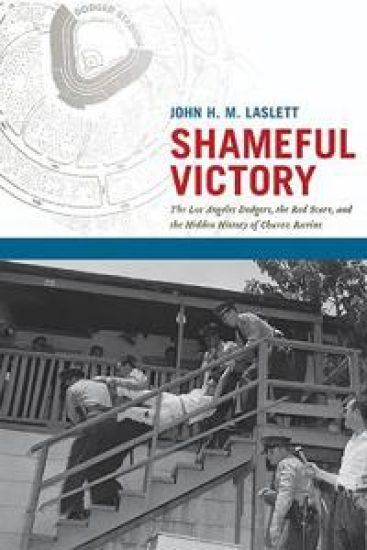
On May 8, 1959, the evening news shocked Los Angeles residents, who saw LA County sheriffs carrying a Mexican American woman from her home in Chavez Ravine not far from downtown. Immediately afterward, the house was bulldozed to the ground. This violent act was the last step in th John H. M. Laslett offers a new interpretation of the Chavez Ravine tragedy, paying special attention to the early history of the barrio, the reform of Los Angeles's destructive urban renewal policies, and the influence of the evictions on the collective memory of the Mexican American community. In addition to examining the political decisions made by power brokers at city hall, Shameful Victory argues that the tragedy exerted a much greater influence on the history of the Los Angeles civil rights movement than has hitherto been appreciated. The author also sheds fresh light on how the community grew, on the experience of individual home owners who were evicted from the barrio, and on the influence that the event had on the development of recent Chicano/a popular music, drama, and literature forced eviction of 3,500 families from the unique hilltop barrio that in 1962 became the home of the Los Angeles Dodgers.