Kirjojen hintavertailu. Mukana 12 016 292 kirjaa ja 12 kauppaa.

Kirjahaku

Etsi kirjoja tekijän nimen, kirjan nimen tai ISBN:n perusteella.

1000 tulosta hakusanalla Jr. Shattuck

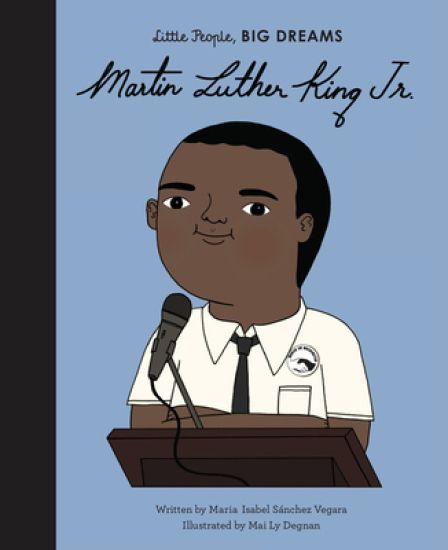
Martin Luther King, Jr.

Martin Luther King, Jr.

Maria Isabel Sanchez Vegara

White Lion Publishing
2020
sidottu
From the critically acclaimed Little People, BIG DREAMS series, discover the life of Martin Luther King, Jr., the inspiring minister and civil rights activist. Little Martin grew up in a family of preachers: his dad was a preacher, his uncle was a preacher, his grandfather was a preacher...so maybe he'd become a great preacher too. One day, a friend invited him to play at his house. Martin was shocked when his mother wouldn't let him in because he was black. That day he realized there was something terribly unfair going on. Martin believed that no one should remain silent and accept something if it's wrong. And he promised himself that--when he grew up--he'd fight injustice with the most powerful weapon of all: words. This moving book features stylish and quirky illustrations and extra facts at the back, including a biographical timeline with historical photos and a detailed profile of the inspiring activist's life.Little People, BIG DREAMS is a best-selling series of books and educational games that explore the lives of outstanding people, from designers and artists to scientists and activists. All of them achieved incredible things, yet each began life as a child with a dream. This empowering series offers inspiring messages to children of all ages, in a range of formats. The board books are told in simple sentences, perfect for reading aloud to babies and toddlers. The hardcover versions present expanded stories for beginning readers. Boxed gift sets allow you to collect a selection of the books by theme. Paper dolls, learning cards, matching games, and other fun learning tools provide even more ways to make the lives of these role models accessible to children.Inspire the next generation of outstanding people who will change the world with Little People, BIG DREAMS!
American Film and Politics from Reagan to Bush Jr
Covers a crucial two decades in American history, when the links between Hollywood and Washington DC were at their strongest.. The period is 'book-ended' by the mighty political and cinematic figures of Reagan and Clinton.. Covers a period in which movies have become targets of political rhetoric of 'family values'.. Essays examine cinematic views of key American political institutions - the presidency and electoral process, politically significant places such as New York City and the American South, the promotion of major issues like gender, family and race. This is a subject which has gained new significance in the wake of recent terrorist attacks in New York and Washington DC, which have changed both the political climate, and the priorities of the movie industry.
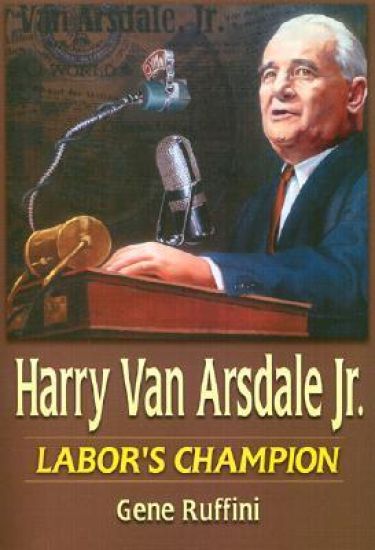
Harry Van Arsdale, Jr.

Harry Van Arsdale, Jr.

Gene Ruffini; Theodore Kheel

Routledge
2002
sidottu
Harry Van Arsdale (1905-1986) was a towering figure in the New York labor scene. After being initiated into the Local 3 International Brotherhood of Electrical Workers in 1925 and becoming its business manager in 1933, Van Arsdale turned the then corrupt and disorganized union into a force to be reckoned with. He became president of the New York City Central Labor Council in 1957, which put him in a position to become a greater influence for labor relations locally and nationally. As business manager and president of these organizations, Van Arsdale advocated and won shorter work days, in order to give more men a chance to work - especially important in the 1930s. He instituted paid vacation, paid holidays, annuity plans, and educational opportunities for union workers - novelties at that time - as well as scholarships for workers' children. His sincere commitment to improving the lives of American workers and their families made him a truly beloved figure. This fascinating memoir traces Van Arsdale's sixty-plus years as a union member and powerful labor figure, and provides colorful details of his many remarkable accomplishments.
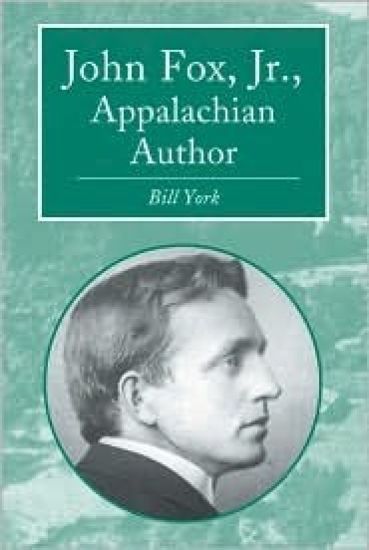
John Fox, Jr.

John Fox, Jr.

Bill York

McFarland Co Inc
2002
nidottu
This work is a biography of John Fox, Jr. It draws from personal and family correspondence and covers his entire life, from his birth in Stony Point, Kentucky, in 1862, to his death from pneumonia in Big Stone Gap, Virginia, in 1919. His early life and education at his father's school, his two years at Transylvania University in Lexington, his transfer to Harvard and graduation in 1883, his work for New York newspapers, and his return home in the mid-1880s to work with his half-brother in the coal mines are all documented. In the 1880s he began his first novel, A Mountain Europa, and over the next thirty years wrote dozens of short stories and nine novels from the family home in Big Stone Gap, including Little Shepherd of Kingdom Come (his first to gain the status of bestseller) and The Trail of the Lonesome Pine.
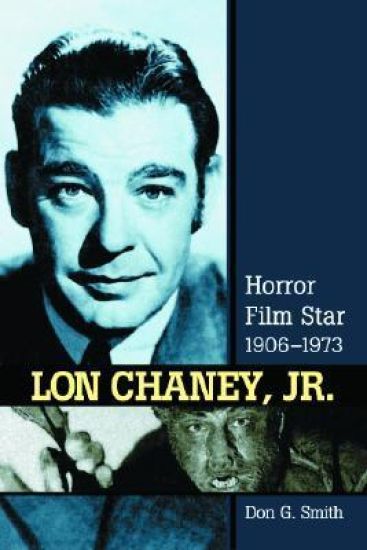
Lon Chaney, Jr.

Lon Chaney, Jr.

Don G. Smith

McFarland Co Inc
2004
pokkari
Though he was haunted by the shadow of his legendary father and devastated by alcoholism, Lon Chaney, Jr., carved out a very successful film career as Universal's leading horror star in the 1940s, and later as a leading character actor in Westerns, dramas, and on television. While rightly focused on the career of the underrated actor, this study also explores his life and times.
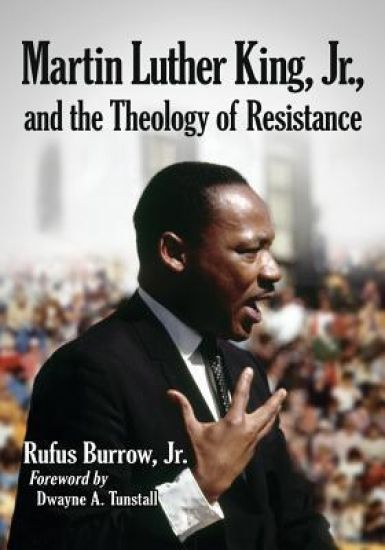
Martin Luther King, Jr., and the Theology of Resistance
It has been nearly fifty years since Martin Luther King, Jr., was assassinated at the Lorraine Motel in Memphis, Tennessee. Appraisals of King's contributions began almost immediately and continue to this day. The author explores a great many of King's chief ideas and socio-ethical practices: his concept of a moral universe, his doctrine of human dignity, his belief that not all suffering is redemptive, his brand of personalism, his contribution to the development of social ethics, the inclusion of young people in the movement, sexism as a contradiction to his personalism, the problem of black-on-black violence, and others. The book reveals both the strengths and the limitations in King's theological socio-ethical project, and shows him to have relentlessly applied personalist ideas to organized nonviolent resistance campaigns in order to change the world. Instructors considering this book for use in a course may request an examination copy here.
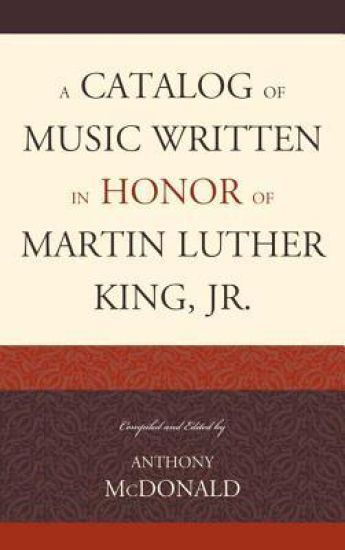
A Catalog of Music Written in Honor of Martin Luther King Jr.
In 1983, Ronald Reagan signed into law a federal holiday to honor Martin Luther King, Jr. Three years later, the holiday was first formally observed by the federal government. In response to the growing number of musical celebrations surrounding the holiday, Anthony McDonald published in 1996 the first edition of The Catalog of Music Written in Honor of Martin Luther King, Jr. Now, more than a decade since its second edition in 1999, McDonald presents his definitive third edition of the catalog. McDonald organizes information on music suitable for concert performances by symphony orchestras, school music departments, church choirs, or solo performers, including works that celebrate not only Martin Luther King Day, but Black History Month as well. His selections comprise musical work written to honor King, as well as other Americans engaged in the struggle for equality and freedom such as Abraham Lincoln, Malcolm X, Harriet Tubman, Frederick Douglass, and John F. Kennedy. McDonald also incorporates works that more broadly address African American history and culture, such as William Grant Still’s Afro-American Symphony. This third edition contains a considerable number of revisions, updates, and new work and includes entirely new sections devoted to jazz and blues songs, sample programs of Martin Luther King, Jr. Day concerts, and a discography, along with appendixes of works listed by orchestration, subject, and a list of publishers and sources. A Catalog of Music Written in Honor of Martin Luther King Jr. is the ideal tool for symphony orchestras, choruses, music departments, and other performing groups and organizations seeking to present concerts that celebrate Martin Luther King Jr., his legacy, and African American history more broadly.
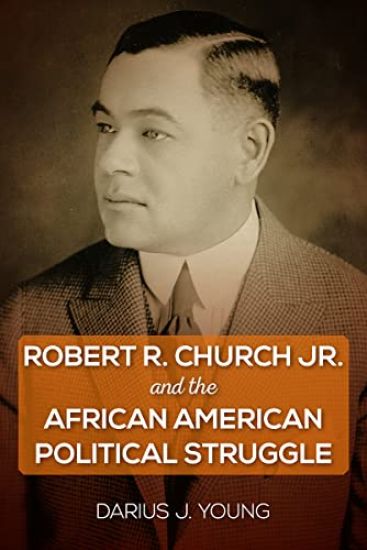
Robert R. Church Jr. and the African American Political Struggle

Robert R. Church Jr. and the African American Political Struggle

Darius J. Young

University Press of Florida
2019
sidottu
This volume highlights the little-known story of Robert R. Church Jr., the most prominent black Republican of the 1920s and 1930s. Tracing Church’s lifelong crusade to make race an important part of the national political conversation, Darius Young reveals how Church and other black leaders of this period were critical to the formative years of the civil rights struggle. A member of the black elite in Memphis, Tennessee, Church was a banker, political mobilizer, and civil rights advocate who worked to create opportunities for the black community despite the notorious Democrat E. H. “Boss” Crump’s hold over Memphis politics. Spurred by the belief that the vote was the most pragmatic path to full citizenship in the United States, Church founded the Lincoln League of America, which helped enfranchise thousands of black southerners. He was instrumental in establishing the NAACP throughout the South. At the height of his influence, Church served as an advisor for Presidents Harding and Coolidge, generating greater participation of and recognition for African Americans in the Republican Party. Church’s life and career offer a window into the incremental, behind-the-scenes victories of black voters and leaders during the Jim Crow era that set the foundation for the more nationally visible civil rights movement to follow.
Robert R. Church Jr. and the African American Political Struggle

Robert R. Church Jr. and the African American Political Struggle

Darius J. Young

University Press of Florida
2022
pokkari
This volume highlights the little-known story of Robert R. Church Jr., the most prominent black Republican of the 1920s and 1930s. Tracing Church’s lifelong crusade to make race an important part of the national political conversation, Darius Young reveals how Church was critical to the formative years of the civil rights struggle.A member of the black elite in Memphis, Tennessee, Church was a banker, political mobilizer, and civil rights advocate who worked to create opportunities for the black community despite the notorious Democrat E. H. “Boss” Crump’s hold over Memphis politics. Spurred by the belief that the vote was the most pragmatic path to full citizenship in the United States, Church founded the Lincoln League of America, which advocated for the interests of black voters in over thirty states. He was instrumental in establishing the NAACP throughout the South as it investigated various incidents of racial violence in the Mississippi Delta. At the height of his influence, Church served as an advisor for Presidents Harding and Coolidge, generating greater participation of and recognition for African Americans in the Republican Party.Church’s life and career offer a window into the incremental, behind-the-scenes victories of black voters and leaders during the Jim Crow era that set the foundation for the more nationally visible civil rights movement to follow.
Dr. Martin Luther King Jr. and the Poor People’s Campaign of 1968
This book introduces new audiences to Dr. Martin Luther King Jr.’s final initiative, the multiracial Poor People’s Campaign (PPC) of 1968. Robert Hamilton depicts the experience of poor people who traveled to Washington in May 1968 to dramatize the issue of poverty by building a temporary city, Resurrection City. His narrative allows us to hear their voices and understand the strategies, objectives, and organization of the campaign. In addition, he highlights the campaign's educational aspect, showing that significant social movements are a means by which societies learn about themselves and framing the PPC as an initiative whose example can teach and inspire current and future generations. The study thus situates Dr. Martin Luther King Jr.’s legacy and teachings in relation to current events and further solidifies Dr. King’s cultural and sociopolitical relevance.In the decades since 1968, we have seen increasing global inequality leading to greater social polarization, including in the United States. Hamilton offers the insight that the radical politics of Dr. King—as represented in the civil rights and human rights agendas of the PPC—can help us understand and address the challenges of this polarization. Hamilton highlights Dr. King’s commitment to ending poverty and explains why Dr. King’s ideas on this and related issues should be brought to the attention of a wider public who often view him almost exclusively as a civil rights, but not a human rights, leader.
Dr. Martin Luther King Jr. and the Poor People’s Campaign of 1968
This book introduces new audiences to Dr. Martin Luther King Jr.’s final initiative, the multiracial Poor People’s Campaign (PPC) of 1968. Robert Hamilton depicts the experience of poor people who traveled to Washington in May 1968 to dramatize the issue of poverty by building a temporary city, Resurrection City. His narrative allows us to hear their voices and understand the strategies, objectives, and organization of the campaign. In addition, he highlights the campaign's educational aspect, showing that significant social movements are a means by which societies learn about themselves and framing the PPC as an initiative whose example can teach and inspire current and future generations. The study thus situates Dr. Martin Luther King Jr.’s legacy and teachings in relation to current events and further solidifies Dr. King’s cultural and sociopolitical relevance.In the decades since 1968, we have seen increasing global inequality leading to greater social polarization, including in the United States. Hamilton offers the insight that the radical politics of Dr. King—as represented in the civil rights and human rights agendas of the PPC—can help us understand and address the challenges of this polarization. Hamilton highlights Dr. King’s commitment to ending poverty and explains why Dr. King’s ideas on this and related issues should be brought to the attention of a wider public who often view him almost exclusively as a civil rights, but not a human rights, leader.
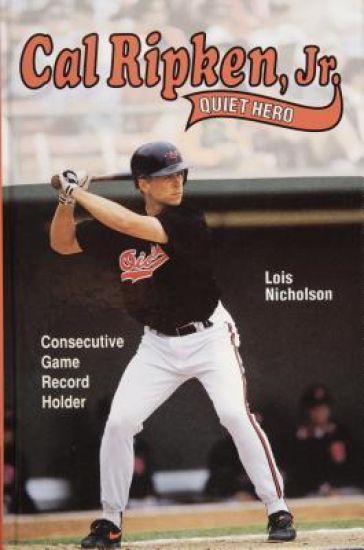
Cal Ripken, Jr., Quiet Hero

Cal Ripken, Jr., Quiet Hero

Lois Nicholson

Schiffer Publishing Ltd
2009
sidottu
On September 6, 1995, Cal Ripken, Jr., baseball’s Ironman, played in his 2,131st consecutive game, breaking Lou Gehrig’s record that many thought would stand forever. The story of Cal’s life takes the reader from his early years in a baseball family through the minor leagues, two Most Valuable Player Awards, and his record-setting achievements as the Baltimore Oriole’s superstar shortstop. Addressing the Baltimore fans after the historic game, Cal explained his approach to baseball: “Whether your name is Gehrig or Ripken, DiMaggio or Robinson, or that of some youngster who picks up his bat or puts on his glove, you are challenged by the game of baseball to do your very best day in and day out. And that’s all I’ve ever tried to do.” Grades 4 to 8
John Clay, Jr.

John Clay, Jr.

Lawrence M. Woods

Arthur H. Clark Company
2001
sidottu
In the western cattle industry, John Clay's name looms large. The young scotsman entered the field in the late 1870s, and he was soon employed by Scottish investors, purchasing and overseeing land and cattle. From Texas to Kansas to Wyoming to California, Clay's story covers the full breadth of ranching in the West. Clay's story includes tales of trail drives, rustlers, the Johnson County Invasion, the Wyoming Stock Growers Association, the Swan Land and Cattle Company, Tom Horn, and much, much more.Called by some the dean of American stockmen, John Clay also ran perhaps the largest livestock commission firm in the country, and controlled a network of nearly two dozen banks that were directed by a private lending operation that we can only call large because there are no surviving records to give us a more precise measure. Through such diversity, Clay escaped the tribulations of other professionals in the same fields by controlling his assets in a way that was probably unique.But there was also the John Clay who followed the hounds in his native Scotland, astride the great horse Chicago, until his eyesight and growing weight forced him to retire from the hunt, and there was John Clay, publisher and author, whose work is nowhere fully catalogued, and a partial list fills several pages.Finally, there is the John Clay who led the cattlemen's confrontation with the "rustler" faction of frontier Wyoming at the time of the infamous Johnson County Invasion. Clay's blanket denials of involvement in that dispute have always been greeted with skepticism by historians, but the paucity of documentation has prevented more than a general review of the issue. Here, Clay's extensive presence in the West is placed in the context of that conflict.Most of what is known about John Clay and his family comes from his own prolific pen, and much of this biography comes from that source, but also added are some of the details which Clay did not give, and place his work in the context of an exciting period in the history of the American West.Cattle Ranche and Wyoming Cattle Ranche companies, Western Ranches, Limited, and the Swan Land and Cattle Company are just a few of the outfits which he managed. In 1890 was elected sixth president of the Wyoming Stock Growers Association, serving for six years during the tumultuous era which included the invasion of Johnson County. Jim Averell and Ella Watson (Cattle Kate) were lynched by men in the employ of Clay and his associates. Clay also had close contact with Tom Horn, and is suspected by some of having been his employer.Fully annotated and with an analytical index, the work includes a partial bibliography of the writings of John Clay, with a thorough bibliography of other sources on the man and the period. Seven illustrations enhance the work.
Tell the Truth: The Collected Columns of Billy Frank Jr.
Ireland's Great Hunger Museum at Quinnipiac University publishes Famine Folios, a unique resource for students, scholars and researchers, as well as general readers, covering many aspects of the Famine in Ireland from 1845-1852 - the worst demographic catastrophe of nineteenth-century Europe. The essays are interdisciplinary in nature, and make available new research in Famine studies by internationally established scholars in history, art history, cultural theory, philosophy, media history, political economy, literature and music.The Great Hunger was the most gothic event in Ireland's history and has haunted Irish literature ever since. In the struggle to resist the diminishment of this tragic episode in Ireland's colonial history, Irish Gothic writers preserved the memory of the Famine when a general silence prevailed among historians and authors of the Victorian novel. Both Irish Gothic literature and the work of the modernists (Joyce, Yeats and Beckett) resonate with the cultural memory of the suffering of millions, either lying in unmarked graves or forcibly transplanted to a harsh new world. "Black Roads" traces the impact of the Famine on Irish literature from William Carlton's "The Black Prophet" (from which the title is taken) to more contemporary work by authors like Patrick McCabe, Seamus Heaney and Eavan Boland, and playwrights like Tom Murphy, Conor MacPherson and Marina Carr. Post Famine, "Black Roads" argues, all Irish literature is about the Famine, leaving the discussion about what "Irishness" means centered on what Seamus Deane described as "what the Famine means."