Kirjojen hintavertailu. Mukana 11 717 486 kirjaa ja 12 kauppaa.

Kirjahaku

Etsi kirjoja tekijän nimen, kirjan nimen tai ISBN:n perusteella.

1000 tulosta hakusanalla Kristen Howe

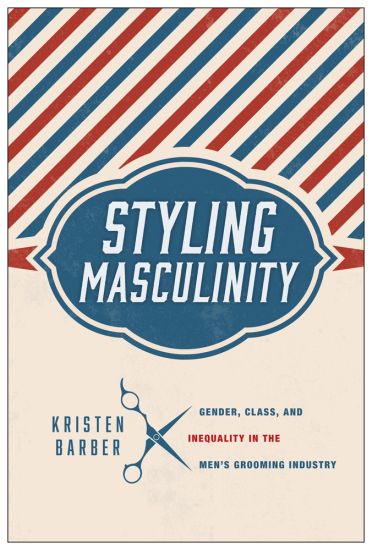
Styling Masculinity

Styling Masculinity

Kristen Barber

Rutgers University Press
2016
nidottu
The twenty-first century has seen the emergence of a new style of man: the metrosexual. Overwhelmingly straight, white, and wealthy, these impeccably coiffed urban professionals spend big money on everything from facials to pedicures, all part of a multi-billion-dollar male grooming industry. Yet as this innovative study reveals, even as the industry encourages men to invest more in their appearance, it still relies on women to do much of the work. Styling Masculinity investigates how men’s beauty salons have persuaded their clientele to regard them as masculine spaces. To answer this question, sociologist Kristen Barber goes inside Adonis and The Executive, two upscale men’s salons in Southern California. Conducting detailed observations and extensive interviews with both customers and employees, she shows how female salon workers not only perform the physical labor of snipping, tweezing, waxing, and exfoliating, but also perform the emotional labor of pampering their clients and pumping up their masculine egos. Letting salon employees tell their own stories, Barber not only documents occasions when these workers are objectified and demeaned, but also explores how their jobs allow for creativity and confer a degree of professional dignity. In the process, she traces the vast network of economic and social relations that undergird the burgeoning male beauty industry.
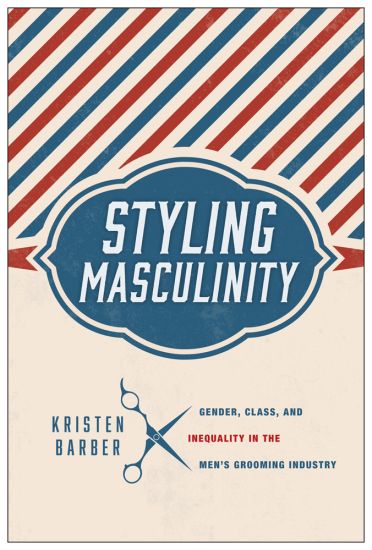
Styling Masculinity

Styling Masculinity

Kristen Barber

Rutgers University Press
2016
sidottu
The twenty-first century has seen the emergence of a new style of man: the metrosexual. Overwhelmingly straight, white, and wealthy, these impeccably coiffed urban professionals spend big money on everything from facials to pedicures, all part of a multi-billion-dollar male grooming industry. Yet as this innovative study reveals, even as the industry encourages men to invest more in their appearance, it still relies on women to do much of the work. Styling Masculinity investigates how men’s beauty salons have persuaded their clientele to regard them as masculine spaces. To answer this question, sociologist Kristen Barber goes inside Adonis and The Executive, two upscale men’s salons in Southern California. Conducting detailed observations and extensive interviews with both customers and employees, she shows how female salon workers not only perform the physical labor of snipping, tweezing, waxing, and exfoliating, but also perform the emotional labor of pampering their clients and pumping up their masculine egos. Letting salon employees tell their own stories, Barber not only documents occasions when these workers are objectified and demeaned, but also explores how their jobs allow for creativity and confer a degree of professional dignity. In the process, she traces the vast network of economic and social relations that undergird the burgeoning male beauty industry.

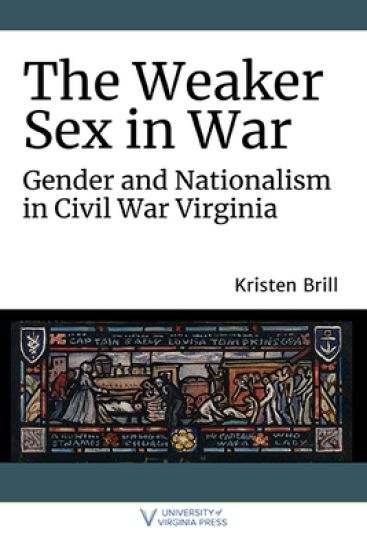
The Weaker Sex in War

The Weaker Sex in War

Kristen Brill

UNIVERSITY OF VIRGINIA PRESS
2022
sidottu
With The Weaker Sex in War, Kristen Brill shows how white women’s wartime experiences shaped Confederate political culture—and the ways in which Confederate political culture shaped their wartime experiences. These white women had become passionate supporters of independence to advance the cause of Southern nationalism and were used by Confederate leadership to advance the cause. These women, drawn from the middle and planter class, played an active, deliberate role in the effort. They became knowing and keen participants in shaping and circulating a gendered nationalist narrative, as both actors for and symbols of the Confederate cause. Through their performance of patriotic devotion, these women helped make gender central to the formation of Confederate national identity, to an extent previously unreckoned with by scholars of the Civil War era.In this important and original work, Brill weaves together individual women’s voices in the private sphere, collective organizations in civic society, and political ideology and policy in the political arena. A signal contribution to an increasingly rich vein of historiography, The Weaker Sex in War provides a definitive take on white women and political culture in the Confederacy.
The Weaker Sex in War

The Weaker Sex in War

Kristen Brill

UNIVERSITY OF VIRGINIA PRESS
2022
pokkari
With The Weaker Sex in War, Kristen Brill shows how white women’s wartime experiences shaped Confederate political culture-and the ways in which Confederate political culture shaped their wartime experiences. These white women had become passionate supporters of independence to advance the cause of Southern nationalism and were used by Confederate leadership to advance the cause. These women, drawn from the middle and planter class, played an active, deliberate role in the effort. They became knowing and keen participants in shaping and circulating a gendered nationalist narrative, as both actors for and symbols of the Confederate cause. Through their performance of patriotic devotion, these women helped make gender central to the formation of Confederate national identity, to an extent previously unreckoned with by scholars of the Civil War era.In this important and original work, Brill weaves together individual women’s voices in the private sphere, collective organizations in civic society, and political ideology and policy in the political arena. A signal contribution to an increasingly rich vein of historiography, The Weaker Sex in War provides a definitive take on white women and political culture in the Confederacy.
Comic Venus

Comic Venus

Kristen Anderson Wagner

Wayne State University Press
2018
sidottu
Examines the social and historical significance of women's contributions to American silent Film comedy. For many people the term ""silent comedy"" conjures up images of Charlie Chaplin’s Little Tramp, Buster Keaton’s Stoneface, or Harold Lloyd hanging precariously from the side of a skyscraper. Even people who have never seen a silent film can recognize these comedians at a glance. But what about the female comedians? Gale Henry, Louise Fazenda, Colleen Moore, Constance Talmadge—these and numerous others were wildly popular during the silent fi lm era, appearing in countless motion pictures and earning top salaries, and yet their names have been almost entirely forgotten. As a consequence, recovering their history is all the more compelling given that they laid the foundation for generations of funny women, from Lucille Ball to Carol Burnett to Tina Fey. These women constitute an essential and neglected sector of film history, reflecting a turning point in women’s social and political history. Their talent and brave spirit continues to be felt today, and Comic Venus: Women and Comedy in American Silent Film seeks to provide a better understanding of women’s experiences in the early twentieth century and to better understand and appreciate the unruly and boundary-breaking women who have followed.The diversity and breadth of archival materials explored in Comic Venus illuminate the social and historical period of comediennes and silent film. It is the first book to explore the overlooked contributions made by comediennes in American silent fi lm. Those with an interest in fi lm and representations of femininity in comedy will be fascinated by the analytical connections and thoroughly researched histories of these women and their groundbreaking movements in comedy and stage.
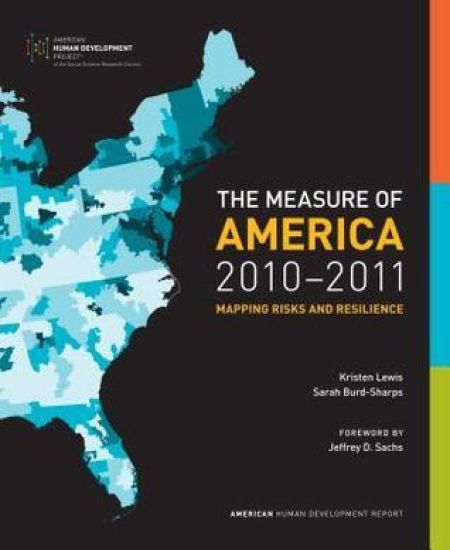
The Measure of America, 2010-2011

The Measure of America, 2010-2011

Kristen Lewis; Sarah Burd-Sharps; Jeffrey Sachs

New York University Press
2010
sidottu
The Measure of America, 2010-2011, is the definitive report on the overall well-being of all Americans. How are Americans doing—compared to one another and compared to the rest of the world? This important, easy-to-understand guide will provide all of the essential information on the current state of America. This fully illustrated report, with over 130 color images, is based on the groundbreaking American Human Development Index, which provides a single measure of the well-being for all Americans, disaggregated by state and congressional district, as well as by race, gender, and ethnicity. The Index rankings of the 50 states and 435 congressional districts reveal huge disparities in the health, education, and living standards of different groups. For example, overall, Connecticut ranked first among states on the 2008-2009 Index, and Mississippi ranked last, suggesting that there is a 30-year gap in human development between the two states. Further, among congressional districts, New York's 14th District, in Manhattan, ranked first, and California's 20th District, near Fresno, ranked last. The average resident of New York's 14th District earned over three times as much as the average resident of California's 20th District, lived over four years longer, and was ten times as likely to have a college degree. The second in the American Human Development Report series, the 2010-2011 edition features a completely updated Index, new findings on the well-being of different racial and ethnic groups from state to state, and a closer look at disparities within major metro areas. It also shines a spotlight on threats to progress and opportunity for some Americans as well as highlighting tested approaches to fosteringresilience among different groups. Using a revelatory framework for explaining the very nature of humanprogress, this report can be used not only as a way to measure America but also to build upon past policy successes, protect the progress made over the last half century from new risks, and create an infrastructure of opportunity that can serve a new generation of Americans. Beautifully illustrated with stunning four-color graphics that allow for a quick visual understanding of often complex but important issues, The Measure of America is essential reading for all Americans, especially for social scientists, policy makers, and pundits who want to understand where Americans stand today.
The Measure of America, 2010-2011

The Measure of America, 2010-2011

Kristen Lewis; Sarah Burd-Sharps; Jeffrey Sachs

New York University Press
2010
pokkari
The Measure of America, 2010-2011, is the definitive report on the overall well-being of all Americans. How are Americans doing—compared to one another and compared to the rest of the world? This important, easy-to-understand guide will provide all of the essential information on the current state of America. This fully illustrated report, with over 130 color images, is based on the groundbreaking American Human Development Index, which provides a single measure of the well-being for all Americans, disaggregated by state and congressional district, as well as by race, gender, and ethnicity. The Index rankings of the 50 states and 435 congressional districts reveal huge disparities in the health, education, and living standards of different groups. For example, overall, Connecticut ranked first among states on the 2008-2009 Index, and Mississippi ranked last, suggesting that there is a 30-year gap in human development between the two states. Further, among congressional districts, New York's 14th District, in Manhattan, ranked first, and California's 20th District, near Fresno, ranked last. The average resident of New York's 14th District earned over three times as much as the average resident of California's 20th District, lived over four years longer, and was ten times as likely to have a college degree. The second in the American Human Development Report series, the 2010-2011 edition features a completely updated Index, new findings on the well-being of different racial and ethnic groups from state to state, and a closer look at disparities within major metro areas. It also shines a spotlight on threats to progress and opportunity for some Americans as well as highlighting tested approaches to fosteringresilience among different groups. Using a revelatory framework for explaining the very nature of humanprogress, this report can be used not only as a way to measure America but also to build upon past policy successes, protect the progress made over the last half century from new risks, and create an infrastructure of opportunity that can serve a new generation of Americans. Beautifully illustrated with stunning four-color graphics that allow for a quick visual understanding of often complex but important issues, The Measure of America is essential reading for all Americans, especially for social scientists, policy makers, and pundits who want to understand where Americans stand today.
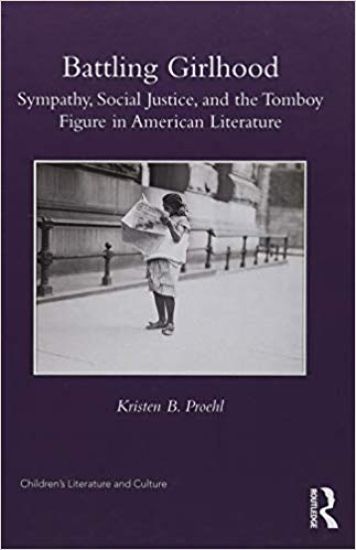
Battling Girlhood

Battling Girlhood

Kristen B. Proehl

CRC Press Inc
2018
sidottu
From Jo March of Little Women (1868) to Katniss Everdeen of The Hunger Games (2008), the American tomboy figure has evolved into an icon of modern girlhood and symbol of female empowerment. Battling Girlhood: Sympathy, Social Justice, and the Tomboy Figure in American Literature traces the development of the tomboy figure from its origins in nineteenth-century sentimental novels to twentieth- and twenty-first-century literature and film.
Beyond Words

Beyond Words

Kristen Johnson Ingram

Morehouse Publishing
2004
pokkari
For people of faith there are many forms of prayer besides the spoken word--devout Jews bow while reading the Torah; Episcopalians stand, sit, or kneel in church; exuberant Christians raise their arms; Native Americans dance--this book is a springboard to action that deepens prayer lives by introducing new prayer concepts. Original.
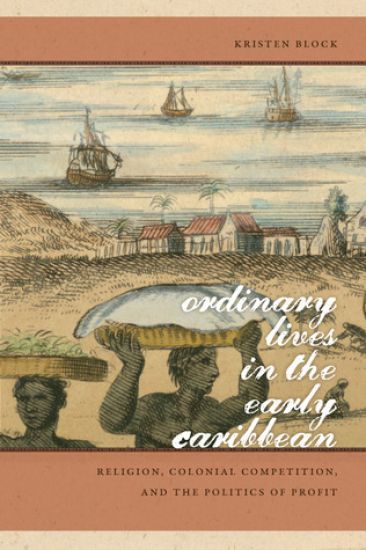
Ordinary Lives in the Early Caribbean

Ordinary Lives in the Early Caribbean

Kristen Block

University of Georgia Press
2012
sidottu
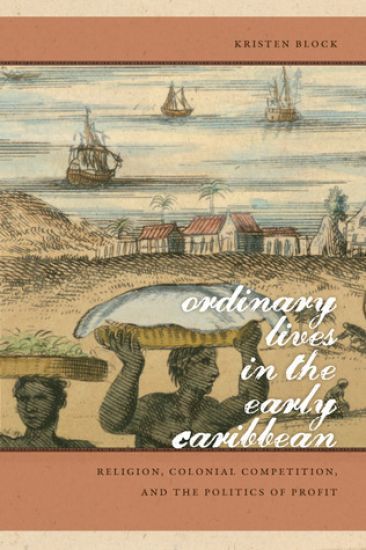
Kristen Block examines the entangled histories of Spain and England in the Caribbean during the long seventeenth century, focusing on colonialism’s two main goals: the search for profit and the call to Christian dominance.Using the stories of ordinary people, Block illustrates how engaging with the powerful rhetoric and rituals of Christianity was central to survival. Isobel Criolla was a runaway slave in Cartagena who successfully lobbied the Spanish governor not to return her to an abusive mistress. Nicolas Burundel was a French Calvinist who served as henchman to the Spanish governor of Jamaica before his arrest by the Inquisition for heresy. Henry Whistler was an English sailor sent to the Caribbean under Oliver Cromwell’s plan for holy war against Catholic Spain. Yaff and Nell were slaves who served a Quaker plantation owner, Lewis Morris, in Barbados. Seen from their on-the-ground perspective, the development of modern capitalism, race, and Christianity emerges as a story of negotiation, contingency, humanity, and the quest for community.Ordinary Lives in the Early Caribbean works in both a comparative and an integrative Atlantic world frame, drawing on archival sources from Spain, England, Barbados, Colombia, and the United States. It pushes the boundaries of how historians read silences in the archive, asking difficult questions about how self-censorship, anxiety, and shame have shaped the historical record. The book also encourages readers to expand their concept of religious history beyond a focus on theology, ideals, and pious exemplars to examine the communal efforts of pirates, smugglers, slaves, and adventurers who together shaped the Caribbean’s emerging moral economy.
Ordinary Lives in the Early Caribbean

Ordinary Lives in the Early Caribbean

Kristen Block

University of Georgia Press
2012
pokkari
Kristen Block examines the entangled histories of Spain and England in the Caribbean during the long seventeenth century, focusing on colonialism’s two main goals: the search for profit and the call to Christian dominance.Using the stories of ordinary people, Block illustrates how engaging with the powerful rhetoric and rituals of Christianity was central to survival. Isobel Criolla was a runaway slave in Cartagena who successfully lobbied the Spanish governor not to return her to an abusive mistress. Nicolas Burundel was a French Calvinist who served as henchman to the Spanish governor of Jamaica before his arrest by the Inquisition for heresy. Henry Whistler was an English sailor sent to the Caribbean under Oliver Cromwell’s plan for holy war against Catholic Spain. Yaff and Nell were slaves who served a Quaker plantation owner, Lewis Morris, in Barbados. Seen from their on-the-ground perspective, the development of modern capitalism, race, and Christianity emerges as a story of negotiation, contingency, humanity, and the quest for community.Ordinary Lives in the Early Caribbean works in both a comparative and an integrative Atlantic world frame, drawing on archival sources from Spain, England, Barbados, Colombia, and the United States. It pushes the boundaries of how historians read silences in the archive, asking difficult questions about how self-censorship, anxiety, and shame have shaped the historical record. The book also encourages readers to expand their concept of religious history beyond a focus on theology, ideals, and pious exemplars to examine the communal efforts of pirates, smugglers, slaves, and adventurers who together shaped the Caribbean’s emerging moral economy.
Slavery on the Periphery

Slavery on the Periphery

Kristen Epps

University of Georgia Press
2016
sidottu
Slavery on the Periphery traces the rise and fall of chattel slavery on the Kansas-Missouri border from the earliest years of American settlement through the Civil War, exploring how its presence shaped life on this critical geographical, political, and social fault line. Kristen Epps explores how this dynamic, small-scale system—characterized by slaves' diverse occupations, close contact between slaves and slaveholders, a robust hiring market, and abroad marriages—emerged from an established upper South slaveholding culture. Awareness of space and local landscapes was also a defining feature of slaves' experiences, because slave mobility could be a powerful means of resistance. This mobility became particularly crucial when the sectional conflict escalated in the 1850s and 1860s, as both enslaved and white residents became central players in a violent national struggle over the future of slavery in America. Drawing on extensive archival research, Epps makes clear that slavery's expansion into Kansas was more than a theoretical, ideological debate. Chattel slavery was already extending its grasp into the West. By foregrounding African Americans' place in the border narrative, Epps illustrates how slavery's presence on this geographic periphery set the stage for the Civil War and emancipation here, as it did elsewhere in the United States.
Posthuman Blackness and the Black Female Imagination

Posthuman Blackness and the Black Female Imagination

Kristen Lillvis

University of Georgia Press
2017
sidottu
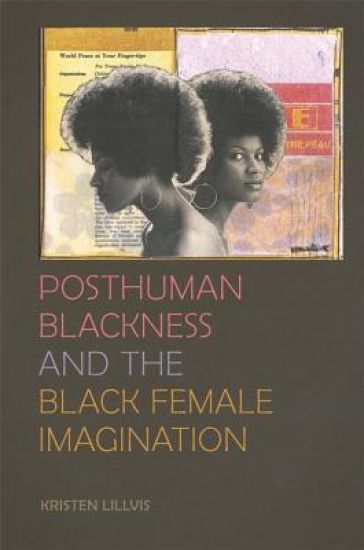
Posthuman Blackness and the Black Female Imagination examines the future-oriented visions of black subjectivity in works by contemporary black women writers, filmmakers, and musicians, including Toni Morrison, Octavia Butler, Julie Dash, and Janelle Monáe. In this innovative study, Kristen Lillvis supplements historically situated conceptions of blackness with imaginative projections of black futures. This theoretical approach allows her to acknowledge the importance of history without positing a purely historical origin for black identities.The authors considered in this book set their stories in the past yet use their characters, particularly women characters, to show how the potential inherent in the future can inspire black authority and resistance. Lillvis introduces the term “posthuman blackness” to describe the empowered subjectivities black women and men develop through their simultaneous existence within past, present, and future temporalities.This project draws on posthuman theory—an area of study that examines the disrupted unities between biology and technology, the self and the outer world, and, most important for this project, history and potentiality—in its readings of a variety of imaginative works, including works of historical fiction such as Gayl Jones’s Corregidora and Morrison’s Beloved. Reading neo–slave narratives through posthuman theory reveals black identity and culture as temporally flexible, based in the potential of what is to come and the history of what has occurred.
Slavery on the Periphery

Slavery on the Periphery

Kristen Epps

University of Georgia Press
2018
pokkari
Slavery on the Periphery traces the rise and fall of chattel slavery on the Kansas-Missouri border from the earliest years of American settlement through the Civil War, exploring how its presence shaped life on this critical geographical, political, and social fault line. Kristen Epps explores how this dynamic, small-scale system—characterized by slaves' diverse occupations, close contact between slaves and slaveholders, a robust hiring market, and abroad marriages—emerged from an established upper South slaveholding culture. Awareness of space and local landscapes was also a defining feature of slaves' experiences, because slave mobility could be a powerful means of resistance. This mobility became particularly crucial when the sectional conflict escalated in the 1850s and 1860s, as both enslaved and white residents became central players in a violent national struggle over the future of slavery in America. Drawing on extensive archival research, Epps makes clear that slavery's expansion into Kansas was more than a theoretical, ideological debate. Chattel slavery was already extending its grasp into the West. By foregrounding African Americans' place in the border narrative, Epps illustrates how slavery's presence on this geographic periphery set the stage for the Civil War and emancipation here, as it did elsewhere in the United States.
Posthuman Blackness and the Black Female Imagination

Posthuman Blackness and the Black Female Imagination

Kristen Lillvis

University of Georgia Press
2019
pokkari
Posthuman Blackness and the Black Female Imagination examines the future-oriented visions of black subjectivity in works by contemporary black women writers, filmmakers, and musicians, including Toni Morrison, Octavia Butler, Julie Dash, and Janelle Monáe. In this innovative study, Kristen Lillvis supplements historically situated conceptions of blackness with imaginative projections of black futures. This theoretical approach allows her to acknowledge the importance of history without positing a purely historical origin for black identities.The authors considered in this book set their stories in the past yet use their characters, particularly women characters, to show how the potential inherent in the future can inspire black authority and resistance. Lillvis introduces the term “posthuman blackness” to describe the empowered subjectivities black women and men develop through their simultaneous existence within past, present, and future temporalities.This project draws on posthuman theory—an area of study that examines the disrupted unities between biology and technology, the self and the outer world, and, most important for this project, history and potentiality—in its readings of a variety of imaginative works, including works of historical fiction such as Gayl Jones’s Corregidora and Morrison’s Beloved. Reading neo–slave narratives through posthuman theory reveals black identity and culture as temporally flexible, based in the potential of what is to come and the history of what has occurred.
The Red Riviera

The Red Riviera

Kristen Ghodsee

Duke University Press
2005
sidottu
This compelling ethnography of women working in Bulgaria’s popular sea and ski resorts challenges the idea that women have consistently fared worse than men in Eastern Europe’s transition from socialism to a market economy. For decades western European tourists have flocked to Bulgaria’s beautiful beaches and mountains; tourism is today one of the few successful-and expanding-sectors of the country’s economy. Even at the highest levels of management, employment in the tourism industry has long been dominated by women. Kristen Ghodsee explains why this is and how women working in the industry have successfully negotiated their way through Bulgaria’s capitalist transformation while the fortunes of most of the population have plummeted. She highlights how, prior to 1989, the communist planners sought to create full employment for all at the same time that they steered women into the service sector. The women given jobs in tourism obtained higher educations, foreign language skills, and experiences working with Westerners, all of which positioned them to take advantage of the institutional changes eventually brought about by privatization.Interspersed throughout The Red Riviera are vivid examinations of the lives of Bulgarian women, including a waitress, a tour operator, a chef, a maid, a receptionist, and a travel agent. Through these women’s stories, Ghodsee describes their employment prior to 1989 and after. She considers the postsocialist forces that have shaped the tourist industry over the past fifteen years: the emergence of a new democratic state, the small but increasing interest of foreign investors and transnational corporations, and the proliferation of ngos. Ghodsee suggests that many of the ngos, by insisting that Bulgarian women are necessarily disenfranchised, ignore their significant professional successes.
The Red Riviera

The Red Riviera

Kristen Ghodsee

Duke University Press
2005
pokkari
This compelling ethnography of women working in Bulgaria’s popular sea and ski resorts challenges the idea that women have consistently fared worse than men in Eastern Europe’s transition from socialism to a market economy. For decades western European tourists have flocked to Bulgaria’s beautiful beaches and mountains; tourism is today one of the few successful-and expanding-sectors of the country’s economy. Even at the highest levels of management, employment in the tourism industry has long been dominated by women. Kristen Ghodsee explains why this is and how women working in the industry have successfully negotiated their way through Bulgaria’s capitalist transformation while the fortunes of most of the population have plummeted. She highlights how, prior to 1989, the communist planners sought to create full employment for all at the same time that they steered women into the service sector. The women given jobs in tourism obtained higher educations, foreign language skills, and experiences working with Westerners, all of which positioned them to take advantage of the institutional changes eventually brought about by privatization.Interspersed throughout The Red Riviera are vivid examinations of the lives of Bulgarian women, including a waitress, a tour operator, a chef, a maid, a receptionist, and a travel agent. Through these women’s stories, Ghodsee describes their employment prior to 1989 and after. She considers the postsocialist forces that have shaped the tourist industry over the past fifteen years: the emergence of a new democratic state, the small but increasing interest of foreign investors and transnational corporations, and the proliferation of ngos. Ghodsee suggests that many of the ngos, by insisting that Bulgarian women are necessarily disenfranchised, ignore their significant professional successes.
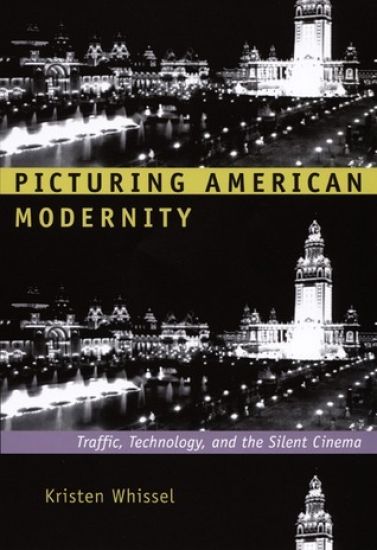
Picturing American Modernity

Picturing American Modernity

Kristen Whissel

Duke University Press
2008
sidottu
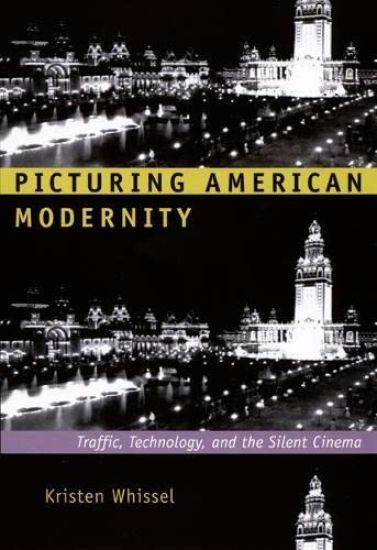
In Picturing American Modernity, Kristen Whissel investigates the relationship between early American cinema and the experience of technological modernity. She demonstrates how between the late 1890s and the eve of the First World War moving pictures helped the U.S. public understand the possibilities and perils of new forms of “traffic” produced by industrialization and urbanization. As more efficient ways to move people, goods, and information transformed work and leisure at home and contributed to the expansion of the U.S. empire abroad, silent films presented compelling visual representations of the spaces, bodies, machines, and forms of mobility that increasingly defined modern life in the United States and its new territories.Whissel shows that by portraying key events, achievements, and anxieties, the cinema invited American audiences to participate in the rapidly changing world around them. Moving pictures provided astonishing visual dispatches from military camps prior to the outbreak of fighting in the Spanish-American War. They allowed audiences to delight in images of the Pan-American Exposition, and also to mourn the assassination of President McKinley there. One early film genre, the reenactment, presented spectators with renditions of bloody battles fought overseas during the Philippine-American War. Early features offered sensational dramatizations of the scandalous “white slave trade,” which was often linked to immigration and new forms of urban work and leisure. By bringing these frequently distant events and anxieties “near” to audiences in cities and towns across the country, the cinema helped construct an American national identity for the machine age.
Picturing American Modernity

Picturing American Modernity

Kristen Whissel

Duke University Press
2008
pokkari
In Picturing American Modernity, Kristen Whissel investigates the relationship between early American cinema and the experience of technological modernity. She demonstrates how between the late 1890s and the eve of the First World War moving pictures helped the U.S. public understand the possibilities and perils of new forms of “traffic” produced by industrialization and urbanization. As more efficient ways to move people, goods, and information transformed work and leisure at home and contributed to the expansion of the U.S. empire abroad, silent films presented compelling visual representations of the spaces, bodies, machines, and forms of mobility that increasingly defined modern life in the United States and its new territories.Whissel shows that by portraying key events, achievements, and anxieties, the cinema invited American audiences to participate in the rapidly changing world around them. Moving pictures provided astonishing visual dispatches from military camps prior to the outbreak of fighting in the Spanish-American War. They allowed audiences to delight in images of the Pan-American Exposition, and also to mourn the assassination of President McKinley there. One early film genre, the reenactment, presented spectators with renditions of bloody battles fought overseas during the Philippine-American War. Early features offered sensational dramatizations of the scandalous “white slave trade,” which was often linked to immigration and new forms of urban work and leisure. By bringing these frequently distant events and anxieties “near” to audiences in cities and towns across the country, the cinema helped construct an American national identity for the machine age.
Lost in Transition

Lost in Transition

Kristen Ghodsee

Duke University Press
2011
sidottu
Lost in Transition tells of ordinary lives upended by the collapse of communism. Through ethnographic essays and short stories based on her experiences with Eastern Europe between 1989 and 2009, Kristen Ghodsee explains why it is that so many Eastern Europeans are nostalgic for the communist past. Ghodsee uses Bulgaria, the Eastern European nation where she has spent the most time, as a lens for exploring the broader transition from communism to democracy. She locates the growing nostalgia for the communist era in the disastrous, disorienting way that the transition was handled. The privatization process was contested and chaotic. A few well-connected foreigners and a new local class of oligarchs and criminals used the uncertainty of the transition process to take formerly state-owned assets for themselves. Ordinary people inevitably felt that they had been robbed. Many people lost their jobs just as the state social-support system disappeared. Lost in Transition portrays one of the most dramatic upheavals in modern history by describing the ways that it interrupted the rhythms of everyday lives, leaving confusion, frustration, and insecurity in its wake.