Kirjojen hintavertailu. Mukana 11 717 486 kirjaa ja 12 kauppaa.

Kirjahaku

Etsi kirjoja tekijän nimen, kirjan nimen tai ISBN:n perusteella.

1000 tulosta hakusanalla Leon Edel

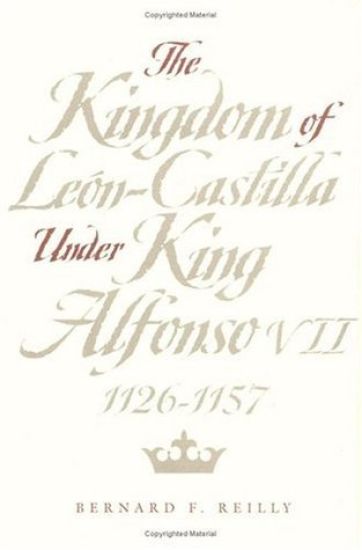
The Kingdom of Leon-Castilla Under King Alfonso VII, 1126-1157

The Kingdom of Leon-Castilla Under King Alfonso VII, 1126-1157

Reilly Bernard F.

UNIVERSITY OF PENNSYLVANIA PRESS
1998
sidottu
The reign of Alfonso VII occupied more than a quarter century during which the political landscape of medieval Spain was altered significantly. It was marked by the enhancement of royal administration, an increased papal intervention in the affairs of the peninsular church, and the development of the church's territorial structure. With the publication of The Kingdom of Leon-Castilla Under King Alfonso VII, 1126-1157, Bernard Reilly completes a detailed, three-part history of the largest of the Christian states of the Iberian peninsula from the mid-eleventh through the mid-twelfth century. Like his earlier books on the reigns of Queen Urraca and King Alfonso VI, this will no doubt be an essential resource for all students of European and Spanish history and to anyone investigating the antecedents of Castile's eventual preeminence in Iberian affairs.
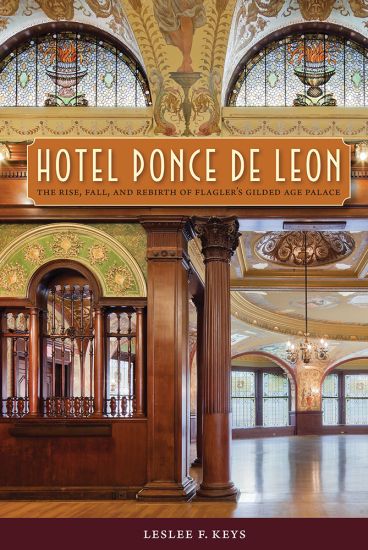
Hotel Ponce De Leon

Hotel Ponce De Leon

Leslee F. Keys

University Press of Florida
2015
sidottu
Henry Flagler's opulent Hotel Ponce de Leon drew worldwide praise from the day its elaborately carved doors opened in 1888. Built in the Spanish Renaissance Revival style, the architectural and engineering marvel featured the talents of a team of renowned artisans, including the designs of architects John Carrère, Thomas Hastings, and Bernard Maybeck, electricity by Thomas Edison, and interior decoration and stained glass windows by Louis Tiffany. The rich and famous strolling its halls were the most successful people of the Gilded Age, including John D. Rockefeller, Mark Twain, Alexander Graham Bell, and President Teddy Roosevelt.But with the Great Depression, the gem of Flagler's empire began a slow decline until Flagler College acquired it in 1968 as the centerpiece of its campus.Hotel Ponce de Leon is the first work to present the building's complete history and detail its transformation into the heart of Flagler College. Leslee Keys, who played a major role in the restoration, recounts the complicated construction of the hotel - the first major structure to be built entirely of poured concrete - and the efforts to preserve it and restore it to its former glory. The methods used at Flagler College have been recognized as best practices in historic preservation and decorative arts conservation, and today the campus is one of Florida’s most visited heritage tourism destinations.
Hotel Ponce de Leon

Hotel Ponce de Leon

Leslee F. Keys

University Press of Florida
2018
nidottu
Henry Flagler's opulent Hotel Ponce de Leon drew worldwide praise from the day its elaborately carved doors opened in 1888. Built in the Spanish Renaissance Revival style, the architectural and engineering marvel featured the talents of a team of renowned artisans, including the designs of architects John Carrère, Thomas Hastings, and Bernard Maybeck, electricity by Thomas Edison, and interior decoration and stained glass windows by Louis Tiffany. Hotel Ponce de Leon is the first work to present the building's complete history and detail its transformation into the heart of Flagler College. Leslee Keys, who assisted in the restoration, recounts the complicated construction of the hotel—the first major structure to be built entirely of poured concrete—and the efforts to preserve it and restore it to its former glory. The methods used at Flagler College have been recognized as best practices in historic preservation and decorative arts conservation, and today the campus is one of Florida's most visited heritage tourism destinations.
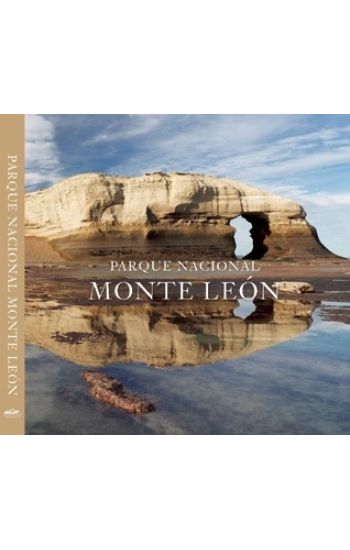
Parque Nacional Monte Leon

Parque Nacional Monte Leon

Foundation for Deep Ecology
2014
sidottu
Endless sky, rock, and water: Where the arid grasslands of southern Argentina meet the Atlantic Ocean, the wild winds and waters of Patagonia have sculpted a magical landscape. This wonderland is Monte Leon National Park. Established in 2002 through public/private collaboration, the park's creation was prompted by a gift from Kristine Tompkins, the former CEO of the clothing company named for this legendary region at the bottom of the Earth. Encompassing roughly 155,000 acres and 25 miles of shoreline, Monte Leon is now held in trust for future generations as part of Argentina's national park system. It is both a destination for adventurous travellers and a home to an array of charismatic creatures; a place where guanacos remain ever wary of stalking pumas, vast colonies of Magellanic penguins coat the beaches, and every tide pool harbours a universe in miniature. In Monte Leon, photographer Antonio Vizcaino takes readers on a visual tour of the park's natural features, exploring the wildlife, landforms, and textures and the sublime quality of light where land meets sea. Essays are included by Carlos Enrique Meyer, Silvia Braun, Claudio Campagna, William Coway, Francisco Erize and Patricia Gandini, the key players who helped birth the new park and other experts complement Vizcaino's images. Monte Leon is a book as beautiful as the landscape it celebrates. For everyone who has ever dreamed of Patagonia, Monte Leon is your invitation to visit a treasure of the Patagonia coast. All proceeds from the sale of the book go to continue conservation efforts in Monte Leon.
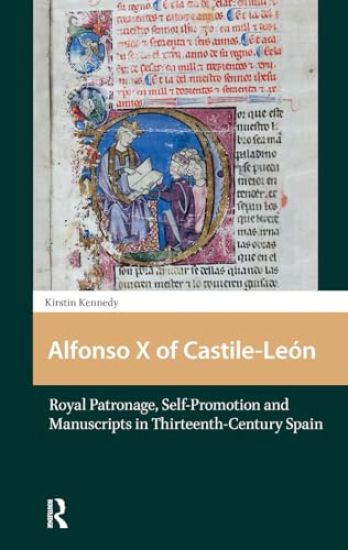
Alfonso X of Castile-León

Alfonso X of Castile-León

Kirstin Kennedy

TAYLOR FRANCIS LTD
2025
nidottu
Alfonso X 'the Learned' of Castile (1252-1284) was praised in his lifetime as a king who devoted himself to discovering all worldly and divine knowledge. He commissioned chronicles and law codes and composed poems to the Virgin Mary, he gathered together Jewish scholars to translate works of Arab astrology and astronomy, and he founded a university of Latin and Arabic studies at Seville. Moreover, according to his nephew Juan Manuel, Alfonso was careful to ensure that 'he had leisure to look into things he wanted for himself'. The level of his personal involvement in this literary activity marks him out as an exceptional patron in any period. However, Alfonso's relationship with the arts also had much in common with that of other thirteenth-century European royal patrons, among them his first cousin, Louis IX of France. Like his contemporaries, he relentlessly used literary works as a vehicle to promote his royal status and advance his claim to the imperial crown. His motivation for the foundation of the university at Seville was arguably political rather than educational, and instead of promoting institutional learning during his reign, Alfonso preferred to direct the messages about his kingship in the lavish manuscripts he patronized to a restricted, courtly audience. Yet such was the interest of the works he commissioned, that those who could obtain copies did so, even if these were still incomplete drafts. Three codices traditionally held to have been copied for Alfonso in fact show how this learning reserved for the few began to filter out beyond the Learned King's immediate circle. Close codicological analysis of particular manuscripts to make new arguments about the existence and organization of the Alfonsine scriptorium, and the revision of the list of manuscripts commonly agreed to have been copied for Alfonso himself. Close analysis of the iconography of Alfonso to present new arguments about the role of colour and astrological symbolism in the construction of the royal image. The conclusion that Alfonso's literary patronage was part of a propaganda campaign directed towards his court circle, and was not an attempt to formulate a cultural programme for his kingdoms, or a campaign to support educational institutions such as universities.
Travels of Pedro de Cieza de León, A.D. 1532–50

Travels of Pedro de Cieza de León, A.D. 1532–50

Pedro de Cieza de León

Cambridge University Press
2010
pokkari
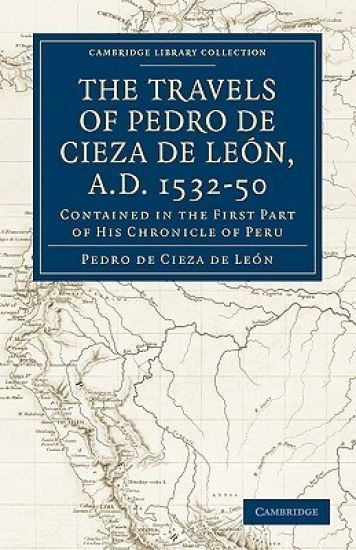
The publications of the Hakluyt Society (founded in 1846) made available early accounts of exploration. The first series, which ran from 1847 to 1899, consists of 100 books containing published or previously unpublished works by authors from Christopher Columbus to Sir Francis Drake, and covering voyages to the New World, to China and Japan, to Russia and to Africa and India. Pedro de Cierza de León (c.1520–1554) was a Spanish solider who participated in many expeditions throughout South America. Between 1548 and 1553 he travelled across Peru, interviewing local officials and Inca prisoners and collecting information about the landscape and indigenous people. Volume 33 of the Hakluyt series, first published in 1874 and reissued here, begins the first English translation of his work, which was continued in Volume 68 (1883). This volume contains detailed descriptions of the geography of Peru and an ethnographical account of different indigenous cultures.
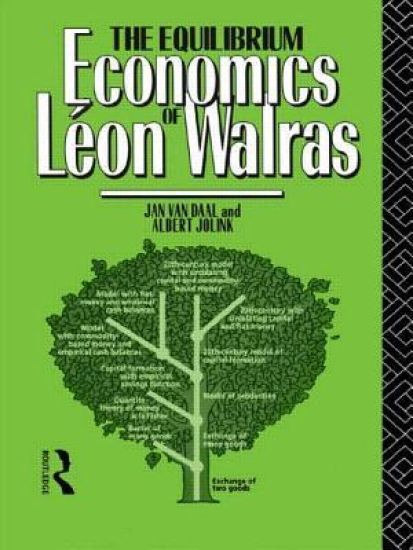
The Equilibrium Economics of Leon Walras

The Equilibrium Economics of Leon Walras

Albert Jolink; Jan Van Daal

Routledge
2014
nidottu
The existing literature on Walras has focused on his Elements of Pure Economics to an extent which has unbalanced our view of his work. Jan van Daal and Albert Jolink pay very careful attention to Walras' general equilibrium models, tracing their development through the five editions of his Elements. But they also place his equilibrium exercises in a broader context, arguing that these models should be considered as an instrument in Walras' design for optimal economic order.