Kirjahaku
Etsi kirjoja tekijän nimen, kirjan nimen tai ISBN:n perusteella.
1000 tulosta hakusanalla Lester Bangs
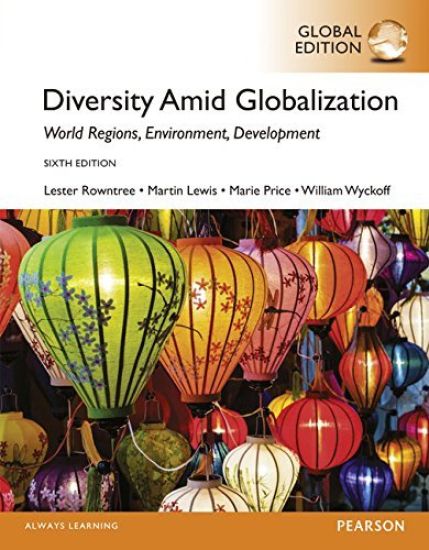
Diversity Amid Globalization: World Religions, Environment, Development, Global Edition
Lester Rowntree; Martin Lewis; Marie Price; William Wyckoff
pearson education limited
2015
nidottu
For Introductory World Regional Geography/Regional Geography Courses. Diversity Amid Globalization takes students on a journey into the connections and diversity between people and places–the contrasting regions of the world–within thematically organised regional chapters. With an arresting visual layout and new and updated content and maps throughout, the text maintains and strengthens its hallmark thematic organisation and focus on globalisation, while encouraging students to participate in the material using a number of stimulating, interactive learning tools.

Frank Mossan, an over-the-hill security guard for a shopping centre that's well past its heyday, is tasked to find the owner's missing child. Whilst searching for the child, Frank follows an unreliable breadcrumb trail of information leading him into the stranger parts of the building. Dealing with the incompetence of his peers, the dilapidation of the premises, the loss of his wife, and his own apathetic inclinations, can Frank find the child before she is lost forever? "Mysterious and heartbreaking." - Timothy Reads "Dizzyingly good." - Innad

Lester Gartland's latest thriller explores themes of loneliness and isolation through the lens of a quiet rural town with an inexplicable supernatural entity. With chapters switching between the 70's, 80's, 90's, and one other unknown time, Nobody Cries or Sleeps Anymore explores the detriment of the classic English tight-lipped fa ade. Blurb: "Something is wrong in these parts. Spitchwick's mundane appearance belies the towns macabre intentions. The older crowd prefer not to talk about it, but the younger generation are beginning to realise potentially sinister energy in the woods. Shelley knows it, Andrew knows it, and a young outsider knows it, but will any of them escape the towns illusory barriers? Set between the 80's and 90's in a rural South-West English town, Nobody Cries or Sleeps Anymore explores and satirises the grotesque necessities of looming modernity, socially acceptable communication, and the ever-expanding requirements of working life."

So many books tell you how to live and what to do. This journal relies on you to interact with it so that you become your own solution finder. Take a journey in this book of self discovery.
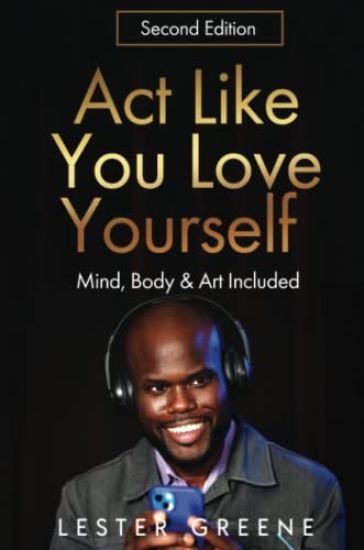
Act Like You Love Yourself, Mind Body & Art Included, Lester Greene, New Edition, Lubey Jube Productions, 2018, ISBN: 9781329035997
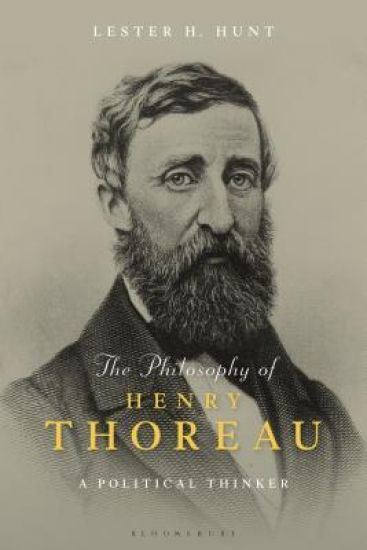
Henry Thoreau is widely considered to be one of the greatest nature writers, among whose best-known works are Walden and Walking. In this book, Lester Hunt shows that his writings have a compelling philosophical dimension as well. Thoreau seldom argues for his ideas the way other philosophers do. Rather than setting up proofs designed to trap the reader into agreeing with him, he challenges the reader – by means of narratives, jokes, questions, and paradoxes -- to recognize possibilities previously unknown and unexplored. Thoreau’s own explorations led him to several distinctively philosophical theories: an intuitionist metaethics, an ethics based on virtue and self-realization, a politics that is fundamentally individualist and anarchist, and a secular religion in which nature is pre-eminent.
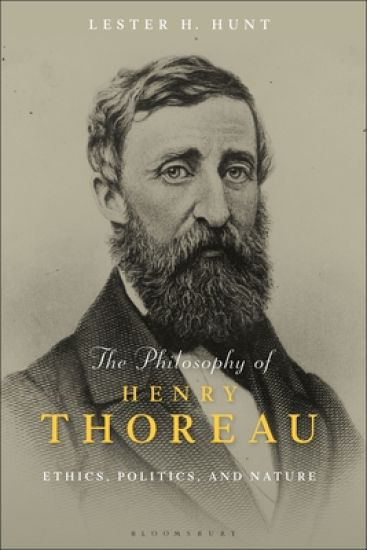
Henry Thoreau is widely considered to be one of the greatest nature writers, among whose best-known works are Walden and Walking. In this book, Lester Hunt shows that his writings have a compelling philosophical dimension as well. Thoreau seldom argues for his ideas the way other philosophers do. Rather than setting up proofs designed to trap the reader into agreeing with him, he challenges the reader – by means of narratives, jokes, questions, and paradoxes -- to recognize possibilities previously unknown and unexplored. Thoreau’s own explorations led him to several distinctively philosophical theories: an intuitionist metaethics, an ethics based on virtue and self-realization, a politics that is fundamentally individualist and anarchist, and a secular religion in which nature is pre-eminent.

The Energetics Of DevelopmentA Study Of Metabolism In The Frog Egg
Lester G Barth; Barth Lucena J
Palala Press
2018
pokkari
This work has been selected by scholars as being culturally important, and is part of the knowledge base of civilization as we know it. This work was reproduced from the original artifact, and remains as true to the original work as possible. Therefore, you will see the original copyright references, library stamps (as most of these works have been housed in our most important libraries around the world), and other notations in the work.This work is in the public domain in the United States of America, and possibly other nations. Within the United States, you may freely copy and distribute this work, as no entity (individual or corporate) has a copyright on the body of the work.As a reproduction of a historical artifact, this work may contain missing or blurred pages, poor pictures, errant marks, etc. Scholars believe, and we concur, that this work is important enough to be preserved, reproduced, and made generally available to the public. We appreciate your support of the preservation process, and thank you for being an important part of keeping this knowledge alive and relevant.
"Great Cicero's ghost " That was Tom Parson's exclamation. "It's gone " A horrified gasp from Sid Henderson. "Who took it?" That was what Phil Clinton wanted to know. Then the three college chums, who had paused on the threshold of their room, almost spellbound at the astounding discovery they had made, advanced into the apartment, as if unable to believe what was only too evident. Tom came to a halt near his bed, and gazed warily around.



Explaining Civil Society Development
Lester M. Salamon; S. Wojciech Sokolowski; Megan A. Haddock
Johns Hopkins University Press
2017
sidottu
The civil society sector-made up of millions of nonprofit organizations, associations, charitable institutions, and the volunteers and resources they mobilize-has long been the invisible subcontinent on the landscape of contemporary society. For the past twenty years, however, scholars under the umbrella of the Johns Hopkins Comparative Nonprofit Sector Project have worked with statisticians to assemble the first comprehensive, empirical picture of the size, structure, financing, and role of this increasingly important part of modern life. What accounts for the enormous cross-national variations in the size and contours of the civil society sector around the world? Drawing on the project's data, Lester M. Salamon, S. Wojciech Sokolowski, Megan A. Haddock, and their colleagues raise serious questions about the ability of the field's currently dominant preference and sentiment theories to account for these variations in civil society development. Instead, using statistical and comparative historical materials, the authors posit a novel social origins theory that roots the variations in civil society strength and composition in the relative power of different social groupings and institutions during the transition to modernity. Drawing on the work of Barrington Moore, Dietrich Rueschemeyer, and others, Explaining Civil Society Development provides insight into the nonprofit sector's ability to thrive and perform its distinctive roles. Combining solid data and analytical clarity, this pioneering volume offers a critically needed lens for viewing the evolution of civil society and the nonprofit sector throughout the world.

Originally published in 1959. This book examines the French Enlightenment by analyzing critical thought in eighteenth-centruy France. It examines the philosophes' views on evil, free will and determinism, and human nature. This is an interesting group to look at, according to Crocker, because French Enlightenment thinkers straddled two vastly different time periods.
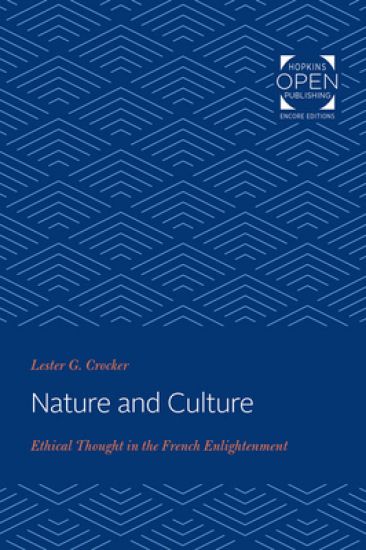
Originally published in 1963. Perhaps the most generative ethical question of eighteenth-century France was how to live a virtuous and happy life at the same time. During the Age of Enlightenment, Christianity fell out of vogue as the dominant and authoritative moral code. In place of Christianity's emphasis on sin and redemption in light of a supposed afterlife, present happiness became recognized as an appropriate end goal among French Enlightenment thinkers. French intellectuals struggled to find equilibrium between nature (a person's individual goals and needs) and culture (the political, economic, and social organization of humans for a collective good). Enlightenment discourse generated a unique cultural moment in which thinkers addressed the problems of humans' moral coexistence through the dichotomy of nature and culture. Lester Crocker addresses these questions in an overview of ethical thought in eighteenth-century France.