Kirjojen hintavertailu. Mukana 11 637 059 kirjaa ja 12 kauppaa.

Kirjahaku

Etsi kirjoja tekijän nimen, kirjan nimen tai ISBN:n perusteella.

1000 tulosta hakusanalla Louis Howland

Declaration de M. Louis de Narbonne, ancien ministre de la guerre, en France dans le procès du roi.
The 18th century was a wealth of knowledge, exploration and rapidly growing technology and expanding record-keeping made possible by advances in the printing press. In its determination to preserve the century of revolution, Gale initiated a revolution of its own: digitization of epic proportions to preserve these invaluable works in the largest archive of its kind. Now for the first time these high-quality digital copies of original 18th century manuscripts are available in print, making them highly accessible to libraries, undergraduate students, and independent scholars.Delve into what it was like to live during the eighteenth century by reading the first-hand accounts of everyday people, including city dwellers and farmers, businessmen and bankers, artisans and merchants, artists and their patrons, politicians and their constituents. Original texts make the American, French, and Industrial revolutions vividly contemporary.++++The below data was compiled from various identification fields in the bibliographic record of this title. This data is provided as an additional tool in helping to insure edition identification: ++++British LibraryT080008Londres i.e. Paris?]: chez les marchands de nouveaut s, 1793. 16p.; 8
The Memoire of M. Louis-Philip-Joseph (Duke) D'Orleans; Accused of High-treason, Before the Tribunal of the Chatelet in Paris
The 18th century was a wealth of knowledge, exploration and rapidly growing technology and expanding record-keeping made possible by advances in the printing press. In its determination to preserve the century of revolution, Gale initiated a revolution of its own: digitization of epic proportions to preserve these invaluable works in the largest archive of its kind. Now for the first time these high-quality digital copies of original 18th century manuscripts are available in print, making them highly accessible to libraries, undergraduate students, and independent scholars.Delve into what it was like to live during the eighteenth century by reading the first-hand accounts of everyday people, including city dwellers and farmers, businessmen and bankers, artisans and merchants, artists and their patrons, politicians and their constituents. Original texts make the American, French, and Industrial revolutions vividly contemporary.++++The below data was compiled from various identification fields in the bibliographic record of this title. This data is provided as an additional tool in helping to insure edition identification: ++++British LibraryT081234Horizontal chain lines.Dublin: printed for P. Wogan, P. Byrne, J. Moore, J. Jones, A. Grueber, W. Jones, R. White, and J. Rice, 1791. 2], iii, 1],58p.; 8
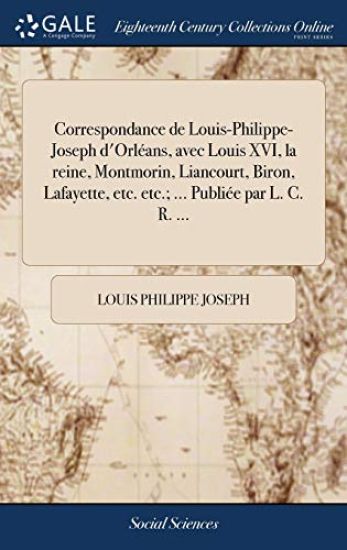
Correspondance de Louis-Philippe-Joseph d'Orléans, avec Louis XVI, la reine, Montmorin, Liancourt, Biron, Lafayette, etc. etc.; ... Publiée par L. C. R. ...
The 18th century was a wealth of knowledge, exploration and rapidly growing technology and expanding record-keeping made possible by advances in the printing press. In its determination to preserve the century of revolution, Gale initiated a revolution of its own: digitization of epic proportions to preserve these invaluable works in the largest archive of its kind. Now for the first time these high-quality digital copies of original 18th century manuscripts are available in print, making them highly accessible to libraries, undergraduate students, and independent scholars.Delve into what it was like to live during the eighteenth century by reading the first-hand accounts of everyday people, including city dwellers and farmers, businessmen and bankers, artisans and merchants, artists and their patrons, politicians and their constituents. Original texts make the American, French, and Industrial revolutions vividly contemporary.++++The below data was compiled from various identification fields in the bibliographic record of this title. This data is provided as an additional tool in helping to insure edition identification: ++++British LibraryT034195The colophon reads: Gillet, imprimeur. With a half-title and three final leaves containing a table. London]: A Paris, chez Lerruge, Debraye; reimprim Londres par T. Baylis, 1800. 4],282, 6]p.; 8
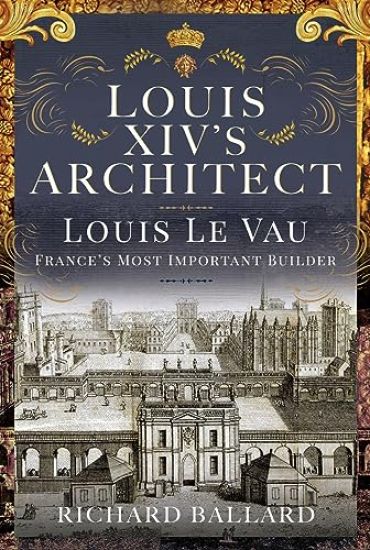
Louis XIV's Architect

Louis XIV's Architect

Richard Ballard

PEN SWORD BOOKS LTD
2023
sidottu
This is a study of royal absolutism in a most extreme form in modern European history, and of the nature of Louis XIV's concept of personal glory and of the embodiment of France as a new superpower. It is a study of political ideas expressed in architecture to establish Versailles as the centre of French world power and royal prestige. It is also a personal story, full of social, cultural, and economic history of the period as seen in the life and work of Louis Le Vau, from a humble family of craftsmen, who was a self-taught architect in the early history of the profession, skilled in technical craft skills and even grand design. He was a major contributor to the architectural glories of Paris including the Louvre, Vincennes, Versailles and the College of the Four Nations. And all achieved despite interference from the great magnates of the age like Mazarin and Colbert and constant mind-changing by the King who wanted every feature in the buildings to reflect his concept of personal, royal, prestige. Le Vau was Louis XIV's First Architect from 1654 until his death and disgrace in 1670. The social, cultural, economic and political backdrop is striking with court intrigue, scandal, corruption, luxury, indulgence and the rise of a rich bourgeoisie, but the main thrust of the story concerns Louis XIV and the royal personal ambition, and the work of a stone-cutter's son who became the Sun King's instrument. The study is good on the more technical features of architectural history - reminiscent of Pevsner's marvellous Buildings of England series.
Louis XIV's Marshals of France

Louis XIV's Marshals of France

James Falkner

PEN SWORD BOOKS LTD
2025
sidottu
For over 70 years, from 1643 to 1715, Louis XIV fought a series of increasingly bitter wars with the Dutch, the Spanish, the British and the Austrians. During his long reign France was the foremost power in Europe and the king used his military and economic strength to expand French territory to the north into the Low Countries, to the Rhine, and south to the Pyrenees. To enable this expansion, and defend it against the powerful armies that combined to oppose him, he depended on a select group of exceptional commanders – remarkable men close to the throne, who held the prestigious title of Marshal of France. These are the distinguished soldiers James Falkner focuses on in this perceptive and original study, and their colourful careers and long-reaching campaigns give us a fascinating insight into the European warfare of the period and into their relationship with their master, the Sun King. Among them are Turenne, the pre-eminent commander of the early years of Louis’s reign; Luxembourg who never lost a battle; elegant Villeroi who confronted the Duke of Marlborough at the Battle of Ramillies; Boufflers, famous for his defence of Lille; Villars who remarkably outwitted and defeated Prince Eugene; Tallard, who endured catastrophe and capture at the Battle of Blenheim; Berwick, James II’s illegitimate son, the English Marshal; and brawling Vendôme who, though defeated at Oudenarde, later triumphed against the British and Austrians in Spain. Their skill as commanders and their qualities of leadership during a turbulent era in European history are a primary focus of James Falkner’s absorbing book, but he also looks at them as remarkable and varied individuals who expressed the military spirit of their age.
The Political and Historical Works of Louis Napoleon Bonaparte

The Political and Historical Works of Louis Napoleon Bonaparte

Louis Napoleon Bonaparte

University Press of the Pacific
2004
pokkari
The various historical and political works of Prince Louis Napoleon Bonaparte, though composed at intervals, and while the author was in exile or captivity, have all one great object mainly in view, the constitutional reorganization of France. His theory of national reformation is based upon a revival of what he terms the Idie Napolionienne, which he labors to show is the only political system which can meet the requirements, accord with the habits, and command the respect and sympathy of the French nation.
The Political and Historical Works of Louis Napoleon Bonaparte

The Political and Historical Works of Louis Napoleon Bonaparte

Louis Napoleon Bonaparte

University Press of the Pacific
2004
pokkari
The various historical and political works of Prince Louis Napoleon Bonaparte, though composed at intervals, and while the author was in exile or captivity, have all one great object mainly in view, the constitutional reorganization of France. His theory of national reformation is based upon a revival of what he terms the Idee Napoleonienne, which he labors to show is the only political system which can meet the requirements, accord with the habits, and command the respect and sympathy of the French nation.
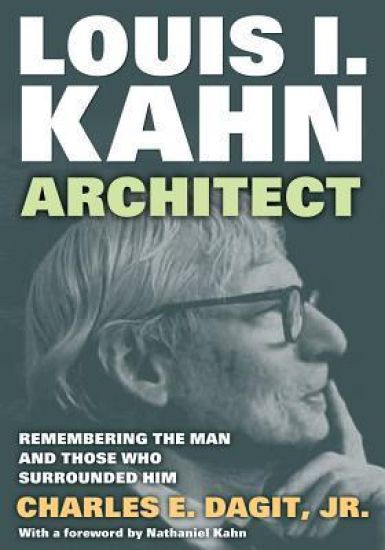
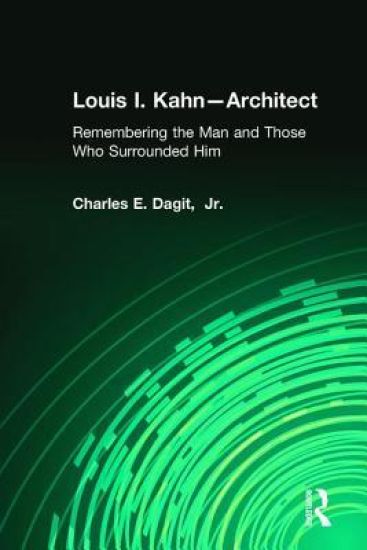
Louis I. Kahn—Architect

Louis I. Kahn—Architect

Jr. Dagit

AldineTransaction
2013
sidottu
Few people in the history of art and architecture have planted a seed of inspiration that grew to become a towering oak of lasting influence. There are those, particularly colleagues and students of Louis I. Kahn, who would say that he was one of these people. Certainly Kahn was one of the foremost architects of the twentieth century, designing such famous landmarks as the National Assembly Building in Dhaka, Bangladesh; the Salk Institute in La Jolla, California; and the Kimbell Museum in Fort Worth, Texas. In this commemorative volume, Charles E. Dagit, Jr. shows the power and influence that Kahn displayed at the University of Pennsylvania department of architecture in the 1960s. Since Dagit knew Kahn personally, this is a factual history as well as a glimpse into Kahn's personal wisdom and humanity. Beginning with a prelude that starts with the author's undergraduate years at the University of Pennsylvania, Dagit launches readers on an intellectual journey of how he first met Kahn. From there he details his experiences with Kahn and explores Kahn's interactions with Penn faculty members, including Mario Romanach, Robert Le Ricolet and Aldo Giurgola. This first-hand account sheds fascinating new light on one of the most prominent architects of the twentieth century.
Louis I. Kahn—Architect

Louis I. Kahn—Architect

Jr. Dagit

AldineTransaction
2017
nidottu
Few people in the history of art and architecture have planted a seed of inspiration that grew to become a towering oak of lasting influence. There are those, particularly colleagues and students of Louis I. Kahn, who would say that he was one of these people. Certainly Kahn was one of the foremost architects of the twentieth century, designing such famous landmarks as the National Assembly Building in Dhaka, Bangladesh; the Salk Institute in La Jolla, California; and the Kimbell Museum in Fort Worth, Texas. In this commemorative volume, Charles E. Dagit, Jr. shows the power and influence that Kahn displayed at the University of Pennsylvania department of architecture in the 1960s. Since Dagit knew Kahn personally, this is a factual history as well as a glimpse into Kahn's personal wisdom and humanity. Beginning with a prelude that starts with the author's undergraduate years at the University of Pennsylvania, Dagit launches readers on an intellectual journey of how he first met Kahn. From there he details his experiences with Kahn and explores Kahn's interactions with Penn faculty members, including Mario Romanach, Robert LeRicolais, and Aldo Giurgola. This first-hand account sheds fascinating new light on one of the most prominent architects of the twentieth century.