Kirjojen hintavertailu. Mukana 11 244 527 kirjaa ja 12 kauppaa.

Kirjahaku

Etsi kirjoja tekijän nimen, kirjan nimen tai ISBN:n perusteella.

1000 tulosta hakusanalla MARIO FARNETI

The Politics of Hallowed Ground

The Politics of Hallowed Ground

Mario Gonzalez; Elizabeth Cook-Lynn

University of Illinois Press
1998
nidottu
Inside the Sioux Nation's pursuit of recognition and justice This book is the powerful story of the ongoing struggle of indigenous Americans in the twentieth century United States and of its shift in focus from traditional battlefield and massacre sites to federal courtrooms and the halls of Congress. The Politics of Hallowed Ground includes excerpts from the diary kept by Mario Gonzalez, the attorney for the Sioux Nation in its struggle for recognition of the Wounded Knee Massacre site as a national monument. Gonzalez's personal record of the struggle is coupled with commentary by Elizabeth Cook-Lynn, a Native American writer who places the work in its historical context. Together, the two voices will draw the reader into far more than the continuing struggle of the Sioux people to achieve justice. The book covers Sioux history from before the Wounded Knee tragedy to modern times, through the Sioux Nation's long and often rancorous dialogue with the U.S. government over control of South Dakota's Black Hills, traditional Sioux lands recognized by treaty in 1877 and never forfeited or sold. After reading a 13-year-old survivor's narrative of what happened at Wounded Knee and the list of the dead and wounded, readers will find it difficult not to share the Sioux perspective.
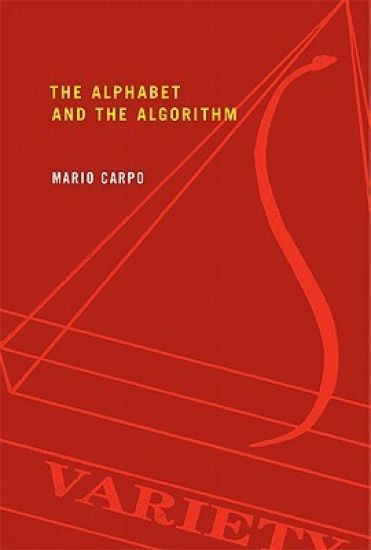
The Alphabet and the Algorithm

The Alphabet and the Algorithm

Mario Carpo

MIT Press
2011
pokkari
The rise and fall of identical copies: digital technologies and form-making from mass customization to mass collaboration.Digital technologies have changed architecture-the way it is taught, practiced, managed, and regulated. But if the digital has created a "paradigm shift" for architecture, which paradigm is shifting? In The Alphabet and the Algorithm, Mario Carpo points to one key practice of modernity: the making of identical copies. Carpo highlights two examples of identicality crucial to the shaping of architectural modernity: in the fifteenth century, Leon Battista Alberti's invention of architectural design, according to which a building is an identical copy of the architect's design; and, in the nineteenth and twentieth centuries, the mass production of identical copies from mechanical master models, matrixes, imprints, or molds. The modern power of the identical, Carpo argues, came to an end with the rise of digital technologies. Everything digital is variable. In architecture, this means the end of notational limitations, of mechanical standardization, and of the Albertian, authorial way of building by design. Charting the rise and fall of the paradigm of identicality, Carpo compares new forms of postindustrial digital craftsmanship to hand-making and the cultures and technologies of variations that existed before the coming of machine-made, identical copies. Carpo reviews the unfolding of digitally based design and construction from the early 1990s to the present, and suggests a new agenda for architecture in an age of variable objects and of generic and participatory authorship.
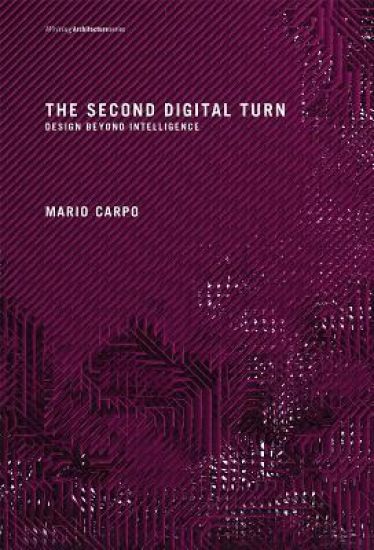
The Second Digital Turn

The Second Digital Turn

Mario Carpo

MIT Press
2017
pokkari
The first digital turn in architecture changed our ways of making; the second changes our ways of thinking.Almost a generation ago, the early software for computer aided design and manufacturing (CAD/CAM) spawned a style of smooth and curving lines and surfaces that gave visible form to the first digital age, and left an indelible mark on contemporary architecture. But today's digitally intelligent architecture no longer looks that way. In The Second Digital Turn, Mario Carpo explains that this is because the design professions are now coming to terms with a new kind of digital tools they have adopted—no longer tools for making but tools for thinking. In the early 1990s the design professions were the first to intuit and interpret the new technical logic of the digital age: digital mass-customization (the use of digital tools to mass-produce variations at no extra cost) has already changed the way we produce and consume almost everything, and the same technology applied to commerce at large is now heralding a new society without scale—a flat marginal cost society where bigger markets will not make anything cheaper. But today, the unprecedented power of computation also favors a new kind of science where prediction can be based on sheer information retrieval, and form finding by simulation and optimization can replace deduction from mathematical formulas. Designers have been toying with machine thinking and machine learning for some time, and the apparently unfathomable complexity of the physical shapes they are now creating already expresses a new form of artificial intelligence, outside the tradition of modern science and alien to the organic logic of our mind.
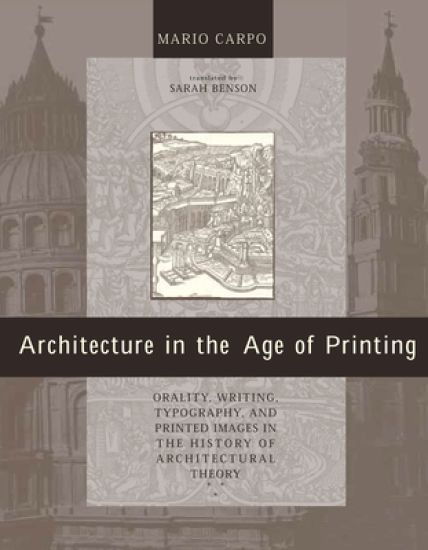
Architecture in the Age of Printing
A history of the influence of communication technologies on Western architectural theory.The discipline of architecture depends on the transmission in space and time of accumulated experiences, concepts, rules, and models. From the invention of the alphabet to the development of ASCII code for electronic communication, the process of recording and transmitting this body of knowledge has reflected the dominant information technologies of each period. In this book Mario Carpo discusses the communications media used by Western architects, from classical antiquity to modern classicism, showing how each medium related to specific forms of architectural thinking.Carpo highlights the significance of the invention of movable type and mechanically reproduced images. He argues that Renaissance architectural theory, particularly the system of the five architectural orders, was consciously developed in response to the formats and potential of the new printed media. Carpo contrasts architecture in the age of printing with what preceded it: Vitruvian theory and the manuscript format, oral transmission in the Middle Ages, and the fifteenth-century transition from script to print. He also suggests that the basic principles of "typographic" architecture thrived in the Western world as long as print remained our main information technology. The shift from printed to digital representations, he points out, will again alter the course of architecture.
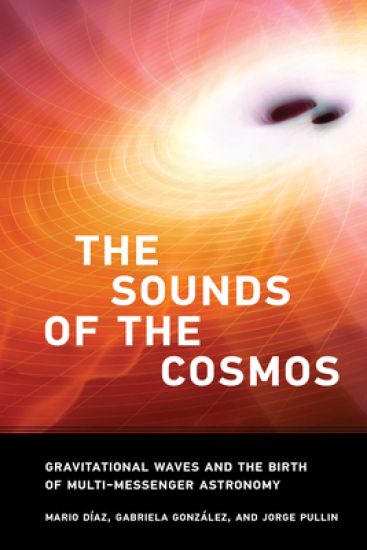
The Sound of the Cosmos

The Sound of the Cosmos

Mario Diaz; Gabriela Gonzalez

MIT PRESS LTD
2023
sidottu
The remarkable story of how humankind discovered gravitational waves, chronicled with unparalleled historical and scientific vision. In 2016, the LIGO and Virgo Collaborations made headlines when they announced the detection of gravitational waves--a century after Albert Einstein first predicted their existence with his general theory of relativity. With unprecedented perspective as physicists at the forefront of this discovery, Mario D az, Gabriela Gonz lez, and Jorge Pullin provide a comprehensive and accessible account of the quest to find gravitational waves, their controversial history, and the efforts that culminated with their detection and a Nobel Prize in physics. The Sounds of the Cosmos vividly narrates contributions from the ancient Greeks through Einstein, in addition to the breakthroughs of the twentieth and twenty-first centuries, including the discovery of the Hulse-Taylor binary star system (the first of its kind ever observed) and the technology behind gravitational wave detectors. The authors' fusion of meticulous research and accessible prose makes this book an indispensable resource for the scientifically curious, lending astonishing new context to the revelation that we can "hear" the cosmos through gravitational waves. Written with exceptional historical and conceptual insight, this is a definitive and dazzling journey through "the eternal quest of humankind to understand the universe."
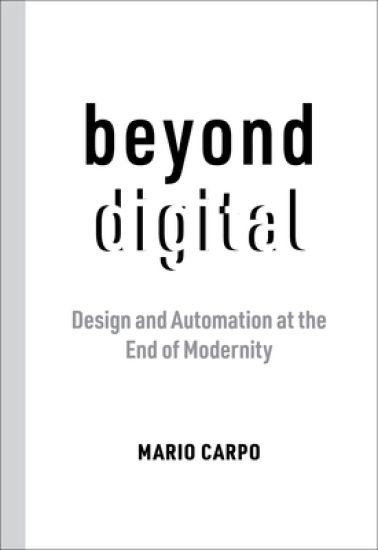
Beyond Digital

Beyond Digital

Mario Carpo

MIT PRESS LTD
2023
nidottu
Recasting computational design: a new modern agenda for a post-industrial, post-pandemic world.Mass production was the core technical logic of industrial modernity: for the last hundred years, architects and designers have tried to industrialize construction and standardize building materials and processes in the pursuit of economies of scale. But this epochal march of modernity is now over. In Beyond Digital, Mario Carpo reviews the long history of the computational mode of production, showing how the merger of robotic automation and artificial intelligence will stop and reverse the modernist quest for scale. Today’s technologies already allow us to use nonstandard building materials as found, or as made, and assemble them in as many nonstandard, intelligent, adaptive ways as needed: the microfactories of our imminent future will be automated artisan shops.The post-industrial logic of computational manufacturing has been known and theorized for some time. By tracing its theoretical and technical sources, and reviewing the design theories that accompanied its rise, Carpo shows how the computational project, long under the sway of powerful antimodern ideologies, is now being recast by the urgency of the climate crisis, which has vindicated its premises—and by the global pandemic, which has tragically proven its viability. Looking at the work of a new generation of designers, technologists, and producers, Beyond Digital offers a new modern agenda for our post-industrial future.
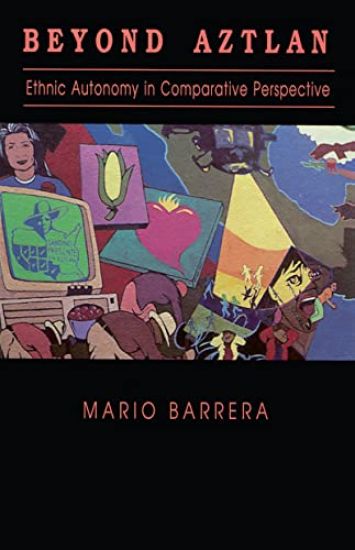
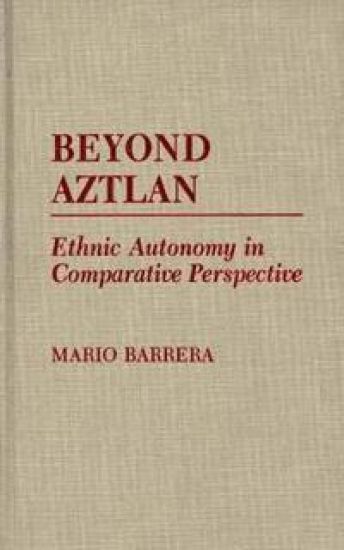
Beyond Aztlan

Beyond Aztlan

Mario Barrera

University of Notre Dame Press
1990
nidottu
**Does achieving equality in a multiethnic society require the complete loss of a minority's cultural identity? ** Mario Barrera strives to answer that question with full historical context in his provocative book Beyond Aztlan. Barrera identifies the goals of the Mexican American population at large—community and equality—and lays out the complicated history of achieving these goals throughout the 20th century. As focus has shifted to equality over community, the Mexican American cultural identity has fragmented and begun to erode. Barrera explores varied trends, such as the revival of community identity during the Chicano Movement, as well as cultural fragmentation and radicalization. To fully understand and answer the question of economic equality over cultural identity, Barrera looks at minorities in four other countries to compare to the United States: Canada, China, Switzerland, and Nicaragua. He argues that while equality is not easy to attain and even harder to hold onto, a group can still preserve cultural identity while being treated as equals.
Race and Class in the Southwest

Race and Class in the Southwest

Mario Barrera

University of Notre Dame Press
1989
nidottu
Focusing on the economic foundations of inequality as they have affected Chicanos in the Southwest from the Mexican-American War to the present, Mario Barrera develops his theory as a synthesis of class and colonial analyses.
Beyond Aztlan

Beyond Aztlan

Mario Barrera

University of Notre Dame Press
1990
sidottu
**Does achieving equality in a multiethnic society require the complete loss of a minority's cultural identity? ** Mario Barrera strives to answer that question with full historical context in his provocative book Beyond Aztlan. Barrera identifies the goals of the Mexican American population at large—community and equality—and lays out the complicated history of achieving these goals throughout the 20th century. As focus has shifted to equality over community, the Mexican American cultural identity has fragmented and begun to erode. Barrera explores varied trends, such as the revival of community identity during the Chicano Movement, as well as cultural fragmentation and radicalization. To fully understand and answer the question of economic equality over cultural identity, Barrera looks at minorities in four other countries to compare to the United States: Canada, China, Switzerland, and Nicaragua. He argues that while equality is not easy to attain and even harder to hold onto, a group can still preserve cultural identity while being treated as equals.
Race and Class in the Southwest

Race and Class in the Southwest

Mario Barrera

University of Notre Dame Press
1979
sidottu
Focusing on the economic foundations of inequality as they have affected Chicanos in the Southwest from the Mexican-American War to the present, Mario Barrera develops his theory as a synthesis of class and colonial analyses.
Beyond Aztlan

Beyond Aztlan

Mario Barrera

Praeger Publishers Inc
1988
sidottu
Does the achievement of economic equality in a multiethnic society require the complete loss of a minority's cultural identity? Beyond Aztlan argues that American society has historically viewed a distinctive cultural identity as something that an ethnic group gives up in order to achieve economic and political parity. Mexican Americans, who have scored limited gains in their struggle for equality since the 1940s, are proving to be no exception to the rule. However, Barrera compares the situation of Mexican Americans to that of minority groups in four other countries and concludes that equality does not necessarily require assimilation.
Roosevelt and the French

Roosevelt and the French

Mario Rossi

Praeger Publishers Inc
1993
sidottu
This original contribution largely based on unpublished material to the biography of an American president and to the diplomatic history of the United States traces Franklin Roosevelt's contacts with the French from his childhood until the end of his life. It necessarily concentrates on the years after he ascended the presidency--the pre-war years of the 1930s and the war years from 1939 to 1944. Especially knotty were the war years when Roosevelt had to deal with two French governments--the Vichy government and the Free French government of Charles de Gaulle--as well as their representatives and supporters.
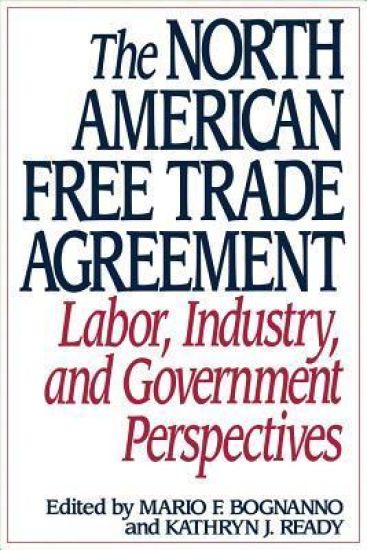
The North American Free Trade Agreement

The North American Free Trade Agreement

Mario F. Bognanno; Kathryn Ready

Praeger Publishers Inc
1993
nidottu
After more than two years of negotiations, in December 1992, the governments of Canada, Mexico, and the United States signed the North American Free Trade Agreement. During the months leading up to the signing, labor, industry, environment, and religious groups from the three countries actively debated and lobbied their respective trade negotiators to gain support for their particular concerns. Lobbying by these groups continues as policy deliberations shift from treaty negotiations to the submission of enabling legislation and, ultimately in the United States, congressional authorization.This volume brings together key spokespeople from labor, industry, and government and presents the main arguments for and against the Free Trade Agreement as well as views on the Agreement's impact. The book is intended for policy makers, business managers, labor organizations, environmentalists, academics, students, and others who have an interest in understanding and exploring the issues surrounding the NAFTA debate.
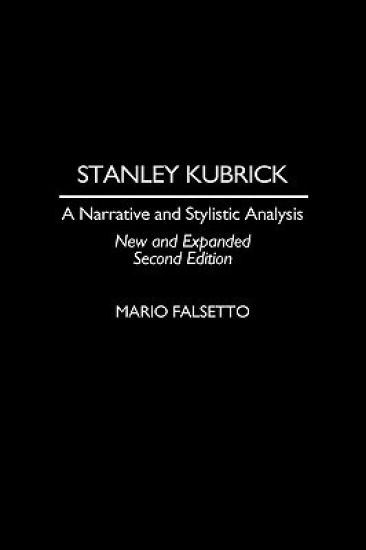
Stanley Kubrick

Stanley Kubrick

Mario Falsetto

Praeger Publishers Inc
2001
sidottu
The second edition of Mario Falsetto's extensive analysis of Kubrick's films carefully examines the filmmaker's oeuvre in its entirety--from smaller, early films (The Killing) through mid-career masterpieces (Dr. Strangelove; 2001: A Space Odyssey; A Clockwork Orange), later films such as Full Metal Jacket, and his final work, 1999's Eyes Wide Shut. The author, offering close readings supported by precise shot descriptions, shows us how Kubrick's body of work represents a stylistically and thematically consistent cinematic vision, one that merges formal experimentation with great philosophical complexity. Falsetto explores many of Kubrick's often-used devices, including the long-take aesthetic, voice-overs, and moving camera, and discusses the thematic uses to which these techniques are applied. Finally, he presents the very first formal analysis of Eyes Wide Shut, the director's final, very much underrated masterwork.
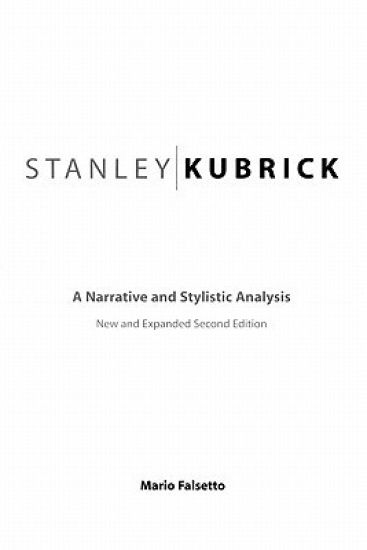
Stanley Kubrick

Stanley Kubrick

Mario Falsetto

Praeger Publishers Inc
2001
nidottu
The second edition of Mario Falsetto's extensive analysis of Kubrick's films carefully examines the filmmaker's oeuvre in its entirety--from smaller, early films (The Killing) through mid-career masterpieces (Dr. Strangelove; 2001: A Space Odyssey; A Clockwork Orange), later films such as Full Metal Jacket, and his final work, 1999's Eyes Wide Shut. The author, offering close readings supported by precise shot descriptions, shows us how Kubrick's body of work represents a stylistically and thematically consistent cinematic vision, one that merges formal experimentation with great philosophical complexity. Falsetto explores many of Kubrick's often-used devices, including the long-take aesthetic, voice-overs, and moving camera, and discusses the thematic uses to which these techniques are applied. Finally, he presents the very first formal analysis of Eyes Wide Shut, the director's final, very much underrated masterwork.
The Making of Alternative Cinema

The Making of Alternative Cinema

Mario Falsetto

Praeger Publishers Inc
2007
nidottu
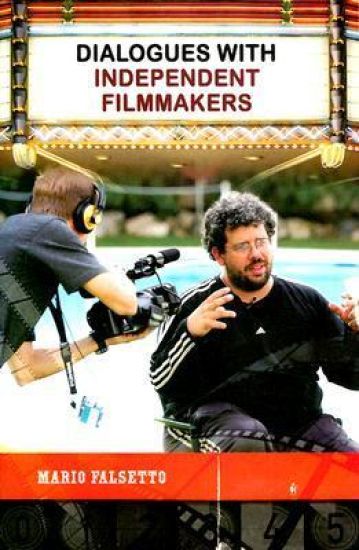
The massive investments made in Hollywood today mandate tight studio controls on mainstream cinema. As a result, one must often look to alternative outlets in order to see a movie intended primarily as art—or even as a sincere effort at entertainment—instead of as a simple source of revenue. Foreign and independent movies thus often play the role of bellwether for the Hollywood studios that are unable to experiment themselves: behind the look of the studio smash Sin City, for instance, was the rigorous pulp style of Road to Perdition; before the sadism and cynicism of many current thrillers and horror movies there was the work of Neil Labute; and where would Hollywood's plots be without the harsh, fragmented narratives of Guillermo Arriaga and Alejandro Inarritu? By looking at these films, and at the people who created them,we can obtain a clearer sense of what movies really are at heart, and what they may still want to become.Elaborate measures are thus taken everywhere and at all points to maintain a grip on the public's imagination, but the more adept Hollywood becomes at giving the public what it wants, the less any given studio is able to say anything new or truly innovative. Inside of the United States, this means looking to independent films; outside of the United States, it means filtering through an enormous mass of movies and moviemakers.In Volume 1 of this revealing set, Mario Falsetto presents extended interviews with nine of the most prominent independent film directors working in America today; while in Volume 2, Liza Béar gives prominent international filmmakers the opportunity to address essential issues surrounding creativity and production in a number of different geographical setting and contexts.
Católicos

Católicos

Mario T. García

University of Texas Press
2008
pokkari
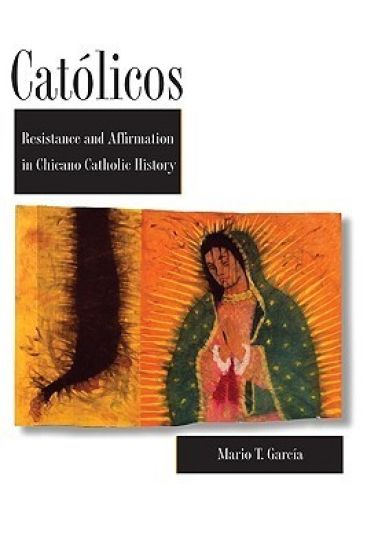
Chicano Catholicism-both as a popular religion and a foundation for community organizing-has, over the past century, inspired Chicano resistance to external forces of oppression and discrimination including from other non-Mexican Catholics and even the institutionalized church. Chicano Catholics have also used their faith to assert their particular identity and establish a kind of cultural citizenship. Based exclusively on original research and sources, Mario T. GarcÍa here offers the first major historical study to explore the various dimensions of the role of Catholicism in Chicano history in the twentieth century. This is also one of the first significant studies in the still limited field of Chicano religious history. Topics range from how early Chicano Catholic intellectuals and civil rights leaders were influenced by Catholic Social Doctrine, to the role that popular religion has played in the lives of ordinary men and women in both rural and urban areas. GarcÍa also examines faith-based Chicano community movements like CatÓlicos Por La Raza in the 1960s and the Sanctuary movement in Los Angeles in the 1980s. While Latino/a history and culture has been, for the most part, inextricably linked with the tenets and practices of Catholicism, there has been very little written, until recently, about Chicano Catholic history. GarcÍa helps to fill that void and explore the impact-both positive and negative-that the Catholic experience has had on the Chicano community.
Roman Tragedy

Roman Tragedy

Mario Erasmo

University of Texas Press
2004
pokkari
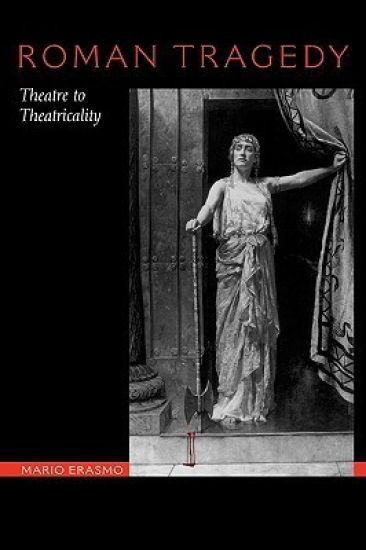
Roman tragedies were written for over three hundred years, but only fragments remain of plays that predate the works of Seneca in the mid-first century C.E., making it difficult to define the role of tragedy in ancient Roman culture. Nevertheless, in this pioneering book, Mario Erasmo draws on all the available evidence to trace the evolution of Roman tragedy from the earliest tragedians to the dramatist Seneca and to explore the role played by Roman culture in shaping the perception of theatricality on and off the stage. Performing a philological analysis of texts informed by semiotic theory and audience reception, Erasmo pursues two main questions in this study: how does Roman tragedy become metatragedy, and how did off-stage theatricality come to compete with the theatre? Working chronologically, he looks at how plays began to incorporate a rhetoricized reality on stage, thus pointing to their own theatricality. And he shows how this theatricality, in turn, came to permeate society, so that real events such as the assassination of Julius Caesar took on theatrical overtones, while Pompey's theatre opening and the lavish spectacles of the emperor Nero deliberately blurred the lines between reality and theatre. Tragedy eventually declined as a force in Roman culture, Erasmo suggests, because off-stage reality became so theatrical that on-stage tragedy could no longer compete.