Kirjojen hintavertailu. Mukana 12 459 402 kirjaa ja 12 kauppaa.

Kirjahaku

Etsi kirjoja tekijän nimen, kirjan nimen tai ISBN:n perusteella.

1000 tulosta hakusanalla Manning Marable

Genealogical Abstracts from Newspapers of the German Reformed Church, 1840-1843
By the early nineteenth century, the powerful Reformed Church movement had established itself among German-speaking settlers in Pennsylvania, Maryland, Virginia, and the Carolinas. Seeking to launch churches in other communities, missionaries were sent into the surrounding states and territories. In 1827, the church began a newspaper, printed in Franklin County, Pennsylvania, and later named The Weekly Messenger of the German Reformed Church, to support its missionary activities and to provide a connection and communication between church members across the country. This book contains abstracts of more than 200 issues of that newspaper, published from 1840 to 1843, which cover happenings in more than twenty-two states and territories (primarily Pennsylvania, Maryland, Ohio, New York, Virginia, and North Carolina), and twelve countries. All sorts of events, not limited to those church-related, were covered by the newspaper and are contained in these abstracts. "Ministers sending subscriptions and payments to the editor included marriage and death notices about people in the communities that they served and were not limited to members of their church. Lists of victims of train and boat accidents, and natural disasters, were printed, as well as acknowledgments of subscriptions and charitable contributions." These abstracts paint a truly fascinating picture of mid-nineteenth century life, and of the German Reformed Church and its influences. An every-name index is a great aid to researchers.

Some History of Van Zandt County, Louisiana

Some History of Van Zandt County, Louisiana

Wentworth Manning

Heritage Books
2024
pokkari
A comprehensive overview of the history of Van Zandt County, Texas is provided in this work, opening with an insightful account of the Louisiana Purchase and a description of the area prior to settlement. The author touches on several topics, from Indian reservations and means of transportation, to mills, schools, rivers, and lakes. Early court proceedings are also disclosed, detailing various crimes committed throughout the county and government action. Several biographies of significant former residents, including Confederate soldiers are given, supporting major events and painting a visual of what life was like in the early days of Van Zandt. These biographies offer valuable information to anyone researching the county or its locals. Other documents such as letters, government addresses, reports, and telegrams are provided, further showcasing the development of the county. The author concludes the book with a full-name index.
Chemical Bonds

Chemical Bonds

Phillip Manning

Chelsea House Publishers
2009
sidottu
Modern life is made up of a mind-boggling array of materials. A simple drinking cup, for example, might be made of Styrofoam, paper, or glass, depending on the drinker's needs at the moment. Home storage cabinets can be made of metal, wood, or plastic. Space shuttles are assembled from silicon, steel, and hundreds of other materials. All of these items owe their properties to the chemical bonds between the atoms that make up the substance. ""Chemical Bonds"" examines the nature of the chemical bonds, answering fundamental questions about how they form, how they are broken, and how they help define life as we know it.
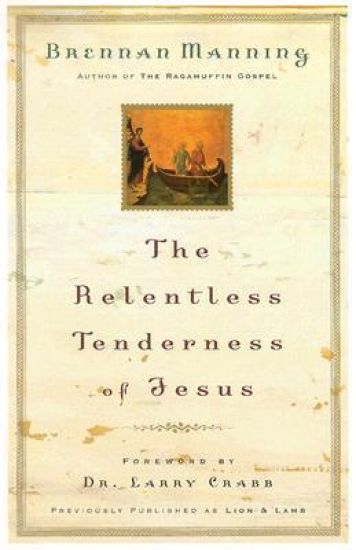
The Relentless Tenderness of Jesus

The Relentless Tenderness of Jesus

Brennan Manning

Revell, a division of Baker Publishing Group
2004
nidottu
Is God a wrathful judge? A gentle healer? A father? Brother? Friend?In The Relentless Tenderness of Jesus, Brennan Manning brings you to a deeper understanding of the true nature of God. Through poignant and unforgettable stories and challenging observations, Manning helps you stretch your mind and reject simplistic explanations of who God really is. With rich insights you'll see how God can at once be a roaring lion, pacing the globe and seeking you out; and simultaneously a tender lamb, there to comfort you in any time of need.A unique experience, this book will forever change the way you think about God.
Dear Abba

Dear Abba

Brennan Manning

William B Eerdmans Publishing Co
2014
nidottu
Completed shortly before Manning's recent death, this book lays out a month of honest prayers to God -- whom Manning affectionately calls "Abba" -- in a devotional format designed to guide and inspire the reader's own prayers. The morning and evening entries each present a Scripture passage, a select excerpt from Manning's contemporary spiritual classics, and a concluding "Dear Abba" prayer.
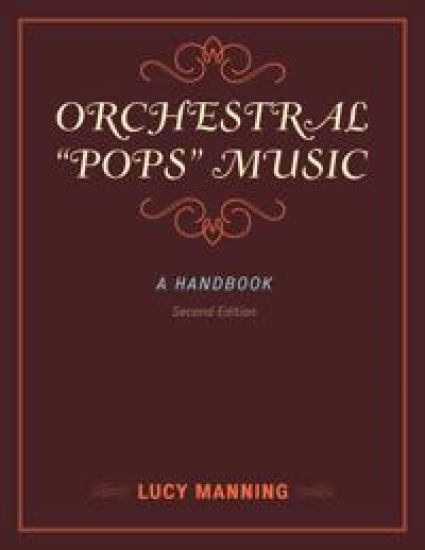
Orchestral "Pops" Music

Orchestral "Pops" Music

Lucy Manning

Scarecrow Press
2013
sidottu
In this second edition of Orchestral “Pops” Music: A Handbook, Lucy Manning brings forward to the present her remarkable compendium of information about this form of orchestral music. Since the appearance of the first edition in 2009, this work has proven critical to successful “pops” concert programming. With changes in publishers and agents, the discontinuation of the publication of certain original material or, worst of all, presses going out of business, music directors, orchestra conductors, and professional instrumentalists face formidable challenges in tracking down accurate information about this vast repertoire. This revised handbook alleviates the time-consuming task of researching these changes by offering a list of works for orchestral “pops” concerts that is comprehensive, informative, and current. Manning’s emphasis on clarity and accuracy gives users an indispensable tool for gathering vital information on the style, instrumentation, and availability of the repertoire listed, as well as notes on its performance. The user-friendly appendices include expanded instrumentation choices, easy-to-find durations, and handy title cross-references. In addition to corrections and updates, this new edition of Orchestral “Pops” Music includes at least 1,000 new title listings. Orchestral “Pops” Music: A Handbook is the ideal tool for working conductors and orchestral librarians, as well as music program directors at colleges, conservatories, and orchestras.
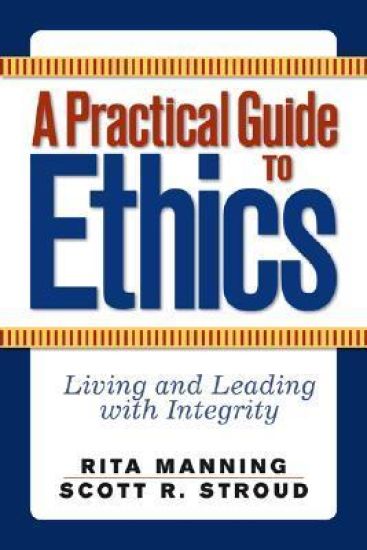
A Practical Guide to Ethics

A Practical Guide to Ethics

Rita Manning; Scott Stroud

Westview Press Inc
2007
pokkari
This essential new text is designed for courses in contemporary moral issues, applied ethics, and leadership. Emphasizing personal choice in the study of ethics, the authors take the reader on a journey of self-discovery rather than a mere academic survey of the field of ethics. A Practical Guide to Ethics: Living and Leading with Integrity helps students develop their skills in ethical decision-making and put those decisions into effective practice. Its unique focus on leadership, especially the moral dimensions of understanding one's own values, teaches students to understand and, through dialog and negotiation, communicate their own beliefs as a step to building coalitions with those who may hold different views. It is also distinctive in combining ethical theory with both multicultural ethics (Confucianism, Hinduism, Islam, feminism) and a practical orientation to moral decision-making and leadership.
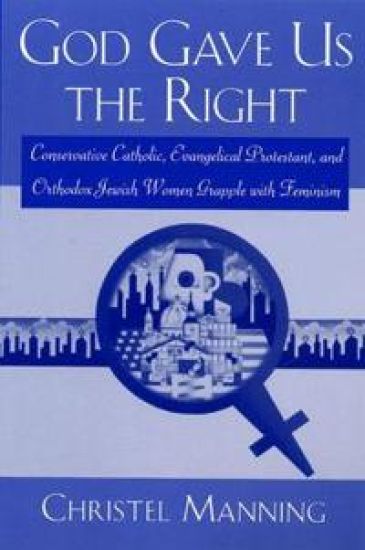
God Gave Us The Right

God Gave Us The Right

Christel Manning

Rutgers University Press
1999
nidottu
What does it mean to be a religious conservative, particularly for women, in America today? While it appears that people are returning to conservative religion because they are fed up with the excesses of liberalism, including feminism, a closer look at the lives of religious conservatives reveals a more complex reality. Drawing on two years of ethnographic research in Catholic, Jewish, and Protestant communities, Christel Manning explores the diversity among women who have returned to tradition. Arguing that America has undergone profound cultural and economic changes in the last thirty years, which create tension between women's lives and traditional gender roles, she demonstrates that conservative Catholics, Orthodox Jews, and Evangelical Protestants negotiate those tensions in different ways. Manning also shows that women in conservative religious communities share many of the same concerns as secular women.Manning looks at how the religious communities profiled have been influenced by feminist values and describes the ways in which these women negotiate gender roles at work, religious services, and at home. She explains how they deal with the inconsistencies created by their attempts to integrate feminist and traditionalist norms. In highly accessible prose, Manning examines their attitudes towards the feminist movement, its impact on American culture, and the extent to which the women seek to resist it. God Gave Us the Right explains how these different views of feminism reflect the diverse theologies and historical experiences of the three communities.
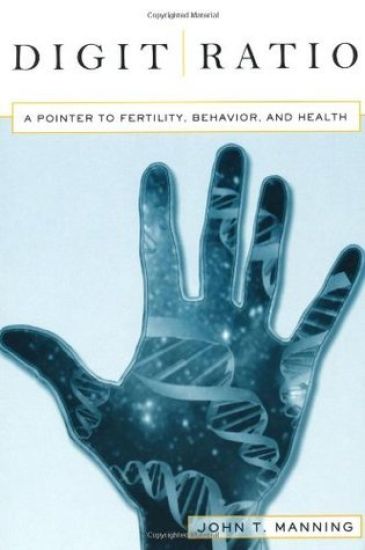
Digit Ratio

Digit Ratio

John Manning

Rutgers University Press
2002
nidottu
Could the length of your fingers indicate a predisposition to breast cancer? Or musical genius? Or homosexuality? In Digit Ratio, John T. Manning posits that relative lengths of the second and fourth digits in humans (2D:4D ratio) does provide such a window into hormone- and sex-related traits.It has been known for more than a century that men and women tend to differ in the relative lengths of their index (2D) and ring (4D) fingers, which upon casual observation seem fairly symmetrical. Men on average have fourth digits longer than their second digits, while women typically have the opposite. Digit ratios are unique in that they are fixed before birth, while other sexually dimorphic variables are fixed after puberty, and the same genes that control for finger length also control the development of the sex organs. The 2D:4D ratio is the only prenatal sexually dimorphic trait that measurably explains conditions linking testosterone, estrogen, and human development; the study of the ratio broadens our view of human ability, talent, behavior, disposition, health, and fertility. In this book, Manning presents evidence for how 2D:4D correlates with traits ranging from sperm counts, family size, musical genius, and sporting prowess, to autism, depression, homosexuality, heart attacks, and breast cancer, traits that are all linked with early exposure to sex hormones.
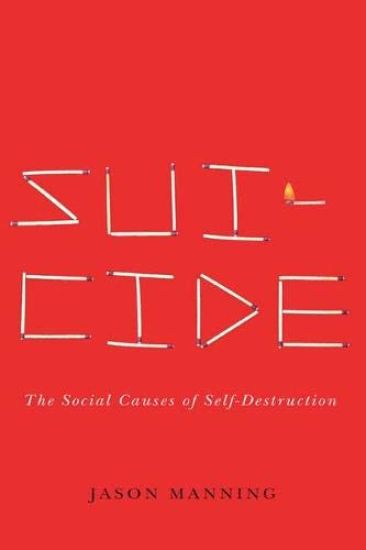
Suicide

Suicide

Jason Manning

University of Virginia Press
2020
sidottu
The conventional approach to suicide is psychiatric: ask the average person why people kill themselves, and they will likely cite depression. But this approach fails to recognize suicide’s social causes. People kill themselves because of breakups and divorces, because of lost jobs and ruined finances, because of public humiliations and the threat of arrest. While some psychological approaches address external stressors, this comprehensive study is the first to systematically examine suicide as a social behavior with social catalysts.Drawing on Donald Black’s theories of conflict management and pure sociology, Suicide presents a new theory of the social conditions that compel an aggrieved person to turn to self-destruction. Interpersonal conflict plays a central but underappreciated role in the incidence of suicide. Examining a wide range of cross-cultural cases, Jason Manning argues that suicide arises from increased inequality and decreasing intimacy, and that conflicts are more likely to become suicidal when they occur in a context of social inferiority. As suicide rates continue to rise around the world, this timely new theory can help clinicians, scholars, and members of the general public to explain and predict patterns of self-destructive behavior.
Suicide

Suicide

Jason Manning

University of Virginia Press
2020
pokkari
The conventional approach to suicide is psychiatric: ask the average person why people kill themselves, and they will likely cite depression. But this approach fails to recognize suicide’s social causes. People kill themselves because of breakups and divorces, because of lost jobs and ruined finances, because of public humiliations and the threat of arrest. While some psychological approaches address external stressors, this comprehensive study is the first to systematically examine suicide as a social behavior with social catalysts.Drawing on Donald Black’s theories of conflict management and pure sociology, Suicide presents a new theory of the social conditions that compel an aggrieved person to turn to self-destruction. Interpersonal conflict plays a central but underappreciated role in the incidence of suicide. Examining a wide range of cross-cultural cases, Jason Manning argues that suicide arises from increased inequality and decreasing intimacy, and that conflicts are more likely to become suicidal when they occur in a context of social inferiority. As suicide rates continue to rise around the world, this timely new theory can help clinicians, scholars, and members of the general public to explain and predict patterns of self-destructive behavior.
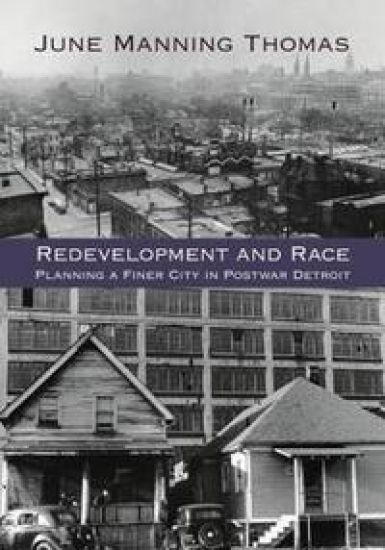
Redevelopment and Race

Redevelopment and Race

June Manning Thomas

Wayne State University Press
2013
nidottu
In the decades following World War II, professional city planners in Detroit made a concerted effort to halt the city's physical and economic decline. Their successes included an award-winning master plan, a number of laudable redevelopment projects, and exemplary planning leadership in the city and the nation. Yet despite their efforts, Detroit was rapidly transforming into a notorious symbol of urban decay. In Redevelopment and Race: Planning a Finer City in Postwar Detroit, June Manning Thomas takes a look at what went wrong, demonstrating how and why government programs were ineffective and even destructive to community needs. In confronting issues like housing shortages, blight in older areas, and changing economic conditions, Detroit's city planners worked during the urban renewal era without much consideration for low-income and African-American residents, and their efforts to stabilise racially-mixed neighbourhoods faltered as well. Steady declines in industrial prowess and the constant decentralisation of white residents counteracted planners' efforts to rebuild the city. Among the issues Thomas discusses in this volume are the harmful impacts of Detroit's highways, the mixed record of urban renewal projects like Lafayette Park, the effects of the 1967 riots on Detroit's ability to plan, the city-building strategies of Coleman Young (the city's first black mayor) and his mayoral successors, and the evolution of the Detroit's federally-designated Empowerment Zone. Examining the city she knew first as an undergraduate student at Michigan State University and later as a scholar and planner, Thomas ultimately argues for a different approach to traditional planning that places social justice, equity, and community ahead of purely physical and economic objectives. Redevelopment and Race was originally published in 1997 and was given the Paul Davidoff Award from the Association of Collegiate Schools of Planning in 1999. Students and teachers of urban planning will be grateful for this re-release. A new postscript offers insights into changes since 1997.
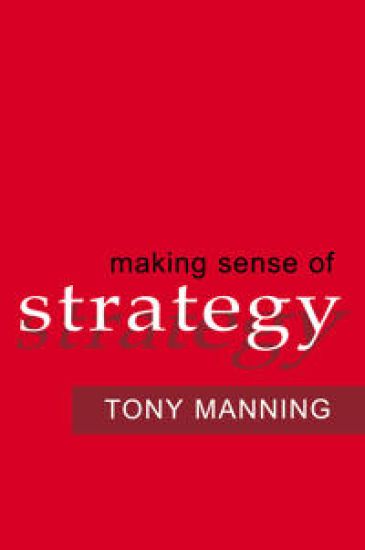
Making Sense of Strategy

Making Sense of Strategy

Tony MANNING

Amacom
2018
nidottu
"Business strategy is not rocket science. It’s about using pertinent information to make smart decisions, and doing it fast enough to keep your business ahead of the curve. And while many companies have embraced the 24/7 business paradigm, their strategies come from the 9-to-5 era. Plain and simple, most strategic planning efforts fail because they can’t keep up with the evolving demands of the market. Standing apart from the piles of discarded management wisdom, Making Sense of Strategy provides real, practical insights and advice for 21st-century businesses. Top strategy consultant Tony Manning cuts through layer after layer of ""guru"" babble to bring the reader only the most genuinely valuable information: the questions that need to be asked, the principles that every organization and its people must adopt, and the tools that every company needs in order to develop their core business strategies and create profit. Manning’s refreshingly streamlined approach to strategy encompasses: * The value of shared ideas * The importance of creating and sustaining unique communities for your products or services * The link between a company’s values and those of its customers and shareholders * And why strategic management is ultimately a conversation, one that empowers its participants with a sense of purpose and ownership. A real-world, no-nonsense guide, Making Sense of Strategy is the key to turning plans into action -- fast!"
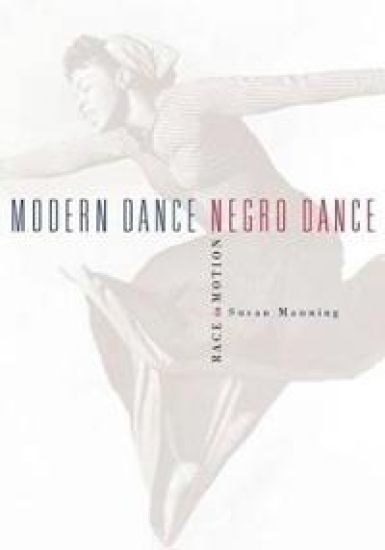
Modern Dance, Negro Dance

Modern Dance, Negro Dance

Susan Manning

University of Minnesota Press
2006
nidottu
At the New School for Social Research in 1931, the dance critic for the New York Times announced the arrival of modern dance, touting the "serious art" of such dancers as Mary Wigman, Martha Graham, and Doris Humphrey. Across town, Hemsley Winfield and Edna Guy were staging what they called "The First Negro Dance Recital in America," which Dance Magazine proclaimed "the beginnings of great and important choreographic creations." Yet never have the two parallel traditions converged in the annals of American dance in the twentieth century.Modern Dance, Negro Dance is the first book to bring together these two vibrant strains of American dance in the modern era. Susan Manning traces the paths of modern dance and Negro dance from their beginnings in the Depression to their ultimate transformations in the postwar years, from Helen Tamiris's and Ted Shawn's suites of Negro Spirituals to concerts sponsored by the Workers Dance League, from Graham's American Document to the debuts of Katherine Dunham and Pearl Primus, from José Limón's 1954 work The Traitor to Merce Cunningham's 1958 dances Summerspace and Antic Meet, to Ailey's 1960 masterpiece Revelations.Through photographs and reviews, documentary film and oral history, Manning intricately and inextricably links the two historically divided traditions. The result is a unique view of American dance history across the divisions of black and white, radical and liberal, gay and straight, performer and spectator, and into the multiple, interdependent meanings of bodies in motion. Susan Manning is associate professor of English, theater, and performance studies at Northwestern University. She is the author of Ecstasy and the Demon: Feminism and Nationalism in the Dances of Mary Wigman, winner of the 1994 de la Torre Bueno Prize for the year's most important contribution to dance studies.
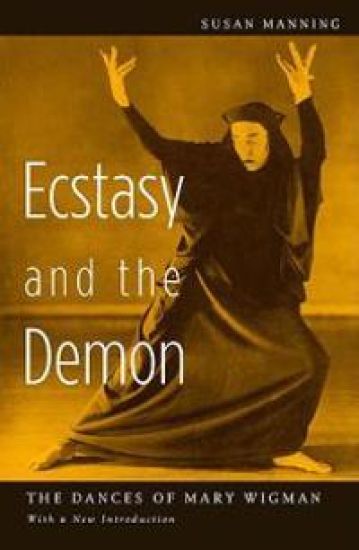
Ecstasy and the Demon

Ecstasy and the Demon

Susan Manning

University of Minnesota Press
2006
nidottu
Mary Wigman, Germany's premier dancer between the two world wars, envisioned the performer in the thrall of ecstatic and demonic forces. Widely hailed as an innovator of dance modernism, she never acknowledged her complex relationship with National Socialism. In Ecstasy and the Demon, Susan Manning advances a sociological explanation for the collaboration between German modern dancers and National Socialism. She models methods for dance studies that contextualize choreography in relation to changing sociopolitical conditions, bringing dance scholarship into conversation with intellectual trends across the humanities.The introduction to this second edition brings Manning's groundbreaking work to bear on dance studies today and reconsiders Wigman's career from the perspective of queer theory and globalization, further illuminating the interplay of dance and politics in the twentieth century.Susan Manning is professor of English, theater, and performance studies at Northwestern University.
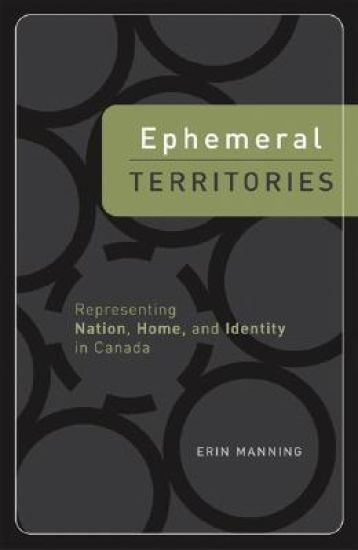
Ephemeral Territories

Ephemeral Territories

Erin Manning

University of Minnesota Press
2003
nidottu
Explores questions of identity and belonging through the lens of Canadian cultural productionWhat does it mean to be at home? In a critical engagement with notions of territory, identity, racial difference, separatism, multiculturalism, and homelessness, this book delves into the question of what it means to belong-in particular, what it means to be at home in Canada. Ephemeral Territories weaves together many narratives and representations of Canadian identity-from political philosophy and cultural theory to art and films such as Srinivas Krishna’s Lulu, Clement Virgo’s Rude, and Charles Biname’s Eldorado-to develop and complicate familiar views of identity and selfhood.Canadian identity has historically been linked to a dual notion of culture traceable to the French and English strains of Canada’s colonial past. Erin Manning subverts this binary through readings that shift our attention from nationalist constructions of identity and territory to a more radical and pluralizing understanding of the political. As she brings together issues specific to Canada (such as Quebec separatism and Canadian landscape painting) and concerns that are more transnational (such as globalization and immigration), Manning emphasizes the truly cross-cultural nature of the problems of racism, gender discrimination, and homelessness. Thus this impassioned reading of Canadian texts also makes an important contribution to philosophical, cultural, and political discourses across the globe.
Politics of Touch

Politics of Touch

Erin Manning

University of Minnesota Press
2006
nidottu
Political philosophy has long been bound by traditional thinking about the body and the senses. Through an engagement with the state-centered vocabulary of this discipline, Politics of Touch explores the ways in which sensing bodies continually run up against existing political structures. In this groundbreaking work, Erin Manning reconsiders how new politics can arise that challenge the national body politic.In Politics of Touch, Manning develops a new way to conceive the role of the senses, and of touch in particular. Exploring concepts of violence, gender, sexuality, security, democracy, and identity, she traces the ways in which touch informs and reforms the body. Specifically considering tango-a tactile, rhythmic, and improvisational dance- she foregrounds movement as the sensing body's intervention into the political. With a fresh vision and an original theoretical basis, Manning shows the ontogenetic potential of the body, and in doing so, redefines our understanding of the sense of touch in philosophical and political terms. Erin Manning is assistant professor of fine arts at Concordia University and the author of Ephemeral Territories (Minnesota, 2003).
Thought in the Act

Thought in the Act

Erin Manning; Brian Massumi

University of Minnesota Press
2014
nidottu
“Every practice is a mode of thought, already in the act. To dance: a thinking in movement. To paint: a thinking through color. To perceive in the everyday: a thinking of the world’s varied ways of affording itself.” -from Thought in the ActCombining philosophy and aesthetics, Thought in the Act is a unique exploration of creative practice as a form of thinking. Challenging the common opposition between the conceptual and the aesthetic, Erin Manning and Brian Massumi “think through” a wide range of creative practices in the process of their making, revealing how thinking and artfulness are intimately, creatively, and inseparably intertwined. They rediscover this intertwining at the heart of everyday perception and investigate its potential for new forms of activism at the crossroads of politics and art. Emerging from active collaborations, the book analyzes the experiential work of the architects and conceptual artists Arakawa and Gins, the improvisational choreographic techniques of William Forsythe, the recent painting practice of Bracha Ettinger, as well as autistic writers’ self-descriptions of their perceptual world and the experimental event making of the SenseLab collective. Drawing from the idiosyncratic vocabularies of each creative practice, and building on the vocabulary of process philosophy, the book reactivates rather than merely describes the artistic processes it examines. The result is a thinking-with and a writing-in-collaboration-with these processes and a demonstration of how philosophy co-composes with the act in the making. Thought in the Act enacts a collaborative mode of thinking in the act at the intersection of art, philosophy, and politics.
The Myth of Ephraim Tutt

The Myth of Ephraim Tutt

Molly Manning; John Train

The University of Alabama Press
2012
sidottu
The Myth of Ephraim Tutt explores the true and previously untold story behind one of the most elaborate literary hoaxes in American history. Arthur Train was a Harvard-educated and well-respected attorney. He was also a best-selling author. Train's greatest literary creation was the character Ephraim Tutt, a public-spirited attorney and champion of justice. Guided by compassion and a strong moral compass, Ephraim Tutt commanded a loyal following among general readers and lawyers alike - in fact, Tutt's fictitious cases were so well-known that attorneys, judges, and law faculty cited them in courtrooms and legal texts. People read Tutt's legal adventures for more than twenty years, all the while believing their beloved protagonist was merely a character and that Train's stories were works of fiction. But in 1943 a most unusual event occurred: Ephraim Tutt published his own autobiography. The possibility of Tutt's existence as an actual human being became asource of confusion, spurring heated debates. One outraged reader sued for fraud, and the legendary lawyer John W. Davis rallied to Train's defense. While the public questioned whether the autobiography was a hoax or genuine, many book reviewers and editors presented the book as a work of nonfiction. In The Myth of Ephraim Tutt Molly Guptill Manning explores the controversy and the impact of the Ephraim Tutt autobiography on American culture. She also considers Tutt's ruse in light of other noted incidents of literary hoaxes, such as those ensuing from the publication of works by Clifford Irving, James Frey, and David Rorvik, among others. As with other outstanding fictitious characters in the literary canon, Ephraim Tutt took on a life of his own. Out of affection for his favorite creation, Arthur Train spent the final years of his life crafting an autobiography that would ensure Tutt's lasting influence - and he was spectacularly successful in this endeavor. Tutt, as the many letters written to him attest, gave comfort to his readers as they faced the challenging years of the Great Depression and World War II and renewed their faith in humanity and justice. Although Tutt's autobiography bewildered some of his readers, the great majority were glad to have read the 'life' story of this cherished character.