Kirjojen hintavertailu. Mukana 12 004 126 kirjaa ja 12 kauppaa.

Kirjahaku

Etsi kirjoja tekijän nimen, kirjan nimen tai ISBN:n perusteella.

1000 tulosta hakusanalla Maral Atmaca

Moral Responsibility and Ontology
Ton van den Beld This book is one of the results of the international conference on Moral Responsibility and Ontology, which was held at Utrecht University in 1 June 1998. It contains a selection of the revised versions of the papers discussed at the conference. The theme is in need of some clarification. In the first place, 'responsi­ bility' is an ambiguous term. Although addition of the adjective 'moral' reduces the variety of its meanings (for example, moral responsibility cannot be confused with causal responsibility), different interpretations are still possible. Thus, the care of dependent children is a parental moral responsibility. That is, parents have the moral obligation to care for their children. It is their moral task, or role, to do so. If they fail to fulfil this obligation, they might be morally responsible for the result of this failure. Here, another meaning of 'moral responsibility' is involved: the children's misery might be imputed to their parents. They may be liable to blame. Moral responsibility in this sense is what the conference was and this book is about. It is about the conditions which must be met for a person to be justly held responsible for his or her moral faults and failures.
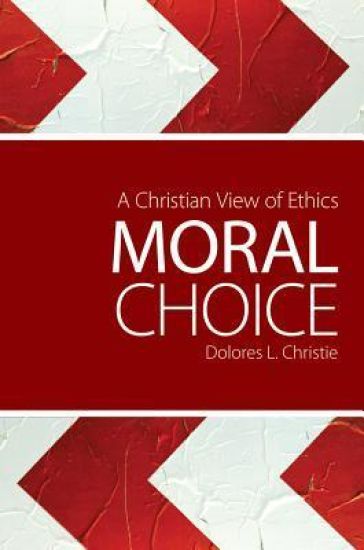
Moral Choice

Moral Choice

Augsburg Fortress
2012
pokkari
This survey text for Christian ethics through a Catholic lens traces the sources and traditions of contemporary ethical principles, rules, and norms. It uses narrative in reaching out to students who seek to understand themselves as they face ethical decisions. Stories are employed to reflect one's own life and its meaning, as well as to prompt moral decision-making.The book gives full treatment to criteria needed for ethical decision-making that students use in evaluating a series of contemporary issues, including abortion, end of life, torture, and others. The book includes numerous pedagogic features, including boxes, questions, key terms, suggested readings, and a glossary.
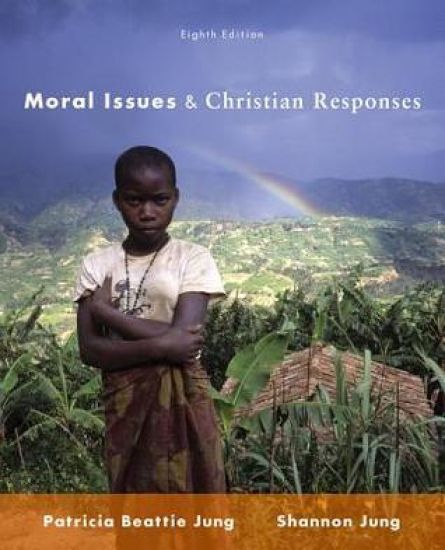
Moral Issues and Christian Responses

Moral Issues and Christian Responses

L. Shannon Jung

Augsburg Fortress
2012
pokkari
This popular anthology for the study of Christian ethics, now in its eighth edition, has been a mainstay of undergraduate courses for nearly thirty years. Shannon and Patricia Jung provide an introduction to contemporary moral issues from decidedly, yet diverse, Christian moral perspectives. The anthology intentionally seeks a range of voices to produce a kind of "point/counterpoint" discussion of an ethical issue. Issues include: the distinctiveness of Christian ethics, sexuality, reproductive rights, prejudice, immigration, the environment, economics, biomedical ethics, death and dying, terrorism, war, and globalization.
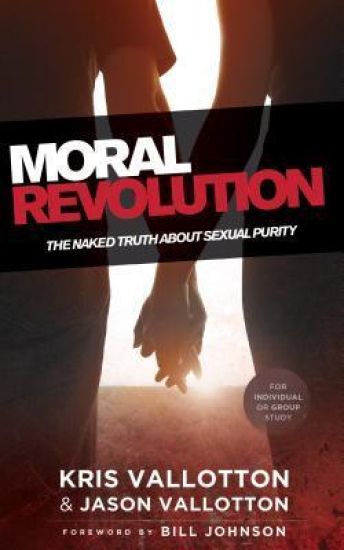
Moral Revolution – The Naked Truth About Sexual Purity

Moral Revolution – The Naked Truth About Sexual Purity

Kris Vallotton; Jason Vallotton; Bill Johnson

Chosen Books, a division of Baker Publishing Group
2012
nidottu
Sex. Purity. Virginity. Love. Moral Revolution seeks to inspire a culture of love, honor and respect with people who walk in purity, passion and power. This intimate and honest book addresses the root causes of purity issues rather than merely communicating to the masses to "abstain from having sex." It will call you to a higher standard of living, imparting value for your heart and encouraging you to walk in all God has created you to be. Many who have given in to the power of peer pressure and the lure of distorted cultural values will find hope and courage to start over again.Moral Revolution is written for radical and passionate people who dream of being catalysts to a different kind of sexual revolution--one that transforms the way the world views sexuality, defines the unborn and embraces the family. Join the Moral Revolution!
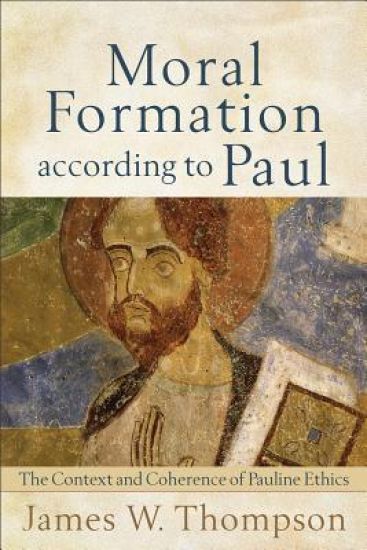
Moral Formation according to Paul – The Context and Coherence of Pauline Ethics

Moral Formation according to Paul – The Context and Coherence of Pauline Ethics

James W. Thompson

Baker Academic, Div of Baker Publishing Group
2011
nidottu
This fresh treatment of Paul's ethics addresses this question: how, according to Paul, can Christian communities know how God wants them to live? Leading biblical scholar James Thompson explains that Paul offers a coherent moral vision based not only on the story of Christ but also on the norms of the law. Paul did not live with a sharp dichotomy of law and gospel and recognized the continuing importance of the law. Thompson makes a distinctive contribution by locating the roots of Paul's concrete ethical thought in Hellenistic Judaism rather than Hellenistic moral philosophy. Students of New Testament ethics and Pauline theology will value this work.
Moral Wisdom and Good Lives

Moral Wisdom and Good Lives

Kekes John

CORNELL UNIVERSITY PRESS
1995
sidottu
In this profound and yet accessible book, John Kekes discusses moral wisdom: a virtue essential to living a morally good and personally satisfying life. He advances a broad, nontechnical argument that considers the adversities inherent in the human condition and assists in the achievement of good lives.The possession of moral wisdom, Kekes asserts, is a matter of degree: more of it makes lives better, less makes them worse. Exactly what is moral wisdom, however, and how should it be sought? Ancient Greek and medieval Christian philosophers were centrally concerned with it. By contrast, modern Western sensibility doubts the existence of a moral order in reality; and because we doubt it, and have developed no alternatives, we have grown dubious about the traditional idea of wisdom.Kekes returns to the classical Greek sources of Western philosophy to argue for the contemporary significance of moral wisdom. He develops a proposal that is eudaimonistic—secular, anthropocentric, pluralistic, individualistic, and agonistic. He understands moral wisdom as focusing on the human effort to create many different forms of good lives. Although the approach is Aristotelian, the author concentrates on formulating and defending a contemporary moral ideal. The importance of this ideal, he shows, lies in increasing our ability to cope with life's adversities by improving our judgment.In chapters on moral imagination, self-knowledge, and moral depth, Kekes calls attention to aspects of our inner life that have been neglected because of our cultural inattention to moral wisdom. He discusses these inner processes through the tragedies of Sophocles, which can inspire us with their enduring moral significance and help us to understand the importance of moral wisdom to living a good life.
Moral Problems in American Life

Moral Problems in American Life

CORNELL UNIVERSITY PRESS
1998
sidottu
American history is filled with moments of grave moral doubt and institutional crisis, with conflicts over fundamental values, with ethical dilemmas and paradoxes. This volume surveys the moral landscape of the American past from slavery to the Vietnam War. Bringing together fourteen of the most original historians practicing today, the book illuminates a critical dimension of American history, even as it shows how historical study contributes to present-day debates about values and the moral life.These essays examine a wide range of questions that have engaged past generations of Americans and persist into the present—questions about the composition of a moral community and the case for civil disobedience, about the appropriate responses to injustices and inequalities, and about the ethical implications of artistic expression, school curricula, sexual behaviors, and popular media. Focusing on the impact of moral problems on everyday experience, the authors consider these questions in light of reform movements and religious practices; changing social institutions such as marriage, public schools, labor unions, and penitentiaries; and enduring moral forces from the Bible to the U.S. Constitution. Together their essays give historical context to a wide variety of American practices and beliefs and, in doing so, provide a new framework for understanding cultural life.
Moral Aspects of Economic Growth, and Other Essays

Moral Aspects of Economic Growth, and Other Essays

Moore Barrington

CORNELL UNIVERSITY PRESS
1998
sidottu
Barrington Moore, Jr., one of the most distinguished thinkers in critical theory and historical sociology, was long concerned with the prospects for freedom and decency in industrial society. The product of decades of reflection on issues of authority, inequality, and injustice, this volume analyzes fluctuating moral beliefs and behavior in political and economic affairs at different points in history, from the early Middle Ages in England to the prospects for liberalism under twentieth-century Soviet socialism. The social sources of antisocial behavior; principles of social inequality; and the origins, enemies, and possibilities of rational discussion in public affairs—these are among the topics Moore considers as he seeks to uncover the historical causes of some accepted forms of morality and to assess their social consequences.The keynote essay examines how moral codes grew out of commercial practices in England from medieval times through the industrial revolution. Moore pays special attention to conceptions of honesty and the temptation to evade that inform the volume as a whole. In the other essays, he considers particular political issues, viewing "political" in its broadest sense as an unequal distribution of power and authority that carries a strong moral charge. Free of preaching and advocacy, his work offers a rare reasonable assessment of the morality of major social institutions over time.
Moral Victories

Moral Victories

Susan D. Burgerman

Cornell University Press
2001
sidottu
In the 1980s, security forces and paramilitary organizations killed, abducted, or tortured an estimated 80,000 Salvadoran citizens. During this period, the government of Guatemala was responsible for the death or disappearance of more than 100,000 civilians, many of them indigenous peasants. But such abuses were curtailed when peace talks, largely motivated by international human rights activism, led to interventions by United Nations observers who raised the degree of respect for human rights within each nation. These two cases are emblematic of many more in recent world events. Susan Burgerman here explains how international pressure can be effective in changing oppressive state behavior. Moral Victories includes a detailed comparative study of human rights abuses in El Salvador and Guatemala from 1980 to 1996, as well as a brief, focused examination of the situation in Cambodia from 1975 to 1992.Moral Victories lays out the mechanisms by which the United Nations and transnational human rights activists have intervened in civil wars and successfully linked international peace and security with the promotion of human rights. The meaning of state sovereignty, defense of which had previously limited governments to unenforceable statements of opprobrium against violator nations, has changed over the past two decades to allow for more aggressive action in support of international moral standards. As a result, human rights have gained increasing importance in the arena of world politics.While researching this book in Guatemala and El Salvador, Burgerman interviewed government officials, negotiators, analysts, and human rights workers, and accompanied UN observer teams in their travels through rainforests and mountainous terrain.
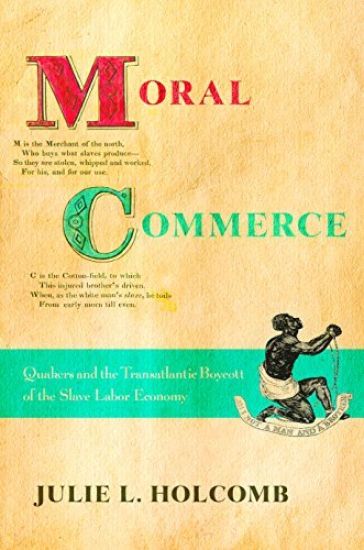
Moral Commerce

Moral Commerce

Julie L. Holcomb

Cornell University Press
2016
sidottu
How can the simple choice of a men's suit be a moral statement and a political act? When the suit is made of free-labor wool rather than slave-grown cotton. In Moral Commerce, Julie L. Holcomb traces the genealogy of the boycott of slave labor from its seventeenth-century Quaker origins through its late nineteenth-century decline. In their failures and in their successes, in their resilience and their persistence, antislavery consumers help us understand the possibilities and the limitations of moral commerce. Quaker antislavery rhetoric began with protests against the slave trade before expanding to include boycotts of the use and products of slave labor. For more than one hundred years, British and American abolitionists highlighted consumers' complicity in sustaining slavery. The boycott of slave labor was the first consumer movement to transcend the boundaries of nation, gender, and race in an effort by reformers to change the conditions of production. The movement attracted a broad cross-section of abolitionists: conservative and radical, Quaker and non-Quaker, male and female, white and black. The men and women who boycotted slave labor created diverse, biracial networks that worked to reorganize the transatlantic economy on an ethical basis. Even when they acted locally, supporters embraced a global vision, mobilizing the boycott as a powerful force that could transform the marketplace. For supporters of the boycott, the abolition of slavery was a step toward a broader goal of a just and humane economy. The boycott failed to overcome the power structures that kept slave labor in place; nonetheless, the movement's historic successes and failures have important implications for modern consumers.
Moral Wisdom and Good Lives

Moral Wisdom and Good Lives

John Kekes

Cornell University Press
1997
pokkari
In this profound and yet accessible book, John Kekes discusses moral wisdom: a virtue essential to living a morally good and personally satisfying life. He advances a broad, nontechnical argument that considers the adversities inherent in the human condition and assists in the achievement of good lives. The possession of moral wisdom, Kekes asserts, is a matter of degree: more of it makes lives better, less makes them worse. Exactly what is moral wisdom, however, and how should it be sought? Ancient Greek and medieval Christian philosophers were centrally concerned with it. By contrast, modern Western sensibility doubts the existence of a moral order in reality; and because we doubt it, and have developed no alternatives, we have grown dubious about the traditional idea of wisdom. Kekes returns to the classical Greek sources of Western philosophy to argue for the contemporary significance of moral wisdom. He develops a proposal that is eudaimonistic—secular, anthropocentric, pluralistic, individualistic, and agonistic. He understands moral wisdom as focusing on the human effort to create many different forms of good lives. Although the approach is Aristotelian, the author concentrates on formulating and defending a contemporary moral ideal. The importance of this ideal, he shows, lies in increasing our ability to cope with life's adversities by improving our judgment. In chapters on moral imagination, self-knowledge, and moral depth, Kekes calls attention to aspects of our inner life that have been neglected because of our cultural inattention to moral wisdom. He discusses these inner processes through the tragedies of Sophocles, which can inspire us with their enduring moral significance and help us to understand the importance of moral wisdom to living a good life.
Moral Problems in American Life

Moral Problems in American Life

Cornell University Press
1998
pokkari
American history is filled with moments of grave moral doubt and institutional crisis, with conflicts over fundamental values, with ethical dilemmas and paradoxes. This volume surveys the moral landscape of the American past from slavery to the Vietnam War. Bringing together fourteen of the most original historians practicing today, the book illuminates a critical dimension of American history, even as it shows how historical study contributes to present-day debates about values and the moral life.These essays examine a wide range of questions that have engaged past generations of Americans and persist into the present—questions about the composition of a moral community and the case for civil disobedience, about the appropriate responses to injustices and inequalities, and about the ethical implications of artistic expression, school curricula, sexual behaviors, and popular media. Focusing on the impact of moral problems on everyday experience, the authors consider these questions in light of reform movements and religious practices; changing social institutions such as marriage, public schools, labor unions, and penitentiaries; and enduring moral forces from the Bible to the U.S. Constitution. Together their essays give historical context to a wide variety of American practices and beliefs and, in doing so, provide a new framework for understanding cultural life.
Moral Selfhood in the Liberal Tradition

Moral Selfhood in the Liberal Tradition

Paul Fairfield

University of Toronto Press
2000
sidottu
Recent critiques of the foundations of liberalism from communitarian, socialist, postmodern, and other philosophical circles have served to remind liberals of several problematic assumptions at the heart of liberal doctrine from its inception to the present day. Such critiques necessitate a rethinking of the foundations of liberalism, and in particular those regarding the self and rationality that liberal politics presupposes. Beginning with a wide-ranging discussion of liberal philosophers - including Hobbes, Locke, Kant, Green, Mill, and Rawls - Paul Fairfield proposes that liberalism requires a complete reconception of moral selfhood, one that accommodates elements of the contemporary critiques without abandoning liberal individualism. The model that emerges is one of situated agency - of a historically and linguistically constituted being who is never without the capacity for individual and autonomous expression. Fairfield defends a narrative conception of moral selfhood in the tradition of phenomenological hermeneutics, one that affords a proper vantage point from which to support and interpret liberal principles.
Moral Problems

Moral Problems

Michael Palmer

University of Toronto Press
1995
pokkari
Moral Problems takes particular account of the needs of both teacher and student. It is not a compendium of ethical theories but a course book, providing the instructor, student, and general reader with a step-by-step introduction to the major ethical theories. For each topic Palmer has provided a lengthy introduction and critique, comprehension exercises, essay questions, and an extensive bibliography. He relates each ethical theory to a contemporary issue, with an introductory discussion followed by excerpts from the original sources.
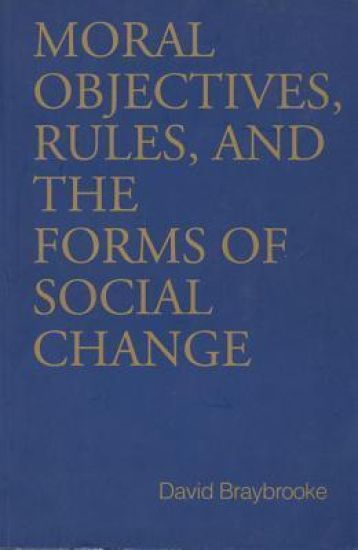
Moral Objectives, Rules, and the Forms of Social Change

Moral Objectives, Rules, and the Forms of Social Change

David Braybrooke

University of Toronto Press
1998
pokkari
Assorted fruit from forty years' writing, these essays by David Braybrooke discuss (in Part One of the book) a variety of concrete, practical topics that ethical concerns bring into politics: people's interests; their needs as well as their preferences; their work and their commitment to work; their participation in politics and in other group activities. Essays follow on the justice with which theme matters are arranged for and on the common good in which they are consolidated. Justice here inspires a 'departures' approach, which moves from agreement on departures from commutative justice to agreement on measures of distributive justice needed to forestall such departures. Another essay (first published here) radically undermines the odd but entrenched belief that utilitarianism classically licenced, even prescribed, systematically sacrificing the happiness of some people to give others greater pleasure. Part II and Part III of the book concentrate upon the subject of settled social rules, which are devices for securing the objectives treated in Part I. Part II shows that rules are ubiquitous in ethics, since there are no virtues without rules, just as there are no (justified) rules; without virtues. Part Two also shows that rules are as ubiquitous in social phenomena as the causal regularities sought by one school of social science. Part III captures the dialectic of history at least in part by a logical analysis of changes in rules following the onset of quandaries. It then considers how political choices can be both prudent, by keeping within duly considered incremental limits, and yet imaginative enough to escape the recent embarrassments generated by social choice theory. Characteristically versatile in topic and style, Braybrooke offers original light on all theme subjects. One reader has commented, '[His] prose is elegant and always a pleasure to read. Some of the pieces are nothing short of brilliant.' Which did the reader have in mind? Readers may differ (they already have) on just which pieces they would rank highest.
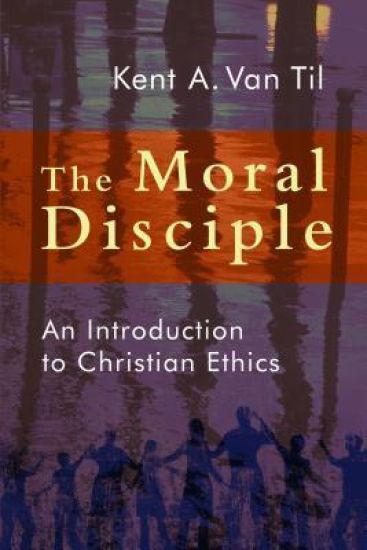
Moral Disciple

Moral Disciple

Kent Van Til

William B Eerdmans Publishing Co
2012
nidottu
The ability to judge good from bad, right from wrong, is a uniquely human characteristic. However, given the complexity of life, it is often difficult to discern which choice to make, where our responsibilities lie, or what the consequences of an action (or of a nonaction) will be. In The Moral Disciple Kent Van Til surveys the skills and dispositions that we need to address moral issues responsibly. This basic introduction to Christian ethics -- the systematic evaluation of morality -- highlights the centrality of Christ and the Christian faith in moral formation, and it offers an ethical framework to guide Christians as they engage a host of moral dilemmas, including those surrounding wealth, sexuality, and the end of life. Using easy-to-read prose and defining terms carefully, Van Til provides an accessible introduction to this crucial and practical subject.
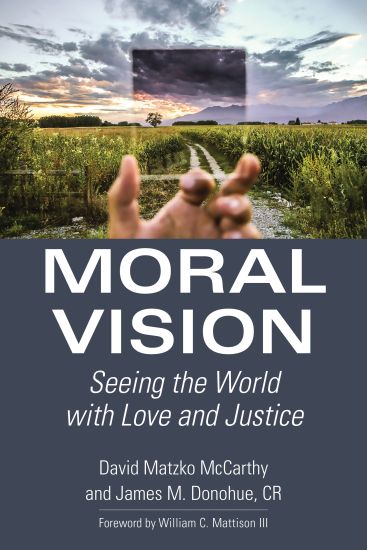
Moral Vision

Moral Vision

David Matzko McCarthy; James M. Donohue

William B Eerdmans Publishing Co
2018
nidottu
In this new textbook two Catholic ethicists with extensive teaching experience present a moral theology based on vision-the idea that how we see the world shapes our choices and actions.David Matzko McCarthy and James M. Donohue draw widely from the western philosophical tradition while integrating biblical and theological themes in order to explore such fundamental questions as What is good? The book's fourteen chapters are short and thematic. Substantive study questions engage with primary texts and get students to apply theory to everyday life and common human experiences. The book is accessibly written and flexible enough to fit into any undergraduate or seminary course on ethics.
Moral Culture

Moral Culture

Keith Tester

SAGE Publications Ltd
1997
sidottu
Increasingly in the West, horror is experienced only through television and cinema screens. Tester looks at the moral possibilities and implications of this, and also addresses the pressing concern of whether or not this is a time of moral decay. He uses a wide range of literature to explore these questions and develops his account around debates raised by Arendt, Simmel, Riesman and Bauman.
Moral Maturity

Moral Maturity

John C. Gibbs; Karen S. Basinger; Dick Fuller; Richard L. Fuller

Routledge Member of the Taylor and Francis Group
1991
sidottu
The traditional production measure of moral judgment has been the Moral Judgment Interview (MJI), which uses hypothetical moral dilemmas to elicit moral judgment. However, the MJI dilemmas have been criticized as artificial and may not be entirely appropriate for children, certain cultures, and practical moral situations. This unique volume utilizes and evaluates a new production measure of moral judgment, the Sociomoral Reflection Measure -- Short Form (SRM-SF), which substitutes brief stimulus materials and evaluative questions for the moral dilemma technique. The authors report that the SRM-SF exhibits an impressive degree of reliability and validity and is quicker to administer and score than other available measures. To illustrate these findings, this book offers the resources needed for the assessment of the Kohlbergian stage of moral judgment using the SRM-SF. These resources include: an up-to-date review of research and theory, a group-administrable questionnaire, an efficient scoring manual, and self-training exercises in assessment. Psychometrically sound and practical, the SRM-SF has the potential to become the leading moral judgment measure of the 90s.