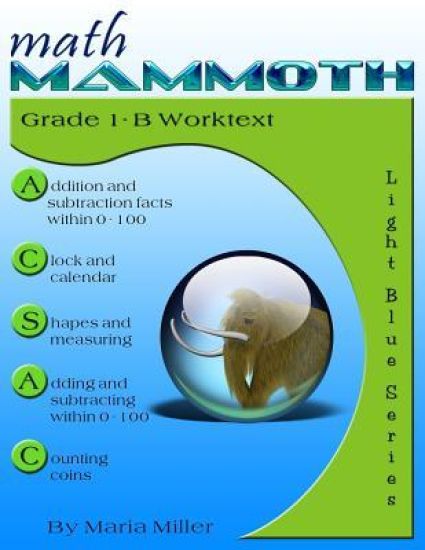
This book has gray-scale interior pages.Math Mammoth Grade 1-B is the student worktext for the second half of grade 1 mathematics studies, as part of the Math Mammoth Grade 1 curriculum. It covers addition and subtraction facts within 10, measuring, geometry, addition and subtraction with two-digit numbers, and counting coins.
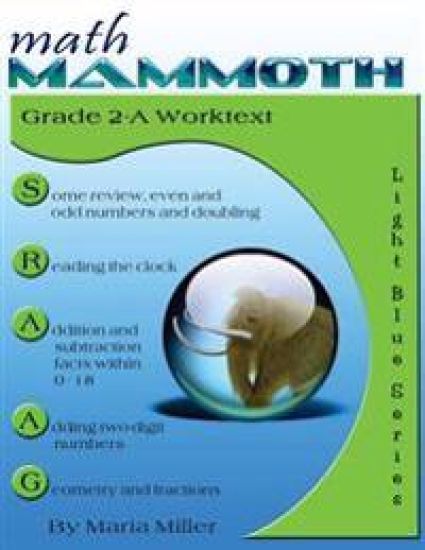
This book has gray-scale interior pages.Math Mammoth Grade 2-A is the student worktext for the first half of grade 2 mathematics studies, as part of the Math Mammoth Grade 2 curriculum. It covers addition and subtraction review, even and odd numbers, reading the clock, addition and subtraction facts within 18, adding two-digit numbers with regrouping, geometry, and fractions.
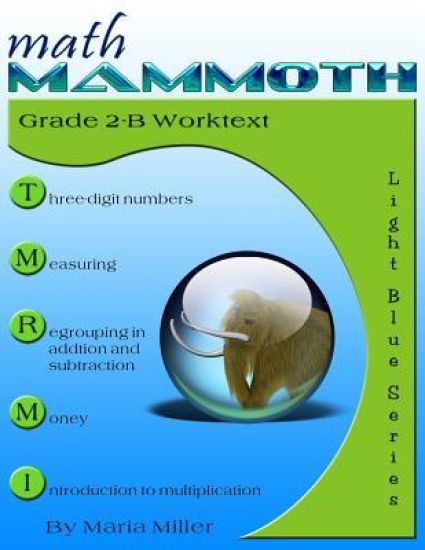
This book has gray-scale interior pages.Math Mammoth Grade 2-B is the student worktext for the second half of grade 2 mathematics studies, as part of the Math Mammoth Grade 2 curriculum. It covers three-digit numbers, measuring, regrouping in addition and subtraction, money, and an introduction to multiplication.
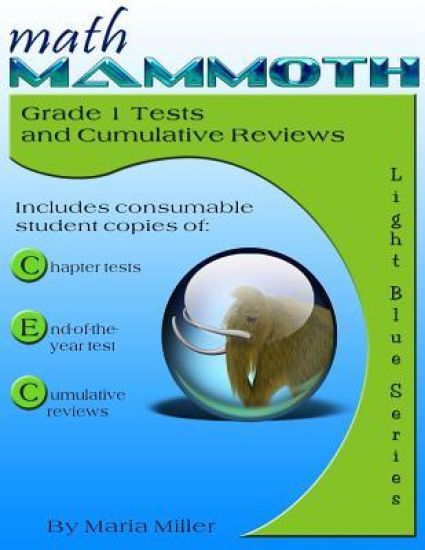
This book has gray-scale interior pages. It includes the chapter tests, end-of-the-year test, and cumulative reviews for Math Mammoth grade 1 complete curriculum. (This book does not include the answers.)
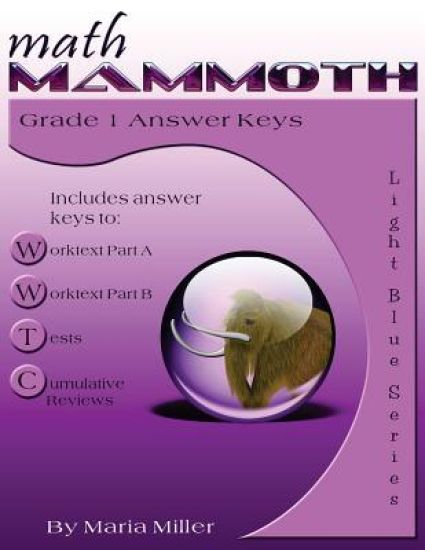
This book has gray-scale interior pages. It contains the answer keys to Math Mammoth Grade 1-A worktext, Grade 1-B worktext, and grade 1 tests and cumulative reviews.
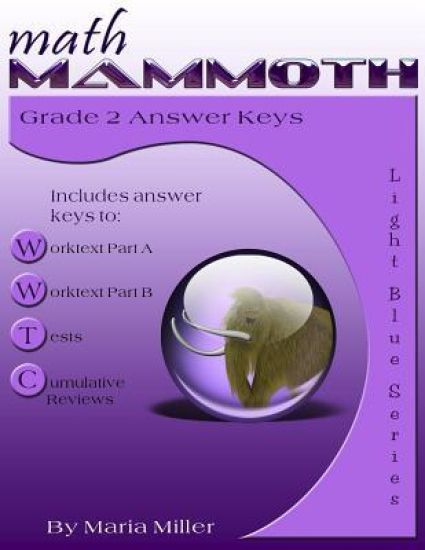
This book has gray-scale interior pages. It contains the answer keys to: *Math Mammoth Grade 2-A Worktext*Math Mammoth Grade 2-B Worktext*Tests*Cumulative reviews
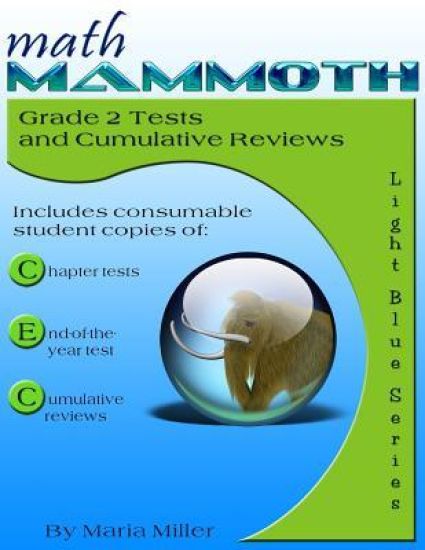
This book has gray-scale interior pages. It includes chapter tests, end-of-year test, and cumulative reviews for Math Mammoth grade 2 complete curriculum.
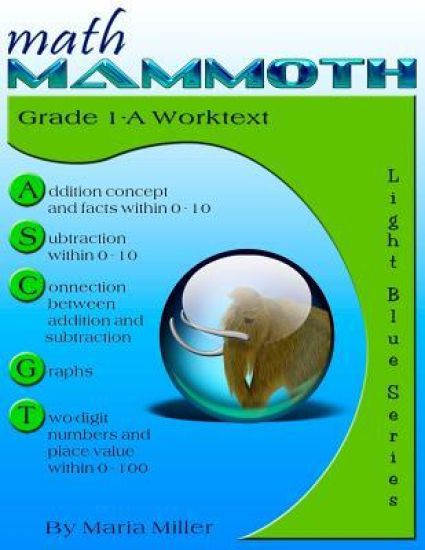
This book has gray-scale interior pages.Math Mammoth Grade 1-A is the student worktext for the first half of grade 1 mathematics studies, as part of the Math Mammoth Grade 1 curriculum. It covers addition within 0-10, subtraction within 0-10, and place value within 0-100.
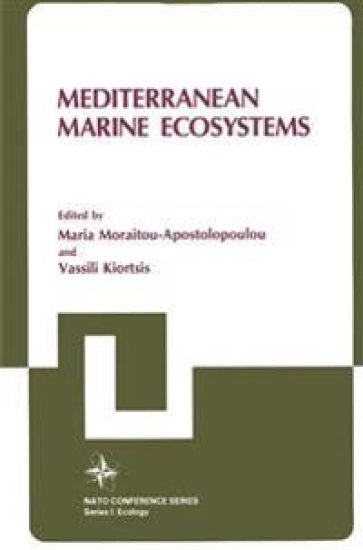
This book contains the papers presented at a NATO Advanced Research Institute on "Mediterranean Marine Ecosystems", held at Heraklion-Crete, Greece, from September 23-27, 1983. A workshop rather than a conference, it was sponsored by the Eco-Sciences Special Programme Panel, in cooperation with the Marine Science Panel. The third of its kind, it was scheduled in the framework of a project on a multidisciplinary integrated approach to the study of the Mediterranean. This Sea and the surrounding land was not only the cradle of many civilizations but is, up to the present time, one of the major world areas of marine traffic, communication and exchanges, fisheries and aquacultures, inshore human activities and ••• pollu tion. To a certain degree it constitutes a gigantic natural labo ratory, where the fate of threatened aquatic and terrestrial eco systems including the human one, is tested. The Mediterranean Sea, with its geological history and present day geographic, hydrological and climatic conditions is believed to form an ecological entity. Important exchanges and mutual influences take place with the surrounding land area and the water masses, naturally (Atlantic, Black Sea) or artificially (Red Sea), connected to the Mediterranean. Therefore, a better and in-depth knowledge of the various ecosystems, benthic, planktonic and nektonic, neritic or pelagic, in the Western or the Eastern Basin seems to be a pre requisite to any action in preserving, upgrading and managing the natural resources of the area.
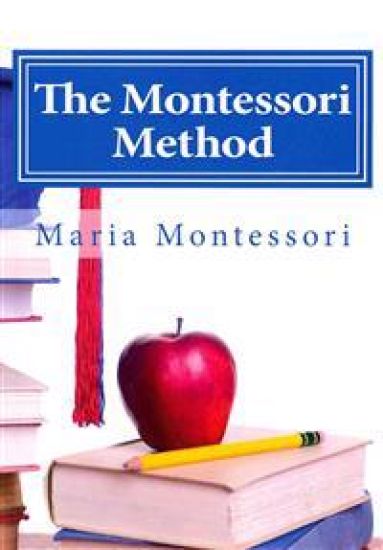
The Montessori Method is a book written by Maria Montessori, an Italian physician and educator, in 1912. The book is considered a classic in the field of education and offers a detailed description of the Montessori method, a child-centered educational approach that emphasizes independence, freedom within limits, and the development of the whole child. The book is divided into several sections, each of which explores a different aspect of the Montessori method. The first section provides an overview of the method and its underlying principles, including the importance of observation and the role of the teacher in guiding the child's development. The second section focuses on the materials used in Montessori classrooms, such as the iconic Montessori materials like the pink tower, the knobbed cylinders and the Montessori bead materials. Montessori describes how these materials are designed to promote sensory exploration and help children develop their cognitive and motor skills.The third section of the book discusses the practical application of the Montessori method in the classroom, including how to create a prepared environment that is conducive to learning and how to structure lessons and activities to meet the needs of individual children. The final section of the book explores the broader implications of the Montessori method for society as a whole, including its potential to foster peace and promote social justice. Overall, The Montessori Method is a comprehensive guide to the Montessori educational approach and a must-read for anyone interested in early childhood education, child development, or alternative educational methods.This Is A New Release Of The Original 1912 Edition.This scarce antiquarian book is a facsimile reprint of the old original and may contain some imperfections such as library marks and notations. Because we believe this work is culturally important, we have made it available as part of our commitment for protecting, preserving, and promoting the world's literature in affordable, high quality, modern editions, that are true to their original work.
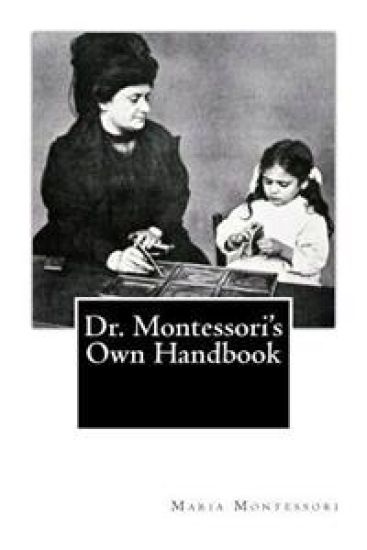
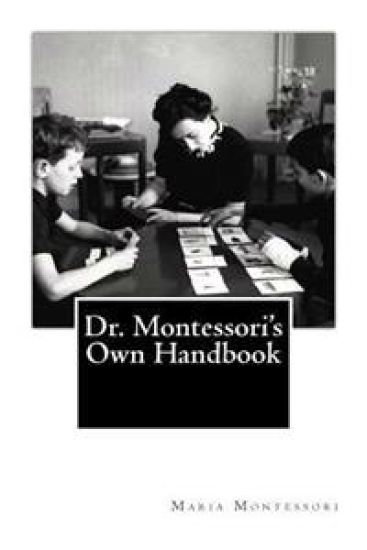
Dr. Montessori's Own Handbook is a classic educational book written by Maria Montessori in 1914. The book is a comprehensive guide to the Montessori method of education, which is a child-centered approach that emphasizes independence, freedom within limits, and respect for a child's natural psychological, physical, and social development. The book covers a wide range of topics, including the philosophy and principles of the Montessori method, the role of the teacher and the environment in facilitating learning, and the development of practical life skills, language, and mathematics. The book is based on Montessori's extensive experience working with children, and it provides practical advice and techniques for teachers and parents who want to implement the Montessori method in their own classrooms or homes. Dr. Montessori's Own Handbook is an important historical document that has influenced the field of education for over a century, and it continues to be a valuable resource for anyone interested in child development and education.This Is A New Release Of The Original 1914 Edition.This scarce antiquarian book is a facsimile reprint of the old original and may contain some imperfections such as library marks and notations. Because we believe this work is culturally important, we have made it available as part of our commitment for protecting, preserving, and promoting the world's literature in affordable, high quality, modern editions, that are true to their original work.