Kirjojen hintavertailu. Mukana 11 699 587 kirjaa ja 12 kauppaa.

Kirjahaku

Etsi kirjoja tekijän nimen, kirjan nimen tai ISBN:n perusteella.

1000 tulosta hakusanalla Maya Eisel

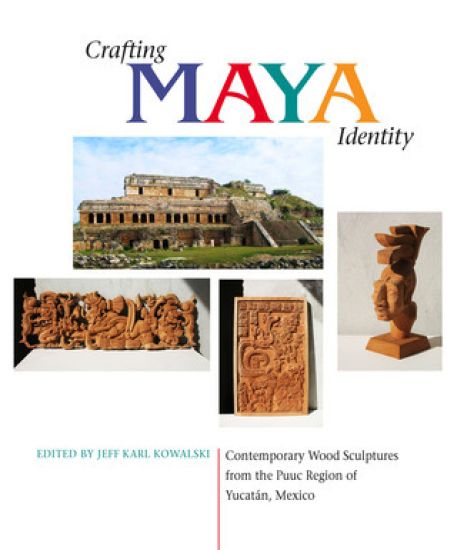
Crafting Maya Identity

Crafting Maya Identity

Northern Illinois University Press
2009
pokkari
Published for the exhibition at the Jack Olson Gallery, School of Art, Northern Illinois University, curated by Jeff Karl Kowalski and Mary Katherine Scott Based on ancient Maya imagery and sold to visitors to archaeological sites, the technically refined, finely detailed, and visually complex carvings created by the artisans of the Puuc region are often described as handicraft or "tourist art." These works, however, provide important information on how a relatively recent artistic tradition has emerged in and responded to particular historical and economic contexts. The influx of "cultural tourists" to archaeological sites in the Puuc region has provided the impetus for a group of entrepreneurial local artisans to combine opportunities for economic gain with creative expression. The carvings also communicate significant messages about the ambivalent nature of Maya cultural identity. Although tourism tends to reinforce ideas that the most authentic image of Maya culture resides in the Pre-Columbian past, the monetary incentive it provides has supported these artisans' efforts to reclaim and re-task such cultural imagery. Accompanying essays by art historians and anthropologists—Kowalski, Janet Catherine Berlo, Christopher B. Steiner, Quetzil Castañeda, and Mary Katherine Scott—provide individualized studies of Native American, African, and Mesoamerican aesthetic artifacts. The authors examine issues that lie at the intersection of art, visual culture, cultural identities, authenticity, and globalization. A key focus includes how identity is constructed, represented, and understood both by the artisans and tourist visitors in the context of cross-cultural contact, mass media, and touristic promotion. The volume considers the broader role of artists and the visual arts in society and the study of such art forms in the context of changing conceptions of art and aesthetics. Crafting Maya Identity presents the first comprehensive examination of the distinctive artworks produced by these Yucatec Maya carvers. The book will appeal to anthropologists, art historians, and scholars of Maya studies and cross-cultural aesthetics, as well as artists and collectors. Included is an abridged Spanish version of the introductory text and a foreword by Alfredo Barrera Rubio, former Director of the Regional Center of Yucatán of the Mexican National Institute of Anthropology and History.
Ancient Maya Gender Identity and Relations
The first book to examine how the ancient Maya defined gender. Contributors explain what it meant to be male and female. They show how gender was experienced and what the bases were for gender designations. They demonstrate how gender relations affected other areas of Mayan life, such as the arts, cosmology, economics, politics, religion, and social structure. And they analyze the changes in Mayan gender relations and identities that were fostered by evolving historical systems.There was no single Mayan polity nor was there a unitary cultural approach. Certain similarities in culture account for the observation of a general commonality among the ancient Maya, but there clearly were significant differences between Mayan sites, within the same site over time, and even between social sectors at the same site in any given time—this is no less true for ancient Maya gender identity and relations. Thus, the authors seek to explain why emphasis upon bilateral inheritance of power and prerogative was emphasized in artwork at some periods and some sites and not at others. Avoiding the vain attempt to provide a single explanation, they seek to offer a clearer sense of the richness of their topic.
Understanding Maya Inscriptions – A Hieroglyph Handbook

Understanding Maya Inscriptions – A Hieroglyph Handbook

John F. Harris; Stephen K. Stearns

University of Pennsylvania Press
1997
nidottu
This second edition includes revised and updated versions of three earlier publications: Understanding Maya Inscriptions: A Hieroglyph Handbook; New and Recent Maya Hieroglyph Readings; and A Resource Bibliography for the Decipherment of Maya Hieroglyphs and New Maya Hieroglyph Readings. This volume is designed to function as a self-teaching tool to help the neophyte, and yet be of value to scholars. It introduces the latest methods of analysis, illustrates techniques for computing Maya calendrics, uses the currently accepted orthography, provides syllabary and syntax, suggests new glyph readings, and presents various interpretations.
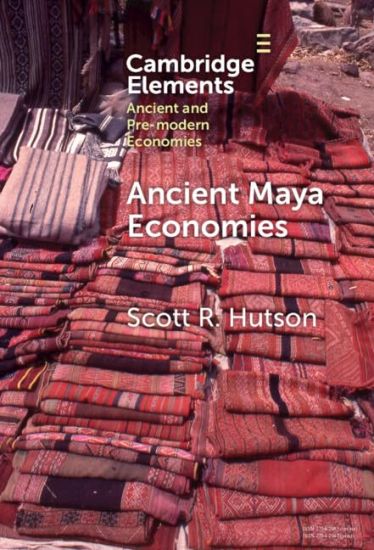
Ancient Maya Economies

Ancient Maya Economies

Scott R. Hutson

Cambridge University Press
2024
pokkari
Ancient Maya Economies synthesizes the state of the art across seven components: geographical and historical background, ritual economy, households, specialization, exchange, political economies, and future directions. Other Elements case studies use many of the same components, making it easy to compare and contrast ancient Maya economies with systems of production and consumption in other parts of the world. The time is right for this Elements case because knowledge of ancient Maya economies has undergone a revolution in the last few decades, resulting in a complex panorama of new economic information. Aerial laser scanning has revealed higher amounts of intensive agriculture and research on the ground has turned up better evidence for marketplaces. Maya economies feature specialized production, trade of both bulk goods and luxury goods, close integration with ritual and religion, and a carnival parade of political economies.
Ancient Maya Economies

Ancient Maya Economies

Scott R. Hutson

Cambridge University Press
2024
sidottu
Ancient Maya Economies synthesizes the state of the art across seven components: geographical and historical background, ritual economy, households, specialization, exchange, political economies, and future directions. Other Elements case studies use many of the same components, making it easy to compare and contrast ancient Maya economies with systems of production and consumption in other parts of the world. The time is right for this Elements case because knowledge of ancient Maya economies has undergone a revolution in the last few decades, resulting in a complex panorama of new economic information. Aerial laser scanning has revealed higher amounts of intensive agriculture and research on the ground has turned up better evidence for marketplaces. Maya economies feature specialized production, trade of both bulk goods and luxury goods, close integration with ritual and religion, and a carnival parade of political economies.
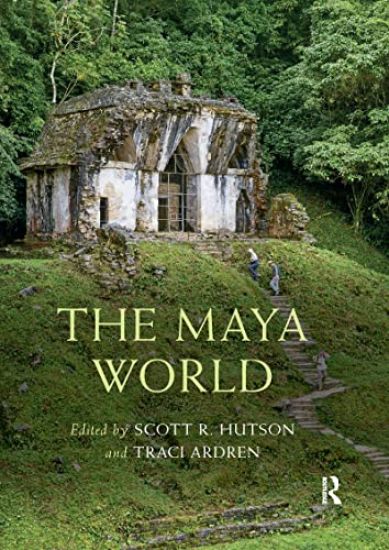
The Maya World

The Maya World

TAYLOR FRANCIS LTD
2022
nidottu
The Maya World brings together over 60 authors, representing the fields of archaeology, art history, epigraphy, geography, and ethnography, who explore cutting-edge research on every major facet of the ancient Maya and all sub-regions within the Maya world.The Maya world, which covers Guatemala, Belize, and parts of Mexico, Honduras, and El Salvador, contains over a hundred ancient sites that are open to tourism, eight of which are UNESCO World Heritage Sites, and many thousands more that have been dug or await investigation. In addition to captivating the lay public, the ancient Maya have attracted scores of major interdisciplinary research expeditions and hundreds of smaller projects going back to the 19th century, making them one of the best-known ancient cultures. The Maya World explores their renowned writing system, towering stone pyramids, exquisitely painted murals, and elaborate funerary tombs as well as their creative agricultural strategies, complex social, economic, and political relationships, widespread interactions with other societies, and remarkable cultural resilience in the face of historical ruptures. This is an invaluable reference volume for scholars of the ancient Maya, including archaeologists, historians, and anthropologists.
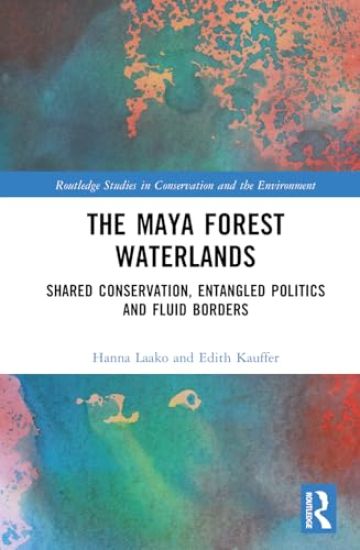
The Maya Forest Waterlands

The Maya Forest Waterlands

Hanna Laako; Edith Kauffer

TAYLOR FRANCIS LTD
2025
sidottu
This book examines the entanglements and blurred edges of nature conservation and geopolitical relations in the borderlands of the trinational Maya Forest.Maya Forest is an umbrella term for transboundary conservation developed by scientists and conservationists in the 1990s to protect the threatened rainforest in the borderlands of Mexico, Belize, and Guatemala. Currently, the Maya Forest is a biodiversity hotspot composed of a network of protected areas and heritage sites. However, issues related to water, land, and forests have often been treated as separate political units, and not as part of the same history. Written by two authors with decades of hands-on experience in this region, this book sheds light on the complex dynamics by which conservation and natural resource management geopolitically shape borderlands such as the Maya Forest. The book introduces the novel concept of forest waterlands as borderlands and fluid edges, which are now subject to concern by conservationists. These are entangled spaces in which conservation, peoples, and politics interact, connect, and disconnect with the nexus of waters, forests, and lands. The book sheds light on the building and mapping of the Maya Forest ecoregion, with particular attention to water as an often neglected, but unifying element. It showcases how the Maya Forest is a distinct region characterized by transformations entangled with the Maya, trails of biological stations, the shared history of chicleros (chewing-gum hunters), fluid international rivers and transboundary basins, and various geopolitical discrepancies. It offers a contemporary glimpse into the Maya Forest’s intertwined bio- and geopolitics, which urge us to rethink borders and boundaries.This book will be of great interest to students and scholars of nature conservation, global environmental politics, geopolitics, borderlands, international relations, and natural resource management.
Ancestral Maya Economies in Archaeological Perspective

Ancestral Maya Economies in Archaeological Perspective

Patricia A. McAnany

Cambridge University Press
2014
pokkari
The decipherment of Maya hieroglyphs has enabled scholars to better understand Classic society, but many aspects of this civilization remain shrouded in mystery, particularly its economies and social structures. How did farmers, artisans, and rulers make a living in a tropical forest environment? In this study, Patricia McAnany tackles this question and presents the first comprehensive view of ancestral Maya economic practice. Bringing an archaeological approach to the topic, she demonstrates the vital role of ritual practice in indigenous ecologies, gendered labour, and the construction of colossal architecture. Examining Maya royalty as a kind of social speciation, McAnany also shows the fundamentality of social difference as well as the pervasiveness of artisan production and marketplaces in ancestral Maya societies. Written in an engaging and accessible style, this book situates Maya economies within contemporary social, political, and economic theories of social practice, gender, actor-networks, inalienable goods, materiality, social difference, indigenous ecologies, and strategies of state finance.