

Kirjahaku
Etsi kirjoja tekijän nimen, kirjan nimen tai ISBN:n perusteella.
1000 tulosta hakusanalla Naemi Fast
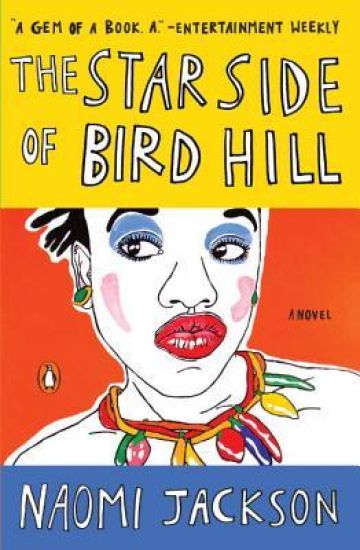
Two sisters are suddenly sent from their home in Brooklyn to Barbados to live with their grandmother, in Naomi Jackson s stunning debut novel This lyrical novel of community, betrayal, and love centers on an unforgettable matriarchal family in Barbados. Two sisters, ages ten and sixteen, are exiled from Brooklyn to Bird Hill in Barbados after their mother can no longer care for them. The young Phaedra and her older sister, Dionne, live for the summer of 1989 with their grandmother Hyacinth, a midwife and practitioner of the local spiritual practice of obeah. Dionne spends the summer in search of love, testing her grandmother s limits, and wanting to go home. Phaedra explores Bird Hill, where her family has lived for generations, accompanies her grandmother in her role as a midwife, and investigates their mother s mysterious life. This tautly paced coming-of-age story builds to a crisis when the father they barely know comes to Bird Hill to reclaim his daughters, and both Phaedra and Dionne must choose between the Brooklyn they once knew and loved or the Barbados of their family. Naomi Jackson s Barbados and her characters are singular, especially the wise Hyacinth and the heartbreaking young Phaedra, who is coming into her own as a young woman amid the tumult of her family. Praise for The Star Side of Bird Hill Once in a while, you ll stumble onto a book like this, one so poetic in its descriptions and so alive with lovable, frustrating, painfully real characters, that your emotional response to it becomes almost physical. . . . The dual coming-of-age story alone could melt the sternest of hearts, but Jackson s exquisite prose is a marvel too. . . . A gem of a book. Entertainment Weekly(A)"
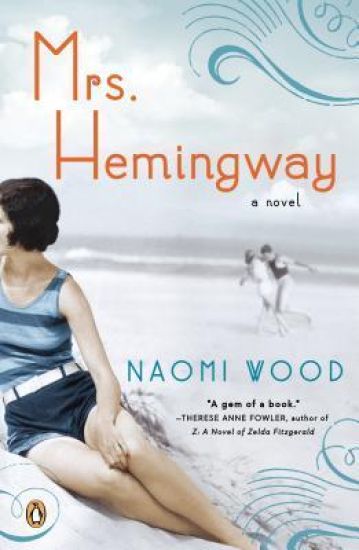
The Paris Wife was only the beginning of the story . . . A New York Times Book Review Editor's ChoiceA Richard & Judy UK Pick Paula McLain's New York Times-bestselling novel piqued readers' interest about Ernest Hemingway's romantic life. But Hadley was only one of four women married, in turn, to the legendary writer. Just as T.C. Boyle's bestseller The Women completed the picture begun by Nancy Horan's Loving Frank, Naomi Wood's Mrs. Hemingway tells the story of how it was to love, and be loved by, the most famous and dashing writer of his generation. Hadley, Pauline, Martha and Mary: each Mrs. Hemingway thought their love would last forever; each one was wrong. Told in four parts and based on real love letters and telegrams, Mrs. Hemingway reveals the explosive love triangles that wrecked each of Hemingway's marriages. Spanning 1920s bohemian Paris through 1960s Cold War America, populated with members of the fabled "Lost Generation," Mrs. Heminway is a riveting tale of passion, love, and heartbreak.
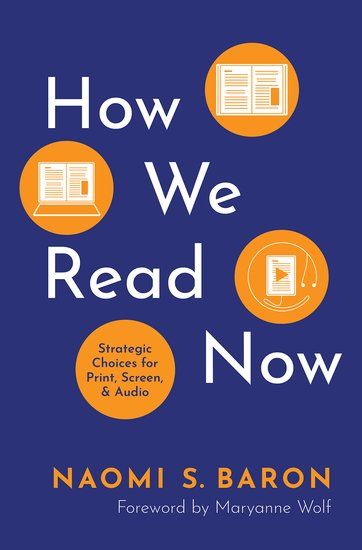
An engaging and authoritative guide to the impact of reading medium on learning, from a foremost expert in the field We face constant choices about how we read. Educators must select classroom materials. College students weigh their textbook options. Parents make decisions for their children. The digital revolution has transformed reading, and with the recent turn to remote learning, onscreen reading may seem like the only viable option. Yet selecting digital is often based on cost or convenience, not on educational evidence. Now more than ever it is imperative to understand how reading medium actually impacts learning--and what strategies we need in order to read effectively in all formats. In How We Read Now, Naomi Baron draws on a wealth of knowledge and research to explain important differences in the way we concentrate, understand, and remember across multiple formats. Mobilizing work from international scholarship along with findings from her own studies of reading practices, Baron addresses key challenges--from student complaints that print is boring to the hazards of digital reading for critical thinking. Rather than arguing for one format over another, she explains how we read and learn in different settings, shedding new light on the current state of reading. The book then crucially connects research insights to concrete applications, offering practical approaches for maximizing learning with print, digital text, audio, and video. Since screens and audio are now entrenched--and invaluable-platforms for reading, we need to rethink ways of helping readers at all stages use them more wisely. How We Read Now shows us how to do that.
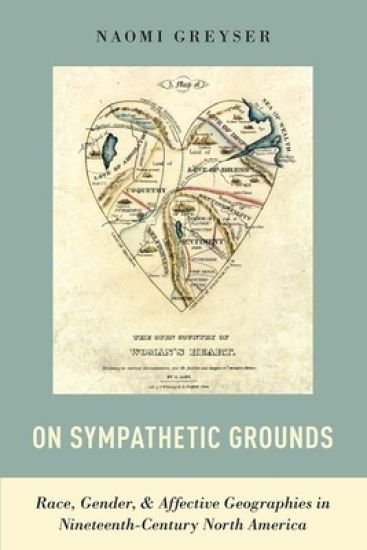
With its filigreed, formidable representations of tears and suffering, sentimentalism has remained a divisive genre and category of analysis. On Sympathetic Grounds offers a new interpretation of the sentimental by mapping its grounds in North America. During sweeping transformations of territory, land stewardship, personhood, and citizenship in the nineteenth century, sentimentalists evoked sympathy to express a desire for a place that was both territorial and emotional--what Naomi Greyser calls an "affective geography." Greyser traces the intricacies attending Americans' sentimental sense that bodies could merge and mutually occupy the same space at the same time. Affective geographies complicate normative, linear assumptions about intimacy and distance, and consequently compel a reconsideration of geopolitics, geophysics and the distribution of resources and care. Mapping feelings in and also about space, On Sympathetic Grounds focuses on the experiences and perspectives of those whose bodies, labor and sovereignty have been occupied to ground others' lives and world-making projects. Bringing literary and rhetorical studies together with critical race and gender theory, cultural geography, American studies, affect studies and the new materialism, this book lays out sentimentalism's usefulness to settler colonialism and the maintenance of racialized labor. The book also carefully charts sentimentalism's value as a means of resisting geographic displacement and both physical and metaphysical dispossession. Philosophers and rhetoricians regard grounds as necessary conditions for argumentation; Greyser treats grounds as also geopolitical, geoaffective, and geophysical. Sympathy has enriched conditions for living at the same time that it has mercilessly enlisted some bodies and lives as the grounds for others' wellbeing. Ultimately, On Sympathetic Grounds uncovers a moving, non-linear cartography of sympathy's vital place in shaping North America.
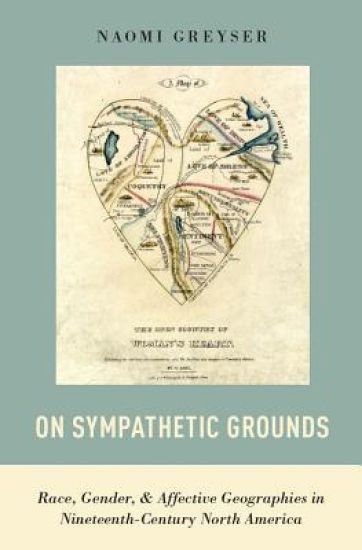
With its filigreed, formidable representations of tears and suffering, sentimentalism has remained a divisive genre and category of analysis. On Sympathetic Grounds offers a new interpretation of the sentimental by mapping its grounds in North America. During sweeping transformations of territory, land stewardship, personhood, and citizenship in the nineteenth century, sentimentalists evoked sympathy to express a desire for a place that was both territorial and emotional--what Naomi Greyser calls an "affective geography." Greyser traces the intricacies attending Americans sentimental sense that bodies could merge and mutually occupy the same space at the same time. Affective geographies complicate normative, linear assumptions about intimacy and distance, and consequently compel a reconsideration of geopolitics, geophysics and the distribution of resources and care. Mapping feelings in and also about space, On Sympathetic Grounds focuses on the experiences and perspectives of those whose bodies, labor, space and sovereignty have been occupied to ground others' lives and world-making projects. Bringing literary and rhetorical studies together with critical race and gender theory, cultural geography, American studies, affect studies and the new materialism, this book lays out sentimentalism's usefulness to settler colonialism and the maintenance of racialized labour. The book also carefully charts sentimentalisms value as a means of resisting geographic displacement and both physical and metaphysical dispossession. Philosophers and rhetoricians regard grounds as necessary conditions for argumentation; Greyser treats grounds as geopolitical, geoaffective, and geophysical. Sympathy has enriched conditions for living at the same time that it has mercilessly enlisted some bodies and lives as the grounds for others' wellbeing. Ultimately, On Sympathetic Grounds uncovers a capacious, non-linear cartography of sympathy's vital place in shaping North America.
People have been reading on computer screens for several decades now, predating popularization of personal computers and widespread use of the internet. But it was the rise of eReaders and tablets that caused digital reading to explode. In 2007, Amazon introduced its first Kindle. Three years later, Apple debuted the iPad. Meanwhile, as mobile phone technology improved and smartphones proliferated, the phone became another vital reading platform. In Words Onscreen, Naomi Baron, an expert on language and technology, explores how technology is reshaping our understanding of what it means to read. Digital reading is increasingly popular. Reading onscreen has many virtues, including convenience, potential cost-savings, and the opportunity to bring free access to books and other written materials to people around the world. Yet, Baron argues, the virtues of eReading are matched with drawbacks. Users are easily distracted by other temptations on their devices, multitasking is rampant, and screens coax us to skim rather than read in-depth. What is more, if the way we read is changing, so is the way we write. In response to changing reading habits, many authors and publishers are producing shorter works and ones that don't require reflection or close reading. In her tour through the new world of eReading, Baron weights the value of reading physical print versus online text, including the question of what long-standing benefits of reading might be lost if we go overwhelmingly digital. She also probes how the internet is shifting reading from being a solitary experience to a social one, and the reasons why eReading has taken off in some countries, especially the United States and United Kingdom, but not others, like France and Japan. Reaching past the hype on both sides of the discussion, Baron draws upon her own cross-cultural studies to offer a clear-eyed and balanced analysis of the ways technology is affecting the ways we read today--and what the future might bring.
Music and Belonging Between Revolution and Restoration
Naomi Waltham-Smith
Oxford University Press Inc
2017
sidottu
In what ways is music implicated in the politics of belonging? How is the proper at stake in listening? What role does the ear play in forming a sense of community? Music and Belonging argues that music, at the level of style and form, produces certain modes of listening that in turn reveal the conditions of belonging. Specifically, listening shows the intimacy between two senses of belonging: belonging to a community is predicated on the possession of a particular property or capacity. Somewhat counter-intuitively, Waltham-Smith suggests that this relation between belonging-as-membership and belonging-as-ownership manifests itself with particular clarity and rigor at the very heart of the Austro-German canon, in the instrumental music of Haydn, Mozart, and Beethoven. Music and Belonging provocatively brings recent European philosophy into contact with the renewed music-theoretical interest in Formenlehre, presenting close analyses to show how we might return to this much-discussed repertoire to mine it for fresh insights. The book's theoretical landscape offers a radical update to Adornian-inspired scholarship, working through debates over relationality, community, and friendship between Derrida, Nancy, Agamben, Badiou, and Malabou. Borrowing the deconstructive strategies of closely reading canonical texts to the point of their unraveling, the book teases out a new politics of listening from processes of repetition and liquidation, from harmonic suppressions and even from trills. What emerges is the enduring political significance of listening to this music in an era of heightened social exclusion under neoliberalism.
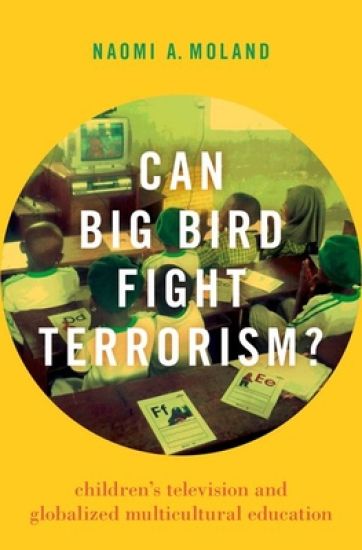
Sesame Street has taught generations of Americans their letters and numbers, and also how to better understand and get along with people of different races, faiths, ethnicities, and temperaments. But the show has a global reach as well, with more than thirty co-productions of Sesame Street that are viewed in over 150 countries. In recent years, the United States Agency for International Development (USAID) has provided funding to the New York-based Sesame Workshop to create international versions of Sesame Street. Many of these programs teach children to respect diversity and tolerate others, which some hope will ultimately help to build peace in conflict-affected societies. In fact, the U.S. government has funded local versions of the show in several countries enmeshed in conflict, including Afghanistan, Kosovo, Pakistan, Jordan, and Nigeria. Can Big Bird Fight Terrorism? takes an in-depth look at the Nigerian version, Sesame Square, which began airing in 2011. In addition to teaching preschool-level academic skills, Sesame Square seeks to promote peaceful coexistence-a daunting task in Nigeria, where escalating ethno-religious tensions and terrorism threaten to fracture the nation. After a year of interviewing Sesame creators, observing their production processes, conducting episode analysis, and talking to local educators who use the program in classrooms, Naomi Moland found that this child-focused use of soft power raised complex questions about how multicultural ideals translate into different settings. In Nigeria, where segregation, state fragility, and escalating conflict raise the stakes of peacebuilding efforts, multicultural education may be ineffective at best, and possibly even divisive. This book offers rare insights into the complexities, challenges, and dilemmas inherent in soft power attempts to teach the ideals of diversity and tolerance in countries suffering from internal conflicts.
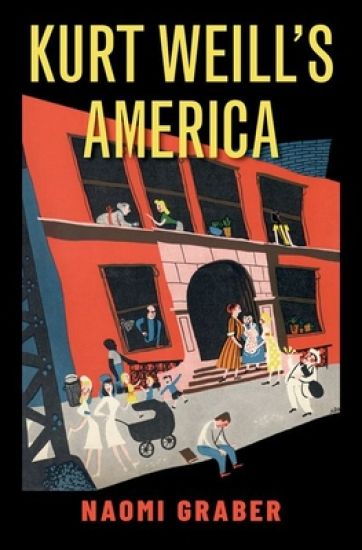
Throughout his life, German-Jewish composer Kurt Weill was fascinated by the idea of America. His European works depict America as a Capitalist dystopia. But in 1935, it became clear that Europe was no longer safe for Weill, and he set sail for New World, and his engagement with American culture shifted. From that point forward, most of his works concerned the idea of "America," whether celebrating her successes, or critiquing her shortcomings. As an outsider-turned-insider, Weill's insights into American culture were unique. He was keenly attuned to the difficult relationship America had with her immigrants, but was slower to grasp the subtleties of others, particularly those surrounding race relations, even though his works reveal that he was devoted to the idea of racial equality. The book treats Weill as a node in a transnational network of musicians, writers, artists, and other stage professionals, all of whom influenced each other. Weill sought out partners from a range of different sectors, including the Popular Front, spoken drama, and the commercial Broadway stage. His personal papers reveal his attempts to navigate not only the shifting tides of American culture, but the specific demands of his institutional and individual collaborators. In reframing Weill's relationship with immigration and nationality, the book also puts nuance contemporary ideas about the relationships of immigrants to their new homes, moving beyond ideas that such figures must either assimilate and abandon their previous identities, or resist the pull of their new home and stay true to their original culture.
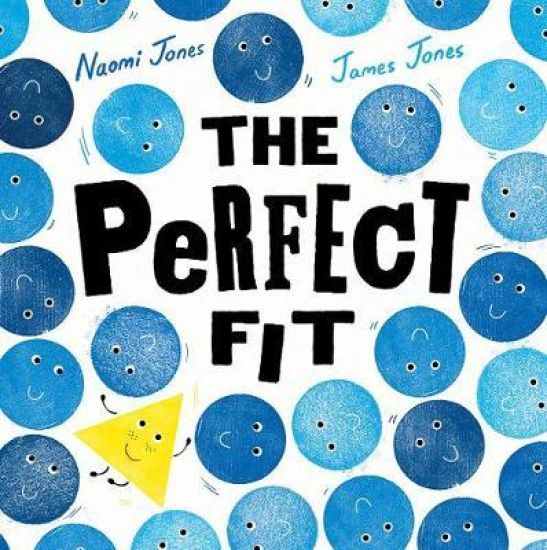
Meet Triangle and all the other shapes in this hilarious picture book about friendships, fun, and finding your place. No matter how hard she tries, Triangle doesn't roll like the circles, or stack like the squares . . . so she sets off to find friends that look exactly like her. But when she finds the other triangles, playtime isn't as fun. She misses the shapes that roll and stack; she misses having friends of all shapes and sizes! Can Triangle get all of the different shapes playing and having fun together? Written by Naomi Jones and illustrated by James Jones, The Perfect Fit is wonderful for sharing with little ones who are learning all about shapes, colours, and friendship! Children can have more fun with One More Try.
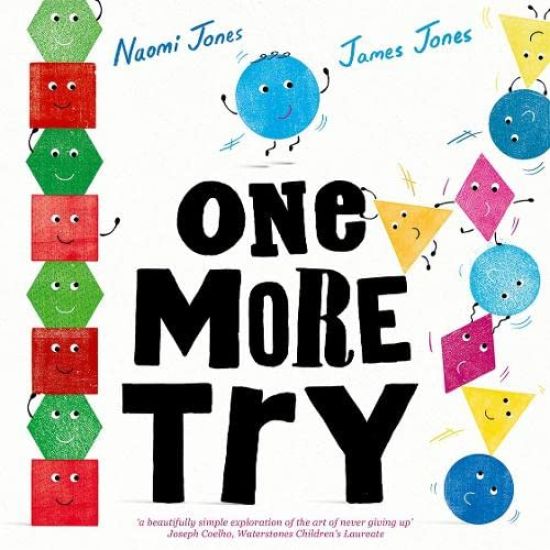
Circle wants to build a tower, just like the squares and hexagons have. But the circles, triangles and diamonds can't build anything together without it tumbling down! A perfectly shaped follow up the bestselling The Perfect Fit.
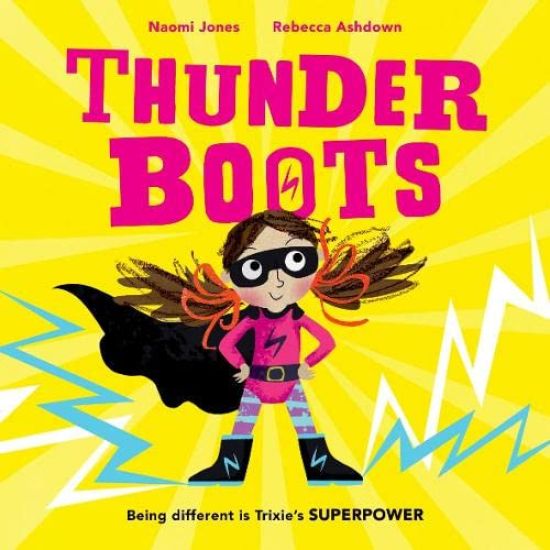
Trixie's nickname is THUNDERBOOTS because she dances wherever she goes. But one day she comes home from school and is very quiet. Dad knows that something is wrong and Trixie explains that she is struggling with her letters. Maybe what she needs is a superpowered plan...
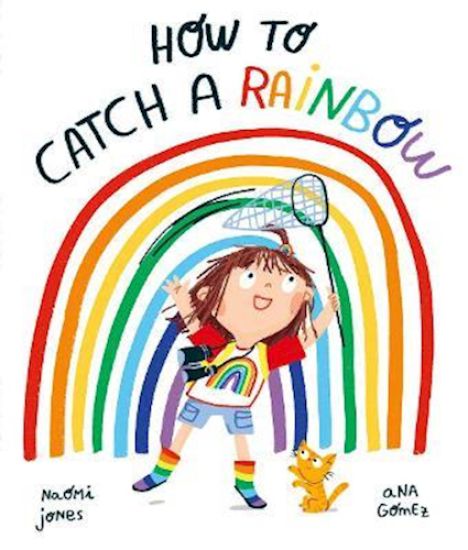
Freya loves rainbows. She loves their bright colours and their curvy shape. More than anything, she wishes she has one of her very own. She tried to hunt one down, but nothing goes quite to plan. Finally she must use her imagination and creativity to make her wish come true.
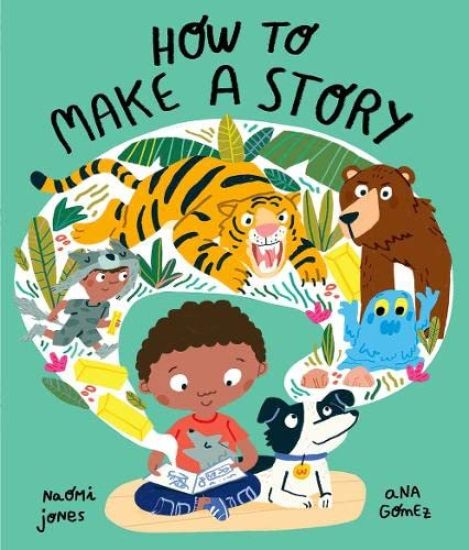
Milo wants a story of his very own, one made up by him. If only his little brother and sister weren't getting in the way.
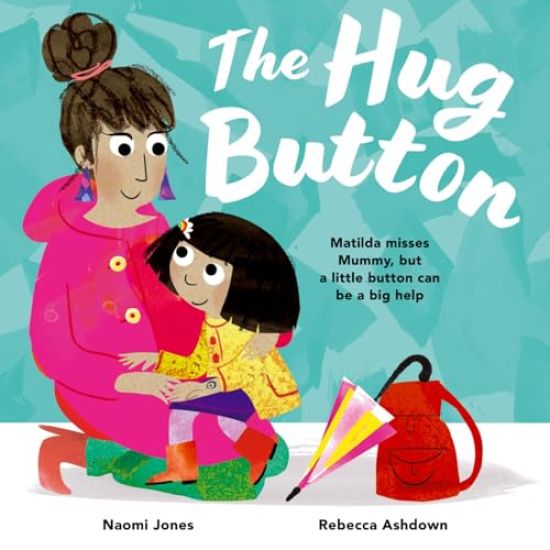
It's Matilda's first day at The Meadows and she's very excited. But when Mummy goes to say goodbye, Matilda isn't happy. She doesn't want Mummy to go. The next day, Mummy has a helpful suggestion. She draws two hug buttons-one on Matilda's wrist and one on her own. Then, when Matilda wants a hug, or wants to give one, she can press the hug button and know that Mummy is thinking about her too. From the award-winning duo, Naomi Jones and Rebecca Ashdown, comes a warm embrace of a book about learning to cope with separation.
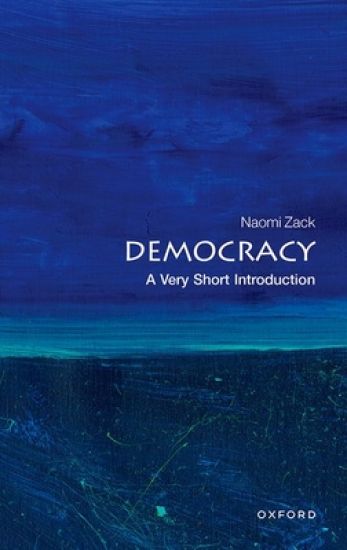
Very Short Introductions: Brilliant, Sharp, Inspiring Democracy refers to both ideal and real forms of government. The concept of democracy means that those governed — the demos — have a say in government. But different conceptions of democracy have left many out. Naomi Zack provides here a fresh treatment of the history of this idea and its key conceptions. In the ancient world, direct and representative democracy in Athens and Rome privileged elites, as did democratic deliberative bodies in Africa, India, the Middle East, and China. Plato, Aristotle, and Cicero were sceptical of mob-rule dangers of democracy. The medieval and renaissance periods saw legislative checks on monarchy, notably the Magna Carta. The social contract theories of Thomas Hobbes, John Locke, and Jean-Jacques Rousseau matched political expectations that national government be based on consent, for the benefit of those governed. The American Revolution established a new sovereignty, based on British government tradition. By contrast, the French Revolution heralded universal humanitarian ideals. In the nineteenth century, Jeremy Bentham, John Stuart Mill, Immanuel Kant, and Karl Marx focused on the democratization of society. Mary Wollstonecraft had championed women's education and rights and Mill advocated further for that cause. Movements for the abolition of slavery, women's suffrage, and labour unionization were organized. World War II brought a reset in the twentieth century, with new democratic governments for many countries, including India and South Africa, and new ideals. Karl Popper, Hannah Arendt, and John Rawls emphasized orderly government transition, inclusion, and fairness. Equalitarian goals have concerned racial and ethnic minorities, as well as women. The twenty-first century has brought fresh challenges, including disasters and uninformed electorates. Democracy among nations is a future goal. ABOUT THE SERIES: The Very Short Introductions series from Oxford University Press contains hundreds of titles in almost every subject area. These pocket-sized books are the perfect way to get ahead in a new subject quickly. Our expert authors combine facts, analysis, perspective, new ideas, and enthusiasm to make interesting and challenging topics highly readable.
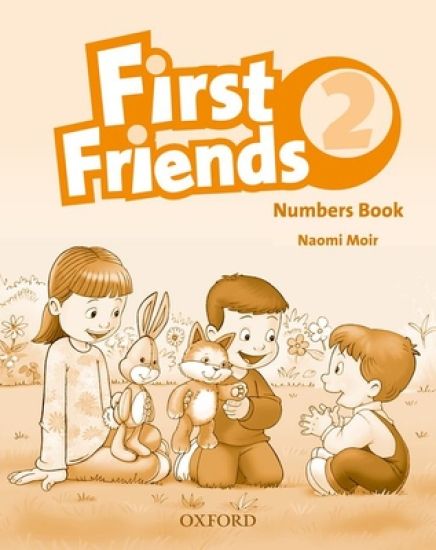
First Friends makes children's first year of learning English motivating and fun. A regular unit cycle and engaging support resources help you create a positive learning environment where children can develop confidence, build vocabulary skills, and practise phonics. The carefully researched phonics programme gives you lessons that are ideal for children who don't use the Roman alphabet. Use Little Friends to extend First Friends to a three-level course.
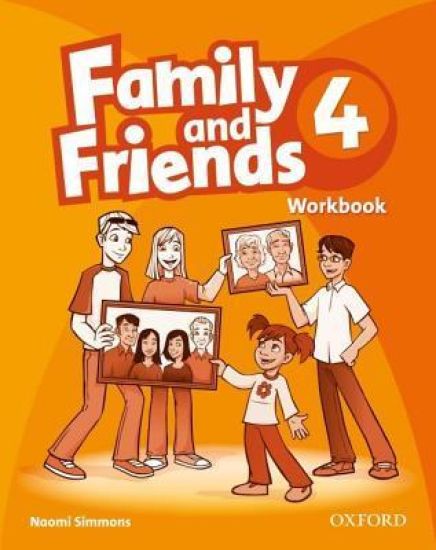
No other course offers you the same benefits as Family and Friends. The exceptionally strong skills training programme includes a focus on real speaking and writing output. Plus - the amazing package of integrated print and digital resources suits all teaching situations and learner types, supporting students, teachers, and parents. Use it with Little Friends and First Friends to make it an eight or nine-year course.
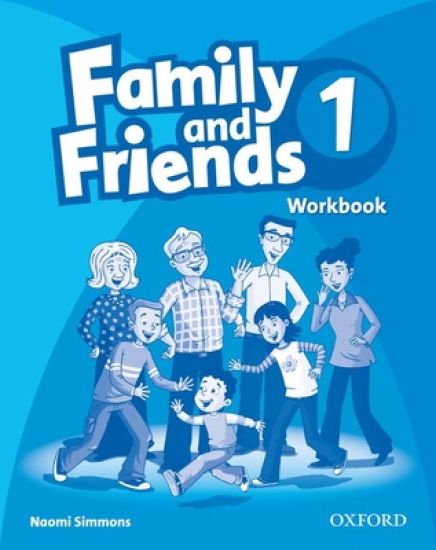
No other course offers you the same benefits as Family and Friends. The exceptionally strong skills training programme includes a focus on real speaking and writing output. Plus - the amazing package of integrated print and digital resources suits all teaching situations and learner types, supporting students, teachers, and parents. Use it with Little Friends and First Friends to make it an eight or nine-year course.