Kirjojen hintavertailu. Mukana 12 083 983 kirjaa ja 12 kauppaa.

Kirjahaku

Etsi kirjoja tekijän nimen, kirjan nimen tai ISBN:n perusteella.

1000 tulosta hakusanalla Nigel Pascoe

Nonstandard Analysis and its Applications

Nonstandard Analysis and its Applications

Nigel Cutland

Cambridge University Press
1988
pokkari
This textbook is an introduction to non-standard analysis and to its many applications. Non standard analysis (NSA) is a subject of great research interest both in its own right and as a tool for answering questions in subjects such as functional analysis, probability, mathematical physics and topology. The book arises from a conference held in July 1986 at the University of Hull which was designed to provide both an introduction to the subject through introductory lectures, and surveys of the state of research. The first part of the book is devoted to the introductory lectures and the second part consists of presentations of applications of NSA to dynamical systems, topology, automata and orderings on words, the non- linear Boltzmann equation and integration on non-standard hulls of vector lattices. One of the book's attractions is that a standard notation is used throughout so the underlying theory is easily applied in a number of different settings. Consequently this book will be ideal for graduate students and research mathematicians coming to the subject for the first time and it will provide an attractive and stimulating account of the subject.
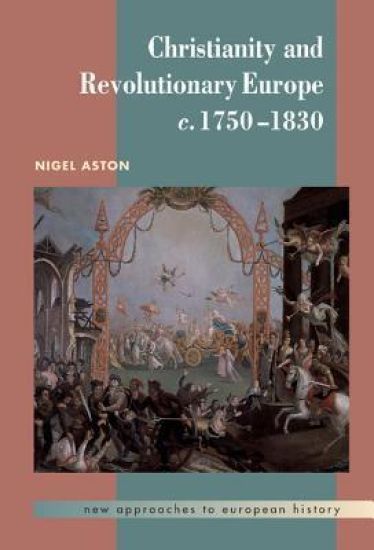
Christianity and Revolutionary Europe, 1750–1830

Christianity and Revolutionary Europe, 1750–1830

Nigel Aston

Cambridge University Press
2003
sidottu
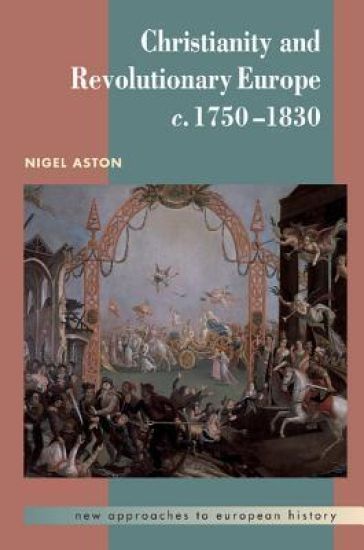
Christianity and Revolutionary Europe, 1750–1830, first published in 2003, provides a comprehensive and accessible summary of the role of the churches during this turbulent period in European history. How did the churches survive the political and intellectual challenges posed by the French Revolution, despite institutional upheaval and the widespread questioning of dogma and tradition? Nigel Aston answers this question by drawing on three decades of research, and argues that pre-Revolutionary Christianity had a vitality and resilience that should not be underestimated. Aston takes the story forward to 1830, dealing with both the immediate aftermath of the Revolution and its longer-term impact and offering comprehensive guidance to the complicated strands of change and continuity. The text is supported by illuminating illustrations, and a glossary of unfamiliar terms gives further help to the student reader. It will be of key interest to all those following courses on religious history and the French Revolution.
Christianity and Revolutionary Europe, 1750–1830

Christianity and Revolutionary Europe, 1750–1830

Nigel Aston

Cambridge University Press
2003
pokkari
Christianity and Revolutionary Europe, 1750–1830, first published in 2003, provides a comprehensive and accessible summary of the role of the churches during this turbulent period in European history. How did the churches survive the political and intellectual challenges posed by the French Revolution, despite institutional upheaval and the widespread questioning of dogma and tradition? Nigel Aston answers this question by drawing on three decades of research, and argues that pre-Revolutionary Christianity had a vitality and resilience that should not be underestimated. Aston takes the story forward to 1830, dealing with both the immediate aftermath of the Revolution and its longer-term impact and offering comprehensive guidance to the complicated strands of change and continuity. The text is supported by illuminating illustrations, and a glossary of unfamiliar terms gives further help to the student reader. It will be of key interest to all those following courses on religious history and the French Revolution.
British Romantic Writers and the East

British Romantic Writers and the East

Nigel Leask

Cambridge University Press
2004
pokkari
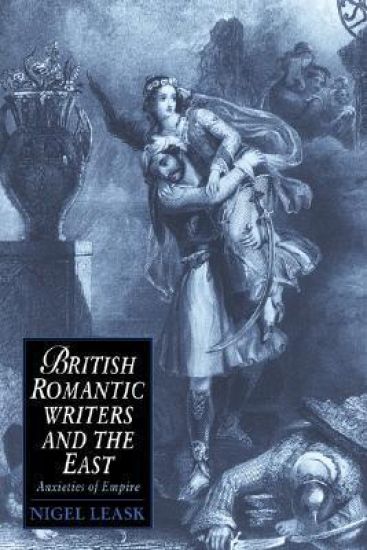
The recent turn to political and historical readings of Romanticism has given us a more complex picture of the institutional, cultural and sexual politics of the period. There has been a tendency, however, to confine such study to the European scene. In this book, Nigel Leask sets out to study the work of Byron, Shelley and De Quincey (together with a number of other major and minor Romantic writers, including Robert Southey and Tom Moore) in relation to Britain's imperial designs on the 'Orient'. Combining historical and theoretical approaches with detailed analyses of specific works, it examines the anxieties and instabilities of Romantic representations of the Ottoman Empire, India, China and the Far East. It argues that these anxieties were not marginal but central to the major concerns of British Romantic writers. The book is illustrated with a number of engravings from the period, giving a visual dimension to the discussion of Romantic representations of the East.
The Algorithmic Resolution of Diophantine Equations

The Algorithmic Resolution of Diophantine Equations

Nigel P. Smart

Cambridge University Press
1998
sidottu
Beginning with a brief introduction to algorithms and diophantine equations, this volume aims to provide a coherent account of the methods used to find all the solutions to certain diophantine equations, particularly those procedures which have been developed for use on a computer. The study is divided into three parts, the emphasis throughout being on examining approaches with a wide range of applications. The first section considers basic techniques including local methods, sieving, descent arguments and the LLL algorithm. The second section explores problems which can be solved using Baker's theory of linear forms in logarithms. The final section looks at problems associated with curves, mainly focusing on rational and integral points on elliptic curves. Each chapter concludes with a useful set of exercises. A detailed bibliography is included. This book will appeal to graduate students and research workers, with a basic knowledge of number theory, who are interested in solving diophantine equations using computational methods.
The Algorithmic Resolution of Diophantine Equations

The Algorithmic Resolution of Diophantine Equations

Nigel P. Smart

Cambridge University Press
1998
pokkari
Beginning with a brief introduction to algorithms and diophantine equations, this volume aims to provide a coherent account of the methods used to find all the solutions to certain diophantine equations, particularly those procedures which have been developed for use on a computer. The study is divided into three parts, the emphasis throughout being on examining approaches with a wide range of applications. The first section considers basic techniques including local methods, sieving, descent arguments and the LLL algorithm. The second section explores problems which can be solved using Baker's theory of linear forms in logarithms. The final section looks at problems associated with curves, mainly focusing on rational and integral points on elliptic curves. Each chapter concludes with a useful set of exercises. A detailed bibliography is included. This book will appeal to graduate students and research workers, with a basic knowledge of number theory, who are interested in solving diophantine equations using computational methods.
Progress in Pathology: Volume 7

Progress in Pathology: Volume 7

Nigel Kirkham; Shepherd Neil A.

Cambridge University Press
2007
pokkari
Progress in Pathology reviews many aspects of pathology, describing issues of everyday diagnostic relevance and the mechanisms underlying some of these processes. Each volume in the series reviews a wide range of topics and recent advances in pathology of relevance to daily practice, keeping consultants, trainees, laboratory staff and researchers abreast of developments as well as providing candidates for the MRCPath and other examinations with answers to some of the questions they will encounter. Highly illustrated in full colour, topics covered in this volume include: Immunohistochemistry as a diagnostic aid in gynaecological pathology, Drug induced liver injury, Childhood lymphoma, Immune responses to tumours, Post-mortem imaging, Understanding the Human Tissue Act 2004 and much more. Volume 7 of Progress in Pathology will be an essential addition to the shelves and laboratory benches of every practising pathologist.
Meter in Poetry

Meter in Poetry

Nigel Fabb; Morris Halle

Cambridge University Press
2008
pokkari
Many of the great works of world literature are composed in metrical verse, that is, in lines which are measured and patterned. Meter in Poetry: A New Theory is the first book to present a single simple account of all known types of metrical verse, which is illustrated with detailed analyses of poems in many languages, including English, Spanish, Italian, French, classical Greek and Latin, Sanskrit, classical Arabic, Chinese, Vietnamese, and Latvian. This outstanding contribution to the study of meter is aimed both at students and scholars of literature and languages, as well as anyone interested in knowing how metrical verse is made.
Memory, War and Trauma

Memory, War and Trauma

Nigel C. Hunt

Cambridge University Press
2010
pokkari
Many millions of people are affected by the trauma of war. Psychologists have a good understanding of how experiences of war impact on memory, but the significance of external environmental influences is often disregarded. Memory, War and Trauma focuses on our understanding of the psychosocial impact of war in its broadest sense. Nigel C. Hunt argues that, in order to understand war trauma, it is critical to develop an understanding not only of the individual perspective but also of how societal and cultural factors impact on the outcome of an individual's experience. This is a compelling book which helps to demonstrate why some people suffer from post-traumatic stress while other people don't, and how narrative understanding is important to the healing process. Its multidisciplinary perspective will enable a deeper understanding of both individual traumatic stress and the structures of memory.
Greek Sculpture

Greek Sculpture

Nigel Spivey

Cambridge University Press
2013
pokkari
Ancient Greek sculpture seems to have a timeless quality – provoking reactions that may range from awe to alienation. Yet it was a particular product of its age: and to know how and why it was once created is to embark upon an understanding of its 'Classic' status. In this richly illustrated and carefully written survey, encompassing works from c.700 BC to the end of antiquity, Nigel Spivey expounds not only the social function of Greek sculpture but also its aesthetic and technical achievement. Fresh approaches are reconciled with traditional modes of study as the connoisseurship of this art is sympathetically unravelled, while source material and historical narratives are woven into detailed explanations, putting the art into its proper context. Greek Sculpture is the ideal textbook for students of classics, classical civilisation, art history and archaeology – and an accessible account for all interested readers.
African Mole-Rats

African Mole-Rats

Nigel C. Bennett; Chris G. Faulkes; Jennifer Jarvis

Cambridge University Press
2000
sidottu
African mole-rats are a unique taxon of subterranean rodents that range in sociality from solitary-dwelling species through to two 'eusocial' species, the Damaraland Mole-Rat and the Naked Mole-Rat. The Naked Mole-Rat is arguably the closest that a mammal comes to behaving like social insects such as bees and termites, with large colonies and a behavioural and reproductive division of labour. As a family, the Bathyergidae represent a model system with which to study the evolution and maintenance of highly social cooperative breeding strategies. In this book, first published in 2000, Nigel Bennett and Chris Faulkes provide a synthesis of the knowledge of bathyergid systematics, ecology, reproductive biology, behaviour and genetics. With this, they explore the role of these factors in the evolution of sociality in the Bathyergidae in the context of both vertebrates and invertebrates. This will be an important new resource for anyone interested in the evolution of sociality, and in mole-rats in particular.
Language and Literary Structure

Language and Literary Structure

Nigel Fabb

Cambridge University Press
2002
sidottu
How does a literary text get to have literary form, and what is the relation between literary form and linguistic form? This theoretical study of linguistic structure in literature focuses on verse and narrative from a linguistic perspective. Nigel Fabb provides a simple and realistic linguistic explanation of poetic form in English from 1500–1900, drawing on the English and American verse and oral narrative tradition, as well as contemporary criticism. In recent years literary theory has paid relatively little attention to form; this book argues that form is interesting. Fabb offers a new linguistic approach to how metre and rhythm work in poetry, based on pragmatic theory and provides a pragmatic explanation of formal ambiguity and indeterminacy and their aesthetic effects. He also uses linguistics to examine the experience of poetry. Language and Literary Structure will be welcomed by students and researchers in linguistics, literary theory and stylistics.
Language and Literary Structure

Language and Literary Structure

Nigel Fabb

Cambridge University Press
2002
pokkari
How does a literary text get to have literary form, and what is the relation between literary form and linguistic form? This theoretical study of linguistic structure in literature focuses on verse and narrative from a linguistic perspective. Nigel Fabb provides a simple and realistic linguistic explanation of poetic form in English from 1500–1900, drawing on the English and American verse and oral narrative tradition, as well as contemporary criticism. In recent years literary theory has paid relatively little attention to form; this book argues that form is interesting. Fabb offers a new linguistic approach to how metre and rhythm work in poetry, based on pragmatic theory and provides a pragmatic explanation of formal ambiguity and indeterminacy and their aesthetic effects. He also uses linguistics to examine the experience of poetry. Language and Literary Structure will be welcomed by students and researchers in linguistics, literary theory and stylistics.
Plant Genetic Conservation

Plant Genetic Conservation

Nigel Maxted; Danny Hunter; Rodomiro Ortiz

Cambridge University Press
2020
sidottu
Plant diversity sustains all animal life, and the genetic diversity within plants underpins global food security. This text provides a practical and theoretical introduction to the strategies and actions to adopt for conserving plant genetic variation, as well as explaining how humans can exploit this diversity for sustainable development. Notably readable, it initially offers current knowledge on the characterization and evaluation of plant genetic resources. The authors then discuss strategies from in situ and ex situ conservation to crop breeding, exploring how these can be used to improve food security in the face of increasing agrobiodiversity loss, human population growth and climate change. Each chapter draws on examples from the literature or the authors' research and includes further reading references. Containing other useful features such as a glossary, it is invaluable for professionals and undergraduate and graduate students in plant sciences, ecology, conservation, genetics and natural resource management.
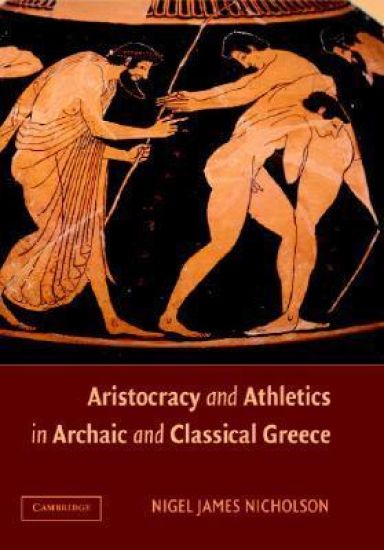
Aristocracy and Athletics in Archaic and Classical Greece

Aristocracy and Athletics in Archaic and Classical Greece

Nigel Nicholson

Cambridge University Press
2005
sidottu
Athletics represented an important institution through which the Greek aristocracies sought to maintain their privileged political position. Victory, however, had always involved the use of others, such as charioteers, jockeys, and trainers, and in the late archaic and early classical period the relationship between the victors and these helpers changed radically. This threatened the political value of athletics and thus undermined the utility of the institution for aristocrats. Nigel Nicholson examines how aristocrats responded to these changes through a study of victory memorials. New Historicist in method, the book draws on odes, dedications, vases, and coins, as well as anecdotes about the victors. It asks how the vulgar details of winning are represented by the memorials, and it assumes that the value of athletics was always under threat, from groups both inside and outside the elite. The result is a fascinating look at one area of social struggle in ancient Greece.
Meter in Poetry

Meter in Poetry

Nigel Fabb; Morris Halle

Cambridge University Press
2008
sidottu
Many of the great works of world literature are composed in metrical verse, that is, in lines which are measured and patterned. Meter in Poetry: A New Theory is the first book to present a single simple account of all known types of metrical verse, which is illustrated with detailed analyses of poems in many languages, including English, Spanish, Italian, French, classical Greek and Latin, Sanskrit, classical Arabic, Chinese, Vietnamese, and Latvian. This outstanding contribution to the study of meter is aimed both at students and scholars of literature and languages, as well as anyone interested in knowing how metrical verse is made.
Memory, War and Trauma

Memory, War and Trauma

Nigel C. Hunt

Cambridge University Press
2010
sidottu
Many millions of people are affected by the trauma of war. Psychologists have a good understanding of how experiences of war impact on memory, but the significance of external environmental influences is often disregarded. Memory, War and Trauma focuses on our understanding of the psychosocial impact of war in its broadest sense. Nigel C. Hunt argues that, in order to understand war trauma, it is critical to develop an understanding not only of the individual perspective but also of how societal and cultural factors impact on the outcome of an individual's experience. This is a compelling book which helps to demonstrate why some people suffer from post-traumatic stress while other people don't, and how narrative understanding is important to the healing process. Its multidisciplinary perspective will enable a deeper understanding of both individual traumatic stress and the structures of memory.
Life After Death

Life After Death

Nigel Starck

MELBOURNE UNIVERSITY PRESS
2006
nidottu
The obituary pages of our quality newspapers have been described as 'oases of calm in a world gone mad', 'a lovely part of the paper to linger in', and 'writing that matters'. Entertaining, inspiring and informative, they serve as a legitimate instrument of history, and have enjoyed an extraordinary revival in popularity over the past twenty years. Life After Death investigates-and celebrates-the development of the obituary form in the British, American, and Australian press. Author Nigel Starck tracks down the earliest exercise in obituary publication (in 1622), then traces the evolution of the form over four centuries, from times when the obituary was the reserve of royalty and privilege to its contemporary egalitarian mode. Along the way Dr Starck delves into a multitude of lives, from the heroic to the comic, the saintly to the downright villainous, the exemplary to the eccentric. Meet, in the posthumous cast list, Major Digby Tatham-Warter, of Britain's Parachute Regiment, who carried an umbrella into battle just in case it rained; the absent-minded Australian barrister Pat Lanigan, who drove from Canberra to Sydney and then flew back, leaving his car behind; and the eccentric American publisher Eddie Clontz, whose newspaper reported (exclusively, of course) that 'tiny terrorists' were disguising themselves as garden gnomes.Life After Death also incorporates a connoisseur's collection of ten obituaries reprinted in full: the subjects include Helen Keller, Diana Mosley, Quentin Crisp, George Wallace, and Rosa Parks. Without doubt, Life After Death is a book that will outlive its author-as an enduring celebration of journalism's dying art. 'Canon Smith expired after suffering an unfortunate disagreement with his bishop.'-The Sydney Morning Herald, 1882 'Minnesota Fats died at his home in Nashville. He was eighty-two, or perhaps ninety-five.'-The New York Times, 1996
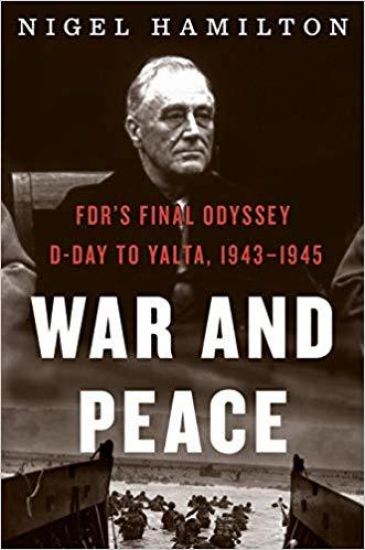
War and Peace: Fdr's Final Odyssey: D-Day to Yalta, 1943-1945
To mark the 75th Anniversary of D-Day, the stirring climax to Nigel Hamilton's three-part saga of FDR at war--proof that he was WWII's key strategist, even on his deathbed. "A first-class, lens-changing work." --James N. Mattis, former United States Secretary of Defense Nigel Hamilton's celebrated trilogy culminates with a story of triumph and tragedy. Just as FDR was proven right by the D-day landings he had championed, so was he found to be mortally ill in the spring of 1944. He was the architect of a victorious peace that he would not live to witness. Using hitherto unpublished documents and interviews, Hamilton rewrites the famous account of World War II strategy given by Winston Churchill in his memoirs. Seventy-five years after the D-day landings we finally get to see, close-up and in dramatic detail, who was responsible for rescuing, and insisting upon, the great American-led invasion of France in June 1944, and why the invasion was led by Eisenhower. As FDR's D-day triumph turns to personal tragedy, we watch with heartbreaking compassion the course of the disease, and how, in the months left him as US commander in chief, the dying president attempted at Hawaii, Quebec, and Yalta to prepare the United Nations for an American-backed postwar world order. Now we know: even on his deathbed, FDR was the war's great visionary.
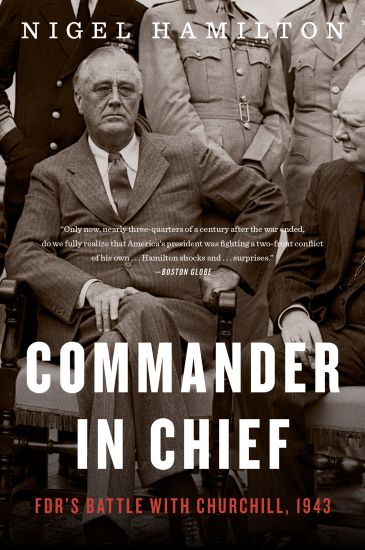
Commander in Chief: Fdr's Battle with Churchill, 1943
From Nigel Hamilton's acclaimed World War II saga, the astonishing story of FDR's yearlong, defining battle with Churchill in 1943, as the war raged in Africa and Italy.1943 was the year of Allied military counteroffensives, beating back the forces of the Axis powers in North Africa and the Pacific--the "Hinge of Fate," as Winston Churchill called it. In Commander in Chief, Nigel Hamilton reveals FDR's true role in this saga: overruling his own Joint Chiefs of Staff, ordering American airmen on an ambush of the Japanese navy's Admiral Yamamoto, facing down Churchill when he attempted to abandon Allied D-day strategy (twice). This FDR is profoundly different from the one Churchill later painted. President Roosevelt's patience was tested to the limit quelling the prime minister's "revolt," as Churchill pressured Congress and senior American leaders to focus Allied energy on disastrous fighting in Italy and the Aegean instead of landings in Normandy. Finally, in a dramatic showdown at Hyde Park, FDR had to stop Churchill from losing the war by making the ultimate threat, setting the Allies on their course to final victory. In Commander in Chief, Hamilton masterfully chronicles the clash of nations--and of two titanic personalities--at a crucial moment in modern history.