Daylen Campbell, veinticinco a os y gay. He acabado currando en una empresa con el jefe m s raro del puto mundo; tiene tipazo, tiene unos ojos de infarto y una sorpresa muy grata entre las piernas. Por alguna extra a raz n se ha abierto a m , me ha mostrado todo de l, y cuando digo todo es todo, aunque... presiento que oculta algo, porque nadie se encapricha as por alguien al que apenas conoce, no? Y, entre comidas de olla, he llegado a una conclusi n: mientras me pague bien las horas extra, no me importara trabajarlas entre sus piernas.
Mississippi bluesman Robert Johnson died young and left behind just twenty-nine recorded songs. But the legacy, legends, and lore surrounding him loom large in American music history. Merging literary analysis with cultural criticism and biographical study, Patricia R. Schroeder explores Johnson's ongoing role as a cultural icon. Schroeder's detailed analysis engages key images and myths about the blues musician (such as the Faustian crossroads exchange of his soul for guitar virtuosity). Navigating the many competing interpretations that swirl around him, Schroeder reveals the cultural purposes served by the stories and the storytellers. The result is a fascinating examination of the relationships among Johnson's life, its subsequent portrayals, and the forces that drove the representations.Offering penetrating insights into both Johnson and the society that perpetuates him, Robert Johnson, Mythmaking, and Contemporary American Culture is essential reading for blues fans and cultural critics interested in a foundational musical figure.
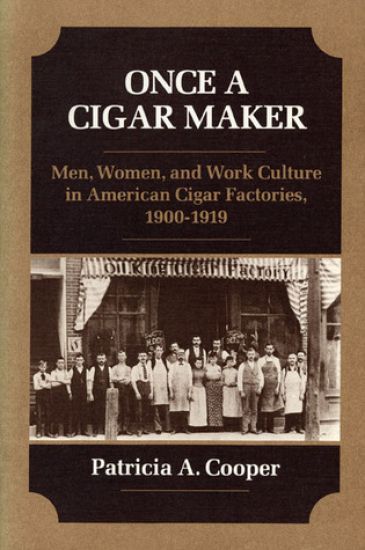
Patricia A. Cooper charts the course of competition, conflict, and camaraderie among American cigar makers during the two decades that preceded mechanization of their work. In the process, she reconstructs the work culture, traditions, and daily lives of the male cigar makers who were members of the Cigar Makers' International Union of America (CMIU) and of the nonunion women who made cigars under a division of labor called the "team system." But Cooper not only examines the work lives of these men and women, she also analyzes their relationship to each other and to their employers during these critical years of the industry's transition from hand craft to mass production.
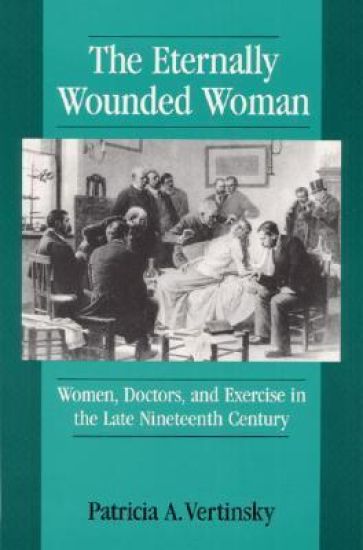
"This book is about the historical influence of late nineteenth-century medical beliefs and values on the perceived benefits of physical activity for women across their life span. The practice of medicine and the knowledge which underpins it have never been simple and logical progressions from one truth to another. Rather, scientific knowledge, medical practice and social perception have interacted to affect views concerning what kinds of amounts of physical activity, including sport and healthful exercise, might be most appropriate for girls and women at different points in their life course. "A review of thinking is needed in the field of sociohistorical analysis concerning attitudes toward the female body and attempts to regulate female physical activity. Such analyses may generate new insights into the questions of both social control and the unevenness of progress in women's real or perceived opportunities for participating freely and fully in sports and exercise of their choice."
This is the inspiring story of The Flaherty, one of the oldest continuously running nonprofit media arts institutions in the world, which has shaped the development of independent film, video, and emerging forms in the United States over the past 60 years. Combining the words of legendary independent filmmakers with a detailed history of The Flaherty, Patricia R. Zimmermann and Scott MacDonald showcase its history and legacy, amply demonstrating how the relationships created at the annual Flaherty seminar have been instrumental in transforming American media history. Moving through the decades, each chapter opens with a detailed history of the organization by Zimmermann, who traces the evolution of The Flaherty from a private gathering of filmmakers to a small annual convening, to today's ever-growing nexus of filmmakers, scholars, librarians, producers, funders, distributors, and others associated with international independent cinema. MacDonald expands each chapter by giving voice to the major figures in the evolution of independent media through transcriptions of key discussions galvanized by films shown at The Flaherty. The discussions feature Frances Flaherty, Robert Gardner, Fred Wiseman, Willard Van Dyke, Jim McBride, Michael Snow, Hollis Frampton, Erik Barnouw, Barbara Kopple, Ed Pincus, Trinh T. Minh-ha, Bruce Conner, Peter Watkins, Su Friedrich, Marlon Riggs, William Greaves, Ken Jacobs, Kazuo Hara, Mani Kaul, Craig Baldwin, Bahman Ghobadi, Eyal Sivan, and many others.
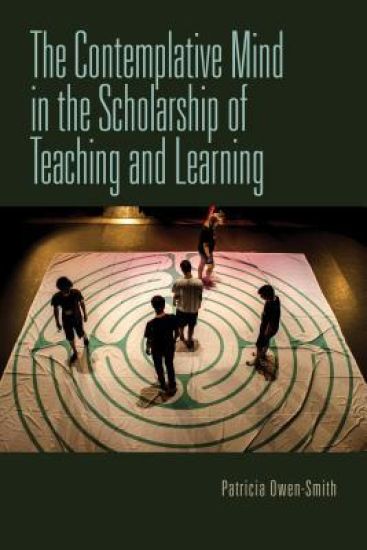
In The Contemplative Mind in the Scholarship of Teaching and Learning, Patricia Owen-Smith considers how contemplative practices may find a place in higher education. By creating a bridge between contemplative practices and the Scholarship of Teaching and Learning (SoTL), Owen-Smith brings awareness of contemplative pedagogy to a larger audience of college instructors, while also offering classroom models and outlining the ongoing challenges of both defining these practices and assessing their impact in education. Ultimately, Owen-Smith asserts that such practices have the potential to deepen a student's development and understanding of the self as a learner, knower, and citizen of the world.
In The Contemplative Mind in the Scholarship of Teaching and Learning, Patricia Owen-Smith considers how contemplative practices may find a place in higher education. By creating a bridge between contemplative practices and the Scholarship of Teaching and Learning (SoTL), Owen-Smith brings awareness of contemplative pedagogy to a larger audience of college instructors, while also offering classroom models and outlining the ongoing challenges of both defining these practices and assessing their impact in education. Ultimately, Owen-Smith asserts that such practices have the potential to deepen a student's development and understanding of the self as a learner, knower, and citizen of the world.
In Documentary Across Platforms, noted scholar of film and experimental media Patricia R. Zimmermann offers a glimpse into the ever-evolving constellation of practices known as "documentary" and the way in which they investigate, engage with, and interrogate the world. Collected here for the first time are her celebrated essays and speculations about documentary, experimental, and new media published outside of traditional scholarly venues. These essays envision documentary as a complex ecology composed of different technologies, sets of practices, and specific relationships to communities, engagement, politics, and social struggles. Through the lens of reverse engineering—the concept that ideas just like objects can be disassembled to learn how they work and then rebuilt into something new and better—Zimmermann explores how numerous small-scale documentary works present strategies of intervention into existing power structures. Adaptive to their context, modular, and unfixed, the documentary practices she explores exploit both sophisticated high-end professional and consumer-grade amateur technologies, moving through different political terrains, different platforms, and different exhibition contexts. Together these essays demonstrate documentary's role as a conceptual practice to think through how the world is organized and to imagine ways that it might be reorganized with actions, communities, and ideas.
In Documentary Across Platforms, noted scholar of film and experimental media Patricia R. Zimmermann offers a glimpse into the ever-evolving constellation of practices known as "documentary" and the way in which they investigate, engage with, and interrogate the world. Collected here for the first time are her celebrated essays and speculations about documentary, experimental, and new media published outside of traditional scholarly venues. These essays envision documentary as a complex ecology composed of different technologies, sets of practices, and specific relationships to communities, engagement, politics, and social struggles. Through the lens of reverse engineering—the concept that ideas just like objects can be disassembled to learn how they work and then rebuilt into something new and better—Zimmermann explores how numerous small-scale documentary works present strategies of intervention into existing power structures. Adaptive to their context, modular, and unfixed, the documentary practices she explores exploit both sophisticated high-end professional and consumer-grade amateur technologies, moving through different political terrains, different platforms, and different exhibition contexts. Together these essays demonstrate documentary's role as a conceptual practice to think through how the world is organized and to imagine ways that it might be reorganized with actions, communities, and ideas.
Placing cinematic representations of the "Jew" within their historical context, Bartov demonstrates the powerful political, social, and cultural impact of these images on popular attitudes. He argues that these representations generally fall into four categories: the "Jew" as perpetrator, as victim, as hero, and as anti-hero. Examples range from film's early days to the present, from Europe, Israel, and the United States.
Indiscretions follows the path of U.S. avant-garde film and video from the underground of the 1960s to the academy of the 1980s. Patricia Mellencamp traces and charts the intersections of Lacanian psychoanalysis and the desiring male subject, Roland Barthes and texts of pleasure, Michel Foucault and the disciplinary society, the grotesque body and Mikhail Bakhtin, the rhizomatic alogic of Gilles Deleuze and Felix Guattari, and the female subject of feminist film theory. She creates a dialogue among theory and popular culture and politics through inventive readings of the films of Owen Land, Hollis Frampton, Ken Jacobs, Bruce Conner, Robert Nelson, Michael Snow, Yvonne Rainer, and Sally Potter, and videotapes by Ant Farm, TVTV, Michael Smith, William Wegman, and Cecelia Condit.
" . . . acute look at the state of contemporary culture . . . A humorous . . . book, it yields rewarding advice for our perception of reality and fiction." —Back Stage / Shoot "Mellencamp's ease of movement between the conceptual and the commonplace is the great strength of this work. . . . High Anxiety is an invaluable contribution to the cultural studies debate . . . " —Art + Text Written with wit and flair, High Anxiety is a critique of the temporality of U.S. television, a narrative journey between Freud's texts on obsession and the cult of anxiety pervading contemporary culture. Operation Desert Storm, I Love Lucy, Anita Hill, Twin Peaks, and Oprah are a few of the subjects which form this "anxious" mosaic of popular culture.
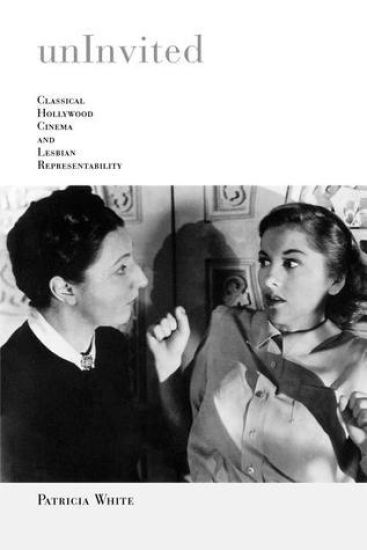
"White writes with considerable flair, and her arguments are always interesting . . ." —Choice "Uncovering a massive trove of what she calls 'lesbian representability'—images of lesbian desire, love and life—in mainstream movies, White provides an insightful look at classic American films. . . . her myriad examples and finely wrought arguments prove both convincing and engaging." —Publishers Weekly "Conspiratorial and witty, Uninvited is a mischievous invitation to dissect classical cinema by someone who wields the razor with glee." —OUT Magazine Lesbian characters, stories, and images were barred from onscreen depiction in Hollywood films from the 1930s to the 1960s, together with all forms of "sex perversion." Looking at the lure of some of the great female stars and at the visual coding of supporting actresses, the book identifies lesbian spectatorial strategies.
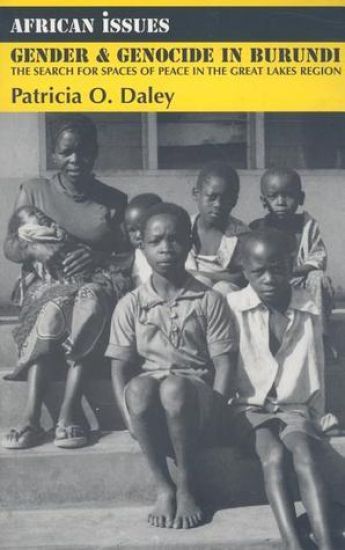
Burundi, like Rwanda, Congo, and Uganda, is linked to patterns of recurrent genocidal violence that have shaped events in the African Great Lakes region. In Gender and Genocide in Burundi, Patricia O. Daley argues that sexual patterns of violence have become more pervasive as male and Western-dominated cultures of impunity devalue lives across the region. In her view, only a revised feminist-historical approach to understanding violence and a reformed peace process, on local as well as international levels, will bring genocide to an end. By bringing gender to bear, Daley breaks down divisions at places where violence or social injustice has been reproduced in the past and illustrates how the protracted nature of oppression, warfare, and endemic violence can come to an end. Daley's unique insight into the politics of genocide shows how a new gender-oriented paradigm that emphasizes rights and humanity can make "never again" a reality.
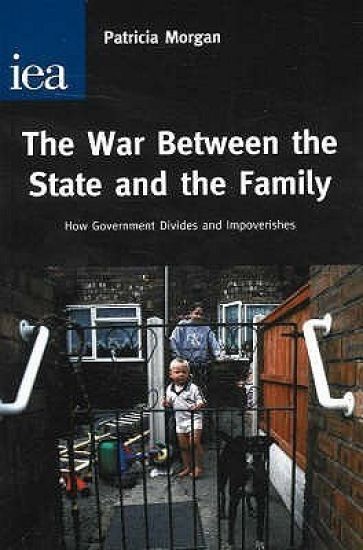
In a new study, Patricia Morgan shows how tax and benefits policy has undermined family life in Britain and encouraged fraud and dishonesty. The study shows how the tax and benefits systems are particularly harsh on single-earner couples who have to earn over GBP50,000 before there is no loss from declaring their relationship to the authorities. This situation encourages couples not to marry and, if they are living together, to lie to the authorities about their family situation. In 2004/05, the government paid credits and benefits to 200,000 more lone parents than actually live in the UK -- fraud is widespread. The tax and benefits system encourages such fraud. In the most extreme case, a couple can gain nearly GBP10,000 a year by not declaring their relationship. Family life has been discouraged over 25 years by both Conservative and Labour governments. In the Thatcher years, the Conservative government gave lone parents special financial benefits and priority entitlement to council housing. In the Labour years, the state increasingly became the child-care provider. As Patricia Morgan comments, "Under Thatcher, the state became the bread-winner for lone parents; under Brown the state became the child carer. The consequences are obvious -- couples are strongly encouraged not to commit to each other because, by doing so, they will lose out financially. Both Conservative and Labour governments also removed any offsetting compensation in the tax system that had previously helped two-parent families." Government policy penalising two-parent families has had a disastrous economic and social effect. Couples who describe themselves as "closely involved" are twelve times more likely than married couples to split up in the first three years of a childs life. There are also higher levels of worklessness and benefit dependency -- lone parent families receiving an average of 66% of their income in benefits and tax credits. Morgan shows how it is clear from international evidence, examining trends over time and by looking at the behaviour of individuals on different levels of income, that the tax and benefits system has caused the increase in lone parent families. Where there are no incentives for lone parenthood, couples tend to stay together, marry and ensure that they can support their children independently of the state. Individuals and couples respond rationally to the incentives they face -- currently the government is giving families perverse incentives, encouraging them not to form stable family units. Major changes in the tax and benefit system are necessary. Benefits to lone parents could be reduced. Also, the perverse incentives in the benefits system that discourage couples from committing together should be offset by a tax system that recognises families. In particular, families should be allowed to allocate the income of the main earner to non-earners in the family for tax purposes. Reforms to the tax and benefits system should be bolstered by reforms to the "no fault" divorce laws that currently allow a guilty party to walk away from their marriage contract whilst imposing financial penalties on the injured party.
A deeply compelling biography of the pioneering children’s heart doctor Helen Taussig, who helped start heart surgery and became a global force against preventable suffering.In A Heart Afire, Patricia Meisol renders a moving portrait of the indomitable pediatrician and global patient activist Helen Taussig (1898–1986), who famously gathered and publicized evidence linking thalidomide to birth defects, leading to US drug safety laws. Taussig also developed the Blalock-Taussig shunt (along with Alfred Blalock) for infants with congenital heart defects. Spanning Taussig’s childhood in Boston, her struggle with dyslexia, her progressive hearing loss, her research contributions, and the founding of her own fledgling children’s heart clinic, this book chronicles Taussig’s ambition, tenacity, and formidable work ethic. As Meisol shows, Taussig not only saved lives, but also set a bold precedent for other women doctors in the twentieth century, who were largely excluded from medicine.Meticulously researched and intimately told, A Heart Afire is unique in its use of a fifty-year-long campaign by Taussig’s followers for a worthy memorial portrait and shows how views of women doctors have evolved. Meisol reveals Taussig as an authentic American hero, one who embodies the Emersonian ethic of developing oneself, following the processes of nature, and serving the public. A fiercely independent thinker, Taussig infused herself and her ideas into the medical culture, paving the way not only for other professional women but also for patients then and now to advocate for themselves. Offering an indispensable look at health care as a universal human right, A Heart Afire is a beacon and a blueprint for creating a more just and compassionate world of medicine.
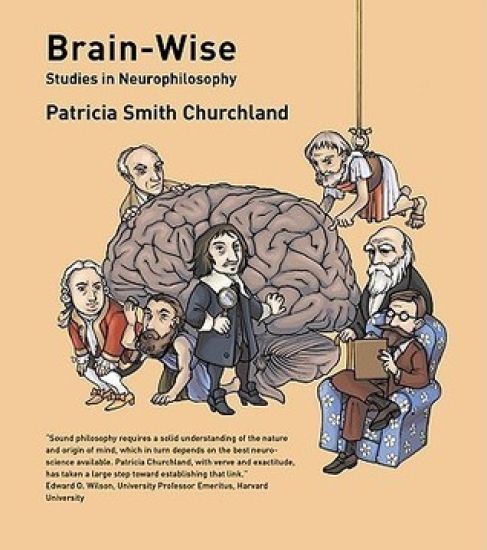
Progress in the neurosciences is profoundly changing our conception of ourselves. Contrary to time-honored intuition, the mind turns out to be a complex of brain functions. And contrary to the wishful thinking of some philosophers, there is no stemming the revolutionary impact that brain research will have on our understanding of how the mind works.Brain-Wise is the sequel to Patricia Smith Churchland's Neurophilosophy, the book that launched a subfield. In a clear, conversational manner, this book examines old questions about the nature of the mind within the new framework of the brain sciences. What, it asks, is the neurobiological basis of consciousness, the self, and free choice? How does the brain learn about the external world and about its own introspective world? What can neurophilosophy tell us about the basis and significance of religious and moral experiences?Drawing on results from research at the neuronal, neurochemical, system, and whole-brain levels, the book gives an up-to-date perspective on the state of neurophilosophy-what we know, what we do not know, and where things may go from here.
An anniversary edition of the classic work that influenced a generation of neuroscientists and cognitive neuroscientists.Before The Computational Brain was published in 1992, conceptual frameworks for brain function were based on the behavior of single neurons, applied globally. In The Computational Brain, Patricia Churchland and Terrence Sejnowski developed a different conceptual framework, based on large populations of neurons. They did this by showing that patterns of activities among the units in trained artificial neural network models had properties that resembled those recorded from populations of neurons recorded one at a time. It is one of the first books to bring together computational concepts and behavioral data within a neurobiological framework. Aimed at a broad audience of neuroscientists, computer scientists, cognitive scientists, and philosophers, The Computational Brain is written for both expert and novice. This anniversary edition offers a new preface by the authors that puts the book in the context of current research.This approach influenced a generation of researchers. Even today, when neuroscientists can routinely record from hundreds of neurons using optics rather than electricity, and the 2013 White House BRAIN initiative heralded a new era in innovative neurotechnologies, the main message of The Computational Brain is still relevant.
Patricia Badir's The Maudlin Impression investigates the figure of Mary Magdalene in post-medieval English religious writings and visual representations. Badir argues that the medieval Magdalene story was not discarded as part of Reformation iconoclasm, but was enthusiastically embraced by English writers and artists and retold in a wide array of genres. This rich study bridges the historical division between medieval and early modern culture by showing the ways in which Protestant writers, as well as Catholics, used the medieval stories, art, and symbolism related to the biblical Magdalene as resources for thinking about the role of the affective and erotic in Christian devotion. Their literary and artistic glosses protected a range of religious devotional practices and lent embodied, tangible form to the God of the Reformation. They employed the Magdalene figure to articulate religious experience by means of a poetics that could avoid controversial questions of religious art while exploring the potency and appeal of the beautiful. The Maudlin Impression is a literary history of imitation and invention. It participates in the "religious turn" in early modern studies by demonstrating the resilience of a single topos across time and across changing Christian beliefs.
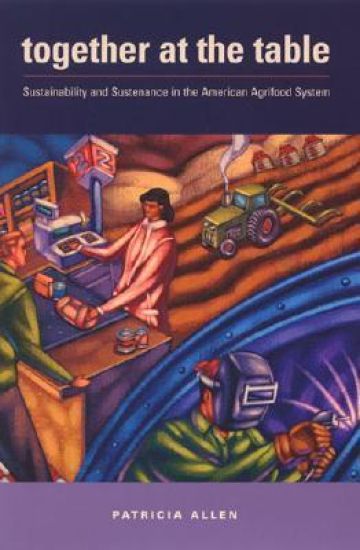
Everywhere you look people are more aware of what they eat and where their food comes from. In a cafeteria in Los Angeles, children make their lunchtime food choices at fresh-fruit and salad bars stocked with local foods. In a community garden in New York, low-income residents are producing organically grown fruits and vegetables for their own use and to sell at market. In Madison, Wisconsin, shoppers select their food from a bounty of choices at a vibrant farmers’ market. Together at the Table is about people throughout the United States who are building successful alternatives to the contemporary agrifood system and their prospects for the future. At the heart of these efforts are the movements for sustainable agriculture and community food security. Both movements seek to reconstruct the agrifood system—the food production chain, from the growing of crops to food production and distribution—to become more ecologically sound, economically viable, and socially just. Allen describes the ways in which people working in these movements view the world and how they see their place in challenging and reshaping the agrifood system. She also shows how ideas and practices of sustainable agriculture and community food security have already woven their way into the dominant agrifood institutions. Allen explores the possibilities this process may hold for improving social and environmental justice in the American agrifood system.Together at the Table is an important reminder that much work still remains to be done. Now that the ideas and priorities of alternative food movements have taken hold, it is time for the next—even more challenging—step. Alternative agrifood movements must acknowledge and address the deeper structural and cultural patterns that constrain the long-term resolution of social and environmental problems in the agrifood system.