Kirjojen hintavertailu. Mukana 12 016 292 kirjaa ja 12 kauppaa.

Kirjahaku

Etsi kirjoja tekijän nimen, kirjan nimen tai ISBN:n perusteella.

1000 tulosta hakusanalla Paul Tengesdal

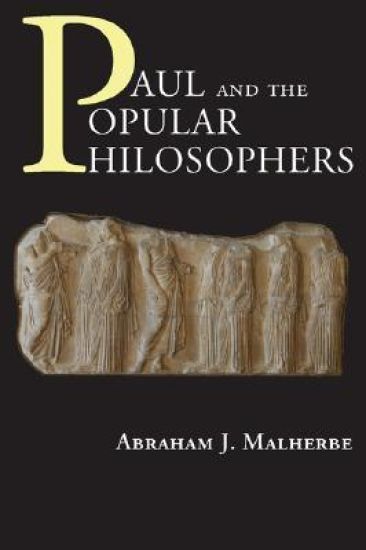
Paul and the Popular Philosophers

Paul and the Popular Philosophers

Abraham J. Malherbe

Augsburg Fortress Publishing
2006
nidottu
These studies continue a tradition of scholarship that flourished around the turn of the century when new editions of ancient philosophical sources were published. Professor Malherbe, however, widens the scope to include other philosophical traditions. He recognizes and identifies the influences of Platonists, Peripatetics, Cynics, Stoics, Epicureans, and Pythagoreans. These popular philosophers aimed at moral reform; they shared both in their substance and in the techniques employed. Yet, they need to be distinguished in order to discern their influence, if any, on Paul.
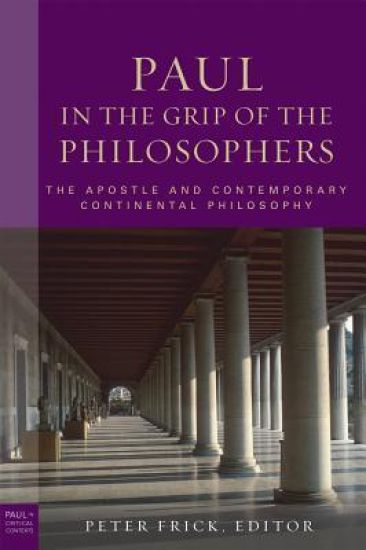
Paul in the Grip of the Philosophers

Paul in the Grip of the Philosophers

Peter Frick

Fortress Press,U.S.
2013
sidottu
One of the remarkable developments in the contemporary study of Paul is the dramatic interest in his thought amongst European philosophers. This collection of leading scholars makes accessible a discussion often elusive to those not already conversant in the categories of European philosophy.
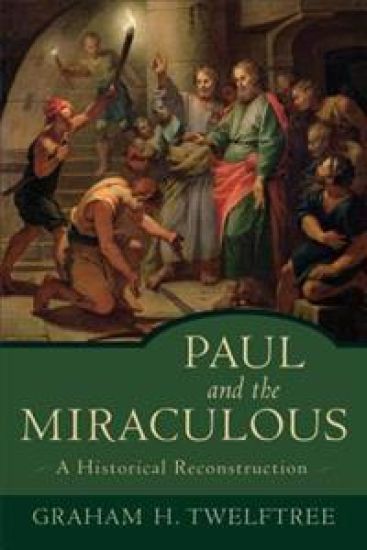
Paul and the Miraculous – A Historical Reconstruction

Paul and the Miraculous – A Historical Reconstruction

Graham H. Twelftree

Baker Academic, Div of Baker Publishing Group
2013
nidottu
How can we explain the difference between the "miraculous" Christianity expressed in the Gospels and the nearly miracle-free Christianity of Paul? In this historically informed study, senior New Testament scholar Graham Twelftree challenges the view that Paul was primarily a thinker and reimagines him as an apostle of Jesus for whom the miraculous was of profound importance. Highlighting often-overlooked material in Paul's letters, Twelftree offers a fresh consideration of what the life and work of Paul might teach us about miracles in early Christianity and sheds light on how early Christians lived out their faith.
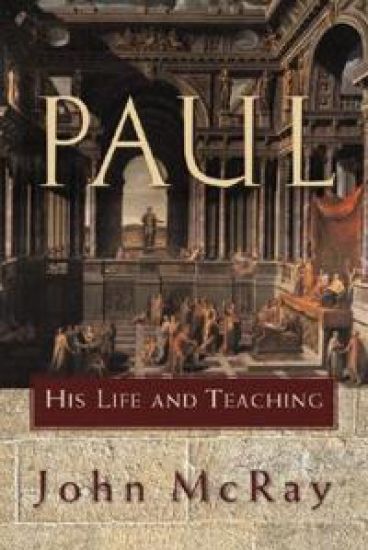
Paul – His Life and Teaching

Paul – His Life and Teaching

John McRay

Baker Academic, Div of Baker Publishing Group
2007
nidottu
The apostle Paul and his significance for the New Testament and Christianity is a perennial topic of interest, but few evangelical surveys of his life offer a truly holistic picture of the man and his world. Now available in trade paper, John McRay's Paul explores the apostle's preconversion days, missionary travels, and theological contributions. A specialist in archaeology, the author draws on his more than forty years of teaching experience as well as knowledge gained from extensive travels to the places Paul visited. Paul is a comprehensive and readable presentation of Paul's ministry and theology that weaves together historical backgrounds, archaeological discoveries, and theological themes.
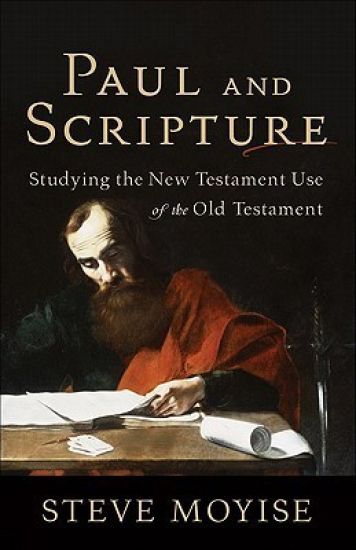
Paul and Scripture: Studying the New Testament Use of the Old Testament
There are over one hundred explicit quotations of Scripture in Paul's letters and at least two hundred allusions. The coming of Jesus and the birth of the church caused Paul to look at the Scriptures with new eyes, sometimes clarifying what was written and sometimes reinterpreting it. This volume illuminates Paul's use of the Old Testament, providing a big-picture overview for students of the New Testament. Steve Moyise, a recognized expert on the use of the Old Testament in the New, discusses Paul's handling of creation stories, Abraham, Moses, the Law, the Prophets, and the Writings. He then assesses competing contemporary approaches to Paul's interpretations of Scripture.
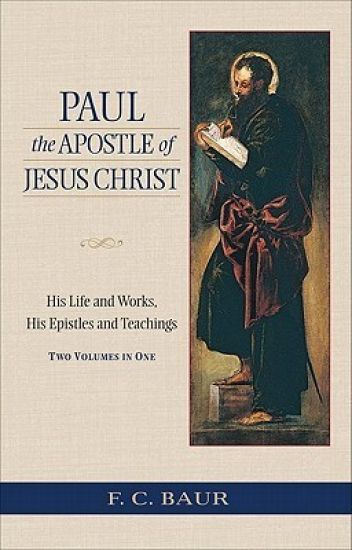
Paul the Apostle of Jesus Christ

Paul the Apostle of Jesus Christ

Baker Academic, Div of Baker Publishing Group
2013
pokkari
"One hundred and sixty years ago F. C. Baur posed, in inescapably sharp form, a question which has haunted Christianity throughout its history: is Christianity simply a form of Judaism, development from Judaism, or was it, as Baur argued, from the beginning something quite distinct, a religious spirit or consciousness which could not be or become itself until it broke through the limits and restrictions of its historical origins? Baur's radical answer set the agenda for the rest of the nineteenth century, and though neglected for most of the twentieth century, the question has reemerged with renewed force in a post-Holocaust world."--James D. G. Dunn, Emeritus Lightfoot Professor of Divinity, University of Durham "It will be extremely helpful to New Testament critics to have F. C. Baur's influential work on Paul--long out of print and often no longer even available on most theological library shelves--conveniently at hand. Baur's application of Hegel's dialectical theories to the writings of Paul profoundly shaped the discourse of his mid-nineteenth-century German contemporaries, including that of those who sought to challenge certain aspects of his interpretation. They did not escape the powerful force of his conceptualization of the world, including a deeply negative evaluation of the Oriental spirit (i.e., Judaism and Jewishness), which was central to his project. The legacy of these developments--the so-called TUbingen school--has deeply influenced NT studies (and arguably world history) ever since and continues to assert its influence on the interpretation of Paul's voice to this day, although often now in unrecognized ways. With the availability of this edition, that is about to change."--Mark D. Nanos, author of The Galatians Debate, The Irony of Galatians, and The Mystery of Romans"Perhaps the most influential book of nineteenth-century New Testament scholarship, Paul the Apostle of Jesus Christ offered a novel, breathtaking synthesis of the apostle's place in the development of early Christianity. . . . In seeking the authentic writings of Paul, the generative center of his thought, the role of the law and its relationship to the gospel of Jesus Christ, the historical value of the book of Acts, and the views of Paul's opponents, Baur's work set an agenda that continues to dominate modern inquiry."--A. Andrew Das, Niebuhr Distinguished Chair, professor of religious studies, Elmhurst College "The history of Pauline and even New Testament studies is a continuing dialogue with the assumptions and conclusions of Ferdinand Christian Baur. No Pauline scholar--recent efforts notwithstanding--has so shaped the set of questions asked of Paul's letters as did Baur. This is not to say that Baur got it right--far from it. He was no doubt wrong, and sometimes quite wrong, on a number of crucial issues in each of the areas that he so significantly influenced. Nevertheless, his legacy regarding the influence of fundamental conflicts in the early church, and the need for critical rather than simply theological scrutiny of the letters, is still of importance as we continue to study Paul's letters in the context of the New Testament and early Christianity."--Stanley E. Porter, president, dean, and professor of New Testament, McMaster Divinity College
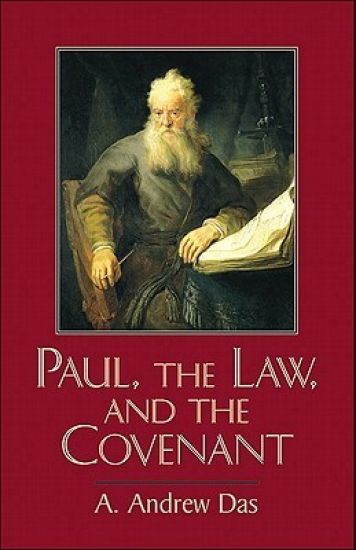
Paul, the Law, and the Covenant

Paul, the Law, and the Covenant

A Das

Baker Academic, Div of Baker Publishing Group
2012
nidottu
The now familiar "new perspective" asserts that the "covenantal nomism" characteristic of second-temple Judaism softened the Mosaic law's requirement of perfect obedience. Because of God's gracious covenant with Israel, manifested in election and the provision of atoning sacrifices, one could be righteous under the law despite occasional failures to obey the law perfectly. This view concludes that Paul, as a first-century Jew, could not have been troubled by the law's stringent demands, because it was generally understood that the gracious framework of the covenant provided a way of dealing with occasional lapses. Consequently, it is claimed, Paul's problem with the law must have to do with its misuse as a means of enforcing ethnic boundaries and excluding Gentile believers. However, as Das demonstrates in this book, whenever the gracious framework of covenantal nomism is called into question, the law's demands take on central importance. Das traces this development in a number of second-temple Jewish works and especially in the writings of Paul. "Covenantal nomism" is probably an apt characterization of Paul's opponents, and indeed of Paul's past life; thus he can assert that formerly he was "blameless" under the law. But now Paul sees God's grace as active only in Christ. He emphatically denies that God will show special grace in his judgment of Jews; to do so would be favoritism. Similarly, Paul sees no atoning benefit to the sacrificial system. In effect, Paul is no longer a "covenantal nomist." Since the gracious framework of the covenant has collapsed, all that remains for Paul is the law, with its oppressive requirement of perfect obedience and ethnic exclusivism. Contra the "new perspective," the "works of the law" should not be construed so narrowly as only the law's ethnic exclusivity. Christ is "the end" of the law in general, both in the sense that he is the goal to which the law always pointed, and in that he is the sole agent of God's grace apart from which the law's demands would be impossible.
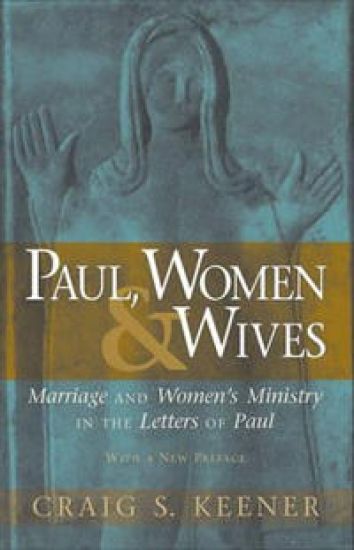
Paul, Women, and Wives – Marriage and Women`s Ministry in the Letters of Paul

Paul, Women, and Wives – Marriage and Women`s Ministry in the Letters of Paul

Craig S. Keener

Baker Academic, Div of Baker Publishing Group
1992
nidottu
Paul's letters stand at the center of the dispute over women, the church, and the home, with each side championing passages from the Apostle. Now, in a challenging new attempt to wrestle with these thorny texts, Craig Keener delves as deeply into the world of Paul and the apostles as anyone thus far. Acknowledging that we must take the biblical text seriously, and recognizing that Paul's letters arose in a specific time and place for a specific purpose, Keener mines the historical, lexical, cultural, and exegetical details behind Paul's words about women in the home and ministry to give us one of the most insightful expositions of the key Pauline passages in years.
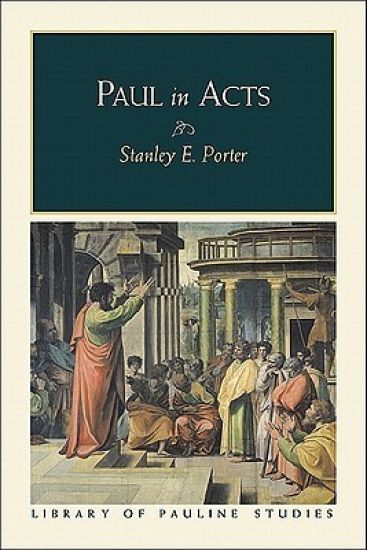
Paul in Acts

Paul in Acts

Stanley E. Porter

Baker Academic Brazos Press
2012
nidottu
Stanley E. Porter focuses upon the depiction of Paul in the book of Acts from literary-critical, rhetorical, and theological perspectives, among several others. The essays within this volume examine various topics related to the Paul of Acts such as the extent to which the "we" passages of Acts should function as a source regarding Paul, and the theology and perspective of these passages in terms of their portrait of him. Porter analyzes the Acts passages that deal with Paul and the Holy Spirit and the question of whether Paul is an epistolographer or rhetorician. He examines Paul's missionary speeches and apologetic speeches in Acts. Porter also looks at Acts 21 and Paul's arrest in Jerusalem before he closes with an analysis of some common conceptions and misconceptions of the Paul of Acts and the Paul of the letters. The Library of Pauline Studies is a series of books exploring key issues in Pauline and related studies. This series is edited by Stanley E. Porter, principal, dean, and professor of New Testament at McMaster Divinity College in Hamilton, Ontario, Canada.
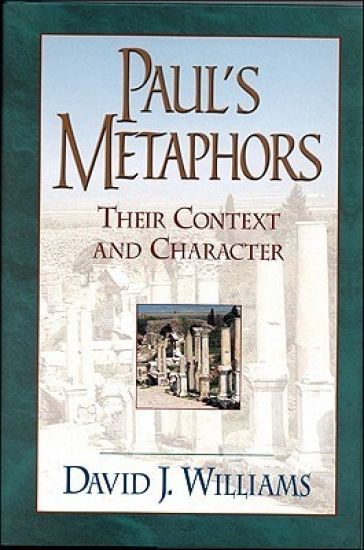
Paul`s Metaphors – Their Context and Character

Paul`s Metaphors – Their Context and Character

David J. Williams

Baker Academic, Div of Baker Publishing Group
2003
nidottu
Paul's writings are laced with vivid images from the bustling New Testament world. To understand these metaphors, David J. Williams delves into that Greco-Roman world and uses ancient sources to explore a wide variety of topics such as architecture, law, commerce, health care, and education. Williams studies this world in chapters with titles such as "Life in the City," "Family Life," "Slavery and Freedom," "Citizens and Courts of Law," "Travel," and "Warfare and Soldiering."Paul's metaphors, set apart in bold type, are examined in the light of this background information and restored to their original vitality. Well-known metaphors--the Christian as a slave of Christ, the church as a body, Paul's two natures being at war within him, the Christian as an athlete striving toward the prize, Jesus' return as a thief in the night, Christians as adopted heirs of God--and lesser-known metaphors come to life for the modern reader through Williams's careful exposition.The main text is accessible to the general reader; scholars will appreciate footnotes that discuss the Greek text and provide resources for further study. Appendix 1 lists a select chronology of the Roman Empire and appendix 2 provides dates and descriptions of significant ancient authors and tests. Scripture, ancient source, and modern author indexes add to the usefulness of this work.
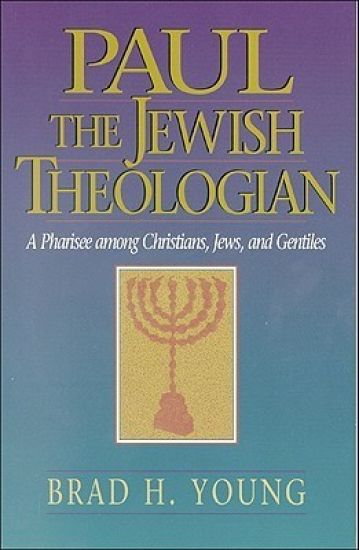
Paul the Jewish Theologian – A Pharisee among Christians, Jews, and Gentiles

Paul the Jewish Theologian – A Pharisee among Christians, Jews, and Gentiles

Brad H. Young; Cheryl Brown; Burton Visotzky

Baker Academic, Div of Baker Publishing Group
1995
nidottu
Paul the Jewish Theologian reveals Saul of Tarsus as a man who, though rejected in the synagogue, never truly left Judaism. Author Young disagrees with long held notions that Hellenism was the context which most influenced Paul's communication of the Gospel. This skewed notion has led to widely divergent interpretations of Paul's writings. Only in rightly aligning Paul as rooted in his Jewishness and training as a Pharisee can he be correctly interpreted. Young asserts that Paul's view of the Torah was always positive, and he separates Jesus' mission among the Jews from Paul's call to the Gentiles.
Paul and the Early Jewish Encounter with Deuteronomy

Paul and the Early Jewish Encounter with Deuteronomy

Baker Academic, Div of Baker Publishing Group
2013
pokkari
This study offers a fresh, thorough engagement with Paul's use of Deuteronomy, paying full attention to the concrete realities of Paul's exposure, in life and literature, to Torah. David Lincicum compares Paul's handling of Deuteronomy to the treatment of Deuteronomy in other contemporary Jewish sources. He shows how this key book of Jewish Scripture was influential in Jewish life and liturgy and how it bears on Paul's relationship to the Law. Originally published by Mohr Siebeck in the Wissenschaftliche Untersuchungen zum Neuen Testament series, this work is now available as an affordable North American paperback.
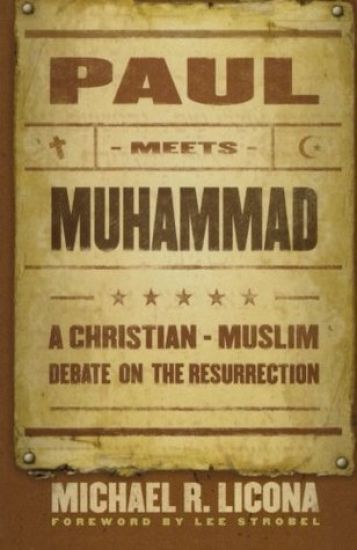
Paul Meets Muhammad – A Christian–Muslim Debate on the Resurrection

Paul Meets Muhammad – A Christian–Muslim Debate on the Resurrection

Michael R. Licona; Lee Strobel

Baker Books, a division of Baker Publishing Group
2006
nidottu
Imagine if the Apostle Paul were alive to defend the truth of Jesus's resurrection-only to be countered by none other than the prophet Muhammad himself.In an approach as creative as any scholar has taken, Michael R. Licona describes an invention that can make historical figures appear alive and present. Imagining an audience of both Christians and Muslims, Licona crafts a lively debate between Paul and Muhammad, each speaking on and analyzing the validity of the Qur'an, the gospel accounts, and both Christian and Muslim doctrine.Intriguing and entertaining, Paul Meets Muhammad uniquely offers evangelism advice for Christians who want to speak the gospel to Muslim friends and neighbors. This fictional scenario presents a powerful, comprehensive defense of Jesus's resurrection and of Christianity itself.
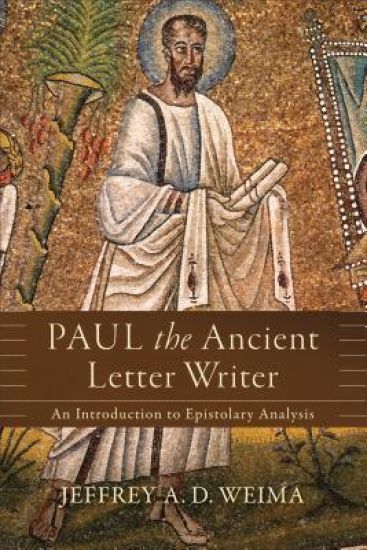
Paul the Ancient Letter Writer – An Introduction to Epistolary Analysis

Paul the Ancient Letter Writer – An Introduction to Epistolary Analysis

Jeffrey A. D. Weima

Baker Academic, Div of Baker Publishing Group
2016
nidottu
This clear and user-friendly introduction to the interpretive method called "epistolary analysis" shows how focusing on the form and function of Paul's letters yields valuable insights into the apostle's purpose and meaning. The author helps readers interpret Paul's letters properly by paying close attention to the apostle's use of ancient letter-writing conventions. Paul is an extremely skilled letter writer who deliberately adapts or expands traditional epistolary forms so that his persuasive purposes are enhanced. This is an ideal supplemental textbook for courses on Paul or the New Testament. It contains numerous analyses of key Pauline texts, including a final chapter analyzing the apostle's Letter to Philemon as a "test case" to demonstrate the benefits of this interpretive approach.
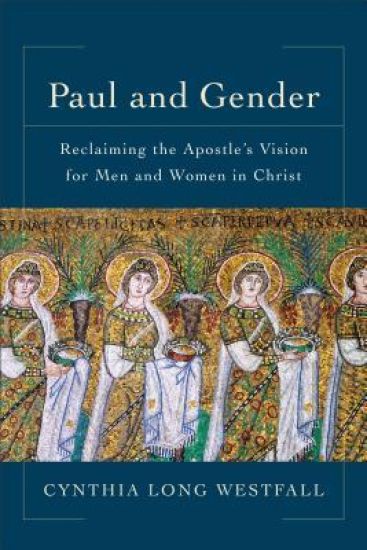
Paul and Gender – Reclaiming the Apostle`s Vision for Men and Women in Christ

Paul and Gender – Reclaiming the Apostle`s Vision for Men and Women in Christ

Cynthia Long Westfall

Baker Academic, Div of Baker Publishing Group
2016
nidottu
Christianity Today 2018 Book Award WinnerRespected New Testament scholar Cynthia Long Westfall offers a coherent Pauline theology of gender, which includes fresh perspectives on the most controverted texts. Westfall interprets passages on women and men together and places those passages in the context of the Pauline corpus as a whole. She offers viable alternatives for some notorious interpretive problems in certain Pauline passages, reframing gender issues in a way that stimulates thinking, promotes discussion, and moves the conversation forward. As Westfall explores the significance of Paul's teaching on both genders, she seeks to support and equip males and females to serve in their area of gifting.
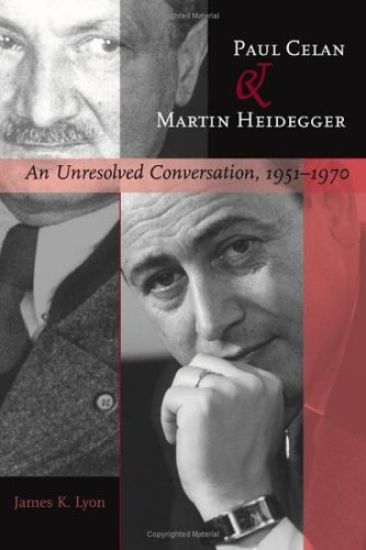
Paul Celan and Martin Heidegger

Paul Celan and Martin Heidegger

James K. Lyon

Johns Hopkins University Press
2006
sidottu
This work explores the troubled relationship and unfinished intellectual dialogue between Paul Celan, regarded by many as the most important European poet after 1945, and Martin Heidegger, perhaps the most influential figure in twentieth-century philosophy. It centers on the persistent ambivalence Celan, a Holocaust survivor, felt toward a thinker who respected him and at times promoted his poetry. Celan, although strongly affected by Heidegger's writings, struggled to reconcile his admiration of Heidegger's ideas on literature with his revulsion at the thinker's Nazi past. That Celan and Heidegger communicated with each other over a number of years, and in a controversial encounter, met in 1967, is well known. The full duration, extent, and nature of their exchanges and their impact on Celan's poetics has been less understood, however. In the first systematic analysis of their relationship between 1951 and 1970, James K. Lyon describes how the poet and the philosopher read and responded to each other's work throughout the period. He offers new information about their interactions before, during, and after their famous 1967 meeting at Todtnauberg. He suggests that Celan, who changed his account of that meeting, may have contributed to misreadings of his poem "Todtnauberg." Finally, Lyon discusses their two last meetings after 1967 before the poet's death three years later. Drawing heavily on documentary material-including Celan's reading notes on more than two dozen works by Heidegger, the philosopher's written response to the poet's "Meridian" speech, and references to Heidegger in Celan's letters-Lyon presents a focused perspective on this critical aspect of the poet's intellectual development and provides important insights into his relationship with Heidegger, transforming previous conceptions of it.
Paul Virilio

Paul Virilio

Steve Redhead

University of Toronto Press
2004
sidottu
Paul Virilio is known as the high priest of speed. His discourses on speed, military technology, and modernity are highly influential among urban and cultural theorists, but he has influenced the work of many in other fields as well, including media theory, international relations, art history, cultural politics, architecture, and peace studies, to name a few. The first authoritative study of the life and work of Virilio, Steve Redhead's Paul Virilio: Theorist for an Accelerated Culture explains and analyses Virilio's work, correcting many mistaken interpretations that have surfaced in the literature over the years. Although now retired from his position at the École Spéciale d'Architecture in Paris, Virilio remains an active political and cultural thinker and commentator with a significant catalogue of work stretching back to the 1950s. Redhead reviews Virilio's intellectual career, from his days hanging out in an architect's office in the 1960s to his recent creation of a major art foundation exhibition on 'the accident' in the wake of 11 September 2001. Paul Virilio: Theorist for an Accelerated Culture is a rigorous and accessible introduction to Virilio that places him in the pantheon of critical thinkers in today's accelerated culture.
Paul Virilio

Paul Virilio

Steve Redhead

University of Toronto Press
2004
pokkari
Paul Virilio is known as the high priest of speed. His discourses on speed, military technology, and modernity are highly influential among urban and cultural theorists, but he has influenced the work of many in other fields as well, including media theory, international relations, art history, cultural politics, architecture, and peace studies, to name a few. The first authoritative study of the life and work of Virilio, Steve Redhead's Paul Virilio: Theorist for an Accelerated Culture explains and analyses Virilio's work, correcting many mistaken interpretations that have surfaced in the literature over the years. Although now retired from his position at the École Spéciale d'Architecture in Paris, Virilio remains an active political and cultural thinker and commentator with a significant catalogue of work stretching back to the 1950s. Redhead reviews Virilio's intellectual career, from his days hanging out in an architect's office in the 1960s to his recent creation of a major art foundation exhibition on 'the accident' in the wake of 11 September 2001. Paul Virilio: Theorist for an Accelerated Culture is a rigorous and accessible introduction to Virilio that places him in the pantheon of critical thinkers in today's accelerated culture.
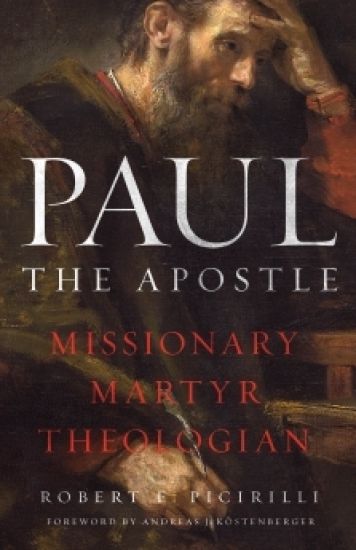
Paul the Apostle

Paul the Apostle

Robert E. Picirilli

Moody Publishers
1986
nidottu
"Except for the Lord Himself, no single figure has done more for the Christian faith." If you want to understand Christianity, you need to understand Paul. But with so many books on the apostle, where do you start? Paul the Apostle is the ideal choice if you want a solid understanding of Paul's life, ministry, and writings without getting weighed down with minutia. Author Robert E. Picirilli, who taught college courses on Paul for over twenty-five years, found that most books on the apostle were either too technical or too basic, so he wrote a book that strikes a happy medium. It offers: A profile of Paul in his historical and cultural context Outlines and explanations of his missionary journeys Introductions and brief analyses of each of his epistles Useful for individual study or as a textbook (as it is in many universities today), Paul the Apostle is a great one-stop study of the man who wrote half the New Testament, spread the gospel to the heart of the known world, and gave his life for the Kingdom.
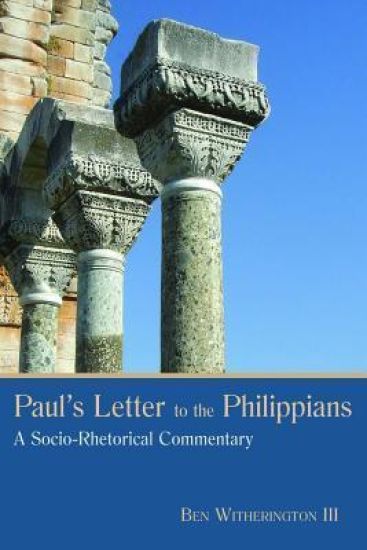
Paul's Letter to the Philippians

Paul's Letter to the Philippians

Ben Witherington

William B Eerdmans Publishing Co
2011
nidottu
Interprets Paul's letter in light of its rhetorical content and cultural context Skeptical of the trend among many biblical scholars to analyze Paul's short, affectionate letter to the Philippians in light of Greco-Roman letter-writing conventions, Ben Witherington instead looks at Philippians as a masterful piece of long-distance oratory -- an extension of Paul's oral speech, dictated to a scribe and meant to be read aloud to its recipients. Witherington examines Philippians in light of Greco-Roman rhetorical conventions, identifying Paul's purpose, highlighting his main points and his persuasive strategies, and considering how his original audience would have heard and received Paul's message.