This graphically compelling, diversely illustrated volume is a behind-the-scenes look at Academy Award-winning director Ang Lee's most ambitious film to date, "Life of Pi", an adaptation of Yann Martel's international bestseller and Man Booker Prize-winning novel. The book includes a foreword by Martel and an introduction by Lee. This 3-D film is released on December 21, 2012.
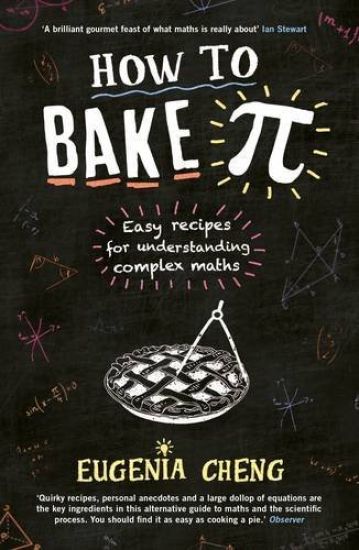
Möbius bagels, Euclid's flourless chocolate cake and apple pi - this is maths, but not as you know it. In How to Bake Pi, mathematical crusader and star baker Eugenia Cheng has rustled up a batch of delicious culinary insights into everything from simple numeracy to category theory ('the mathematics of mathematics'), via Fermat, Poincaré and Riemann. Maths is much more than simultaneous equations and pr2 : it is an incredibly powerful tool for thinking about the world around us. And once you learn how to think mathematically, you'll never think about anything - cakes, custard, bagels or doughnuts; not to mention fruit crumble, kitchen clutter and Yorkshire puddings - the same way again. Stuffed with moreish puzzles and topped with a generous dusting of wit and charm, How to Bake Pi is a foolproof recipe for a mathematical feast. *Previously published under the title Cakes, Custard & Category Theory*
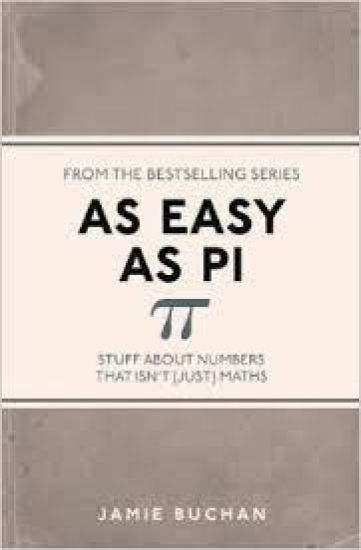
Taking a quirky and insightful look at the world of numbers, As Easy As Pi will delight and entertain any number enthusiast.In this day and age it's hard to imagine a world without numbers. Our lives are centred around commerce and money, and it is the only language that's the same the world over. However, did you know that for a long period of time people could not get their heads around the idea of zero, a figure representing nothing, and that it was even regarded as heretical in some circles? As Easy As Pi is an entertaining and accessible guide, written for those who love numbers – and those who don't – and uncovers a great deal of lore and intriguing information. Including:- Snippets of fascinating numerical facts - Myths and mysticism in the world of numbers- Numbers in language and used as slang- Pop culture trivia - Useful mathematical rules to remember
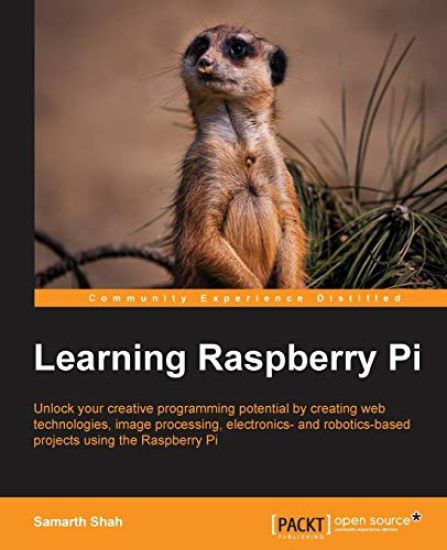
About This BookLearn how to create games, web, and desktop applications using the best features of the Raspberry PiDiscover the powerful development tools that allow you to cross-compile your software and build your own Linux distribution for maximum performanceStep-by-step tutorials show you how to quickly develop real-world applications using the Raspberry PiWho This Book Is ForIf you have a passion for technology and want to explore the world of Raspberry Pi, then this book provides you with all the tools and information you are looking for. Although being familiar with basic programming concepts is useful, you can still learn a lot from this book as a wide variety of topics are covered.
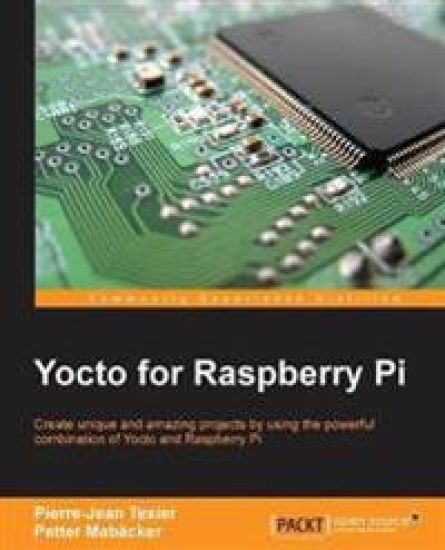
Create unique and amazing projects by using the powerful combination of Yocto and Raspberry Pi About This Book • Set up and configure the Yocto Project efficiently with Raspberry Pi • Deploy multimedia applications from existing Yocto/OE layers • An easy-to-follow guide to utilize your custom recipes on your Raspberry Pi Who This Book Is For If you are a student or a developer of embedded software, embedded Linux engineer or embedded systems in competence with Raspberry Pi and want to discover the Yocto Project, then this book is for you. Experience with Yocto is not needed. What You Will Learn • Explore the basic concept of Yocto's build system and how it is organized in order to use it efficiently with Raspberry Pi • Generate your first image with Yocto for the Raspberry Pi • Understand how to customize your Linux kernel within the Yocto Project • Customize your image in order to integrate your own applications • Write your own recipes for your graphical applications • Integrate a custom layer for the Raspberry Pi In Detail The Yocto Project is a Linux Foundation workgroup, which produces tools (SDK) and processes (configuration, compilation, installation) that will enable the creation of Linux distributions for embedded software, independent of the architecture of embedded software (Raspberry Pi, i.MX6, and so on). It is a powerful build system that allows you to master your personal or professional development. This book presents you with the configuration of the Yocto Framework for the Raspberry Pi, allowing you to create amazing and innovative projects using the Yocto/OpenEmbedded eco-system. It starts with the basic introduction of Yocto's build system, and takes you through the setup and deployment steps for Yocto. It then helps you to develop an understanding of Bitbake (the task scheduler), and learn how to create a basic recipe through a GPIO application example. You can then explore the different types of Yocto recipe elements (LICENSE, FILES, SRC_URI, and so on). Next, you will learn how to customize existing recipes in Yocto/OE layers and add layers to your custom environment (qt5 for example). Style and approach A step by step guide covering the fundamentals to create amazing new projects with Raspberry Pi and Yocto.
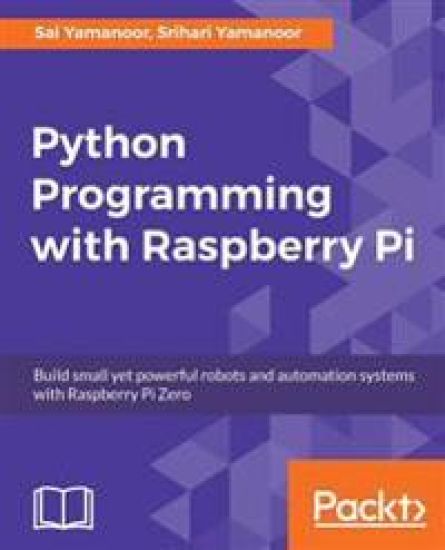
Become a master of Python programming using the small yet powerful Raspberry Pi Zero About This Book • This is the first book on the market that teaches Python programming with Raspberry Pi Zero • Develop exciting applications such as a mobile robot and home automation controller using Python • This step-by-step guide helps you make the most out of Raspberry Pi Zero using Python programming Who This Book Is For This book is aimed at hobbyists and programmers who want to learn Python programming and develop applications using the Pi Zero. They should have basic familiarity with electronics. What You Will Learn • Configure Raspberry Pi using Python • Control loops to blink an LED using simple arithmetic operations • Understand how interface sensors, actuators, and LED displays work • Get to grips with every aspect of Python programming using practical examples • Explore machine vision, data visualization, and scientific computations • Build a mobile robot using the Raspberry Pi as the controller • Build a voice-activated home automation controller In Detail Raspberry Pi Zero is a super-small and super-affordable product from Raspberry Pi that is packed with a plethora of features and has grabbed the notice of programmers, especially those who use Python. This step-by-step guide will get you developing practical applications in Python using a Raspberry Pi Zero. It will become a valuable resource as you learn the essential details of interfacing sensors and actuators to a Raspberry Pi, as well as acquiring and displaying data. You will get started by writing a Python program that blinks an LED at 1-second intervals. Then you will learn to write simple logic to execute tasks based upon sensor data (for example, to control a motor) and retrieve data from the web (such as to check e-mails to provide a visual alert). Finally, you will learn to build a home automation system with Python where different appliances are controlled using the Raspberry Pi. The examples discussed in each chapter of this book culminate in a project that help improve the quality of people's lives. Style and approach This will be a learning, step-by-step guide to teach Python programming using the famous Raspberry Pi Zero. The book is packed with practical examples at every step along with tips and tricks for the Raspberry Pi fans
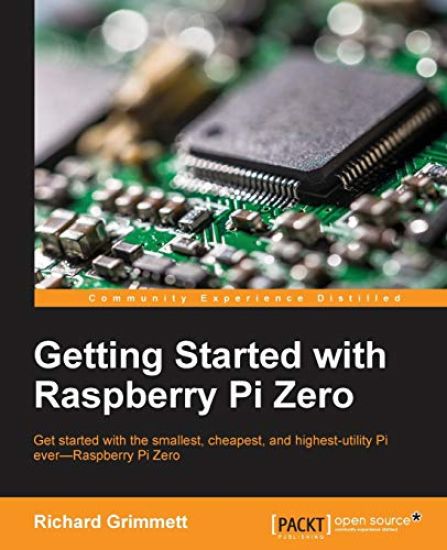
Get started with the smallest, cheapest, and highest-utility Pi ever—Raspberry Pi Zero About This Book • Get started with Raspberry Pi Zero and put all of its exciting features to use • Create fun games and programs with little or no programming experience • Learn to use this super-tiny PC to control hardware and software for work, play, and everything else Who This Book Is For This book is for hobbyists and programmers who are taking their first steps toward using Raspberry Pi Zero. No programming experience is required, although some Python programming experience might be useful. What You Will Learn • Understand how to initially download the operating system and set up Raspberry Pi Zero • Find out how to control the GPIO pins of Raspberry Pi Zero to control LED circuits • Get to grips with adding hardware to the GPIO to control more complex hardware such as motors • Add USB control hardware to control a complex robot with 12 servos • Include speech recognition so that projects can receive commands • Enable the robot to communicate with the world around it by adding speech output • Control the robot from a distance and see what the robot is seeing by adding wireless communication • Discover how to build a Robotic hand and a Quadcopter In Detail Raspberry Pi Zero is half the size of Raspberry Pi A, only with twice the utility. At just three centimeters wide, it packs in every utility required for full-fledged computing tasks. This practical tutorial will help you quickly get up and running with Raspberry Pi Zero to control hardware and software and write simple programs and games. You will learn to build creative programs and exciting games with little or no programming experience. We cover all the features of Raspberry Pi Zero as you discover how to configure software and hardware, and control external devices. You will find out how to navigate your way in Raspbian, write simple Python scripts, and create simple DIY programs. Style and approach This is a practical and fun ?getting started? tutorial that will guide you through everything new that the Raspberry Pi has to offer.
One boy, one boat, one tiger . . .After the tragic sinking of a cargo ship, a solitary lifeboat remains bobbing on the wild, blue Pacific. The only survivors from the wreck are a sixteen-year-old boy named Pi, a hyena, a zebra (with a broken leg), a female orang-utan - and a 450-pound Royal Bengal tiger. The scene is set for one of the most extraordinary and best-loved works of fiction in recent years.
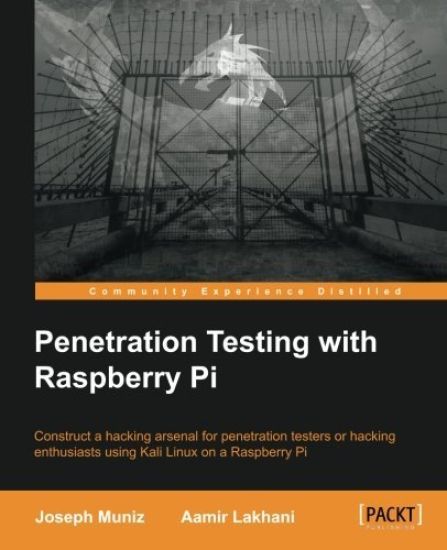
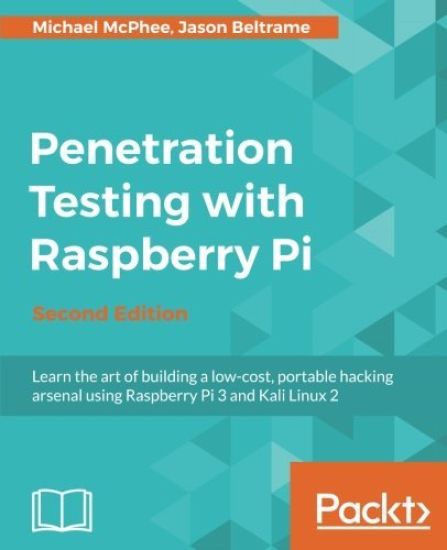
Learn the art of building a low-cost, portable hacking arsenal using Raspberry Pi 3 and Kali Linux 2 About This Book • Quickly turn your Raspberry Pi 3 into a low-cost hacking tool using Kali Linux 2 • Protect your confidential data by deftly preventing various network security attacks • Use Raspberry Pi 3 as honeypots to warn you that hackers are on your wire Who This Book Is For If you are a computer enthusiast who wants to learn advanced hacking techniques using the Raspberry Pi 3 as your pentesting toolbox, then this book is for you. Prior knowledge of networking and Linux would be an advantage. What You Will Learn • Install and tune Kali Linux 2 on a Raspberry Pi 3 for hacking • Learn how to store and offload pentest data from the Raspberry Pi 3 • Plan and perform man-in-the-middle attacks and bypass advanced encryption techniques • Compromise systems using various exploits and tools using Kali Linux 2 • Bypass security defenses and remove data off a target network • Develop a command and control system to manage remotely placed Raspberry Pis • Turn a Raspberry Pi 3 into a honeypot to capture sensitive information In Detail This book will show you how to utilize the latest credit card sized Raspberry Pi 3 and create a portable, low-cost hacking tool using Kali Linux 2. You'll begin by installing and tuning Kali Linux 2 on Raspberry Pi 3 and then get started with penetration testing. You will be exposed to various network security scenarios such as wireless security, scanning network packets in order to detect any issues in the network, and capturing sensitive data. You will also learn how to plan and perform various attacks such as man-in-the-middle, password cracking, bypassing SSL encryption, compromising systems using various toolkits, and many more. Finally, you'll see how to bypass security defenses and avoid detection, turn your Pi 3 into a honeypot, and develop a command and control system to manage a remotely-placed Raspberry Pi 3. By the end of this book you will be able to turn Raspberry Pi 3 into a hacking arsenal to leverage the most popular open source toolkit, Kali Linux 2.0. Style and approach This concise and fast-paced guide will ensure you get hands-on with penetration testing right from the start. You will quickly install the powerful Kali Linux 2 on your Raspberry Pi 3 and then learn how to use and conduct fundamental penetration techniques and attacks.
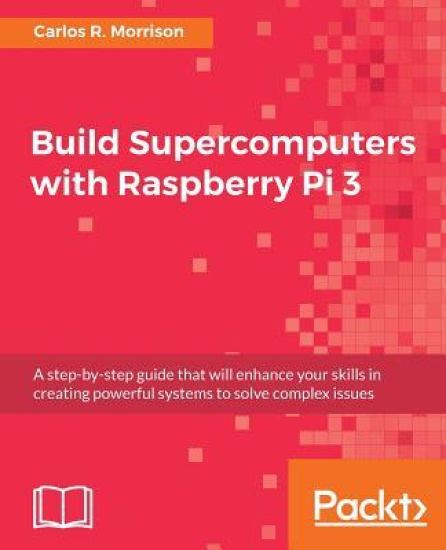
A step-by-step guide that will enhance your skills in creating powerful systems to solve complex issues About This Book • Carlos R. Morrison from NASA will teach you to build a supercomputer with Raspberry Pi 3 • Deepen your understanding of setting up host nodes, configuring networks, and automating mountable drives • Learn various math, physics, and engineering applications to solve complex problems Who This Book Is For This book targets hobbyists and enthusiasts who want to explore building supercomputers with microcomputers. Researchers will also find this book useful. Prior programming knowledge is necessary; knowledge of supercomputers is not. What You Will Learn • Understand the concept of the Message Passing Interface (MPI) • Understand node networking. • Configure nodes so that they can communicate with each other via the network switch • Build a Raspberry Pi3 supercomputer. • Test the supercluster • Use the supercomputer to calculate MPI p codes. • Learn various practical supercomputer applications In Detail Author Carlos R. Morrison (Staff Scientist, NASA) will empower the uninitiated reader to quickly assemble and operate a Pi3 supercomputer in the shortest possible time. The lifeblood of a supercomputer, the MPI code, is introduced early, and sample MPI code provides additional practice opportunities for you to test the effectiveness of your creation. You will learn how to configure various nodes and switches so that they can effectively communicate with each other. By the end of this book, you will have successfully built a supercomputer and the various applications related to it. Style and approach A progressive guide that will start off with serial coding and MPI concepts, moving towards configuring a complete supercluster, and solving real world problems
Can you find the tiny creatures that are hiding under the flaps? Be careful! They may jump out! This book promotes cognitive skills and the imagination, and helps to create an interactive bond between child and parent.
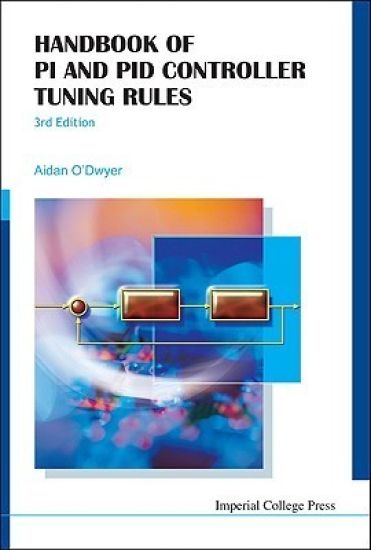
The vast majority of automatic controllers used to compensate industrial processes are PI or PID type. This book comprehensively compiles, using a unified notation, tuning rules for these controllers proposed from 1935 to 2008. The tuning rules are carefully categorized and application information about each rule is given. The book discusses controller architecture and process modeling issues, as well as the performance and robustness of loops compensated with PI or PID controllers. This unique publication brings together in an easy-to-use format material previously published in a large number of papers and books.This wholly revised third edition extends the presentation of PI and PID controller tuning rules, for single variable processes with time delays, to include additional rules compiled since the second edition was published in 2006.
A Welsh adaptation by Elin Meek of Sophie Peekaboo! Colours to promote early learning by giving toddlers a hands-on experience while learning basic colours with touch and feel elements and lift-the-flap surprises. Featuring five bright and appealing spreads, this peekaboo board book is sure to keep toddlers entertained while learning necessary words and skills.
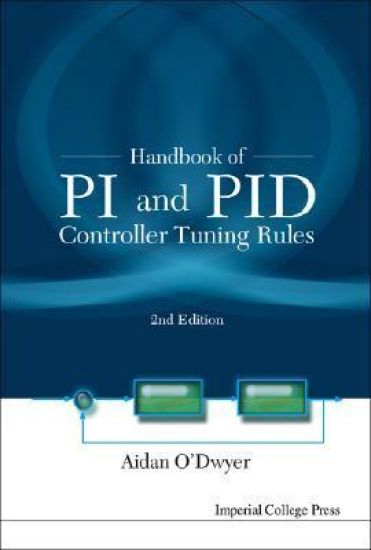
The vast majority of automatic controllers used to compensate industrial processes are of PI or PID type. This book comprehensively compiles, using a unified notation, tuning rules for these controllers proposed over the last seven decades (1935-2005). The tuning rules are carefully categorized and application information about each rule is given. The book discusses controller architecture and process modeling issues, as well as the performance and robustness of loops compensated with PI or PID controllers. This unique publication brings together in an easy-to-use format material previously published in a large number of papers and books.This wholly revised second edition extends the presentation of PI and PID controller tuning rules, for single variable processes with time delays, to include additional rules compiled since the first edition was published in 2003.