
Kirjahaku
Etsi kirjoja tekijän nimen, kirjan nimen tai ISBN:n perusteella.
1000 tulosta hakusanalla Rafael Class
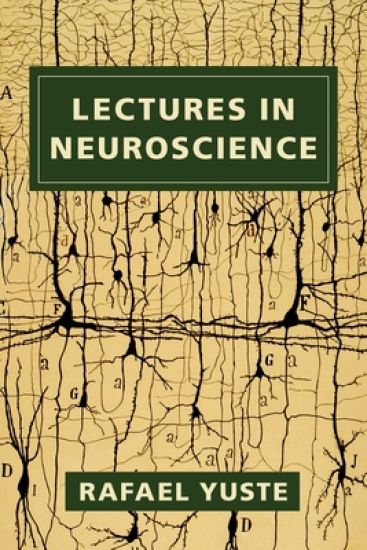
The human brain is perhaps the most intricate and fascinating object in the known universe. Through a mysterious process, the activity of billions of neurons within a few pounds of matter generates the unfathomable complexity of the mind.This book is a conversational and accessible introduction to the brain. Beginning from basic elements of neuroscience, the acclaimed scientist Rafael Yuste guides readers through increasingly sophisticated topics, developing a unified framework for how the brain functions. He describes how the brain is organized and how it develops, how neurons operate and form neural circuits, and how these circuits function as neural networks to generate behavior and mental states.Yuste challenges the traditional view that the brain is an input-output machine that reacts reflexively to sensory stimuli. Instead, he argues, the purpose of the brain is to make a predictive model of the world in order to anticipate the future and choose successful courses of action. He gives readers insight into the workings of sensory and motor systems and the neurobiological basis of our perceptions, thoughts, emotions, memories, and consciousness.Peppered with anecdotes and illustrated with elegant drawings and diagrams, this succinct and cohesive book is accessible to readers without previous background in the subject. It is written for anyone seeking to grasp the core principles of neuroscience or looking for a fresh and clear perspective on how the brain works.
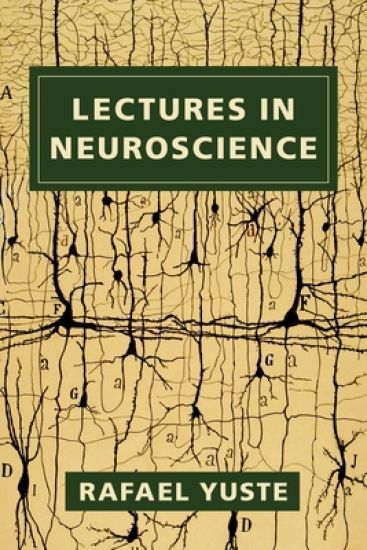
The human brain is perhaps the most intricate and fascinating object in the known universe. Through a mysterious process, the activity of billions of neurons within a few pounds of matter generates the unfathomable complexity of the mind.This book is a conversational and accessible introduction to the brain. Beginning from basic elements of neuroscience, the acclaimed scientist Rafael Yuste guides readers through increasingly sophisticated topics, developing a unified framework for how the brain functions. He describes how the brain is organized and how it develops, how neurons operate and form neural circuits, and how these circuits function as neural networks to generate behavior and mental states.Yuste challenges the traditional view that the brain is an input-output machine that reacts reflexively to sensory stimuli. Instead, he argues, the purpose of the brain is to make a predictive model of the world in order to anticipate the future and choose successful courses of action. He gives readers insight into the workings of sensory and motor systems and the neurobiological basis of our perceptions, thoughts, emotions, memories, and consciousness.Peppered with anecdotes and illustrated with elegant drawings and diagrams, this succinct and cohesive book is accessible to readers without previous background in the subject. It is written for anyone seeking to grasp the core principles of neuroscience or looking for a fresh and clear perspective on how the brain works.
A design tech portfolio showcases a theatre designer/technician's most prized accomplishments in stage design, lighting, costuming, or makeup. The ability to make a winning portfolio is essential to getting into choice colleges, obtaining scholarships, and getting new jobs in the field. Unfortunately the process can become time consuming and challenging if you don't know where to start. Show Case offers students, teachers, and aspiring professionals the information they need to know to create, maintain, and show off their portfolio.This fully revised second edition features new and expanded chapters that explore current and innovative approaches to creating a design-tech portfolio, including branding, social networking, and traditional and interactive e-portfolios. This comprehensive guide also covers planning and developing details such as page layout, content variety, aesthetic sequencing, marketing, personal presentation, and next steps. Each chapter features introductions, samples, and lists of "Do's and Don'ts" provided by experienced professionals in the different design/tech fields. Portfolios featured are from an incredible cast of contributors at different stages of their careers, including recent graduate students, officers of renowned organizations and international theater artists, and art directors representing narrative artists in the allied fields of film, TV, and other media. This book is designed as a reference guide, workbook, and an inspirational tool, assisting designers/technicians in the process of developing a showcase that can be used to apply for graduate school, to pursue new jobs in the field, and for career marketing purposes.

Este libro es un testimonio de lucha y esperanza. A lo largo de sus p ginas se recogen las historias de unos guerreros en su batalla contra el c ncer testicular. Son historias contadas desde diferentes pa ses, algunos casos m s graves y con m s complicaciones que otros, ya que unos tuvieron que recibir quimioterapia, mientras que para otros fue suficiente con una intervenci n quir rgica a tiempo.

DespuZs de Nombrar para Sanar y Sanar lo Nombrado , te entrego Fuego Sanador! Terapia de la Noche Oscura Espiritual . Libro inscripto, plenamente, en nuestra propuesta de Sanaci-n Interior. Ya has nombrado, identificado, reconocido y aceptado tus heridas interiores; has comenzado a trabajarlas a la luz de la propuesta que te he hecho en Sanar lo Nombrado y en la Novena de Sanaci-n Interior a Santa Teresita del Ni-o Jesoes . Ahora, quZ sigue? Ahora sigue lo profundo. Iremos m+s all+. Iremos a la ra'z de las heridas m+s profundas. Lo haremos de la mano de un experto: Juan de la Cruz.
Los seres humanos sentimos dolor f'sico cuando nos hacemos alguna herida, pero, adem+s, tenemos que enfrentarnos a un dolor distinto, especial, el dolor emocional o ps'quico. Nos referimos a experiencias internas como el miedo, la culpa, la tristeza o la desesperaci-n. Este libro, basado en la Terapia de Aceptaci-n y Compromiso, nos presenta una serie de estrategias y herramientas terapZuticas eficaces a la hora de aprender a manejar todos los eventos privados dolorosos.

La Casa Soesegada es una propuesta de diagn stico y sanaci n de las heridas sexuales y afectivas. Una excelente propuesta para superar las consecuencias del abuso y traumas sexuales, as como los problemas, vac os y carencias afectivos: falta de amor materno, paterno, rechazo, abandono; dependencia y co-dependencia afectiva... Este libro te ayudar discernir y clarificar si has padecido alg n tipo de abuso sexual en tu infancia. Especialmente recomendable para trabajar y sanar la sexualidad en el contexto de las parejas y matrimonios.

La peque a muerte de Albert es un relato corto basado en hechos reales ocurridos en la fortaleza de La Mola durante una visita guiada en la que Albert (nombre ficticio) cont al autor del relato su particular experiencia vital y el c mo hab a decidido librarse de un trauma que 70 a os atr s le hab a provocado otra visita, menos agradable, a ese lugar.

"Todos estamos heridos, pero todos podemos sanar." As comenz bamos la introducci n de nuestro anterior libro "Nombrar para Sanar." Ahora te entrego este segundo libro, "Sanar lo Nombrado," que consta de cuatro cap tulos: 1) De verdad, quieres sanar?; 2) Jes s, nuestro modelo y meta; 3) transformaci n de las heridas en perlas preciosas; y, 4) la oraci n que sana y transforma. Se trata de preguntarnos por las motivaciones y deseos reales de sanaci n interior; identificar nuestra meta, a d nde queremos llegar; ir m s all de una mera sanaci n, hasta la total transformaci n; y, vivir un proceso "orante" que nos sane, integre, madure y humanice totalmente. La meta es la plenitud!

Ya nos herimos, ¿ahora qué hacemos? Sanación Interior de las Heridas de Pareja
Rafael a Abreu
Lulu.com
2019
pokkari
Todas las parejas tienen crisis y heridas. La infidelidad, el enga?o, el perd?n, la sexualidad... son temas muy frecuentes en las relaciones de pareja. ?C?mo sanar tu relaci?n de pareja? ?Por qu? tu pareja piensa de esa manera tan distinta a la tuya? ?Por qu? tu pareja es tan celoso, controlador y posesivo? ?Por qu? a tu pareja le cuesta tanto sanar y superar la infidelidad? ?C?mo sanar la infidelidad? ?C?mo ser fieles? ?C?mo mejorar la comunicaci?n? ?C?mo pasar del ?sexo? a la ?intimidad C?mo orar en pareja? ?C?mo perdonar y sanar todo el da?o que tu pareja o ex_pareja te ha provocado? ?C?mo sanar despu's de la separaci?n y del divorcio? A todas estas preguntas y a muchas otras te respondo en este libro de manera profunda, pr?ctica y eficaz. Puedes, debes y mereces sanar tus heridas. ?Ahora es el momento

La conversión de los 'aparentemente' buenos. Del fervor a la madurez espiritual
Rafael a Abreu
Lulu.com
2020
pokkari
Eres una buena persona, pero necesitas conversi n. Este libro te dir por qu y c mo convertirte en tu mejor versi n humana y espiritual. Este libro te ayudar a pasar de la bondad a la santidad. Por buena y santa que sea una persona suele guardar en su interior alg n 'islote irredento', alg n 'aguij n' que le atormenta, 'desaguaderos' que le drenan el esp ritu. Puedes ser la persona m s correcta, devota e intachable para los dem s; y, sin embargo, estar podrido de ego smo, soberbia, mezquindad, vanidad y presunci n por dentro. No sientes que, interiormente, algo te falta? La sensaci n de vac o y sinsentido nunca ha tocado a la puerta de tu conciencia? A veces no te preguntas si valdr la pena? Por qu sentimos que no avanzamos? Por qu la sensaci n de rutina? D nde ha quedado tu conversi n? D nde est tu fervor de los inicios? Qui n apag el fuego vivo de tus ansias de Dios?
A graduate-level, mathematically rigorous introduction to strategic behavior in a networked world.This introductory graduate-level text uses tools from game theory and graph theory to examine the role of network structures and network effects in economic and information markets. The goal is for students to develop an intuitive and mathematically rigorous understanding of how strategic agents interact in a connected world. The text synthesizes some of the central results in the field while also simplifying their treatment to make them more accessible to nonexperts. Thus, students at the introductory level will gain an understanding of key ideas in the field that are usually only taught at the advanced graduate level.The book introduces basic concepts from game theory and graph theory as well as some fundamental algorithms for exploring graphs. These tools are then applied to analyze strategic interactions over social networks, to explore different types of markets and mechanisms for networks, and to study the role of beliefs and higher-level beliefs (beliefs about beliefs). Specific topics discussed include coordination and contagion on social networks, traffic networks, matchings and matching markets, exchange networks, auctions, voting, web search, models of belief and knowledge, and how beliefs affect auctions and markets. An appendix offers a "Primer on Probability." Mathematically rigorous, the text assumes a level of mathematical maturity (comfort with definitions and proofs) in the reader.
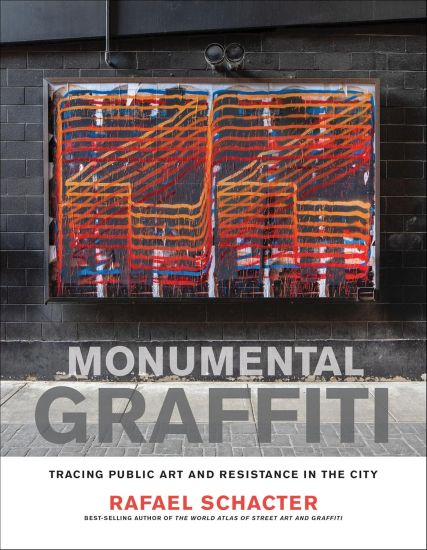
What graffiti says about contemporary society, and why it demands our urgent attention as a form of civic expression. What is graffiti vandalism, ornament, art? What if, rather than any of those things, we thought of graffiti as a monument? How would that change our understanding of graffiti, and, in turn, our understanding of monument? In Monumental Graffiti, anthropologist Rafael Schacter focuses on the material, communicative, and contextual aspects of these two forms of material culture to provide a timely perspective on public art, citizenship, and the city today. He applies monument as a lens to understand graffiti and graffiti as a lens to comprehend monument, challenging us to consider what the appropriate monument for our contemporary world could be. Monumental Graffiti unpacks today s iconoclastic moment, showing us why graffiti demands our urgent attention as a form of expression that challenges power structures by questioning whose voices are included in and whose are excluded from public space. Written from 20 years of embedded research on graffiti, the book includes works from graffiti writers such as 10Foot, Delta, Egs, Honet, Mosa, Petro, Revok, and Wombat, alongside those of artists such as Francis Alys, Jeremy Deller, Thomas Hirschhorn, Jenny Holzer, Klara Liden, Gordan Matta-Clark, William Pope. L, Cy Twombly, and many more. Richly illustrated, this study of graffiti as monument and monument as graffiti is as fascinating as it is ethnographically expansive.
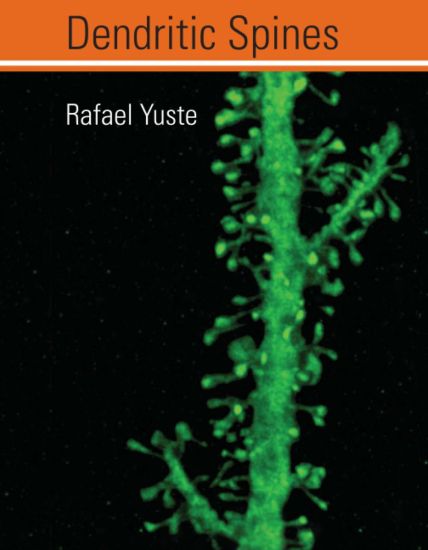
A leading neurobiologist explores the fundamental function of dendritic spines in neural circuits by analyzing different aspects of their biology, including structure, development, motility, and plasticity. Most neurons in the brain are covered by dendritic spines, small protrusions that arise from dendrites, covering them like leaves on a tree. But a hundred and twenty years after spines were first described by Ram n y Cajal, their function is still unclear. Dozens of different functions have been proposed, from Cajal's idea that they enhance neuronal interconnectivity to hypotheses that spines serve as plasticity machines, neuroprotective devices, or even digital logic elements. In Dendritic Spines, leading neurobiologist Rafael Yuste attempts to solve the "spine problem," searching for the fundamental function of spines. He does this by examining many aspects of spine biology that have fascinated him over the years, including their structure, development, motility, plasticity, biophysical properties, and calcium compartmentalization. Yuste argues that we may never understand how the brain works without understanding the specific function of spines. In this book, he offers a synthesis of the information that has been gathered on spines (much of which comes from his own studies of the mammalian cortex), linking their function with the computational logic of the neuronal circuits that use them. He argues that once viewed from the circuit perspective, all the pieces of the spine puzzle fit together nicely into a single, overarching function. Yuste connects these two topics, integrating current knowledge of spines with that of key features of the circuits in which they operate. He concludes with a speculative chapter on the computational function of spines, searching for the ultimate logic of their existence in the brain and offering a proposal that is sure to stimulate discussions and drive future research.

Drug Lords, Cowboys, and Desperadoes
Rafael Acosta Morales
University of Notre Dame Press
2021
sidottu
Drug Lords, Cowboys, and Desperadoes examines how historical archetypes in violent narratives on the Mexican American frontier have resulted in political discourse that feeds back into real violence. The drug battles, outlaw culture, and violence that permeate the U.S.-Mexican frontier serve as scenery and motivation for a wide swath of North American culture. In this innovative study, Rafael Acosta Morales ties the pride that many communities felt for heroic tales of banditry and rebels to the darker repercussions of the violence inflicted by the representatives of the law or the state. Narratives on bandits, cowboys, and desperadoes promise redistribution, regeneration, and community, but they often bring about the very opposite of those goals. This paradox is at the heart of Acosta Morales's book. Drug Lords, Cowboys, and Desperadoes examines the relationship between affect, narrative, and violence surrounding three historical archetypes—social bandits (often associated with the drug trade), cowboys, and desperadoes—and how these narratives create affective loops that recreate violent structures in the Mexican American frontier. Acosta Morales analyzes narrative in literary, cinematic, and musical form, examining works by Américo Paredes, Luis G. Inclán, Clint Eastwood, Rolando Hinojosa, Yuri Herrera, and Cormac McCarthy. The book focuses on how narratives of Mexican social banditry become incorporated into the social order that bandits rose against and how representations of violence in the U.S. weaponize narratives of trauma in order to justify and expand the violence that cowboys commit. Finally, it explains the usage of universality under the law as a means of criminalizing minorities by reading the stories of Mexican American men who were turned into desperadoes by the criminal law system. Drug Lords, Cowboys, and Desperadoes demonstrates how these stories led to recreated violence and criminalization of minorities, a conversation especially important during this time of recognizing social inequality and social injustices. The book is part of a growing body of scholarship that applies theoretical approaches to borderlands studies, and it will be of interest to students and scholars in American and Mexican history and literature, border studies, literary criticism, cultural criticism, and related fields.
Cuarto Centenario Del Descubrimiento De Am"erica
Rafael Salillas
Creative Media Partners, LLC
2018
pokkari

How have American Zionists maintained the delicate balance between their Americanism and their Zionism? How did they, as Americans, support the principle of democracy and at the same time, as Jews, support the creation of a Jewish homeland despite the pre-1948 Arab majority in Palestine? Looking at America-Holy Land relations during the years prior to the establishment of the state of Israel, Medoff explores this crucial question of American Jewish identity. Using original, previously unpublished archival material, this study presents an engaging account of a dilemma that is still very much an issue in today's political climate.
The daily routines, habits, beliefs, and values of the Hispanic culture that create unique human interactions in this society are revealed in this book. The book consists of 26 chapters relating to different themes that collectively provide an understanding of cultural responses. An anecdote is placed at the beginning of each chapter to assist the reader in understanding the more pedagogical information that follows. Reflected in this book is the reality that the Hispanic world covers a vast geographical area, and as such, is a mosaic of ethnic, religious, and historical backgrounds. Examples of diversity—the salsa, the taste of this culture—that makes this culture so unique are illustrated throughout the text. This book has been written with a wide range of readers in mind and will be of use to students on the secondary as well as undergraduate levels, teachers, social workers, and travelers.