Kirjojen hintavertailu. Mukana 11 627 362 kirjaa ja 12 kauppaa.

Kirjahaku

Etsi kirjoja tekijän nimen, kirjan nimen tai ISBN:n perusteella.

1000 tulosta hakusanalla Simone St. James

The Routledge Companion to Simone Weil
The remarkable life and work of the French philosopher and activist Simone Weil has fascinated scholars from many disciplines, with no less than Albert Camus calling her the 'only great spirit of our times'. Although contemporaneous with the rise of existentialism, and educated alongside contemporaries such as Simone de Beauvoir, Jean-Paul Sartre, and Maurice Merleau-Ponty, the creative and restless nature of Weil's thought set her apart. She wrote about political issues whilst acknowledging the limits of politics, whilst her rejection of rights in favour of duties and the often-Christian inspiration in her work - following her conversion from Judaism to Catholicism - made her a highly distinctive and controversial figure. The Routledge Companion to Simone Weil is an outstanding survey of her thought. Thirty-seven chapters by an international team of expert contributors are divided into six clear parts: Contextualising Weil Philosophical Sources Key Concepts Politics and Society Interactions with Religion Conversations. Within these sections key thinkers and topics central to Weil’s philosophy are addressed, including Plato, Kant, Marx, God, attention, love, beauty, labour and work, the body, slavery, rootedness, colonialism, fascism, Catholicism, Judaism, Indic thought, phenomenology, existentialism, feminism, literature, and many more. The Routledge Companion to Simone Weil is an invaluable resource for anyone studying or researching Weil's thought, whether in philosophy and religious studies or related disciplines such as political theory, French literature and Jewish studies.
Big Ideas for Little Philosophers: Equality with Simone de Beauvoir

Big Ideas for Little Philosophers: Equality with Simone de Beauvoir

Duane Armitage; Maureen McQuerry

Puffin
2020
pahvisivuinen
Answering life's big questions for little children, this board book explains Simone de Beauvoir's beliefs about equality and respect in a simple, accessible way.Even little children can become philosophers by asking big questions about the world around them. Simone de Beauvoir believed that everybody should have the same opportunities to be happy, and to be themselves. In Equality with Simone de Beauvoir, this idea is explained for the youngest thinkers, from treating people with respect to listening to who you are on the inside. This book will inspire little ones to have exciting thoughts and conversations about these big ideas.'A philosopher is a person who loves wisdom.Wisdom means knowing things that help you live better and be happy.'
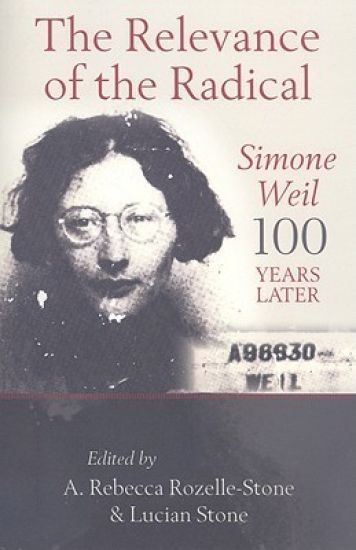
The Relevance of the Radical: Simone Weil 100 Years Later
In the early 1940s, Simone Weil (1909-1943) wrote that "the glossy surface" of her civilization hid "a real intellectual decadence." There is also good reason to think that the 21st century has ushered in new extremes of intellectual and aesthetic impoverishment. 2009 will mark the centennial of the birth of this late French activist, philosopher, and mystic, and her life and words are arguably more urgent now than ever before. While Weil's ideas are impossible to separate from her praxis, the first section of the book will analyze the "radical orientation" suggested in her writings. Contributors in this section will address the relevance of her religious ideas, the "irrelevant," the posture of attentiveness and "looking," and the roles of erotic exemplarity and mystery. The second section will examine the "radical world" that follows from the orientation described and will consider themes like violence, power, resistance, responsibility, feminism, liberation theology, science, technology, propaganda, and political hegemony. Through the revolutionary insights of this remarkable woman, then, the contributors propose a framework for understanding and creating a more just world, one that challenges Western philosophy's metaphysical, epistemological, and ethical assumptions which have led to pervasive forms of uprootedness, or what Weil calls déracinement. This framework centres on a notion of absolute selflessness and humility, and is radical both in the sense of being "unconventional" and in the sense of the Latin radicalis, "returning to essential roots." Becoming rooted in reality and centred in what is essential, especially in our context characterized by over-consumption and "virtual reality," is unconventional. How much more, then, is the radical absolutely relevant and Simone Weil the paradigm for effective socio-political redress.
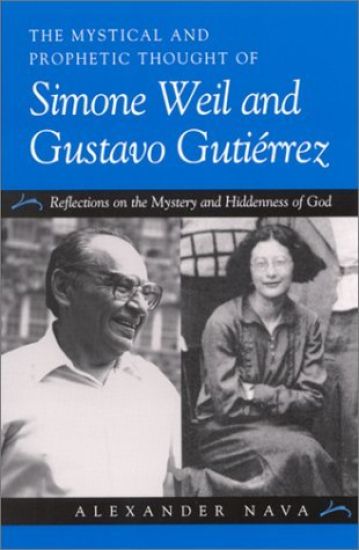
The Mystical and Prophetic Thought of Simone Weil and Gustavo Gutiérrez

The Mystical and Prophetic Thought of Simone Weil and Gustavo Gutiérrez

Alexander Nava

State University of New York Press
2001
pokkari
Brings together the thought of liberation theologian Gustavo Gutiérrez and Christian philosopher Simone Weil to present a unique vision that can speak of both the reality of suffering and the desire for mystical experience.Two Christian thinkers-philosopher Simone Weil and theologian Gustavo Gutiérrez-are brought together here. While very different in background, situation, and in their writings, Weil and Gutiérrez display striking points of contact in their lives and work. Author Alexander Nava finds that together the two provide a philosophical and theological vision that integrates the mystical and the prophetic, two dimensions of the Christian tradition that are often considered mutually exclusive. Exploring the thought of Weil and Gutiérrez, this book shows that both are suspicious of forms of mysticism that minimize the harsh reality of suffering and violence, and that both have a serious mistrust of prophetic traditions that deny the contributions of mystical interpretations, practices, and ways of speaking to and about the Divine mystery. Nava proposes that dialogue between the thought of Weil and Gutiérrez and between the mystical and prophetic traditions can lead to a more authentic understanding of the diversity and creativity of religious thought.
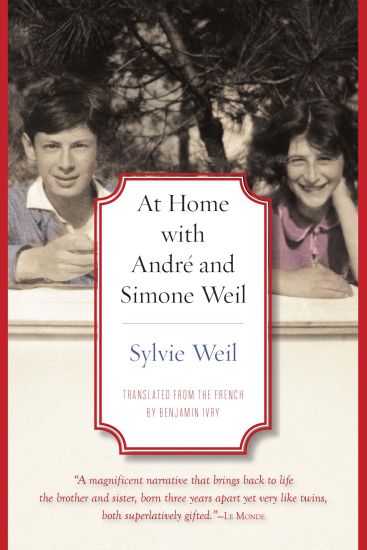
At Home with Andre and Simone Weil

At Home with Andre and Simone Weil

Sylvie Weil

Northwestern University Press
2010
sidottu
Translated from the French by Benjamin Ivry, Simone Weil was one of the twentieth century’s most original philosopher-critics, and as a result her legacy has been claimed by many. This memoir by Weil’s niece is strong-willed and incisive and as close as we are likely to get to the real Simone Weil. Born into a freethinking Jewish family, Weil contributed many articles to Socialist and Communist journals and was active in the Spanish Civil War until her health failed.In 1940 she became strongly attracted to Roman Catholicism and the Passion of Christ. Most of her works, published posthumously, continue to inform debates in ethics, philosophy, and spirituality surrounding questions of sacrifice, asceticism, and the virtues of manual labor. Massively influential, Weil’s writings were widely praised by such readers as Albert Camus, T. S. Eliot, Simone de Beauvoir, Pope John XXIII, Czeslaw Milosz, and Susan Sontag. Sylvie Weil recovers the deeply Jewish nature of Simone’s thinking and details how her preoccupations with charity and justice were fully in the tradition of tzedakah, the Jewish religious obligation toward these actions.Using previously unpublished family correspondence and conversations, Sylvie Weil offers a more authentically personal portrait of her aunt than previous biographers have provided. At Home with André and Simone Weil illuminates Simone’s relationship to her family, especially to her brother, the great Princeton mathematician André Weil. A clear-eyed and uncompromising memoir of her family, At Home with André and Simone Weil is a fresh look at the noted French philosopher,mystic, and social activist.
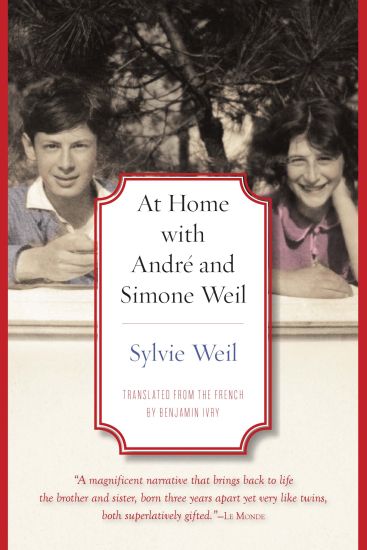
At Home with André and Simone Weil

At Home with André and Simone Weil

Sylvie Weil

Northwestern University Press
2020
nidottu
Translated from the French by Benjamin Ivry, Simone Weil was one of the twentieth century's most original philosopher-critics, and as a result her legacy has been claimed by many. This memoir by Weil's niece is strong-willed and incisive and as close as we are likely to get to the real Simone Weil. Born into a freethinking Jewish family, Weil contributed many articles to Socialist and Communist journals and was active in the Spanish Civil War until her health failed. In 1940 she became strongly attracted to Roman Catholicism and the Passion of Christ. Most of her works, published posthumously, continue to inform debates in ethics, philosophy, and spirituality surrounding questions of sacrifice, asceticism, and the virtues of manual labor. Massively influential, Weil's writings were widely praised by such readers as Albert Camus, T. S. Eliot, Simone de Beauvoir, Pope John XXIII, Czeslaw Milosz, and Susan Sontag. Sylvie Weil recovers the deeply Jewish nature of Simone's thinking and details how her preoccupations with charity and justice were fully in the tradition of tzedakah, the Jewish religious obligation toward these actions.Using previously unpublished family correspondence and conversations, Sylvie Weil offers a more authentically personal portrait of her aunt than previous biographers have provided. At Home with AndrÉ and Simone Weil illuminates Simone's relationship to her family, especially to her brother, the great Princeton mathematician AndrÉ Weil. A clear-eyed and uncompromising memoir of her family, At Home with AndrÉ and Simone Weil is a fresh look at the noted French philosopher,mystic, and social activist.
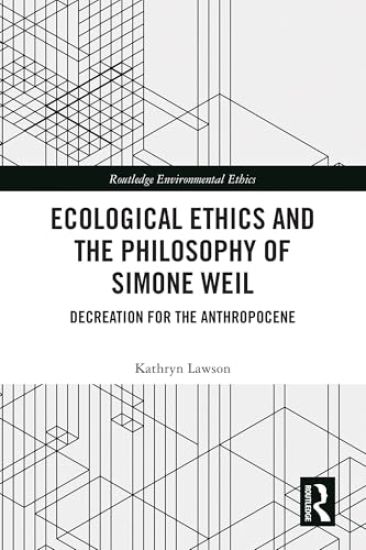
Ecological Ethics and the Philosophy of Simone Weil
This book places the philosophy of Simone Weil into conversation with contemporary environmental concerns in the Anthropocene. The book offers a systematic interpretation of Simone Weil, making her ethical philosophy more accessible to non-Weil scholars. Weil’s work has been influential in many fields, including politically and theologically-based critiques of social inequalities and suffering, but rarely linked to ecology. Kathryn Lawson argues that Weil’s work can be understood as offering a coherent approach with potentially widespread appeal applicable to our ethical relations to much more than just other human beings. She suggests that the process of "decreation" in Weil is an expansion of the self which might also come to include the surrounding earth and a vast assemblage of others. This allows readers to consider what it means to be human in this time and place, and to contemplate our ethical responsibilities both to other humans and also to the more-than-human world. Ultimately, the book uses Weil’s thought to decenter the human being by cultivating human actions towards an ecological ethics. This book will be useful for Simone Weil scholars and academics, as well as students and researchers interested in environmental ethics in departments of comparative literature, theory and criticism, philosophy, and environmental studies. For further discussion on the book, please check out the following podcast and book launch links below: https://youtu.be/oOUEeSiMrh8?si=eLXDpKrQHd8E6SFU https://youtu.be/sIc1jIw_CW8?si=xQPeW4iK-8vC3pnA https://youtu.be/jf12ZVRr3oY?si=z7Z9xRdEn8fhaMGY
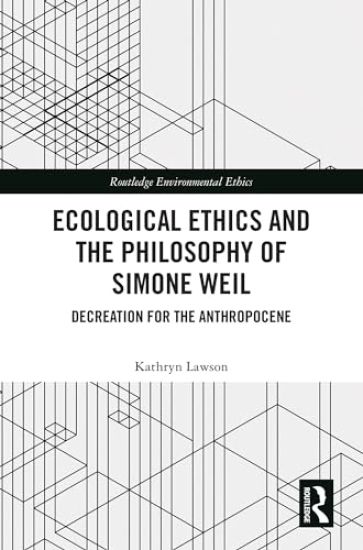
Ecological Ethics and the Philosophy of Simone Weil
This book places the philosophy of Simone Weil into conversation with contemporary environmental concerns in the Anthropocene.The book offers a systematic interpretation of Simone Weil, making her ethical philosophy more accessible to non-Weil scholars. Weil’s work has been influential in many fields, including politically and theologically-based critiques of social inequalities and suffering, but rarely linked to ecology. Kathryn Lawson argues that Weil’s work can be understood as offering a coherent approach with potentially widespread appeal applicable to our ethical relations to much more than just other human beings. She suggests that the process of "decreation" in Weil is an expansion of the self which might also come to include the surrounding earth and a vast assemblage of others. This allows readers to consider what it means to be human in this time and place, and to contemplate our ethical responsibilities both to other humans and also to the more-than-human world. Ultimately, the book uses Weil’s thought to decenter the human being by cultivating human actions towards an ecological ethics.This book will be useful for Simone Weil scholars and academics, as well as students and researchers interested in environmental ethics in departments of comparative literature, theory and criticism, philosophy, and environmental studies.For further discussion on the book, please check out the following podcast and book launch links below:https://youtu.be/oOUEeSiMrh8?si=eLXDpKrQHd8E6SFUhttps://youtu.be/sIc1jIw_CW8?si=xQPeW4iK-8vC3pnAhttps://youtu.be/jf12ZVRr3oY?si=z7Z9xRdEn8fhaMGY
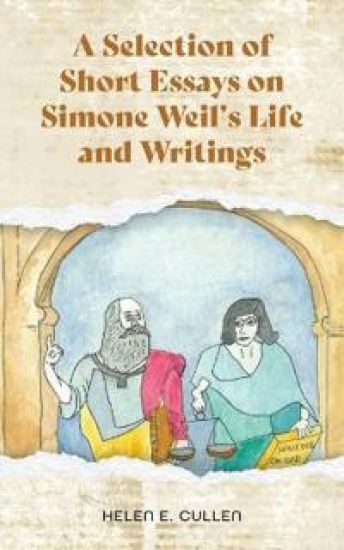
A Selection of Short Essays on Simone Weil's Life and Writings
Simone Weil was an extraordinary French woman who, born in 1909, didn't have the same freedoms women today enjoy. Despite that, she became a political activist, a teacher, and one of the world's most well-respected philosophers. By the time she died at the age of thirty-three, Weil had made significant contributions to humanity.In Helen Cullen's book, A Selection of Short Essays on Simone Weil's Life and Writings, Weil's background and philosophies on life are laid out and examined. Though many believe that her political leanings had become more conservative over time-as she embraced a more mystical life-Cullen aims to demonstrate how she continued to have very progressive and leftist beliefs until her death.Weil wrote copiously during her short life, addressing many social, political, and religious issues, such as the rights of factory workers during the Second World War. She was an activist during the 1930's, herself working in factories so she could live the experiences she wrote about. Weil's perspectives on life were heavily influenced by Plato and his philosophy, which Cullen analyzes in her essays. Cullen also spends time examining Weil's theory of Identical Thought, which some believe is her greatest contribution to humanity. This book of essays offers new insight into one of this world's greatest female minds, inspiring us to consider how we, too, may contribute to humanity.
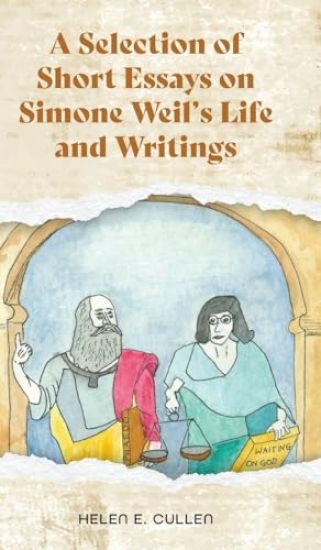
A Selection of Short Essays on Simone Weil's Life and Writings
Simone Weil was an extraordinary French woman who, born in 1909, didn't have the same freedoms women today enjoy. Despite that, she became a political activist, a teacher, and one of the world's most well-respected philosophers. By the time she died at the age of thirty-three, Weil had made significant contributions to humanity.In Helen Cullen's book, A Selection of Short Essays on Simone Weil's Life and Writings, Weil's background and philosophies on life are laid out and examined. Though many believe that her political leanings had become more conservative over time-as she embraced a more mystical life-Cullen aims to demonstrate how she continued to have very progressive and leftist beliefs until her death.Weil wrote copiously during her short life, addressing many social, political, and religious issues, such as the rights of factory workers during the Second World War. She was an activist during the 1930's, herself working in factories so she could live the experiences she wrote about. Weil's perspectives on life were heavily influenced by Plato and his philosophy, which Cullen analyzes in her essays. Cullen also spends time examining Weil's theory of Identical Thought, which some believe is her greatest contribution to humanity. This book of essays offers new insight into one of this world's greatest female minds, inspiring us to consider how we, too, may contribute to humanity.
What You Never Knew About Simone Biles

What You Never Knew About Simone Biles

Helen Cox Cannons

Capstone Global Library Ltd
2024
nidottu
Simone Biles has inspired the world with her incredible gymnastics achievements, including her many Olympic medals. But what is her life like outside of the gym? High-interest details and bold photos of her exciting life will enthrall reluctant and struggling readers, while carefully levelled text will leave them feeling confident.
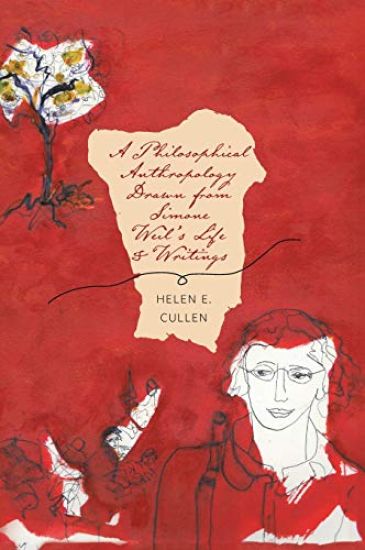
A Philosophical Anthropology Drawn from Simone Weil's Life and Writings
A Philosophical Anthropology Drawn from Simone Weil's Life & Writings situates Weil's thought in the time between the two world wars through which she lived, and traces Weil's consistent conception of a mind-body dualism in the Cartesian sense to a dualism that places the mind within a carnal part of the soul and establishes an eternal part of the soul as the essence of human beings.Helen Cullen argues that in Weil's early conception of human nature, her Cartesian conception of perception already shows a glimpse of the eternal. Weil's dualistic conception also forms the basis of her political analysis of the left of her time, and through working in factories and in the fields, she develops a conception of labour as a theory of "action" and "work with a method." Weil was influenced by leading thinkers of her time, prompting her to do an analysis of current scientific theories.Cullen argues that Weil's analysis of Christianity, already present in Greek philosophy, shows us a theory of "identical thought" inherited from the East (India and China) and brought forth by peoples around Israel. This theory leads to Weil's analysis, developed in The Need for Roots, of how we've been uprooted through colonization and how we can grow roots in a free local society (both rural and urban)....
A Philosophical Anthropology Drawn from Simone Weil's Life and Writings
A Philosophical Anthropology Drawn from Simone Weil's Life & Writings situates Weil's thought in the time between the two world wars through which she lived, and traces Weil's consistent conception of a mind-body dualism in the Cartesian sense to a dualism that places the mind within a carnal part of the soul and establishes an eternal part of the soul as the essence of human beings.Helen Cullen argues that in Weil's early conception of human nature, her Cartesian conception of perception already shows a glimpse of the eternal. Weil's dualistic conception also forms the basis of her political analysis of the left of her time, and through working in factories and in the fields, she develops a conception of labour as a theory of "action" and "work with a method." Weil was influenced by leading thinkers of her time, prompting her to do an analysis of current scientific theories.Cullen argues that Weil's analysis of Christianity, already present in Greek philosophy, shows us a theory of "identical thought" inherited from the East (India and China) and brought forth by peoples around Israel. This theory leads to Weil's analysis, developed in The Need for Roots, of how we've been uprooted through colonization and how we can grow roots in a free local society (both rural and urban)....
La plage des comediens - En souvenir de Simone Berriau

La plage des comediens - En souvenir de Simone Berriau

Jean-Luc Pouliquen

Createspace Independent Publishing Platform
2017
nidottu
Hy res, au bord de la M diterran e, se dressent des immeubles qui ont pour nom: "La Chatte sur un toit br lant", "L'Heure blouissante" ou encore "Vu du pont". Avant de devenir des r f rences cin matographiques, ces titres ont fait partie du r pertoire des pi ces jou es Paris au th tre Antoine alors dirig par Simone Berriau. C'est elle que l'on doit de les avoir choisis pour donner un parfum de th tre la r sidence qu'elle avait fait construire m me la plage l'intention des com diens. Ce livre en retrace l'histoire. Il se souvient de ses h tes c l bres comme Louis de Fun s et Michel Serrault. Il nous conduit jusqu'au domaine de Mauvanne o Simone Berriau l'a imagin e. Il rappelle encore cette grande poque de l'apr s-guerre o le th tre Antoine vit passer Sartre, Camus, Louis Jouvet et Jean Vilar. Au fil des pages, travers les lieux et les personnages pr sent s, c'est finalement un portrait de Simone Berriau elle-m me qui est dessin . Celui d'une femme au parcours exceptionnel qui nous fait revivre une poque et un monde dont le souvenir est toujours pr sent dans la m moire collective.