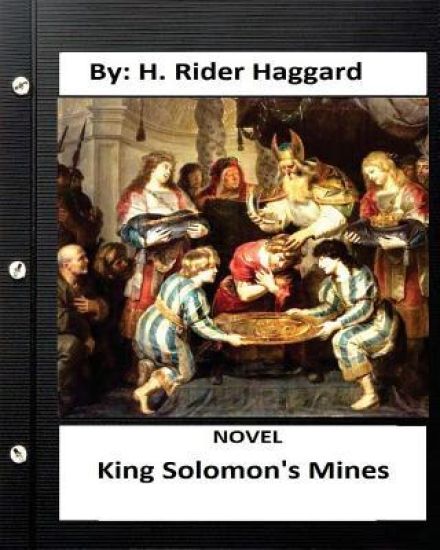
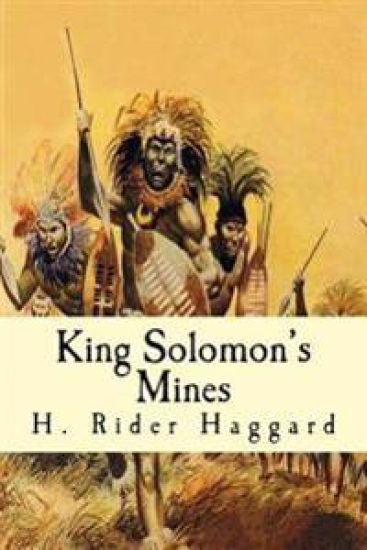
King Solomon's Mines (1885) is a popular novel by the Victorian adventure writer and fabulist Sir H. Rider Haggard. It tells of a search of an unexplored region of Africa by a group of adventurers led by Allan Quatermain for the missing brother of one of the party. It is the first English adventure novel set in Africa, and is considered to be the genesis of the Lost World literary genre.The book was first published in September 1885 amid considerable fanfare, with billboards and posters around London announcing "The Most Amazing Book Ever Written". It became an immediate best seller. By the late 19th century, explorers were uncovering ancient civilisations around the world, such as Egypt's Valley of the Kings, and the empire of Assyria. Inner Africa remained largely unexplored and King Solomon's Mines, the first novel of African adventure published in English, captured the public's imagination. The "King Solomon" of the book's title is the Biblical king renowned both for his wisdom and for his wealth. A number of sites have been suggested as the location of his mines, including the workings at the Timna valley near Eilat. Research published in September 2013 has shown that this site was in use during the 10th century BC as a copper mine possibly by the Edomites, who the Bible reports were rivals of and frequently at war with King Solomon. Haggard knew Africa well, having travelled deep within the continent as a 19-year-old during the Anglo-Zulu War and the First Boer War, where he had been impressed by South Africa's vast mineral wealth and by the ruins of ancient lost cities being uncovered, such as Great Zimbabwe. His original Allan Quatermain character was based in large part on Frederick Courtney Selous, the famous British white hunter and explorer of Colonial Africa. Selous's real-life experiences provided Haggard with the background and inspiration for this and many later stories.
H. Rider Haggard, 1856 - 1925) was an English writer, largely of adventure fiction, but also of non-fiction. The eighth child of a Norfolk barrister and squire, through family connections he gained employment with Sir Henry Bulwer during the latter's service as lieutenant-governor of Natal, South Africa. Rider Haggard travelled to southern Africa in 1875 and remained in the country for six years, during which time he served as Master of the High Court of the Transvaal and an adjutant of the Pretoria HorseKing Solomon's Mines (1885) is a popular novel by the Victorian adventure writer and fabulist Sir H. Rider Haggard. It tells of a search of an unexplored region of Africa by a group of adventurers led by Allan Quatermain for the missing brother of one of the party. It is the first English adventure novel set in Africa, and is considered to be the genesis of the Lost World literary genre The book was first published in September 1885 amid considerable fanfare, with billboards and posters around London announcing "The Most Amazing Book Ever Written". It became an immediate best seller. By the late 19th century, explorers were uncovering ancient civilisations around the world, such as Egypt's Valley of the Kings, and the empire of Assyria. Inner Africa remained largely unexplored and King Solomon's Mines, the first novel of African adventure published in English, captured the public's imagination. The "King Solomon" of the book's title is the Biblical king renowned both for his wisdom and for his wealth. A number of sites have been suggested as the location of his mines, including the workings at the Timna valley near Eilat. Research published in September 2013 has shown that this site was in use during the 10th century BC as a copper mine possibly by the Edomites, 2] 3] who the Bible reports were rivals of and frequently at war with King Solomon. Allan Quatermain, an adventurer and white hunter based in Durban, in what is now South Africa, is approached by aristocrat Sir Henry Curtis and his friend Captain Good, seeking his help finding Sir Henry's brother, who was last seen travelling north into the unexplored interior on a quest for the fabled King Solomon's Mines. Quatermain has a mysterious map purporting to lead to the mines, but had never taken it seriously. However, he agrees to lead an expedition in return for a share of the treasure, or a stipend for his son if he is killed along the way. He has little hope they will return alive, but reasons that he has already outlived most people in his profession, so dying in this manner at least ensures that his son will be provided for. They also take along a mysterious native, Umbopa, who seems more regal, handsome and well-spoken than most porters of his class, but who is very anxious to join the party.
King Solomon's Mines by H. Rider Haggard King Solomon's Mines (1885) is a popular novel by the Victorian adventure writer and fabulist Sir H. Rider Haggard. It tells of a search of an unexplored region of Africa by a group of adventurers led by Allan Quatermain for the missing brother of one of the party. It is the first English adventure novel set in Africa, and is considered to be the genesis of the Lost World literary genre. The book was first published in September 1885 amid considerable fanfare, with billboards and posters around London announcing "The Most Amazing Book Ever Written". It became an immediate best seller. By the late 19th century, explorers were uncovering ancient civilisations around the world, such as Egypt's Valley of the Kings, and the empire of Assyria. Inner Africa remained largely unexplored and King Solomon's Mines, the first novel of African adventure published in English, captured the public's imagination.
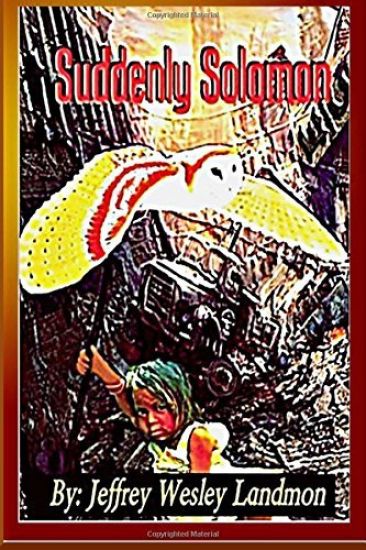
REVISED EDITION: When the lights go out, Mickey and her brother Virge at first think it's just one of those things. But then, the Angel comes...and the Earthquakes begin...and the world as we know it will never be the same again. Join the adventure, as this small group of survivors discover that they are THE Remnant of Believers, and the last hope for those who have put off their Salvation maybe just a bit too long
A man is sucked into an underground cult when he tries to save a woman's life. But nothing is coincidence in the haunted town of Weston West Virginia. Spirits from the insane asylum that has long been shut down, return to wrong, that which is right
A man is sucked into an underground cult when he tries to save a woman's life. But nothing is coincidence in the haunted town of Weston West Virginia. Spirits from the insane asylum that has long been shut down, return to wrong, that which is right.
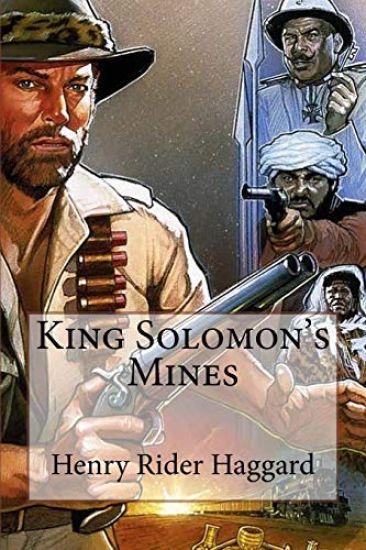
King Solomon's Mines (1885) is a popular novel by the Victorian adventure writer and fabulist, Sir H. Rider Haggard. It tells of a quest into an unexplored region of Africa by a group of adventurers led by Allan Quatermain in search of the missing brother of one of the party. It is significant as the first English fictional adventure novel set in Africa, and is considered the genesis of the Lost World literary genre.
King Solomon's Mines (1885) is a popular novel by the Victorian adventure writer and fabulist Sir H. Rider Haggard. It tells of a search of an unexplored region of Africa by a group of adventurers led by Allan Quatermain for the missing brother of one of the party. It is the first English adventure novel set in Africa, and is considered to be the genesis of the Lost World literary genre. Plot: Allan Quatermain, an adventurer and white hunter based in Durban, in what is now South Africa, is approached by aristocrat Sir Henry Curtis and his friend Captain Good, seeking his help finding Sir Henry's brother, who was last seen travelling north into the unexplored interior on a quest for the fabled King Solomon's Mines. Quatermain has a mysterious map purporting to lead to the mines, but had never taken it seriously. However, he agrees to lead an expedition in return for a share of the treasure, or a stipend for his son if he is killed along the way. He has little hope they will return alive, but reasons that he has already outlived most people in his profession, so dying in this manner at least ensures that his son will be provided for. They also take along a mysterious native, Umbopa, who seems more regal, handsome and well-spoken than most porters of his class, but who is very anxious to join the party. Travelling by oxcart, they reach the edge of a desert, but not before a hunt in which a wounded elephant claims the life of a servant. They continue on foot across the desert, almost dying of thirst before finding the oasis shown halfway across on the map. Reaching a mountain range called Suliman Berg, they climb a peak (one of "Sheba's Breasts") and enter a cave where they find the frozen corpse of Jos Silvestre (also spelt Silvestra), the 16th-century Portuguese explorer who drew the map in his own blood. That night, a second servant dies from the cold, so they leave his body next to Silvestra's, to "give him a companion". They cross the mountains into a raised valley, lush and green, known as Kukuanaland. The inhabitants have a well-organised army and society and speak an ancient dialect of IsiZulu. Kukuanaland's capital is Loo, the destination of a magnificent road from ancient times. The city is dominated by a central royal kraal. They soon meet a party of Kukuana warriors who are about to kill them when Captain Good nervously fidgets with his false teeth, making the Kukuanas recoil in fear. Thereafter, to protect themselves, they style themselves "white men from the stars"-sorcerer-gods-and are required to give regular proof of their divinity, considerably straining both their nerves and their ingenuity. They are brought before King Twala, who rules over his people with ruthless violence. He came to power years before when he murdered his brother, the previous king, and drove his brother's wife and infant son, Ignosi, out into the desert to die. Twala's rule is unchallenged. An evil, impossibly ancient hag named Gagool is his chief advisor. She roots out any potential opposition by ordering regular witch hunts and murdering without trial all those identified as traitors. When she singles out Umbopa for this fate, it takes all Quatermain's skill to save his life. Gagool, it appears, has already sensed what Umbopa soon after reveals: he is Ignosi, the rightful king of the Kukuanas. A rebellion breaks out, the Englishmen gaining support for Ignosi by taking advantage of their foreknowledge of a lunar eclipse to claim that they will black out the sun as proof of Ignosi's claim. The Englishmen join Ignosi's army in a furious battle. Although outnumbered, the rebels overthrow Twala, and Sir Henry lops off his head in a duel.... Sir Henry Rider Haggard, KBE ( 22 June 1856 - 14 May 1925), known as H. Rider Haggard, was an English writer of adventure novels set in exotic locations, predominantly Africa, and a pioneer of the Lost World literary genre.
Allan Quatermain is the protagonist of Sir Henry Rider Haggard's 1885 novel King Solomon's Mines and its sequels. Allan Quatermain was also the title of a book in this sequence. The character Quatermain is an English-born professional big game hunter and occasional trader in southern Africa, who supports colonial efforts to spread civilization in the Dark Continent, though he also favours native Africans having a say in their affairs. An outdoorsman who nds English cities and climate unbearable, he prefers to spend most of his life in Africa, where he grew up under the care of his widower father, a Christian missionary. Quatermain was one of the templates for the American lm character Indiana Jones, featured in Raiders of the Lost Ark, Indiana Jones and the Temple of Doom, and Indiana Jones and the Last Crusade. The route to King Solomon's Mines described by Haggard was also referred to in the movie The Librarian: Return to King Solomon's Mines, speci cally the reference to Sheba's Breasts and Three Witches Mountain, which are geographical features mentioned by Quatermain in the novel. In the Graham Greene novel The Heart of the Matter (1948), the main character Scobie remembers Allan Quatermain as his childhood hero.This classic title has been published by RADLEY BOOKS. Each RADLEY CLASSIC is a meticulously restored, luxurious and faithful reproduction of a classic book; produced with elegant text layout, clarity of presentation, and stylistic features that make reading a true pleasure. Special attention is given to legible fonts and adequate letter sizing, correct line length for readability, generous margins and triple lead (lavish line separation); plus we do not allow any mistakes/changes/additions to creep into the author's words.Visit RADLEY BOOKS at www.radleybooks.com (or search RADLEY CLASSIC on Amazon) to see more classic book titles in this series.