Kirjojen hintavertailu. Mukana 12 016 292 kirjaa ja 12 kauppaa.

Kirjahaku

Etsi kirjoja tekijän nimen, kirjan nimen tai ISBN:n perusteella.

1000 tulosta hakusanalla Stephen Collier

Stephen Arnold Douglas

Stephen Arnold Douglas

William Garrott Brown

Createspace Independent Publishing Platform
2016
nidottu
Stephen Arnold Douglas is a classic American history biography by William Garrott Brown. Stephen Arnold Douglas (April 23, 1813 - June 3, 1861) was an American politician from Illinois and the designer of the Kansas-Nebraska Act. He was a member of the House of Representatives, the United States Senate, and the Democratic Party nominee for president in the 1860 election, losing to Republican Abraham Lincoln. Douglas had previously defeated Lincoln in a Senate contest, noted for the famous Lincoln-Douglas debates of 1858. He was nicknamed the "Little Giant" because he was short in physical stature, but a forceful and dominant figure in politics. (His height is given in various sources as being in the range of 5 feet (1.5 m) to 5 feet 4 inches (1.63 m); five feet four is reported most often.) Douglas was well known as a resourceful party leader, and an adroit, ready, skillful tactician in debate and passage of legislation. He was a champion of the Young America movement which sought to modernize politics and replace the agrarian and strict constructionist orthodoxies of the past. Douglas was a leading proponent of democracy, and believed in the principle of popular sovereignty: that the majority of citizens should decide contentious issues such as slavery and territorial expansion. As chairman of the Committee on Territories, Douglas dominated the Senate from 1850 to 1859. He was largely responsible for the Compromise of 1850 that apparently settled slavery issues; however, in 1854 he reopened the slavery question with the Kansas-Nebraska Act, which opened some previously prohibited territories to slavery under popular sovereignty. Opposition to this led to the formation of the Republican Party. Douglas initially endorsed the Dred Scott decision of 1857. But during the 1858 Senate campaign, he argued its effect could be negated by popular sovereignty. He also opposed the efforts of President James Buchanan and his Southern allies to enact a Federal slave code and impose the Lecompton Constitution on Kansas. In 1860, the conflict over slavery led to the split in the Democratic Party in the 1860 Convention. Hardline pro-slavery Southerners rejected Douglas, and nominated their own candidate, Vice President John C. Breckinridge, while the Northern Democrats nominated Douglas. Douglas deeply believed in democracy, arguing the will of the people should always be decisive. When civil war came in April 1861, he rallied his supporters to the Union cause with all his energies, but he died of typhoid fever a few weeks later.

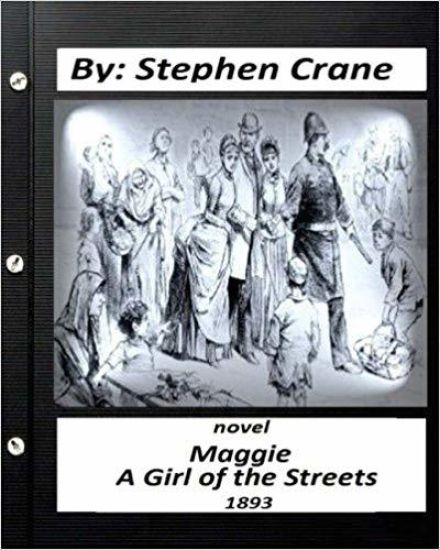
Maggie: A Girl of the Streets (1893) NOVEL by Stephen Crane (Classics)

Maggie: A Girl of the Streets (1893) NOVEL by Stephen Crane (Classics)

Stephen Crane

Createspace Independent Publishing Platform
2016
nidottu
Maggie: A Girl of the Streets is an 1893 novella by American author Stephen Crane (1871-1900). The story centers on Maggie, a young girl from the Bowery who is driven to unfortunate circumstances by poverty and solitude. The work was considered risqu by publishers because of its literary realism and strong themes. Crane - who was 22 years old at the time - financed the book's publication himself, although the original 1893 edition was printed under the pseudonym Johnston Smith. After the success of 1895's The Red Badge of Courage, Maggie was reissued in 1896 with considerable changes and re-writing. The story is followed by George's Mother.The story opens with Jimmie, at this point a young boy, trying by himself to fight a gang of boys from an opposing neighborhood. He is saved by his friend, Pete, and comes home to his sister Maggie, his toddling brother Tommie, his brutal and drunken father and mother, Mary Johnson. The parents terrify the children until they are shuddering in the corner. Years pass, the father and Tommie die, and Jimmie hardens into a sneering, aggressive, cynical youth. He gets a job as a teamster, having no regard for anyone but firetrucks who would run him down. Maggie begins to work in a shirt factory, but her attempts to improve her life are undermined by her mother's drunken rages. Maggie begins to date Jimmie's friend Pete, who has a job as a bartender and seems a very fine fellow, convinced that he will help her escape the life she leads. He takes her to the theater and the museum. One night Jimmie and Mary accuse Maggie of "Goin to deh devil", essentially kicking her out of the tenement, throwing her lot in with Pete. Jimmie goes to Pete's bar and picks a fight with him (even though he himself has ruined other boys' sisters). As the neighbors continue to talk about Maggie, Jimmie and Mary decide to join them in badmouthing her instead of defending her.
Maggie: A Girl of the Streets (1893), by Stephen Crane

Maggie: A Girl of the Streets (1893), by Stephen Crane

Stephen Crane

Createspace Independent Publishing Platform
2016
nidottu
In 1892 Stephen Crane (1871-1900) published Maggie, Girl of the Streets at his own expense. Considered at the time to be immature, it was a failure. Since that time it has come to be considered one of the earliest American realistic novels. Maggie is the story of a pretty child of the Bowery which is written with the same intensity and vivid scenes of his masterpiece -- The Red Badge of Courage. In her short life, Maggie "blossomed in a mud puddle", was driven to prostitution, and died by her own hand while still a teenager. Crane, who worked as a free lance reporter, was in many ways addicted to the low life of the cities. He died at the age of 29.
Maggie: A Girl of the Streets (1893), by Stephen Crane

Maggie: A Girl of the Streets (1893), by Stephen Crane

Stephen Crane

Createspace Independent Publishing Platform
2016
nidottu
In 1892 Stephen Crane (1871-1900) published Maggie, Girl of the Streets at his own expense. Considered at the time to be immature, it was a failure. Since that time it has come to be considered one of the earliest American realistic novels. Maggie is the story of a pretty child of the Bowery which is written with the same intensity and vivid scenes of his masterpiece -- The Red Badge of Courage. In her short life, Maggie "blossomed in a mud puddle", was driven to prostitution, and died by her own hand while still a teenager. Crane, who worked as a free lance reporter, was in many ways addicted to the low life of the cities. He died at the age of 29.
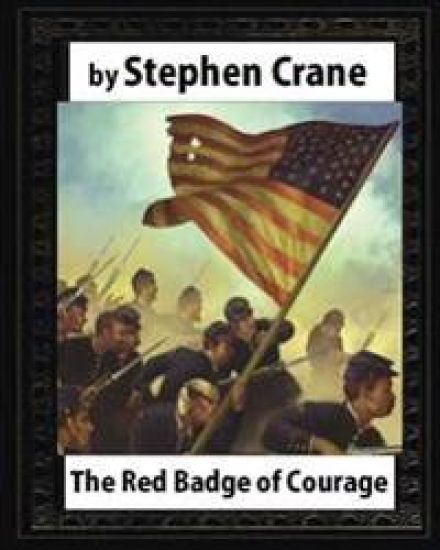
The Red Badge of Courage (1895), by Stephen Crane

The Red Badge of Courage (1895), by Stephen Crane

Stephen Crane

Createspace Independent Publishing Platform
2016
nidottu
During an unnamed battle, 18-year-old private Henry Fleming survives what he considers to be a lost cause by escaping into a nearby wood, deserting his battalion. He finds a group of injured men in which one of the group, the "Tattered Soldier", asks Henry, who's often referred to as "The Youth", where he's wounded. Henry, embarrassed that he's whole, wanders thru the forest. He ultimately decides that running was the best thing, & that he's a small part of the army responsible for saving himself. When he learns that his battalion had won the battle, Henry feels guilty. As a result, he returns to his battalion & is injured when a cannon operator hits him in the head because he wouldn't let go of his arm. When he returns to camp, the other soldiers believe he was harmed by a bullet grazing him in battle. The next morning he goes into battle for a 3rd time. While looking for a stream from which to attain water, he discovers from the commanding officer that his regiment has a lackluster reputation. The officer speaks casually about sacrificing Henry's regiment because they're nothing more than "mule drivers" & "mud diggers". With no regiments to spare, the general orders his men forward. In the final battle, Henry becomes one of the best fighters in his battalion as well as the flag bearer, finally proving his courage as a man.
The open boat, and other tales of adventure (1898) by Stephen Crane

The open boat, and other tales of adventure (1898) by Stephen Crane

Stephen Crane

Createspace Independent Publishing Platform
2016
nidottu
"The Open Boat" is a short story by American author Stephen Crane (1871-1900). First published in 1897, it was based on Crane's experience of surviving a shipwreck off the coast of Florida earlier that year while traveling to Cuba to work as a newspaper correspondent. Crane was stranded at sea for thirty hours when his ship, the SS Commodore, sank after hitting a sandbar. He and three other men were forced to navigate their way to shore in a small boat; one of the men, an oiler named Billie Higgins, drowned after the boat overturned. Crane's personal account of the shipwreck and the men's survival, titled "Stephen Crane's Own Story", was first published a few days after his rescue. Crane subsequently adapted his report into narrative form, and the resulting short story "The Open Boat" was published in Scribner's Magazine. The story is told from the point of view of an anonymous correspondent, with Crane as the implied author, the action closely resembles the author's experiences after the shipwreck. A volume titled The Open Boat and Other Tales of Adventure was published in the United States in 1898; an edition entitled The Open Boat and Other Stories was published simultaneously in England. Praised for its innovation by contemporary critics, the story is considered an exemplary work of literary Naturalism, and is one of the most frequently discussed works in Crane's canon. It is notable for its use of imagery, irony, symbolism, and the exploration of such themes as survival, solidarity, and the conflict between man and nature. H. G. Wells considered "The Open Boat" to be "beyond all question, the crown of all Crane's] work""The Open Boat" is divided into seven sections, each told mainly from the point of view of the correspondent, based upon Crane himself. The first part introduces the four characters-the correspondent, a condescending observer detached from the rest of the group; 15] the captain, who is injured and morose at having lost his ship, yet capable of leadership; the cook, fat and comical, but optimistic that they will be rescued; and the oiler, Billie, who is physically the strongest, and the only one in the story referred to by name. The four are survivors of a shipwreck, which occurred before the beginning of the story, and are drifting at sea in a small dinghy. In the following four sections, the moods of the men fluctuate from anger at their desperate situation, to a growing empathy for one another and the sudden realization that nature is indifferent to their fates. The men become fatigued and bicker with one another; nevertheless, the oiler and the correspondent take turns rowing toward shore, while the cook bails water to keep the boat afloat. When they see a lighthouse on the horizon, their hope is tempered with the realization of the danger of trying to reach it. Their hopes dwindle further when, after seeing a man waving from shore, and what may or may not be another boat, they fail to make contact. The correspondent and the oiler continue to take turns rowing, while the others sleep fitfully during the night. The correspondent then notices a shark swimming near the boat, but he does not seem to be bothered by it as one would expect. In the penultimate chapter, the correspondent wearily recalls a verse from the poem "Bingen on the Rhine" by Caroline Norton, in which a "soldier of the Legion" dies far from home. The final chapter begins with the men's resolution to abandon the floundering dinghy they have occupied for thirty hours and to swim ashore. Stephen Crane (November 1, 1871 - June 5, 1900) was an American poet, novelist, and short story writer. Prolific throughout his short life, he wrote notable works in the
Active service; a novel (1899), by Stephen Crane

Active service; a novel (1899), by Stephen Crane

Stephen Crane

Createspace Independent Publishing Platform
2016
nidottu
Stephen Crane (1871-1900) was an American novelist, poet and journalist. He is best known for his novel Red Badge of Courage (1895). The novel introduced for most readers Crane's strikingly original prose, an intensely rendered mix of impressionism, naturalism and symbolism. He lived in New York City a bohemian life where he observed the poor in the Bowery slums as research for his first novel, Maggie: A Girl of the Streets (1893), a milestone in uncompromising realism and in the early development of literary naturalism. He became shipwrecked in route to Cuba in early 1897, an experience which he later transformed into his short story masterpiece, The Open Boat (1898). Crane's poetry, which he called 'lines' rather than poems, was also strikingly new in its minimalist meter and rhyme. It employed symbolic imagery in order to communicate at times heavy-handed irony and paradox. Other works include Active Service (1899), The Monster (1899), The Blue Hotel (1899), Whilomville Stories (1900) and Wounds in the Rain (1900). Stephen Crane (1871-1900) was born in 1871 in Newark, New Jersey. He was educated at Lafayette College and Syracuse University. In 1891, he got a job as a freelance reporter, writing articles about the slums of New York. Without steady work as a reporter, Crane, himself, was a poor man and lived in The Bowery, New York's worst slum. This firsthand experience of poverty gave Crane the material he needed for his first novel, Maggie, a Girl of the Streets. It was a tragic story about a young prostitute who commits suicide. Crane used what little money he had to publish the book in 1893, using the pen-name Johnston Smith. Although it was not a commercially successful novel, the book received excellent critical reviews. In 1895, Crane published his second novel, The Red Badge of Courage. It was a powerful and realistic psychological portrait of a young soldier fighting in the American Civil War. This novel brought Crane international recognition as a great novelist. He was one of the first American writers to work in the style known as Naturalism. Naturalism portrayed characters who were not in total control of their lives, but rather, were strongly affected by natural forces. These forces could be the internal emotions or personality conflicts of the characters themselves, or they could be external elements like the stormy sea in The Open Boat, or social situations, such as war in The Red Badge of Courage. Although Crane had never been a soldier himself, he worked as a war correspondent for several American and foreign newspapers. He reported on the war between Greece and Turkey in 1897, as well as on the Spanish-American War, fought between the United States and Spain, in Cuba and the Philippines in 1898. Just before the Spanish-American war broke out, Crane was shipwrecked while on an expedition to Cuba. This experience is the basis of The Open Boat. The character referred to in the story as the correspondent is most likely Crane himself. Sadly, Crane developed tuberculosis as a result of his weakened condition after the shipwreck. He died in 1900 at the age of 28.
Wounds in the rain: war stories (1900), by Stephen Crane

Wounds in the rain: war stories (1900), by Stephen Crane

Stephen Crane

Createspace Independent Publishing Platform
2016
nidottu
Wounds in the Rain (1900) It was not war on a grand scale that Crane saw in the Spanish-American complication, in which he participated as a war correspondent; no such war as the recent horror. But the occasions for personal heroism were no fewer than always, and the opportunities for the exercise of such powers of trained and appreciative understanding and sympathy as Crane possessed, were abundant. Stephen Crane (November 1, 1871 - June 5, 1900) was an American poet, novelist, and short story writer. Prolific throughout his short life, he wrote notable works in the Realist tradition as well as early examples of American Naturalism and Impressionism. He is recognized by modern critics as one of the most innovative writers of his generation. The ninth surviving child of Protestant Methodist parents, Crane began writing at the age of four and had published several articles by the age of 16. Having little interest in university studies, he left college in 1891 to work as a reporter and writer. Crane's first novel was the 1893 Bowery tale Maggie: A Girl of the Streets, generally considered by critics to be the first work of American literary Naturalism. He won international acclaim in 1895 for his Civil War novel The Red Badge of Courage, which he wrote without having any battle experience. In 1896, Crane endured a highly publicized scandal after appearing as a witness in the trial of a suspected prostitute, an acquaintance named Dora Clark. Late that year he accepted an offer to travel to Cuba as a war correspondent. As he waited in Jacksonville, Florida, for passage, he met Cora Taylor, with whom he began a lasting relationship. En route to Cuba, Crane's vessel the SS Commodore, sank off the coast of Florida, leaving him and others adrift for 30 hours in a dinghy. 1] Crane described the ordeal in "The Open Boat". During the final years of his life, he covered conflicts in Greece (accompanied by Cora, recognized as the first woman war correspondent) and later lived in England with her. He was befriended by writers such as Joseph Conrad and H. G. Wells. Plagued by financial difficulties and ill health, Crane died of tuberculosis in a Black Forest sanatorium in Germany at the age of 28. At the time of his death, Crane was considered an important figure in American literature. After he was nearly forgotten for two decades, critics revived interest in his life and work. Crane's writing is characterized by vivid intensity, distinctive dialects, and irony. Common themes involve fear, spiritual crises and social isolation. Although recognized primarily for The Red Badge of Courage, which has become an American classic, Crane is also known for his poetry, journalism, and short stories such as "The Open Boat", "The Blue Hotel", "The Bride Comes to Yellow Sky", and The Monster. His writing made a deep impression on 20th-century writers, most prominent among them Ernest Hemingway, and is thought to have inspired the Modernists and the Imagists.
Stephen Curry: Rise of the Star. Full COLOR book with stunning graphics. The inspiring and interesting life story from a struggling y
'I've never been afraid of big moments. I get butterflies. I get nervous and anxious, but I think those are all good signs that I'm ready for the moment' - Stephen Curry. Stephen Curry was intent in showing the world that he was not just 'lucky' - he wanted to show that he deserved to be playing in the Finals. He deserved to be the MVP. He deserved to win a championship. He deserved to be recognized as one of the greatest players to ever play this game. From humble beginnings, as the 7th pick in the 2009 NBA Draft that went relatively unnoticed, from having the one of worst records in the NBA in his first year as a Warrior, from being cast aside by critics for being always riddled with injury, he was now on the verge of ending all speculation once and for all as to whether his name deserved to be mentioned amongst the NBA greats. All it took was just 12 more minutes, just 1 more quarter of basketball - with the Cleveland Cavalier fans booing him, the critics doubting him and the whole world watching him - he would show them just what he's capable of to succeed under pressure, a skill he has picked up and honed over all the years of his basketball life. After 12 minutes, the world would come to know of the legend of Stephen Curry - being one of the greatest shooter's to ever play the game of basketball. After 12 more minutes, Stephen Curry would be deemed a bonafide superstar. After 12 more minutes, Stephen Curry wouldn't be known as the guy who got 'lucky' to be MVP - he would go from being just another all-star, to being an NBA Champion and solidifying his status as an absolute force to be reckoned with in the league. Interesting, engaging and easy to read, this book is about the rise of Stephen Curry, the Long-Shot, the MVP, and the Champion. Get this book now and enjoy the journey of the greatest super star