Kirjojen hintavertailu. Mukana 12 016 292 kirjaa ja 12 kauppaa.

Kirjahaku

Etsi kirjoja tekijän nimen, kirjan nimen tai ISBN:n perusteella.

1000 tulosta hakusanalla Stephen Kozeniewski

The open boat, and other tales of adventure (1898) by Stephen Crane

The open boat, and other tales of adventure (1898) by Stephen Crane

Stephen Crane

Createspace Independent Publishing Platform
2016
nidottu
"The Open Boat" is a short story by American author Stephen Crane (1871-1900). First published in 1897, it was based on Crane's experience of surviving a shipwreck off the coast of Florida earlier that year while traveling to Cuba to work as a newspaper correspondent. Crane was stranded at sea for thirty hours when his ship, the SS Commodore, sank after hitting a sandbar. He and three other men were forced to navigate their way to shore in a small boat; one of the men, an oiler named Billie Higgins, drowned after the boat overturned. Crane's personal account of the shipwreck and the men's survival, titled "Stephen Crane's Own Story", was first published a few days after his rescue. Crane subsequently adapted his report into narrative form, and the resulting short story "The Open Boat" was published in Scribner's Magazine. The story is told from the point of view of an anonymous correspondent, with Crane as the implied author, the action closely resembles the author's experiences after the shipwreck. A volume titled The Open Boat and Other Tales of Adventure was published in the United States in 1898; an edition entitled The Open Boat and Other Stories was published simultaneously in England. Praised for its innovation by contemporary critics, the story is considered an exemplary work of literary Naturalism, and is one of the most frequently discussed works in Crane's canon. It is notable for its use of imagery, irony, symbolism, and the exploration of such themes as survival, solidarity, and the conflict between man and nature. H. G. Wells considered "The Open Boat" to be "beyond all question, the crown of all Crane's] work""The Open Boat" is divided into seven sections, each told mainly from the point of view of the correspondent, based upon Crane himself. The first part introduces the four characters-the correspondent, a condescending observer detached from the rest of the group; 15] the captain, who is injured and morose at having lost his ship, yet capable of leadership; the cook, fat and comical, but optimistic that they will be rescued; and the oiler, Billie, who is physically the strongest, and the only one in the story referred to by name. The four are survivors of a shipwreck, which occurred before the beginning of the story, and are drifting at sea in a small dinghy. In the following four sections, the moods of the men fluctuate from anger at their desperate situation, to a growing empathy for one another and the sudden realization that nature is indifferent to their fates. The men become fatigued and bicker with one another; nevertheless, the oiler and the correspondent take turns rowing toward shore, while the cook bails water to keep the boat afloat. When they see a lighthouse on the horizon, their hope is tempered with the realization of the danger of trying to reach it. Their hopes dwindle further when, after seeing a man waving from shore, and what may or may not be another boat, they fail to make contact. The correspondent and the oiler continue to take turns rowing, while the others sleep fitfully during the night. The correspondent then notices a shark swimming near the boat, but he does not seem to be bothered by it as one would expect. In the penultimate chapter, the correspondent wearily recalls a verse from the poem "Bingen on the Rhine" by Caroline Norton, in which a "soldier of the Legion" dies far from home. The final chapter begins with the men's resolution to abandon the floundering dinghy they have occupied for thirty hours and to swim ashore. Stephen Crane (November 1, 1871 - June 5, 1900) was an American poet, novelist, and short story writer. Prolific throughout his short life, he wrote notable works in the
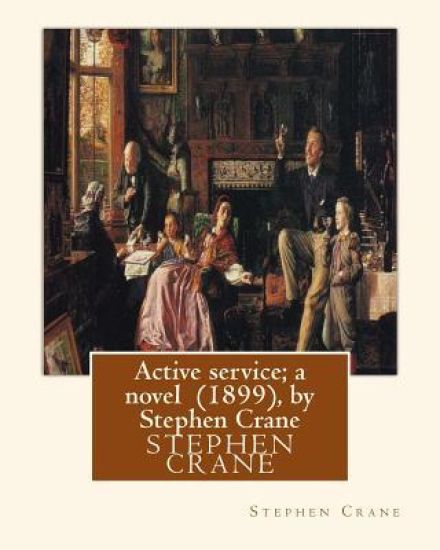
Active service; a novel (1899), by Stephen Crane

Active service; a novel (1899), by Stephen Crane

Stephen Crane

Createspace Independent Publishing Platform
2016
nidottu
Stephen Crane (1871-1900) was an American novelist, poet and journalist. He is best known for his novel Red Badge of Courage (1895). The novel introduced for most readers Crane's strikingly original prose, an intensely rendered mix of impressionism, naturalism and symbolism. He lived in New York City a bohemian life where he observed the poor in the Bowery slums as research for his first novel, Maggie: A Girl of the Streets (1893), a milestone in uncompromising realism and in the early development of literary naturalism. He became shipwrecked in route to Cuba in early 1897, an experience which he later transformed into his short story masterpiece, The Open Boat (1898). Crane's poetry, which he called 'lines' rather than poems, was also strikingly new in its minimalist meter and rhyme. It employed symbolic imagery in order to communicate at times heavy-handed irony and paradox. Other works include Active Service (1899), The Monster (1899), The Blue Hotel (1899), Whilomville Stories (1900) and Wounds in the Rain (1900). Stephen Crane (1871-1900) was born in 1871 in Newark, New Jersey. He was educated at Lafayette College and Syracuse University. In 1891, he got a job as a freelance reporter, writing articles about the slums of New York. Without steady work as a reporter, Crane, himself, was a poor man and lived in The Bowery, New York's worst slum. This firsthand experience of poverty gave Crane the material he needed for his first novel, Maggie, a Girl of the Streets. It was a tragic story about a young prostitute who commits suicide. Crane used what little money he had to publish the book in 1893, using the pen-name Johnston Smith. Although it was not a commercially successful novel, the book received excellent critical reviews. In 1895, Crane published his second novel, The Red Badge of Courage. It was a powerful and realistic psychological portrait of a young soldier fighting in the American Civil War. This novel brought Crane international recognition as a great novelist. He was one of the first American writers to work in the style known as Naturalism. Naturalism portrayed characters who were not in total control of their lives, but rather, were strongly affected by natural forces. These forces could be the internal emotions or personality conflicts of the characters themselves, or they could be external elements like the stormy sea in The Open Boat, or social situations, such as war in The Red Badge of Courage. Although Crane had never been a soldier himself, he worked as a war correspondent for several American and foreign newspapers. He reported on the war between Greece and Turkey in 1897, as well as on the Spanish-American War, fought between the United States and Spain, in Cuba and the Philippines in 1898. Just before the Spanish-American war broke out, Crane was shipwrecked while on an expedition to Cuba. This experience is the basis of The Open Boat. The character referred to in the story as the correspondent is most likely Crane himself. Sadly, Crane developed tuberculosis as a result of his weakened condition after the shipwreck. He died in 1900 at the age of 28.
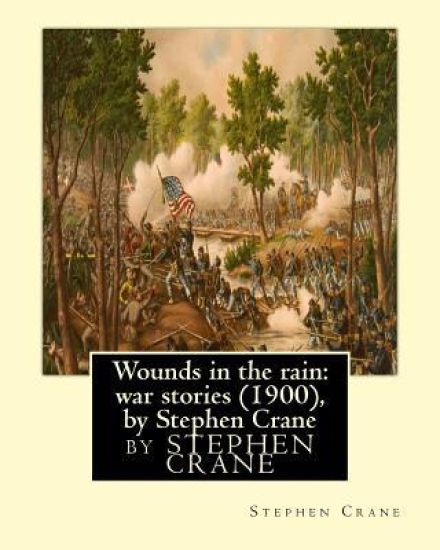
Wounds in the rain: war stories (1900), by Stephen Crane

Wounds in the rain: war stories (1900), by Stephen Crane

Stephen Crane

Createspace Independent Publishing Platform
2016
nidottu
Wounds in the Rain (1900) It was not war on a grand scale that Crane saw in the Spanish-American complication, in which he participated as a war correspondent; no such war as the recent horror. But the occasions for personal heroism were no fewer than always, and the opportunities for the exercise of such powers of trained and appreciative understanding and sympathy as Crane possessed, were abundant. Stephen Crane (November 1, 1871 - June 5, 1900) was an American poet, novelist, and short story writer. Prolific throughout his short life, he wrote notable works in the Realist tradition as well as early examples of American Naturalism and Impressionism. He is recognized by modern critics as one of the most innovative writers of his generation. The ninth surviving child of Protestant Methodist parents, Crane began writing at the age of four and had published several articles by the age of 16. Having little interest in university studies, he left college in 1891 to work as a reporter and writer. Crane's first novel was the 1893 Bowery tale Maggie: A Girl of the Streets, generally considered by critics to be the first work of American literary Naturalism. He won international acclaim in 1895 for his Civil War novel The Red Badge of Courage, which he wrote without having any battle experience. In 1896, Crane endured a highly publicized scandal after appearing as a witness in the trial of a suspected prostitute, an acquaintance named Dora Clark. Late that year he accepted an offer to travel to Cuba as a war correspondent. As he waited in Jacksonville, Florida, for passage, he met Cora Taylor, with whom he began a lasting relationship. En route to Cuba, Crane's vessel the SS Commodore, sank off the coast of Florida, leaving him and others adrift for 30 hours in a dinghy. 1] Crane described the ordeal in "The Open Boat". During the final years of his life, he covered conflicts in Greece (accompanied by Cora, recognized as the first woman war correspondent) and later lived in England with her. He was befriended by writers such as Joseph Conrad and H. G. Wells. Plagued by financial difficulties and ill health, Crane died of tuberculosis in a Black Forest sanatorium in Germany at the age of 28. At the time of his death, Crane was considered an important figure in American literature. After he was nearly forgotten for two decades, critics revived interest in his life and work. Crane's writing is characterized by vivid intensity, distinctive dialects, and irony. Common themes involve fear, spiritual crises and social isolation. Although recognized primarily for The Red Badge of Courage, which has become an American classic, Crane is also known for his poetry, journalism, and short stories such as "The Open Boat", "The Blue Hotel", "The Bride Comes to Yellow Sky", and The Monster. His writing made a deep impression on 20th-century writers, most prominent among them Ernest Hemingway, and is thought to have inspired the Modernists and the Imagists.
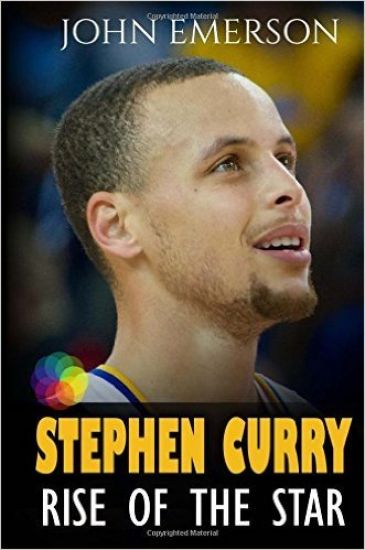
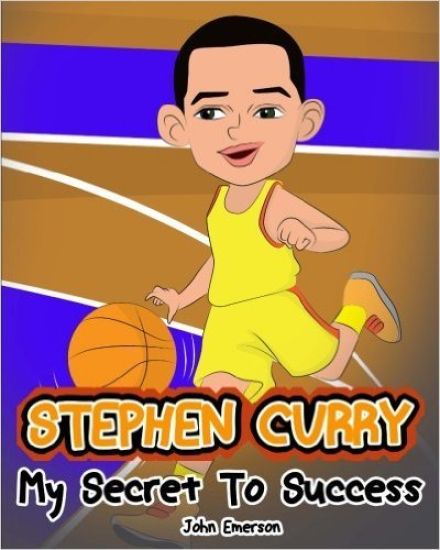
Stephen Curry: Rise of the Star. Full COLOR book with stunning graphics. The inspiring and interesting life story from a struggling y
'I've never been afraid of big moments. I get butterflies. I get nervous and anxious, but I think those are all good signs that I'm ready for the moment' - Stephen Curry. Stephen Curry was intent in showing the world that he was not just 'lucky' - he wanted to show that he deserved to be playing in the Finals. He deserved to be the MVP. He deserved to win a championship. He deserved to be recognized as one of the greatest players to ever play this game. From humble beginnings, as the 7th pick in the 2009 NBA Draft that went relatively unnoticed, from having the one of worst records in the NBA in his first year as a Warrior, from being cast aside by critics for being always riddled with injury, he was now on the verge of ending all speculation once and for all as to whether his name deserved to be mentioned amongst the NBA greats. All it took was just 12 more minutes, just 1 more quarter of basketball - with the Cleveland Cavalier fans booing him, the critics doubting him and the whole world watching him - he would show them just what he's capable of to succeed under pressure, a skill he has picked up and honed over all the years of his basketball life. After 12 minutes, the world would come to know of the legend of Stephen Curry - being one of the greatest shooter's to ever play the game of basketball. After 12 more minutes, Stephen Curry would be deemed a bonafide superstar. After 12 more minutes, Stephen Curry wouldn't be known as the guy who got 'lucky' to be MVP - he would go from being just another all-star, to being an NBA Champion and solidifying his status as an absolute force to be reckoned with in the league. Interesting, engaging and easy to read, this book is about the rise of Stephen Curry, the Long-Shot, the MVP, and the Champion. Get this book now and enjoy the journey of the greatest super star
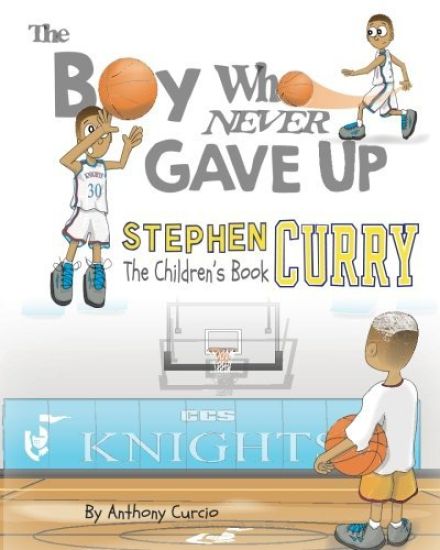
Stephen Curry

Stephen Curry

Anthony Curcio

Createspace Independent Publishing Platform
2016
pokkari
The Boy Who Never Gave Up is the inspiring true story of NBA superstar Stephen Curry. This Fully illustrated picture book biography tells the story of a young boy who many said was too short to play in high school, too weak to play in college and not good enough to play in the NBA. Against all odds, this small boy who follows his dream, not only makes it to the NBA, but becomes one of the greatest players to ever play the game of basketball. Children's/Kids Picture Book Biography K-3 Be sure to check out this author's newest release: NBA All Stars 2020-21: The Ultimate Basketball Activity, Stats and Coloring Book for Adults and Kids by Anthony Curcio
Stephen Sondheim’s Sweeney Todd

Stephen Sondheim’s Sweeney Todd

Rick Pender

BLOOMSBURY PUBLISHING PLC
2025
sidottu
An award-winning Sondheim expert dives into all facets of this unique, murder-filled masterpiece—its slimy roots, original production, characters from killers to lovers to bakers, soaring score, gripping storytelling, and lasting power.This bloody tale is often considered one of the greatest musicals of all time. Rick Pender provides a kaleidoscopic view and interweaves a wealth of archival materials and insights, starting with the show’s 19th-century gruesome literary origins and Christopher Bond’s 1970 stage adaptation that inspired Sondheim to transform it into a Broadway musical. Pender extensively explores the show’s development and its Tony Award-winning original 1979 production, focusing on Sondheim’s majestic score and the show’s masterfully written and intricately plotted book by Hugh Wheeler. Also profiled are members of the all-star creative team led by producer/director Harold Prince as well as legendary orchestrator Jonathan Tunick, renowned musical director Paul Gemignani, and the original cast, including Len Cariou, Angela Lansbury, Victor Garber, Sarah Rice, Edmund Lyndeck, Ken Jennings, and Merle Louise. The book surveys major, subsequent productions by theater and opera companies, as well as Tim Burton’s dark cinematic adaptation featuring Johnny Depp and Helena Bonham-Carter. Critical assessments of the original production and numerous adaptations are shared, including John Doyle’s 2005 Tony Award-winning actor/musician production and the 2023 revival starring Josh Groban and Annaleigh Ashford. The book ends with a look at the musical’s cultural impacts and legacy. Rick Pender provides riveting exploration of Sweeney Todd will please fans of musical theatre, Sondheim enthusiasts, and those who gravitate to horror stories.
Stephen Es Un Buen Nieto (Stephen Is a Good Grandson)
Stephen loves visiting his maternal grandparents in the country. When he visits, he plays outside, goes fishing, and goes for long hikes. He also loves visiting his paternal grandmother, who lives in the city. When he visits her, they take walks to the local shops. To be a good grandson, Stephen picks up after himself, helps wash up after dinner, and listens to what his grandparents tell him to do. The brightly colored illustrations and manageable text make this book perfect for story-time listeners and emerging readers.
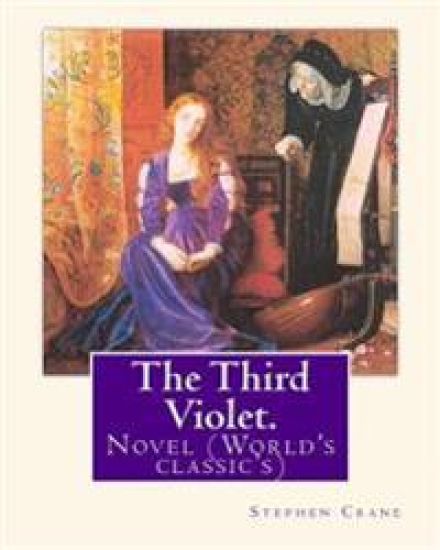
The Third Violet. By: Stephen Crane: Novel (World's classic's)

The Third Violet. By: Stephen Crane: Novel (World's classic's)

Stephen Crane

Createspace Independent Publishing Platform
2016
nidottu
Before he succumbed to a fatal case of tuberculosis at the age of 28, author Stephen Crane penned five remarkably accomplished novels, not to mention dozens of short stories, essays, and sketches. Stephen Crane (November 1, 1871 - June 5, 1900) was an American poet, novelist, and short story writer. Prolific throughout his short life, he wrote notable works in the Realist tradition as well as early examples of American Naturalism and Impressionism. He is recognized by modern critics as one of the most innovative writers of his generation. The ninth surviving child of Protestant Methodist parents, Crane began writing at the age of four and had published several articles by the age of 16. Having little interest in university studies, he left college in 1891 to work as a reporter and writer. Crane's first novel was the 1893 Bowery tale Maggie: A Girl of the Streets, generally considered by critics to be the first work of American literary Naturalism. He won international acclaim in 1895 for his Civil War novel The Red Badge of Courage, which he wrote without having any battle experience. In 1896, Crane endured a highly publicized scandal after appearing as a witness in the trial of a suspected prostitute, an acquaintance named Dora Clark. Late that year he accepted an offer to travel to Cuba as a war correspondent. As he waited in Jacksonville, Florida, for passage, he met Cora Taylor, with whom he began a lasting relationship. En route to Cuba, Crane's vessel the SS Commodore, sank off the coast of Florida, leaving him and others adrift for 30 hours in a dinghy. 1] Crane described the ordeal in "The Open Boat". During the final years of his life, he covered conflicts in Greece (accompanied by Cora, recognized as the first woman war correspondent) and later lived in England with her. He was befriended by writers such as Joseph Conrad and H. G. Wells. Plagued by financial difficulties and ill health, Crane died of tuberculosis in a Black Forest sanatorium in Germany at the age of 28. At the time of his death, Crane was considered an important figure in American literature. After he was nearly forgotten for two decades, critics revived interest in his life and work. Crane's writing is characterized by vivid intensity, distinctive dialects, and irony. Common themes involve fear, spiritual crises and social isolation. Although recognized primarily for The Red Badge of Courage, which has become an American classic, Crane is also known for his poetry, journalism, and short stories such as "The Open Boat", "The Blue Hotel", "The Bride Comes to Yellow Sky", and The Monster. His writing made a deep impression on 20th-century writers, most prominent among them Ernest Hemingway, and is thought to have inspired the Modernists and the Imagists....
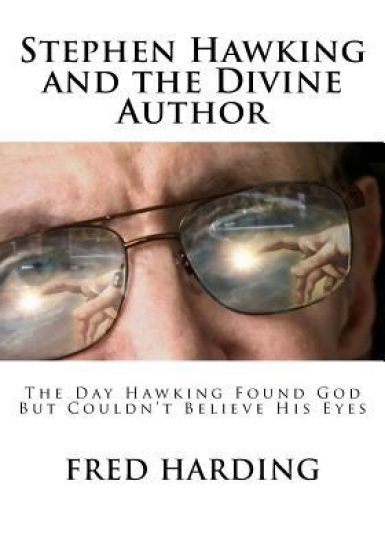
Stephen Hawking and the Divine Author: The Day Hawking Found God But Could't Believe His Eyes
2nd Edition with over 150 illustrations How can we have freewill when it seems that our lives are already predetermined by God? "For I alone am God I am God, and there is none like me. Only I can tell you the future before it even happens. Everything I plan will come to pass, for I do whatever I wish." (ISAIAH 46:10) One of Stephen Hawking's theories makes it possible for us to have freewill while at the same time it enables God to know the future before it happens. The explanation is simply amazing This is the story how Hawking ducked and weaved to avoid the evidence that his theories kept leading him to, namely that God created the Universe. However, in the end he came face to face with the Divine Author and ironically, it was one of his theories that made that fateful confrontation possible. But he could not bring himself to overcome his religious paradigm and acknowledge what his eyes had clearly been revealing to him. By reading this book not only will you learn about Hawking's brush with the Divine Author on a number of occasions, but you will also gain a good grounding on Black Holes, the Steady State Theory of Fred Hoyle, the Big Bang, Hawking Radiation, Einstein's theory of Relativity, Quantum Mechanics, Imaginary Time, String theory and more. This will enable you to make an an informed judgement as to the premise of this book, that, "In the Beginning God created the heavens and the earth". As for Hawking, having been unable to contradict his own theories any more and in a final act of frustration and self-betrayal he adopted a theory that was not even one of his own - M-theory. Now here is the irony of it. By all accounts M-theory is not a genuine theory but rather it is philosophical speculation disguised as science. Sir Roger Penrose, who shared the Wolf Prize for physics with Hawking in 1988 said on a radio show in 2010, "... M-Theory isn't even a theory. It's a collection of ideas, hopes, aspirations. It's not even a theory." For any scientist, let alone a science superstar like Hawking, to disparage philosophy on the one hand, and then proceed to engage in it by adopting a self contradictory philosophical stance on the other, with M-theory, is really scraping the bottom of the barrel. What a sad end to such a remarkable man, who has captured the hearts and minds of so many people. But is it the end? Hawking's story is not finished yet. He once said: "Intelligence is the ability to adapt to change." Thus, it is in the realm of possibility that he may read this book, which goes over his theories that often point to God and change his mind. Stephen, if you are reading this, it is not too late to change your mind and believe what your eyes have been telling you all along. The question is will you? The world waits with bated breath upon your decision.
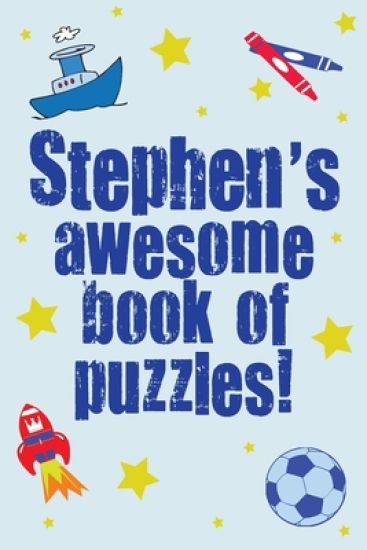
Stephen's Awesome Book Of Puzzles!: Children's puzzles containing 20 personalised puzzles & 80 others
Stephen's awesome book of puzzles contains a fun collection of 100 different puzzles, including 20 Stephen themed word search puzzles. Other puzzles include: Sudoku Find The Word Mazes Number Pyramid Word Finder Spot The Difference Dot To Dot All of our books are printed on very high quality paper making the puzzle experience all the more enjoyable This book is a part of our puzzle book range. For others, visit our www.puzzle-book.co.uk page.
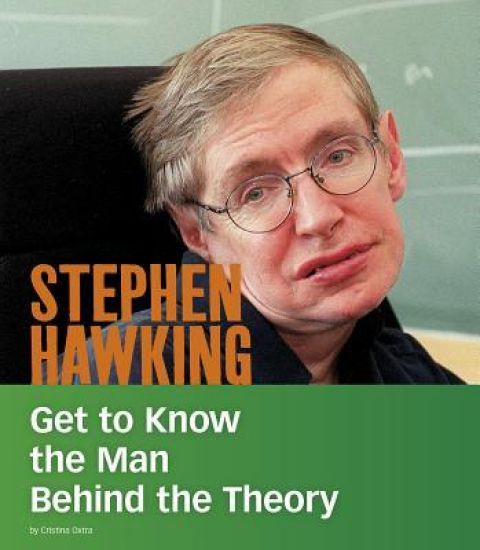
Stephen Hawking on Trial: Confronting the Big Bang

Stephen Hawking on Trial: Confronting the Big Bang

Pierre St Clair

Createspace Independent Publishing Platform
2017
nidottu
The genius of the wee Doctor behind the electronic voice on trial? Stephen Hawking's influence in cosmology has been significant. Why put him on trial? The public has a right to investigate Professor Hawking's Grand Design theory about the origin of the universe. Evaluating a theory is the foundation of the scientific method. All scientific research must stand up to exacting scrutiny. This is the reason bestselling author, Pierre St. Clair, extracts science fact from social fantasy via the judgement of 64 renowned physicists. This book uncovers a widespread turmoil in astrophysics "Theoretical physics is at a crossroads right now...In a sense we've entered a very deep crisis." Dr. Neil Turok - Director of the Perimeter Institute for Theoretical Physics The author exposes hidden facts behind the headlines because an essential initiative in cosmology is being neglected. Therefore, unbiased investigators may reasonably challenge, "Let's have a look at the evidence." "Stephen Hawking On Trial is compelling reading for anyone with an interest in physics and cosmology. It may challenge your beliefs, or maybe not, but it's a fascinating read in either case." J. Chambers - Amazon Top 10 Reviewer Society doesn't thrive on uncertainty. Does Hawking's latest theory eliminate uncertainty? All evidence must be beyond reasonable doubt - the rationale that logical people and jurors use to settle an issue. "This is the first book that has assembled the origins of cosmology as evidence like opposing counsels. Readers can weigh testimonies as a judge who demands rigorous arguments and proofs. St. Clair has the detached presence of mind to act as both scales of justice." D. M. Shapiro - Los Angeles filmmaker The author provides an in-depth analysis of Stephen Hawking's Grand Design theory which lacks supporting data yet relegates other models of the universe to the dustbin of history. Author St. Clair reveals: - What we factually know and, more importantly, what we do not know about the universe - The one question that is never asked but deserves an answer - Why many hypotheses lacking data are put forward as relevant theories Gravity is the most common force in nature Stephen Hawking On Trial challenges Dr. Hawking who misapplies gravitation to support his ideas which he promotes unjustifiably as a genuine theory despite a lack of contributory data. "Hawking and a few others are doing a disservice to science by exaggerating what we know and therein confusing the public. This book sets the record straight." D. Friedmann - Canadian author NASA physicists admit that dark matter and dark energy are unknown factors, yet together they comprise 96% of the universe. Although physicists admit they only understand 4% of the universe, Professor Hawking declares on a national TV broadcast, "The scientific account is complete." Can any scientific account of the cosmos be complete if we only understand 4% of the universe? Stephen Hawking portrays his ideas of the universe as scientific and supported by evidence when in reality they are mostly clouds of caveats and probabilities. Therefore, we have legitimate cause for his ideas to stand trial. "As a scientist and as an educator, I like the idea that we believe things because there's evidence." Dr. Richard Dawkins - Oxford University Professor & Bestselling Author "This is the best Science book that I've read in quite a while. A Science book that views Hawking's work and statements critically in a clear concise manner. I've been aware of the criticisms of Hawking's work... " H. Lipman - American author