

Kirjahaku
Etsi kirjoja tekijän nimen, kirjan nimen tai ISBN:n perusteella.
1000 tulosta hakusanalla Thilo

The Age of Fakes!
Bryce Austin; Thilo Baum; Nils Bäumer
Brain Script Publishers / Dikt Gmbh
2026
pokkari


Mémoire pour le comte de Cagliostro, accusé, contre M. le procureur-général, accusateur
Alessandro Cagliostro; Jean-Charles Thilorier; Pierre Titon
Hachette Livre Bnf
2021
pokkari
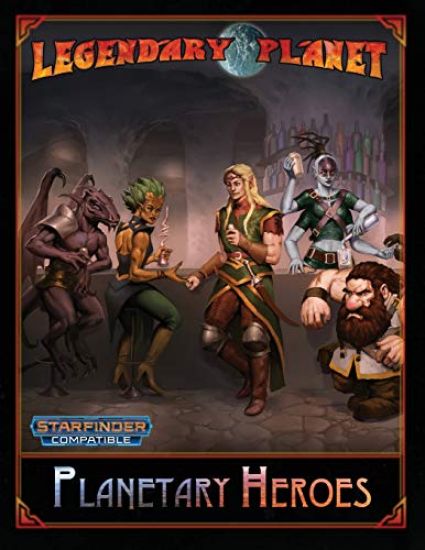
Planetary Heroes (Starfinder)
Jeff Provine; George Loki Williams; Thilo Graf
Createspace Independent Publishing Platform
2018
nidottu
Formeln - Mathematik, Physik, Technik, Chemie
Dieter Baum; Hannes Klein; Thilo Schmid
Cornelsen Verlag GmbH
2020
nidottu

Thomas von Aquin. Ethik als natürliches Gesetz
Daniel M. Wolanski; Thilo Maceiczyk
GRIN Verlag
2011
nidottu

Der große Ausflugs-Verführer Weinfranken
Birgit Drees; Roland Schulz; Thilo Castner
Ars Vivendi
2022
pokkari


Die berufliche Bildung in Polen
Joanna Dolinska; Barbara Hupfer; Thilo Ketschau
Waxmann Verlag
2024
pokkari

Kein Berg ohne Täler
Hartmut Zückner; Marc Knepper; Thilo Müller
Bundesverb. Stotterer-Sel
2016
nidottu
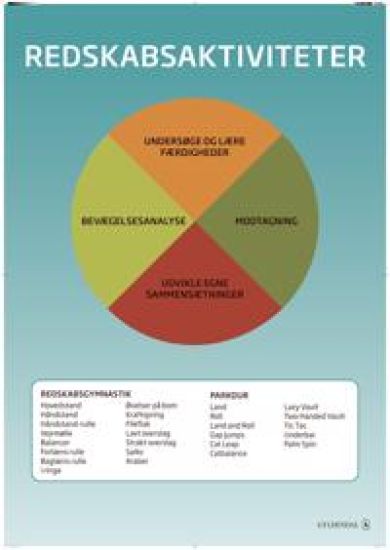
Idrætsdidaktiske plakater
Birgitte Hedeskov; Kasper Kaare Gade; Tina Thilo
Gyldendal undervisning
2019
muu
Plakatsamling med 10 idrætsdidaktiske plakater, som passer til Tjek på idræt og Idræt7-9.gyldendal.dk. Plakaterne måler 70 x 100 cm. Syv af plakaterne viser centrale elementer i de indholdsområder, som eleverne kan trække til den afsluttende prøve i idræt. Derudover er der udvalgte arbejdsmodeller inden for dans og udtryk samt boldbasis og boldspil. Plakaterne kan anvendes til at styrke det mundtlige og refleksive arbejde i forbindelse med den daglige idrætsundervisning såvel som i relation til prøven i idræt. Plakatsamlingen indeholder: Centrale elementer i redskabsaktiviteter Centrale elementer i dans og udtryk Centrale elementer i kropsbasis Centrale elementer i boldbasis og boldspil Centrale elementer i løb, spring og kast Centrale elementer i fysisk træning Centrale elementer i Natur og udeliv Dansehjulet Spilhjulet Spillerkvalitetsmodellen Vil du også have laminerede A3 plakater til gulvet? Gyldendal har i samarbejde med Nationalt Videnscenter Kosmos udarbejdet laminerede gulvplakater i A3 størrelse af ni af de ti idrætsplakater. Gulvplakaterne er et godt supplement til vægplakaterne, da de også indeholder en beskrivelse af de enkelte modeller. Gulvplakaterne kan bestilles eller printes på Videns Center Kosmos hjemmeside.

Derived from the renowned multi-volume International Encyclopaedia of Laws, this practical analysis of sports law in Switzerland deals with the regulation of sports activity by both public authorities and private sports organizations. The growing internationalization of sports inevitably increases the weight of global regulation, yet each country maintains its own distinct regime of sports law and its own national and local sports organizations. Sports law at a national or organizational level thus gains a growing relevance in comparative law. The book describes and discusses both state-created rules and autonomous self-regulation regarding the variety of economic, social, commercial, cultural, and political aspects of sports activities. Self- regulation manifests itself in the form of by-laws, and encompasses organizational provisions, disciplinary rules, and rules of play. However, the trend towards more professionalism in sports and the growing economic, social and cultural relevance of sports have prompted an increasing reliance on legal rules adopted by public authorities. This form of regulation appears in a variety of legal areas, including criminal law, labour law, commercial law, tax law, competition law, and tort law, and may vary following a particular type or sector of sport. It is in this dual and overlapping context that such much-publicized aspects as doping, sponsoring and media, and responsibility for injuries are legally measured. This monograph fills a gap in the legal literature by giving academics, practitioners, sports organizations, and policymakers access to sports law at this specific level. Lawyers representing parties with interests in Switzerland will welcome this very useful guide, and academics and researchers will appreciate its value in the study of comparative sports law.

Leserabe Sonderausgaben - Ritter- und Drachengeschichten zum Lesenlernen
Heinz Janisch; Cee Neudert; Thilo
Ravensburger Verlag
2025
sidottu

Managing Tourette Syndrome
Douglas W Woods; John Piacentini; Susanna Chang; Thilo Deckersbach; Golda Ginsburg; Alan Peterson; Lawrence D Scahill; John T Walkup; Sabine Wilhelm
Oxford University Press Inc
2008
nidottu
In 2002, the Tourette Syndrome Association formed the TS Behavioral Sciences Consortium (BSC). The charge of the BSC was to develop and test nonpharmacological treatment options for individuals, both children and adults with Tourette Syndrome. This manual is the result of their work, and represents the most scientifically effective behavioral treatment for Tourette Syndrome available today. The treatment program uses Habit Reversal Training (HRT) for children and adults with chronic tic disorder. Individual treatment is based at its core on awareness training, the development of a specific competing response for each tic, and the use of functionally-based strategies for the elimination of tic-exacerbating antecedent and consequent variables. In addition, individual treatment includes techniques designed to enhance patient compliance, including social support and an inconvenience review, as well as scheduled time for the therapist and client to discuss areas of functioning that individuals with TS may find difficult, such as social/familial difficulties and disruptive/anger/rage behavior. Each week, clients are given homework assignments, to be done 4-5 times per week, consisting of 20 to 30 minutes of awareness and competing response training to tics addressed in session. The client will be encouraged to keep tally marks to monitor tic behavior. Home-based monitoring and competing response training are reviewed at each session. All homework assignments will be available in the companion workbook.
Managing Tourette Syndrome
Douglas W Woods; John Piacentini; Susanna Chang; Thilo Deckersbach; Golda Ginsburg; Alan Peterson; Lawrence d Scahill; John T Walkup; Sabine Wilhelm
Oxford University Press Inc
2008
nidottu
In 2002, the Tourette Syndrome Association formed the TS Behavioral Sciences Consortium (BSC). The charge of the BSC was to develop and test nonpharmacological treatment options for individuals, both children and adults with Tourette Syndrome. This manual is the result of their work, and represents the most scientifically effective behavioral treatment for Tourette Syndrome available today. The treatment program uses Habit Reversal Training (HRT) for children and adults with chronic tic disorder. Individual treatment is based at its core on awareness training, the development of a specific competing response for each tic, and the use of functionally-based strategies for the elimination of tic-exacerbating antecedent and consequent variables. In addition, individual treatment includes techniques designed to enhance patient compliance, including social support and an inconvenience review, as well as scheduled time for the therapist and client to discuss areas of functioning that individuals with TS may find difficult, such as social/familial difficulties and disruptive/anger/rage behavior. Each week, clients are given homework assignments, to be done 4-5 times per week, consisting of 20 to 30 minutes of awareness and competing response training to tics addressed in session. The client will be encouraged to keep tally marks to monitor tic behavior. Home-based monitoring and competing response training are reviewed at each session. All homework assignments will be available in the companion workbook.

Managing Tourette Syndrome
Douglas W Woods; John Piacentini; Susanna Chang; Thilo Deckersbach; Golda Ginsburg; Alan Peterson; Lawrence D Scahill; John Walup; Sabine Wilhelm
Oxford University Press Inc
2008
nidottu
In 2002, the Tourette Syndrome Association formed the TS Behavioral Sciences Consortium (BSC). The charge of the BSC was to develop and test nonpharmacological treatment options for individuals, both children and adults with Tourette Syndrome. This manual is the result of their work, and represents the most scientifically effective behavioral treatment for Tourette Syndrome available today. The treatment program uses Habit Reversal Training (HRT) for children and adults with chronic tic disorder. Individual treatment is based at its core on awareness training, the development of a specific competing response for each tic, and the use of functionally-based strategies for the elimination of tic-exacerbating antecedent and consequent variables. In addition, individual treatment includes techniques designed to enhance patient compliance, including social support and an inconvenience review, as well as scheduled time for the therapist and client to discuss areas of functioning that individuals with TS may find difficult, such as social/familial difficulties and disruptive anger/rage behavior. Each week, clients are given homework assignments, to be done 4-5 times per week, consisting of 20 to 30 minutes of awareness and competing response training to tics addressed in session. The client will be encouraged to keep tally marks to monitor tic behavior. Home-based monitoring and competing response training are reviewed at each session. All homework assignments will be available in this companion workbook.

3D Interconnect Architectures for Heterogeneous Technologies
Lennart Bamberg; Jan Moritz Joseph; Alberto García-Ortiz; Thilo Pionteck
Springer Nature Switzerland AG
2022
sidottu
This book describes the first comprehensive approach to the optimization of interconnect architectures in 3D systems on chips (SoCs), specially addressing the challenges and opportunities arising from heterogeneous integration. Readers learn about the physical implications of using heterogeneous 3D technologies for SoC integration, while also learning to maximize the 3D-technology gains, through a physical-effect-aware architecture design. The book provides a deep theoretical background covering all abstraction-levels needed to research and architect tomorrow’s 3D-integrated circuits, an extensive set of optimization methods (for power, performance, area, and yield), as well as an open-source optimization and simulation framework for fast exploration of novel designs.

3D Interconnect Architectures for Heterogeneous Technologies
Lennart Bamberg; Jan Moritz Joseph; Alberto García-Ortiz; Thilo Pionteck
Springer Nature Switzerland AG
2023
nidottu
This book describes the first comprehensive approach to the optimization of interconnect architectures in 3D systems on chips (SoCs), specially addressing the challenges and opportunities arising from heterogeneous integration. Readers learn about the physical implications of using heterogeneous 3D technologies for SoC integration, while also learning to maximize the 3D-technology gains, through a physical-effect-aware architecture design. The book provides a deep theoretical background covering all abstraction-levels needed to research and architect tomorrow’s 3D-integrated circuits, an extensive set of optimization methods (for power, performance, area, and yield), as well as an open-source optimization and simulation framework for fast exploration of novel designs.
Building the Ecosystem for Engaged Research
Emma R. Dorris; Liam Cleere; Thilo Kroll
Springer International Publishing AG
2025
nidottu
This book discusses the ecosystem and infrastructure needed to successfully embed a culture of societally engaged research at a systems level. To date, few initiatives have concentrated on systematically building a research ecosystem that promotes engagement, enhances capacity, and integrates institutional processes to connect this engagement with research impact. The authors present a critical reflection of engaged research as a systemic and dynamic process which continuously changes, and which requires adaptation. They discuss transformations required to achieve sustainable change and the actors responsible for implementing those transformations. Research is changing. There is an increased focus on aligning strategic research with societal needs, expectations and values nationally and globally. More open and inclusive approaches can reduce the distance between research and society, leading to greater impact for all stakeholders. The heart of engaged research is the collaborative engagement with community stakeholders throughout the research cycle. The authors have been striving to help researchers maximise the potential societal benefit from their research. Through these experiences, it has become increasingly clear that one of the greatest stumbling blocks that researchers face is the research ecosystem itself. The systems traditionally supporting research are based on old assumptions of who has a stake in research. In order to capitalise on the vast wealth of locally held knowledge for the benefit of research, fundamental changes in how we operate are required. The book does not lay out a firm road to achieve sustainable engaged research but can be considered as a map of the terrain with suggested pathways. Among the contents covered: Chapter 1 provides an introduction and overview of the 'engaged research' concept and sets the scene;Chapter 2 discusses development of the engaged research ecosystem at the organisational level and the need for integrated approaches across units and services;Chapter 3 focuses on engaged research case studies, to demonstrate how engaged research can lead to greater research impact; andChapter 4 considers future trends in engaged research and how we can create adaptable environments for future challenges. Building the Ecosystem for Engaged Research is essential reading for research administrators, university leadership, policy professionals, research funders, community-based organisations, and non-governmental organisations. The book is designed to be non-discipline specific. However, it would be of particular interest to the disciplines most active in engaged research including Health and Medicine, Environment, Ecology, Biology, Conservation, Social Justice, Social Care, Psychology, Education, Law and Policy, Astronomy, Architecture and Planning, Media and Communications, and Information Sciences.