Kirjahaku
Etsi kirjoja tekijän nimen, kirjan nimen tai ISBN:n perusteella.
1000 tulosta hakusanalla Timothy J. Stapleton
'Includes a large number of user-friendly examples that integrate mathematics content and process standards. The step-by-step guidance and explanations in each chapter are beneficial' - Melissa Miller, Teacher, Randall G. Lynch Middle School, Farmington, AR 'Great activities that are exploratory in nature. A valuable resource' - Carol Amos, Teacher Leader and Mathematics Coordinator, Twinfield Union School, Plainfield, VT Helping teachers see how math standards can be integrated into the secondary classroom, Key Concepts in Mathematics, Second Edition presents engaging activities and ready-to-use lessons. This user-friendly book by mathematics educator Timothy J. McNamara is filled with a generous collection of lessons, with many activities that address multiple standards, and numerous practical suggestions for extending the lessons beyond the curriculum. In addition, this updated resource combines mathematics and technology by incorporating graphing calculator applications and programmes. Each chapter offers: • Ready-to-use lessons, hands-on activities, practical suggestions, and an abundance of "good problems" • Suggestions for integrating multiple topics and concepts in each lesson • Strategies to strengthen student engagement, understanding, and retention by building connections among mathematics topics This exciting guide delivers exactly what is needed for today's standards-based math classroom!

Teaching Essential Mathematics, Grades K-8 provides an overview of the most essential concepts students must acquire in depth as they move through school. Written by a national consultant in mathematics instruction and assessment, this book puts expertise in teachers' hands with friendly text and clear examples of how to teach in ways that will lay a foundation of mathematics success for students. The author supplies background information for teaching in each key area of mathematics, including how each concept looks at upper and lower grades. This resource also offers educators supplementary lessons to strengthen their skills in the critical areas of mathematics instruction, no matter what primary resources they are using for instruction.
In this in-depth and detailed history, Timothy J. Williams reveals that antebellum southern higher education did more than train future secessionists and proslavery ideologues. It also fostered a growing world of intellectualism flexible enough to marry the era's middle-class value system to the honor-bound worldview of the southern gentry. By focusing on the students' perspective and drawing from a rich trove of their letters, diaries, essays, speeches, and memoirs, Williams narrates the under examined story of education and manhood at the University of North Carolina, the nation's first public university.Every aspect of student life is considered, from the formal classroom and the vibrant curriculum of private literary societies to students' personal relationships with each other, their families, young women, and college slaves. In each of these areas, Williams sheds new light on the cultural and intellectual history of young southern men, and in the process dispels commonly held misunderstandings of southern history. Williams's fresh perspective reveals that students of this era produced a distinctly southern form of intellectual masculinity and maturity that laid the foundation for the formulation of the post-Civil War South.
Alternating Currents
Brennan Timothy J.; Palmer Karen L.; Martinez Salvador A.
Resources for the Future Press (RFF Press)
2002
nidottu
Many states within the U.S., and many countries across the world, are opening their electicity markets to competition. Many others are uncertain about their plans. These differences emphasize the complexities involved in the technology and regulatory structure of the electricity industry--an industry for which the introduction of market competition has been notoriously difficult. In response to these challenges, Alternating Currents provides a timely overview and analysis of the concerns facing industry regulators, legislators, and others as they consider whether, when, and how to open electricity markets. Authors Brennan, Palmer, and Martinez offer background on the history of regulatory policy and the technology for producing and delivering electric power. They then provide insights into the policy debates and economic issues involved in eleven important topics, including industry structure, system integrity and reliability, the mitigation of market power, and environmental protection. Alternating Currents describes the recent events leading to the demise of retail competition in California with the intent on drawing lessons for the future. In the end, the authors offer their perspective about what makes electricity a unique resource and how those factors make the potential conflict between competition and reliability the most pressing of the long-term concerns about the transformation of the electric power industry.
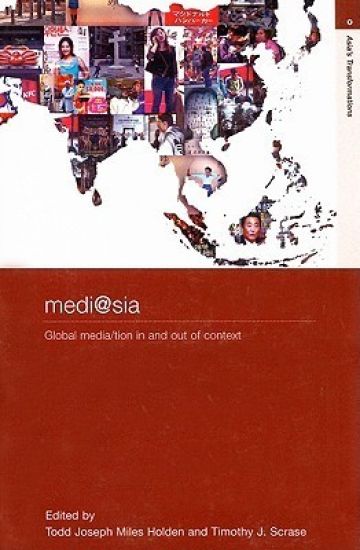
This new inter-disciplinary book is the first comparative, case-based analysis of media panoply in (and out of) Asia today. Examining what the authors call the "media/tion equation", the contributors demonstrate the multiple links between media, society and culture, and advance the claim that media is the key means through which Asians experience, understand, effect and are affected by the worlds containing them. Exploring a relatively neglected principle in cultural studies - that context counts - medi@sia highlights how the experiences of those encountering media messages differ depending on social, economic, politial and ideational conditions. Balancing social, cultural and media theory with empirical research, the essays in this collection provide a better understanding of the complex relationship between media and people’s practices, values and behaviour in contemporary Asia.
Evidence-Based Treatment Planning for Depression Workbook
David J. Berghuis; Timothy J. Bruce
John Wiley Sons Inc
2011
nidottu
Improve the Quality of Mental Health Care This Companion Workbook to the Evidence-Based Treatment Planning for Depression DVD is designed to be used in conjunction with the DVD, which is focused on teaching mental health professionals about empirically informed treatment for depression. The Workbook reinforces the key points covered in the DVD and helps assess the level of mastery of basic concepts through discussion and test questions. It can be used as part of a self-paced learning tool or as a team collaborative tool. This Companion Workbook includes: Summary highlights of content shown in the DVD Full transcripts of the DVD's vignettes demonstrating cognitive restructuring, behavioral activation, and problem solving Discussion questions Chapter review test questions and answers Empirical support chapter references Clinical resource chapter references Also available: Evidence-Based Treatment Planning for Depression DVD / 978-0-470-41506-1 This DVD offers clear, step-by-step guidance on the process and criteria for diagnosing depression and using empirically supported treatments to inform the treatment planning process. Evidence-Based Treatment Planning for Depression DVD Facilitator's Guide / 978-0-470-54854-7 The Facilitator's Guide assists professionals in leading an educational training session. Other DVDs, Facilitator Guides, and Workbooks in the Evidence-Based Psychotherapy Treatment Planning Video Series: Evidence-Based Psychotherapy Treatment Planning Evidence-Based Treatment Planning for Panic Disorder Evidence-Based Treatment Planning for Social Anxiety Disorder For more information on these and forthcoming titles in the Evidence-Based Psychotherapy Treatment Planning Video Series, visit us on the Web at wiley.com/psychology
Evidence-Based Psychotherapy Treatment Planning Workbook
David J. Berghuis; Timothy J. Bruce
John Wiley Sons Inc
2010
nidottu
With the need for patients to receive care that is proven effective arises as well the need to train mental health practitioners in the latest in Evidence-Based Practice (EBP). Evidence-Based Psychotherapy Treatment Planning DVD Workbook covers the most common DSM-IV-TR disorders and other presenting problems. This workbook demonstrates the techniques and treatment interventions covered in the DVD (sold separately). Staff are guided in their implementation of the interventions with their clients. Ideal for training mental health professionals at any level.
Evidence-Based Treatment Planning for Social Anxiety Disorder Workbook
David J. Berghuis; Timothy J. Bruce
John Wiley Sons Inc
2010
nidottu
This Companion Workbook to the Evidence-Based Treatment Planning for Social Anxiety Disorder DVD is designed to be used in conjunction with the DVD, which is focused on informing mental health professionals about empirically informed treatment for panic disorder. The workbook reinforces the key points covered in the DVD and helps assess the level of mastery of basic concepts through discussion and test questions. It can also be used as part of a self-paced learning tool or as a team collaborative tool. The Companion Workbook includes: Summary highlights of content shown in the DVDFull transcripts of the DVD's vignettes demonstrating cognitive and behavioral coping skills, cognitive restructuring, physical sensation exposure, and situational exposureDiscussion questionsChapter review test questions and answersEmpirical support chapter referencesClinical resource chapter references
Evidence-Based Treatment Planning for Panic Disorder Workbook
David J. Berghuis; Timothy J. Bruce
John Wiley Sons Inc
2010
nidottu
Improve the Quality of Mental Health Care This Companion Workbook to the Evidence-Based Treatment Planning for Panic Disorder DVD is designed to be used in conjunction with the DVD, which is focused on informing mental health professionals about empirically informed treatment for panic disorder. The Workbook reinforces the key points covered in the DVD and helps assess the level of mastery of basic concepts through discussion and test questions. It can also be used as part of a self-paced learning tool or as a team collaborative tool. This Companion Workbook includes: Summary highlights of content shown in the DVD Full transcripts of the DVD's vignettes demonstrating cognitive and behavioral coping skills, cognitive restructuring, physical sensation exposure, and situational exposure Discussion questions Chapter review test questions and answers Empirical support chapter references Clinical resource chapter references Also available: Evidence-Based Treatment Planning for Panic Disorder DVD / 978-0-470-41793-5 This DVD offers clear, step-by-step guidance on the process and criteria for diagnosing panic disorder and using empirically supported treatments for panic disorder to inform the treatment planning process. Evidence-Based Treatment Planning for Panic Disorder DVD Facilitator's Guide / 978-0-470-54856-1 The Facilitator's Guide assists professionals in leading an educational training session. Other DVDs, Facilitator Guides, and Workbooks in the Evidence-Based Psychotherapy Treatment Planning Video Series: Evidence-Based Psychotherapy Treatment Planning Evidence-Based Treatment Planning for Social Anxiety Disorder Evidence-Based Treatment Planning for Depression For more information on these and forthcoming titles in the Evidence-Based Psychotherapy Treatment Planning Video Series, visit us on the Web at wiley.com/psychology
Evidence-Based Treatment Planning for Depression Facilitator's Guide
David J. Berghuis; Timothy J. Bruce
John Wiley Sons Inc
2010
nidottu
This Facilitator’s Guide is designed to help lead an educational training session in empirically informed treatment planning. It is to be used in conjunction with the DVD and Companion Workbook (both sold separately). The guide explains the process of delivering a training session. In this guide you will find in each chapter: Chapter Review Questions and AnswersChapter Review Test Questions and AnswersOptional Discussion Questions with Talking PointsChapter References In appropriate chapters the references are divided into those for "Empirical Support," those for "Clinical Resources," and those for "Bibliotherapy Resources." The Facilitator's Guide has brief summaries of the answers to the chapter review questions. The "Chapter Review Test Questions" section contains "test-style" questions that can be asked of participants or taken by them as a self-test. The Facilitator's Guide contains the answers to these questions, which can then be reviewed. The "For Discussion" section offers a selected discussion topic as well as talking points to help facilitate the discussion. This section is designed to offer facilitators the option of exploring a key concept further should he or she desire. Finally, Chapter Five (“How Do You Integrate ESTs into Treatment Planning?”) contains highlights of the lecture material, summary of treatment plan components, an outline of the EST procedures, transcripts of psychotherapy vignettes that demonstrate ESTs, and critiques of the vignettes. References are also made to homework assignments contained in the Companion Workbook that demonstrate selected therapeutic interventions discussed in the DVD. Appendix A: Explanations of all correct and incorrect answer options
Evidence-Based Treatment Planning for Anger Control Problems, Companion Workbook
David J. Berghuis; Timothy J. Bruce
John Wiley Sons Inc
2011
nidottu
Improve the Quality of Mental Health Care This Companion Workbook to the Evidence-Based Treatment Planning for Anger Control Problems DVD follows each section of the DVD, summarizing important content and providing section reviews as well as test questions and answers to enhance learning of the material. The Workbook can be used as an individual self-paced learning tool or in classroom or workshop settings. Designed to be used in conjunction with the DVD, this Companion Workbook includes: Summary highlights of content shown in the DVD Chapter review questions covering key chapter concepts Test questions of selected chapter concepts References to empirical support, clinical resources, and training opportunities for the empirically supported treatments (ESTs) discussed Scripts and critiques of the role-played scenarios demonstrating selected aspects of the ESTs Online links to client homework exercises consistent with the therapeutic techniques described and demonstrated Explanations of correct and incorrect answers to the test questions from each chapter Also available: Evidence-Based Treatment Planning for Anger Control DVD/Workbook Study Package / 978-1-1180-2891-9 This study package includes both the Evidence-Based Treatment Planning for Anger Control DVD (978-0-470-41788-1) and the Evidence-Based Treatment Planning for Anger Control DVD Companion Workbook (978-0-470-56845-3). Evidence-Based Treatment Planning for Anger Control DVD / 978-0-470-41788-1 (sold separately) This DVD offers clear, step-by-step guidance on the process and criteria for diagnosing anger control and using empirically supported treatments to inform the treatment planning process. Evidence-Based Treatment Planning for Anger Control DVD Facilitator’s Guide / 978-0-470-56844-6 (sold separately) The Facilitator’s Guide assists professionals in leading an educational training session.
Evidence-Based Treatment Planning for Generalized Anxiety Disorder Facilitator's Guide
David J. Berghuis; Timothy J. Bruce
John Wiley Sons Inc
2012
nidottu
This DVD Facilitator's Guide to the Evidence-Based Treatment Planning for Generalized Anxiety Disorder (DVD sold separately) is designed to help teachers or trainers conduct lectures or training sessions on the content of the DVD. The guide follows each section of the DVD, providing succinct summaries of key section content, section review test questions and answers, and test questions and answers covering key concepts. The DVD, Companion Workbook, and Facilitator's Guide are designed so that instructors can cover only the content of the DVD or springboard into further coverage of any of the concepts. Designed to be used in conjunction with the DVD and its Companion Workbook, this guide includes: Summary highlights of content shown in the DVDChapter review questions and answers summarizing key conceptsTest questions and answers on selected chapter conceptsOptional topics for further discussion, with talking pointsScripts and critiques of the role-played scenarios demonstrating selected aspects of the ESTsReferences to empirical support, clinical resources, and training opportunities for the treatments discussedOnline links to client homework exercises consistent with the therapeutic techniques described and demonstratedExplanations of correct and incorrect answers to the test-style questions from each chapter
Evidence-Based Treatment Planning for General Anxiety Disorder Companion Workbook
David J. Berghuis; Timothy J. Bruce
John Wiley Sons Inc
2012
nidottu
Improve the Quality of Mental Health Care This Companion Workbook to the Evidence-Based Treatment Planning for Generalized Anxiety Disorder DVD follows each section of the DVD, summarizing important content and providing section reviews as well as test questions and answers to enhance learning of the material. The workbook can be used as an individual, self-paced learning tool or in classroom or workshop settings. Designed to be used in conjunction with the DVD, this Companion Workbook includes: Summary highlights of content shown in the DVD Chapter review questions covering key chapter concepts Test questions of selected chapter concepts References to empirical support, clinical resources, and training opportunities for the empirically supported treatments (ESTs) discussed Scripts and critiques of the role-played scenarios demonstrating selected aspects of the ESTs Online links to client homework exercises consistent with the therapeutic techniques described and demonstrated Explanations of correct and incorrect answers to the test questions from each chapter An optional 20-question test for Continuing Education Credit Also available: Evidence-Based Treatment Planning for Generalized Anxiety Disorder DVD / 978-0-470-41791-1 Evidence-Based Treatment Planning for Generalized Anxiety Disorder DVD Facilitator's Guide / 978-0-470-56848-4 For more information on these and other titles in the Evidence-Based Psychotherapy Treatment Planning Video Series, visit us on the Web at www.wiley.com/psychology
Evidence-Based Treatment Planning for Posttraumatic Stress Disorder, DVD Companion Workbook
David J. Berghuis; Timothy J. Bruce
John Wiley Sons Inc
2011
nidottu
Improve the Quality of Mental Health Care This Companion Workbook to the Evidence-Based Treatment Planning for Posttraumatic Stress Disorder DVD follows each section of the DVD, summarizing important content and providing section reviews as well as test questions and answers to enhance learning of the material. The Workbook can be used as an individual self-paced learning tool or in classroom or workshop settings. Designed to be used in conjunction with the DVD, this Companion Workbook includes: Summary highlights of content shown in the DVDChapter review questions covering key chapter conceptsTest questions of selected chapter conceptsReferences to empirical support, clinical resources, and training opportunities for the empirically supported treatments (ESTs) discussedScripts and critiques of the role-played scenarios demonstrating selected aspects of the ESTsOnline links to client homework exercises consistent with the therapeutic techniques described and demonstratedExplanations of correct and incorrect answers to the test questions from each chapter Also available: Evidence-Based Treatment Planning for Posttraumatic Stress Disorder DVD/Workbook Study Package / 978-1-1180-2895-7 This study package includes both the Evidence-Based Treatment Planning for Posttraumatic Stress Disorder DVD (978-0-470-41787-4) and the Evidence-Based Treatment Planning for Disruptive Child and Adolescent Behavior DVD Companion Workbook (978-0-470-56852-1). Evidence-Based Treatment Planning for Posttraumatic Stress Disorder DVD / 978-0-470-41787-4 (sold separately) This DVD offers clear, step-by-step guidance on the process and criteria for diagnosing posttraumatic stress disorder and using empirically supported treatments to inform the treatment planning process. Evidence-Based Treatment Planning for Posttraumatic Stress Disorder DVD Facilitator’s Guide / 978-0-470-56854-5 (sold separately) The Facilitator’s Guide assists professionals in leading an educational training session.
Evidence-Based Treatment Planning for Bipolar Disorder Companion Workbook
David J. Berghuis; Timothy J. Bruce
John Wiley Sons Inc
2012
nidottu
Improve the Quality of Mental Health Care This Companion Workbook to the Evidence-Based Treatment Planning for Bipolar Disorder DVD follows each section of the DVD, summarizing important content and providing section reviews as well as test questions and answers to enhance learning of the material. The workbook can be used as an individual, self-paced learning tool or in classroom or workshop settings. Designed to be used in conjunction with the DVD, this Companion Workbook includes: Summary highlights of content shown in the DVD Chapter review questions covering key chapter concepts Test questions of selected chapter concepts References to empirical support, clinical resources, and training opportunities for the empirically supported treatments (ESTs) discussed Scripts and critiques of the role-played scenarios demonstrating selected aspects of the ESTs Online links to client homework exercises consistent with the therapeutic techniques described and demonstrated Explanations of correct and incorrect answers to the test questions from each chapter An optional 20-question test for Continuing Education Credit Also available: Evidence-Based Treatment Planning for Bipolar Disorder DVD / 978-0-470-41790-4 Evidence-Based Treatment Planning for Bipolar Disorder DVD Facilitator's Guide / 978-0-470-56846-0 For more information on these and other titles in the Evidence-Based Psychotherapy Treatment Planning Video Series, visit us on the Web at www.wiley.com/psychology