Kirjojen hintavertailu. Mukana 12 016 292 kirjaa ja 12 kauppaa.

Kirjahaku

Etsi kirjoja tekijän nimen, kirjan nimen tai ISBN:n perusteella.

1000 tulosta hakusanalla Alain Goetzmann

The Languages and Literatures of Africa
An historical overview provides new insights into the literatures of Africa, both oral and written. Expanded and updated from the earlier French edition Litteratures d'Afrique noire (1995), African literatures are presented in a new perspective focusing on the dialogue between languages and literatures. Orality is not always traditional, manuscripts are read aloud, and books have often been written in local languages, as well as in colonial languages. This book examines the dialogue between literatures written in different languages: Thomas Mofolo wrote in Sesotho and Sol Plaatje wrote in English but their novels Chaka (1926) and Mhudi (1931), should be read in counterpoint. The same could be said of Senghor and Soyinka, involved in a conversation on Africa's future that lasted for several decades. Many African writers write in several languages: from Okot p'Bitek (Acoli-English) to Ngugi wa Thiong'o (English-Gikuyu), and from Amadou Hampate Ba (Fula-French) to Alexis Kagame (French-Kinyarwanda). Focusing on linguistic consciousness and the place of language in the writer's consciousness, this book provides an original and comprehensive treatment of the African literary situation. North America:Africa World Press

As Long As Trees Take Root in the Earth

As Long As Trees Take Root in the Earth

Alain Mabanckou

Seagull Books London Ltd
2021
sidottu
A hopeful, music-infused poetry collection from Congolese poet Alain Mabanckou. These compelling poems by novelist and essayist Alain Mabanckou conjure nostalgia for an African childhood where the fauna, flora, sounds, and smells evoke snapshots of a life forever gone. Mabanckou's poetry is frank and forthright, urging his compatriots to no longer be held hostage by the civil wars and political upheavals that have ravaged their country and to embrace a new era of self-determination where the village roosters can sing again. These music-infused texts, beautifully translated by Nancy Naomi Carlson and supported by a grant from the National Endowment for the Arts, appear together in English for the first time. In these pages, Mabanckou pays tribute to his beloved mother, as well as to the regenerative power of nature, and especially of trees, whose roots are a metaphor for the poet's roots, anchored in the red earth of his birthplace. Mabanckou's yearning for the land of his ancestors is even more poignant because he has been declared persona non grata in his homeland, now called Congo-Brazzaville, due to his biting criticism of the country's regime. Despite these barriers, his poetry exudes hope that nature's resilience will lead humankind on the path to redemption and reconciliation.
Health Care, the Market and Consumer Choice

Health Care, the Market and Consumer Choice

Alain C. Enthoven

Edward Elgar Publishing Ltd
2012
sidottu
In this well-documented book, Alain Enthoven develops the ideas of consumer choice and managed competition of alternative health care financing and delivery systems, as well as describing ways to improve quality and reduce the cost of health care. He demonstrates how these ideas could be applied in the American employment-based health insurance model, how similar ideas have been introduced in the British National Health Service; how these ideas have been applied in the Netherlands; and the need for integrated comprehensive care systems. This unique anthology traces the development of two important and related themes. Firstly, the 'output' of the health services industry has been produced by disaggregated physicians, nurses and other health professionals, hospitals, drugs and device companies that somehow combine to serve the patient. Progress in quality and the economy requires the services of these components to be integrated into coherent systems in which the incentives of all providers are aligned with the needs and wants of patients for quality affordable care. Secondly, the book argues that the framework that can provide such incentives, is an appropriately designed form of market competition among systems of care seeking to serve value-conscious patients. Public officials, scholars and policy analysts from developing countries will find here a set of ideas for how to improve incentives for greater value for money. Students of health economics, policy and organization, as well as journalists and public officials interested in the use of public policy to improve efficiency in health care systems, will also find much to interest them in this book.
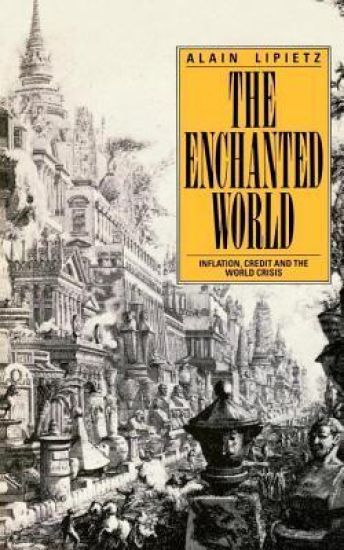
The Enchanted World

The Enchanted World

Alain Lipietz

Verso Books
1985
nidottu
In this seminal book, Alain Lipietz, one of France's most distinguished Marxist economists, explores the role of money and credit in the causes of the 1980s world slump.Lipietz presents a cogent and convincing argument that traditional Marxist economics has concentrated too heavily on the production process at the price of ignoring day-to-day forms of capitalist commerce-money and commodities.The Enchanted World will be of interest to all students of economics concerned with the vicissitudes of the world recession. It also presents a readable introduction to the work of the renowned "regulation school" of French economics, offering a concise explanation of its emphasis on the structural forms within which accumulation takes place.
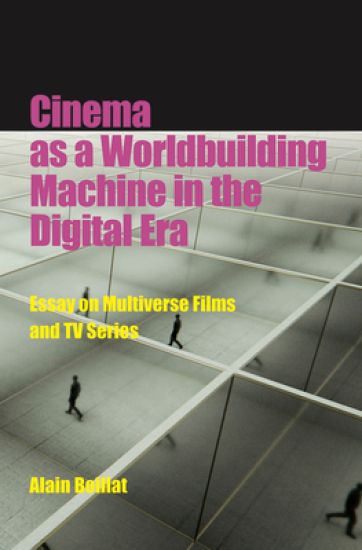
Cinema as a Worldbuilding Machine in the Digital Era
This essay examines the primacy of worldbuilding in the age of CGI, transmedia practices and "high concept" fiction by studying the principles that govern the creation of a multiverse in a wide range of film and TV productions. Emphasis is placed on Hollywood sci-fi movies and their on-screen representation of imaginary machines that mirror the film medium, following in the tradition of Philip K. Dick's writings and the cyberpunk culture. A typology of worlds is established, as well as a number of analytical tools for assessing the impact of the coexistence of two or more worlds on the narrative structure, the style (uses of color, editing practices), the generic affiliation (or hybridity), the seriality and the discourse produced by a given film (particularly in fictions linked to post-9/11 fantasies). Among the various titles examined, the reader is offered a detailed analysis of the Resident Evil film series, Total Recall and its remake, Dark City, the Matrix trilogy, Avatar, Source Code and other time-loop films, TRON and its sequel, Christopher Nolan's Tenet, and several TV shows – most notably HBO's Westworld, but also Sliders, Lost, Fringe and Counterpart.
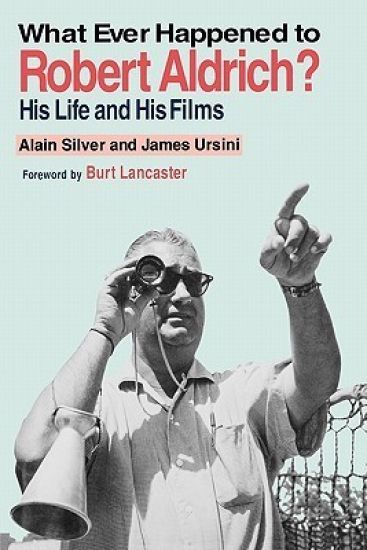
Whatever Happened to Robert Aldrich?

Whatever Happened to Robert Aldrich?

Alain Silver

Limelight Editions
2004
sidottu
"There was something about Robert Aldrich's artistic temperament that enabled him to transcend the apparent vulgarity of so many of his motion picutres. Besides the great films, such as Kiss Me Deadly which is certainly one of the finest examples of film noir, are several little-seen or underrated later works such as the revisionist Western, Ulzana's Raid, the gangster love story, The Grissom Gang, or the grim cop picture, Hustle. Aldrich's career has long deserved the detailed evaluation which this book provides." - Andrew Sarris
Film Noir Reader

Film Noir Reader

Alain Ursini; Alain Silver; James Ursini

Limelight Editions
1996
pokkari
This bountiful anthology combines all the key early writings on film noir with many newer essays, including some published here for the first time. The collection is assembled by the editors of the Third Edition of Film Noir: An Enclyclopedic Reference to the American Style, now regarded as the standard work on the subject.
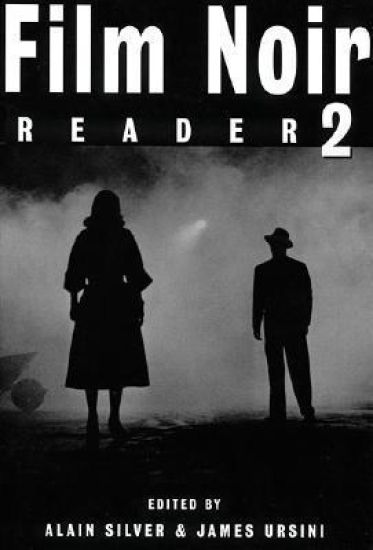
Film Noir Reader 2

Film Noir Reader 2

Alain Silver

Limelight Editions
1999
pokkari
Generously includes film stills and essays on crime films, The Postman Always Rings Twice, "Hitchcock's Noire Landscape," "Samuel Fuller's Tabloid Cinema," "Son of Noir," "Noir Science," "Girl Power: Female Centered Neo-Noir," and "Abstract Expressionism and Film Noir."
Horror Film Reader

Horror Film Reader

Alain Silver

Limelight Editions
2000
pokkari
Alain Silver and James Ursini now delve into the weird and terrifying terrain of the horror film. Its lineage extends from the silent screen to Scream 3 and, like most movie vampires, it remains defiantly, frighteningly alive. As do the earlier Silver-Ursini collections, Horror Film Reader begins with seminal essays, several dating back to the 1950s, that uncover the roots of the genre and explain its wide-ranging, indestructible appeal. These writings include, among many others, "Horror Is My Business" by Terence Fisher, "The Subconscious: From Pleasure Castle to Libido Motel" by Raymond Durgnat and "The Horror Film: Polanski and Repulsion" by Ivan Butler. The second part of the book, New Perspectives, focuses on such specific films as Tod Browning's Freaks and The Devil Doll, The Haunting, in both its 1963 and 1999 incarnations, and The Devil and Daniel Webster; and on such sequel-driven characters as Frankenstein's Monster and Freddy Krueger, the Wolf Man and the Candyman. In this section, too, are such unexpected finds as "Horrible Dr. Hitchcock," from the on-line periodical Images and "Jesus Franco," from Joan Hawkins' book on art and film, Cutting Edge: Art-Horror and the Horrific Avant-Garde. The scope of this collection is thus surprisingly broad, considering as it does the horror film genre from different times, different perspectives, different premises. But the book's purpose is unvarying: to increase our understanding of the often-hidden meanings of these movies and the ways in which they succeed (or do not) in making our flesh creep, our skin turn pale and our hair stand on end. Indeed, the stills alone -- about 100 of them -- may occasionally do that.
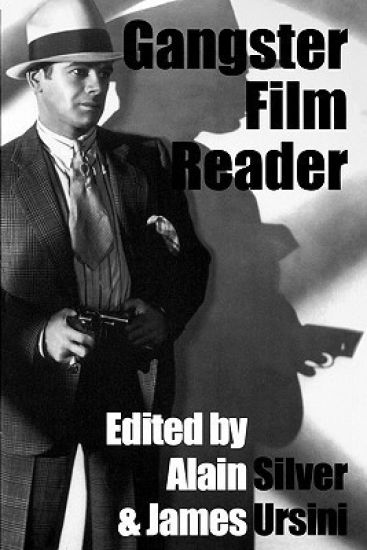
Gangster Film Reader

Gangster Film Reader

Alain Silver

Limelight Editions
2007
pokkari
During the early 1930's, a burgeoning Hollywood film industry defined one of the most iconic genres of all time. With the release of three films, "Little Caesar" (1931), "The Public Enemy" (1931), and "Scarface" (1932), Hollywood established the style and audience expectations associated with gangster films that remain in force to the present day. "The Gangster Film Reader" brings together a group of essays, many of which were written specifically for this volume, which present an exhaustive overview of this seminal film genre. This is a thorough and informative volume that is a must-have for any self-respecting film fan.
The Vampire Film

The Vampire Film

Alain Silver

Limelight Editions
2011
pokkari
This newest edition will track the form's evolution from such 1970s reinventions as ÊCount Yorga VampireÊ and ÊBlaculaÊ ÊThe HungerÊ and ÊVampire's KissÊ in the Eighties ÊInterview with the VampireÊ ÊBram Stoker's DraculaÊ and the ÊBladeÊ series in the Nineties through Ê30 Days of NightÊ ÊI Am LegendÊ and the ÊUnderworldÊ series in the first decade of the 21st century. All these films plus celebrated international examples such as ÊThirstÊ and ÊLet the Right One InÊ and the hit television series ÊBuffy the Vampire SlayerÊ ÊNew AmsterdamÊ ÊAngelÊ ÊThe Vampire DiariesÊ and ÊTrue BloodÊ are covered in this long-awaited completely revised expanded and redesigned fourth edition that follows the vampire figures both male and female through the millennium and beyond.
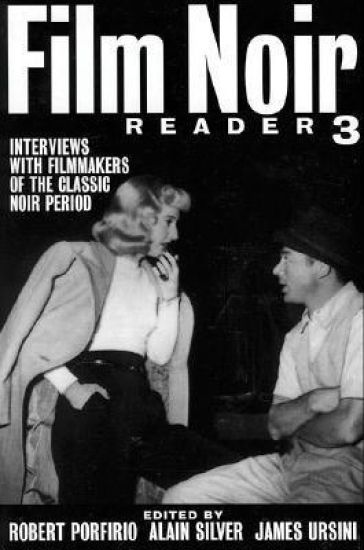
Film Noir Reader 3

Film Noir Reader 3

Alain Silver

Limelight Editions
2001
pokkari
Departing from the approach of its Film Noir Reader predecessors, this third volume in the series assembles a collection of interviews with film noir directors and a cinematographer, few of whom are alive today. Interviewees include Billy Wilder (Double Indemnity and Sunset Boulevard), Otto Preminger (Laura), Joseph Lewis (Gun Crazy and The Big Combo), Curtis Bernhardt (Possessed and A Stolen Life), Edward Dmytryk (Murder, My Sweet and Crossfire), and Fritz Lang (Scarlet Street and The Woman in the Window).
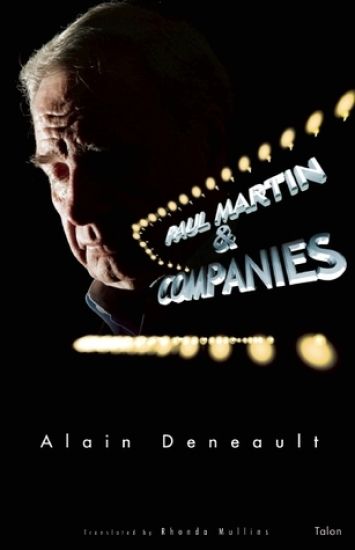
Paul Martin & Companies

Paul Martin & Companies

Alain Deneault

Talonbooks
2006
pokkari
The more one reads about Paul Martin's business affairs, the more troubling they appear. In Paul Martin & Companies, Alain Deneault offers a piercing look at what it means when a Canadian prime minister puts his private interests outside the laws he has been elected to apply. Using Martin's business dealings as an example, Deneault sheds light on the shadowy world of tax havens, offering insight into the functioning of these government-free fiscal zones and their relation to the growing world problems of capital flight, foreign debt, accountability for political power, endemic conflicts of interest in the public realm, media concentration, massacres, misery and even war. These sixty short theses lay bare the contradictions embodied in Paul Martin, the businessman and the politician, and those inherent in the emerging forms of economic globalization and the Canadian political system and its laws. Deneault delves beyond the superficial, albeit alarming, aspects of the Martin case to get at the heart of what political and economic power really mean in the age of globalization.He presents the Martin case as a symptom of a worldwide crisis of public ethics that goes far beyond the simple question of Martin's assets, and demonstrates that it is part of a lawless global culture that increasingly allows the world's largest financial transactions to escape all forms of control, regulation and contribution to our national economies. It has often been said that the appalling human misery endemic to third world countries is due not to their lack of natural resources, but to the self-interest and corruption of their leadership. Alain Deneault argues that this diversion of capital from the wealth of nations into the private bank accounts of their leaders is not particular to third world countries, and spells out what this means for all of us.
Imperial Canada Inc.

Imperial Canada Inc.

Alain Deneault; William Sacher

Talonbooks
2011
pokkari
Imperial Canada Inc. sets out to ask a simple question: why is Canada home to more than 70% of the world's mining companies? Created by the British North America Act of 1867, Canada, rather than turning away from its colonial past, actively embraced, appropriated, and perpetuated the imperial ambitions of its mother country. Two years later, it took possession of Rupert's Land--all of the land draining into Hudson Bay--and the North West Territories from the Hudson's Bay Company, 3 million square miles of resources, and set about its nation-building enterprise of extending its Dominion "from sea to sea." This Canadian imperial heritage continues to offer the extractive sector worldwide a customized trading environment that: supports speculation, enables capital flows to finance questionable projects abroad, pursues a pro-active diplomacy which successfully promotes this sector to international institutions, opens fiscal pipelines to Caribbean tax havens, provides government subsidies, and most especially, offers a politicized legal haven from any risk of litigious recourse attempted by any community seriously affected by these industries.Traditionally rooted in Canadian law, the right to reputation effectively supersedes freedom of expression and the public's right to information. Hence, Canadian "bodies corporate," i.e. Canadian-based corporations, can sue for "libel" any and all persons or legal entities that quote documents or generate analyses of their corporate practices that they do not approve of. Even foreign academics have become hesitant about presenting their work in Canada for fear of such prosecution. The authors of Imperial Canada Inc., all respected scholars in their fields, meticulously research four factors that contribute to the answer to this question: Quebec's and Ontario's mining codes; the history of the Toronto Stock Exchange; Canada's involvement with Caribbean tax havens; and, finally, Canada's official role of promoting itself to international institutions governing the world's mining sector.
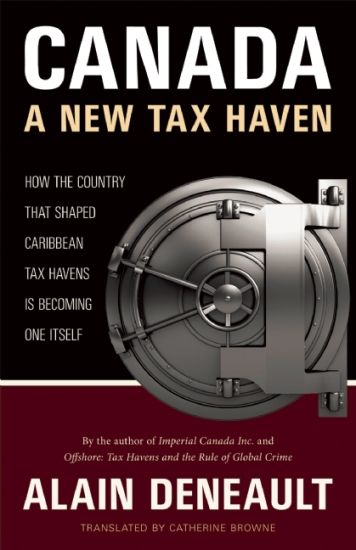
Canada: A New Tax Haven

Canada: A New Tax Haven

Alain Deneault

Talonbooks
2015
pokkari
In Canada: A New Tax Haven, Alain Deneault traces Canada's relationship with Commonwealth Caribbean nations back through the last half of the twentieth century, arguing that the involvement of Canadian financiers in establishing and maintaining Caribbean tax havens has predisposed Canada to become a tax haven itself -- a metamorphosis well under way. Canada was linked to Caribbean nations long before they became tax havens. In the 1950s, an ex-governor of Canada's central bank attempted to establish a low taxation regime in Jamaica. In the 1960s, the transformation of the Bahamas into a tax haven characterized by impenetrable banking secrecy was shaped by a minister of finance who sat on the Royal Bank of Canada's board of directors. A Calgary lawyer and former Conservative Party heavyweight drew up the clauses that transformed the Cayman Islands into an opaque offshore jurisdiction. For years, Canadian politicians have debated annexing tax havens such as the Turks and Caicos Islands, making them part of Canadian territory. Canada has signed a free-trade agreement with Panama and is currently seeking a wider agreement with countries in CARICOM, the Caribbean economic community.And, notably, Canada currently shares its seat at the World Bank and the International Monetary Fund with a group of Caribbean tax havens. These exercises in fostering fiscal and banking leniency have predisposed Canada to become one of the most attractive tax havens to foreign interests. Not only does Canada offer one of the lowest corporate tax rates in the world, but a number of loopholes encourage companies to relocate to Canada as if it were Barbados or Bermuda. Canada: A New Tax Haven is an attempt to analyze the situation and address its implications for Canadians.for Canadians.