Kirjojen hintavertailu. Mukana 12 030 399 kirjaa ja 12 kauppaa.

Kirjahaku

Etsi kirjoja tekijän nimen, kirjan nimen tai ISBN:n perusteella.

1000 tulosta hakusanalla Alan J. Singer

The Jackpot Lottery Companion: Player's Guide to Mega Millions

The Jackpot Lottery Companion: Player's Guide to Mega Millions

J. Alan Sampson

Createspace Independent Publishing Platform
2017
nidottu
THE JACKPOT LOTTERY COMPANION: PLAYER'S GUIDE TO MEGA MILLIONS is the must-have resource for the latest Mega Millions game. Full game access, with valuable game-specific data found no-where else, is just the beginning. All the tools needed to dramatically improve your play. The Jackpot Lottery Companion for Mega Millions is the most unique and comprehensive play guide available anywhere and features the following exciting methods for the highest level of game play: -Last Digit Combinations: This strategy allows access to every single possibility for the Mega Millions game. Choose the eventual winning last digit combination from the conveniently ranked selection tables and you will successfully eliminate well over 99 % of the game from the field of choice. -First Digit Combinations: Another promising strategy that allows access to the entire game. There is a small field of first digit combinations to choose from and if a winning first digit combination and last digit combination are combined for play then the odds of winning a Mega Millions jackpot become very favorable. -Playing All Even or All Odd Numbers: This strategy is covered in great detail and not only informs players when to play a set of all even or all odd numbers, but also features ranked selection tables which contain the most to least probable sets of numbers to occur. -Playing Sequential or Non-Sequential Numbers: This strategy covers the most to least probable scenarios and features ranked selection tables for game play. -Even / Odd Combinations: Tables are presented for selection of the most to least probable even-odd combinations. Choosing an eventual winning even-odd combination can greatly enhance the Pick 5 number selection process and make the eventual winning numbers much more accessible. -Create your Own Quick Picks: A full chapter is dedicated to creating personalized quick picks. Ranked selection tables make this strategy easy to use for playing the most to least likely sets of numbers. The entire game is now at your careful discretion. -First and Last Game Numbers: This strategy is covered in detail and features the most to least probable sets of first and last game numbers to occur in a Pick 5 drawing. Successfully choosing the eventual winning first and last game numbers creates a smaller range for selection of the final three numbers needed for Pick 5 play. -Forecast Future Drawings: A full chapter is dedicated to recording key results from each drawing which can then be used to forecast the next occurrence date of the game's key components. This can be a very effective strategy for identifying past due game components which allows for tightly-focused game play. -Informative Tutorials and Glossary: The main components and key terms within this guide are supported by highly informative tutorials and a detailed glossary. This player-friendly guide is easy to understand and players can effectively use all strategies presented. This unique play guide is the leading authority for playing Mega Millions. Players can now "Play the Percentages", strategically focus, dramatically improve their play position and even forecast future drawings. Perfect for lottery clubs, player groups and individual players as well. The Jackpot Lottery Companion is fully supported by the science of math and is founded upon thousands of hours of detailed calculations and player-friendly analysis. If you're going to dream, dream big. Someone is going to win the jackpot. A set of promising numbers for play that culminate into a jackpot win is the crux of this guide. The author, J. Alan Sampson, believes you will thoroughly enjoy the play advantages and complete game access offered within The Jackpot Lottery Companion: "It goes anywhere you go, but can take you beyond." Please purchase your copy of The Jackpot Lottery Companion: Player's Guide to Mega Millions. You and your play partners will be glad you did.

The Fifth Di... September 2017

The Fifth Di... September 2017

J. Alan Erwine

Createspace Independent Publishing Platform
2017
nidottu
The September 2017 issue of The Fifth Di... brings you the story of a man caught in an experiment gone wrong...waking up to a different reality every day, and not sure if he will ever be able to get home. You can also read the story of a human that meets the Scorpii god, but there's something familiar about this god. Also, a woman who knows the way of magic is attacked on a train by a power that only she can see...or is there someone else. And finally, an old man has isolated himself and is ready to die, but the past won't let him be alone anymore.This issue features the fiction of Fredrick Obermeyer, Eamonn Murphy, Keith P. Graham, and Mike Murphy.
How Am I Wired?

How Am I Wired?

David Alan Greene; Eve J Day

GraceWord Publishing, LLC
2025
pokkari
About The Book How Am I Wired? was written for Christians to understand who they are and how God created each person to be unique. Have you ever wondered why we do the things we do? Why are people so different. We have all heard parents say that their child isn't like either of them. Their child is different. How Am I Wired? will help to answer questions like these. This book introduces the reader to the concept of temperament. It looks at each of the five unique temperaments. It explains in simple terms their dynamics and components, as well as their strengths and weaknesses. Temperament Theory is based upon the fact that each individual is uniquely made before they are born. There are endless possible combinations of these temperaments. Most people are surprised when they learn that temperaments are not inherited. In our mother's womb, God gave each of us a blend of temperaments making us special. How wonderful We are custom designed by God The benefit of understanding our blend of temperaments is two-fold. First, we can understand our internal conflicts. Sometimes, our temperaments play tug-of-war within us. Second, there are interpersonal dynamics in all relationships. Big words that basically mean that husbands and wives, siblings, co-workers, and neighbors all are wired differently. If we can understand their temperament and our own, then interactions are more fruitful. God did this for a reason. How Am I Wired? explains why.
How Am I Wired?

How Am I Wired?

David Alan Greene; Eve J Day

GraceWord Publishing, LLC
2025
sidottu
About The Book How Am I Wired? was written for Christians to understand who they are and how God created each person to be unique. Have you ever wondered why we do the things we do? Why are people so different. We have all heard parents say that their child isn't like either of them. Their child is different. How Am I Wired? will help to answer questions like these. This book introduces the reader to the concept of temperament. It looks at each of the five unique temperaments. It explains in simple terms their dynamics and components, as well as their strengths and weaknesses. Temperament Theory is based upon the fact that each individual is uniquely made before they are born. There are endless possible combinations of these temperaments. Most people are surprised when they learn that temperaments are not inherited. In our mother's womb, God gave each of us a blend of temperaments making us special. How wonderful We are custom designed by God The benefit of understanding our blend of temperaments is two-fold. First, we can understand our internal conflicts. Sometimes, our temperaments play tug-of-war within us. Second, there are interpersonal dynamics in all relationships. Big words that basically mean that husbands and wives, siblings, co-workers, and neighbors all are wired differently. If we can understand their temperament and our own, then interactions are more fruitful. God did this for a reason. How Am I Wired? explains why.
30 Days to the GMAT

30 Days to the GMAT

Mark Alan Stewart; Frederick J. O'Toole

SIMON SCHUSTER LTD
1998
nidottu
Geared to the Computer-Adaptive Test (CAT) version of the GMAT, this book includes: 30 mini-sections designed to be studied one a day, tips and strategies for every question type, practice with two full-length sample exams, and a last minute review before taking the actual test.
GMAT CAT

GMAT CAT

Mark Alan Stewart; Frederick J. O'Toole

SIMON SCHUSTER LTD
1998
nidottu
The GMAT test-makers are releasing 180 real essay questions in advance of the exam, this guide provides sample answers to every question. It also features ten strategies to add points to essay scores and tips on what the graders are looking for.
Principles of CASE Tool Integration

Principles of CASE Tool Integration

Alan W. Brown; David J. Carney; Edwin J. Morris; Dennis B. Smith; Paul F. Zarrella

Oxford University Press Inc
1994
sidottu
Computer Aided Software Engineering tools typically support individual users in the automation of some task within a software development process. Used this way, CASE tools have undoubtedly helped many organisations in their efforts to develop better quality software to budget, within precedented time scales. This book will address the increasing activity within the software engineering community for automated support in the software development process. The authors integrate CASE tools into the overall software life cycle with emphasis on the following factors: scale=size and complexity; lack of maturity=limited expertise; diversity=many classes of users; technology base=extended operating system.
Casino and Gaming Resort Investigations

Casino and Gaming Resort Investigations

Derk J. Boss; Alan W. Zajic

Routledge
2019
nidottu
Casino and Gaming Resort Investigations addresses the continued and growing need for gaming security professionals to properly and successfully investigate the increasing and unique types of crime they will face in their careers. As the gaming industry has grown, so has the need for competent and highly skilled investigators who must be prepared to manage a case of employee theft one day to a sophisticated sports book scam the next.This book provides the reader with the fundamental knowledge needed to understand how each gaming and non-gaming department functions and interacts within the overall gaming resort, allowing the investigator to determine and focus on the important elements of any investigation in any area. Each chapter delivers a background of a department or type of crime normally seen in the gaming environment, and then discusses what should be considered important or even critical for the investigator to know or determine in the course of the investigation. Likely scenarios, case histories, and tips, as well as cautions for investigators to be aware of, are used throughout the book.This book was written for and directed at gaming security and surveillance professionals, including gaming regulators, and tribal gaming authorities, who are almost daily confronted by the ingenious and the most common scams, theft, and frauds that are perpetrated in the gaming world.
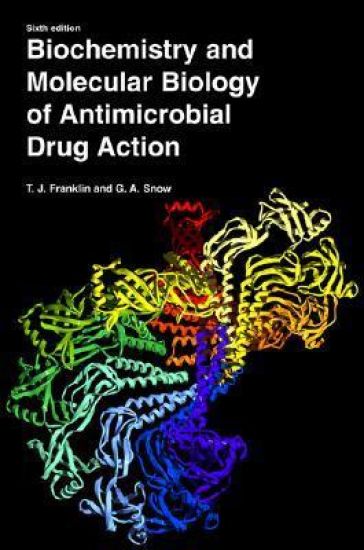
Biochemistry and Molecular Biology of Antimicrobial Drug Action

Biochemistry and Molecular Biology of Antimicrobial Drug Action

Trevor J. Franklin; George Alan Snow

Springer-Verlag New York Inc.
2005
sidottu
Preface to the sixth edition x 1 THE DEVELOPMENT OF ANTIMICROBIAL AGENTS, PAST, PRESENT AND FUTURE 1 1. 1 The social and economic importance of antimicrobial agents 1 1. 2 All outhne of the historical development of antimicrobial agents 2 1. 3 Reasons for studying the biochemistry and molecular biology of antimicrobial compounds 9 1. 4 Uncovering the molecular basis of antimicrobial action iO 1. 5 Current trends in the discovery of antimicrobial drugs 14 1. 6 . Scope and layout of the book 15 2 VULNERABLE SHIELDS—THE CELL WALLS OF BACTERIA AND FUNGI 17 2. 1 Functions of the ceU wall 17 2. 2 . Structure of the bacterial wall 17 2. 3 Structure and biosynthesis of peptidoglycan 22 2. 4 Antibiotics that inhibit peptidoglycan biosynthesis 29 2. 5 Drugs that interfere with the biosynthesis of the cell wall of mycobacteria 39 2. 6 The fungal cell wall as a target for antifungal drugs 41 3 ANTIMICROBIAL AGENTS AND CELL MEMBRANES 47 3. 1 Microbe killers: antiseptics and disinfectants 47 3. 2 Cationic peptide antibiotics 52 3. 3 lonophoric antibiotics 54 3. 4 Antifungal agents that interfere with the function and biosynthesis of membrane sterols 59 4 INHIBITORS OF NUCLEIC ACID BIOSYNTHESIS 65 4. 1 Compounds affecting the biosynthesis and utilization of nucleotide precursors 66 4. 2 Nucleoside analogues 70 4. 3 Inhibitors of the reverse transcriptase of the human immunodeficiency virus 72 4. 4 Antibacterial inhibitors of topoisomerases 75 4.
The Win-Win Solution

The Win-Win Solution

Steven J. Brams; Alan D. Taylor

WW Norton Co
2000
nidottu
Since the publication of Roger Fisher and William Ury's highly influential book, Getting to Yes, it has been widely recognized that there is a middle ground between winning and losing in negotiation. Yet, while Getting to Yes was long on motivation, it was short on technique. What you really want to know is on which issues you will win, on which you will lose, and on which you will have to compromise. To this question, Steven J. Brams and Alan D. Taylor bring a patented procedure that not only is fair but also actually guarantees that both parties walk away with as much of the "win-win" potential as possible. "One can hire a lawyer and spend years and thousands of dollars fighting [in a divorce], or one can make use of a neat new formula devised by Steven Brams and Alan Taylor."—The New Yorker
Fair Division

Fair Division

Steven J. Brams; Alan D. Taylor

Cambridge University Press
1996
pokkari
Cutting a cake, dividing up the property in an estate, determining the borders in an international dispute - such problems of fair division are ubiquitous. Fair Division treats all these problems and many more through a rigorous analysis of a variety of procedures for allocating goods (or ‘bads’ like chores), or deciding who wins on what issues, when there are disputes. Starting with an analysis of the well-known cake-cutting procedure, ‘I cut, you choose’, the authors show how it has been adapted in a number of fields and then analyze fair-division procedures applicable to situations in which there are more than two parties, or there is more than one good to be divided. In particular they focus on procedures which provide ‘envy-free’ allocations, in which everybody thinks he or she has received the largest portion and hence does not envy anybody else. They also discuss the fairness of different auction and election procedures.
Youth Physical Activity and Sedentary Behavior

Youth Physical Activity and Sedentary Behavior

Alan L. Smith; Stuart J.H. Biddle

Human Kinetics
2008
sidottu
As interest in the public health challenge of youth inactivity increases, the ambitious Youth Physical Activity and Sedentary Behavior sets a standard for addressing a problem with worldwide implications. Drawing on the contributions of a diverse group of international experts, this reference challenges professionals, researchers, and students to implement new solutions and further their research and work. No other text addresses the causes, contributing factors, and fundamental issues in dealing with youth physical activity with such depth or comprehensive coverage. Using a multidisciplinary approach, Youth Physical Activity and Sedentary Behavior breaks away from traditional thinking that places activity and sedentary behavior on a single continuum, which may limit progress in addressing youth inactivity. Instead, the authors encourage readers to focus on how sedentary and physically active behaviors coexist and consider how the two behaviors may have different determinants. In doing so, the text also considers developmental features such as maturation, ethnicity, environment, and genetics across both childhood (through age 12) and adolescence (the teen years). By looking at a variety of psychosocial and epidemiological factors, the authors set the stage for a critical analysis of beliefs and views at a time when many assumptions are taken for granted. This book is organized in three parts that build on one another to deepen readers' understanding of this complex problem. This text begins by addressing the fundamental issues and assumptions pertaining to youth physical activity and sedentary behavior, covering such topics as measurement of the behavior in question, health outcomes, concepts, and trends in a public health context. Once readers have grasped this foundational knowledge, they advance to part II for a comprehensive account of personal factors likely to be associated with the problem. Part III moves beyond the individual into the wider social and contextual aspects of physically active and sedentary living in young people. Through this concluding part, readers gain the latest thinking on how parents, peers, schools, organized sport, and related factors link to youth physical activity and sedentary behavior. Each chapter presents the latest theory and research, real-world approaches to implementation, and background information to encourage discussion and future directions in national policy making. Youth Physical Activity and Sedentary Behavior also contains the following features that add to an unprecedented learning experience: •An at-a-glance look at why and how research can be used in the real world helps researchers relate their work to overall solutions. •Coverage of more issues related to this subject than are available in any other reference makes this a one-stop resource. •Internationally respected foreword writer, editors, and contributors provide a cross-disciplinary perspective valuable for putting solutions into a wider context. •Applications for Professionals boxes and Applications for Researchers boxes at the end of each chapter provide practical suggestions for implementing solutions. Youth Physical Activity and Sedentary Behavior: Challenges and Solutions considers current research about youth physical activity and sedentary behavior across a range of personal factors as well as cultural and social influences. The text communicates the knowledge base on developmental, economic, psychological, and social factors related to youth physical activity and sedentary behavior and provides an overview of youth-specific approaches to addressing the problem of inactivity among youth.
Ultrafast Spectroscopy

Ultrafast Spectroscopy

Alán Aspuru-Guzik; Joel Yuen-Zhou; Jacob J Krich; Ivan Kassal; Allan S Johnson

Institute of Physics Publishing
2014
sidottu
The goal of the book is to provide a simple and conceptually intuitive introduction to nonlinear spectroscopy via the formalism of quantum processes and wavepacket dynamics. Through this unified framework, the authors provide t simple analytical models, examples, and concepts to understand the workings of nonlinear spectroscopy in depth. This book provides an introduction to the field for advanced undergraduate, graduate students, and researchers, in a simple and pedagogical manner. It will also be useful for practitioners who are already familiar with the subject, but who want to develop a more conceptual understanding of it.
Data Fusion for Sensory Information Processing Systems

Data Fusion for Sensory Information Processing Systems

James J. Clark; Alan L. Yuille

Springer
1990
sidottu
The science associated with the development of artificial sen­ sory systems is occupied primarily with determining how information about the world can be extracted from sensory data. For example, computational vision is, for the most part, concerned with the de­ velopment of algorithms for distilling information about the world and recognition of various objects in the environ­ (e. g. localization ment) from visual images (e. g. photographs or video frames). There are often a multitude of ways in which a specific piece of informa­ tion about the world can be obtained from sensory data. A subarea of research into sensory systems has arisen which is concerned with methods for combining these various information sources. This field is known as data fusion, or sensor fusion. The literature on data fusion is extensive, indicating the intense interest in this topic, but is quite chaotic. There are no accepted approaches, save for a few special cases, and many of the best methods are ad hoc. This book represents our attempt at providing a mathematical foundation upon which data fusion algorithms can be constructed and analyzed. The methodology that we present in this text is mo­ tivated by a strong belief in the importance of constraints in sensory information processing systems. In our view, data fusion is best un­ derstood as the embedding of multiple constraints on the solution to a sensory information processing problem into the solution pro­ cess.
Biomedical Desk Reference

Biomedical Desk Reference

Daniel J. Schneck; Alan R. Tempkin

New York University Press
1992
sidottu
The basic language of biology and medicine seems strange, and it should?it is essentially a foreign language, filled with words of Latin and Greek origin, diseases that are identified named after the physician who discovered it rather than the cause or effect, and is otherwise made up of abbreviations and other obscure terminology and information that only a trained physician or researcher would know. Yet many professionals are required to have at least a rudimentary knowledge of biomedical terminology and information, and frequently they are at a loss in understanding even the simplest concepts and terms. For example, how would an engineer know how the various systems of the body work together as an organism? Would a nurse know the difference between the acetabulum and acetylcholine? How can a lawyer or journalist become familiar with common clinical abbreviations and terminology? How can a patient understand his or her own medical record? The Biomedical Desk Reference is intended to be a handy, easy-to-reach for compilation of useful biomedical terminology. The volume contains the following sections: Basic Anatomical vocabulary and Physiologic Concepts; Basic Medical and Physiologic Terminology; Common Clinical Abbreviations; Terms Commonly Used in Health-Care Administration, Insurance, and Legal Settings; Biomedical Eponyms; Medical Prefixes and Suffixes; Synopsis of Major Diseases, Drugs, and Treatments; The Anatomy of the Medical Record. Biomedical Desk Reference also contains a wealth of appendices showing conversion charts, common vital signs, laboratory values of physiologic importance, useful physical constants, definitions, and formulae. This comprehensive reference book will be useful for biomedical engineers, lawyers and legal secretaries, physician's assistants, medical secretaries, nurses, biomedical technicians, laboratory technicians, hospital administrators, ward clerks, aides, and other medical laypersons.