El Amor Tard -o es un drama rom ntico en tres actos escrito por Alberto Ins a y Alfonso Hern ndez Cat . Esta obra teatral, rica en di logos emotivos y situaciones conmovedoras, explora las complejidades del amor en etapas avanzadas de la vida. Ambientada en un contexto de elegancia y melancol -a, la pieza destaca por su an lisis psicol 3gico de los personajes y su reflexi 3n sobre las oportunidades perdidas y los nuevos comienzos. Con una narrativa que entrelaza pasi 3n y resignaci 3n, El Amor Tard -o ofrece una experiencia teatral intensa y memorable. Ideal para estudiantes de literatura espa ola, amantes del teatro cl sico y cualquier lector interesado en las profundidades del coraz 3n humano, esta obra sigue resonando por su autenticidad y su representaci 3n honesta de las relaciones humanas. This work has been selected by scholars as being culturally important, and is part of the knowledge base of civilization as we know it. This work was reproduced from the original artifact, and remains as true to the original work as possible. Therefore, you will see the original copyright references, library stamps (as most of these works have been housed in our most important libraries around the world), and other notations in the work. This work is in the public domain in the United States of America, and possibly other nations. Within the United States, you may freely copy and distribute this work, as no entity (individual or corporate) has a copyright on the body of the work. As a reproduction of a historical artifact, this work may contain missing or blurred pages, poor pictures, errant marks, etc. Scholars believe, and we concur, that this work is important enough to be preserved, reproduced, and made generally available to the public. We appreciate your support of the preservation process, and thank you for being an important part of keeping this knowledge alive and relevant.
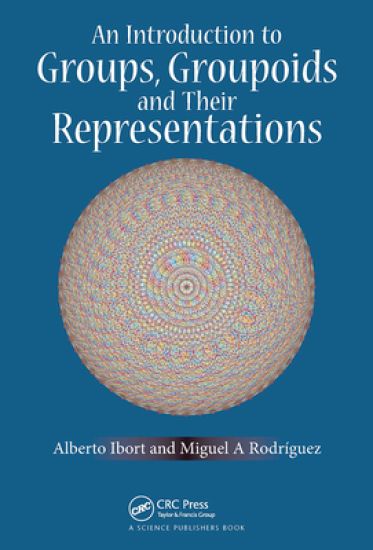
This book offers an introduction to the theory of groupoids and their representations encompassing the standard theory of groups. Using a categorical language, developed from simple examples, the theory of finite groupoids is shown to knit neatly with that of groups and their structure as well as that of their representations is described. The book comprises numerous examples and applications, including well-known games and puzzles, databases and physics applications. Key concepts have been presented using only basic notions so that it can be used both by students and researchers interested in the subject.Category theory is the natural language that is being used to develop the theory of groupoids. However, categorical presentations of mathematical subjects tend to become highly abstract very fast and out of reach of many potential users. To avoid this, foundations of the theory, starting with simple examples, have been developed and used to study the structure of finite groups and groupoids. The appropriate language and notions from category theory have been developed for students of mathematics and theoretical physics. The book presents the theory on the same level as the ordinary and elementary theories of finite groups and their representations, and provides a unified picture of the same. The structure of the algebra of finite groupoids is analysed, along with the classical theory of characters of their representations.Unnecessary complications in the formal presentation of the subject are avoided. The book offers an introduction to the language of category theory in the concrete setting of finite sets. It also shows how this perspective provides a common ground for various problems and applications, ranging from combinatorics, the topology of graphs, structure of databases and quantum physics.
This is the first monograph to develop a hermeneutic approach to the digital—as both a technological milieu and a cultural phenomenon. While philosophical in its orientation, the book covers a wide body of literature across science and technology studies, media studies, digital humanities, digital sociology, cognitive science, and the study of artificial intelligence.In the first part of the book, the author formulates an epistemological thesis according to which the “virtual never ended.” Although the frontiers between the real and the virtual are certainly more porous today, they still exist and endure. In the book’s second part, the author offers an ontological reflection on emerging digital technologies as “imaginative machines.” He introduces the concept of emagination, arguing that human schematizations are always externalized into technologies, and that human imagination has its analog in the digital dynamics of articulation between databases and algorithms. The author takes an ethical and political stance in the concluding chapter. He resorts to the notion of "digital habitus" for claiming that within the digital we are repeatedly being reconducted to an oversimplified image and understanding of ourselves.Digital Hermeneutics will be of interest to scholars across a wide range of disciplines, including those working on philosophy of technology, hermeneutics, science and technology studies, media studies, and the digital humanities.
This book argues that narrations of rhetorical performances in late antique literature can be interpreted as a reflection of the ongoing debates of the time. Competition among cultural elites, strategies of self-presentation and the making of religious orthodoxy often took the shape of narrations of rhetorical performances in which comments on the display of oratorical skills also incorporated moral and ethical judgments about the performer. Using texts from late antique authors (in particular, Themistius, Synesius of Cyrene, and Libanius of Antioch), this book proposes that this type of narrative should be understood as a valuable way to decipher the cultural and religious landscape of the fourth century AD. The volume pays particular attention to narrations of deficient rhetorical deliveries, arguing that the accounts of flaws and mistakes in oratorical displays and rhetorical performances reveal how late antique literature echoed the concerns of the time. Criticisms of deficient deliveries in different speaking occasions (declamations, public speeches, oratorical agones, school exercises, sermons) were often disguised as accusations of practising magic, heresy or cultural apostasy. A close reading of the sources shows that these oratorical deficiencies hid struggles over religious, cultural and political issues.
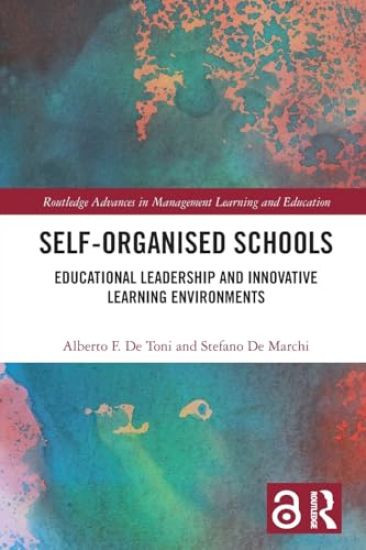
Self-Organised Schools: Educational Leadership and Innovative Learning Environments describes the results of the research we carried out at fourteen Italian schools that highlight how there is a positive correlation between the capabilities of school self-organization and the innovativeness of learning environments: in other words, the more self-organized schools are, the more innovative learning environments are. The results of this work are part of the strand of research of bottom-up emergency and self-organization, an extremely fruitful trend as shown by Sugata Mitra, the founder of the Self-Organized Learning Environments, according to whom, education is a self-organized system where learning is an emerging phenomenon. This book gives new insights on self-organization studies, and most of all, to the idea that change - organizational and educational innovation - sparks from the bottom. This book is aimed specifically at school principals of all levels, scholastic reformers, educational scholars, organisation and management consultants who want to innovate learning and management of learning. These actors will benefit drawing useful examples from more than thirty different learning environments worldwide, fourteen examples of schools that self-organize, two frameworks - and two ready-to-use questionnaires - measuring the innovativeness of a learning environment, and the capability of a school to self-organize. Self-organization is the most fascinating future of innovative principals
Self-Organised Schools: Educational Leadership and Innovative Learning Environments describes the results of the research we carried out at fourteen Italian schools that highlight how there is a positive correlation between the capabilities of school self-organization and the innovativeness of learning environments: in other words, the more self-organized schools are, the more innovative learning environments are. The results of this work are part of the strand of research of bottom-up emergency and self-organization, an extremely fruitful trend as shown by Sugata Mitra, the founder of the Self-Organized Learning Environments, according to whom, education is a self-organized system where learning is an emerging phenomenon. This book gives new insights on self-organization studies, and most of all, to the idea that change - organizational and educational innovation - sparks from the bottom. This book is aimed specifically at school principals of all levels, scholastic reformers, educational scholars, organisation and management consultants who want to innovate learning and management of learning. These actors will benefit drawing useful examples from more than thirty different learning environments worldwide, fourteen examples of schools that self-organize, two frameworks - and two ready-to-use questionnaires - measuring the innovativeness of a learning environment, and the capability of a school to self-organize. Self-organization is the most fascinating future of innovative principals
Over a hundred years after the first socialist revolution broke the global monopoly of capitalism, a new class of socialist-oriented socioeconomic development is coming to the fore. Capitalism is still dominant worldwide, although its hegemony is no longer undisputed, and humankind is now faced with a key existential challenge. This book proposes an alternative path to overcoming the worldwide crisis of globalized capitalism. It offers a novel, balanced and historically rooted interpretation of the successes and failures of socialist economic construction throughout the last century. The authors apply a multidisciplinary, holistic and purpose-based methodology to draw basic lessons from stylized facts, emerging in different areas of knowledge, ranging from political economy to biology, and from key national socioeconomic experiences, with a particular focus on China. The book is divided into three parts. The first is mainly theoretical and general in nature, identifying the major contributions bequeathed by the hard sciences to their social counterparts. Consistent with these findings, the authors offer a stylized interpretation of the contemporary state-of-the-art of the debate on the core concepts of economic science and advance a few elementary theories about what socialism in the 21st century could look like. The second and third parts analyze and discusses the core features of a few select experiences, which have evolved in certain countries since 1917, some of which are still unfolding. The book will find an audience among academics, researchers and students in the fields of economics, political science, history, and geography, as well as, policy makers, particularly in developing countries.
Over a hundred years after the first socialist revolution broke the global monopoly of capitalism, a new class of socialist-oriented socioeconomic development is coming to the fore. Capitalism is still dominant worldwide, although its hegemony is no longer undisputed, and humankind is now faced with a key existential challenge. This book proposes an alternative path to overcoming the worldwide crisis of globalized capitalism. It offers a novel, balanced and historically rooted interpretation of the successes and failures of socialist economic construction throughout the last century. The authors apply a multidisciplinary, holistic and purpose-based methodology to draw basic lessons from stylized facts, emerging in different areas of knowledge, ranging from political economy to biology, and from key national socioeconomic experiences, with a particular focus on China. The book is divided into three parts. The first is mainly theoretical and general in nature, identifying the major contributions bequeathed by the hard sciences to their social counterparts. Consistent with these findings, the authors offer a stylized interpretation of the contemporary state-of-the-art of the debate on the core concepts of economic science and advance a few elementary theories about what socialism in the 21st century could look like. The second and third parts analyze and discusses the core features of a few select experiences, which have evolved in certain countries since 1917, some of which are still unfolding. The book will find an audience among academics, researchers and students in the fields of economics, political science, history, and geography, as well as, policy makers, particularly in developing countries.
This book is a translation of La Nazione del Risorgimento, one of the most important and influential works on modern Italian history published in recent years. It analyses the aspects of the ideas of nationhood and patriotism that impassioned and energized the Italian Risorgimento movement during the first half of the nineteenth century. Employing an innovative interdisciplinary approach that examines the cultural production and consumption of the period, the author has challenged the orthodoxies of post-1945 Italian historiography. He explores the developing themes that gave strength to the idea of the Italian ‘nation’, and in the process persuasively explains why so many young men and women were willing to lay down their lives for the ‘patria’ and its independence.