Kirjojen hintavertailu. Mukana 11 699 587 kirjaa ja 12 kauppaa.

Kirjahaku

Etsi kirjoja tekijän nimen, kirjan nimen tai ISBN:n perusteella.

1000 tulosta hakusanalla Allen Hamilton

Science in Arcady (1892). By: Grant Allen: Archaeology, Science

Science in Arcady (1892). By: Grant Allen: Archaeology, Science

Grant Allen

Createspace Independent Publishing Platform
2017
nidottu
Grant Blairfindie Allen (February 24, 1848 - October 25, 1899) was a Canadian science writer and novelist, and a proponent of the theory of evolution. Biography: Early life and education: Allen was born near Kingston, Canada West (known as Ontario after Confederation), the second son of Catharine Ann Grant and the Rev. Joseph Antisell Allen, a Protestant minister from Dublin, Ireland. His mother was a daughter of the fifth Baron de Longueuil. Allen was educated at home until, at age 13, he and his parents moved to the United States, then to France, and finally to the United Kingdom.He was educated at King Edward's School in Birmingham and at Merton College in Oxford, both in the United Kingdom. After graduation, Allen studied in France, taught at Brighton College in 1870-71, and in his mid-twenties became a professor at Queen's College, a black college in Jamaica. Despite being the son of a minister, Allen became an agnostic and a socialist. Writing career: After leaving his professorship, in 1876 he returned to England, where he turned his talents to writing, gaining a reputation for his essays on science and for literary works. A 2007 book by Oliver Sacks cites with approval one of Allen's early articles, "Note-Deafness" (a description of what became known as amusia, published in 1878 in the learned journal Mind). Allen's first books dealt with scientific subjects, and include Physiological sthetics (1877) and Flowers and Their Pedigrees (1886). He was first influenced by associationist psychology as expounded by Alexander Bain and by Herbert Spencer, the latter often considered by whom?] the most important individual in the transition from associationist psychology to Darwinian functionalism. In Allen's many articles on flowers and on perception in insects, Darwinian arguments replaced the old Spencerian terms, leading to a radically new vision of plant life that influenced H.G. Wells and helped transform later botanical research. On a personal level, a long friendship that started when Allen met Spencer on his return from Jamaica grew uneasy over the years. Allen wrote a critical and revealing biographical article on Spencer that was published after Spencer's death. After assisting Sir W. W. Hunter with his Gazetteer of India in the early 1880s, Allen turned his attention to fiction, and between 1884 and 1899 produced about 30 novels. In 1895, his scandalous book titled The Woman Who Did, promulgating certain startling views on marriage and kindred questions, became a bestseller. The book told the story of an independent woman who has a child out of wedlock.In his career, Allen wrote two novels under female pseudonyms. One of these, the short novel The Type-writer Girl, he wrote under the name Olive Pratt Rayner. Another work, The Evolution of the Idea of God (1897), propounds a theory of religion on heterodox lines comparable to Herbert Spencer's "ghost theory".Allen's theory became well known and brief references to it appear in a review by Marcel Mauss, Durkheim's nephew, in the articles of William James and in the works of Sigmund Freud. The young G. K. Chesterton wrote on what he considered the flawed premise of the idea, arguing that the idea of God preceded human mythologies, rather than developing from them. Chesterton said of Allen's book on the evolution of the idea of God: "it would be much more interesting if God wrote a book on the evolution of the idea of Grant Allen". Allen also became a pioneer in science fiction, with the novel The British Barbarians (1895). This book, published about the same time as H. G. Wells's The Time Machine (which appeared January-May 1895, and which includes a mention of Allen), also described time travel, although the plot is quite different. Allen's short story The Thames Valley Catastrophe (published 1901 in The Strand Magazine) describes the destruction of London by a sudden and massive volcanic eruption.
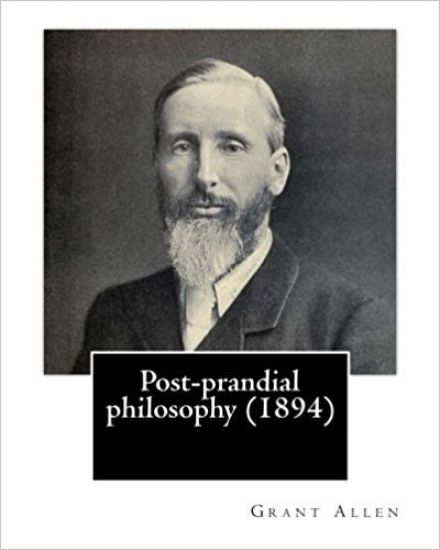
Post-prandial philosophy (1894). By: Grant Allen: (Original Version)

Post-prandial philosophy (1894). By: Grant Allen: (Original Version)

Grant Allen

Createspace Independent Publishing Platform
2017
nidottu
Grant Blairfindie Allen (February 24, 1848 - October 25, 1899) was a Canadian science writer and novelist, and a proponent of the theory of evolution. Biography: Early life and education: Allen was born near Kingston, Canada West (known as Ontario after Confederation), the second son of Catharine Ann Grant and the Rev. Joseph Antisell Allen, a Protestant minister from Dublin, Ireland. His mother was a daughter of the fifth Baron de Longueuil. Allen was educated at home until, at age 13, he and his parents moved to the United States, then to France, and finally to the United Kingdom.He was educated at King Edward's School in Birmingham and at Merton College in Oxford, both in the United Kingdom. After graduation, Allen studied in France, taught at Brighton College in 1870-71, and in his mid-twenties became a professor at Queen's College, a black college in Jamaica. Despite being the son of a minister, Allen became an agnostic and a socialist. Writing career: After leaving his professorship, in 1876 he returned to England, where he turned his talents to writing, gaining a reputation for his essays on science and for literary works. A 2007 book by Oliver Sacks cites with approval one of Allen's early articles, "Note-Deafness" (a description of what became known as amusia, published in 1878 in the learned journal Mind). Allen's first books dealt with scientific subjects, and include Physiological sthetics (1877) and Flowers and Their Pedigrees (1886). He was first influenced by associationist psychology as expounded by Alexander Bain and by Herbert Spencer, the latter often considered by whom?] the most important individual in the transition from associationist psychology to Darwinian functionalism. In Allen's many articles on flowers and on perception in insects, Darwinian arguments replaced the old Spencerian terms, leading to a radically new vision of plant life that influenced H.G. Wells and helped transform later botanical research. On a personal level, a long friendship that started when Allen met Spencer on his return from Jamaica grew uneasy over the years. Allen wrote a critical and revealing biographical article on Spencer that was published after Spencer's death. After assisting Sir W. W. Hunter with his Gazetteer of India in the early 1880s, Allen turned his attention to fiction, and between 1884 and 1899 produced about 30 novels. In 1895, his scandalous book titled The Woman Who Did, promulgating certain startling views on marriage and kindred questions, became a bestseller. The book told the story of an independent woman who has a child out of wedlock.In his career, Allen wrote two novels under female pseudonyms. One of these, the short novel The Type-writer Girl, he wrote under the name Olive Pratt Rayner. Another work, The Evolution of the Idea of God (1897), propounds a theory of religion on heterodox lines comparable to Herbert Spencer's "ghost theory".Allen's theory became well known and brief references to it appear in a review by Marcel Mauss, Durkheim's nephew, in the articles of William James and in the works of Sigmund Freud. The young G. K. Chesterton wrote on what he considered the flawed premise of the idea, arguing that the idea of God preceded human mythologies, rather than developing from them. Chesterton said of Allen's book on the evolution of the idea of God: "it would be much more interesting if God wrote a book on the evolution of the idea of Grant Allen". Allen also became a pioneer in science fiction, with the novel The British Barbarians (1895). This book, published about the same time as H. G. Wells's The Time Machine (which appeared January-May 1895, and which includes a mention of Allen), also described time travel, although the plot is quite different. Allen's short story The Thames Valley Catastrophe (published 1901 in The Strand Magazine) describes the destruction of London by a sudden and massive volcanic eruption.
Cities of Belgium By: Grant Allen: Belgium

Cities of Belgium By: Grant Allen: Belgium

Grant Allen

Createspace Independent Publishing Platform
2017
nidottu
Grant Blairfindie Allen (February 24, 1848 - October 25, 1899) was a Canadian science writer and novelist, and a proponent of the theory of evolution. Biography: Early life and education: Allen was born near Kingston, Canada West (known as Ontario after Confederation), the second son of Catharine Ann Grant and the Rev. Joseph Antisell Allen, a Protestant minister from Dublin, Ireland. His mother was a daughter of the fifth Baron de Longueuil. Allen was educated at home until, at age 13, he and his parents moved to the United States, then to France, and finally to the United Kingdom.He was educated at King Edward's School in Birmingham and at Merton College in Oxford, both in the United Kingdom. After graduation, Allen studied in France, taught at Brighton College in 1870-71, and in his mid-twenties became a professor at Queen's College, a black college in Jamaica. Despite being the son of a minister, Allen became an agnostic and a socialist. Writing career: After leaving his professorship, in 1876 he returned to England, where he turned his talents to writing, gaining a reputation for his essays on science and for literary works. A 2007 book by Oliver Sacks cites with approval one of Allen's early articles, "Note-Deafness" (a description of what became known as amusia, published in 1878 in the learned journal Mind). Allen's first books dealt with scientific subjects, and include Physiological sthetics (1877) and Flowers and Their Pedigrees (1886). He was first influenced by associationist psychology as expounded by Alexander Bain and by Herbert Spencer, the latter often considered by whom?] the most important individual in the transition from associationist psychology to Darwinian functionalism. In Allen's many articles on flowers and on perception in insects, Darwinian arguments replaced the old Spencerian terms, leading to a radically new vision of plant life that influenced H.G. Wells and helped transform later botanical research. On a personal level, a long friendship that started when Allen met Spencer on his return from Jamaica grew uneasy over the years. Allen wrote a critical and revealing biographical article on Spencer that was published after Spencer's death. After assisting Sir W. W. Hunter with his Gazetteer of India in the early 1880s, Allen turned his attention to fiction, and between 1884 and 1899 produced about 30 novels. In 1895, his scandalous book titled The Woman Who Did, promulgating certain startling views on marriage and kindred questions, became a bestseller. The book told the story of an independent woman who has a child out of wedlock.In his career, Allen wrote two novels under female pseudonyms. One of these, the short novel The Type-writer Girl, he wrote under the name Olive Pratt Rayner. Another work, The Evolution of the Idea of God (1897), propounds a theory of religion on heterodox lines comparable to Herbert Spencer's "ghost theory".Allen's theory became well known and brief references to it appear in a review by Marcel Mauss, Durkheim's nephew, in the articles of William James and in the works of Sigmund Freud. The young G. K. Chesterton wrote on what he considered the flawed premise of the idea, arguing that the idea of God preceded human mythologies, rather than developing from them. Chesterton said of Allen's book on the evolution of the idea of God: "it would be much more interesting if God wrote a book on the evolution of the idea of Grant Allen". Allen also became a pioneer in science fiction, with the novel The British Barbarians (1895). This book, published about the same time as H. G. Wells's The Time Machine (which appeared January-May 1895, and which includes a mention of Allen), also described time travel, although the plot is quite different. Allen's short story The Thames Valley Catastrophe (published 1901 in The Strand Magazine) describes the destruction of London by a sudden and massive volcanic eruption.
Jane Allen, Junior

Jane Allen, Junior

Edith Bancroft

Createspace Independent Publishing Platform
2017
nidottu
"There, there, Teddy dear, don't take on so," soothed Maud, rescuing the other's new silver pencil that was rapidly sliding further away from Ted with the pretty open hand bag. "I had entirely forgotten how you despise ice sports. And you so lovely and fat for falling. You should love 'em," insisted the studious Maud. "Being fat isn't all it's--" "Cracked up to be," assisted Judith Stearns. "I quote freely. That's one of Tim Jackson's." "Where have I heard the line before?" mimicked Theodosia Dalton, otherwise Dozia the Fearless. "It has a chummy tone. All of which is as naught to the question. Where is Jane? Never knew her to miss the line up here. And I even tapped at her door. Judy, where is Jane?" demanded Dozia.
Jane Allen

Jane Allen

Edith Bancroft

Createspace Independent Publishing Platform
2017
nidottu
"Of course I was dreaming, Dad," she declared gaily, making an ineffectual grab at the hands he held behind him. "No fair using force," he warned, dexterously eluding her. "This is a guessing contest. Now which hand will you choose?" "Both hands, you mean thing " laughed Jane. "I know what you have in one of them. It's a letter. Maybe two. Now stand and deliver." "Here you are." Obligingly obeying the imperative command, Mr. Allen handed Jane two letters. "Oh, joy Here you are " Jane enveloped her father in a bear-like hug, planting a resounding kiss on his sun-burnt cheek.
Aus allen Winkeln: Novellen

Aus allen Winkeln: Novellen

Hermann Heiberg

Createspace Independent Publishing Platform
2017
nidottu
Hermann Heiberg: Aus allen Winkeln. Novellen Edition Holzinger. Taschenbuch Berliner Ausgabe, 2017 Durchgesehener Neusatz bearbeitet und eingerichtet von Michael Holzinger Erstdruck: Leipzig, 1896 Inhaltsverzeichnis Aus allen Winkeln Es ging fast ans Leben Signa Abro Doris Waterkants Erben Einer, wie viele Der Hochhinaus K sse Isabel Was du nicht willst Vornehme Menschen Und er lie sie doch Frau Grots Staatszimmer Versteckte Quellen Wer will richten Die Raupe Auf norddeutscher Erde Grausam Herausgeber der Reihe: Michael Holzinger Reihengestaltung: Viktor Harvion Umschlaggestaltung unter Verwendung des Bildes: Dante Gabriel Rossetti, Schneegl ckchen, 1880 Gesetzt aus der Minion Pro, 11 pt.
Woody Allen

Woody Allen

Richard Schickel

Ivan R Dee, Inc
2003
sidottu
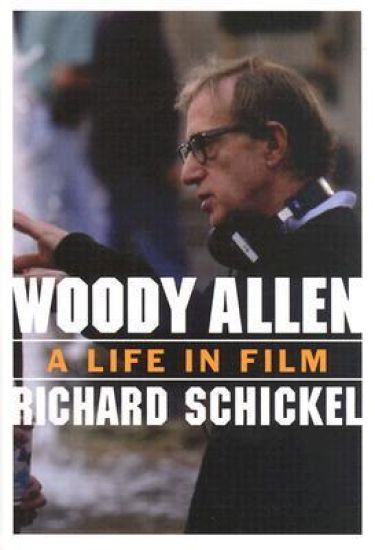
In an unprecedented television program last year, Woody Allen spoke to the camera for the first time about the entire range of his work, in an interview with Richard Schickel, the distinguished film critic and historian. Mr. Allen talked about how he does it, why he does it, its roots in his early life, and his current thinking about the state of his art. The result Woody Allen: A Life in Film, was one of the most popular and critically acclaimed programs in the history of Turner Classic Movies. But the presentation contained only a small fraction of Mr. Schickel's four-hour interview with the famed writer-director-actor. This new book reprints the complete conversation between the two men and includes a long essay of introduction by Mr. Schickel, which places Woody Allen's entire career in critical perspective. Readers will find Mr. Allen's reflections on his major preoccupations—the battle of the sexes; the conflict between reality and fantasy in his major films; mortality, religion, and the role that chance plays in the unfolding of our lives. The book also offers insights into Mr. Allen's working methods as a writer and the growth of his skills as a director, as well as his assessment of himself as an actor and his surprising views of his long life in the public eye. Brief but sharply honed, Woody Allen: A Life in Film is an essential book for anyone seeking to understand the life and times of one of the most important and least understood American filmmakers of our era.
Woody Allen

Woody Allen

University Press of Mississippi
2006
nidottu
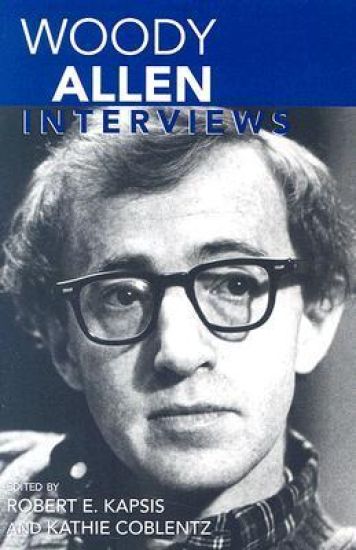
Woody Allen (b. 1935) is one of America's most idiosyncratic filmmakers, with an unparalleled output of nearly one film every year for over three decades. His movies are filled with rapid-fire one-liners, neurotic characters, anguished relationships, and old-time jazz music. Allen's vision of New York—whether in comedies or dramas—has shaped our perception of the city more than any other modern filmmaker. ""On the screen,"" John Lahr wrote in the New Yorker in 1996, ""Allen is a loser who makes much of his inadequacy; off-screen, he has created over the years the most wide-ranging oeuvre in American entertainment."" Woody Allen: Interviews collects over twenty-five years of interviews with the director of Manhattan, Hannah and Her Sisters, Crimes and Misdemeanors, Bullets Over Broadway, and Annie Hall, for which he won an Oscar. The book's interviews reveal a serious director, often at odds with his onscreen persona as a lovable, slap-stick loser. Allen talks frankly about his rigorous work habits; his biggest artistic influences; the attention he devotes to acting, screenwriting, and directing; and how New York fuels his filmmaking. Along with discussing film techniques and styles, Allen opens up about his love of jazz, his Jewish heritage, and the scandal that arose when he left his longtime partner Mia Farrow for her adopted daughter. Including four interviews from European sources, three of which are now available in English for the first time, Woody Allen: Interviews is a treasure trove of conversations with one of America's most distinctive filmmakers. Robert E. Kapsis is professor of sociology at Queens College and is the author of Hitchcock: The Making of a Reputation. His work has appeared in the Village Voice, Variety, Journal of Popular Film and Video, and Cineaste and at the Museum of Modern Art. Kathie Coblentz is special collections cataloger at the New York Public Library. Kapsis and Coblentz coedited Clint Eastwood: Interviews (University Press of Mississippi).
Eugene Allen Smith's Alabama

Eugene Allen Smith's Alabama

Aileen Kilgore Henderson

UNIVERSITY OF GEORGIA PRESS
2011
sidottu
In 1871 when the University of Alabama reopened after its destruction by federal troops, Eugene Allen Smith returned to his alma mater as professor of geology and mineralogy. After persuading the legislature to appoint him state geologist in 1873, he spent his summers enduring chills, fevers, and verbal abuse as he searched for industrial raw materials that could bring about better lives for destitute Alabamians. What he accomplished became the catalyst that transformed Alabama from an aimless and poverty-stricken agricultural state to an industrial giant to be reckoned with. The story of “Little Doc,” as told in Eugene Allen Smith’s Alabama, is drawn from many sources: Smith’s transcribed field notes, countless numbers of letters he received and the carbon copies of his replies, his published reports over a period of fifty years, wills, genealogical records, histories of the state and of the University of Alabama, and contemporary newspapers.