
Kirjahaku
Etsi kirjoja tekijän nimen, kirjan nimen tai ISBN:n perusteella.
1000 tulosta hakusanalla Basil Bernstein

Joyce Wethered (Lady Heathcoat Amory) was the finest lady golfer of her, and any other, generation. Playing in the golden era of golf (between the wars), Bobby Jones said that she was 'the best golfer in the world'. British Lady Champion four times, English title holder on five occasions and winner of the Worplesdon Mixed Foursomes seven times in thirteen years with six different partners, she was a great stylist on the golf course. Having toured the United States and Canada many times, after retiring from golf she became an expert gardener until her death in 1997; today, thousands flock to her former home Knightshayes (now a National Trust property).
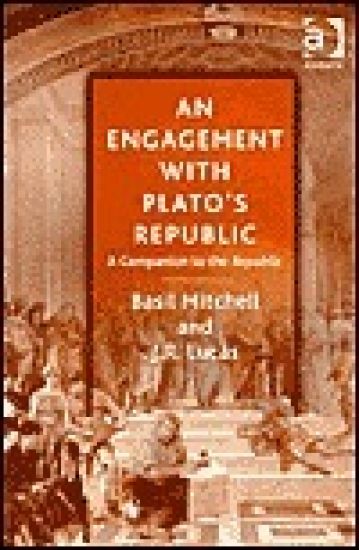
An Engagement with Plato's Republic
Basil Mitchell; J.R. Lucas
Ashgate Publishing Limited
2003
nidottu
Outrageous, unfashionable, politically incorrect though many of Plato's opinions undoubtedly are, we should not just dismiss them as thoughts now unthinkable, but think through them, recognising the force of the arguments that led Plato to enunciate them and consider the counter-arguments he might have marshalled to meet contemporary objections. This book encourages today's students to engage in Plato's thought, grapple with Plato's arguments, and explore the relevance of his arguments in contemporary terms. A text only comes alive if we make it our own; Plato's great work The Republic, often reads as though it were addressing the problems of the day rather than those of ancient Athens. Treating The Republic as a whole and offering a comprehensive introduction to Plato's arguments, Mitchell and Lucas draw students into an exploration of the relevance of Plato's thought to our present ideas about politics, society and education, as well as the philosophy of mathematics, science and religion. The authors bring The Republic to life. The first chapters help the reader to make sense of the text, either in translation or the original Greek. Later chapters deal with the themes that Plato raises, treating Plato as a contemporary. Plato is inexhaustible: he speaks to many different people of different generations and from different backgrounds. The Republic is not just an ancient text: it never ceases to be relevant to contemporary concerns, and it demands fresh discussion in every age.
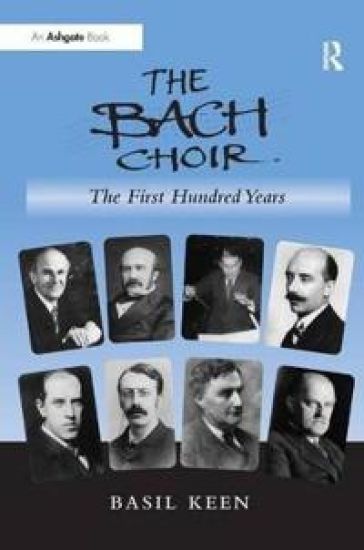
This study of the Bach Choir provides a much-needed overview of one of the major choral societies in London. Dr Basil Keen examines the background that led to the formation of an ad hoc body to give the first performance in England of J.S. Bach's B minor Mass. The musical and organizational effects of a permanent choral society drawn from one social group are traced during the first twenty years, after such time the pressures of social change led to a complete review followed by a restructuring of the methods of recruitment and internal organization. The rebuilding of the choir at the opening of the twentieth century, the expansion of the repertoire, the upheaval resulting from the First World War and the impact of these events on preparation and performance, are all considered. The book is essentially structured around the tenure of successive Musical Directors: Otto Goldschmidt, Charles Villiers Stanford, Walford Davies, Hugh Allen, Ralph Vaughan Williams, Adrian Boult, Reginald Jacques and David Willcocks, since their varied tastes and interests inevitably had a decisive influence on policy. Keen draws upon previously unpublished material, including minutes and correspondence of the Bach Choir, interviews with relatives and descendants, and examination of family records and correspondence. To date, there has been no survey of a major London choir that encompasses the full history of the organization in context. In this study, Dr Basil Keen provides a thorough examination of the Bach Choir, including the response of the choir to social changes; the influence of conductors and officials; changes in musical taste; relationships with composers and composition; major national and international events; and the effect of these matters on organization and repertoire.
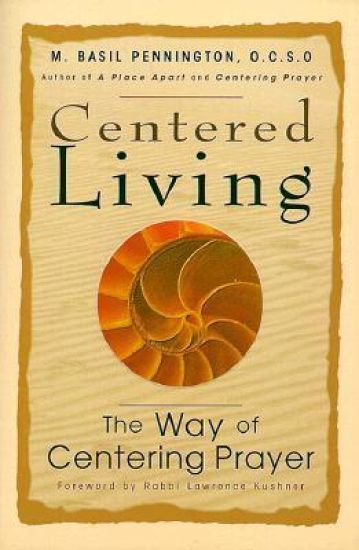
In an easy-to-understand, non-technical language, internationally renowned author M. Basil Pennington combines testimonies of practitioners, updated guidelines, theological reflections, and helpful hints for teaching others in an exploration of all the essential information about centering prayer.
Evolution as Outlined in the Archaic Eastern Records (1930)
Basil Crump
KESSINGER PUBLISHING CO
2003
pokkari

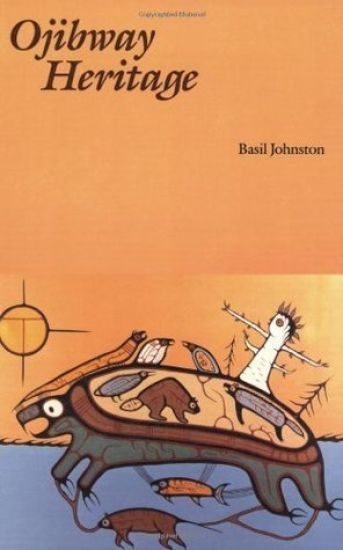
"A colorful, beautiful book which teaches us about ourselves as much as about one of North America's native peoples."-Vancouver SunRarely accessible to the general public, Ojibway mythology is as rich in meaning, as broad, as deep, and as innately appealing as the mythologies of Greece, Rome, and other Western civilizations. In Ojibway Heritage Basil Johnston introduces his people's ceremonies, rituals, songs, dances, prayers, arid legends. Conveying the sense of wonder and mystery at the heart of the Ojibway experience, Johnston describes the creation of the universe, followed by that of plants and animals and human beings, and the paths taken by the latter. These stories are to be read, enjoyed, and freely interpreted. Their authorship is perhaps most properly attributed to the tribal storytellers who have carried on the oral tradition that Johnston records and preserves in this book.
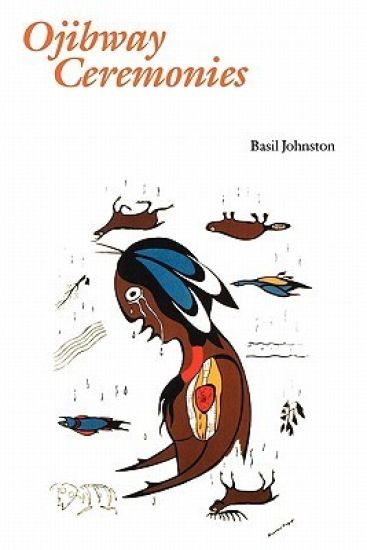
The Ojibway Indians were first encountered by the French early in the seventeenth century along the northern shores of Lakes Huron and Superior. By the time Henry Wadsworth Longfellow immortalized them in The Song of Hiawatha, they had dispersed over large areas of Canada and the United States, becoming known as the Chippewas in the latter. A rare and fascinating glimpse of Ojibway culture before its disruption by the Europeans is provided in Ojibway Ceremonies by Basil Johnston, himself an Ojibway who was born on the Parry Island Indian Reserve.Johnston focuses on a young member of the tribe and his development through participation in the many rituals so important to the Ojibway way of life, from the Naming Ceremony and the Vision Quest to the War Path, and from the Marriage Ceremony to the Ritual of the Dead. In the style of a tribal storyteller, Johnston preserves the attitudes and beliefs of forest dwellers and hunters whose lives were vitalized by a sense of the supernatural and of mystery.
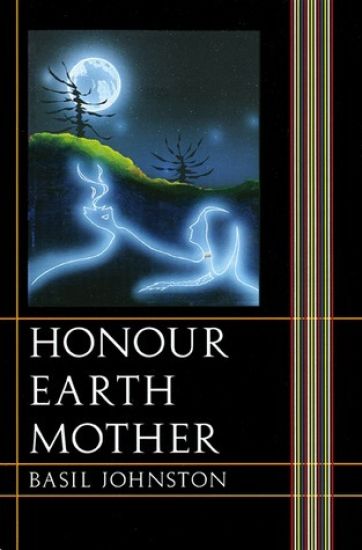
Honour Earth Mother is an inspiring reminder of the affection and reverence that the Native peoples of North America have had for the land. For Native peoples the earth was special, the dwelling place of manitous and spirits and the repository of the bones of generations of ancestors. And the earth remains today a deep wellspring of revelations and unveiled mysteries for those who take time to watch, listen, and reflect.Celebrated Ojibwa writer Basil Johnston invites us to go into the woods and meadows, mountains, valleys, and seashores to watch miracles still unfolding, to listen to nature's symphonies, to feel the pulse of the earth, to take in the fragrances, and to sense the awesome. His stories of the creatures, seasons, and landscape of the earth reveal a land that has never stopped brimming with beauty, song, and dance.
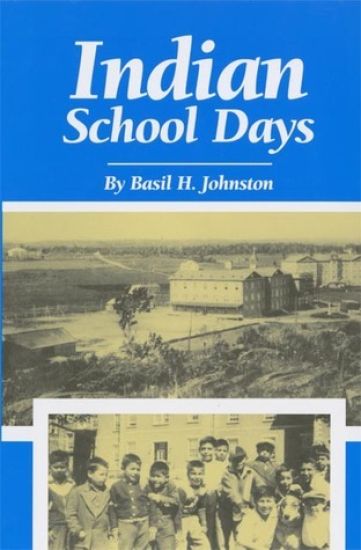
This book is the humorous, bitter-sweet autobiography of a Canadian Ojibwa who was taken from his family at age ten and placed in Jesuit boarding school in northern Ontario. It was 1939 when the feared Indian agent visited Basil Johnston's family and removed him and his four-year-old sister to St. Peter Claver's school, run by the priests in a community known as Spanish, 75 miles from Sudbury.""Spanish! It was a word synonymous with residential school, penitentiary, reformatory, exile, dungeon, whippings, kicks, slaps, all rolled into one,"" Johnston recalls. But despite the aching loneliness, the deprivation, the culture shock and the numbing routine, his story is engaging and compassionate. Johnston creates marvelous portraits of the young Indian boys who struggled to adapt to strange ways and unthinking, unfeeling discipline. Even the Jesuit teachers, whose flashes of humor occasionally broke through their stern demeanor, are portrayed with an understanding born of hindsight.
Follows the evolution of the fiendish figure in folklore, literature, film, and the theater, and discusses actual cases of medical vampirism
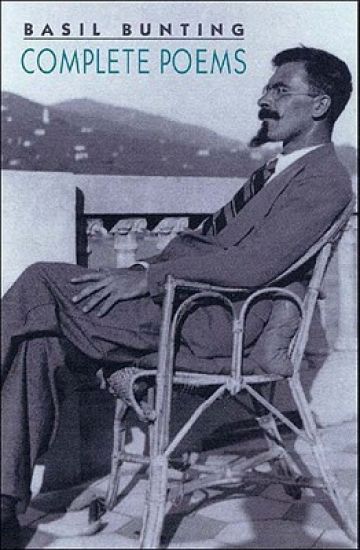
A master of song poems which celebrate--and incarnate--the music of nature and history, love and mythology, religion and language, Basil Bunting (1900-1985) was a major figure in Modernist poetry, recognized by Pound and Zukofsky as early as the 1930s, and crowned, with the 1966 publication of his masterpiece Briggflatts, Britain's greatest poet. The poet himself called his great epic poem old wives' chatter, cottage wisdom, but for many writers Briggflatts is one of the dozen great poems of the 20th century: as Cyril Connolly put it, the finest long poem to have been published in England since T. S. Eliot's Four Quartets. As well as Briggflatts (long out of print in the US, and now only available in this edition), this new Complete Poems includes Bunting's other great sonatas, most notably Villon (1925) and The Spoils (1951), along with his two books of Odes, his vividly realized Overdrafts (as he called his free translations of Horace, Rudaki, and others), and his brilliantly condensed Japanese adaptation, Chomei at Toyama (1932). It also includes his posthumous Uncollected Poems. This centenary edition has an introduction by Richard Caddel, Director of the Basil Bunting Poetry Center at Durham University.
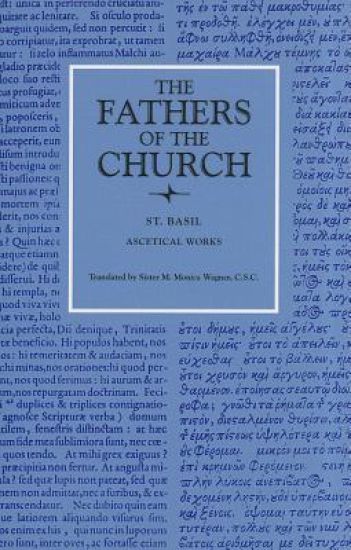
His zealous and intrepid defense of the orthodox faith and his contribution to handling the external affairs of the Eastern Church were by no means the whole service to which St. Basil the Great devoted his considerable talents. His life both exemplified and shaped the ascetical movement of his time. After renouncing a brilliant career as rhetorician, he traveled widely, studying the various forms of asceticism practiced in Eastern Christendom. On his return, he retired in the year 358 to a place near Neocaesarea to put into practice the best of what he had seen, and there disciples soon joined him. When his friend Gregory of Nazianzus visited him there in 358, he began to write his Rules and other works that have had great importance in promoting and regulating the common life of monasticism. This life, regulated and freed from excess, as an expression of the law of charity was to be the monk's path to union with God. Basil's concept of the monastic ideal, socially directed and moderate without being lax, became the fundamental concept of Greek and Slavonic monasticism, and it influenced St. Benedict in legislating for Western monasticism.The ascetical writings of St. Basil contained in this volume, addressed to both monks and laymen, are of prime importance for understanding the role their author played in the Church of the fourth century and, through his influence, still plays today.
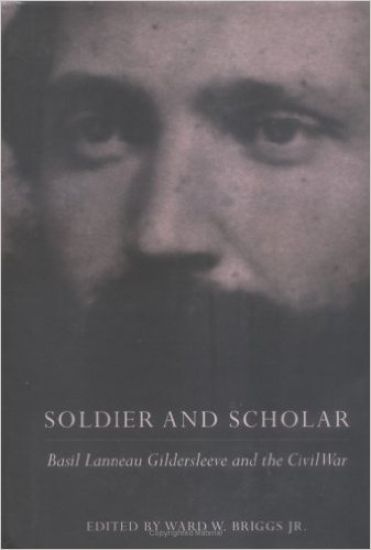
This is an account of the classical scholar, Basil Lanneau Gildersleeve, who was a soldier and who taught at the University of Virginia during the winter. This book is a collection of his writings: autobiographical essays; 63 editorials; and reflections upon the causes and effects of the Civil War.