This book is a volume in the Penn Press Anniversary Collection. To mark its 125th anniversary in 2015, the University of Pennsylvania Press rereleased more than 1,100 titles from Penn Press's distinguished backlist from 1899-1999 that had fallen out of print. Spanning an entire century, the Anniversary Collection offers peer-reviewed scholarship in a wide range of subject areas.
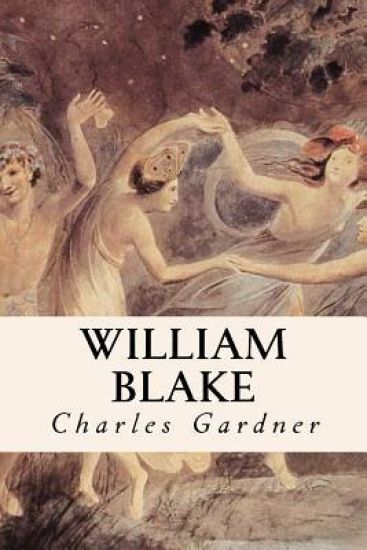
William Blake, by Charles Gardner, is a classic and definitive biography of the great English artist and poet, William Blake. To-day a large house stands in Broad Street numbered 28, to which is attached a blue disk announcing that William Blake, Poet and Artist, was born there. The house looks old and shabby, and may well have stood a hundred years; but on inquiry one finds that it is a recent erection, and that of William Blake's actual house not one stone has been left upon another. One walks through Broad Street and its neighbouring streets hoping to see at least one group of buildings as Blake saw them. William Blake (28 November 1757 - 12 August 1827) was an English poet, painter, and printmaker. Largely unrecognised during his lifetime, William Blake is now considered a seminal figure in the history of the poetry and visual arts of the Romantic Age. What he called his prophetic works were said by 20th-century critic Northrop Frye to form "what is in proportion to its merits the least read body of poetry in the English language". 2] His visual artistry led 21st-century critic Jonathan Jones to proclaim him "far and away the greatest artist Britain has ever produced". 3] In 2002, Blake was placed at number 38 in the BBC's poll of the 100 Greatest Britons. 4] Although he lived in London his entire life (except for three years spent in Felpham), 5] he produced a diverse and symbolically rich oeuvre, which embraced the imagination as "the body of God" 6] or "human existence itself". 7] Although Blake was considered mad by contemporaries for his idiosyncratic views, he is held in high regard by later critics for his expressiveness and creativity, and for the philosophical and mystical undercurrents within his work. His paintings and poetry have been characterised as part of the Romantic movement and as "Pre-Romantic". Reverent of the Bible but hostile to the Church of England (indeed, to almost all forms of organised religion), William Blake was influenced by the ideals and ambitions of the French and American Revolutions. 9] Though later he rejected many of these political beliefs, he maintained an amiable relationship with the political activist Thomas Paine; he was also influenced by thinkers such as Emanuel Swedenborg. 10] Despite these known influences, the singularity of William Blake's work makes him difficult to classify. The 19th-century scholar William Rossetti characterised him as a "glorious luminary", 11] and "a man not forestalled by predecessors, nor to be classed with contemporaries, nor to be replaced by known or readily surmisable successors". Because Blake's later poetry contains a private mythology with complex symbolism, his late work has been less published than his earlier more accessible work. The Vintage anthology of Blake edited by Patti Smith focuses heavily on the earlier work, as do many critical studies such as William Blake by D. G. Gillham. The earlier work is primarily rebellious in character and can be seen as a protest against dogmatic religion especially notable in The Marriage of Heaven and Hell, in which the figure represented by the "Devil" is virtually a hero rebelling against an imposter authoritarian deity. In later works, such as Milton and Jerusalem, William Blake carves a distinctive vision of a humanity redeemed by self-sacrifice and forgiveness, while retaining his earlier negative attitude towards what he felt was the rigid and morbid authoritarianism of traditional religion. Not all readers of Blake agree upon how much continuity exists between Blake's earlier and later works. Psychoanalyst June Singer has written that William Blake's late work displayed a development of the ideas first introduced in his earlier works, namely, the humanitarian goal of achieving personal wholeness of body and spirit. The final section of the expanded edition of her Blake study The Unholy Bible suggests the later works are the "Bible of Hell" promised in The Marriage of Heaven and He
This work has been selected by scholars as being culturally important and is part of the knowledge base of civilization as we know it.This work is in the public domain in the United States of America, and possibly other nations. Within the United States, you may freely copy and distribute this work, as no entity (individual or corporate) has a copyright on the body of the work.Scholars believe, and we concur, that this work is important enough to be preserved, reproduced, and made generally available to the public. To ensure a quality reading experience, this work has been proofread and republished using a format that seamlessly blends the original graphical elements with text in an easy-to-read typeface.We appreciate your support of the preservation process, and thank you for being an important part of keeping this knowledge alive and relevant.
Abigail Brooks was like any other insignificant teenage girl. Her parents had just uprooted her from her small, cozy, hometown of Pemberton, Minnesota. Moving to Portland, Oregon would be an adventure, she'd convinced herself. Only she had no idea how much of an adventure it would be. She finds herself intrigued by her new neighbors. Four teenage, Irish brothers who seem to live by themselves. She finds herself most intrigued by the youngest brother, Benjamin, who seems oddly protective of her. Benjamin warns her to keep her distance from him and his family, which only interests her more. But the more secrets she unravels, the more fascinated she becomes. Before she knows it, she's in too deep. A family curse threatens to tear them all apart. Abigail may be the only one who can save them all, herself included.
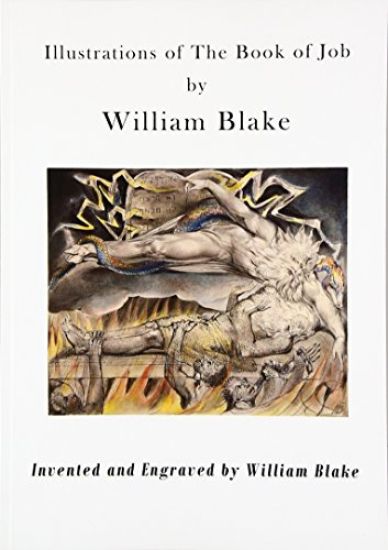
Illustrations of The Book of JobWilliam BlakeIllustrations of the Book of JobInvented and Engraved by William BlakeWilliam Blake's Illustrations of the Book of Job primarily refers to a series of twenty-two engraved prints (published 1826) by Blake illustrating the biblical Book of Job. It also refers to two earlier sets of watercolours by Blake on the same subject (1806 and 1821). The engraved Illustrations are considered to be Blake's greatest masterpieces in the medium of engraving, and were also a rare commercial and critical success for Blake.As early as 1785 Blake had sketched several ink studies of an illustration to Job. In 1793 Blake engraved a composition based upon these drawings, which he offered for sale in the Prospectus to the Public for twelve shillings. This, alongside an engraving of Ezekiel, are the only extant examples of an intended series of biblical illustrations that were never completed. Blake reworked the Job plate sometime after 1804, but the resulting print was not included in the Illustrations.Blake's next illustration was the tempera painting Job and his Daughters (1800), commissioned by Thomas Butts. This has similarities to plate 20 of the engraved illustrations, but it is unclear whether the print was directly based upon it.
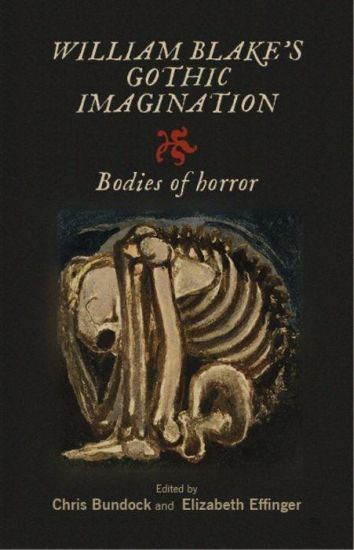
Scholars of the Gothic have long recognised Blake’s affinity with the genre. Yet, to date, no major scholarly study focused on Blake’s intersection with the Gothic exists. William Blake’s gothic imagination seeks to redress this disconnect. The papers here do not simply identify Blake’s Gothic conventions but, thanks to recent scholarship on affect, psychology, and embodiment in Gothic studies, reach deeper into the tissue of anxieties that take confused form through this notoriously nebulous historical, aesthetic, and narrative mode. The collection opens with papers touching on literary form, history, lineation, and narrative in Blake’s work, establishing contact with major topics in Gothic studies. Then refines its focus to Blake’s bloody, nervous bodies, through which he explores various kinds of Gothic horror related to reproduction, anatomy, sexuality, affect, and materiality. Rather than transcendent images, this collection attends to Blake’s ‘dark visions of torment’.