Kirjojen hintavertailu. Mukana 12 256 004 kirjaa ja 12 kauppaa.

Kirjahaku

Etsi kirjoja tekijän nimen, kirjan nimen tai ISBN:n perusteella.

1000 tulosta hakusanalla Brenda Capps

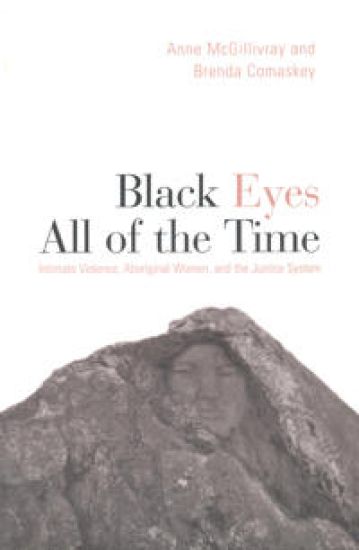
Black Eyes All of the Time

Black Eyes All of the Time

Brenda Comaskey; Anne McGillivray

University of Toronto Press
1999
pokkari
A decade ago, a landmark study by Indian law affairs specialist Rupert Ross suggested that alternative methods of crime prevention based on traditional Aboriginal values would lower crime rates in Native communities. Since then, reform measures that have been implemented have resulted in fewer criminal charges, less vigorous prosecution, and shorter jail terms for Aboriginal offenders. Unfortunately, such research and reforms have often failed to address two groups greatly hurt by criminal violence: women and children. The impetus for this book arose out of a 1995 Winnipeg study involving twenty-six Aboriginal women. The compelling accounts these women give of the domestic violence they experienced, first as children and later as wives and mothers, make it all too clear that any plan to implement diversionary reforms must first take into account this under-represented group. For survivors of domestic violence, jail terms for abusers allow time for healing, and the threat of criminal prosecution may quell violent outbreaks. Lax responses from an inconsistent criminal justice system often put Native women at risk. Drawing on the experiences and views of the women affected, Black Eyes All of the Time analyses how this pervasive cycle of violence evolved and suggests possible solutions involving both the dominant Canadian justice system and Aboriginal traditions.
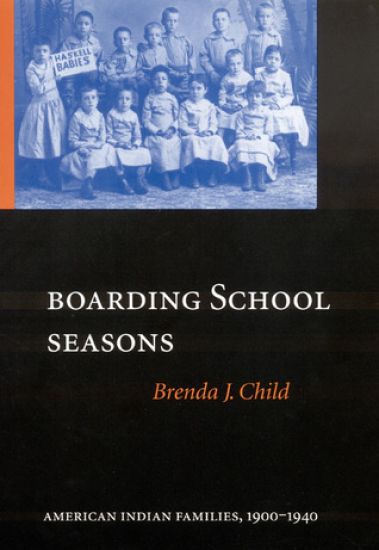
Boarding School Seasons

Boarding School Seasons

Brenda J. Child

University of Nebraska Press
1998
sidottu
The paperback edition features a new introduction by the author.Boarding School Seasons offers a revealing look at the strong emotional history of Indian boarding school experiences in the first half of the twentieth century. At the heart of this book are the hundreds of letters written by parents, children, and school officials at Haskell Institute in Kansas and the Flandreau School in South Dakota. These revealing letters show how profoundly entire families were affected by their experiences. Children, who often attended schools at great distances from their communities, suffered from homesickness, and their parents from loneliness. Parents worried continually about the emotional and physical health and the academic progress of their children. Families clashed repeatedly with school officials over rampant illnesses and deplorable living conditions and devised strategies to circumvent severely limiting visitation rules. Family intimacy was threatened by the schools' suppression of traditional languages and Native cultural practices. Although boarding schools were a threat to family life, profound changes occurred in the boarding school experiences as families turned to these institutions for relief during the Depression, when poverty and the loss of traditional seasonal economics proved a greater threat. Boarding School Seasons provides a multifaceted look at the aspirations and struggles of real people.
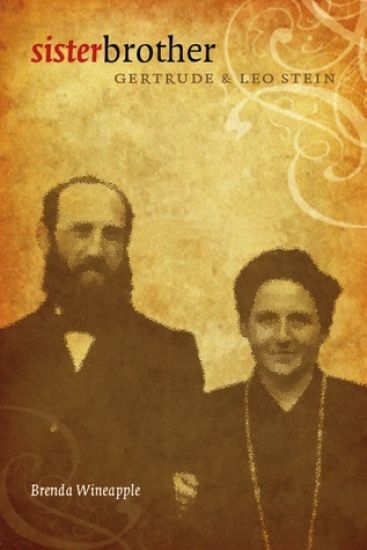
Sister Brother

Sister Brother

Brenda Wineapple

Bison Books
2008
pokkari
Devoted, eccentric, and compelling, Gertrude and Leo Stein were constant companions, from childhood to adulthood, until, finally, they spoke no more. Americans, expatriates, and virtually orphans, they lived together for almost forty years, collaborating in one of the great artistic and literary adventures of the twentieth century. Sister Brother tells the story of that adventure and relationship. With a personality that drew people toward her—regardless of what they thought of her inventive, hermetic prose—Gertrude Stein dazzled and perplexed. Enigmatic, intelligent, and self-absorbed, Leo also dazzled but in his own way. One of the crucial figures in Gertrude's early years, he was the original guiding spirit of the famed salon at 27 rue de Fleurus, which continued for almost two decades. From her early days as a medical student to her first days in Paris, Gertrude was passionately driven toward the career in which she distinguished herself, demanding appreciation as an exceptional writer who knew precisely what she intended. This book shows how Gertrude slowly struggled with what became a unique voice—and why her brother spurned it. With its wealth of new and rare material, its reconstruction of Leo's famed art collection, and its array of characters—from Bernard Berenson to Pablo Picasso—this biography offers the first glimpse into the smoldering sibling relationship that helped form two of the twentieth century's most unusual figures.
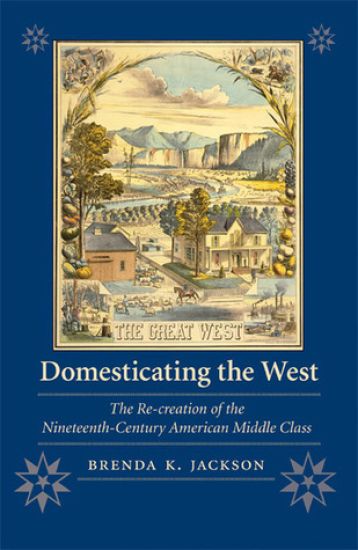
Domesticating the West

Domesticating the West

Brenda K. Jackson

University of Nebraska Press
2008
pokkari
In 1881 Thomas and Elizabeth Tannatt said a final good-bye to Massachusetts and the eastern seaboard and set out in search not of land but of opportunities for social and political advancement. Facing severe limitations to their goals in the depressed and disheveled postwar East, the Tannatts went west to Walla Walla, Washington Territory, to pursue their dreams of influence and status. Domesticating the West examines the motivations of late-nineteenth-century middle-class migrants who moved west to build communities and establish themselves as leaders. The West offered new opportunities for solidly middle-class eastern families who endured hardship, uncertainty, and displacement during the Civil War, and who struggled to carve out meaningful social space in the war's aftermath. Brenda K. Jackson places the Tannatts at the center of this movement and demonstrates how gender, class, and place affected the new migrants' abilities to integrate into their new communities. She also shows how easterners redefined themselves as leaders of a new, moral western environment through volunteerism and political participation. While many studies of westward expansion focus exclusively on the earliest pioneers, Jackson adroitly shows how later arrivals shaped the social, economic, and cultural growth of the nation.
Do You See What I Mean?

Do You See What I Mean?

Brenda Farnell

University of Nebraska Press
2009
pokkari
Plains Indian Sign Talk (PST), a complex system of hand signs, once served as the lingua franca among many Native American tribes of the Great Plains, who spoke very different languages. Although some researchers thought it had disappeared following the establishment of reservations and the widespread adoption of English, Brenda Farnell discovered that PST is still an integral component of the storytelling tradition in contemporary Assiniboine (Nakota) culture.Farnell's research challenges the dominant European American view of language as a matter of words only. In Nakota language practices, she asserts, words and gestures are equal partners in the creation of meaning. Drawing on Nakota narratives videotaped during field research at the Fort Belknap reservation in northern Montana, she uses the movement script Labanotation to create texts of the movement content of these performances. The first and only ethnographic study of contemporary uses of PST, Do You See What I Mean? draws on important developments in the study of language and culture to provide an action-centered analysis of spoken and gestural discourse. It offers a theoretical approach to language and the body that transcends the current "intellectualist" versus "phenomenological" impasse in social and linguistic theory.
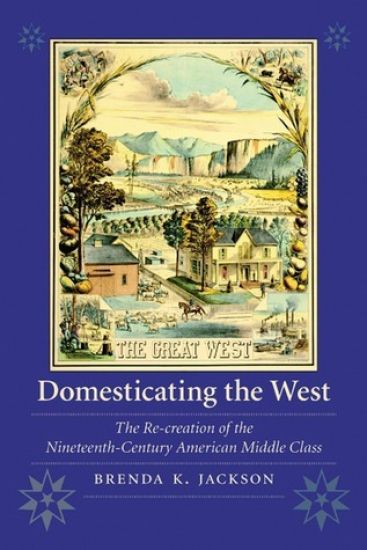
Domesticating the West

Domesticating the West

Brenda K. Jackson

University of Nebraska Press
2005
sidottu
In 1881, Thomas and Elizabeth Tannatt said a final good-bye to Massachusetts and the eastern seaboard and set out in search not of land but of opportunities for social and political advancement. Facing severe limitations to their goals in the depressed and disheveled postwar East, the Tannatts went west to Walla Walla, Washington Territory, to pursue their dreams of influence and status. Domesticating the West examines the motivations of late-nineteenth-century middle-class migrants who moved west to build communities and establish themselves as leaders. The West offered new opportunities for solidly middle-class eastern families who endured hardship, uncertainty, and displacement during the Civil War, and who struggled to carve out meaningful social space in the war's aftermath.Brenda K. Jackson places the Tannatts at the center of this movement and demonstrates how gender, class, and place affected the new migrants' abilities to integrate into their new communities. She also shows how easterners redefined themselves as leaders of a new, moral western environment through volunteerism and political participation. While many studies of westward expansion focus exclusively on the earliest pioneers, Jackson adroitly shows how later arrivals shaped the social, economic, and cultural growth of the nation. Brenda K. Jackson is an assistant professor of history at Belmont University.
The Fortune Teller's Kiss

The Fortune Teller's Kiss

Brenda Serotte

University of Nebraska Press
2006
sidottu
There was always the incantation: "Whoever wishes you harm, may harm come to them!" And just in case that didn't work, there were garlic and cloves to repel the Evil Eye - or, better yet, the dried foreskin from a baby boy's circumcision, ground to a fine powder. But whatever precautions Brenda Serotte was subjected to, they were not enough. Shortly before her eighth birthday, in the fall of 1954, she came down with polio-painfully singled out in a world already marked by differences. Her bout with the dreaded disease is at the heart of this poignant and heartbreakingly hilarious memoir of growing up a Sephardic Jew among Ashkenazi neighbors in the Bronx. This was a world of belly dancers and fortune tellers, shelter drills and vast quantities of Mediterranean food; a world of staunchly joined and endlessly contrary aunts and uncles, all drawn here in loving, merciless detail. "The Fortune Teller's Kiss" is a heartfelt tribute to a disappearing culture and a paean to the author's truly quirky clan, especially her beloved champion, her father. It is also a deft and intimate cultural history of the Bronx fifty years ago and of its middle-class inhabitants, their attitudes toward contagious illness, womanly beauty, poverty, and belonging. Brenda Serotte is a poet and an adjunct professor at Nova Southeastern University in Fort Lauderdale, Florida. Her poetry and prose have appeared in numerous publications, such as "Atlanta Review", "Kit-Kat Review", "Quarter after Eight: A Journal of Prose and Commentary", and "Fourth Genre", from which her chapter "Contagious" was nominated for a Pushcart Prize.
The Fortune Teller's Kiss

The Fortune Teller's Kiss

Brenda Serotte

University of Nebraska Press
2012
pokkari
There was always the incantation: "Whoever wishes you harm, may harm come to them!" And just in case that didn't work, there were garlic and cloves to repel the Evil Eye—or, better yet, the dried foreskin from a baby boy's circumcision, ground to a fine powder. But whatever precautions Brenda Serotte was subjected to, they were not enough. Shortly before her eighth birthday, in the fall of 1954, she came down with polio—painfully singled out in a world already marked by differences. Her bout with the dreaded disease is at the heart of this poignant and heartbreakingly hilarious memoir of growing up a Sephardic Jew among Ashkenazi neighbors in the Bronx. This was a world of belly dancers and fortune tellers, shelter drills and vast quantities of Mediterranean food; a world of staunchly joined and endlessly contrary aunts and uncles, all drawn here in loving, merciless detail. The Fortune Teller's Kiss is a heartfelt tribute to a disappearing culture and a paean to the author's truly quirky clan, especially her beloved champion, her father. It is also a deft and intimate cultural history of the Bronx fifty years ago and of its middle-class inhabitants, their attitudes toward contagious illness, womanly beauty, poverty, and belonging.
Boarding School Seasons

Boarding School Seasons

Brenda J. Child

University of Nebraska Press
2016
pokkari
The paperback edition features a new introduction by the author.Boarding School Seasons offers a revealing look at the strong emotional history of Indian boarding school experiences in the first half of the twentieth century. At the heart of this book are the hundreds of letters written by parents, children, and school officials at Haskell Institute in Kansas and the Flandreau School in South Dakota. These revealing letters show how profoundly entire families were affected by their experiences. Children, who often attended schools at great distances from their communities, suffered from homesickness, and their parents from loneliness. Parents worried continually about the emotional and physical health and the academic progress of their children. Families clashed repeatedly with school officials over rampant illnesses and deplorable living conditions and devised strategies to circumvent severely limiting visitation rules. Family intimacy was threatened by the schools' suppression of traditional languages and Native cultural practices. Although boarding schools were a threat to family life, profound changes occurred in the boarding school experiences as families turned to these institutions for relief during the Depression, when poverty and the loss of traditional seasonal economics proved a greater threat. Boarding School Seasons provides a multifaceted look at the aspirations and struggles of real people.
Genêt

Genêt

Brenda Wineapple

University of Nebraska Press
1992
pokkari
The daughter of an Indianapolis mortician, Janet Flanner really began to live at the age of thirty, when she fled to Paris with her female lover. That was in 1921, a few years before she signed on as Paris correspondent for the New Yorker, taking the pseudonym Genêt. For half a century she described life on the Continent with matchless elegance.
Nurse's Fast Facts

Nurse's Fast Facts

Brenda Walters Holloway

F.A. Davis Company
2004
nidottu
Nurse's Fast Facts is a compilation of all of those hard-to-remember procedures, calculations, lab values, and interactions in a lightweight, easy-to-carry package. This essential handbook offers the most important but difficult to remember clinical information for nine nursing content areas as well as age-specific guidelines for assessing health problems and interpreting lab values. Reference tabs provide speedy access to information by specialty, and the many charts, graphs, illustrations, and a new two-color design make locating facts even easier!Topics include:Medical-SurgicalGerontological CareMaternal-InfantPediatricMental HealthEmergency and Critical CareLong-Term CareHome Health CareNutrition
Sexual Citizens

Sexual Citizens

Brenda Cossman

Stanford University Press
2007
sidottu
This book explores the relationship between sex and belonging in law and popular culture, arguing that contemporary citizenship is sexed, privatized, and self-disciplined. Former sexual outlaws have challenged their exclusion and are being incorporated into citizenship. But as citizenship becomes more sexed, it also becomes privatized and self-disciplined. The author explores these contesting representations of sex and belonging in films, television, and legal decisions. She examines a broad range of subjects, from gay men and lesbians, pornographers and hip hop artists, to women selling vibrators, adulterers, and single mothers on welfare. She observes cultural representations ranging from Queer Eye for the Straight Guy to Dr. Phil, Sex in the City to Desperate Housewives. She reviews appellate court cases on sodomy and same-sex marriage, national welfare reform, and obscenity regulation. Finally, the author argues that these representations shape the terms of belonging and governance, producing good (and bad) sexual citizens, based on the degree to which they abide by the codes of privatized and self-disciplined sex.
Thinking Allegory Otherwise

Thinking Allegory Otherwise

Brenda Machosky

Stanford University Press
2009
sidottu
Thinking Allegory Otherwise is a unique collection of essays by allegory specialists and other scholars who engage allegory in exciting new ways. The contributors include Jody Enders, Karen Feldman, Angus Fletcher, Blair Hoxby, Brenda Machosky, Catherine Gimelli Martin, Stephen Orgel, Maureen Quilligan, James Paxson, Daniel Selcer, Gordon Teskey, and Richard Wittman. The essays are not limited to an examination of literary texts and works of art, and in fact focus on a wide range of topics that includes architecture, philosophy, theatre, science, and law. The book proves the truth of the statement that all language is allegorical, and more importantly it shows its consequences. To "think allegory otherwise" is to think otherwise— to rethink not only the idea of allegory itself, but also the law and its execution, the literality of figurative abstraction, and the figurations upon which even hard science depends.
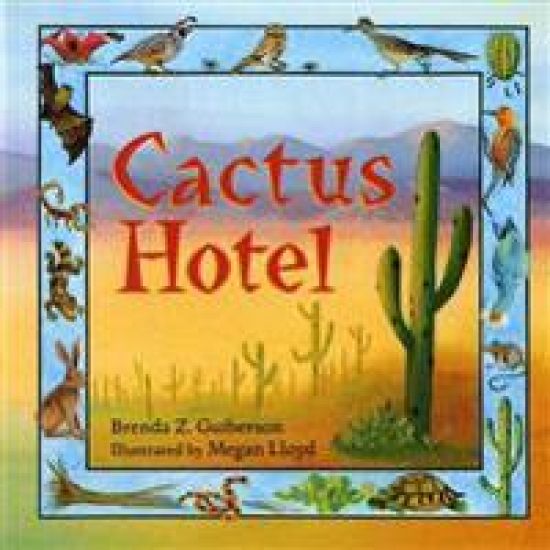
Cactus Hotel

Cactus Hotel

Brenda Z. Guiberson

Henry Holt Company
1991
sidottu
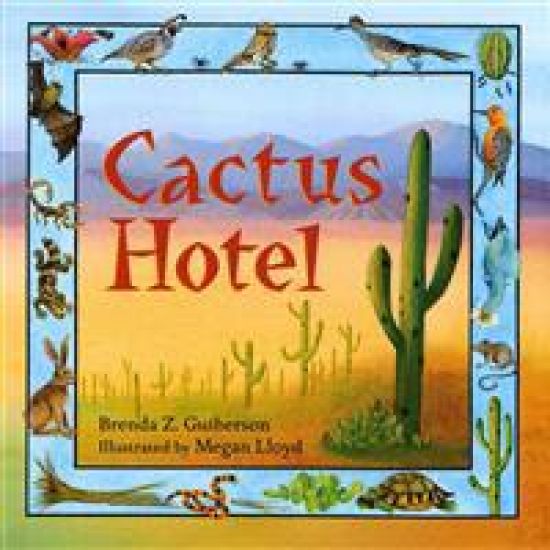
It is another hot day in the desert. Birds and other animals scurry about looking for food. When they get tired they stop to rest at a giant cactus. It is their hotel in the desert Many different animals live in the cactus hotel. It protects them; and they protect it, by eating the pests that could harm the cactus. The cactus grows larger and larger and will live for about two hundred years. When one animal moves out, another moves in. There is never a vacancy in the cactus hotel. This story--about a desert, a giant cactus, and the animals who live in it--is one that even the youngest child will understand and enjoy. Parents' Choice Award IRA-CBC Teachers' Choice An NSTA-CBC Outstanding Science Trade Book An NCTE Notable Trade Book in the Language Arts
Cactus Hotel

Cactus Hotel

Brenda Z. Guiberson

Henry Holt Company
1993
nidottu
It is another hot day in the desert. Birds and other animals scurry about looking for food. When they get tired they stop to rest at a giant cactus. It is their hotel in the desert Many different animals live in the cactus hotel. It protects them; and they protect it, by eating the pests that could harm the cactus. The cactus grows larger and larger and will live for about two hundred years. When one animal moves out, another moves in. There is never a vacancy in the cactus hotel. This story--about a desert, a giant cactus, and the animals who live in it--is one that even the youngest child will understand and enjoy. Parents' Choice AwardIRA-CBC Teachers' ChoiceAn NSTA-CBC Outstanding Science Trade BookAn NCTE Notable Trade Book in the Language Arts
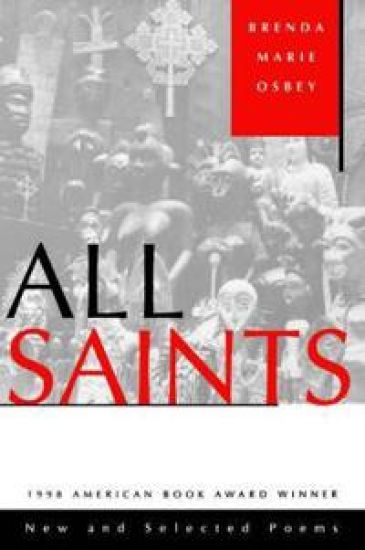
All Saints

All Saints

Brenda Marie Osbey

Louisiana State University Press
1997
nidottu
Like the feast day recalled in its title, this collection of twenty narrative poems venerates the dead. Brenda Marie Osbey invokes, impersonates, and converses with her Afro-New Orleans forebears, both blood ancestors and spiritual predecessors, weaving in hypnotic cadence a spell as potent as the religious and magical mysteries of her native culture. In All Saints we come to believe the dead do live, in the slave bricks paving the city's faubourgs, in the Hoodoo rites and images of saints, and especially in ourselves, who ""walk upon the earth a living man / wearing all the shrouds of mourning like a skin / and memory like a stone inside your organs."" Assisted by a glossary of New Orleans ethnic expressions, place names, and characters, we discern in these poems a multitude of voices that speak to us from colonial times forward. We hear Juan San Malo, leader of a slave rebellion; Luis Congo, a free Kongo man; myriad brothers and sisters, both distinct and collective; and the city itself, ""thrumming / eternal / ever / at the tracks."" Chanting, lamenting, outpouring, healing, Osbey's poems measure her own musical refrain to the past while keeping time with the present: ""we cry out together / in time to hear their cries.
All Souls

All Souls

Brenda Marie Osbey

Louisiana State University Press
2015
nidottu
All Souls: Essential Poems brings together work that reflects the interweaving of history, memory, and the indelible bonds between living and dead that has marked the output of Louisiana Poet Laureate Emerita Brenda Marie Osbey. Comprising poems written and published over the span of four decades, this thematic collection highlights the unity of Osbey's voice and narrative intent.The six sections of the book reveal the breadth of her poetic vision. The first, House in the Faubourg, contains poems focused on the people and places of Osbey's native New Orleans, and the penultimate section, Unfinished Coffees, examines the Crescent City within a broader, more contemporary meditation on culture. Something about Trains features two suites of poems that use trains and railway stations as settings from which to inspect desolation, writing, and memory; and Little History, Part One recounts tales of European settlement and exploitation of the New World. The poems in What Hunger look at the many facets of desire, while Mourning Like a Skin includes elegies and poems addressing the lasting presence of the dead.Dynamic and unflinching, the poems in All Souls speak of a world with many secrets, known ""only through having learned them / the hardest way.
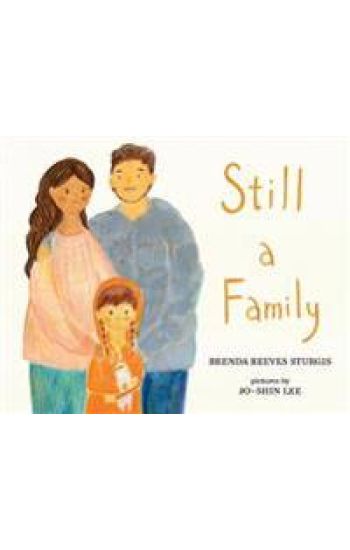
Still A Family

Still A Family

Brenda Sturgis

Albert Whitman Company
2017
sidottu
A little girl and her parents have lost their home and must live in a homeless shelter. Even worse, due to a common shelter policy, her dad must live in a men's shelter, separated from her and her mom. Despite these circumstances, the family still finds time to be together. They meet at the park to play hide-and-seek, slide on slides, and pet puppies. While the young girl wishes for better days when her family is together again under a roof of their very own, she continues to remind herself that they're still a family even in times of separation.