Kirjojen hintavertailu. Mukana 11 717 486 kirjaa ja 12 kauppaa.

Kirjahaku

Etsi kirjoja tekijän nimen, kirjan nimen tai ISBN:n perusteella.

1000 tulosta hakusanalla Brian E. Butler

Locus e Praxis na Residência de Professores de Denver

Locus e Praxis na Residência de Professores de Denver

Bryan Wehrli

Edicoes Nosso Conhecimento
2025
pokkari
O objetivo deste estudo qualitativo foi explorar os conceitos de locus e pr xis no que se refere s pr ticas de forma o de professores e aprendizagem de novatos no Programa de Resid ncia de Professores de Denver. O termo locus pretendia sugerir uma forma matizada e abrangente de considerar a escola e a sala de aula do ensino b sico e secund rio como o local essencial para aprender a ensinar. O termo pr xis referia-se especializa o adaptativa, ou racioc nio pr tico, resolu o de problemas e sabedoria informada pela teoria na pr tica. Um estudo de caso anal tico investigou duas quest es de investiga o: 1) De que forma a aprendizagem dos professores est deliberadamente localizada no ambiente cl nico de uma sala de aula do ensino b sico e secund rio? 2) De que forma as pr ticas cl nicas, as experi ncias de aprendizagem e os curr culos desenvolvem a capacidade de praxis nos residentes? Um projeto de investiga o emergente para este estudo de caso incluiu trabalho de campo prolongado e an lise de dados provis rios. A recolha de dados incluiu entrevistas e observa es dos participantes do programa (residentes, instrutores, coordenadores de campo, professores mentores, administradores do programa), bem como a revis o de documentos (por exemplo, documentos curriculares, descri es de tarefas, textos atribu dos).

Teenage Brain

Teenage Brain

Frances E. Jensen

Harpercollins Publishers
2015
pokkari
Why is it that the behaviour of teenagers can be so odd? As they grow older, young children steadily improve their sense of how to behave, and then all of a sudden, they can become totally uncommunicative, wildly emotional and completely unpredictable.
Super Brain: Unleashing the Explosive Power of Your Mind to Maximize Health, Happiness, and Spiritual Well-Being
A manual for relating to the brain in a revolutionary new way, Super Brain shows you how to use your brain as a gateway for achieving health, happiness, and spiritual growth. Two pioneers, bestselling author and physician Deepak Chopra and Harvard Medical School professor Rudolph E. Tanzi, one of the world's foremost experts on the causes of Alzheimer's, have merged their wisdom and expertise for a bold new understanding of the "three-pound universe" and its untapped potential. In contrast to the "baseline brain" that fulfills the tasks of everyday life, Chopra and Tanzi propose that, through a person's increased self-awareness and conscious intention, the brain can be taught to reach far beyond its present limitations. "We are living in a golden age for brain research, but is this a golden age for your brain?" they ask. Super Brain explains how it can be, by combining cutting-edge research and spiritual insights, demolishing the five most widespread myths about the brain that limit your potential, and then showing you methods to: -Use your brain instead of letting it use you-Create the ideal lifestyle for a healthy brain-Reduce the risks of aging-Promote happiness and well-being through the mind-body connection-Access the enlightened brain, the gateway to freedom and bliss-Overcome the most common challenges, such as memory loss, depression, anxiety, and obesity Your brain is capable of incredible healing and constant reshaping. Through a new relationship with your brain you can transform your life. In Super Brain, Chopra and Tanzi guide you on a fascinating journey that envisions a leap in human evolution. The brain is not just the greatest gift that Nature has given us. It's the gateway to an unlimited future that you can begin to live today.
Big Brain Bible Games – Fun Puzzles, Quizzes, and Trivia to Test Your Bible Knowledge
Ready to test your knowledge of Scripture and learn more of God's Word? Then you're ready for Big Brain Bible Games! From Guinness World Records Puzzle Master Timothy E. Parker, this brand-new collection of puzzles, trivia, and brain teasers is sure to provide hours of entertainment. The hundreds of games include· word searches· true or false· word scrambles· anagrams· fill in the blanks· and moreThere's no better way to combine fun, relaxation, and education than with games.
e-HR

e-HR

Bryan Hopkins; James Markham

Routledge
2019
nidottu
Title first published in 2003. Despite all the hype about e-learning, the real breakthrough in technology, at least as far as HR goes, is in the development of the corporate intranet for people management purposes. Bryan Hopkins and James Markham's book explains the potential for intranets in every aspect of HR: personnel administration, performance management, employee development, communication and knowledge management, as well as training and e-learning. It asks and answers the key questions you need to ask yourself and provides case studies illustrating how organizations have successfully exploited their intranet to help their people work more effectively and efficiently. HR managers are under pressure to cut costs, increase the effectiveness and range of the services they deliver. In many organizations there is also considerable pressure to maximise the returns on investment in technology. This book provides you with the means to achieve all of these goals.
e-HR

e-HR

Bryan Hopkins; James Markham

Routledge
2017
sidottu
Title first published in 2003. Despite all the hype about e-learning, the real breakthrough in technology, at least as far as HR goes, is in the development of the corporate intranet for people management purposes. Bryan Hopkins and James Markham's book explains the potential for intranets in every aspect of HR: personnel administration, performance management, employee development, communication and knowledge management, as well as training and e-learning. It asks and answers the key questions you need to ask yourself and provides case studies illustrating how organizations have successfully exploited their intranet to help their people work more effectively and efficiently. HR managers are under pressure to cut costs, increase the effectiveness and range of the services they deliver. In many organizations there is also considerable pressure to maximise the returns on investment in technology. This book provides you with the means to achieve all of these goals.
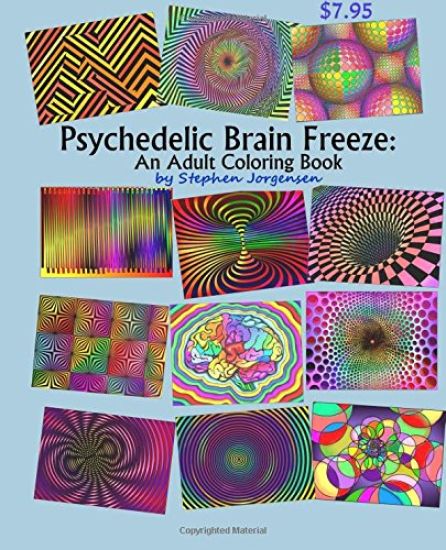
Psychedelic Brain Freeze, An Adult Coloring Book

Psychedelic Brain Freeze, An Adult Coloring Book

Stephen E. Jorgensen

Createspace Independent Publishing Platform
2017
nidottu
This book is a coloring book made for adults. It has 26 line drawings of psychedelic op-art designs for coloring. It includes full color examples of each design printed on the covers. It is for adults because it is not as simple as a child's coloring book as it has smaller and finer details. You have to concentrate when you color to get all the small shapes filled in. The concentration tends to make you clear your mind of thoughts, including many negative thoughts and this will help you relieve your stress. You will find that coloring will tend to reduce anxiety, and will help you focus and in the process it will make you more MINDFULL. It is a therapeutic exercise. The process will stop your mind from all kinds of distracting thoughts. FREEZE YOUR BRAIN The word "psychedelic" (first used by British psychologist Humphry Osmond) means "mind manifesting". By that definition, all artistic efforts to depict the inner world of the mind or mental efforts may be considered "psychedelic". Normally, "psychedelic art" refers to the art movement of the late 1960s hippies and drug counterculture. "Far Out Man " sums it up. It includes mind blowing patterns and shapes, and above all, bright colors that assault the senses and give a feeling of something strange going on in the mind because of the psychedelic art. These pages will give you that feeling. It depends on the coloring, the melding and clashing of adjacent colors that you provide by filling in the tiny spaces between the overlapping lines. Colorists will show a tendency to get lost drawing in the repetitive patterns and the extended detail. It's like a mystic thought process or listening to someone's long drug monologue. It will form an impenetrable wall of pattern by building a different mental world. All the repetitive patterning will lull you into a place where your thoughts can spiral into those really interesting places. It's like a really long varied drug experience but you don't need to take drugs to have the experience. It's a fantasy land of colorful, swirling, psychedelic bubbles. Have fun coloring and letting your mind go.
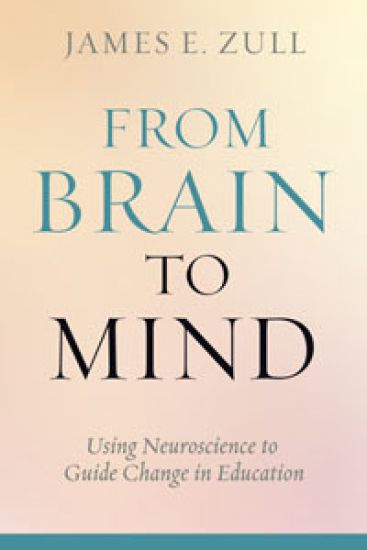
From Brain to Mind

From Brain to Mind

James E. Zull

Stylus Publishing
2011
sidottu
Finalist for Foreword Magazine's 2011 Book of the YearWith his knack for making science intelligible for the layman, and his ability to illuminate scientific concepts through analogy and reference to personal experience, James Zull offers the reader an engrossing and coherent introduction to what neuroscience can tell us about cognitive development through experience, and its implications for education.Stating that educational change is underway and that the time is ripe to recognize that “the primary objective of education is to understand human learning” and that “all other objectives depend on achieving this understanding”, James Zull challenges the reader to focus on this purpose, first for her or himself, and then for those for whose learning they are responsible. The book is addressed to all learners and educators – to the reader as self-educator embarked on the journey of lifelong learning, to the reader as parent, and to readers who are educators in schools or university settings, as well as mentors and trainers in the workplace.In this work, James Zull presents cognitive development as a journey taken by the brain, from an organ of organized cells, blood vessels, and chemicals at birth, through its shaping by experience and environment into potentially to the most powerful and exquisite force in the universe, the human mind.Zull begins his journey with sensory-motor learning, and how that leads to discovery, and discovery to emotion. He then describes how deeper learning develops, how symbolic systems such as language and numbers emerge as tools for thought, how memory builds a knowledge base, and how memory is then used to create ideas and solve problems. Along the way he prompts us to think of new ways to shape educational experiences from early in life through adulthood, informed by the insight that metacognition lies at the root of all learning.At a time when we can expect to change jobs and careers frequently during our lifetime, when technology is changing society at break-neck speed, and we have instant access to almost infinite information and opinion, he argues that self-knowledge, awareness of how and why we think as we do, and the ability to adapt and learn, are critical to our survival as individuals; and that the transformation of education, in the light of all this and what neuroscience can tell us, is a key element in future development of healthy and productive societies.
From Brain to Mind

From Brain to Mind

James E. Zull

Stylus Publishing
2011
nidottu
Finalist for Foreword Magazine's 2011 Book of the YearWith his knack for making science intelligible for the layman, and his ability to illuminate scientific concepts through analogy and reference to personal experience, James Zull offers the reader an engrossing and coherent introduction to what neuroscience can tell us about cognitive development through experience, and its implications for education.Stating that educational change is underway and that the time is ripe to recognize that “the primary objective of education is to understand human learning” and that “all other objectives depend on achieving this understanding”, James Zull challenges the reader to focus on this purpose, first for her or himself, and then for those for whose learning they are responsible. The book is addressed to all learners and educators – to the reader as self-educator embarked on the journey of lifelong learning, to the reader as parent, and to readers who are educators in schools or university settings, as well as mentors and trainers in the workplace.In this work, James Zull presents cognitive development as a journey taken by the brain, from an organ of organized cells, blood vessels, and chemicals at birth, through its shaping by experience and environment into potentially to the most powerful and exquisite force in the universe, the human mind.Zull begins his journey with sensory-motor learning, and how that leads to discovery, and discovery to emotion. He then describes how deeper learning develops, how symbolic systems such as language and numbers emerge as tools for thought, how memory builds a knowledge base, and how memory is then used to create ideas and solve problems. Along the way he prompts us to think of new ways to shape educational experiences from early in life through adulthood, informed by the insight that metacognition lies at the root of all learning.At a time when we can expect to change jobs and careers frequently during our lifetime, when technology is changing society at break-neck speed, and we have instant access to almost infinite information and opinion, he argues that self-knowledge, awareness of how and why we think as we do, and the ability to adapt and learn, are critical to our survival as individuals; and that the transformation of education, in the light of all this and what neuroscience can tell us, is a key element in future development of healthy and productive societies.
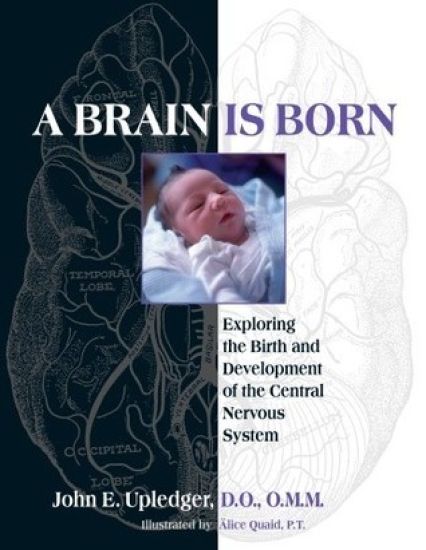
A Brain Is Born

A Brain Is Born

John E. Upledger

North Atlantic Books,U.S.
2010
pokkari
Witness the dramatic unfolding of the human form in all its potential. Join John E. Upledger, D.O., O.M.M., as he takes you from the first union of sperm and egg through the development of the complex circuitry that makes up the human brain. You'll learn about birth, growth, function and dysfunction, and how all these aspects influence physical, mental, and emotional well-being. You'll discover problems that can alter brain and spinal cord development in each of the first eight weeks of pregnancy, and then monthly right through delivery. Perhaps most importantly, Dr. Upledger outlines a series of simple physical tests that can help determine the status of a baby's central nervous system and, to some extent, the peripheral nervous system. Then he shows you, step-by-step, how potential problems might be treated using CranioSacral Therapy and related therapeutic approaches. This breakthrough book empowers parents with knowledge to help them make practical decisions concerning the health of their children. And it crosses the boundaries of many disciplines, including embryology, obstetrics, pediatrics, neurology, and CranioSacral Therapy. A Brain Is Born is as valuable to expectant parents as it is to those who work with children every day.
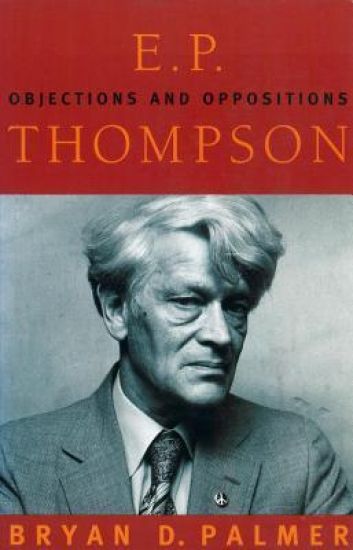
E. P. Thompson

E. P. Thompson

Bryan D Palmer

Verso Books
1994
nidottu
Edward Thompson, perhaps the greatest post-war historian in the English-speaking world, died in 1993. In this readable and unabashedly appreciative survey of Thompson's histories and politics, Byran D. Palmer reviews include a passionate biographical account of the late-nineteenth-century Romantic William Morris, the hugely acclaimed The Making of the English Working Class, and a series of eighteenth-century studies that reach from customary culture to the antinomian poetics of William Blake.In reviewing the politics which gave shape to his historical work, Palmer assesses the role of Thompson's family background in India, his youth in the Communist Party, his decisive break with Stalinism in 1956, and his subsequent work campaigning for the causes of the left and nuclear disarmament. Thompson was never comfortable in an academic milieu, and eventually left formal teaching in the 1970s to devote his time to research and writing. His pen was always ready to bend against the powers of the state, and against a left he too often saw as abandoning the cause of social transformation.For readers who know Thompson's work, Palmer's discussion of hitherto unstudied aspects of his life will be novel and illuminating; those less familiar with his prodigious achievement will find these pages a useful introduction.
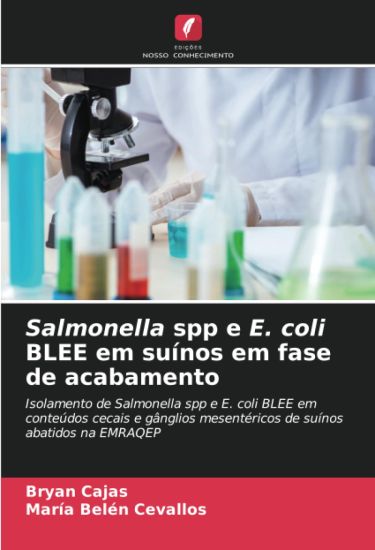
Salmonella spp e E. coli BLEE em suínos em fase de acabamento

Salmonella spp e E. coli BLEE em suínos em fase de acabamento

Bryan Cajas; María Belén Cevallos

Edicoes Nosso Conhecimento
2023
pokkari
Salmonella spp e E. coli BLEE s o bact rias de grande import ncia para a sa de p blica devido ao seu envolvimento tanto em doen as de origem alimentar como na resist ncia antimicrobiana. O principal objetivo da presente investiga o foi isolar Salmonella spp e E. coli BLEE do conte do cecal e dos g nglios linf ticos mesent ricos de su nos abatidos na EMRAQ-EP e associar estatisticamente estes isolados ao local de origem dos su nos. Foram colhidas 365 amostras de cecos e g nglios mesent ricos na zona de eviscera o dos su nos. Para a an lise microbiol gica de Salmonella spp. foi utilizada a metodologia proposta na norma ISO 6579, e a norma ISO 16649 foi aplicada para a determina o de E. coli BLEE. Obteve-se um total de 56 (15,3%) e 347 (95%) isolados de Salmonella spp. e E. coli BLEE, respetivamente. O teste do Qui-quadrado n o revelou qualquer significado estat stico entre a presen a de Salmonella spp. e E. coli BLEE no conte do cecal e nos g nglios linf ticos mesent ricos e o local geogr fico de origem dos su nos amostrados (p>0,05).
Sfide attuali e opportunità future in Malesia
La domanda e l'offerta di riso in Malesia sono aumentate ogni anno e, sebbene il tasso di crescita del consumo di riso sia stato instabile negli ultimi 20 anni, il riso rimane un alimento base per la maggior parte dei malesi. Questo studio esplorer e analizzer le molteplici caratteristiche della domanda e dell'offerta locale di riso e interpreter il significato del riso come elemento di sicurezza alimentare in Malesia. Lo studio esamina in particolare il rapporto tra il contesto sociale dei malesi (in termini di popolazione, reddito e dieta) e la domanda di riso, oltre ad analizzare diversi aspetti che possono contribuire a tale domanda, quali il livello di autosufficienza locale (SSL) del riso, il tasso di produzione, le politiche dei prezzi, prospettive agricole relative all'uso del suolo, modernizzazione e ricerca e sviluppo (R&S) del riso, importazione/esportazione di riso in relazione alla popolazione. Lo studio includer anche la domanda di riso prevista in Malesia fino al 2050.
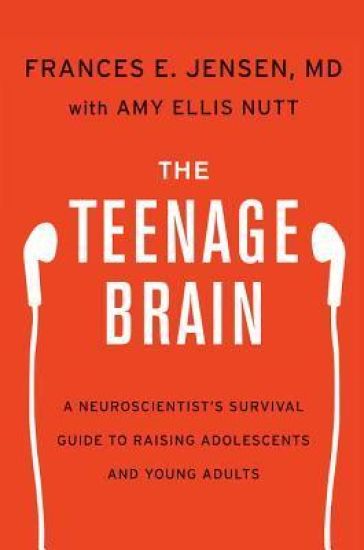
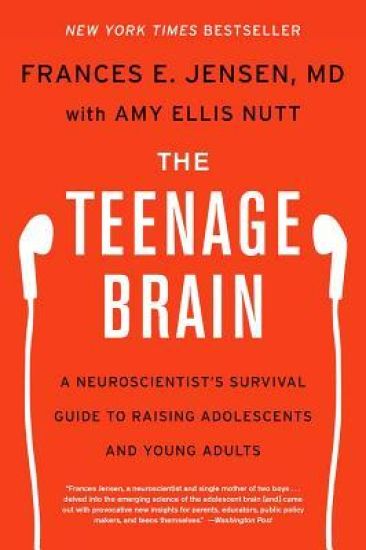
The Teenage Brain: A Neuroscientist's Survival Guide to Raising Adolescents and Young Adults
A New York Times BestsellerRenowned neurologist Dr. Frances E. Jensen offers a revolutionary look at the brains of teenagers, dispelling myths and offering practical advice for teens, parents and teachers.Dr. Frances E. Jensen is chair of the department of neurology in the Perelman School of Medicine at the University of Pennsylvania. As a mother, teacher, researcher, clinician, and frequent lecturer to parents and teens, she is in a unique position to explain to readers the workings of the teen brain. In The Teenage Brain, Dr. Jensen brings to readers the astonishing findings that previously remained buried in academic journals. The root myth scientists believed for years was that the adolescent brain was essentially an adult one, only with fewer miles on it. Over the last decade, however, the scientific community has learned that the teen years encompass vitally important stages of brain development. Samples of some of the most recent findings include: Teens are better learners than adults because their brain cells more readily "build" memories. But this heightened adaptability can be hijacked by addiction, and the adolescent brain can become addicted more strongly and for a longer duration than the adult brain.Studies show that girls' brains are a full two years more mature than boys' brains in the mid-teens, possibly explaining differences seen in the classroom and in social behavior.Adolescents may not be as resilient to the effects of drugs as we thought. Recent experimental and human studies show that the occasional use of marijuana, for instance, can cause lingering memory problems even days after smoking, and that long-term use of pot impacts later adulthood IQ.Multi-tasking causes divided attention and has been shown to reduce learning ability in the teenage brain. Multi-tasking also has some addictive qualities, which may result in habitual short attention in teenagers.Emotionally stressful situations may impact the adolescent more than it would affect the adult: stress can have permanent effects on mental health and can to lead to higher risk of developing neuropsychiatric disorders such as depression.Dr. Jensen gathers what we've discovered about adolescent brain function, wiring, and capacity and explains the science in the contexts of everyday learning and multitasking, stress and memory, sleep, addiction, and decision-making. In this groundbreaking yet accessible book, these findings also yield practical suggestions that will help adults and teenagers negotiate the mysterious world of adolescent development.
The Teenage Brain: A Neuroscientist's Survival Guide to Raising Adolescents and Young Adults
A New York Times BestsellerRenowned neurologist Dr. Frances E. Jensen offers a revolutionary look at the brains of teenagers, dispelling myths and offering practical advice for teens, parents and teachers.Dr. Frances E. Jensen is chair of the department of neurology in the Perelman School of Medicine at the University of Pennsylvania. As a mother, teacher, researcher, clinician, and frequent lecturer to parents and teens, she is in a unique position to explain to readers the workings of the teen brain. In The Teenage Brain, Dr. Jensen brings to readers the astonishing findings that previously remained buried in academic journals. The root myth scientists believed for years was that the adolescent brain was essentially an adult one, only with fewer miles on it. Over the last decade, however, the scientific community has learned that the teen years encompass vitally important stages of brain development. Samples of some of the most recent findings include: Teens are better learners than adults because their brain cells more readily "build" memories. But this heightened adaptability can be hijacked by addiction, and the adolescent brain can become addicted more strongly and for a longer duration than the adult brain.Studies show that girls' brains are a full two years more mature than boys' brains in the mid-teens, possibly explaining differences seen in the classroom and in social behavior.Adolescents may not be as resilient to the effects of drugs as we thought. Recent experimental and human studies show that the occasional use of marijuana, for instance, can cause lingering memory problems even days after smoking, and that long-term use of pot impacts later adulthood IQ.Multi-tasking causes divided attention and has been shown to reduce learning ability in the teenage brain. Multi-tasking also has some addictive qualities, which may result in habitual short attention in teenagers.Emotionally stressful situations may impact the adolescent more than it would affect the adult: stress can have permanent effects on mental health and can to lead to higher risk of developing neuropsychiatric disorders such as depression.Dr. Jensen gathers what we've discovered about adolescent brain function, wiring, and capacity and explains the science in the contexts of everyday learning and multitasking, stress and memory, sleep, addiction, and decision-making. In this groundbreaking yet accessible book, these findings also yield practical suggestions that will help adults and teenagers negotiate the mysterious world of adolescent development.
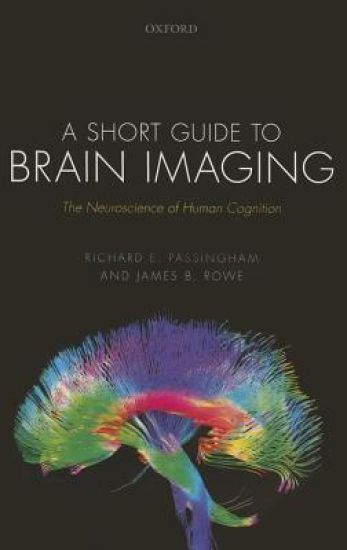
A Short Guide to Brain Imaging

A Short Guide to Brain Imaging

Richard E. Passingham; James B. Rowe

Oxford University Press
2015
nidottu
Brain imaging has revolutionised the field of Psychology - once more concerned with IQ tests, reaction times and questionnaires. Most Psychology departments now have access to an MRI scanner - some have even renamed themselves as departments of cognitive neuroscience. Yet brain imaging can be a minefield, whichever discipline you approach it from. If you are a psychologist, you will have been taught how to do behavioural experiments, but may know little neuroanatomy or neurophysiology. If you are a neurologist or psychiatrist, then you may know the neuroanatomy and neurophysiology, but not know how to carry out experiments on mental phenomena. This is a practical guide to brain imaging, showing how it can advance a true neuroscience of human cognition. It is accessible to those starting out in imaging, whilst also informative for those who have already acquired some expertise. At the heart of the book are 6 main chapters, focusing on - the signal, experimental methods, anatomy, functional specialisation, functional systems, and other methods. For students and researchers in psychology and neuroscience, this is the essential companion when embarking on brain imaging studies.