Edward has no recollection of who she is or why she has left him a love letter. With Thubron's customary clarity he draws a bleak, amnesiac world in which a young man must face again old griefs and linger 'like a coward, just this side of knowing'. On the other side, the memory of a destructive, obsessive relationship looms.
Bageye already finds it a struggle to feed his family on his wage from Vauxhall Motors, but now his wife Blossom has set her heart on her sons going to private school and she will not settle for anything less. This is the story of a father seen through the eyes of his ten-year-old son.
Moving from Greek villages to Turkish towns, the author of Shadow of the Silk Road and Night of Fire provides a profound look into the people of Cyprus â?? from Orthodox monks to wedding parties to peasant families â?? against the landscape of a beautiful Mediterranean island on the eve of chaos and tragedy.
A collection that takes us to Glanbeigh, a small town in rural Ireland - a town in which the youth have the run of the place. Boy racers speed down the back lanes; couples haunt the midnight woods; young skins huddle in the cold once The Peacock has closed its doors. Here the young live hard. It matters whose sister you were seen with.
He shows us the famous people with epilepsy like Julius Caesar, Joan of Arc and Vincent van Gogh, the pioneering doctors whose extraordinary breakthroughs finally helped gain an understanding of how the brain works, and, through the tragic tale of his brother, he considers the effect of epilepsy on his own life.
As soon as you hear the engine start, jump in and get out of sight!'Zoe and Bertram have embarked on the most amazing adventure of their lives. Egged on by the lively young mongrel Jack, they are escaping heir dull, shorebound lives and are on course for the remote island of Clany. But what sort of life can the stowaways expect?
The summer holidays loomed ahead, with nothing to look forward to except one dreary week in a caravan with only mum and dad for company. Roger was sure he'd be bored.But then Dad finds Nuffin; an abandoned puppy who's more a bundle of skin and bone than a dog. Roger's holiday is transformed and soon he and Nuffin are inseperable. But Dad is adamant that Nuffin must find a new home. Is there any way Roger can persuade him to change his mind?
The story of an old man living in a railway carriage on a rubbish dump who knows that even rubbish can sometimes contain treasure; and that, if he stays long enough, gentle nature will heal the countryside and make it green again.
In this book there are entire chapters devoted to the most widely used bird counting techniques, and attempts to amalgamate other counting methodologies into major groups were made. Examples of the use of methods are provided wherever possible and the relative value of various approaches for answering specific questions is also addressed.
Visual Thinking brings the science of perception to the art of design. Designers increasingly need to present information in ways that aid their audience’s thinking process. Fortunately, results from the relatively new science of human visual perception provide valuable guidance. In this book, Colin Ware takes what we now know about perception, cognition, and attention and transforms it into concrete advice that designers can directly apply. He demonstrates how designs can be considered as tools for cognition – extensions of the viewer’s brain in much the same way that a hammer is an extension of the user’s hand. The book includes hundreds of examples, many in the form of integrated text and full-color diagrams. Experienced professional designers and students alike will learn how to maximize the power of the information tools they design for the people who use them.
As the embedded world expands, developers must have a strong grasp of many complex topics in order to make faster, more efficient and more powerful microprocessors to meet the public’s growing demand. Embedded Software: The Works covers all the key subjects embedded engineers need to understand in order to succeed, including Design and Development, Programming, Languages including C/C++, and UML, Real Time Operating Systems Considerations, Networking, and much more. New material on Linux, Android, and multi-core gives engineers the up-to-date practical know-how they need in order to succeed. Colin Walls draws upon his experience and insights from working in the industry, and covers the complete cycle of embedded software development: its design, development, management, debugging procedures, licensing, and reuse. For those new to the field, or for experienced engineers looking to expand their skills, Walls provides the reader with detailed tips and techniques, and rigorous explanations of technologies. Key features include: New chapters on Linux, Android, and multi-core – the cutting edge of embedded software development! Introductory roadmap guides readers through the book, providing a route through the separate chapters and showing how they are linked About the Author Colin Walls has over twenty-five years experience in the electronics industry, largely dedicated to embedded software. A frequent presenter at conferences and seminars and author of numerous technical articles and two books on embedded software, he is a member of the marketing team of the Mentor Graphics Embedded Software Division. He writes a regular blog on the Mentor website (blogs.mentor.com/colinwalls).
Instrumental Thin-Layer Chromatography delivers comprehensive coverage of this separation tool with particular emphasis on how this tool can be used in advanced laboratories and integrated into problem-solving scenarios. Significant improvements in instrumentation have outpaced the development of information resources that describe the latest state-of-the-art and demonstrate the full capabilities of TLC. This book provides a contemporary picture of the fundamentals and practical applications of TLC at a level suitable for the needs of professional scientists with interests in project management where TLC is a common tool. Compact, highly focused chapters convey essential information that defines modern TLC and how it can be effectively implemented in most areas of laboratory science. Numerous figures and tables provide access to material not normally found in a single source yet are required by working scientists.
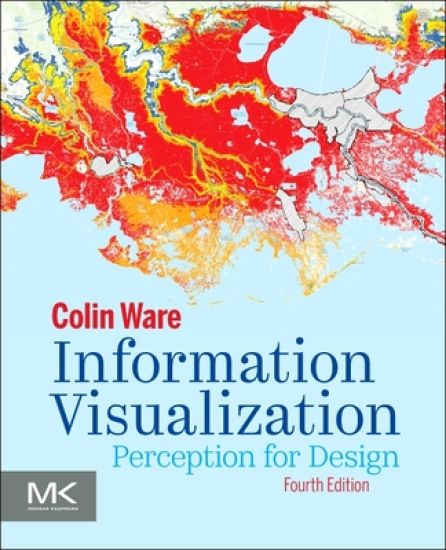
Information Visualization: Perception for Design, Fourth Edition explores the art and science of why we see objects the way we do. Based on the science of perception and vision, the author presents the key principles at work for a wide range of applications--resulting in visualization of improved clarity, utility and persuasiveness. This new edition has been revised and updated to include the latest relevant research findings. Content has been updated in areas such as the cognitive neuroscience of maps and navigation, the neuroscience of pattern perception, and the hierarchy of learned patterns. New changes to the book make it easier to apply perceptual lessons to design decisions. In addition, the book offers practical guidelines that can be applied by anyone, including interaction designers and graphic designers of all kinds.
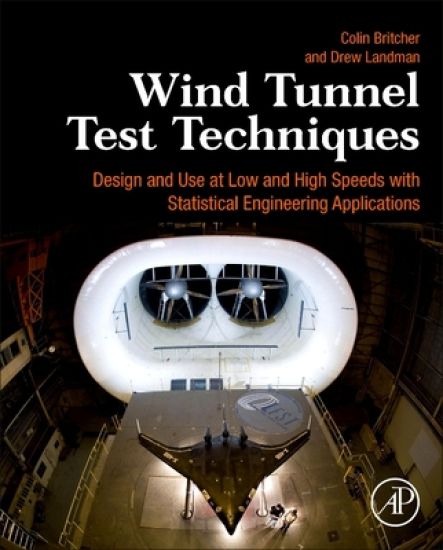
Wind Tunnel Test Techniques: Design and Use at Low and High Speeds with Statistical Engineering Applications provides an up-to-date treatment of the topic. Beginning with a brief history of wind tunnels and its types and uses, the book goes on to cover subsonic, supersonic and hypersonic wind tunnel design and construction, calibration, boundary corrections, flow quality assessment, pressure surveys, and dynamic testing. It also focuses on wind tunnel facilities, making it useful for both the designer and operator. Engineers and graduate students in aerospace, automotive and similar programs will find this book useful in their work with experimental aerodynamics, gas dynamics, facility design and performance.
Manual of Engineering Drawing: British and International Standards, Fifth Edition, chronicles ISO and British Standards in engineering drawings, providing many examples that will help readers understand how to translate engineering specifications into a visual medium. The book includes 6 introductory chapters which provide foundational theory and contextual information regarding the broader context of engineering drawing and design. The concepts enclosed will help readers gain the most out of their drawing skills. As the standards referred to in this book change every few years, this new edition presents an important update.
Embedded RTOS Design: Insights and Implementation combines explanations of RTOS concepts with detailed, practical implementation. It gives a detailed description of the implementation of a basic real-time kernel designed to be limited in scope and simple to understand, which could be used for a real design of modest complexity. The kernel features upward-compatibility to a commercial real-time operating system: Nucleus RTOS. Code is provided which can be used without restriction. Gain practical information on: Scheduling, preemption, and interrupts Information flow (queues, semaphores, etc.) and how they work Signaling between tasks (signals, events, etc.) Memory management (Where does each task get its stack from? What happens if the stack overflows?) The CPU context: storage and retrieval after a context switch With this book you will be able to: Utilize a basic real-time kernel to develop your own prototype Design RTOS features Understand the facilities of a commercial RTOS
Visual Thinking for Information Design, Second Edition brings the science of perception to the art of design. The book takes what we now know about perception, cognition and attention and transforms it into concrete advice that students and designers can directly apply. It demonstrates how designs can be considered as tools for cognition and extensions of the viewer’s brain in much the same way that a hammer is an extension of the user’s hand. The book includes hundreds of examples, many in the form of integrated text and full-color diagrams. Renamed from the first edition, Visual Thinking for Design, to more accurately reflect its focus on infographics, this timely revision has been updated throughout and includes more content on pattern perception, the addition of new material illustrating color assimilation, and a new chapter devoted to communicating ideas through images.
For juniors and seniors of various majors, taking a first course in topology. This book introduces topology as an important and fascinating mathematics discipline. Students learn first the basics of point-set topology, which is enhanced by the real-world application of these concepts to science, economics, and engineering as well as other areas of mathematics. The second half of the book focuses on topics like knots, robotics, and graphs. The text is written in an accessible way for a range of undergraduates to understand the usefulness and importance of the application of topology to other fields.
Focus on Writing is an academic writing program that provides students with essential tools to master not only the key steps in the writing process, but also the grammatical structures, lexical knowledge, and rhetorical modes essential for academic writing. This five-level series progresses with students as they grow in confidence and ability from sentence level (Book 1) through paragraphs (Books 1–3) and essays (Books 3–5). Each unit leads writers step-by-step through the process of prewriting, writing a first draft, revising, and editing before producing a final draft. Not only do students write an entire paragraph or essay in each unit, they are also given plenty of practice at the sentence and word levels. Features: Each unit teaches students how to use one or more common organizational structures: narrative, description, opinion, persuasion, compare-contrast, problem-solution, and cause-effect.High-interest readings and a choice of writing assignments provide a springboard for students’ writing.Grammar presentation and practice correlated to Focus on Grammar make the connection between grammar and writing clear.Building Word Knowledge mini-lessons and exercises teach students’ how to use word forms, collocations, idioms, compounds, descriptive details, phrasal verbs and other types of vocabulary in their writing.Revision and Editing checklists for each writing assignment help students rewrite and polish their first drafts.Online Teacher’s Manuals contain model lesson plans, unit overviews, timed writing assignments, authentic student models, and answer keys.
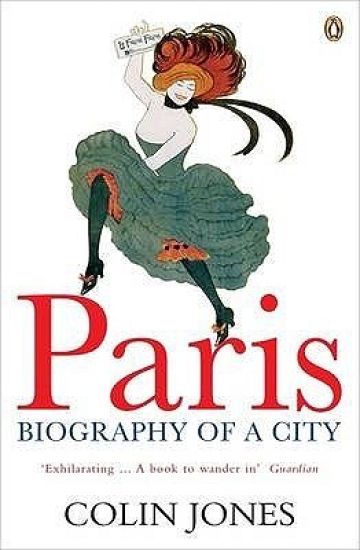
'Paris is the World, the rest of the Earth is nothing but its suburbs' - MarivauxIn this intelligently-written and supremely entertaining new history, Colin Jones seeks to give a sense of the city of Paris as it was lived in and experienced over time. The focal point of generation upon generation of admirers and detractors, a source of attraction or repulsion even for those who have never been there, Paris has witnessed more extraordinary events than any other major city. No spot on earth has been more walked around, written about, discussed, painted and photographed. With an eye for the revealing, startling and (sometimes) horrible detail, Colin Jones takes the reader from Roman Paris to the present, recreating the ups and downs in the history of the city and its inhabitants. Attentive to both the urban environment and to the experience of those who lived within it, PARIS: BIOGRAPHY OF A CITY will be hugely enjoyed by habitual Paris obsessives, by first-time visitors, and by those who know the city only by repute.