Kirjojen hintavertailu. Mukana 12 230 862 kirjaa ja 12 kauppaa.

Kirjahaku

Etsi kirjoja tekijän nimen, kirjan nimen tai ISBN:n perusteella.

1000 tulosta hakusanalla Cynthia L. Rogers

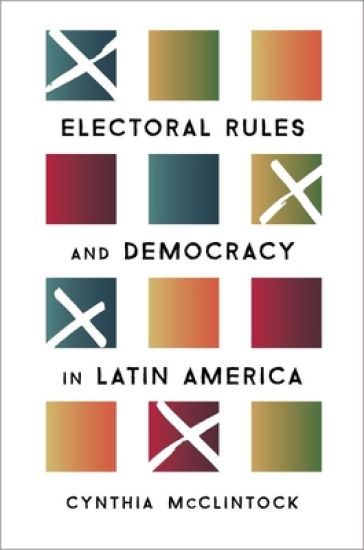
Electoral Rules and Democracy in Latin America

Electoral Rules and Democracy in Latin America

Cynthia McClintock

Oxford University Press Inc
2018
sidottu
During Latin America's third democratic wave, a majority of countries adopted a runoff rule for the election of the president, effectively dampening plurality voting, opening the political arena to new parties, and assuring the public that the president will never have anything less than majority support. In a region in which undemocratic political parties were common and have often been dominated by caudillos, cautious naysayers have voiced concerns about the runoff process, arguing that a proliferation of new political parties vying for power is a sign of inferior democracy. This book is the first rigorous assessment of the implications of runoff versus plurality rules throughout Latin America, and demonstrates that, in contrast to early scholarly skepticism about runoff, it has been positive for democracy in the region. Primarily through qualitative analysis for each country, the author argues that, indeed, an important advantage of runoff is the greater openness of the political arena to new parties--at the same time that measures can be taken to inhibit party proliferation. In this context, it is also the first volume to address whether or not a runoff rule with a reduced threshold (for example, 40% with a 10-point lead) is a felicitous compromise between majority runoff and plurality. The book considers the potential for the superiority of runoff to travel beyond Latin America--in particular, and rather provocatively, to the United States.
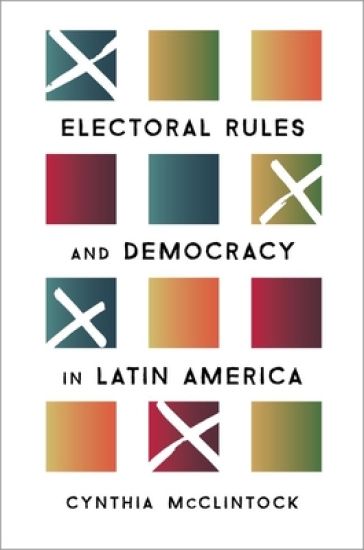
Electoral Rules and Democracy in Latin America

Electoral Rules and Democracy in Latin America

Cynthia McClintock

Oxford University Press Inc
2018
nidottu
During Latin America's third democratic wave, a majority of countries adopted a runoff rule for the election of the president, effectively dampening plurality voting, opening the political arena to new parties, and assuring the public that the president will never have anything less than majority support. In a region in which undemocratic political parties were common and have often been dominated by caudillos, cautious naysayers have voiced concerns about the runoff process, arguing that a proliferation of new political parties vying for power is a sign of inferior democracy. This book is the first rigorous assessment of the implications of runoff versus plurality rules throughout Latin America, and demonstrates that, in contrast to early scholarly skepticism about runoff, it has been positive for democracy in the region. Primarily through qualitative analysis for each country, the author argues that, indeed, an important advantage of runoff is the greater openness of the political arena to new parties--at the same time that measures can be taken to inhibit party proliferation. In this context, it is also the first volume to address whether or not a runoff rule with a reduced threshold (for example, 40% with a 10-point lead) is a felicitous compromise between majority runoff and plurality. The book considers the potential for the superiority of runoff to travel beyond Latin America--in particular, and rather provocatively, to the United States.
Addictions Counseling

Addictions Counseling

Cynthia A. Faulkner; Samuel Faulkner

Oxford University Press Inc
2019
nidottu
Written by authors with extensive experience as practitioners and educators, this text serves as a straightforward resource for undergraduate and graduate students who have a goal of becoming counselors or therapists in the field of addiction. While many books on the subject follow a similar format (i.e., introduction, classification of drugs, theories of counseling, etc.), Addictions Counseling takes one client and follows her through the entire treatment experience-from referral and assessment, all the way through relapse prevention and discharge planning. In following her through the treatment journey, readers are introduced to theories and techniques for approaching each of the topics discussed. This book is a must-read for anybody interested in pursuing a career as an addiction specialist.
Art Theory

Art Theory

Cynthia Freeland

Oxford University Press
2003
nidottu
In today's art world many strange, even shocking, things qualify as art. In this Very Short Introduction Cynthia Freeland explains why innovation and controversy are valued in the arts, weaving together philosophy and art theory with many fascinating examples. She discusses blood, beauty, culture, money, museums, sex, and politics, clarifying contemporary and historical accounts of the nature, function, and interpretation of the arts. Freeland also propels us into the future by surveying cutting-edge web sites, alongside the latest research on the brain's role in perceiving art. This clear, provocative book engages with the big debates surrounding our responses to art and is an invaluable introduction to anyone interested in thinking about art. ABOUT THE SERIES: The Very Short Introductions series from Oxford University Press contains hundreds of titles in almost every subject area. These pocket-sized books are the perfect way to get ahead in a new subject quickly. Our expert authors combine facts, analysis, perspective, new ideas, and enthusiasm to make interesting and challenging topics highly readable.
But Is It Art?

But Is It Art?

Cynthia Freeland

Oxford University Press
2002
nidottu
In today's art world many strange, even shocking, things qualify as art. In this book, Cynthia Freeland explains why innovation and controversy are valued in the arts, weaving together philosophy and art theory with many fascinating examples. She discusses blood, beauty, culture, money, museums, sex, and politics, clarifying contemporary and historical accounts of the nature, function, and interpretation of the arts. Freeland also propels us into the future by surveying cutting-edge web sites, along with the latest research on the brain's role in perceiving art. This clear, provocative book engages with the big debates surrounding our responses to art and is an invaluable introduction to anyone interested in thinking about art.
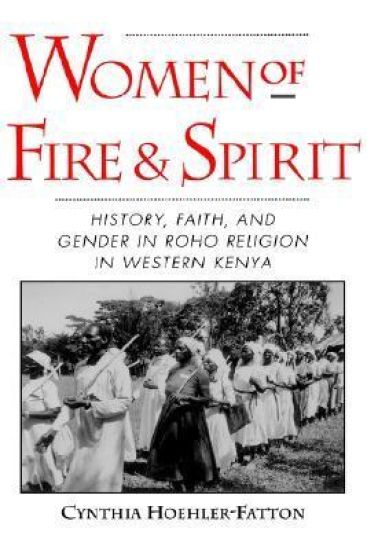
Women of Fire and Spirit

Women of Fire and Spirit

Cynthia Hoehler-Fatton

Oxford University Press Inc
1996
sidottu
This is the first extensive study of the African Christian Roho religion, or Holy Spirit movement, in Western Kenya. Hoehler-Fatton uses extensive oral histories and life narratives to provide a counterweight to existing historical literature, and also brings to the fore the role of women in the evolution and expansion of the Church.
Women of Fire and Spirit

Women of Fire and Spirit

Cynthia Hoehler-Fatton

Oxford University Press Inc
1996
nidottu
This is the first extensive study of the African Christian Roho religion, or Holy Spirit movement, in Western Kenya. Hoehler-Fatton uses extensive oral histories and life narratives to provide a counterweight to existing historical literature, and also brings to the fore the role of women in the evolution and expansion of the Church.
Methodism and the Southern Mind, 1770-1810

Methodism and the Southern Mind, 1770-1810

Cynthia Lynn Lyerly

Oxford University Press Inc
1998
sidottu
This book looks at the role of Methodism in the Revolutionary and early national South. When the Methodists first arrived in the South, Lyerly argues, they were critics of the social order. By advocating values traditionally deemed "feminine", treating white women and African Americans with considerable equality, and preaching against wealth and slavery, Methodism challenged Southern secular mores. For this reason, Methodism evoked sustained opposition, especially from elite white men. Lyerly analyses the public denunciations, domestic assaults on Methodist women and children, and mob violence against black Methodists. These attacks, Lyerly argues, served to bind Methodists more closely to one another; they were sustained by the belief that suffering was salutary and that persecution was a mark of true faith.
Interpreting as a Discourse Process

Interpreting as a Discourse Process

Cynthia B. Roy

Oxford University Press Inc
1999
sidottu
This book studies interpreting between languages as a discourse process and as about managing ccommunication between two people who do not speak a common language. Roy examines the turn exchanges of a face-to-face interpreted event in order to offer a definition of interpreted events, describe the process of taking turns with an interpreter, and account for the role of the interpreter in terms of the performance in interaction.
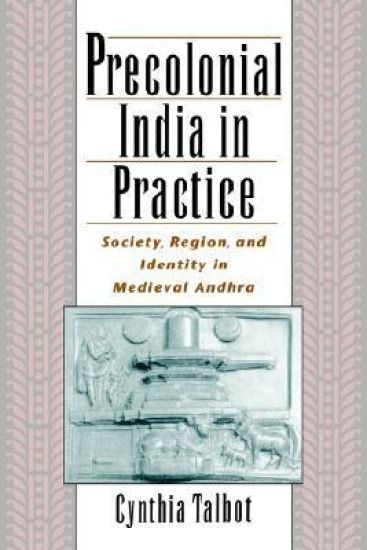
Precolonial India in Practice

Precolonial India in Practice

Cynthia Talbot

Oxford University Press Inc
2001
sidottu
The society of traditional India is frequently characterized as static and dominated by caste. This study challenges older interpretations, arguing that medieval India was actually a time of dynamic change and fluid social identities. Using records of religious endowments from Andhra Pradesh, author Cynthia Talbot reconstructs a regional society of the precolonial past as it existed in practice.
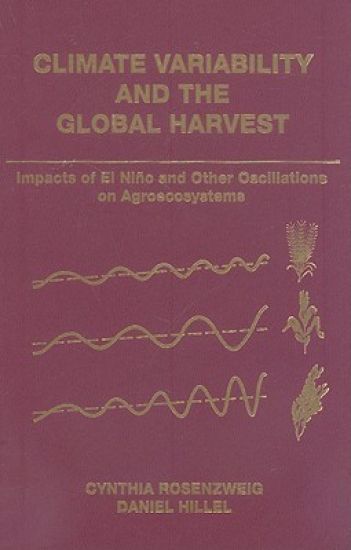
Climate Variability and the Global Harvest

Climate Variability and the Global Harvest

Cynthia Rosenzweig; Daniel Hillel

Oxford University Press Inc
2008
sidottu
The Earth's climate is constantly changing. Some of the changes are progressive, while others fluctuate at various time scales. The El Niño-la Niña cycle is one such fluctuation that recurs every few years and has far-reaching impacts. It generally appears at least once per decade, but this may vary with our changing climate. The exact frequency, sequence, duration and intensity of El Niño's manifestations, as well as its effects and geographic distributions, are highly variable. The El Niño-la Niña cycle is particularly challenging to study due to its many interlinked phenomena that occur in various locations around the globe. These worldwide teleconnections are precisely what makes studying El Niño-la Niña so important. Cynthia Rosenzweig and Daniel Hillel describe the current efforts to develop and apply a global-to-regional approach to climate-risk management. They explain how atmospheric and social scientists are cooperating with agricultural practitioners in various regions around the world to determine how farmers may benefit most from new climate predictions. Specifically, the emerging ability to predict the El Niño-Southern Oscillation (ENSO) cycle offers the potential to transform agricultural planning worldwide. Biophysical scientists are only now beginning to recognize the large-scale, globally distributed impacts of ENSO on the probabilities of seasonal precipitation and temperature regimes. Meanwhile, social scientists have been researching how to disseminate forecasts more effectively within rural communities. Consequently, as the quality of climatic predictions have improved, the dissemination and presentation of forecasts have become more effective as well. This book explores the growing understanding of the interconnectedness of climate predictions and productive agriculture for sustainable development, as well as methods and models used to study this relationship.
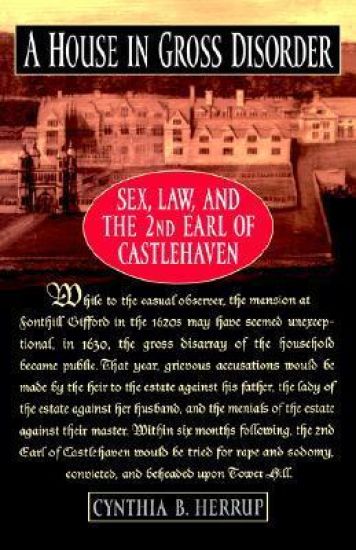
A House in Gross Disorder

A House in Gross Disorder

Cynthia Herrup

Oxford University Press Inc
2001
nidottu
Sex, privilege, corruption, and revenge--these are elements that we expect to find splashed across today's tabloid headlines. But in 17th century England, a sex scandal in which the 2nd Earl of Castlehaven was executed for crimes so horrible that "a Christian man ought scarce to name them" threatened the very foundations of aristocratic hierarchy. In A House in Gross Disorder, Cynthia Herrup presents a strikingly new interpretation both of the case itself and of the sexual and social anxieties it cast into such bold relief. Castlehaven was convicted of abetting the rape of his wife and of committing sodomy with his servants. More than that, he stood accused of inverting the natural order of his household by reveling in rather than restraining the intemperate passions of those he was expected to rule and protect. Herrup argues that because an orderly house was considered both an example and endorsement of aristocratic governance, the riotousness presided over by Castlehaven was the most damning evidence against him. Castlehaven himself argued that he was the victim of an impatient son, an unhappy wife, and courtiers greedy for his lands. Eschewing simple conclusions about guilt or innocence, Herrup focuses instead on the fascinating legal, social and political dynamics of the case and its subsequent retellings. In prose as riveting as the moral and legal dramas it depicts, A House in Gross Disorder reconsiders a scandal that still speaks to contemporary anxieties about sex, good governance, and the role of law in regulating both.
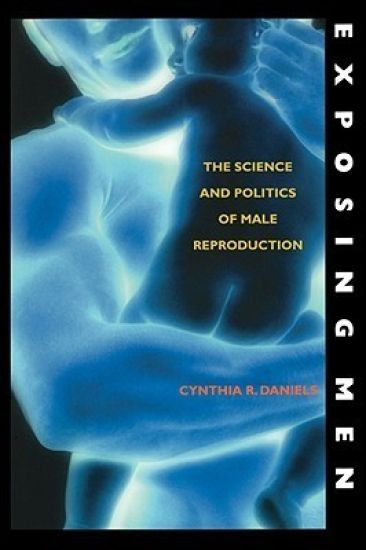
Exposing Men

Exposing Men

Cynthia R Daniels

Oxford University Press Inc
2006
sidottu
Exposing Men examines how ideals of masculinity have long skewed our societal--and scientific--understanding of one of the pillars of male identity: reproductive health. Only with the recent public exposure of men's reproductive troubles has the health of the male body been thrown into question, and along with it deeper masculine ideals. Whereas once mens sexual and reproductive abilities were the most taboo of topics, today erectile dysfunction is a multi-billion dollar business, and magazine articles trumpet male reproductive decline with headlines such as "You're Half the Man Your Father Was." Cynthia R. Daniels casts a gimlet eye on our world of plummeting sperm counts, spiking reproductive cancers, sperm banks, and pharmacological cures for impotence in order to assess the true state of male health. What she finds is male reproductive systems damaged by toxins and war, and proof piling up that men through sperm, pass on harm to the children they father. Yet, despite the evidence that mens health, as much as womens, significantly affects the vitality of their offspring, Daniels also sees a society holding on to outdated assumptions, one in which men ignore blatant health risks as they struggle to live up to antiquated ideas of manliness.
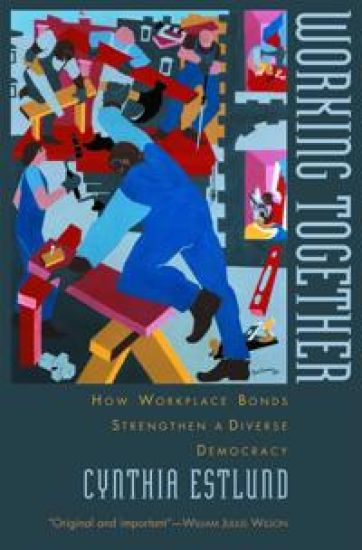
Working Together

Working Together

Cynthia Estlund

Oxford University Press Inc
2003
sidottu
The typical workplace is a hotbed of human relationships--of friendships, conflicts, feuds, alliances, partnerships, coexistence and cooperation. Here, problems are solved, progress is made, and rifts are mended because they need to be - because the work has to get done. And it has to get done among increasingly diverse groups of co-workers. At a time when communal ties in American society are increasingly frayed and segregation persists, the workplace is more than ever the site where Americans from different ethnic, religious, and racial backgrounds meet and forge serviceable and sometimes lasting bonds. What do these highly structured workplace relationships mean for a society still divided by gender and race? Structure and rules are, in fact, central to the answer. Workplace interactions are constrained by economic power and necessity, and often by legal regulation. They exist far from the civic ideal of free and equal citizens voluntarily associating for shared ends. Yet it is the very involuntariness of these interactions that helps to make the often-troubled project of racial integration comparatively successful at work. People can be forced to get along-not without friction, but often with surprising success. This highly original exploration of the paradoxical nature--and the paramount importance--of workplace bonds concludes with concrete suggestions for how law can further realize the democratic possibilities of working together. In linking workplace integration and connectedness beyond work, Estlund suggests a novel and promising strategy for addressing the most profound challenges facing American society.
Working Together

Working Together

Cynthia Estlund

Oxford University Press Inc
2005
nidottu
The typical workplace is a hotbed of human relationships--of friendships, conflicts, feuds, alliances, partnerships, coexistence and cooperation. Here, problems are solved, progress is made, and rifts are mended because they need to be - because the work has to get done. And it has to get done among increasingly diverse groups of co-workers. At a time when communal ties in American society are increasingly frayed and segregation persists, the workplace is more than ever the site where Americans from different ethnic, religious, and racial backgrounds meet and forge serviceable and sometimes lasting bonds. What do these highly structured workplace relationships mean for a society still divided by gender and race? Structure and rules are, in fact, central to the answer. Workplace interactions are constrained by economic power and necessity, and often by legal regulation. They exist far from the civic ideal of free and equal citizens voluntarily associating for shared ends. Yet it is the very involuntariness of these interactions that helps to make the often-troubled project of racial integration comparatively successful at work. People can be forced to get along-not without friction, but often with surprising success. This highly original exploration of the paradoxical nature--and the paramount importance--of workplace bonds concludes with concrete suggestions for how law can further realize the democratic possibilities of working together. In linking workplace integration and connectedness beyond work, Estlund suggests a novel and promising strategy for addressing the most profound challenges facing American society.
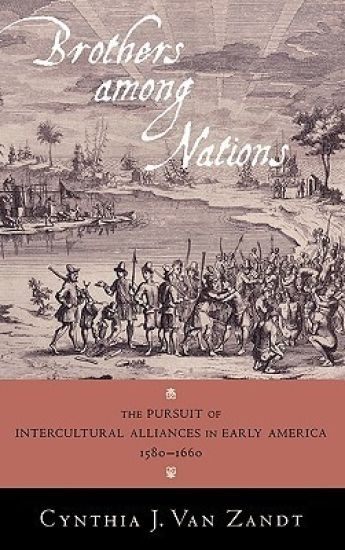
Brothers Among Nations

Brothers Among Nations

Cynthia Van Zandt

Oxford University Press Inc
2008
sidottu
In the past generation, scholars' understanding of relations among the peoples in the eastern portion of the North American mainland during the colonial era has been transformed by studies that have put the Native Americans' experiences at the center of the story instead of the periphery. Cynthia Van Zandt's work represents an effort to show how central Natives were to the European colonial project by demonstrating that the formation of alliances was the only way for the nascent colonies to succeed. Van Zandt argues that the growing number of transplanted Africans in the colonies demanded that Europeans effectively create alliances with them, though they were unequal alliances between free and enslaved peoples. Her study is unusual in that it brings together Indian and colonial peoples from a range of different Indian and European nations, focusing not just on one colony but on New England, Virginia, and the middle colonies together.
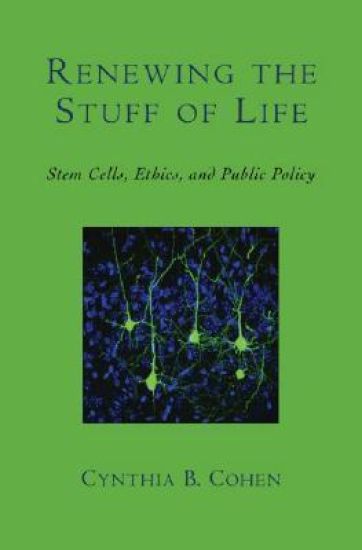
Renewing the Stuff of Life

Renewing the Stuff of Life

Cynthia B. Cohen

Oxford University Press Inc
2007
sidottu
Renewing the Stuff of Life offers the first truly comprehensive picture of the scientific, ethical, policy, social, religious, political, and business issues raied by stem cell research ever since it exploded onto the scene in 1998. It addresses such riveting questions as: should we use cloning and parthenogenesis to create embryos for stem cell research? Is it wrong to develop human-nonhuman chimeras that might house human brains in animal bodies? What social and political forces are driving federal and state stem cell research policies and why? Should stem cell lines be patented? Do we need a national ethics body to guide the development of this research? Cohen explains just what stem cells are, where they come from, and how they function, bringing in the most recent scientific discoveries in this challenging field. She then takes the reader through the leading secular and religious arguments regarding the compelling question of the moral significance of human embryos. In response, she offers a way to meet our responsibilities both to very early embryos and to those who are sick and suffering that takes account of basic values at the heart of our democratic policy. The much-maligned notion of human dignity receives new treatment here in an exploration of the moral import of creating human-nonhuman chimeras in stem cell research.
Methodism and the Southern Mind, 1770-1810

Methodism and the Southern Mind, 1770-1810

Cynthia Lynn Lyerly

Oxford University Press Inc
2016
nidottu
This book looks at the role of Methodism in the Revolutionary and early national South. When the Methodists first arrived in the South, Lyerly argues, they were critics of the social order. By advocating values traditionally deemed "feminine," treating white women and African Americans with considerable equality, and preaching against wealth and slavery, Methodism challenged Southern secular mores. For this reason, Methodism evoked sustained opposition, especially from elite white men. Lyerly analyzes the public denunciations, domestic assaults on Methodist women and children, and mob violence against black Methodists. These attacks, Lyerly argues, served to bind Methodists more closely to one another; they were sustained by the belief that suffering was salutary and that persecution was a mark of true faith.
Unmarried Couples, Law, and Public Policy

Unmarried Couples, Law, and Public Policy

Cynthia Grant Bowman

Oxford University Press Inc
2010
sidottu
In Unmarried Couples, Law, and Public Policy, Cynthia Grant Bowman explores legal recognition of opposite-sex cohabiting couples in the United States. Unmarried cohabitation has increased at a phenomenal rate in the U.S. over the last few decades, but the law has not responded to the legal issues raised by this new family form. Although a majority of cohabiting unions dissolve within the first two years, many are longer in term and function like other families; a large number of children also reside in these households. If one partner dies, is injured, or leaves the family, the remaining family members are left in an extremely vulnerable position in almost every state without any type of survivors' benefits, compensation for loss of a wage-earning partner, or remedies similar to those available upon dissolution of a marriage. The author argues that the many benefits attendant upon formal marriage should be extended to cohabitants who have lived together for more than two years or give birth to a child. In order to avoid these consequences, a couple would need to opt out of them by contract. Professor Bowman reaches this conclusion after a thorough review of the history of the legal treatment of cohabitation in the United States, the inadequacy of the legal remedies available to cohabitants in most states, the now-voluminous social science literature about cohabitation, and the experience of six other countries (England, Canada, Australia, France, The Netherlands, and Sweden) that have attempted a variety of legal reforms to address the problems of cohabitants.