The ability of a business to engage in real organizational learning and to do so faster and in a more sustainable way than its competitors is being increasingly seen as an essential component of success. In Making Sense of Organizational Learning, Cyril Kirwan examines the wide range of factors necessary to create and sustain organizational learning and knowledge at all levels. At the individual level, the generation of continuous learning opportunities and reflection on experiences are critically important. At the team level, it’s about encouraging collaboration, team learning and the sharing of knowledge. At the organizational level, the emphasis is on building systems to capture and share knowledge and providing strategic leadership for learning. The book shows you how you can best exploit the knowledge that already exists within your organization while at the same time develop the capability of the people that work there. It deals in turn with individual learning; learning with others; learning in organizations; and in particular the role of the HR function and of line managers. Each chapter provides theoretical background and real-world examples. Diagnostic questionnaires, checklists and other tools are also included. Making Sense of Organizational Learning provides an evidence-based argument for the adoption of effective organizational learning policies and practices, and offers a real opportunity to improve performance. Thinking practitioners working in and around learning and development or organization development will find it invaluable, as will those undertaking post-graduate study in HR and related disciplines.
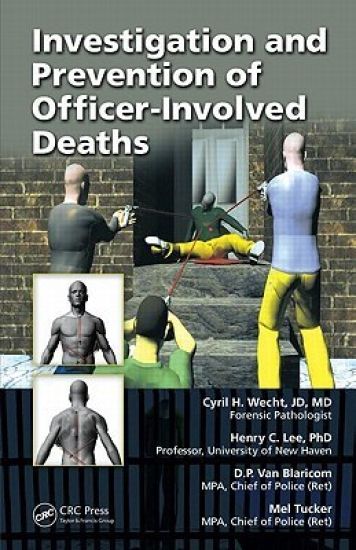
Each year, too many law enforcement officers die in the line of duty and too many people are killed by the police. Yet, can any of these deaths be avoided? To answer this we must investigate the nature and causes of these deaths in an unbiased and objective manner to highlight and expose weaknesses in policy that can be amended through more rigorous, enlightened, and culture-sensitive training. Examining hypothetical cases drawn from the most prevalent and typical officer-involved deaths in recent years, Investigation and Prevention of Officer-Involved Deaths reviews the circumstances, relevant discussions, and critical issues for each case type wherein law enforcement officers have had to respond outside of their usual and trained experience and where the final outcome was the death of either the suspect, an innocent bystander, or the officer. With a focus on crime scene investigation and the collection and preservation of the relevant forensic evidence, the book outlines appropriate crime scene procedures for each situation and lists potential categories of forensic evidence to be searched for, collected, and submitted to the forensic laboratory for analysis. The authors discuss postmortem protocols, including autopsy reports, toxicological analyses, and other appropriate investigative findings. They then examine policy and training protocols for each, look at the use and potential benefit of less-lethal weapons, and pose the critical question of "what would you do if you were the police officer."Through the serious study of each of the categories presented in this book, police officers and other groups of law enforcement officials can more fully comprehend and appreciate the societal significance of such cases. The more aware, sensitive, and well-educated are officers of the law, the more dignified, humane, and safe are the communities they are sworn to serve.
Purchase one of 1st World Library's Classic Books and help support our free internet library of downloadable eBooks. Visit us online at www.1stWorldLibrary.ORG - - "If you are going with the boys on the river, Jack, you will have to get a motor-boat. Won't you let me buy you one?" "No, not a bit of it, Dick." "But you want one?" Certainly, and I am going to have one." "But motor-boats cost money, Jack. Why, mine cost me -"